
Low power wireless sensor nodes for fluctuation enhanced





- Slides: 36
Low power wireless sensor nodes for fluctuation enhanced sensing Robert Mingesz, Gergely Vadai and Zoltan Gingl University of Szeged, Hungary http: //www. noise. inf. u-szeged. hu/Research/fes/ 23 rd of September, 2015
Introduction 2
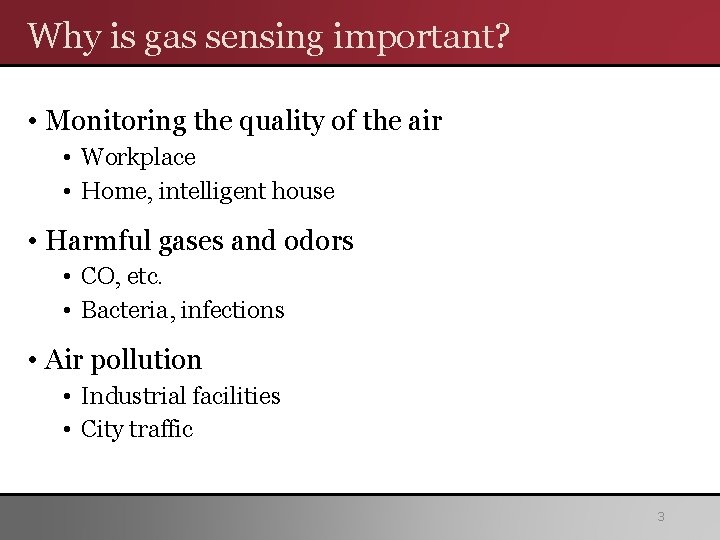
Why is gas sensing important? • Monitoring the quality of the air • Workplace • Home, intelligent house • Harmful gases and odors • CO, etc. • Bacteria, infections • Air pollution • Industrial facilities • City traffic 3
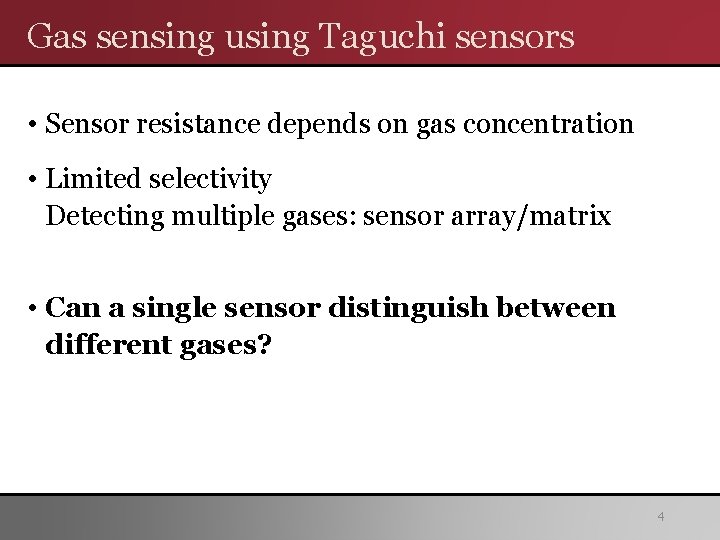
Gas sensing using Taguchi sensors • Sensor resistance depends on gas concentration • Limited selectivity Detecting multiple gases: sensor array/matrix • Can a single sensor distinguish between different gases? 4
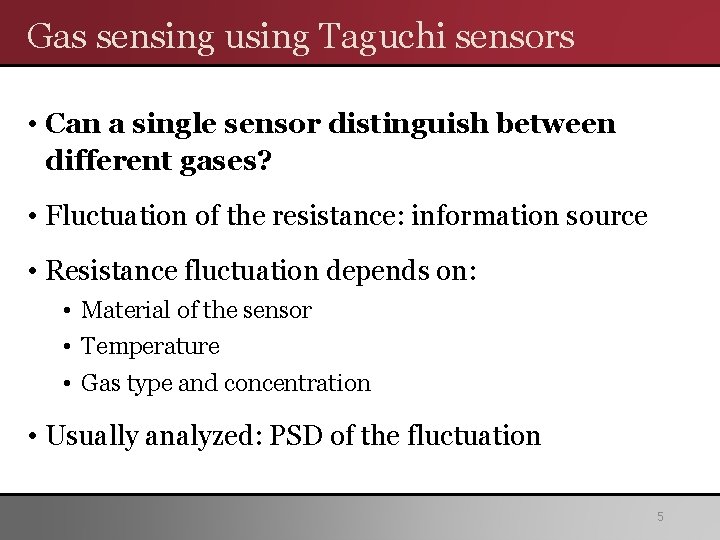
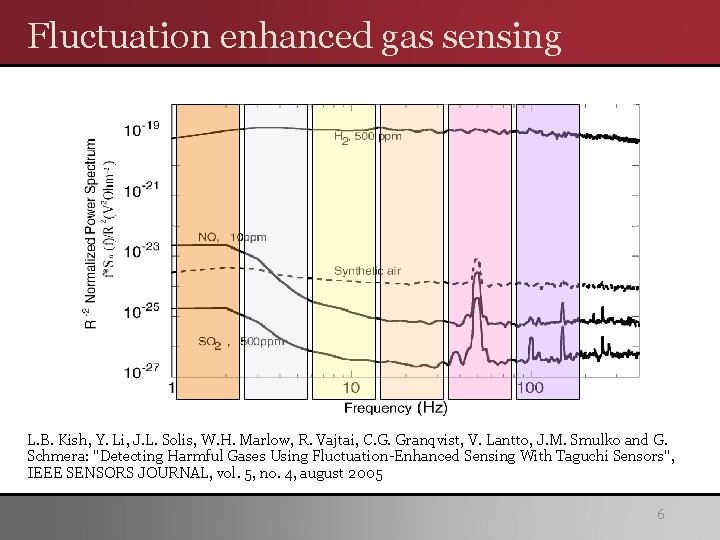
Gas sensing using Taguchi sensors • Can a single sensor distinguish between different gases? • Fluctuation of the resistance: information source • Resistance fluctuation depends on: • Material of the sensor • Temperature • Gas type and concentration • Usually analyzed: PSD of the fluctuation 5
Fluctuation enhanced gas sensing L. B. Kish, Y. Li, J. L. Solis, W. H. Marlow, R. Vajtai, C. G. Granqvist, V. Lantto, J. M. Smulko and G. Schmera: "Detecting Harmful Gases Using Fluctuation-Enhanced Sensing With Taguchi Sensors", IEEE SENSORS JOURNAL, vol. 5, no. 4, august 2005 6
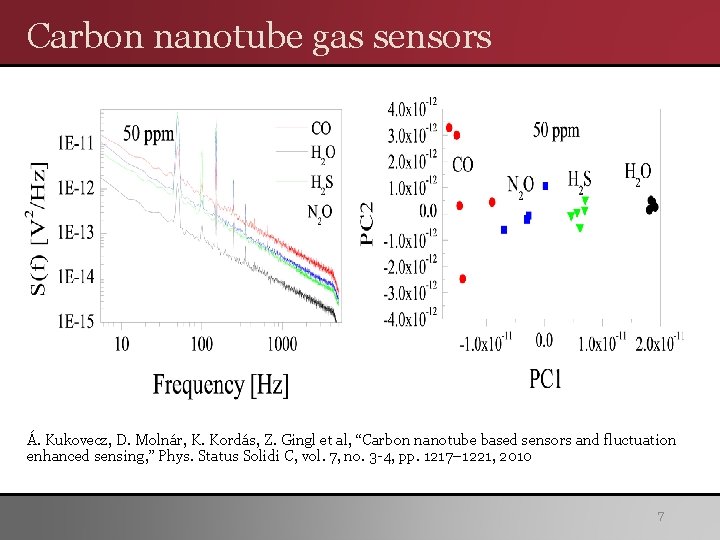
Carbon nanotube gas sensors Á. Kukovecz, D. Molnár, K. Kordás, Z. Gingl et al, “Carbon nanotube based sensors and fluctuation enhanced sensing, ” Phys. Status Solidi C, vol. 7, no. 3 -4, pp. 1217– 1221, 2010 7
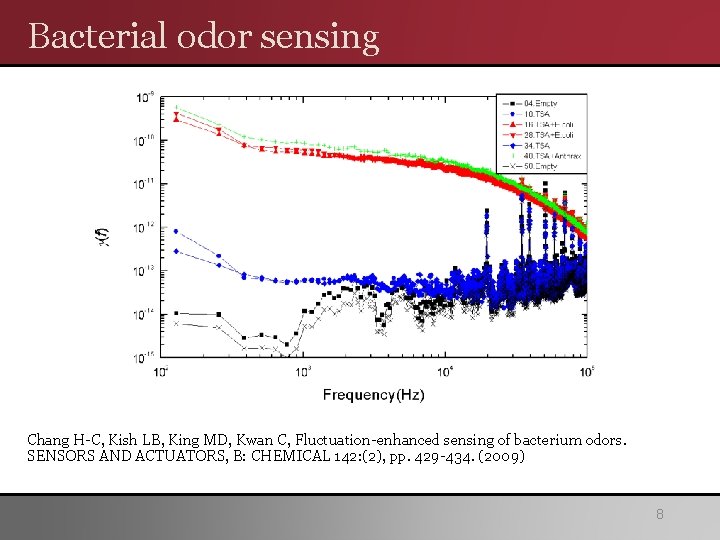
Bacterial odor sensing Chang H-C, Kish LB, King MD, Kwan C, Fluctuation-enhanced sensing of bacterium odors. SENSORS AND ACTUATORS, B: CHEMICAL 142: (2), pp. 429 -434. (2009) 8
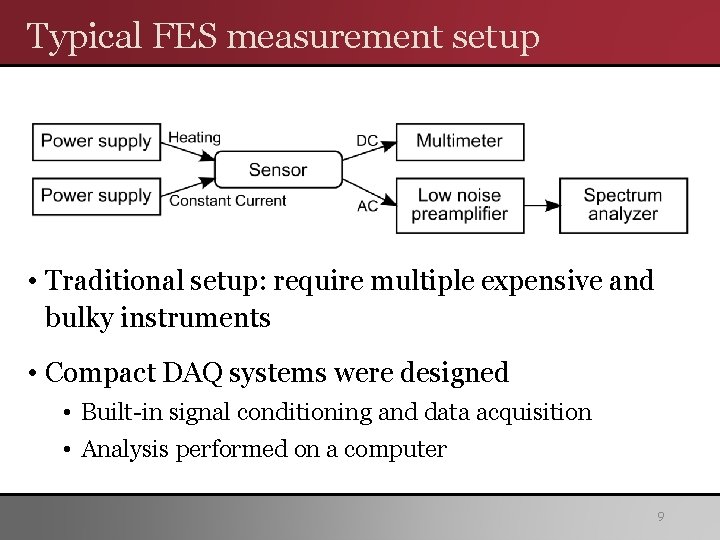
Typical FES measurement setup • Traditional setup: require multiple expensive and bulky instruments • Compact DAQ systems were designed • Built-in signal conditioning and data acquisition • Analysis performed on a computer 9
Our goal • Design of a standalone, low-power, intelligent sensor node (software and hardware) • Optimized battery lifetime • Wireless communication • Suitable for • Wireless sensor networks (WSN) • Internet of things (Io. T) 10
Design of a wireless sensor module 11
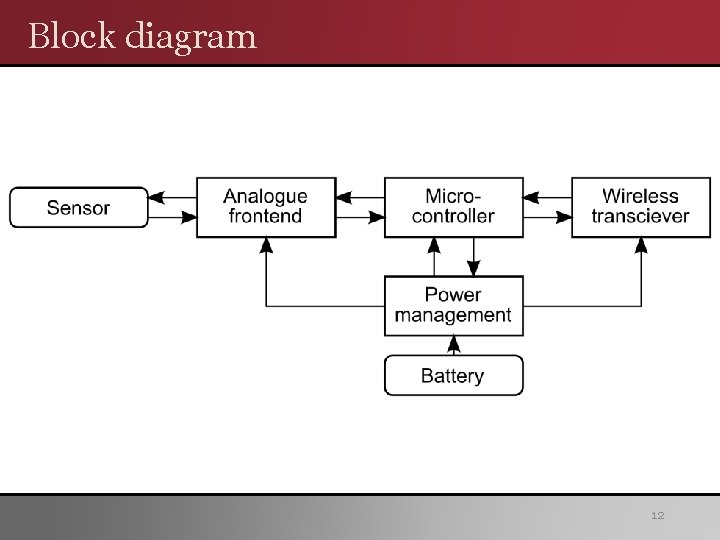
Block diagram 12
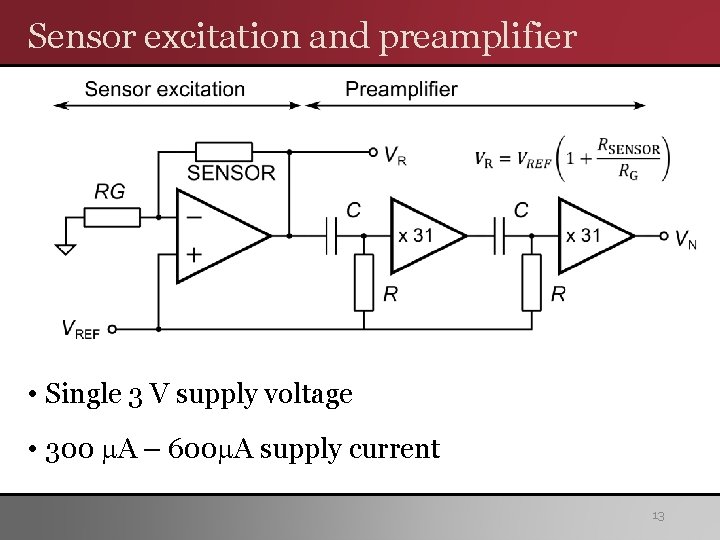
Sensor excitation and preamplifier • Single 3 V supply voltage • 300 A – 600 A supply current 13
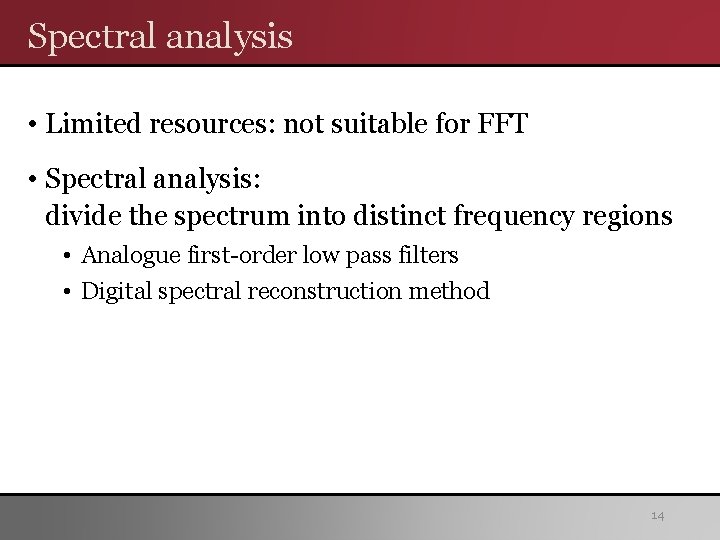
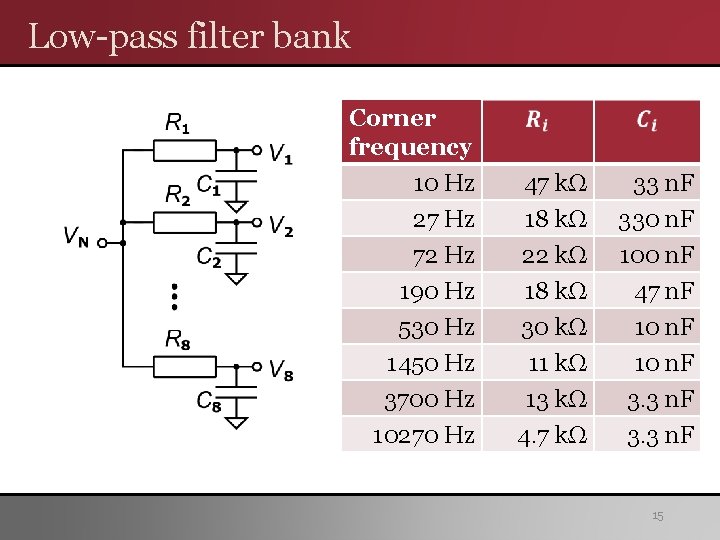
Spectral analysis • Limited resources: not suitable for FFT • Spectral analysis: divide the spectrum into distinct frequency regions • Analogue first-order low pass filters • Digital spectral reconstruction method 14
Low-pass filter bank Corner frequency 10 Hz 27 Hz 47 kΩ 18 kΩ 33 n. F 330 n. F 72 Hz 22 kΩ 100 n. F 190 Hz 530 Hz 1450 Hz 3700 Hz 10270 Hz 18 kΩ 30 kΩ 11 kΩ 13 kΩ 4. 7 kΩ 47 n. F 10 n. F 3. 3 n. F 15
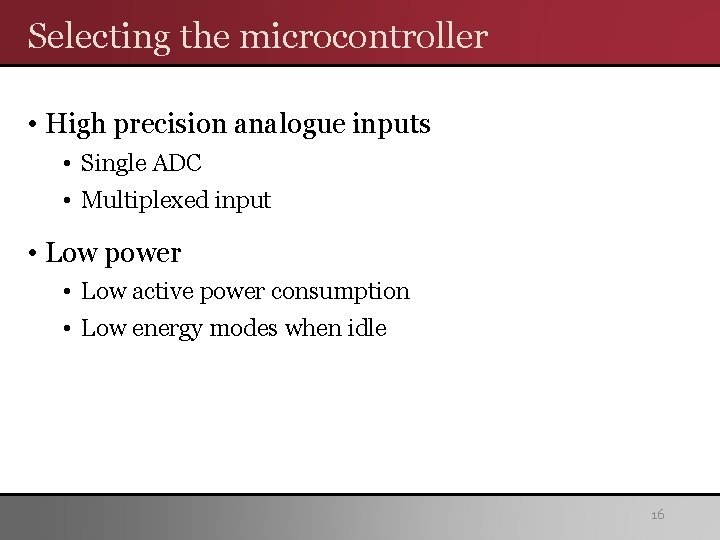
Selecting the microcontroller • High precision analogue inputs • Single ADC • Multiplexed input • Low power • Low active power consumption • Low energy modes when idle 16
Comparing selected microcontrollers C 8051 F 410 EFM 32 Wonder Gecko Architecture 8 bit, 8051 32 bit, ARM Cortex M 4 ADC 12 bit Real-time clock yes RAM 2368 byte 32 Ki. B Flash 32 Ki. B 256 Ki. B DSP instructions no yes Current consumption 160 µA / MHz 225 µA / MHz 17
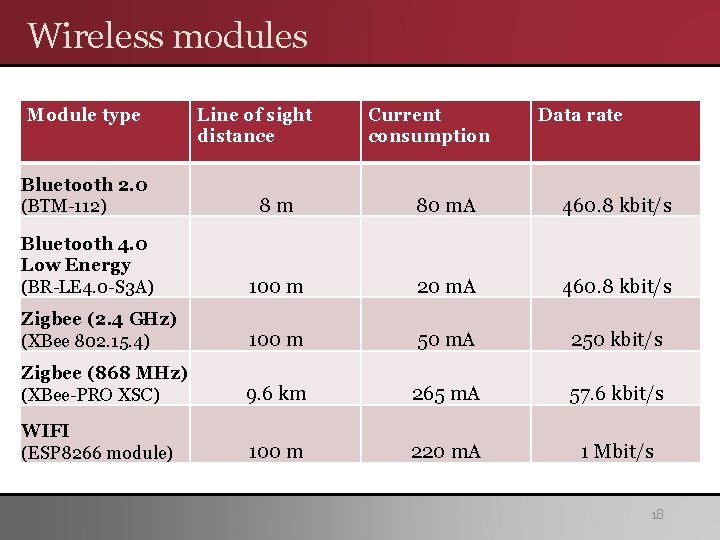
Wireless modules Module type Line of sight distance Current consumption Data rate Bluetooth 2. 0 (BTM-112) 8 m 80 m. A 460. 8 kbit/s Bluetooth 4. 0 Low Energy (BR-LE 4. 0 -S 3 A) 100 m 20 m. A 460. 8 kbit/s Zigbee (2. 4 GHz) (XBee 802. 15. 4) 100 m 50 m. A 250 kbit/s Zigbee (868 MHz) (XBee-PRO XSC) 9. 6 km 265 m. A 57. 6 kbit/s WIFI (ESP 8266 module) 100 m 220 m. A 1 Mbit/s 18
Digital signal processing and pattern recognition 19
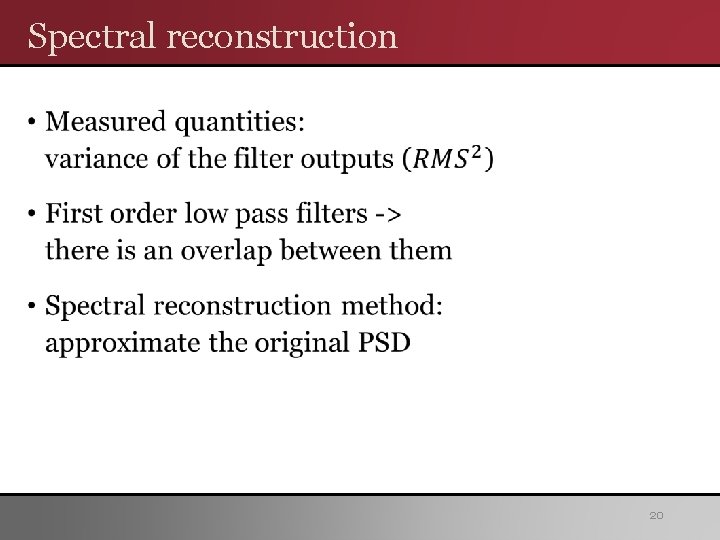
Spectral reconstruction • 20
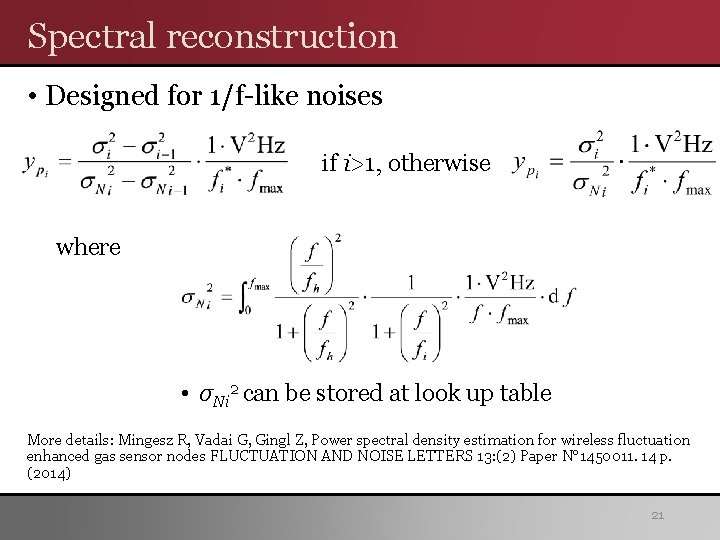
Spectral reconstruction • Designed for 1/f-like noises if i>1, otherwise where • σNi 2 can be stored at look up table More details: Mingesz R, Vadai G, Gingl Z, Power spectral density estimation for wireless fluctuation enhanced gas sensor nodes FLUCTUATION AND NOISE LETTERS 13: (2) Paper N° 1450011. 14 p. (2014) 21
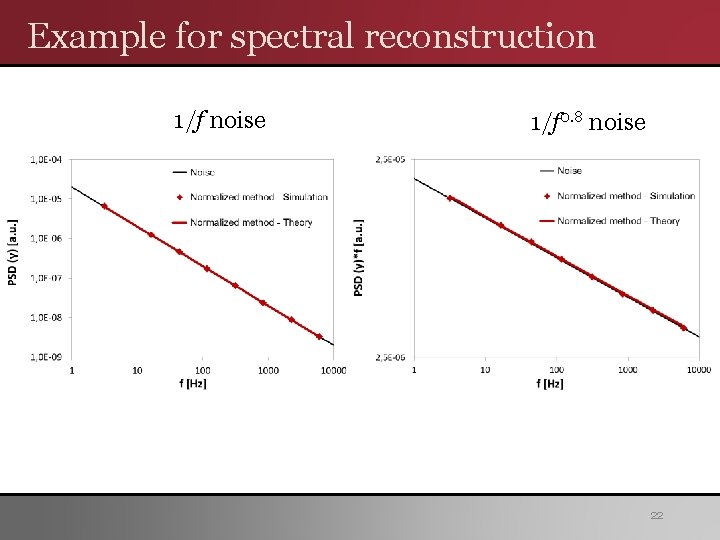
Example for spectral reconstruction 1/f noise 1/f 0. 8 noise 22
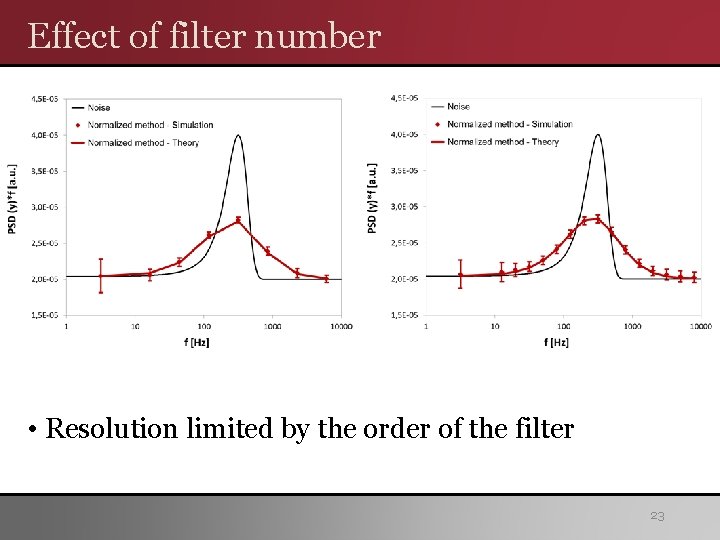
Effect of filter number • Resolution limited by the order of the filter 23
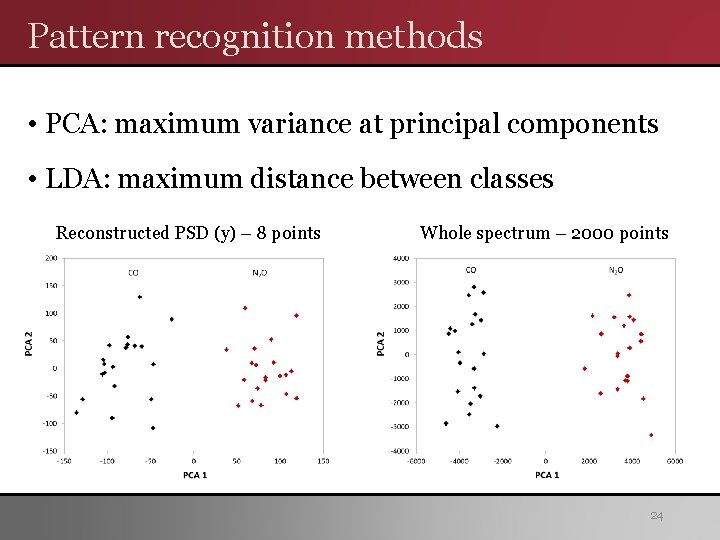
Pattern recognition methods • PCA: maximum variance at principal components • LDA: maximum distance between classes Reconstructed PSD (y) – 8 points Whole spectrum – 2000 points 24
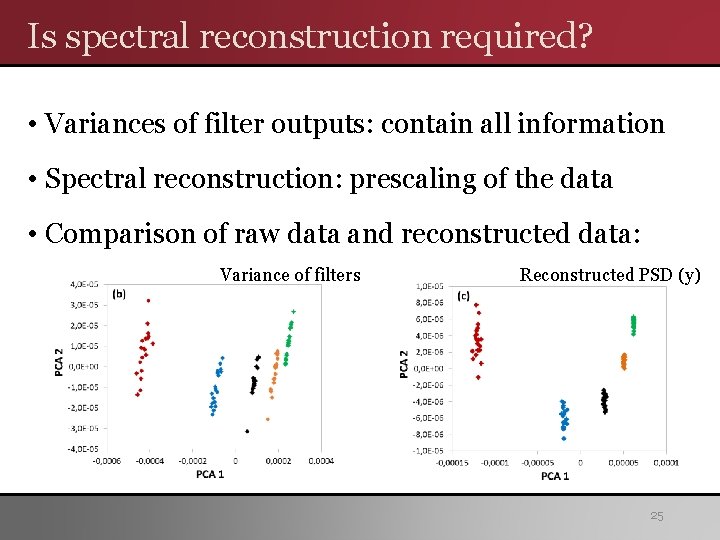
Is spectral reconstruction required? • Variances of filter outputs: contain all information • Spectral reconstruction: prescaling of the data • Comparison of raw data and reconstructed data: Variance of filters Reconstructed PSD (y) 25
Implementation of gas identification • Teaching phase and calibration before installation • Pattern recognition: only final phase is performed by the node • Decision by the sensor node Alternative: • Sensor sends the RMS values to the cloud server • Server performs the pattern recognition and decision 26
Optimizing power consumption 27
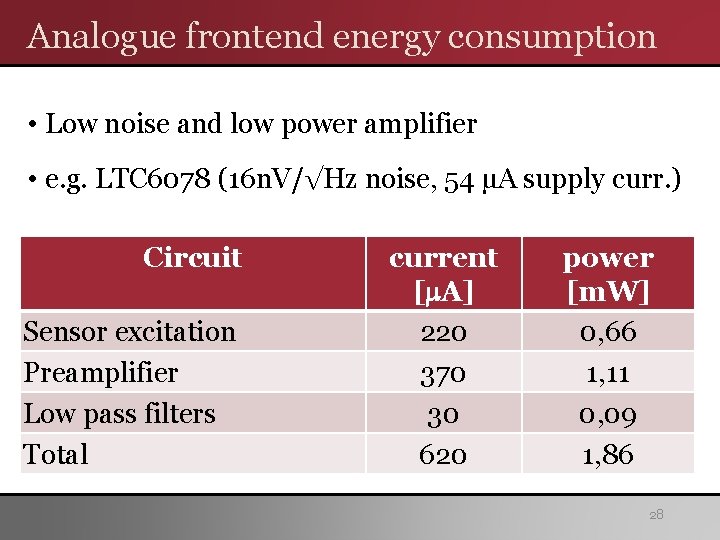
Analogue frontend energy consumption • Low noise and low power amplifier • e. g. LTC 6078 (16 n. V/√Hz noise, 54 μA supply curr. ) Circuit Sensor excitation Preamplifier Low pass filters Total current [ A] 220 370 30 620 power [m. W] 0, 66 1, 11 0, 09 1, 86 28
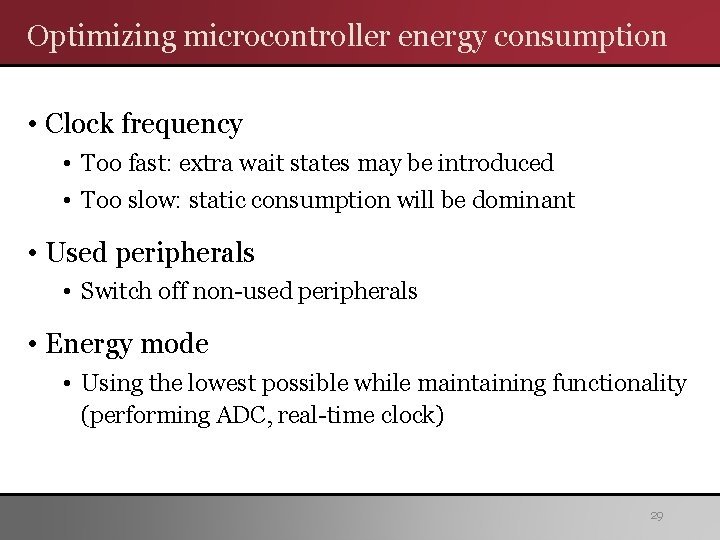
Optimizing microcontroller energy consumption • Clock frequency • Too fast: extra wait states may be introduced • Too slow: static consumption will be dominant • Used peripherals • Switch off non-used peripherals • Energy mode • Using the lowest possible while maintaining functionality (performing ADC, real-time clock) 29
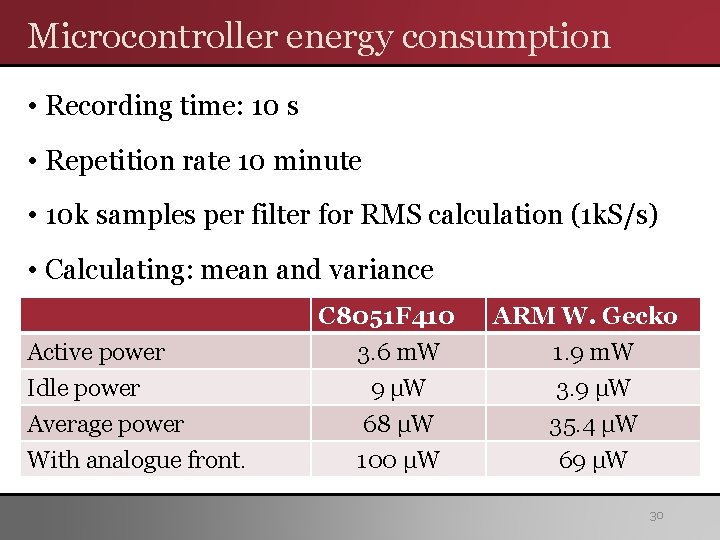
Microcontroller energy consumption • Recording time: 10 s • Repetition rate 10 minute • 10 k samples per filter for RMS calculation (1 k. S/s) • Calculating: mean and variance Active power Idle power Average power With analogue front. C 8051 F 410 3. 6 m. W 9 µW 68 µW 100 µW ARM W. Gecko 1. 9 m. W 3. 9 µW 35. 4 µW 69 µW 30
Energy harvesting • Suitable for low power devices • Harvested power: not constant • Possibilities: • • Light (solar cells) Vibration/motor Thermal RF • Harvested power: 0. 1 µW/cm – 100 µW/cm 31
Conclusion 32
Conclusions • Complete solution for FES gas sensing • High accuracy and sensitivity • Sensor node: • Low power (average consumption 100 µW) • Low cost ($30 component cost) • Compact (75 mm x 35 mm) • General purpose applications 33
Applications • FES gas sensing • gas detecting • bacterial odor sensing • replacement of bulky and expensive setups • Supports using noise as a diagnostic tool • electronic device degradation • General purpose power spectrum estimation • Suitable for WSN and Io. T 34
Acknowledgments • The presentation is supported by the European Union and co -funded by the European Social Fund. Project title: “Telemedicine-focused research activities on the field of Mathematics, Informatics and Medical sciences” Project number: TÁMOP-4. 2. 2. A-11/1/KONV-2012 -0073. • This research was supported by the European Union and the State of Hungary, co-financed by the European Social Fund in the framework of TÁMOP 4. 2. 4. A/2 -11 -1 -2012 -0001 ‘National Excellence Program’. 35
Thank you for your attention! More information: http: //www. noise. inf. u-szeged. hu/Research/fes/ 36