
Low Latency Rendering with Dataflow Architectures Eng D

- Slides: 14
Low Latency Rendering with Dataflow Architectures Eng. D Project Sebastian Friston Supervisor: Anthony Steed
Motivation: latency in virtual environments • Latency is the time between a user’s action and the response to this action • Latency in VR reduces sensory coherence – This coherence is key for creating a sense of presence • Latencies of 10 -16 ms have been shown to have a significant negative effect – Latencies under 5 ms can be detected though
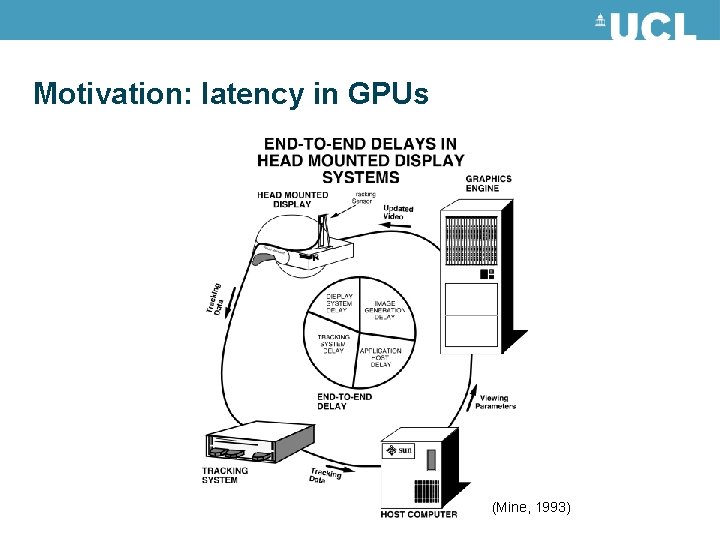
Motivation: latency in GPUs (Mine, 1993)
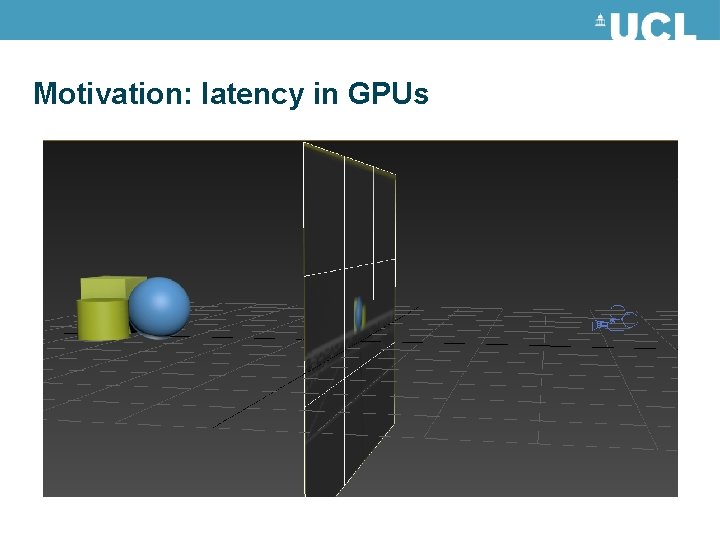
Motivation: latency in GPUs
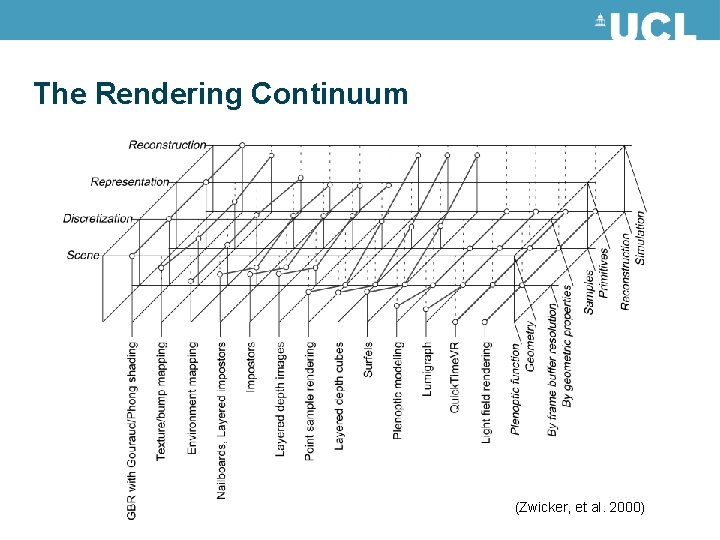
The Rendering Continuum (Zwicker, et al. 2000)
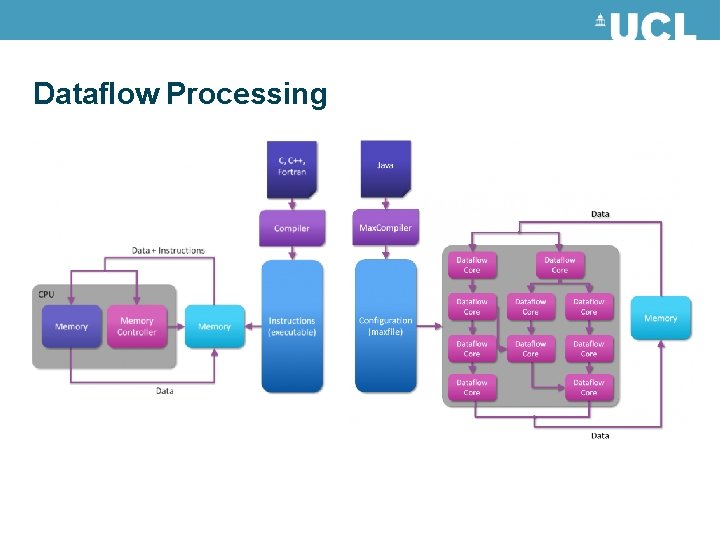
Dataflow Processing
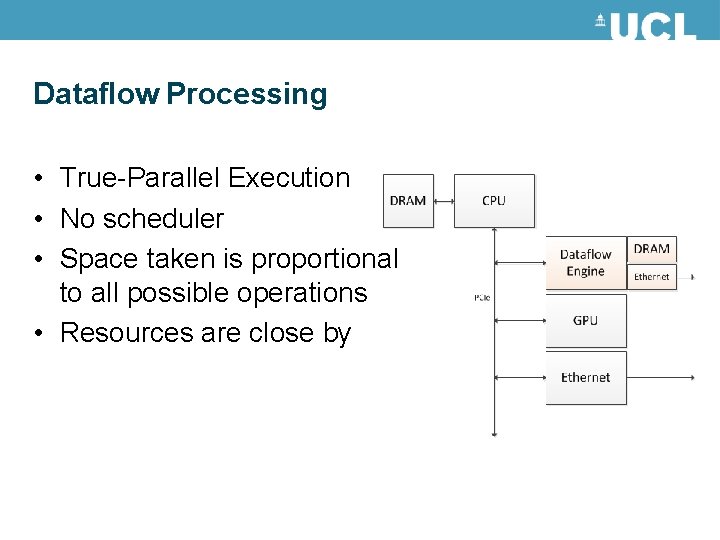
Dataflow Processing • True-Parallel Execution • No scheduler • Space taken is proportional to all possible operations • Resources are close by
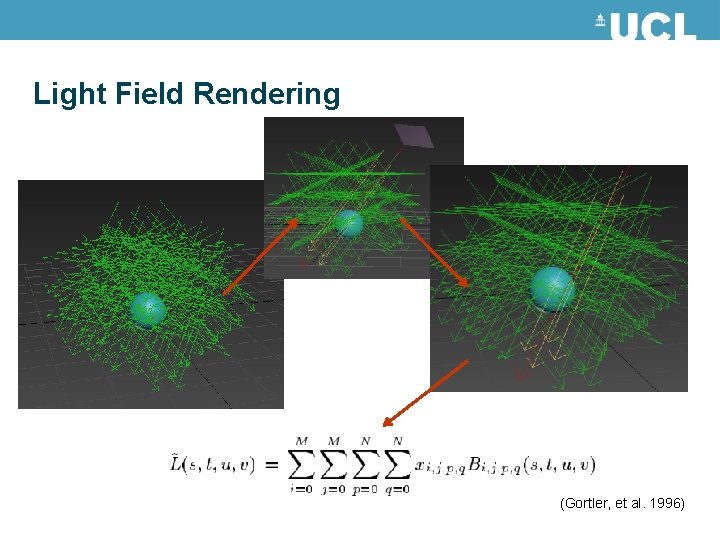
Light Field Rendering (Gortler, et al. 1996)
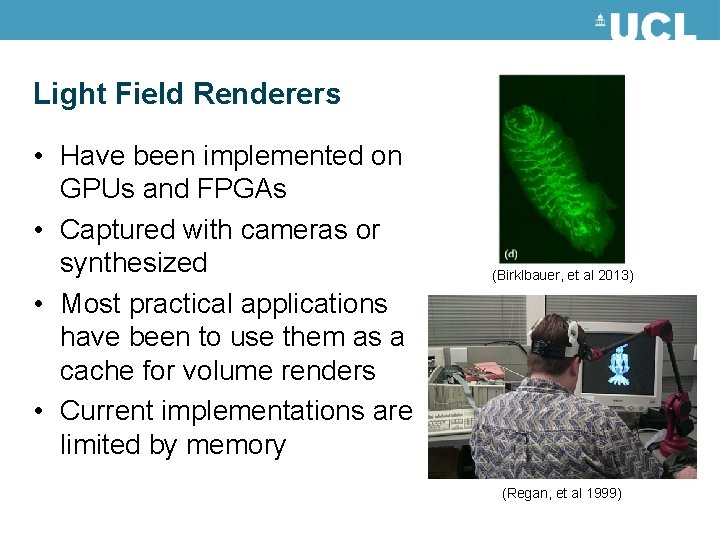
Light Field Renderers • Have been implemented on GPUs and FPGAs • Captured with cameras or synthesized • Most practical applications have been to use them as a cache for volume renders • Current implementations are limited by memory (Birklbauer, et al 2013) (Regan, et al 1999)
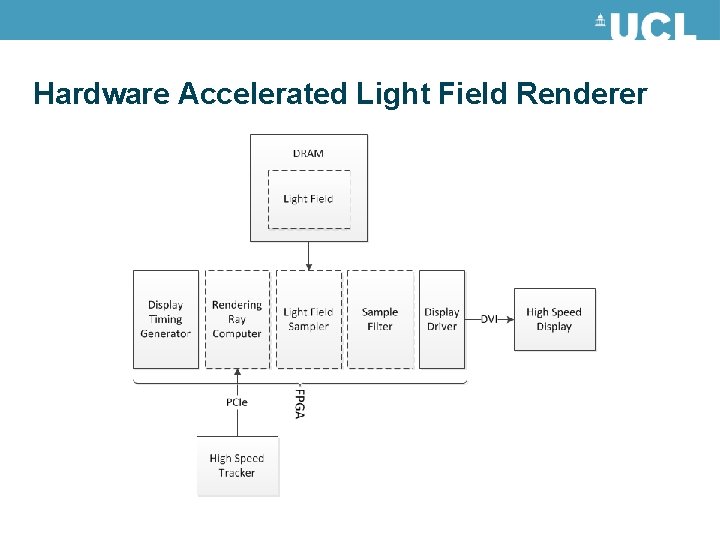
Hardware Accelerated Light Field Renderer
Validation and Complications • Validate our renderer with latency interaction experiment – Possibly investigate phenomena where scale is hard to judge in VR – Possibly continue studies into detection during head rotations • Display will be difficult – Current displays have latencies of ~6 ms
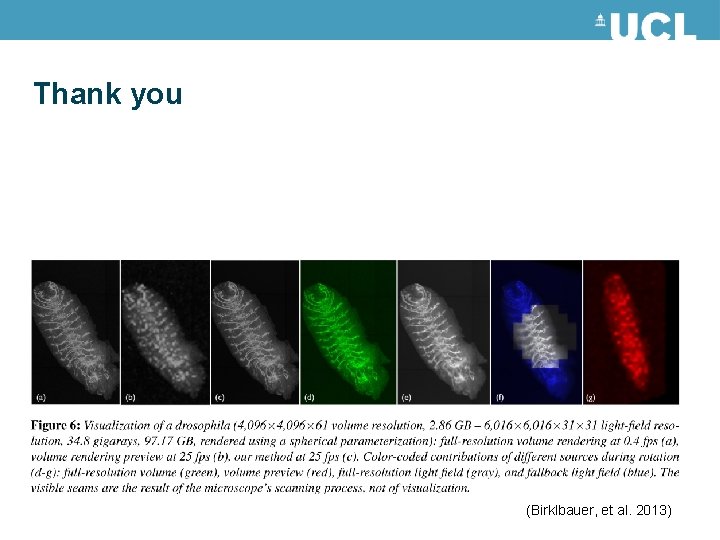
Thank you (Birklbauer, et al. 2013)
References • • • Mine, M. R. (1993). Characterization of end-to-end delays in head-mounted display systems. University of North Carolina at Chapel Hill Zwicker, M. , Gross, M. , & Pfister, H. (2000). A Survey and Classification of Real Time Rendering Methods. Birklbauer, C. , Opelt, S. , & Bimber, O. (2013). Rendering Gigaray Light Fields. Computer Graphics Forum, 32(2 pt 4), 469– 478. doi: 10. 1111/cgf. 12067 Gortler, S. J. , Grzeszczuk, R. , Szeliski, R. , & Cohen, M. F. (1996). The lumigraph. In Proceedings of the 23 rd annual conference on Computer graphics and interactive techniques - SIGGRAPH ’ 96 (pp. 43– 54). New York, USA: ACM Press. doi: 10. 1145/237170. 237200 Regan, M. J. P. , Miller, G. S. P. , Rubin, S. M. , & Kogelnik, C. (1999). A real-time lowlatency hardware light-field renderer. In Proceedings of the 26 th annual conference on Computer graphics and interactive techniques - SIGGRAPH ’ 99 (pp. 287– 290). New York, USA: ACM Press. doi: 10. 1145/311535. 311569