
Low Impact Development Principles Techniques and Implementation Slide



- Slides: 59
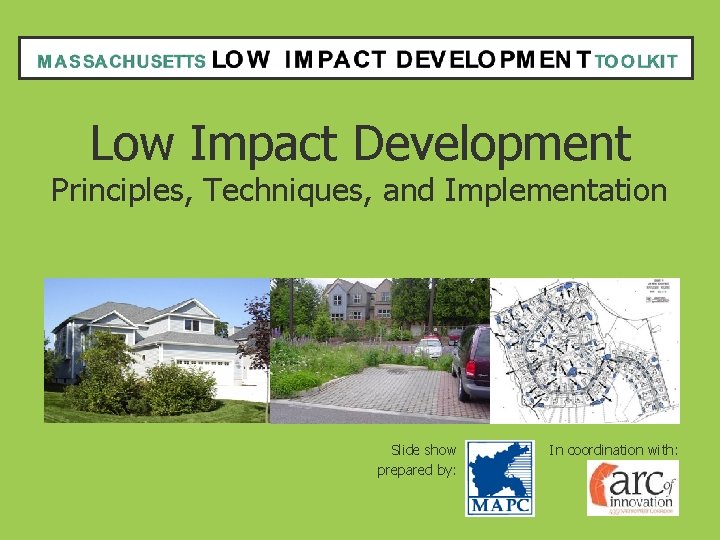
Low Impact Development Principles, Techniques, and Implementation Slide show prepared by: In coordination with:
Presentation Outline • What is Low Impact Development? • Why do we need LID? • Low Impact Development Principles • Low Impact Development Techniques • Benefits of LID • Local Implementation & Considerations
What is Low Impact Development? • Comprehensive, landscape-based approach to sustainable development • Set of strategies to maintain existing natural systems, hydrology, ecology • Cost-effective, flexible approach based on a toolkit of simple techniques • Collection of practices that have been implemented nationwide
What is Low Impact Development? • NOT rocket science • NOT formulaic • NOT the answer to every challenge • NOT yet finished evolving • NOT common in Massachusetts
WHY DO WE NEED LOW IMPACT DEVELOPMENT? Conventional strategies aren’t working • Increased runoff & decreased recharge • Loss of vegetation and wildlife habitat • Loss of community character • Polluted waterways • Cost of development
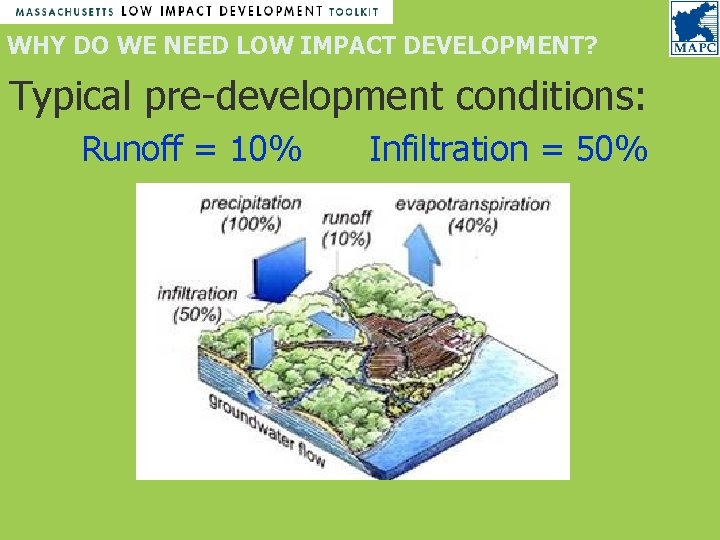
WHY DO WE NEED LOW IMPACT DEVELOPMENT? Typical pre-development conditions: Runoff = 10% Infiltration = 50%
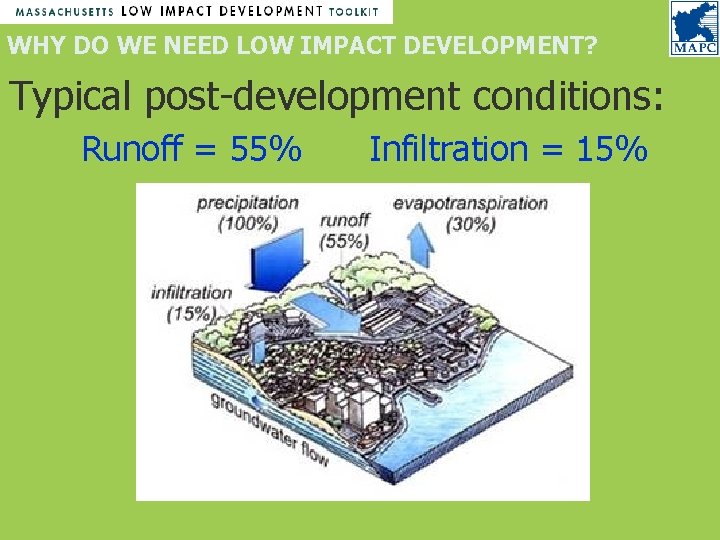
WHY DO WE NEED LOW IMPACT DEVELOPMENT? Typical post-development conditions: Runoff = 55% Infiltration = 15%
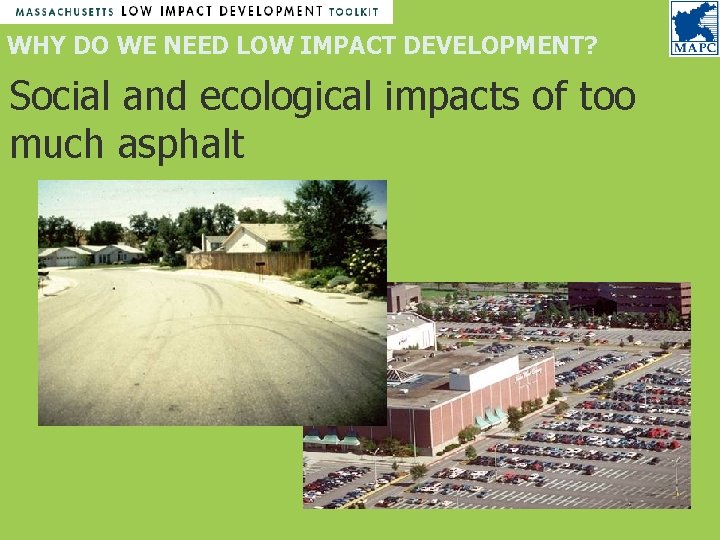
WHY DO WE NEED LOW IMPACT DEVELOPMENT? Social and ecological impacts of too much asphalt
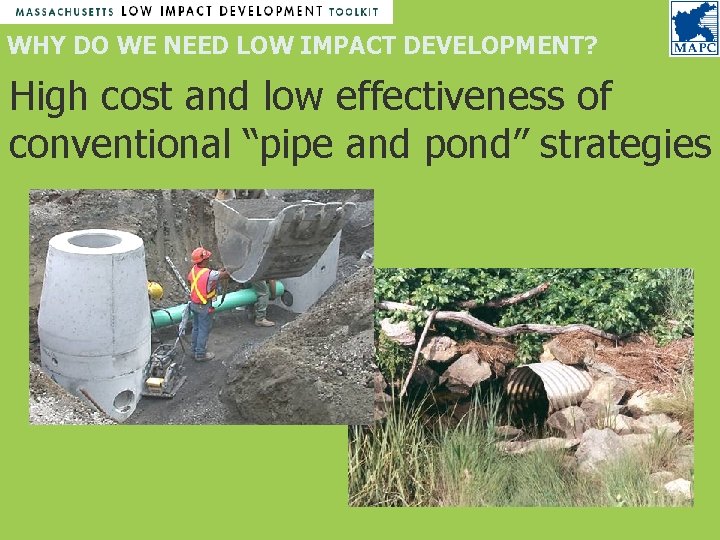
WHY DO WE NEED LOW IMPACT DEVELOPMENT? High cost and low effectiveness of conventional “pipe and pond” strategies
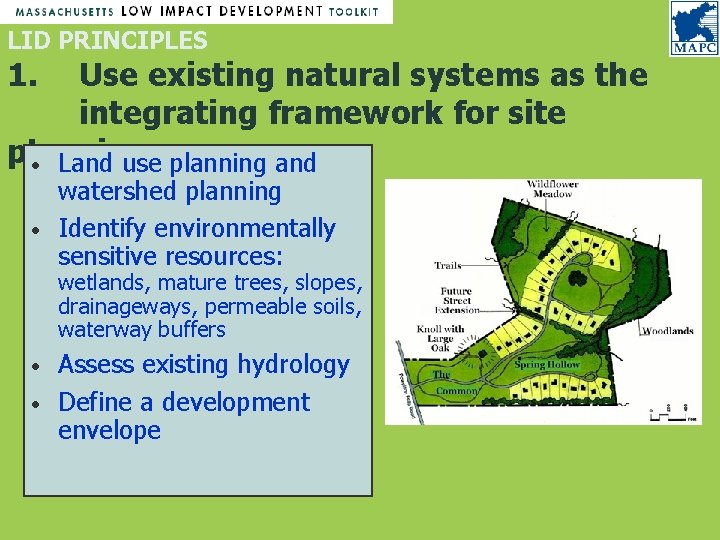
LID PRINCIPLES 1. Use existing natural systems as the integrating framework for site planning • Land use planning and watershed planning • Identify environmentally sensitive resources: wetlands, mature trees, slopes, drainageways, permeable soils, waterway buffers Assess existing hydrology • Define a development envelope •
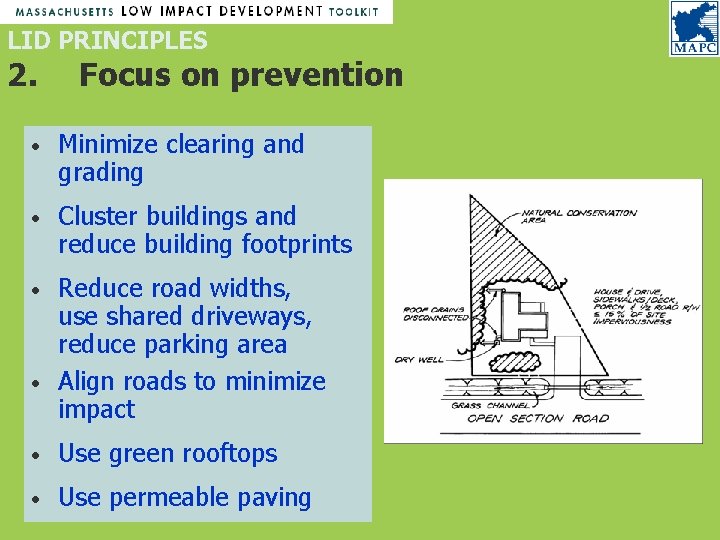
LID PRINCIPLES 2. Focus on prevention • Minimize clearing and grading • Cluster buildings and reduce building footprints Reduce road widths, use shared driveways, reduce parking area • Align roads to minimize impact • • Use green rooftops • Use permeable paving
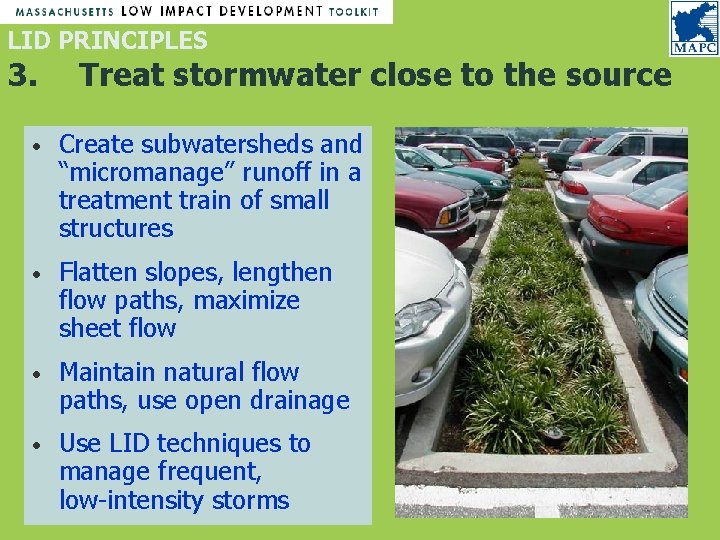
LID PRINCIPLES 3. Treat stormwater close to the source • Create subwatersheds and “micromanage” runoff in a treatment train of small structures • Flatten slopes, lengthen flow paths, maximize sheet flow • Maintain natural flow paths, use open drainage • Use LID techniques to manage frequent, low-intensity storms
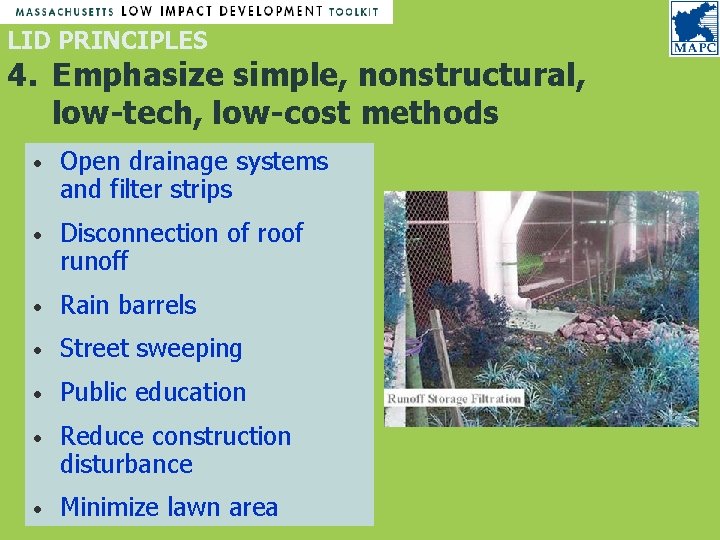
LID PRINCIPLES 4. Emphasize simple, nonstructural, low-tech, low-cost methods • Open drainage systems and filter strips • Disconnection of roof runoff • Rain barrels • Street sweeping • Public education • Reduce construction disturbance • Minimize lawn area
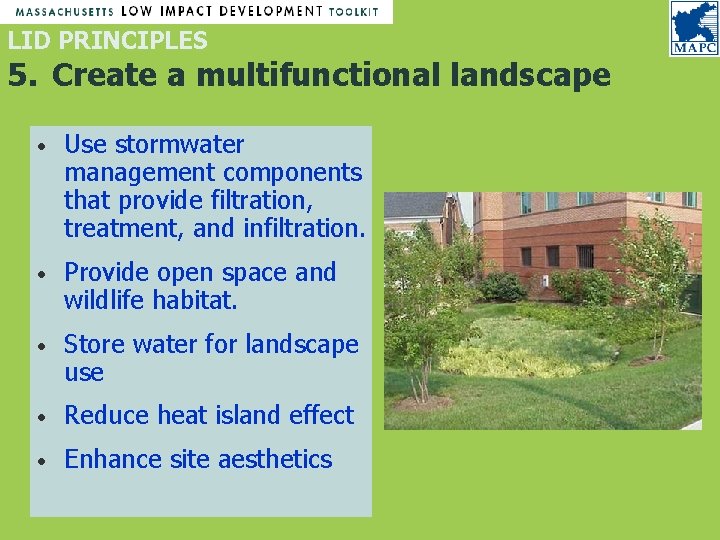
LID PRINCIPLES 5. Create a multifunctional landscape • Use stormwater management components that provide filtration, treatment, and infiltration. • Provide open space and wildlife habitat. • Store water for landscape use • Reduce heat island effect • Enhance site aesthetics
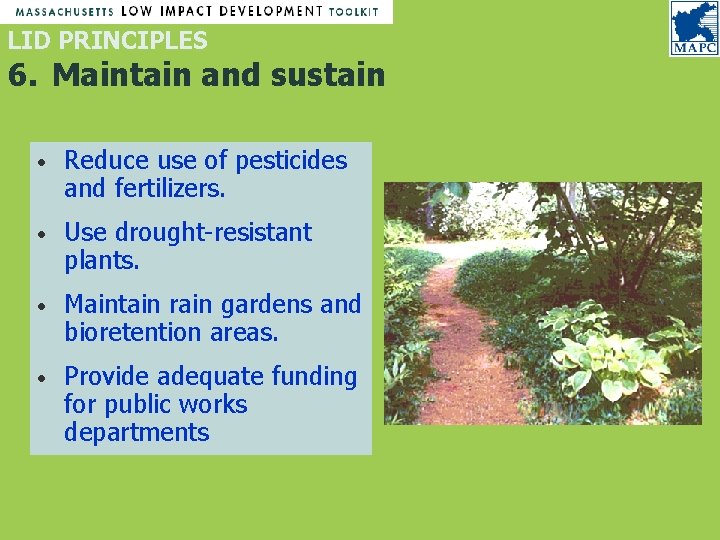
LID PRINCIPLES 6. Maintain and sustain • Reduce use of pesticides and fertilizers. • Use drought-resistant plants. • Maintain rain gardens and bioretention areas. • Provide adequate funding for public works departments
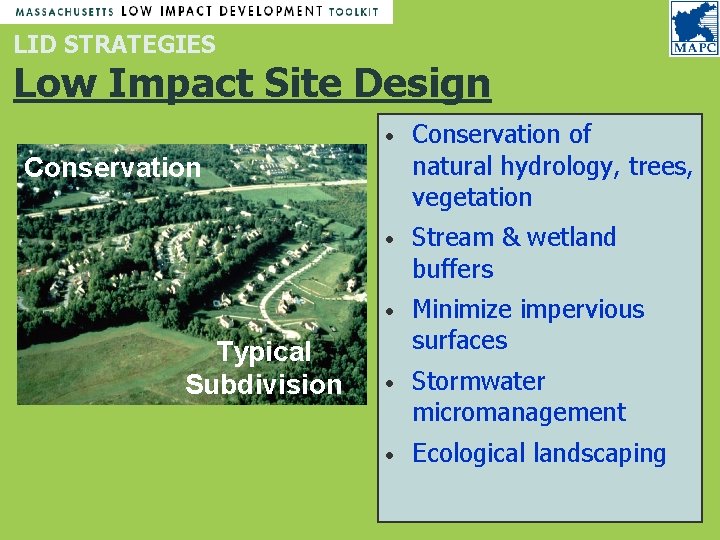
LID STRATEGIES Low Impact Site Design • Conservation of natural hydrology, trees, vegetation • Stream & wetland buffers • Minimize impervious surfaces • Stormwater micromanagement • Ecological landscaping Conservation Typical Subdivision
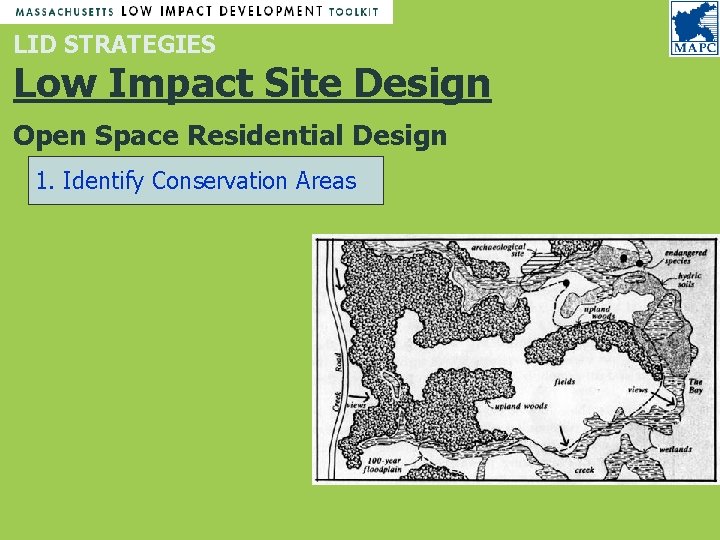
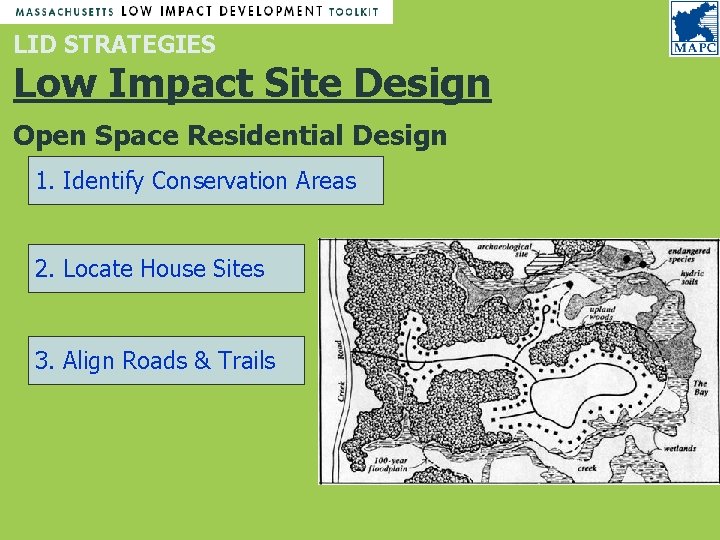
LID STRATEGIES Low Impact Site Design Open Space Residential Design 1. Identify Conservation Areas
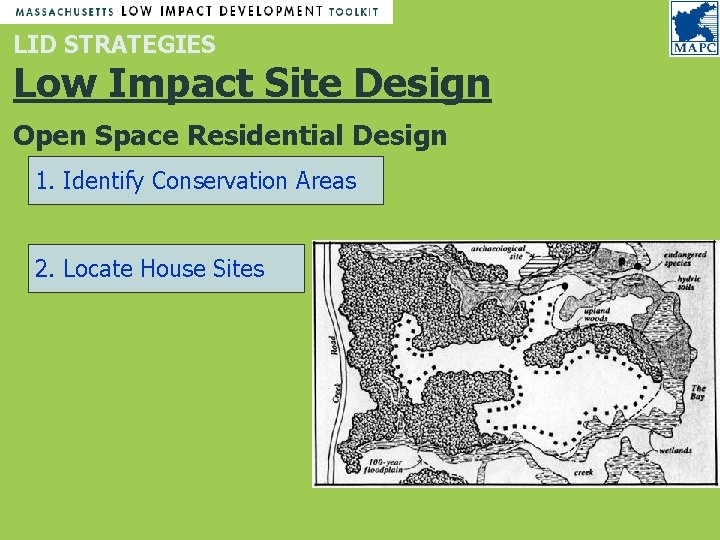
LID STRATEGIES Low Impact Site Design Open Space Residential Design 1. Identify Conservation Areas 2. Locate House Sites
LID STRATEGIES Low Impact Site Design Open Space Residential Design 1. Identify Conservation Areas 2. Locate House Sites 3. Align Roads & Trails
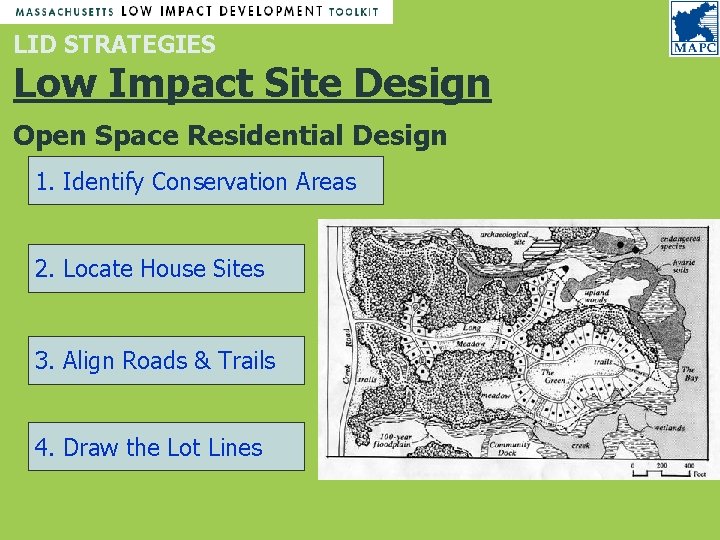
LID STRATEGIES Low Impact Site Design Open Space Residential Design 1. Identify Conservation Areas 2. Locate House Sites 3. Align Roads & Trails 4. Draw the Lot Lines
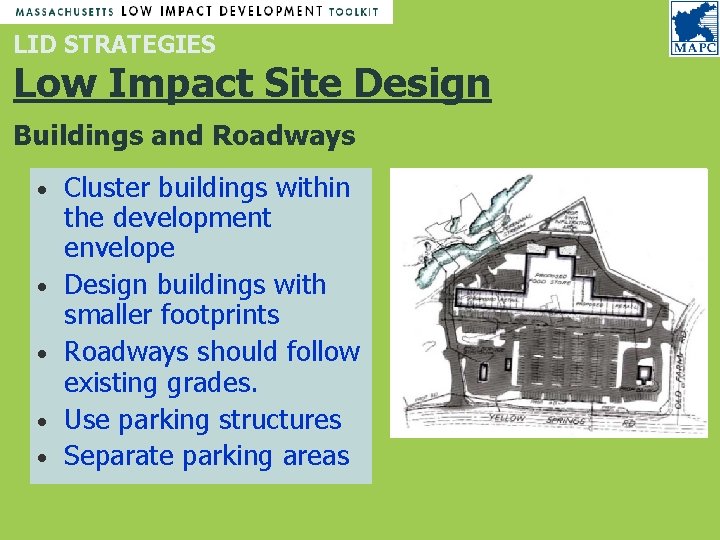
LID STRATEGIES Low Impact Site Design Buildings and Roadways • • • Cluster buildings within the development envelope Design buildings with smaller footprints Roadways should follow existing grades. Use parking structures Separate parking areas
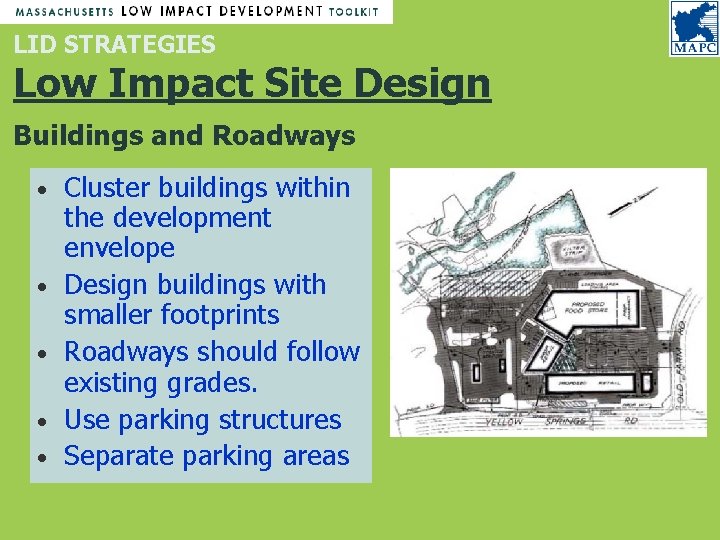
LID STRATEGIES Low Impact Site Design Buildings and Roadways • • • Cluster buildings within the development envelope Design buildings with smaller footprints Roadways should follow existing grades. Use parking structures Separate parking areas
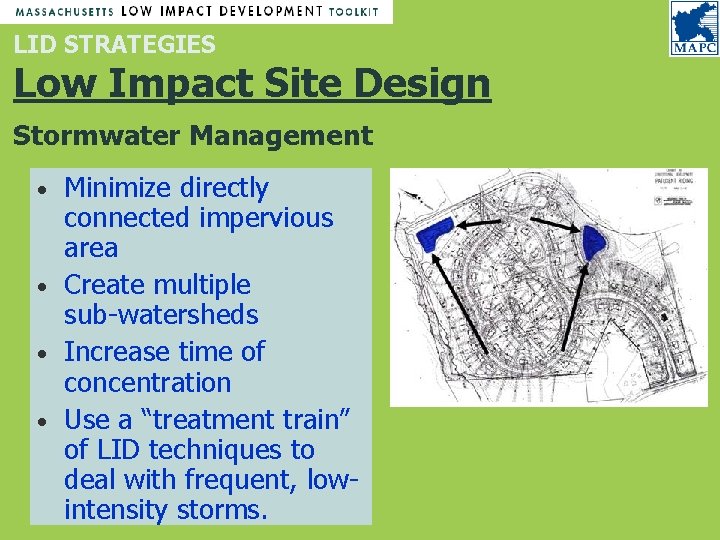
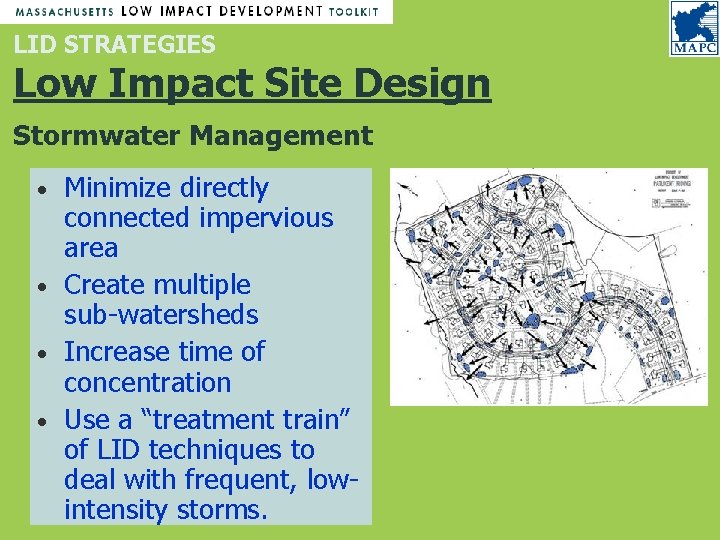
LID STRATEGIES Low Impact Site Design Stormwater Management Minimize directly connected impervious area • Create multiple sub-watersheds • Increase time of concentration • Use a “treatment train” of LID techniques to deal with frequent, lowintensity storms. •
LID STRATEGIES Low Impact Site Design Stormwater Management Minimize directly connected impervious area • Create multiple sub-watersheds • Increase time of concentration • Use a “treatment train” of LID techniques to deal with frequent, lowintensity storms. •
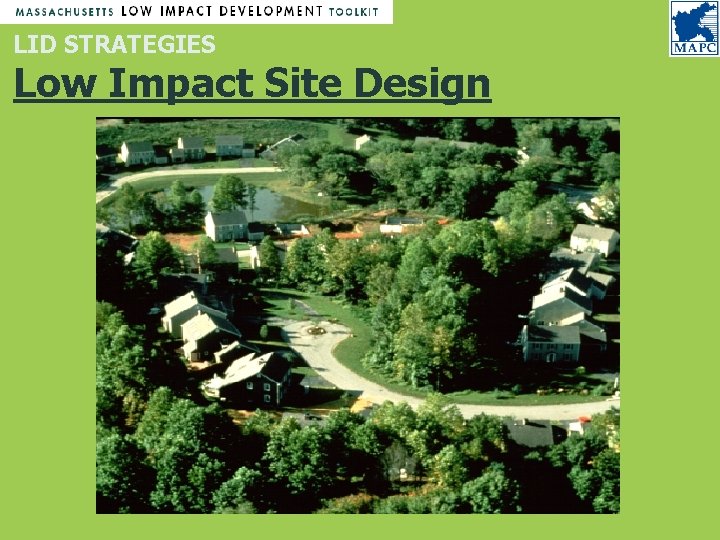
LID STRATEGIES Low Impact Site Design
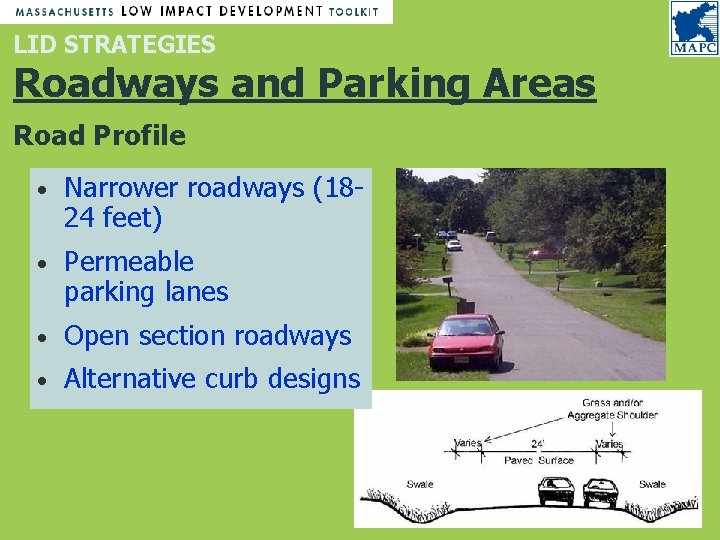
LID STRATEGIES Roadways and Parking Areas Road Profile • Narrower roadways (1824 feet) • Permeable parking lanes • Open section roadways • Alternative curb designs
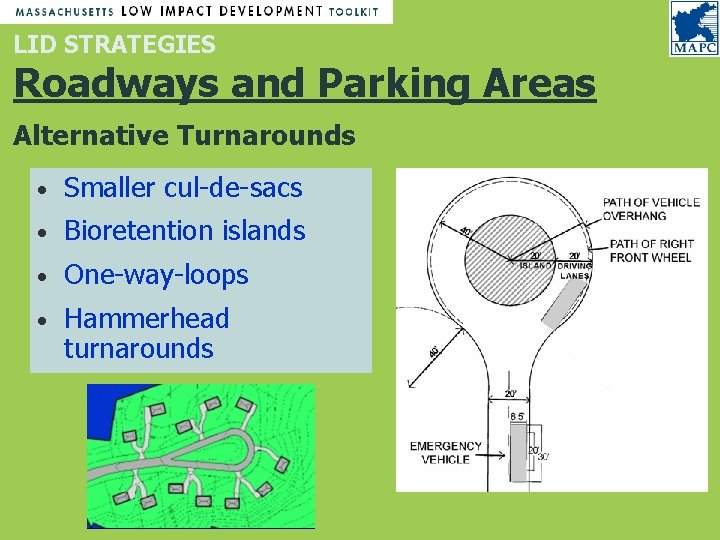
LID STRATEGIES Roadways and Parking Areas Alternative Turnarounds • Smaller cul-de-sacs • Bioretention islands • One-way-loops • Hammerhead turnarounds
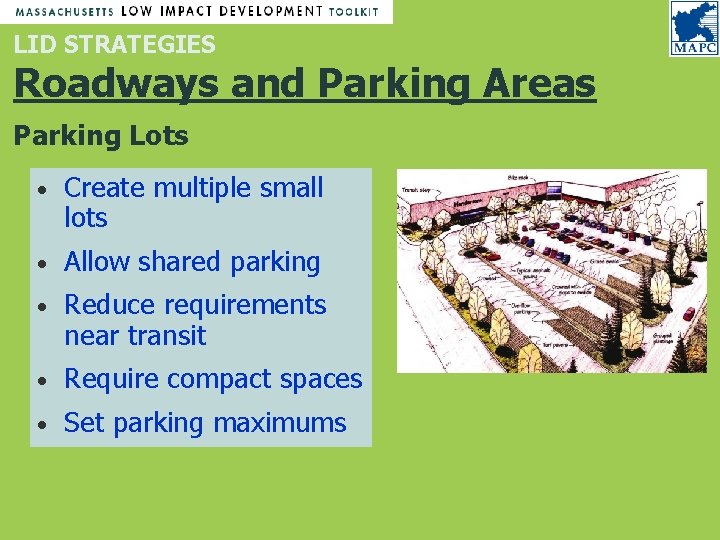
LID STRATEGIES Roadways and Parking Areas Parking Lots • Create multiple small lots • Allow shared parking • Reduce requirements near transit • Require compact spaces • Set parking maximums
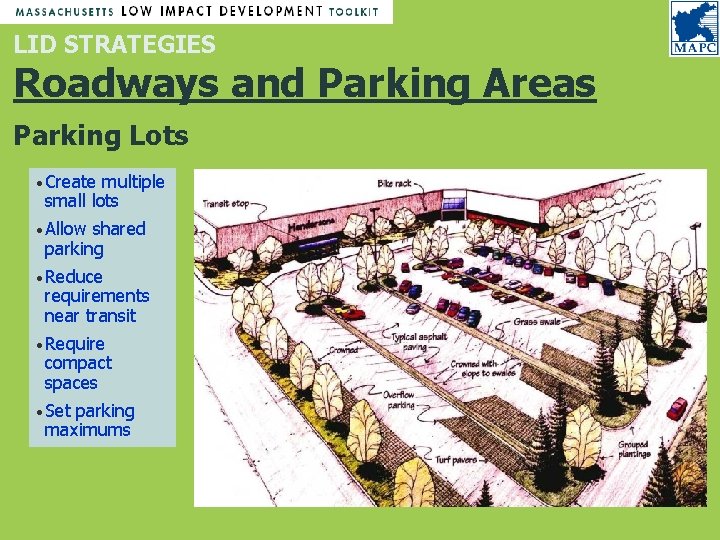
LID STRATEGIES Roadways and Parking Areas Parking Lots • Create multiple small lots • Allow shared parking • Reduce requirements near transit • Require compact spaces • Set parking maximums
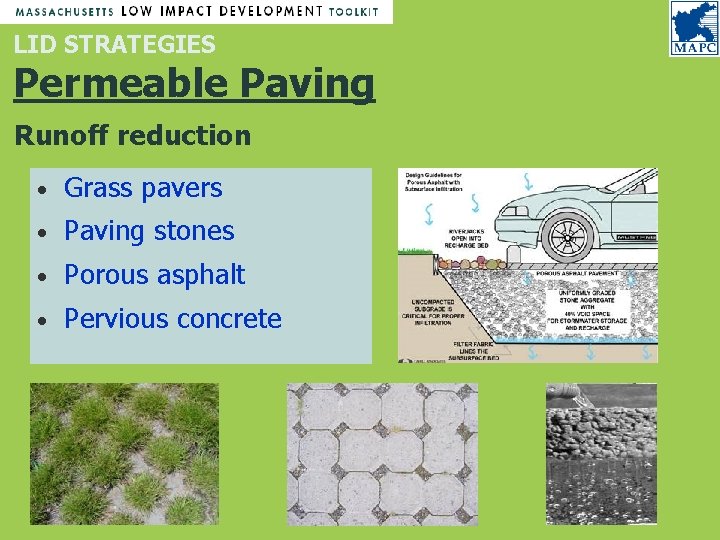
LID STRATEGIES Permeable Paving Runoff reduction • Grass pavers • Paving stones • Porous asphalt • Pervious concrete
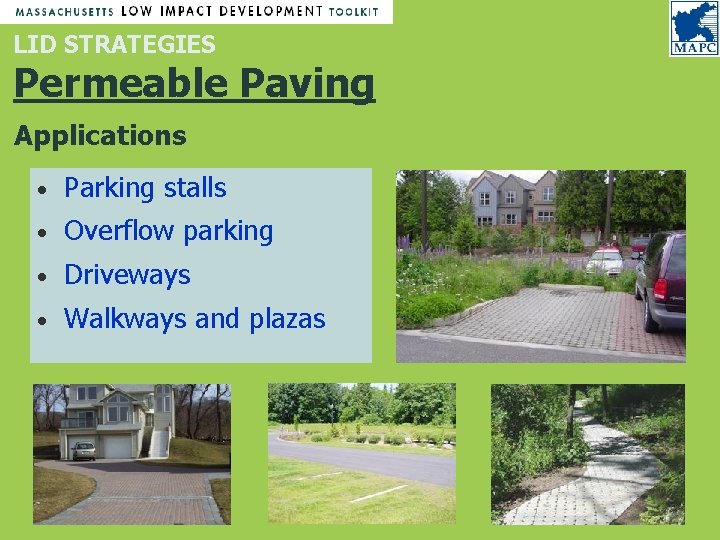
LID STRATEGIES Permeable Paving Applications • Parking stalls • Overflow parking • Driveways • Walkways and plazas
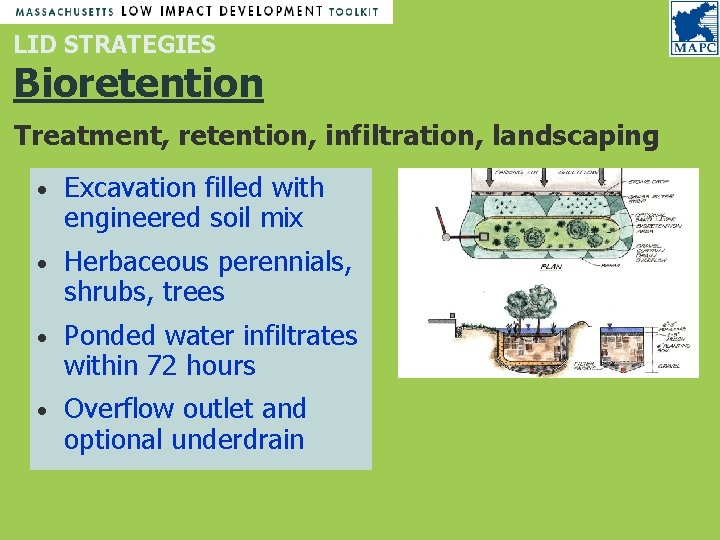
LID STRATEGIES Bioretention Treatment, retention, infiltration, landscaping • Excavation filled with engineered soil mix • Herbaceous perennials, shrubs, trees • Ponded water infiltrates within 72 hours • Overflow outlet and optional underdrain
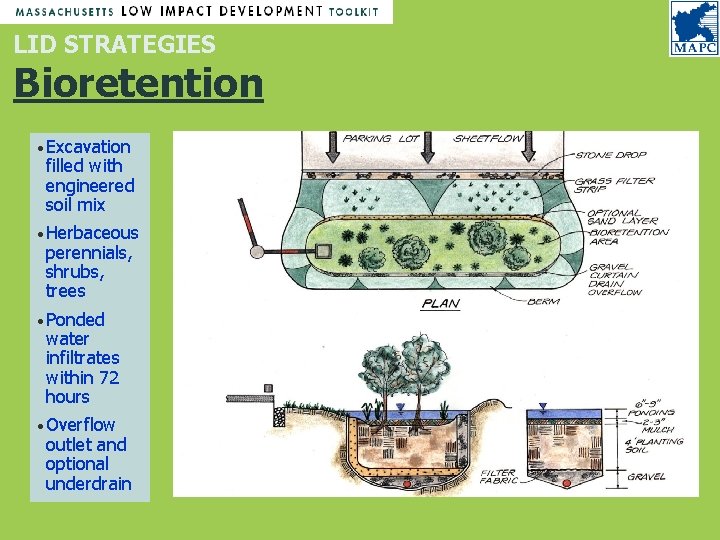
LID STRATEGIES Bioretention • Excavation filled with engineered soil mix • Herbaceous perennials, shrubs, trees • Ponded water infiltrates within 72 hours • Overflow outlet and optional underdrain
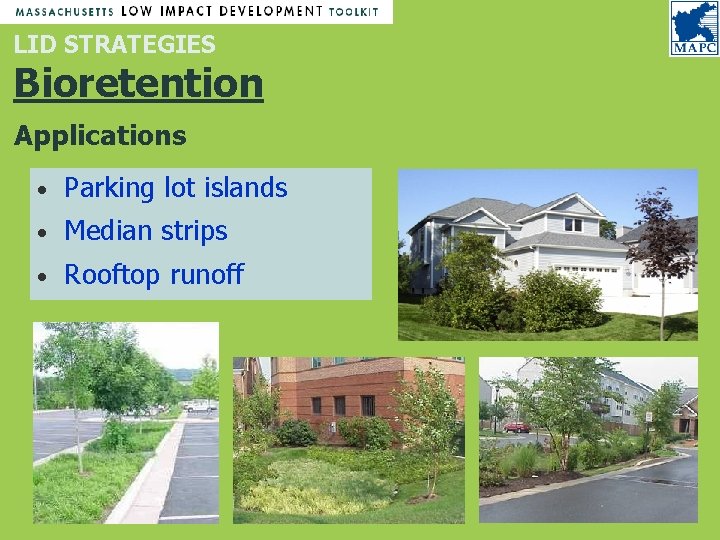
LID STRATEGIES Bioretention Applications • Parking lot islands • Median strips • Rooftop runoff
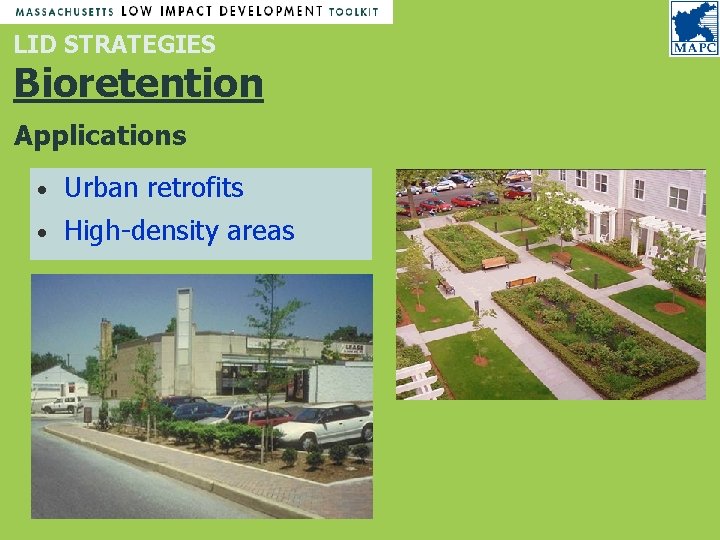
LID STRATEGIES Bioretention Applications • Urban retrofits • High-density areas
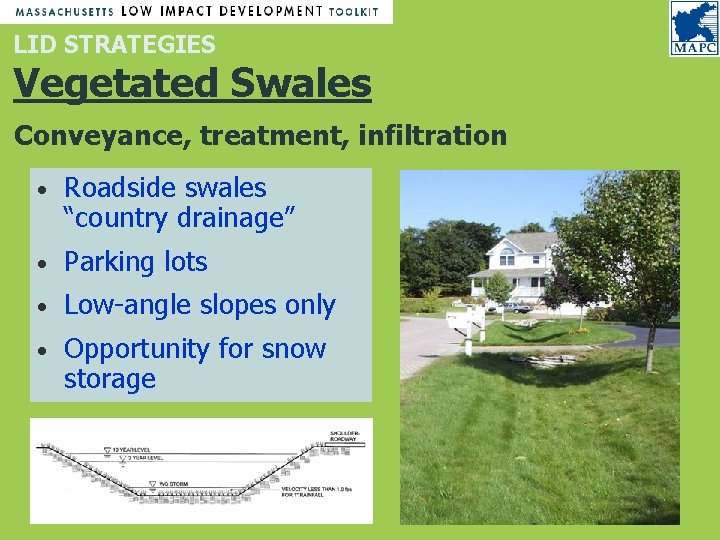
LID STRATEGIES Vegetated Swales Conveyance, treatment, infiltration • Roadside swales “country drainage” • Parking lots • Low-angle slopes only • Opportunity for snow storage
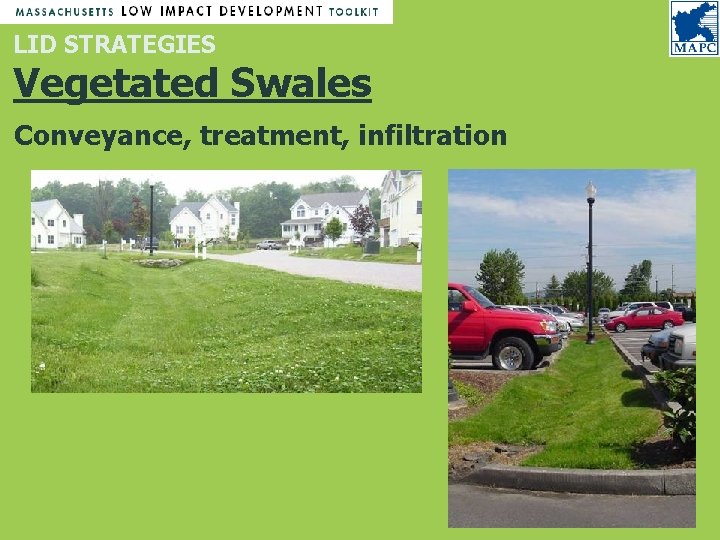
LID STRATEGIES Vegetated Swales Conveyance, treatment, infiltration
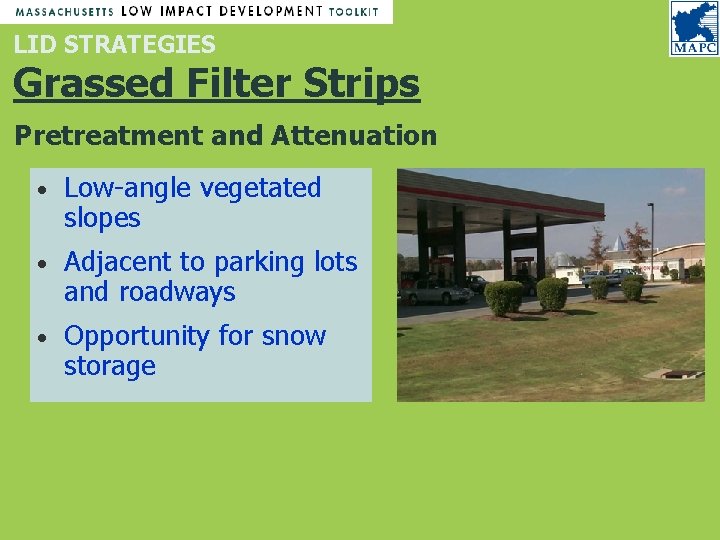
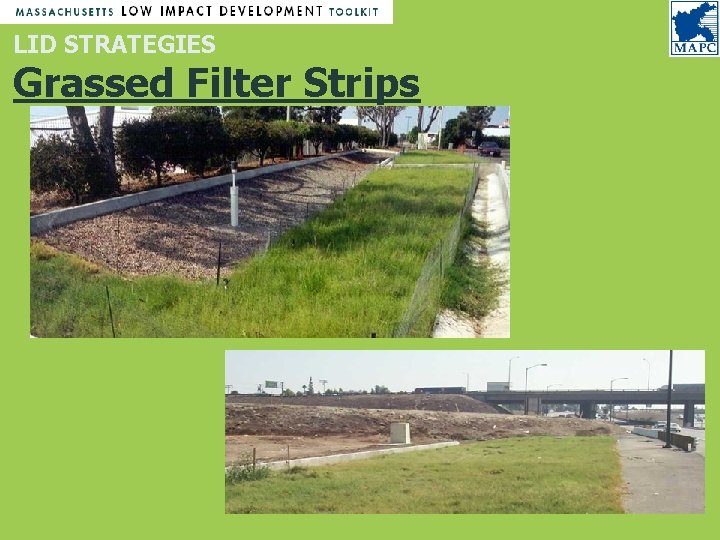
LID STRATEGIES Grassed Filter Strips Pretreatment and Attenuation • Low-angle vegetated slopes • Adjacent to parking lots and roadways • Opportunity for snow storage
LID STRATEGIES Grassed Filter Strips
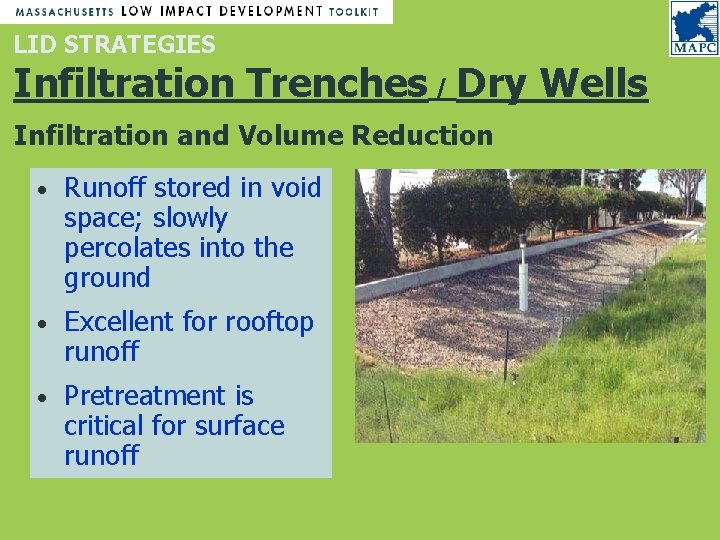
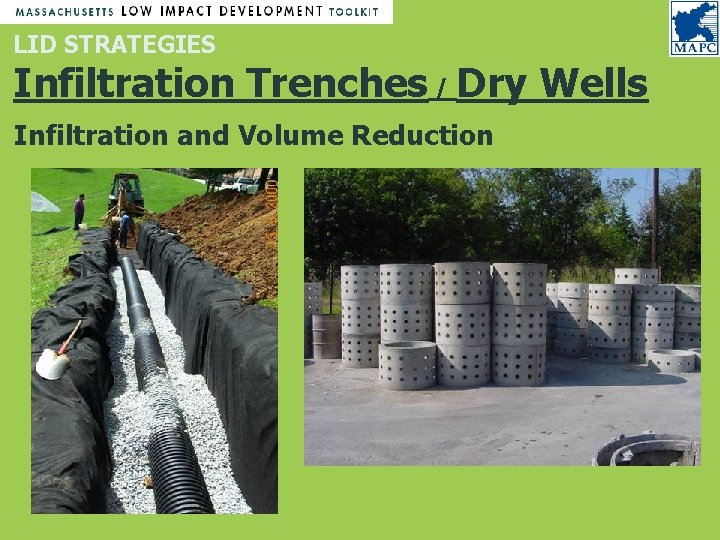
LID STRATEGIES Infiltration Trenches / Dry Wells Infiltration and Volume Reduction • Runoff stored in void space; slowly percolates into the ground • Excellent for rooftop runoff • Pretreatment is critical for surface runoff
LID STRATEGIES Infiltration Trenches / Dry Wells Infiltration and Volume Reduction
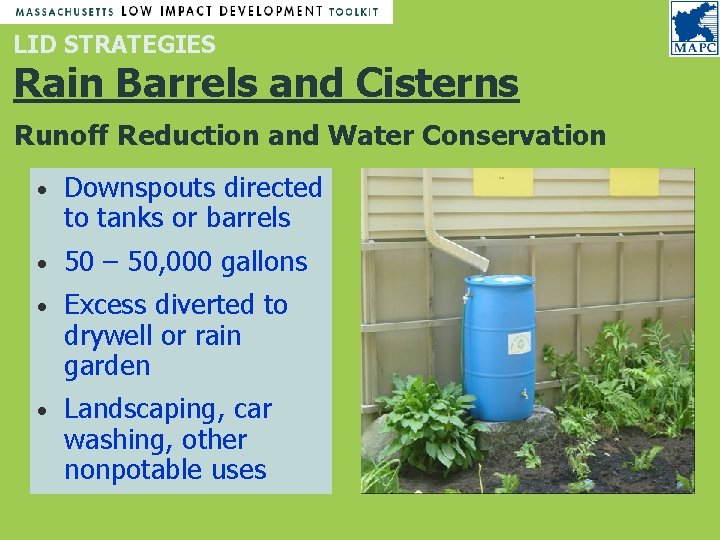
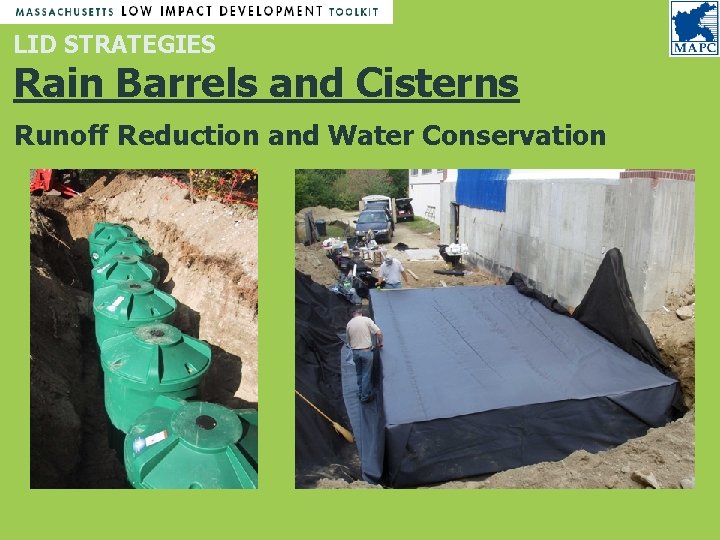
LID STRATEGIES Rain Barrels and Cisterns Runoff Reduction and Water Conservation • Downspouts directed to tanks or barrels • 50 – 50, 000 gallons • Excess diverted to drywell or rain garden • Landscaping, car washing, other nonpotable uses
LID STRATEGIES Rain Barrels and Cisterns Runoff Reduction and Water Conservation
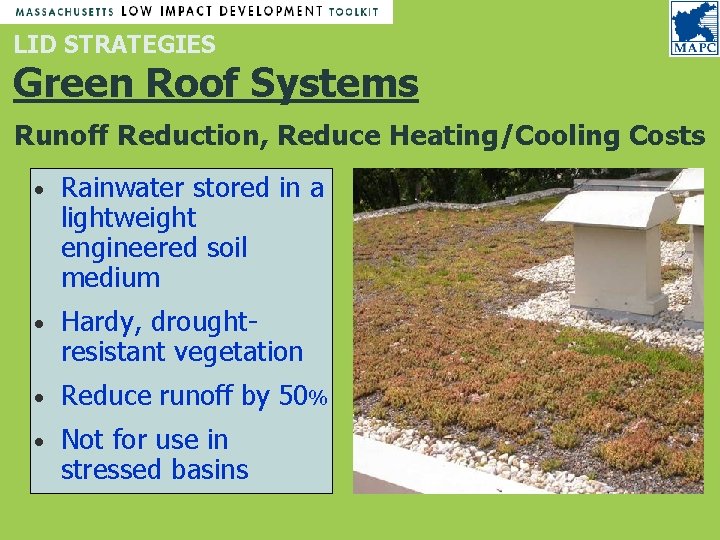
LID STRATEGIES Green Roof Systems Runoff Reduction, Reduce Heating/Cooling Costs • Rainwater stored in a lightweight engineered soil medium • Hardy, droughtresistant vegetation • Reduce runoff by 50% • Not for use in stressed basins
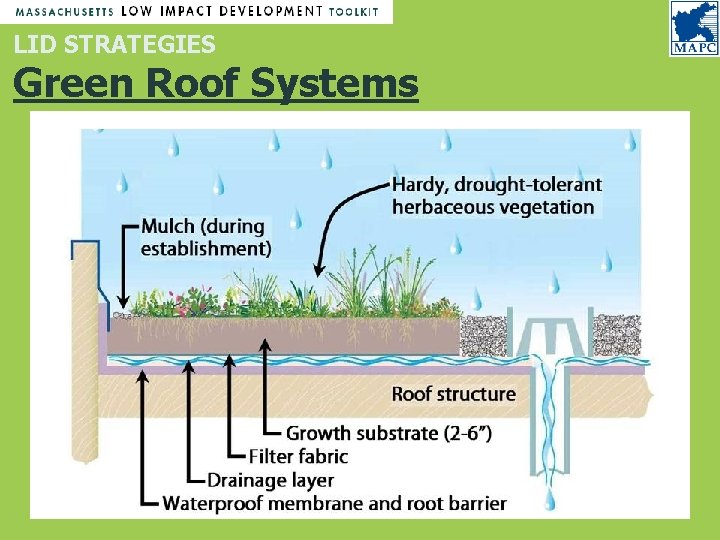
LID STRATEGIES Green Roof Systems
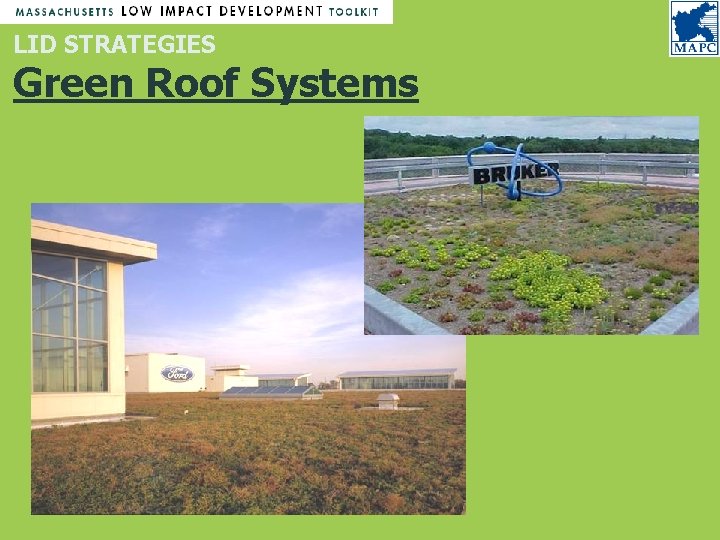
LID STRATEGIES Green Roof Systems
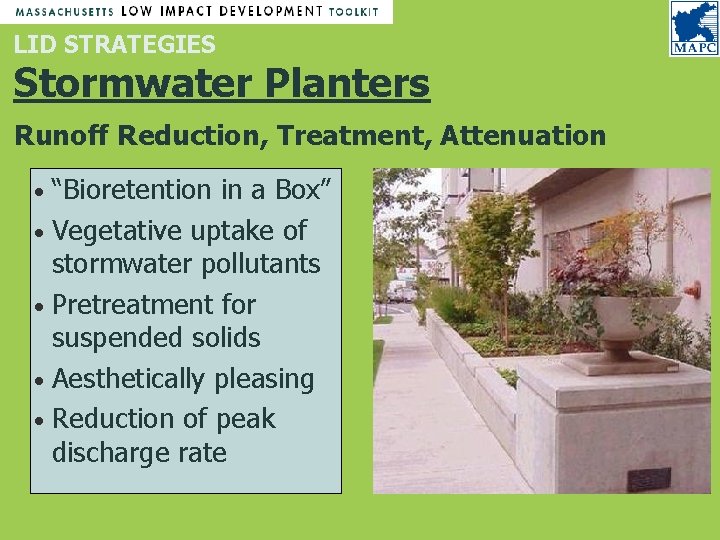
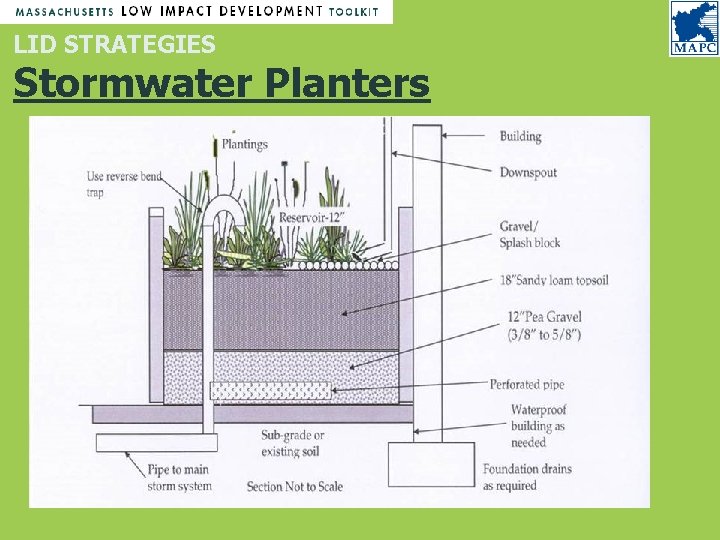
LID STRATEGIES Stormwater Planters Runoff Reduction, Treatment, Attenuation “Bioretention in a Box” • Vegetative uptake of stormwater pollutants • Pretreatment for suspended solids • Aesthetically pleasing • Reduction of peak discharge rate •
LID STRATEGIES Stormwater Planters
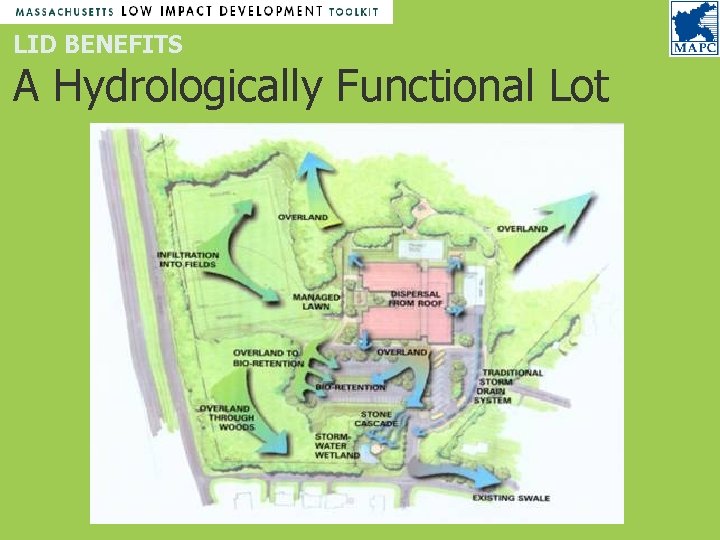
LID BENEFITS A Hydrologically Functional Lot
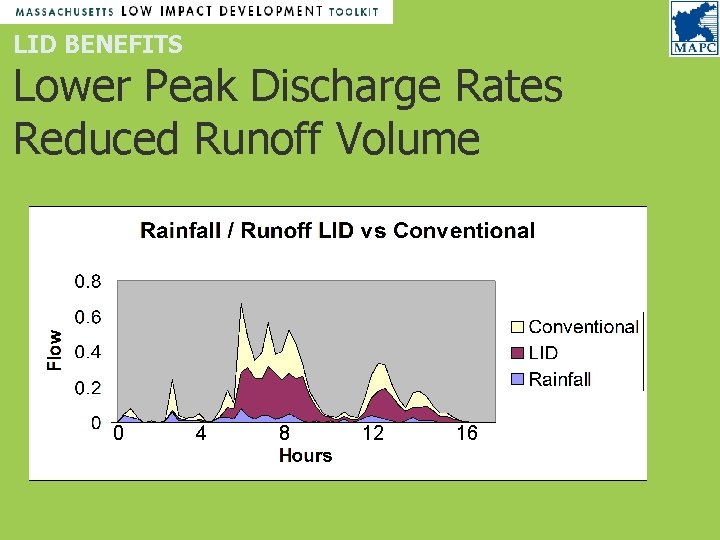
LID BENEFITS Lower Peak Discharge Rates Reduced Runoff Volume 0 4 8 12 16
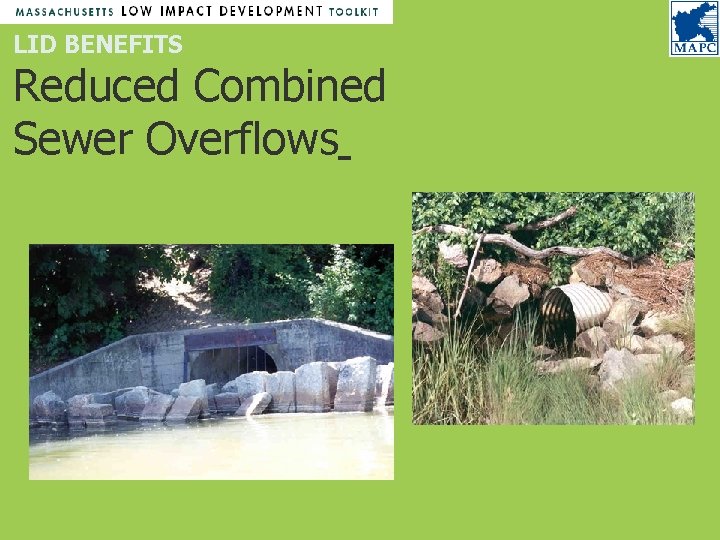
LID BENEFITS Reduced Combined Sewer Overflows
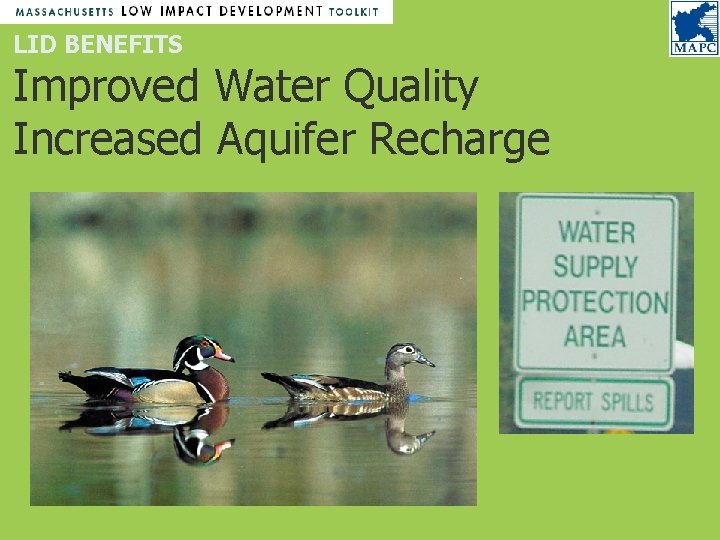
LID BENEFITS Improved Water Quality Increased Aquifer Recharge
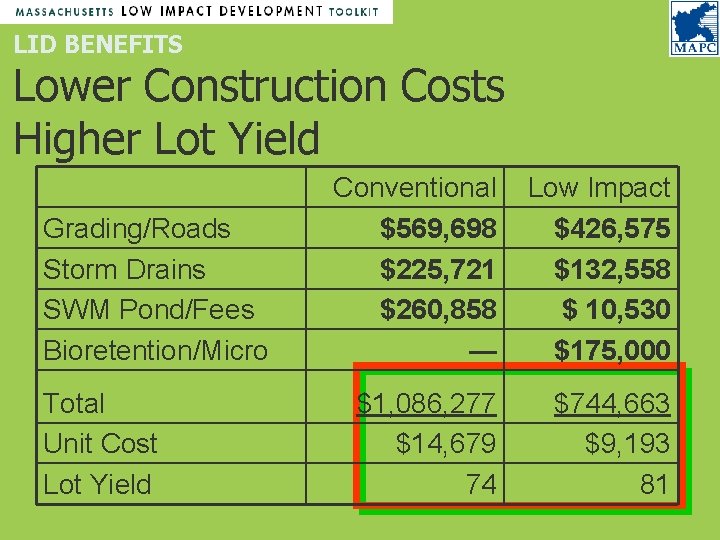
LID BENEFITS Lower Construction Costs Higher Lot Yield Grading/Roads Storm Drains SWM Pond/Fees Bioretention/Micro Total Unit Cost Lot Yield Conventional Low Impact $569, 698 $426, 575 $225, 721 $132, 558 $260, 858 $ 10, 530 — $175, 000 $1, 086, 277 $14, 679 74 $744, 663 $9, 193 81
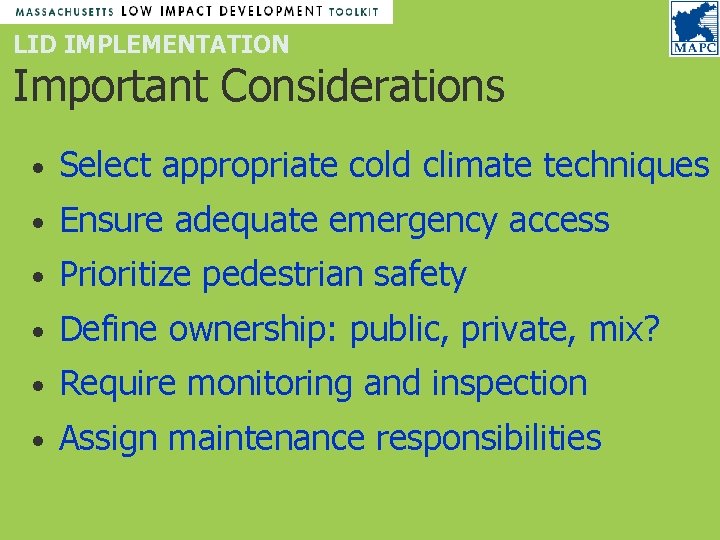
LID IMPLEMENTATION Important Considerations • Select appropriate cold climate techniques • Ensure adequate emergency access • Prioritize pedestrian safety • Define ownership: public, private, mix? • Require monitoring and inspection • Assign maintenance responsibilities
LID IMPLEMENTATION Long-Term Maintenance • All stormwater systems require maintenance • LID maintenance often simple, low cost • Ensure adequate funding for DPWs • Homeowner/landscaper education • Consider requiring permanent sureties
LID IMPLEMENTATION Review of Local Codes • Zoning Bylaw and Site Plan Review • Subdivision Rules and Regulations • Board of Health Regulations • Wetland Regulations • Building Codes
LID IMPLEMENTATION Stormwater/LID Bylaw • Replace the “patchwork” of stormwater codes with a single set of local standards • Establish Stormwater Permitting Authority to review all projects over a certain size • Specify performance standards • Utilize expert review when necessary • Permit/promote the use of LID techniques • Require a maintenance plan
LID IMPLEMENTATION Collaboration is Critical! • Local boards • Public works officials • Fire department and emergency response • Developers and builders • Consultants and engineers • Business interests and property owners • Environmental advocates
For more information, visit: www. mapc. org/lid home of the • • • Fact sheets Brochures Local codes checklist Frequently asked questions Internet links and resources