
Low Impact Development LID A Sustainable Solution for
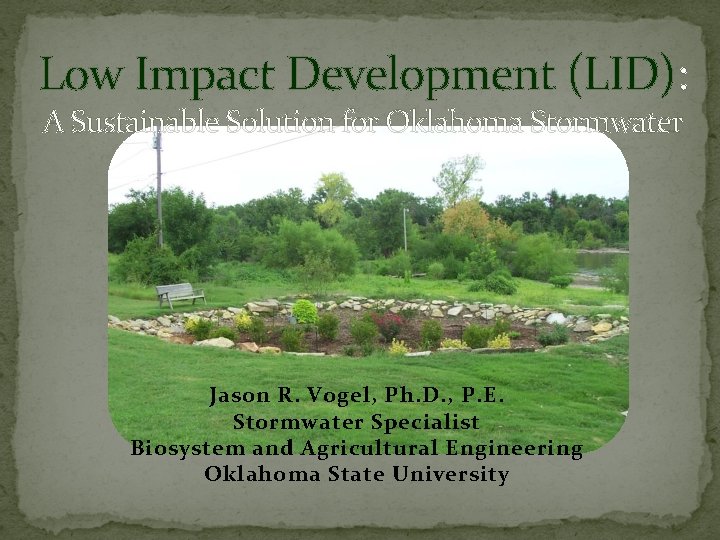
Low Impact Development (LID): A Sustainable Solution for Oklahoma Stormwater Jason R. Vogel, Ph. D. , P. E. Stormwater Specialist Biosystem and Agricultural Engineering Oklahoma State University
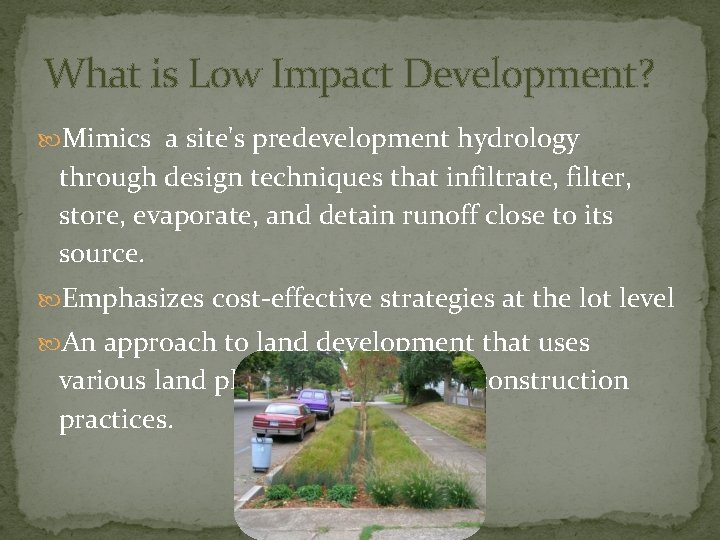
What is Low Impact Development? Mimics a site's predevelopment hydrology through design techniques that infiltrate, filter, store, evaporate, and detain runoff close to its source. Emphasizes cost-effective strategies at the lot level An approach to land development that uses various land planning, design and construction practices.
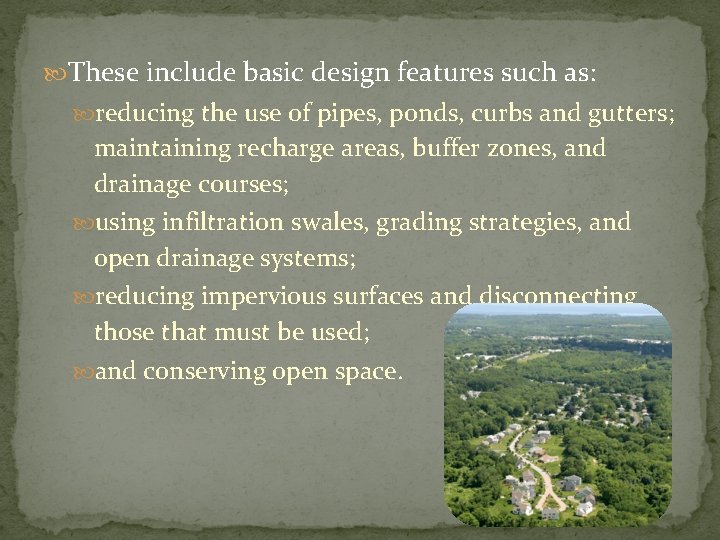
These include basic design features such as: reducing the use of pipes, ponds, curbs and gutters; maintaining recharge areas, buffer zones, and drainage courses; using infiltration swales, grading strategies, and open drainage systems; reducing impervious surfaces and disconnecting those that must be used; and conserving open space.

What are common on-site LID designs? Bioretention/Rain Gardens Rainfall harvesting Permeable Pavement Bioswales Green roofs Stormwater wetlands Tree box planters
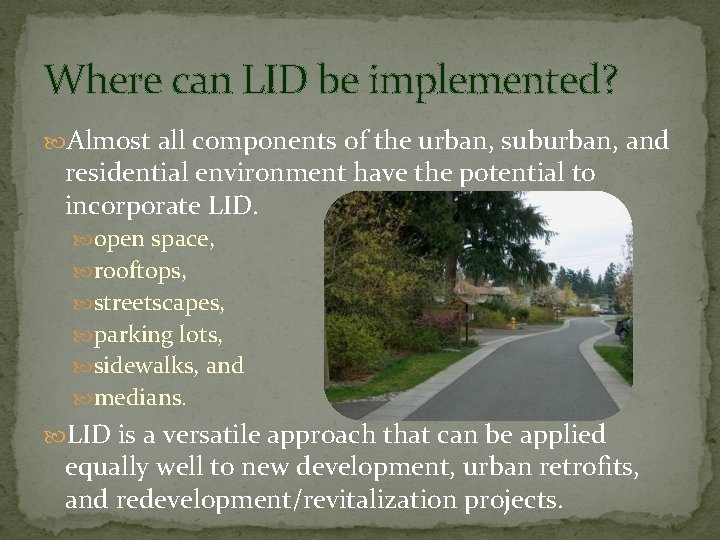
Where can LID be implemented? Almost all components of the urban, suburban, and residential environment have the potential to incorporate LID. open space, rooftops, streetscapes, parking lots, sidewalks, and medians. LID is a versatile approach that can be applied equally well to new development, urban retrofits, and redevelopment/revitalization projects.

Examples of LID Rain gardens and Bioretention cells
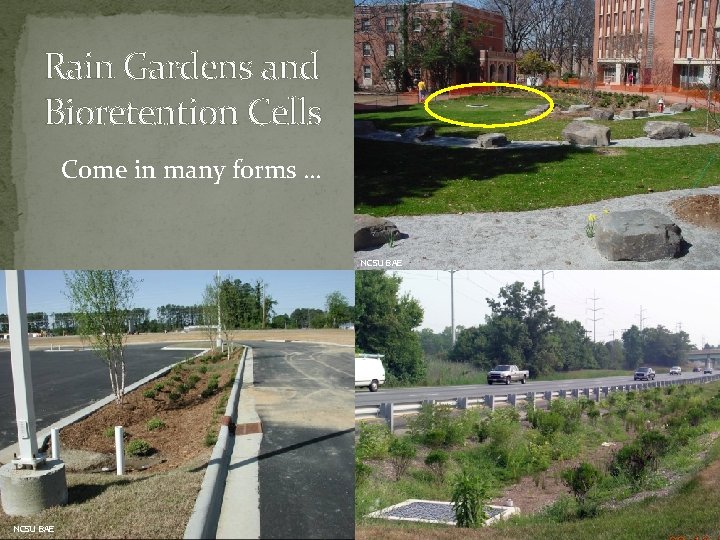
Rain Gardens and Bioretention Cells Come in many forms … NCSU BAE

Examples of LID Bioswales
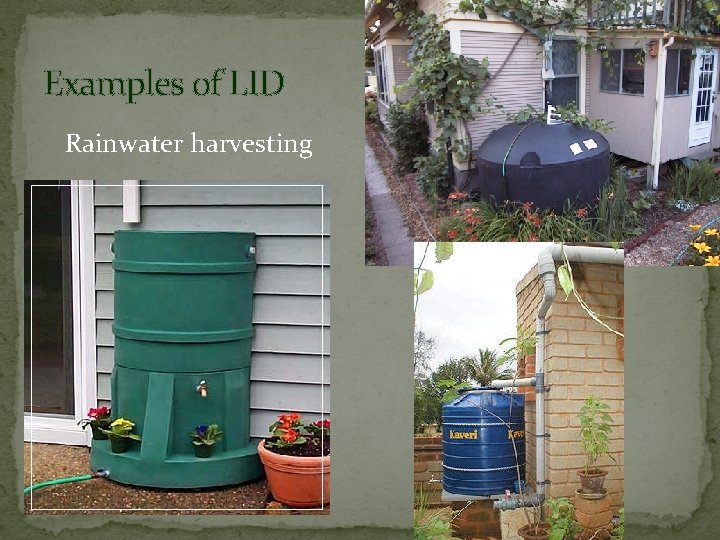
Examples of LID Rainwater harvesting
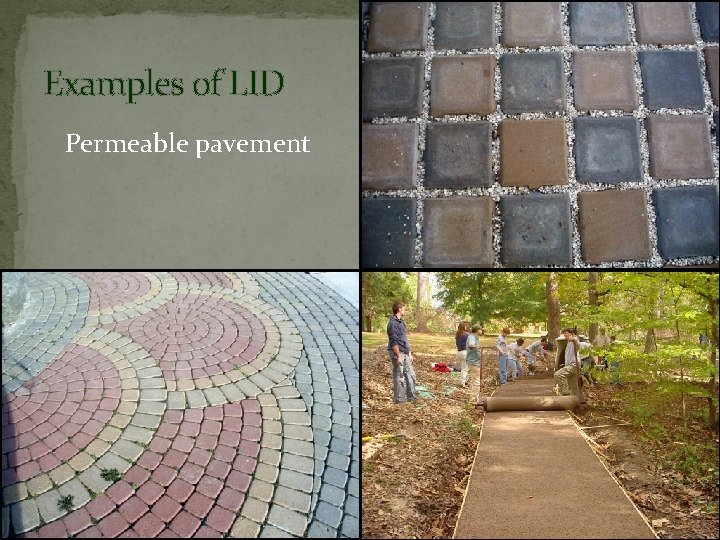
Examples of LID Permeable pavement
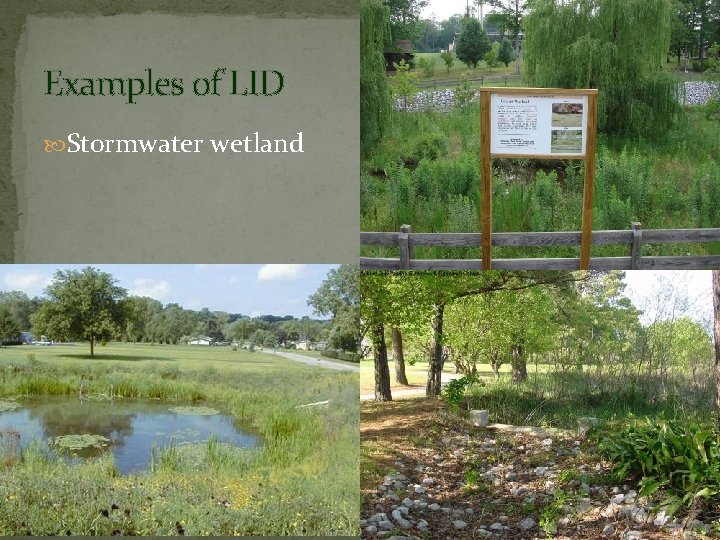
Examples of LID Stormwater wetland
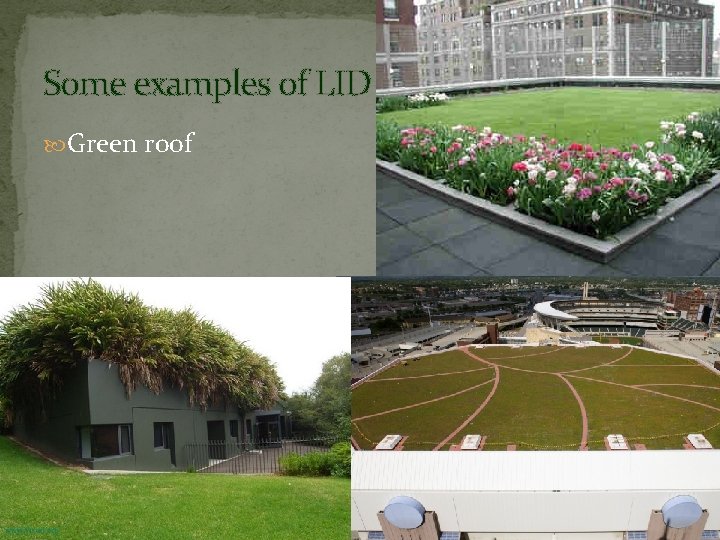
Some examples of LID Green roof
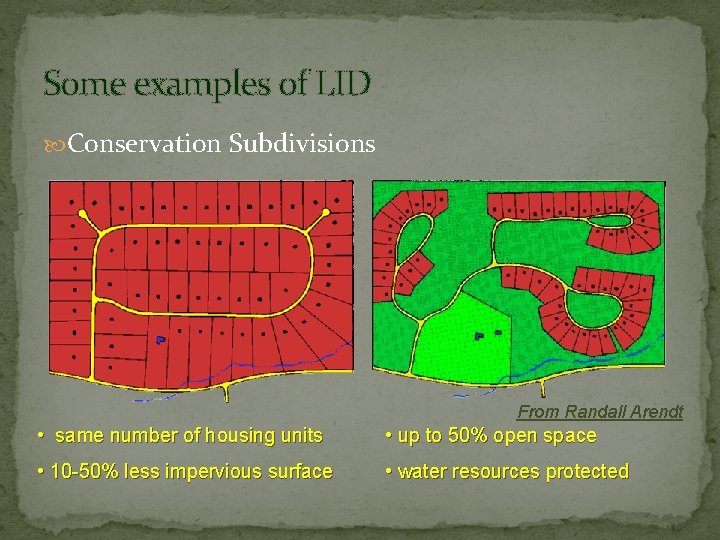
Some examples of LID Conservation Subdivisions From Randall Arendt • same number of housing units • up to 50% open space • 10 -50% less impervious surface • water resources protected

Thanks!!!
- Slides: 14