
Low Frequency Sine Wave Stimulation as a Therapy
- Slides: 32
Low Frequency Sine Wave Stimulation as a Therapy for Epilepsy Jeffrey H. Goodman, Ph. D NYS Institute For Basic Research In Developmental Disabilities June 6, 2009
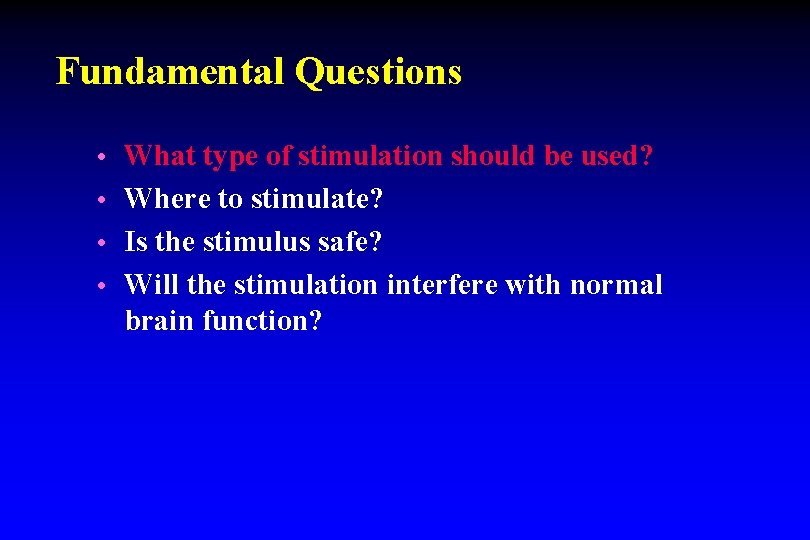
Fundamental Questions • What type of stimulation should be used? • Where to stimulate? • Is the stimulus safe? • Will the stimulation interfere with normal brain function?
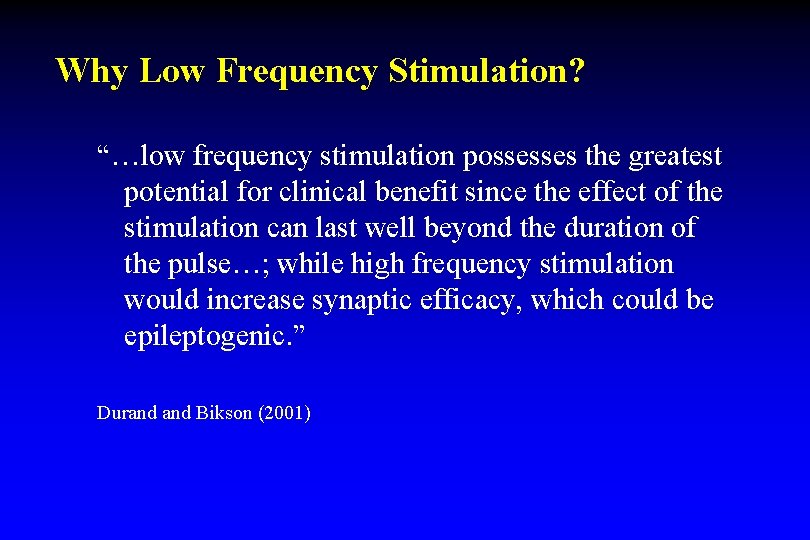
Why Low Frequency Stimulation? “…low frequency stimulation possesses the greatest potential for clinical benefit since the effect of the stimulation can last well beyond the duration of the pulse…; while high frequency stimulation would increase synaptic efficacy, which could be epileptogenic. ” Durand Bikson (2001)
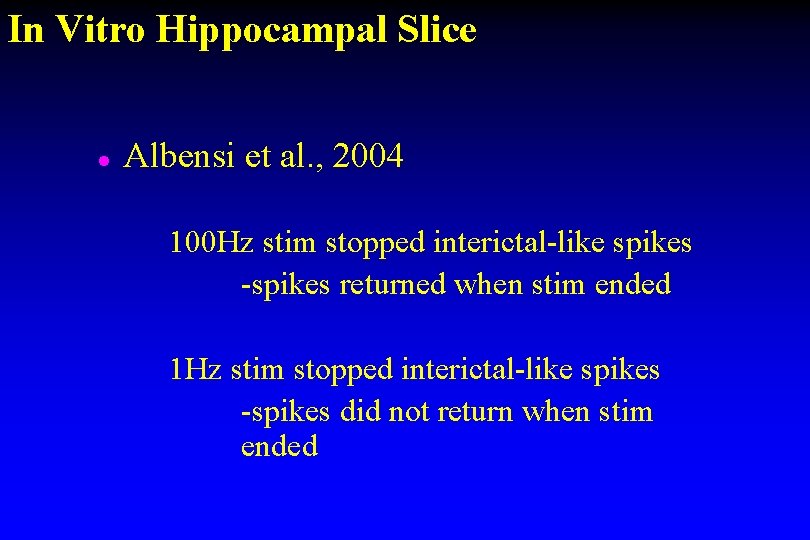
In Vitro Hippocampal Slice l Albensi et al. , 2004 100 Hz stim stopped interictal-like spikes -spikes returned when stim ended 1 Hz stim stopped interictal-like spikes -spikes did not return when stim ended
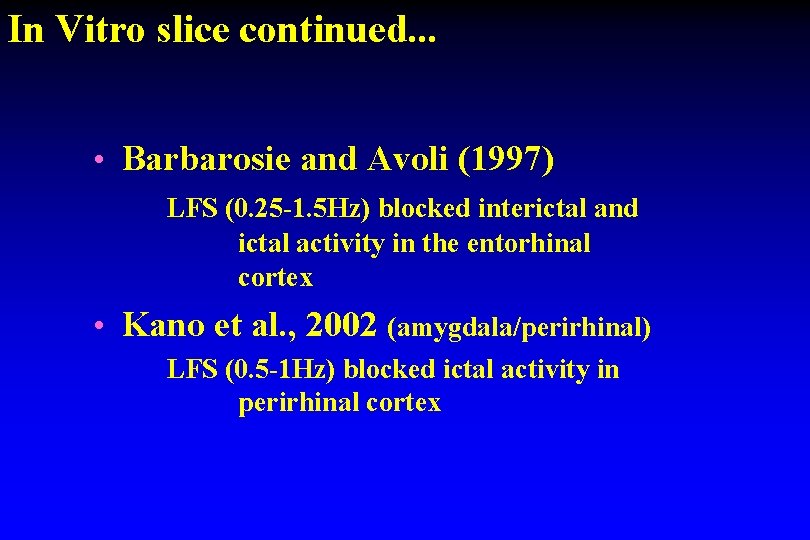
In Vitro slice continued. . . • Barbarosie and Avoli (1997) LFS (0. 25 -1. 5 Hz) blocked interictal and ictal activity in the entorhinal cortex • Kano et al. , 2002 (amygdala/perirhinal) LFS (0. 5 -1 Hz) blocked ictal activity in perirhinal cortex
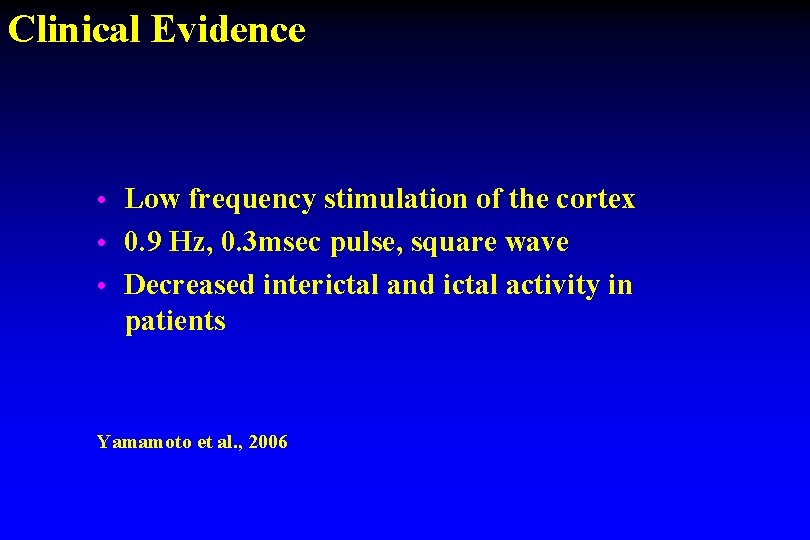
Clinical Evidence • Low frequency stimulation of the cortex • 0. 9 Hz, 0. 3 msec pulse, square wave • Decreased interictal and ictal activity in patients Yamamoto et al. , 2006
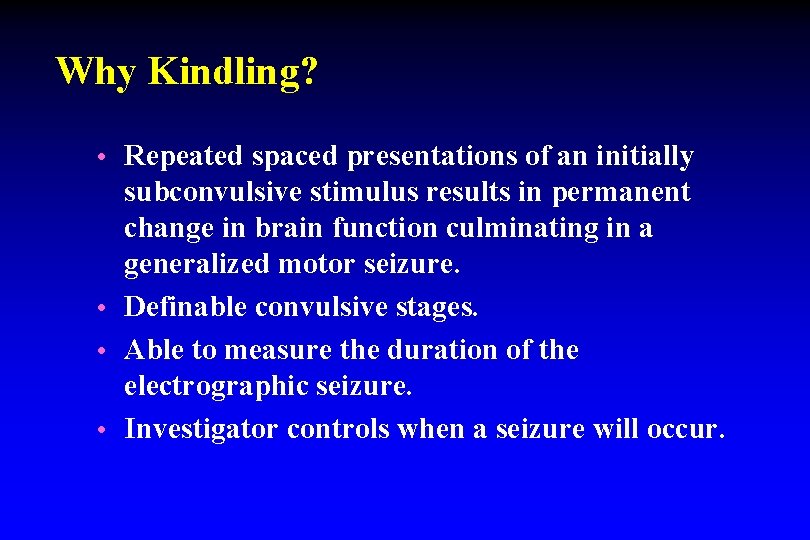
Why Kindling? • Repeated spaced presentations of an initially subconvulsive stimulus results in permanent change in brain function culminating in a generalized motor seizure. • Definable convulsive stages. • Able to measure the duration of the electrographic seizure. • Investigator controls when a seizure will occur.
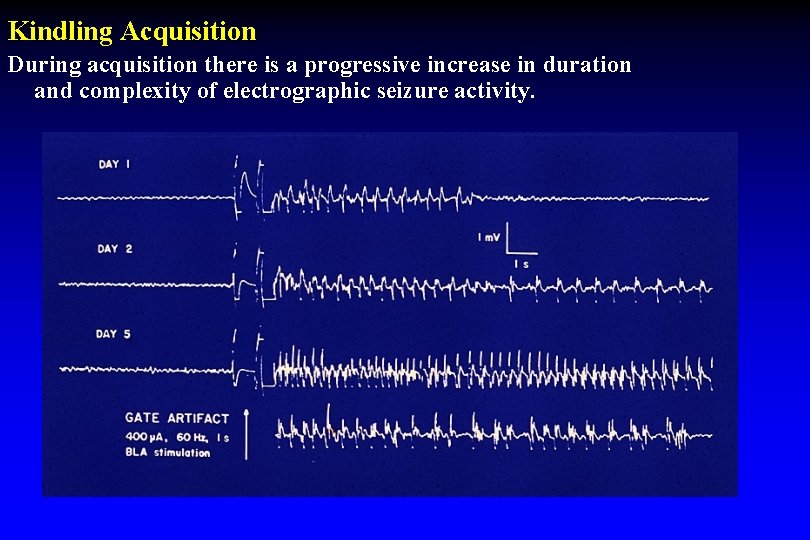
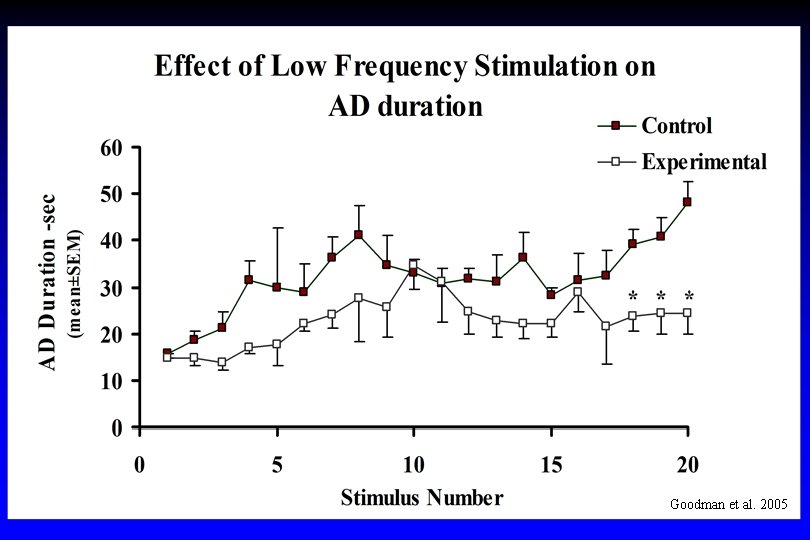
Kindling Acquisition During acquisition there is a progressive increase in duration and complexity of electrographic seizure activity.
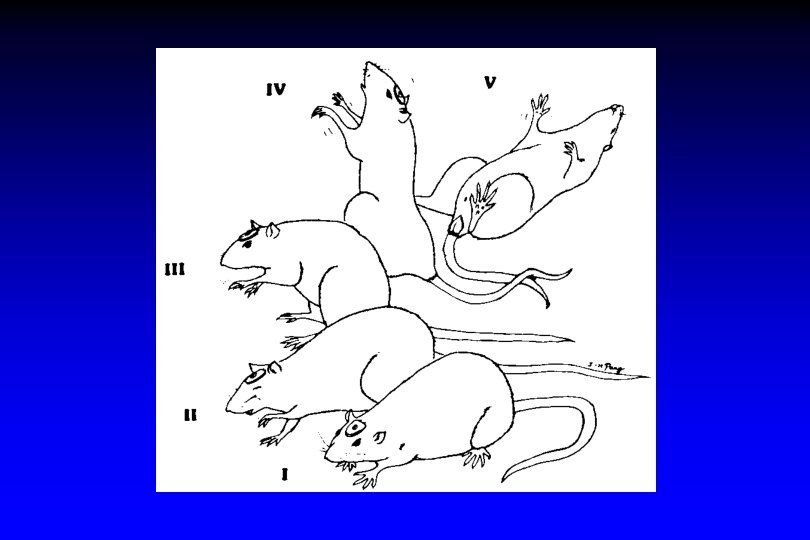
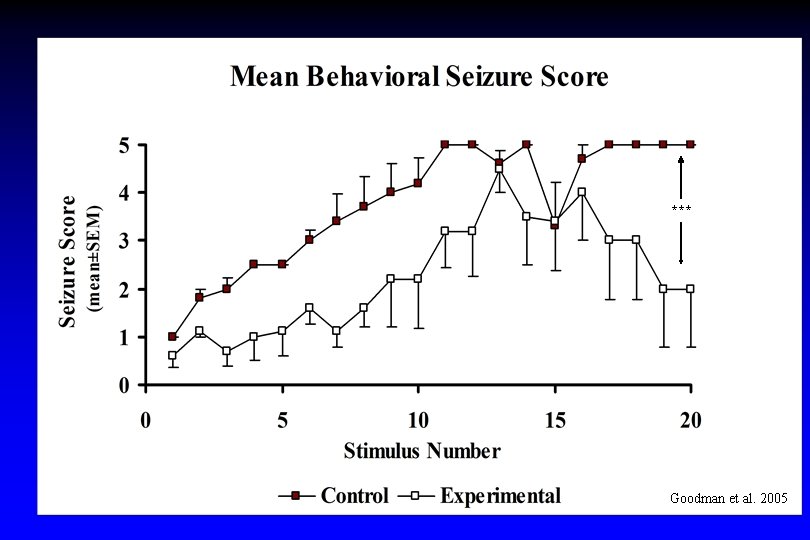
Electrographic seizures are accompanied by progressive behavioral changes • There are 5 distinct behavioral stages • Stages 1 -2 equivalent to partial seizures • Stages 3 -5 generalized • After 3 consecutive Stage 5 seizures the animal is considered Fully Kindled
Gaito, 1980; Gaito et al. , 1980 • 1 st to report LFSWS interfered with kindled seizures • Convoluted experimental design • Results difficult to interpret • Work not accepted, largely ignored
Velisek et al. , 2002 • Examined effect of LFS (1 Hz - square) on kindling acquisition • Used immature animals • LFS increased the number of stimulations required for the animals to become fully kindled.
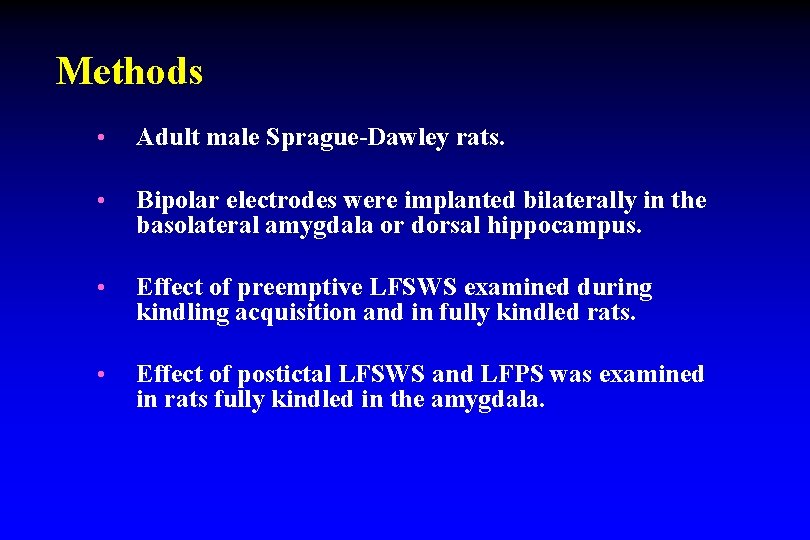
Methods • Adult male Sprague-Dawley rats. • Bipolar electrodes were implanted bilaterally in the basolateral amygdala or dorsal hippocampus. • Effect of preemptive LFSWS examined during kindling acquisition and in fully kindled rats. • Effect of postictal LFSWS and LFPS was examined in rats fully kindled in the amygdala.
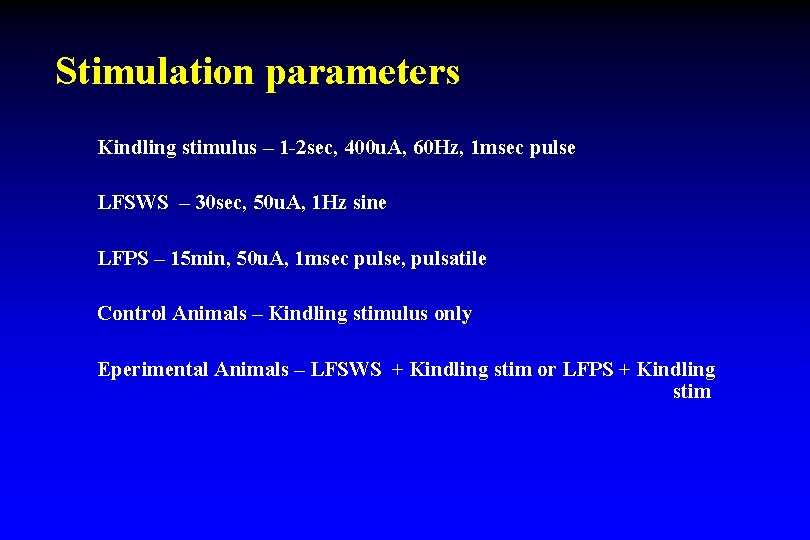
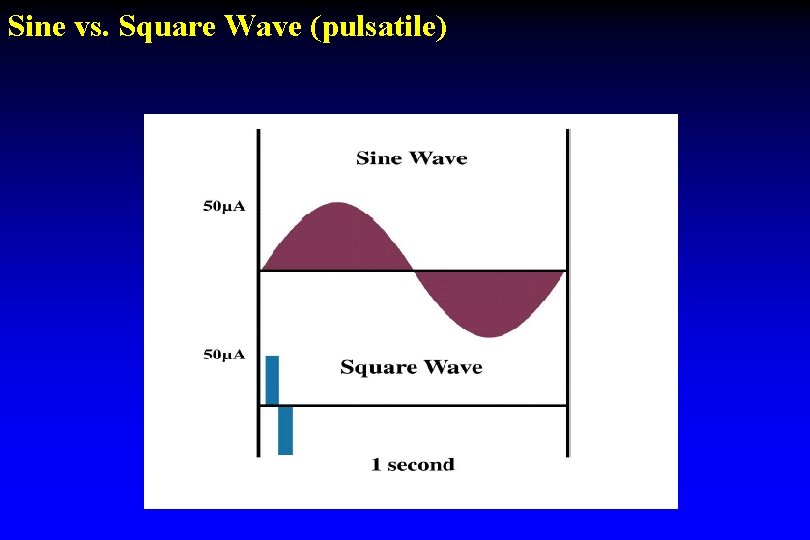
Stimulation parameters Kindling stimulus – 1 -2 sec, 400 u. A, 60 Hz, 1 msec pulse LFSWS – 30 sec, 50 u. A, 1 Hz sine LFPS – 15 min, 50 u. A, 1 msec pulse, pulsatile Control Animals – Kindling stimulus only Eperimental Animals – LFSWS + Kindling stim or LFPS + Kindling stim
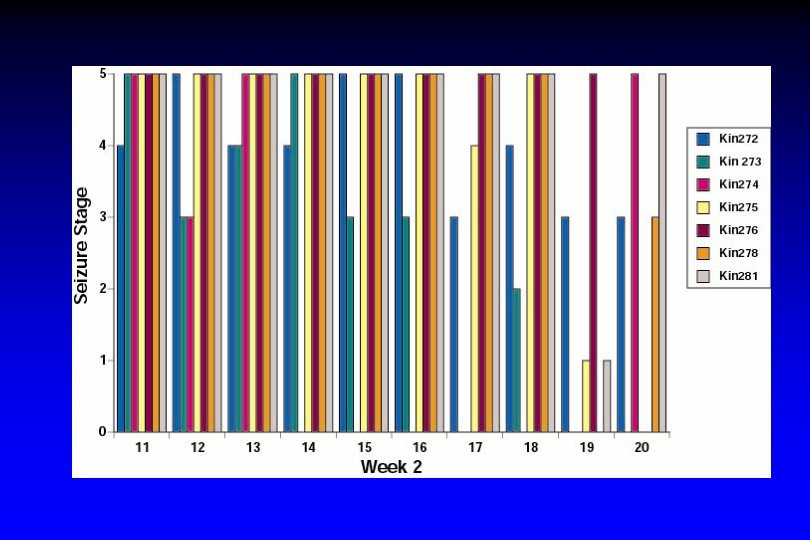
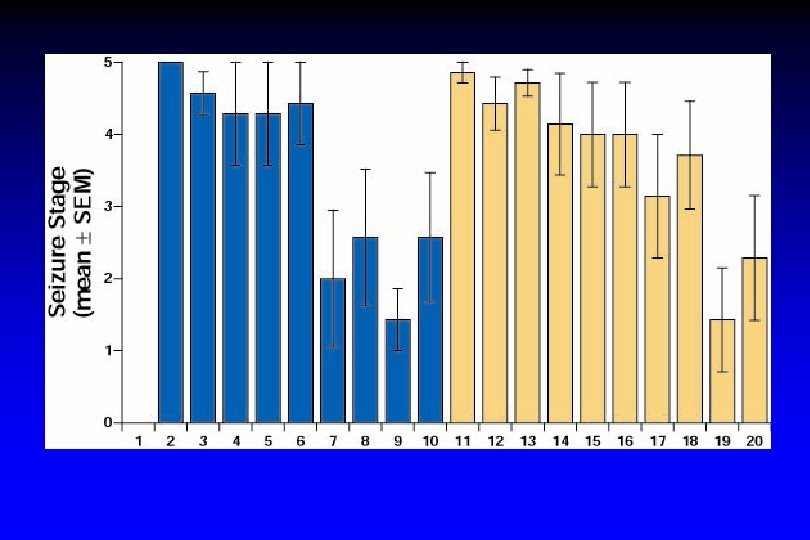
* * =P<0. 01, n=6 Goodman et al. 2005
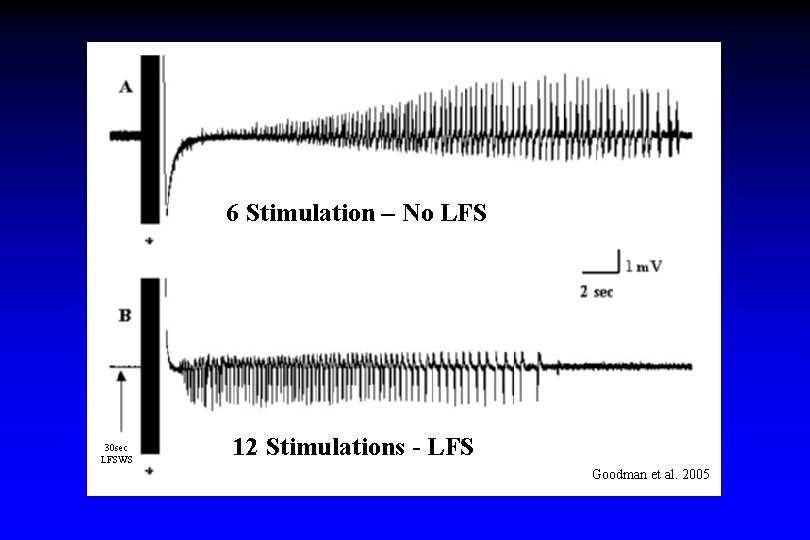
6 Stimulation – No LFS 30 sec LFSWS 12 Stimulations - LFS Goodman et al. 2005
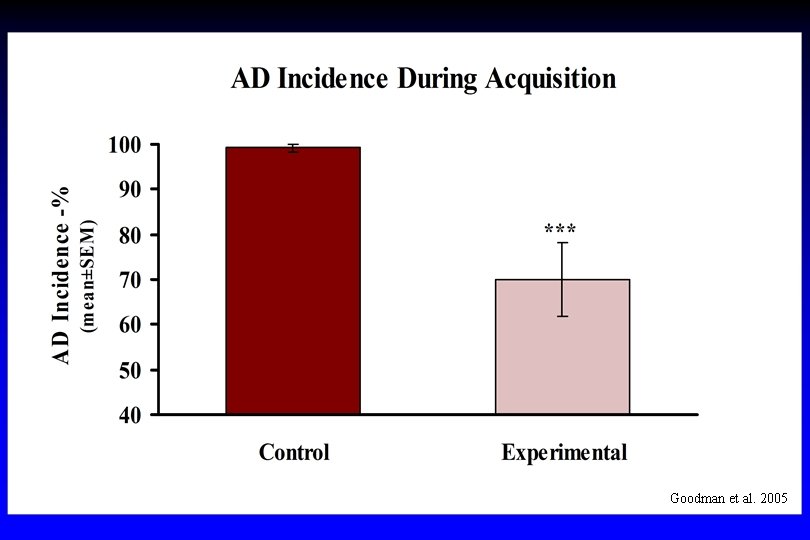
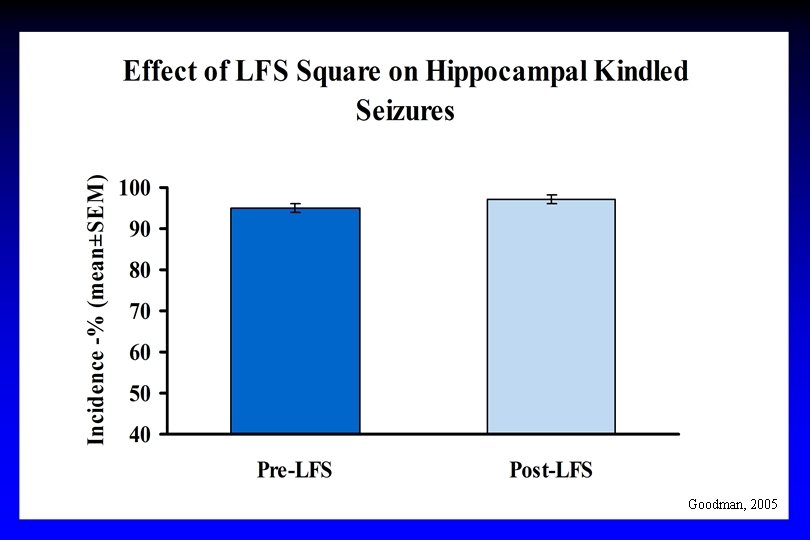
*** * ** Goodman et al. 2005
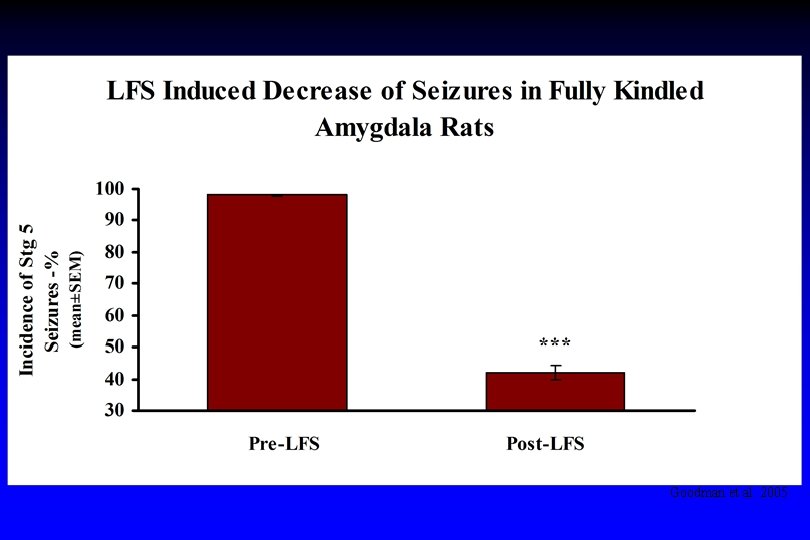
*** Goodman et al. 2005
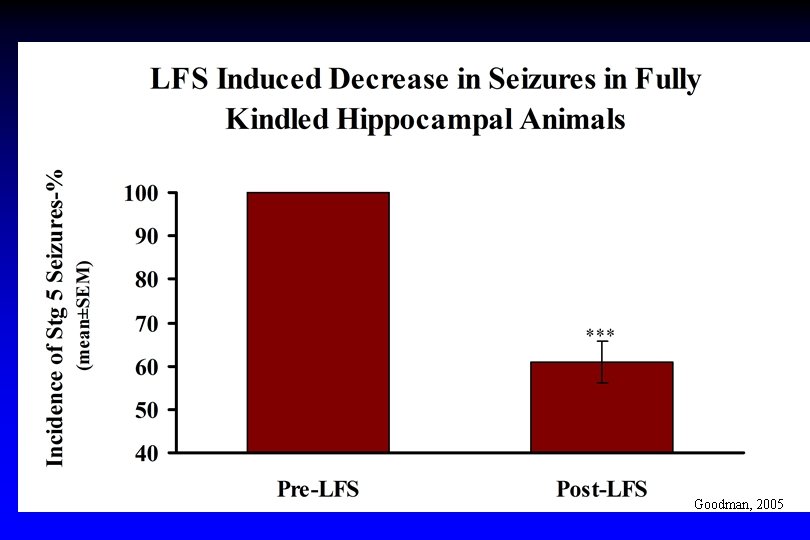
Goodman et al. 2005
Goodman, 2005
Goodman, 2005
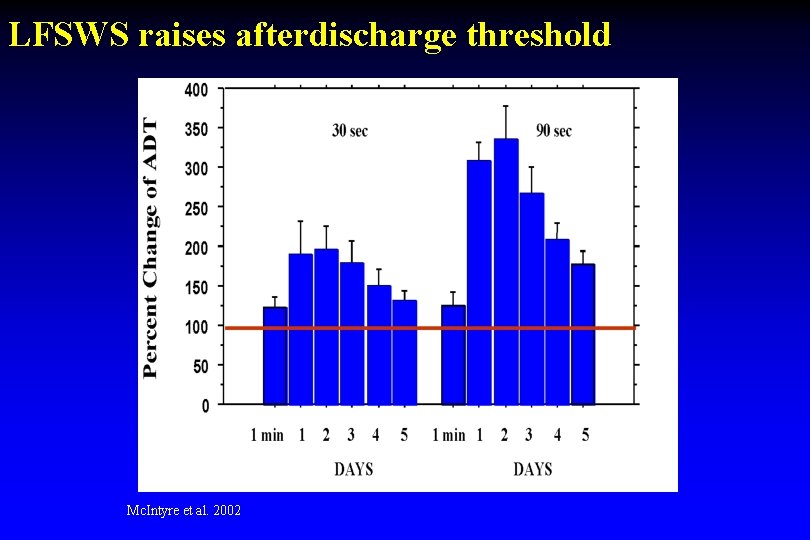
LFSWS raises afterdischarge threshold Mc. Intyre et al. 2002
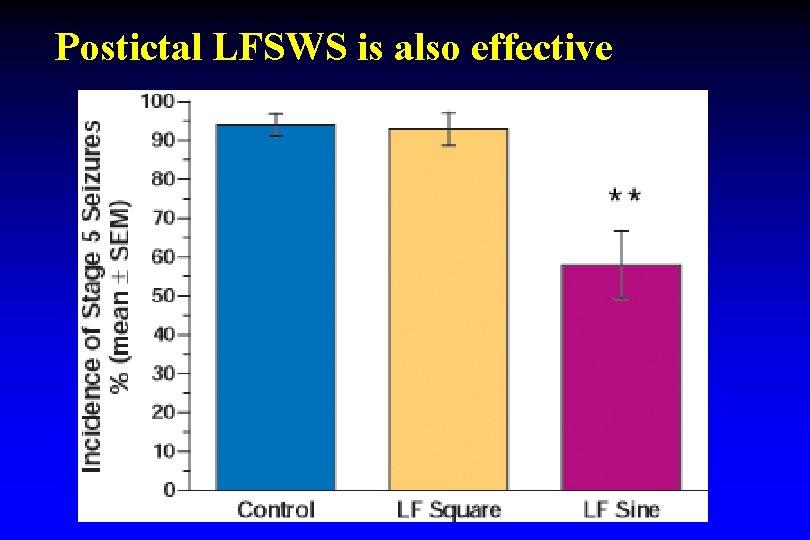
Postictal LFSWS is also effective
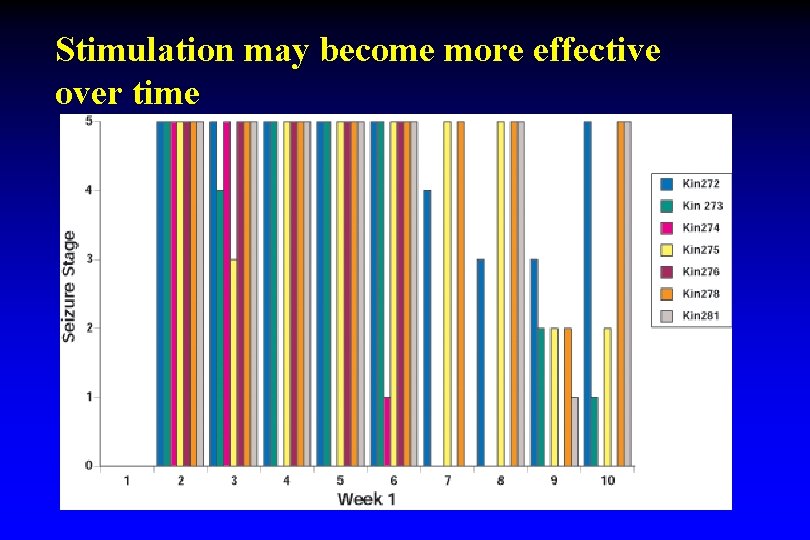
Stimulation may become more effective over time
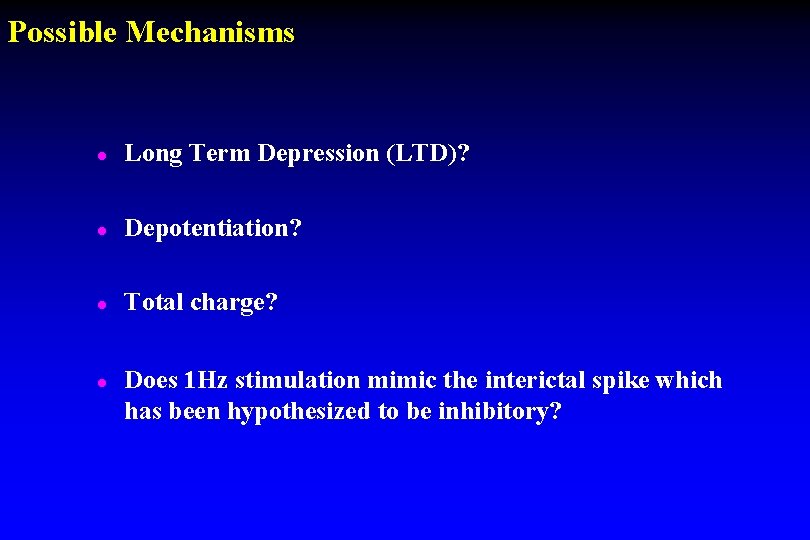
Possible Mechanisms l Long Term Depression (LTD)? l Depotentiation? l Total charge? l Does 1 Hz stimulation mimic the interictal spike which has been hypothesized to be inhibitory?
Sine vs. Square Wave (pulsatile)
Conclusions • Preemptive LFSWS significantly decreased the incidence of AD during kindling acquisition in amygdala kindled rats. • Preemptive LFSWS significantly decreased the incidence of Stage 5 seizures in rats fully kindled in the amygdala and hippocampus. • LFSWS was also effective when delivered postictally in amygdala kindled rats.
Conclusions continued…. . • Preemptive and postictal LFPS did not interfere with kindled seizures. • These results suggest that LFSWS may be an effective therapy for the prevention of clinical seizures.
Collaborators Helen Hayes Hospital Russell Berger Sheeja Thomas Jane Schon Sudarshan Phani Jared Zucker Mathew Pathrose SUNY Downstate Nick Hasulak Neuro. Pace Inc. Thomas Tcheng, Ph. D Erem Boto Wadsworth Labs Karen Smith William Shain, Ph. D. IBR Daniel Erdheim
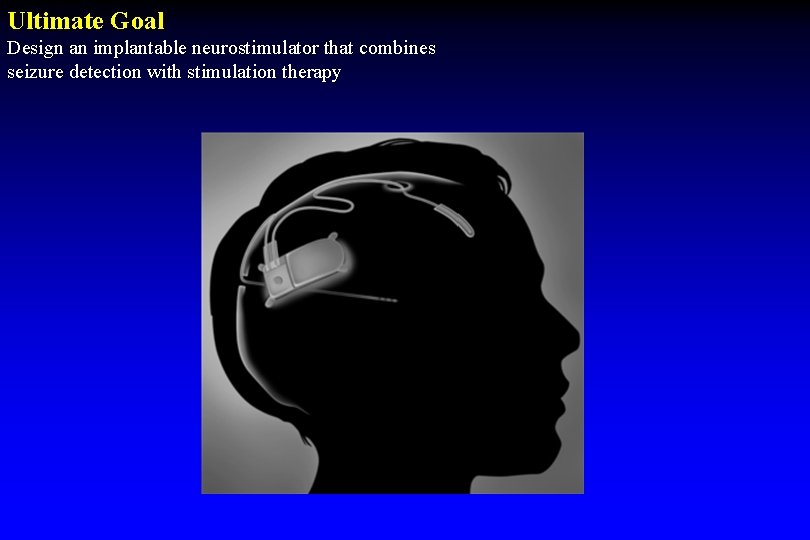
Ultimate Goal Design an implantable neurostimulator that combines seizure detection with stimulation therapy