
Lovebased Strategies for Fear Stress and Trauma Presented
Love-based Strategies for Fear, Stress and Trauma Presented by Aletha Mc. Arthur, OCT Behaviour/Special Education Specialist Founder of New Growth Family Centre Inc. 211 Birmingham St. West, Mount Forest, ON N 0 G 2 L 1 (519)509 -6432 1
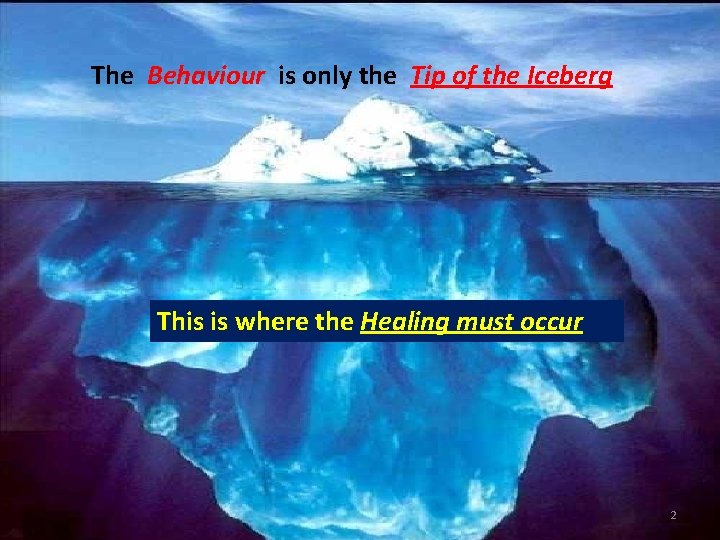
The Behaviour is only the Tip of the Iceberg This is where the Healing must occur 2
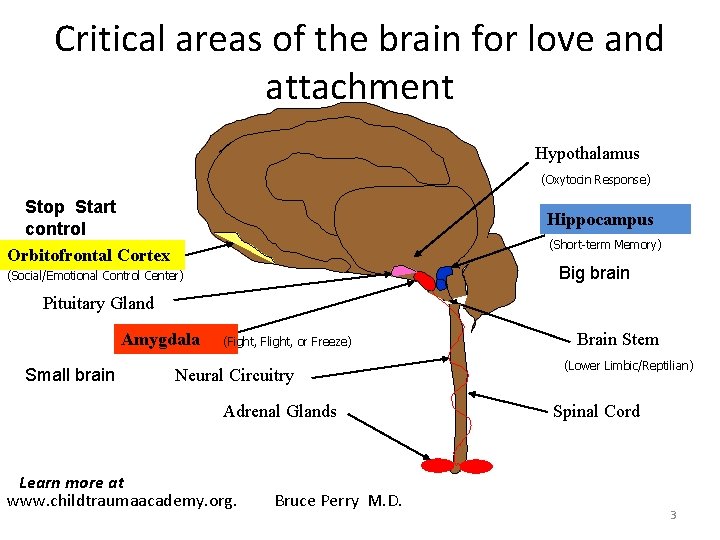
Critical areas of the brain for love and attachment Hypothalamus (Oxytocin Response) Stop Start control Orbitofrontal Cortex Hippocampus (Short-term Memory) Big brain (Social/Emotional Control Center) Pituitary Gland Amygdala Small brain (Fight, Flight, or Freeze) Neural Circuitry Adrenal Glands Learn more at www. childtraumaacademy. org. Bruce Perry M. D. Brain Stem (Lower Limbic/Reptilian) Spinal Cord 3 3
Behaviors Feelings Attitudes 4
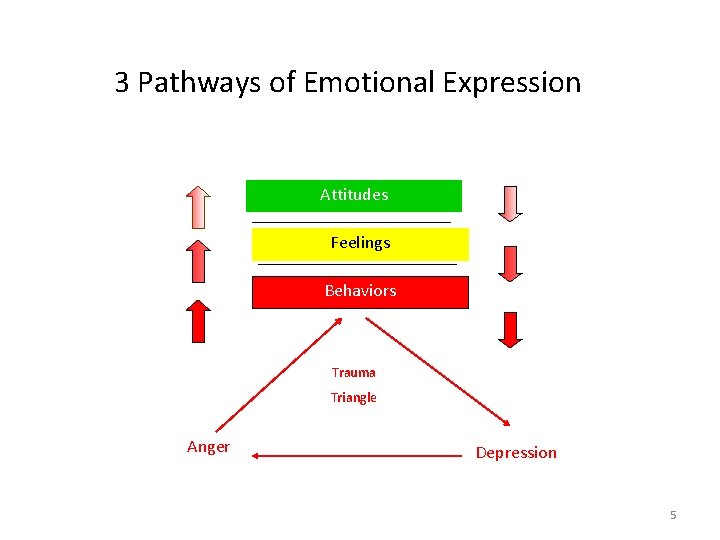
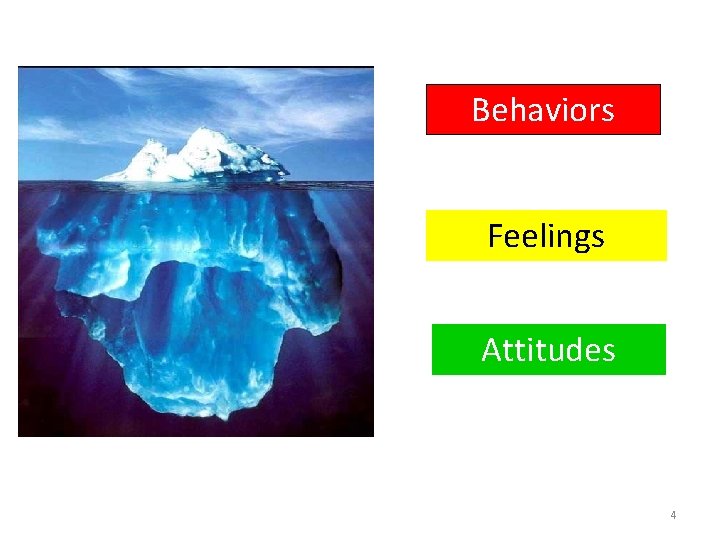
3 Pathways of Emotional Expression Attitudes Feelings Behaviors Trauma Triangle Anger Depression © 2009 B. Bryan Post 5
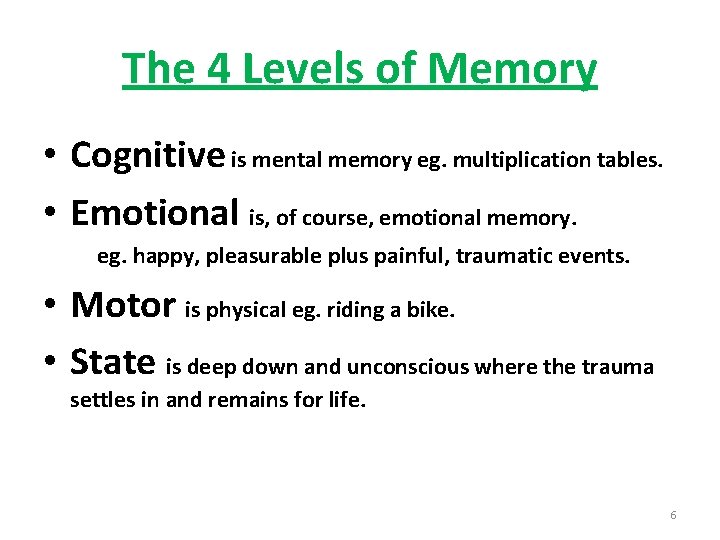
The 4 Levels of Memory • Cognitive is mental memory eg. multiplication tables. • Emotional is, of course, emotional memory. eg. happy, pleasurable plus painful, traumatic events. • Motor is physical eg. riding a bike. • State is deep down and unconscious where the trauma settles in and remains for life. 6 6
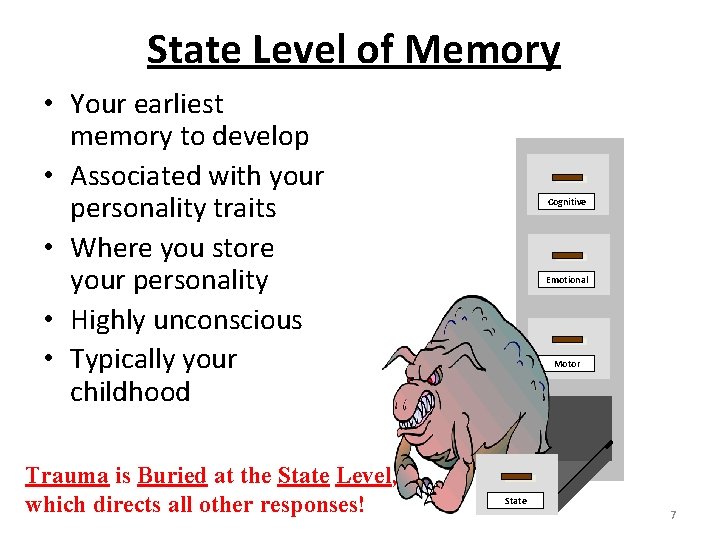
State Level of Memory • Your earliest memory to develop • Associated with your personality traits • Where you store your personality • Highly unconscious • Typically your childhood Cognitive Emotional Motor State Trauma is Buried at the State Level, which directs all other responses! State 7 7
Vocabulary List Stressed Out Attachment Trauma Regulation Dysregulation Relationship Environment Triggers Response Reaction Feedback Loops 8
Traumatic Events Common with Regulatory Difficulties • Abuse • Neglect • Adoption and Foster Care • Frequent Moves • Chronic Pain • Emotional Absence • Parental Depression • Needs Left Unmet 9 9
Conditions and Disorders ADD ADHD ODD OCD FASD Attention Deficit Disorder with hyperactivity Oppositional Defiance Disorder Obsessive Compulsive Disorder Anxiety Disorder Depression Trauma History Reactive Attachment Disorder Fetal Alcohol Spectrum Disorder 10
Autism Spectrum Disorder Asperger’s Syndrome Language Delays Conduct Disorder Bi-Polar Disorder Learning Disabilities Pills Don’t Teach Skills! Medications may be helpful to open the door for therapeutic treatment to take place. 11
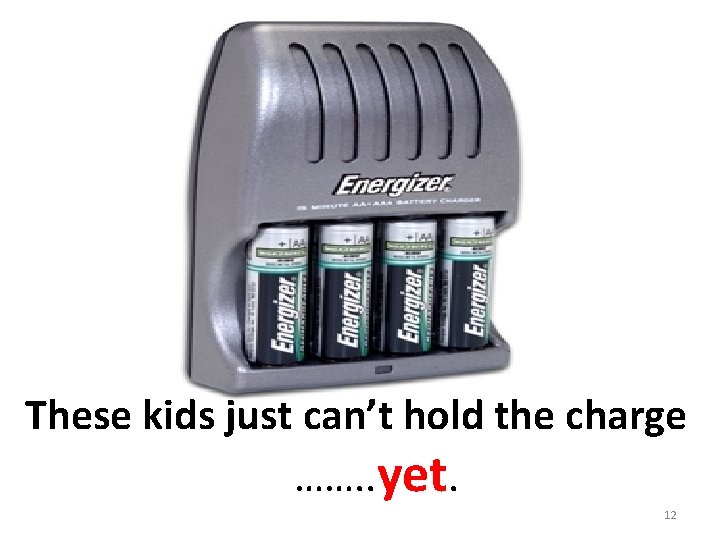
These kids just can’t hold the charge ……. . yet. 12
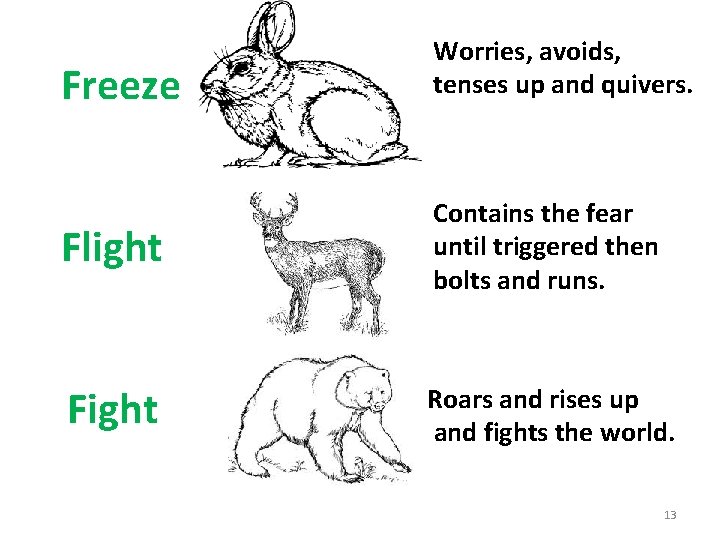
Freeze Worries, avoids, tenses up and quivers. Flight Contains the fear until triggered then bolts and runs. Fight Roars and rises up and fights the world. 13
Signs of Stress & Fear Behaviour • No eye contact, looking sideways • Non-stop talking • Biting, picking, scratching • Constantly moving, agitated • Joking, put downs , sarcasm • Curling up & hiding under things • Clinging, hugging, hovering • Hide & seek behaviour • In your face behaviour • Challenging, disagreeing & knowing all 14
Stress Triggers *new adults *new kids *new environment *new information *size of group *too much excitement *too quiet *too much noise *too crowded *seating arrangement *too far apart in gym or auditorium *sensory overload *time pressure Lack of food and water affects all thinking and amplifies the triggers 15
Parents need to get smart! *Media Images *Fads & Fashions *Social Groups *School Climate *Electronics/Screens *Distractions All teach, influence and set new & different & opposing standards for use outside of home. Adults are often unaware. 16
Parents are often unaware of “accepted” language, dress, gestures, code words, “new” meanings in the youth culture. Know the Lingo…. . there are generation gaps so don’t be afraid to ask. Be prepared to be shocked! All this is tried out, acted out, experimented with outside the home to see how it works. This is not trauma but learned behaviours from a variety of sources. They try it on for size……. especially the extreme needs kids. 17
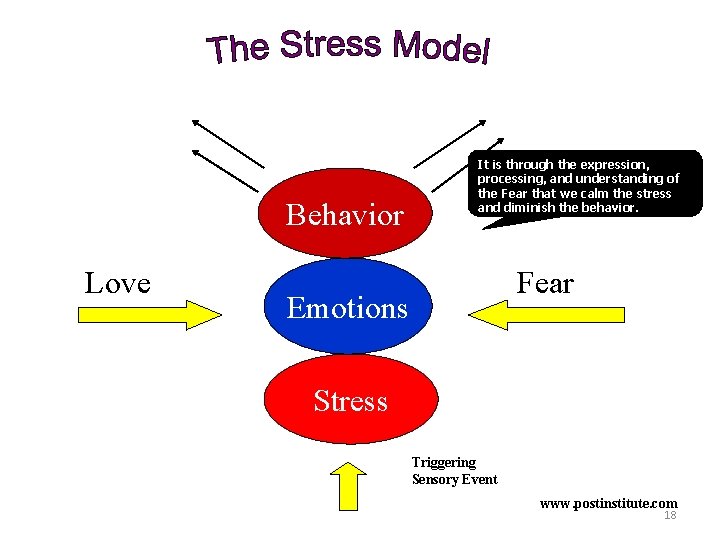
Behavior Love It is through the expression, processing, and understanding of the Fear that we calm the stress and diminish the behavior. Fear Emotions Stress Triggering Sensory Event www. postinstitute. com 18
In the State of Stress (fear) we lose the connection to cognitive thinking. Thinking processes become confused and distorted and short-term memory is suppressed. 19
Stress happens. It’s the response that counts. Regulation allows thinking to take place. The adult response brings regulation to the child. What is your response to stress? Demonstration What are your triggers? Identifying these allows you to accept and understand the stress in the child and respond not react out of your own stress. Your regulated state brings regulation and calm to the child. This is a positive feedback loop. It works in reverse to cause a negative feedback loop. 20
Calm Let’s learn regulation. 21
Prevention is better than Intervention Prior knowledge is necessary. Pre-planning is necessary. Self-regulation is necessary. Team members/partners are necessary. 22
Key Factors Environment Relationship 23
Techniques for addressing challenging behaviors in attachment challenged children “Any therapy or technique that is confrontational, aggressive, threatening blaming or fear based will ultimately not be effective for creating healing environments for attachment challenged Children. ” Bryan Post 24 24
What was your parenting “blueprint” in your childhood? Whatever it was, we all refer to it under stress. Many ineffective, fear-based, trauma inducing tactics are still in use in homes, in schools and in other childcare environments. Parenting “blueprints” can be changed and adjusted and even erased. 25
3 responses by unknowing adults * Ignore and condone * Pounce and make a point * Talk about it and quit * Threaten with punishment * Yell * Spank, slap * Withhold * Belittle and humiliate 26
Strategies that work 1) Prepare for the worst and expect the best. 2) Get rid of fear tactics but keep the firmness. 3) Use love-based principles but set boundaries for safety and security. 4) Keep things safe by providing structure in the environment and safety in the relationship. 5) Remember that skills are learned in developmental stages. 27
6) Talk less, communicate more. 7)Be attentive and available vs. jumping into problems. 8) Solve problems rather than impose penalties and punishments. 9) Encourage more often…. . the good and even the getting better things. 10)Listen to the whole story. 28
My Favourite Principles that really work! 1)Savour the Flavor—Enjoy the moment 2)What’s Up Talk? —Check in and catch up with everyone 3)Are you Okay? ---When stress behaviour is visible 4)There’s a Problem to Solve—It’s a good thing! 29
5) Come with me NOT go /Time in NOT time out---private time to calm, process, solve the problem when it’s small. 6) Be calm, confident and available to handle any situation. 7) It’s OK. You’re safe with me. Yes, it’s OK to touch. They need healthy relationship. It’s crucial to the healing. 30
8) Talk less communicate more ------Pre-plan cues, signals and encouragements. 9) Catch them trying. Notice them improving. Give them encouragement signals. 10) Teach them how to regulate themselves early in life. 31
They can’t ……. . yet. 32
33
Survey for Attendees Reason for attending________________ Parent Community Group Leader Professional Foster Parent Grandparent Other Biggest Question _______________________________________________________________ ____________________________ E-mail_________________ Phone_________________ 34
- Slides: 34