
Louis Riel Hero or traitor Did the HBC

Louis Riel Hero or traitor?
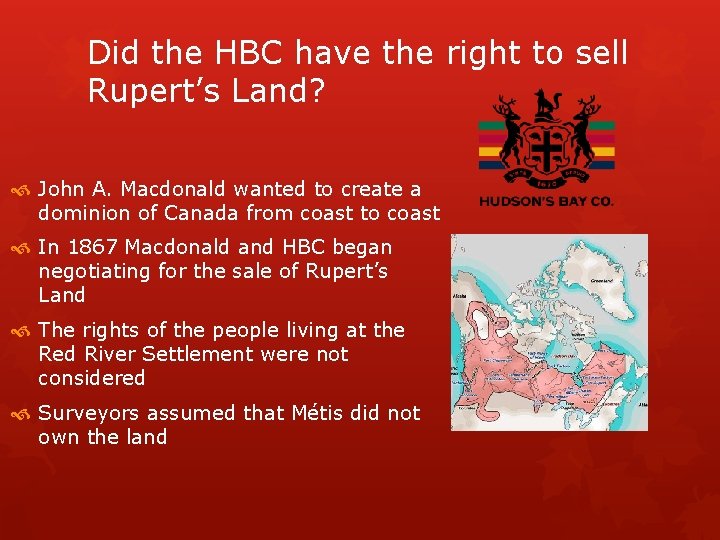
Did the HBC have the right to sell Rupert’s Land? John A. Macdonald wanted to create a dominion of Canada from coast to coast In 1867 Macdonald and HBC began negotiating for the sale of Rupert’s Land The rights of the people living at the Red River Settlement were not considered Surveyors assumed that Métis did not own the land

Louis Riel A young Métis man who returned to the Red River Settlement Educated in Montreal as a lawyer Fluent in both English and French Formed the National Métis Committee to fight for Métis rights
Provisional Government Macdonald appointed William Mc. Dougall, who was anti-French, as lieutenant governor of the Northwest Territories (old Rupert’s Land) Riel and the National Métis Committee told Mc. Dougall he was not welcome in their area Mc. Dougall ignored them and the NMC occupied Upper Fort Garry, seizing weapons and ammunition The NMC were prepared to fight for the rights, if need be NMC was not opposed to confederation but wanted to have their rights upheld Riel set up a provisional government, which would give the Métis a voice and would help maintain order Mc. Dougall made a mistake and claimed himself governor before it was time then fled to the US, which allowed the NMC to exploit a loophole, giving them sovereign rights (legal government)
Trouble at Upper Fort Garry Armed Métis arrested 49 men, including their leader, John Schultz, of the Canadian Party They housed the prisoners at Upper Fort Garry Macdonald sent Donald Smith (senior official of HBC) to negotiate with the NMC and Riel Macdonald felt that if the NMC did not cooperate that they “must be put down” Smith and Riel met and agreed that the provisional government should have negotiators in Ottawa During this time, Schultz and some of his men escaped Upper Fort Garry thanks to a raiding party The Métis caught some members of the raiding party, including a man named Thomas Scott
The Trial of Thomas Scott Born in Northern Ireland, January 1 st, 1842 Settled in Red River in 1869 Known to be difficult, hot headed and prone to violence Aggressive anti-Métis, believed white people to be superior Deep personal hatred for Riel Spent time in captivity berating guards and threatening to kill Riel, even fellow prisoners wanted nothing to do with him Physically assaulted one of his guards March 3 rd, 1870, Scott was put on trial for treason Board (of Métis officials) found Scott guilty and passed the sentence of death by firing squad March 4 th, 1870, Scott was executed
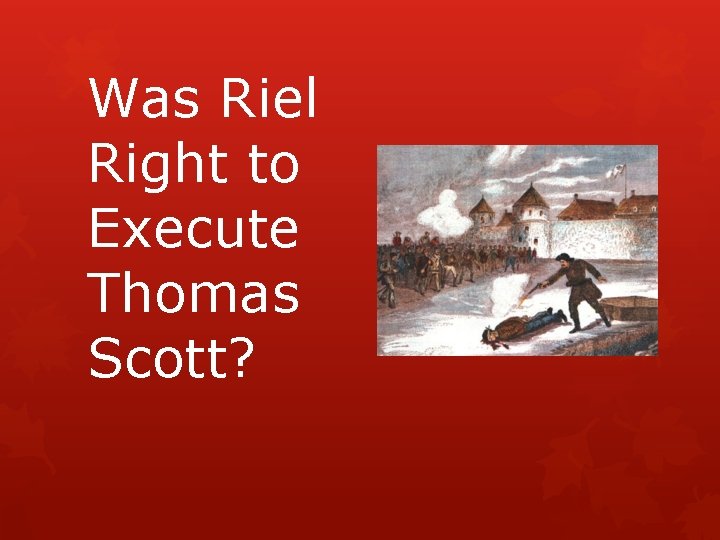
Was Riel Right to Execute Thomas Scott?
- Slides: 7