
LOU GEHRIGS DISEASE LOU GEHRIGS DISEASE Also known

- Slides: 14
LOU GEHRIG’S DISEASE
LOU GEHRIG’S DISEASE Also known as Amyotrophic Lateral Sclerosis Is a disease of the nerve cells in the brain and spinal cord that control voluntary muscle movement. Affects approximately 5 out of every 100, 000 people worldwide. Lou Gehrig's disease usually affects adults between 40 and 70.
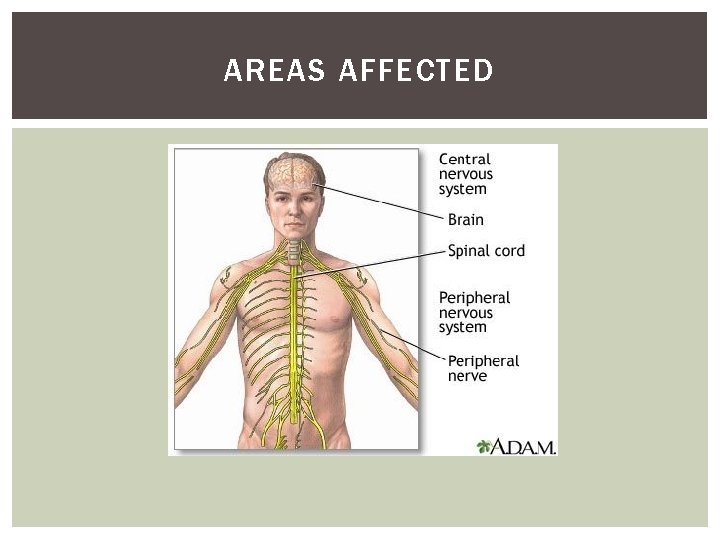
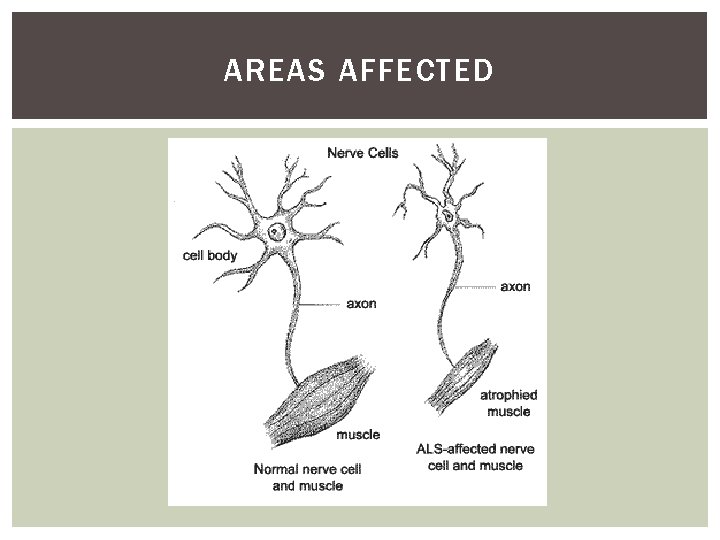
WHAT IS LOU GEHRIG’S DISEASE? It’s a progressive neurodegenerative disease that attacks the nerve cells in the brain and the spinal cord that control muscle movement Lou Gehrig's disease damages spinal cord pathways and motor neurons, which are important parts of the body's neuromuscular system. Over time, Lou Gehrig's disease causes these motor neurons in the brain and spinal cord to shrink and disappear, so that the muscles no longer receive signals to move.
AREAS AFFECTED
AREAS AFFECTED
WHO DISCOVERED IT? Augustus Volney Waller was the first to observe shriveled up nerves in 1816 Lou Gehrig's Disease was first discovered in 1869 by a French neurologist named Jean-Martin Charcot Through observation of his patients Charcot was able to diagnose it
CAUSES In about 10% of cases, Lou Gehrig’s Disease is caused by a genetic defect Although the cause of ALS is not completely understood, the recent years have brought new scientific understanding regarding the physiology of this disease. A new study identified the malfunctioning of protein recycling systems in the neurons of the brain and spinal cord as the underlying cause of all types of ALS,
HOW CAN IT BE DIAGNOSED? Lou Gehrig's disease can be difficult to diagnose in its early stages because the symptoms are similar to many other disorders A physical examination of strength shows weakness, often beginning in one area. There may be muscle tremors, spasms, twitching, or loss of muscle tissue Doctors may test reflexes to check if there is a loss in the gag reflex
TESTS THAT MAY BE DONE Blood tests to rule out other conditions Cervical spine CT or MRI to be sure there is no disease or injury to the neck, which can mimic ALS Genetic testing, if there is a family history of ALS
SYMPTOMS Difficulty breathing and swallowing Head drop due to weakness of the neck muscles Muscle cramps Muscle contractions Muscle weakness that slowly gets worse Paralysis Speech problems, such as a slow or abnormal speech pattern Voice changes, hoarseness Weight loss
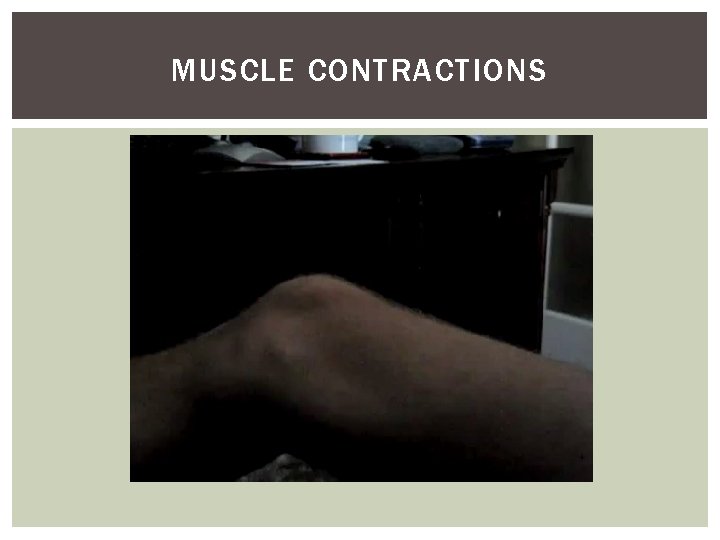
MUSCLE CONTRACTIONS
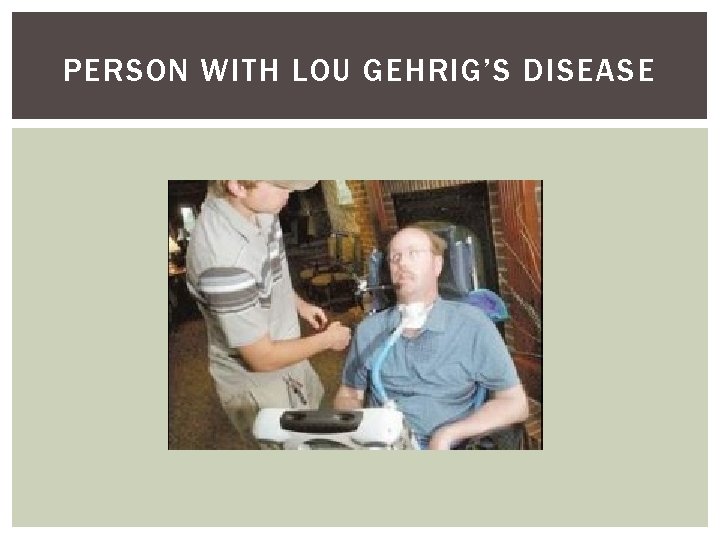
PERSON WITH LOU GEHRIG’S DISEASE
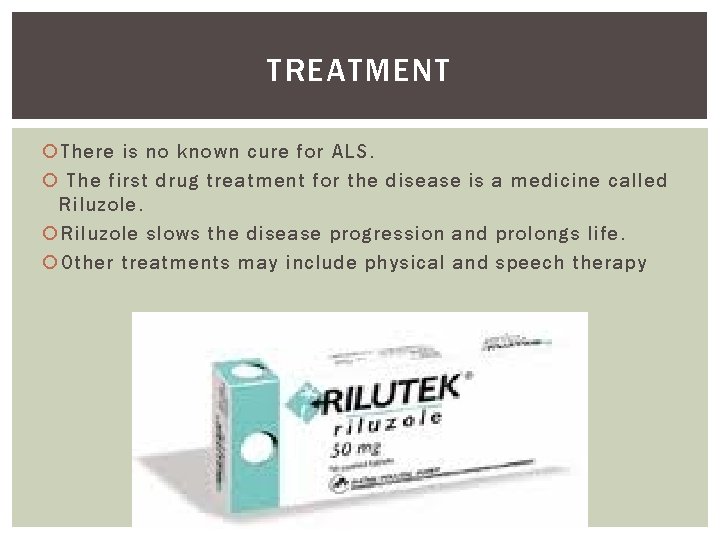
TREATMENT There is no known cure for ALS. The first drug treatment for the disease is a medicine called Riluzole slows the disease progression and prolongs life. Other treatments may include physical and speech therapy
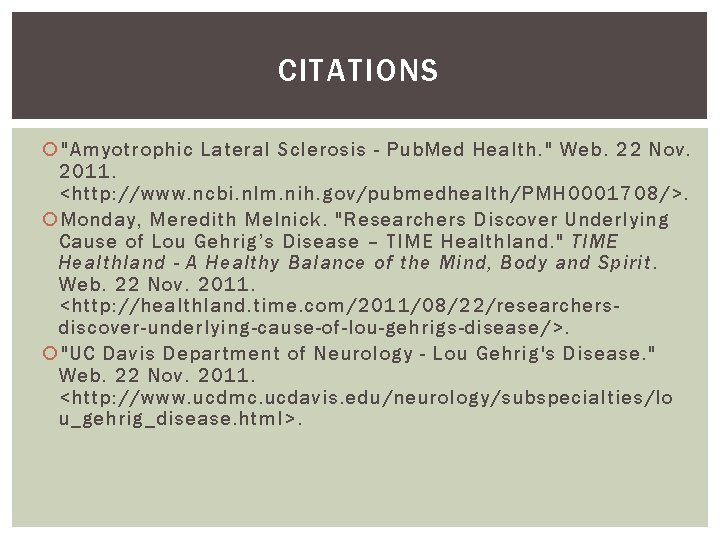
CITATIONS "Amyotrophic Lateral Sclerosis - Pub. Med Health. " Web. 22 Nov. 2011. <http: //www. ncbi. nlm. nih. gov/pubmedhealth/PMH 0001708/>. Monday, Meredith Melnick. "Researchers Discover Underlying Cause of Lou Gehrig’s Disease – TIME Healthland. " TIME Healthland - A Healthy Balance of the Mind, Body and Spirit. Web. 22 Nov. 2011. <http: //healthland. time. com/2011/08/22/researchersdiscover-underlying-cause-of-lou-gehrigs-disease/>. "UC Davis Department of Neurology - Lou Gehrig's Disease. " Web. 22 Nov. 2011. <http: //www. ucdmc. ucdavis. edu/neurology/subspecialties/lo u_gehrig_disease. html>.