
Loss Reduction Techniques for Slow Extraction and Beam


Loss Reduction Techniques for Slow Extraction and Beam Delivery from Synchrotrons Simulations and Recent Measurements at Med. Austron Pablo Arrutia Sota RHUL TECH at CERN JAI Fest, 6 th December 2019 2
Outline • Introduction: From synchrotron to user • Loss reduction at Extraction • Med. Austron Collaboration • Simulations • Measurements • Conclusion and Next Steps 3
Outline • Introduction: From synchrotron to user • Loss reduction at Extraction • Med. Austron Collaboration • Simulations • Measurements • Conclusion and Next Steps 4
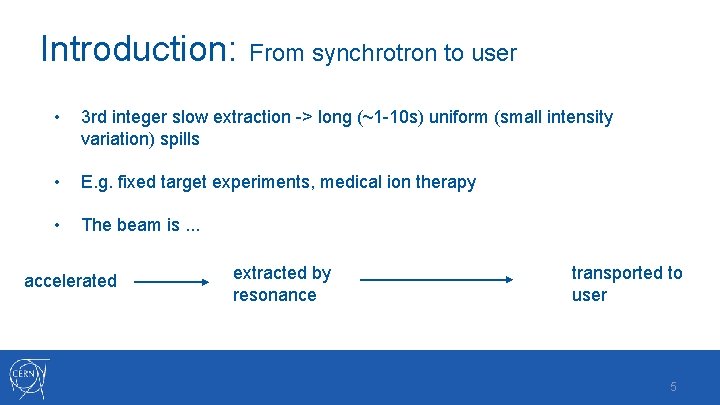
Introduction: From synchrotron to user • 3 rd integer slow extraction -> long (~1 -10 s) uniform (small intensity variation) spills • E. g. fixed target experiments, medical ion therapy • The beam is. . . accelerated extracted by resonance transported to user 5

Introduction: From synchrotron to user • 3 rd integer slow extraction -> long (~1 -10 s) uniform (small intensity variation) spills • E. g. fixed target experiments, medical ion therapy • The beam is. . . accelerated extracted by resonance SPLIT! transported to user 6
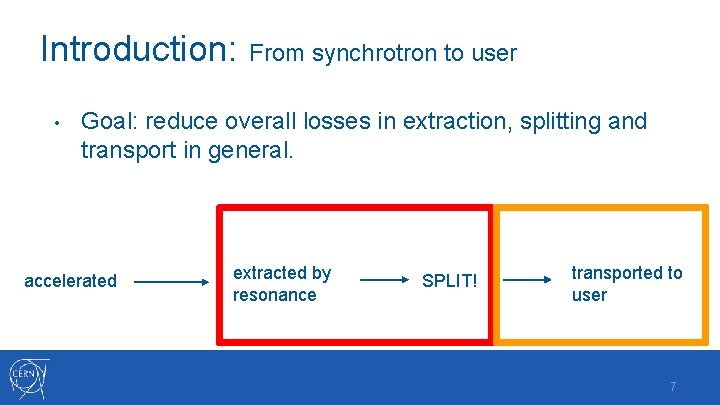
Introduction: • From synchrotron to user Goal: reduce overall losses in extraction, splitting and transport in general. accelerated extracted by resonance SPLIT! transported to user 7
Outline • Introduction: From synchrotron to user • Loss reduction at Extraction • Med. Austron Collaboration • Simulations • Measurements • Conclusion and Next Steps 8
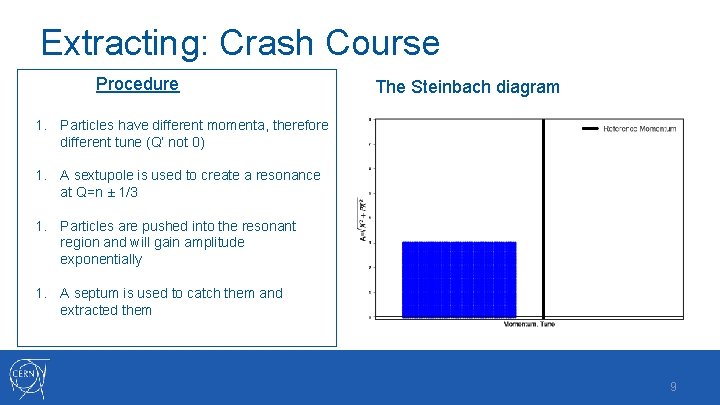
Extracting: Crash Course Procedure The Steinbach diagram 1. Particles have different momenta, therefore different tune (Q’ not 0) 1. A sextupole is used to create a resonance at Q=n ± 1/3 1. Particles are pushed into the resonant region and will gain amplitude exponentially 1. A septum is used to catch them and extracted them 9
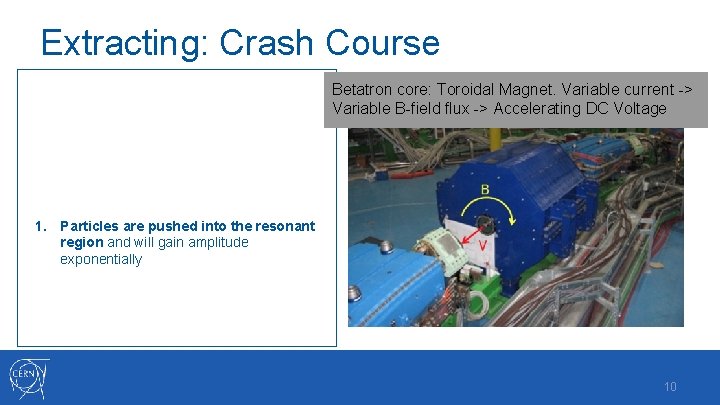
Extracting: Crash Course Procedure 1. Particles have different momenta, therefore different tune (Q’ not 0) The Steinbach Betatron core: Toroidal diagram Magnet. Variable current -> Variable B-field flux -> Accelerating DC Voltage 1. A sextupole is used to create a resonance at Q=n ± 1/3 1. Particles are pushed into the resonant region and will gain amplitude exponentially 1. A septum is used to catch them and extracted them 10
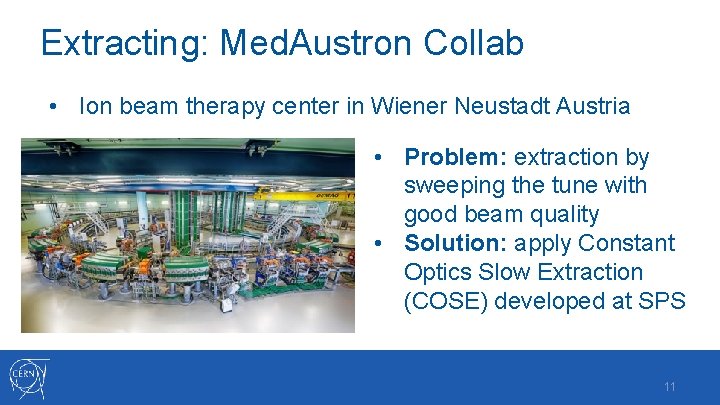
Extracting: Med. Austron Collab • Ion beam therapy center in Wiener Neustadt Austria • Problem: extraction by sweeping the tune with good beam quality • Solution: apply Constant Optics Slow Extraction (COSE) developed at SPS 11
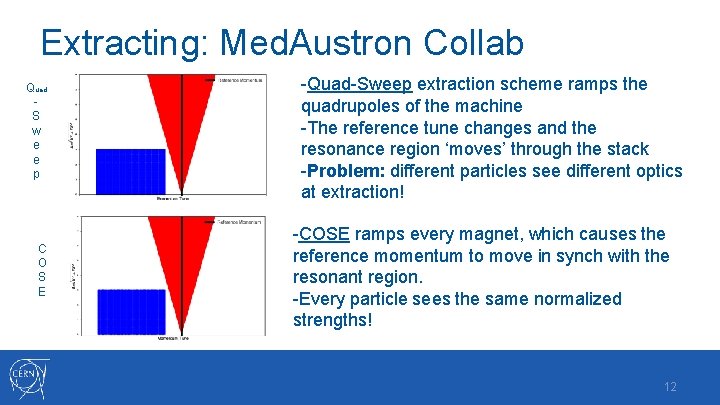
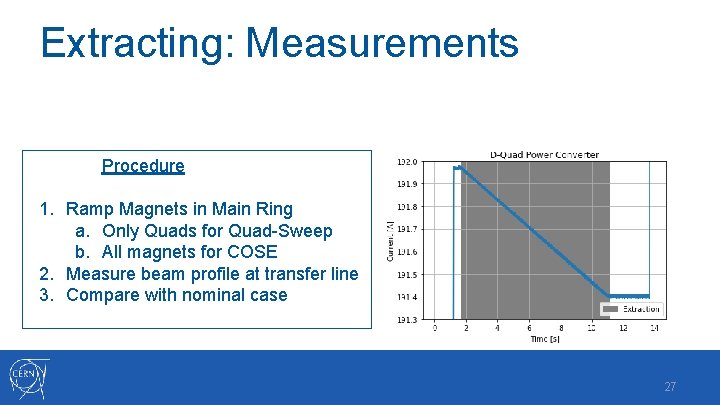
Extracting: Med. Austron Collab Quad S w e e p C O S E -Quad-Sweep extraction scheme ramps the quadrupoles of the machine -The reference tune changes and the resonance region ‘moves’ through the stack -Problem: different particles see different optics at extraction! -COSE ramps every magnet, which causes the reference momentum to move in synch with the resonant region. -Every particle sees the same normalized strengths! 12
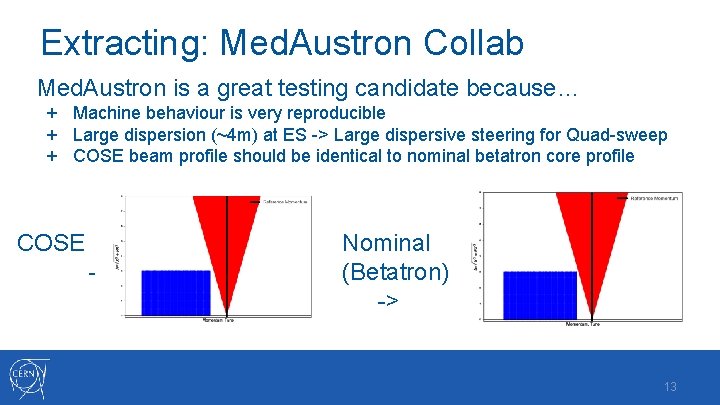
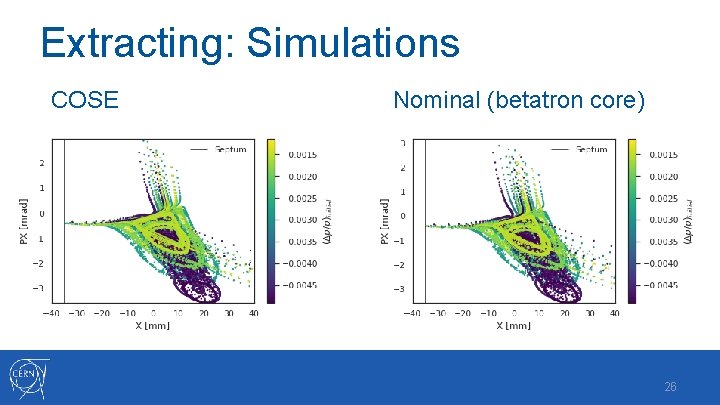
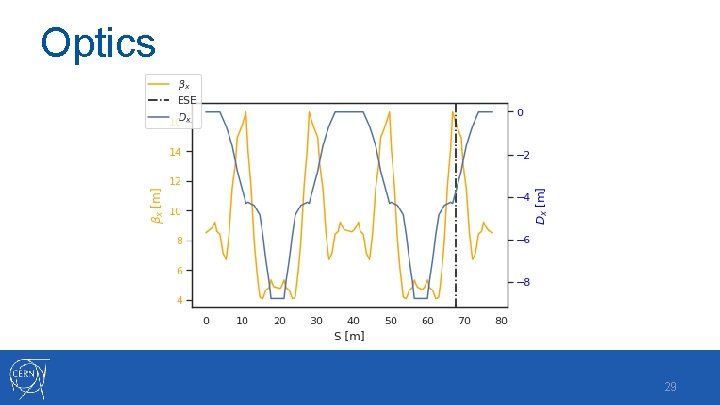
Extracting: Med. Austron Collab Med. Austron is a great testing candidate because… + Machine behaviour is very reproducible + Large dispersion (~4 m) at ES -> Large dispersive steering for Quad-sweep + COSE beam profile should be identical to nominal betatron core profile COSE -> Nominal (Betatron) -> 13
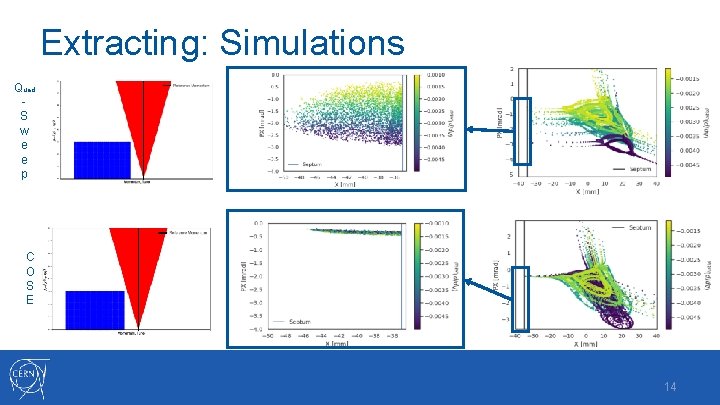
Extracting: Simulations Quad S w e e p C O S E 14
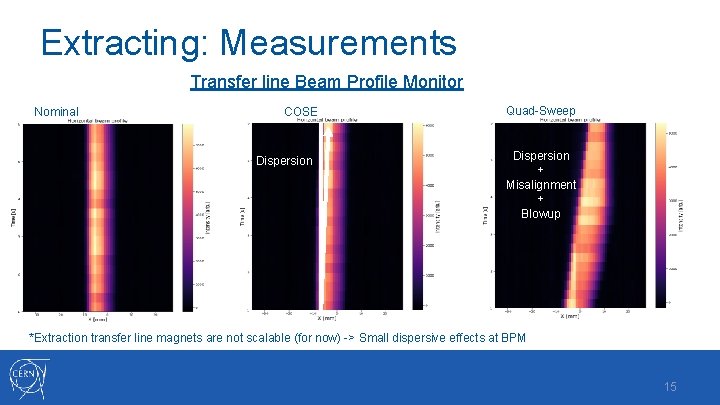
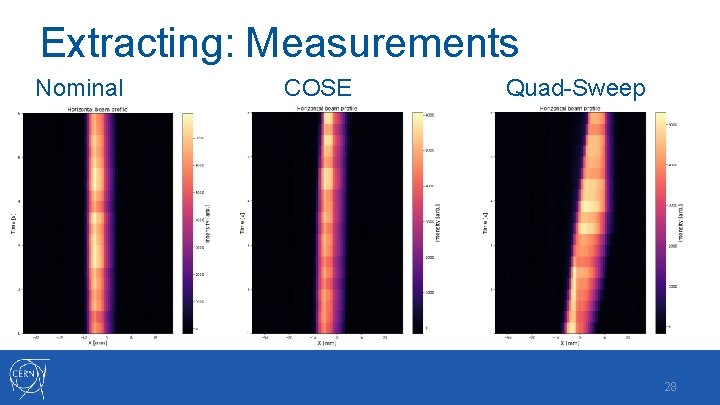
Extracting: Measurements Transfer line Beam Profile Monitor Nominal COSE Dispersion Quad-Sweep Dispersion + Misalignment + Blowup *Extraction transfer line magnets are not scalable (for now) -> Small dispersive effects at BPM 15
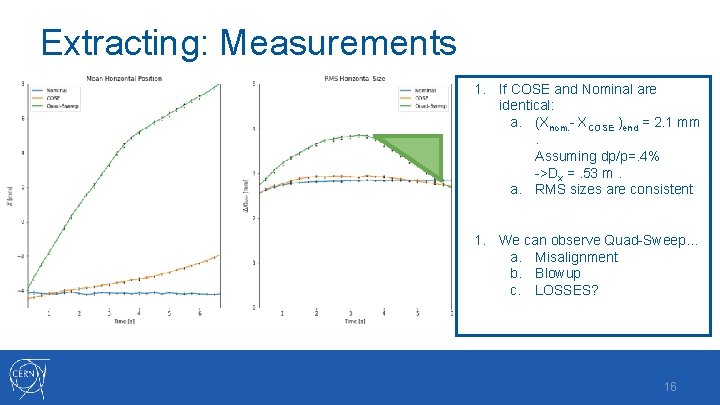
Extracting: Measurements 1. If COSE and Nominal are identical: a. (Xnom. - XCOSE )end = 2. 1 mm. Assuming dp/p=. 4% ->Dx =. 53 m. a. RMS sizes are consistent 1. We can observe Quad-Sweep. . . a. Misalignment b. Blowup c. LOSSES? 16
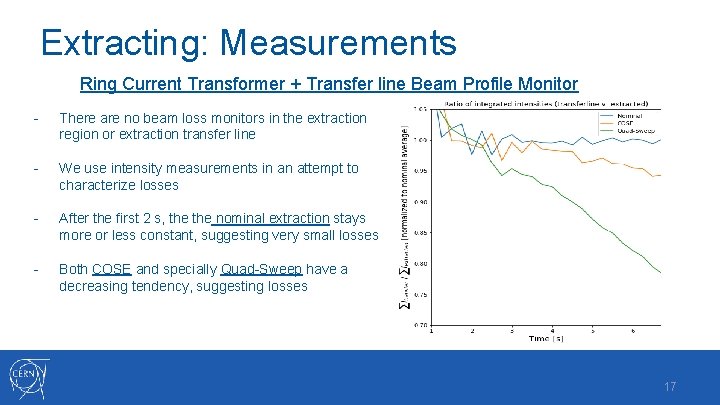
Extracting: Measurements Ring Current Transformer + Transfer line Beam Profile Monitor - There are no beam loss monitors in the extraction region or extraction transfer line - We use intensity measurements in an attempt to characterize losses - After the first 2 s, the nominal extraction stays more or less constant, suggesting very small losses - Both COSE and specially Quad-Sweep have a decreasing tendency, suggesting losses 17
Outline • Introduction: From synchrotron to user • Loss reduction at Extraction • Med. Austron Collaboration • Simulations • Measurements • Conclusion and Next Steps 18
Conclusion & Next Steps Constant Optics Slow Extraction was implemented at Med. Austron to show its loss reduction capabilities vs a quadrupole sweep - Conclusion: COSE improves performance of a Quad-Sweep extraction scheme Next steps: Further loss characterization On a slightly different note… Plans to look into loss reduction techniques for beam splitting. Some results obtained by Martin Tat (Oxford, Summer Student) can be found in the extra slides 19

Thank you! Pablo Arrutia Sota JAI Fest, 6 th December 2019 20
References - - - M. Tat, Beam losses at the TT 20 Splitters. CDS V. Kain, F. M. Velotti, M. A. Fraser, B. Goddard, J. Prieto, L. S. Stoel, and M. Pari, Resonant slow extraction with constant optics for improved separatrix control at the extraction septum. CDS E. Bressi, L. Falbo, C. Priano, S. Foglio, Betatron Core Slow Extraction at CNAO https: //cerncourier. com/a/austrian-synchrotron-debuts-carbon-ion-cancertreatment/ 21

Extra slides Pablo Arrutia Sota JAI Fest, 6 th December 2019 22
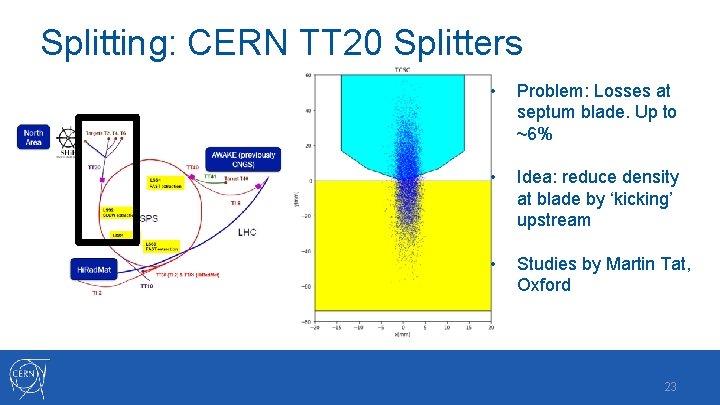
Splitting: CERN TT 20 Splitters • Problem: Losses at septum blade. Up to ~6% • Idea: reduce density at blade by ‘kicking’ upstream • Studies by Martin Tat, Oxford 23
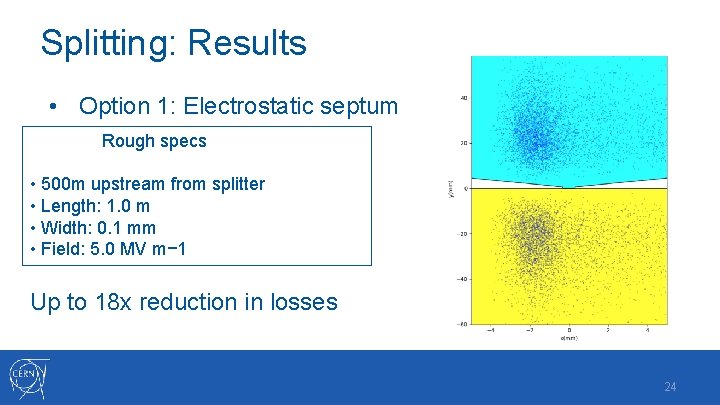
Splitting: Results • Option 1: Electrostatic septum Rough specs • 500 m upstream from splitter • Length: 1. 0 m • Width: 0. 1 mm • Field: 5. 0 MV m− 1 Up to 18 x reduction in losses 24
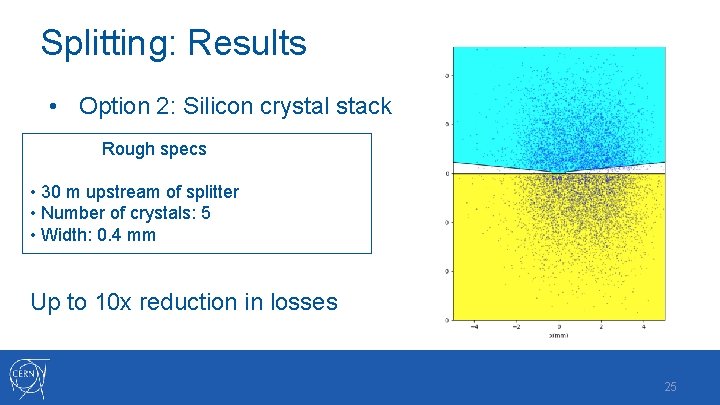
Splitting: Results • Option 2: Silicon crystal stack Rough specs • 30 m upstream of splitter • Number of crystals: 5 • Width: 0. 4 mm Up to 10 x reduction in losses 25
Extracting: Simulations COSE Nominal (betatron core) 26
Extracting: Measurements Procedure 1. Ramp Magnets in Main Ring a. Only Quads for Quad-Sweep b. All magnets for COSE 2. Measure beam profile at transfer line 3. Compare with nominal case 27
Extracting: Measurements Nominal COSE Quad-Sweep 28
Optics 29

- Slides: 30