
Losing Energy and the 10 Rule Energy Units
- Slides: 28
Losing Energy and the 10% Rule
Energy Units • energy is typically measured in joules (J) or calories (cal)
Energy Units calorie vs. Calorie vs. Kilocalorie • • Calorie • • the amount of energy necessary to raise 1 gram of water 1 ° C A food Calorie = kilocalorie • 1, 000 calories
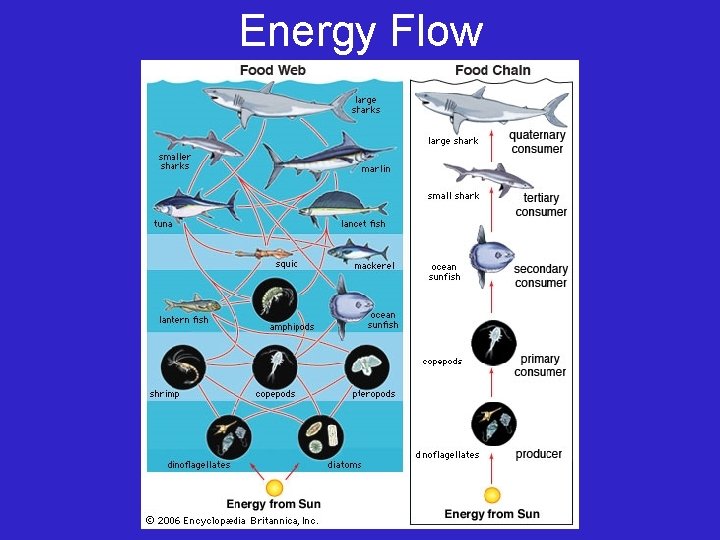
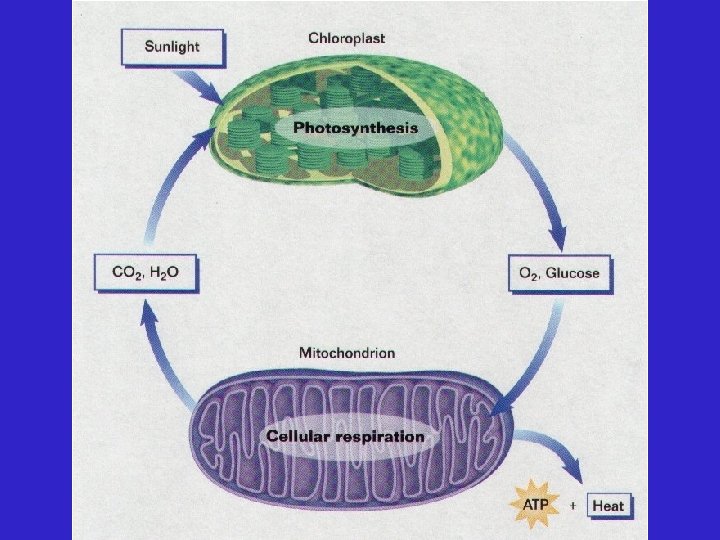
An Important Reminder… Energy flows in one direction through an ecosystem, from the sun or inorganic compounds to producers (organisms that can make their own food) through various levels to consumers (organisms that rely on other organisms for food). Your body gets the energy and materials it needs for growth and repair from the foods you eat.
Think, Pair, Share Warm-up Ø Think Spend 30 seconds in silence thinking about your response to yourself Describe how the number of species in lower trophic levels Ø Pair compares with the l Discuss with your partner number of species in (or table groups) what you higher trophic levels. l thought about during the 30 seconds Ø Share l Share your table’s discussion with the whole class. Explain a reason for why this occurs.
Energy Flow
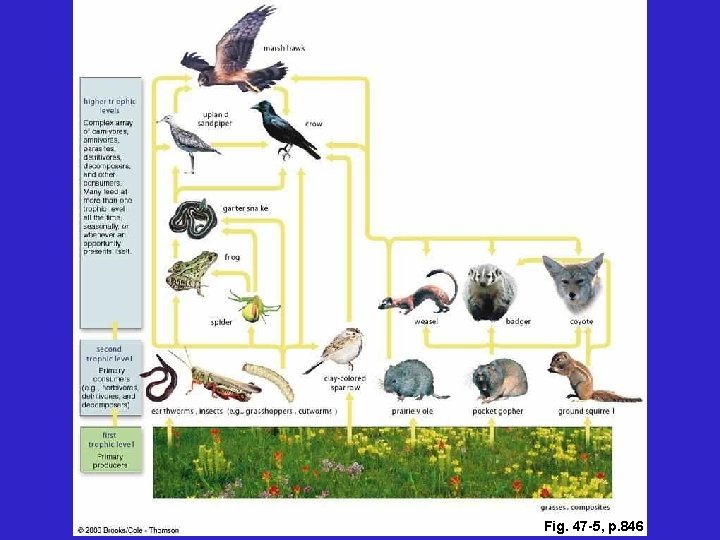
Fig. 47 -5, p. 846
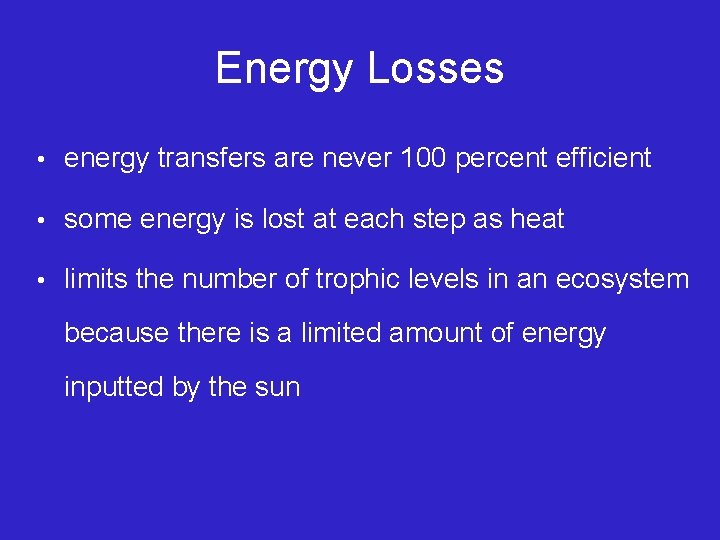
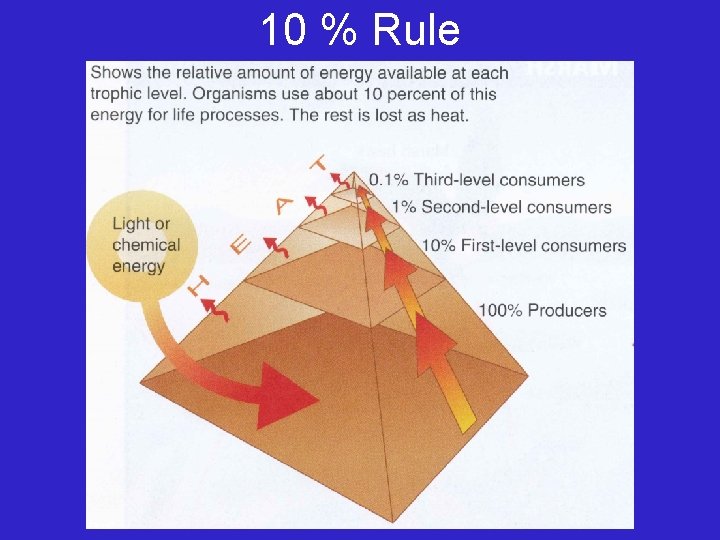
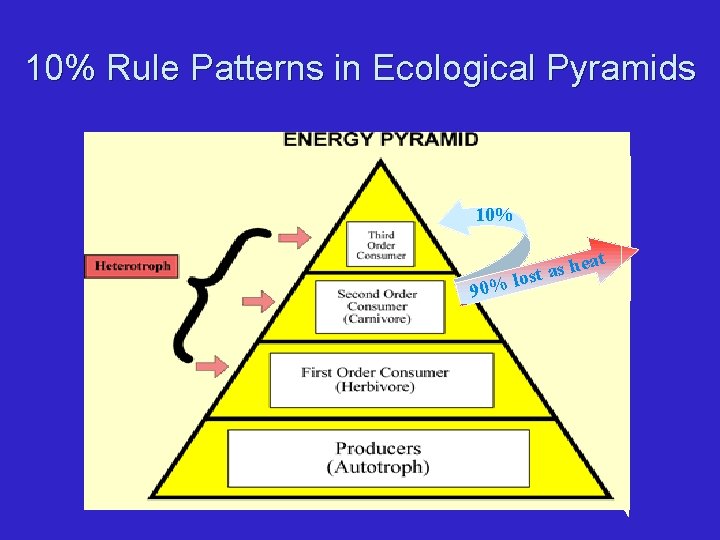
Energy Losses • energy transfers are never 100 percent efficient • some energy is lost at each step as heat • limits the number of trophic levels in an ecosystem because there is a limited amount of energy inputted by the sun
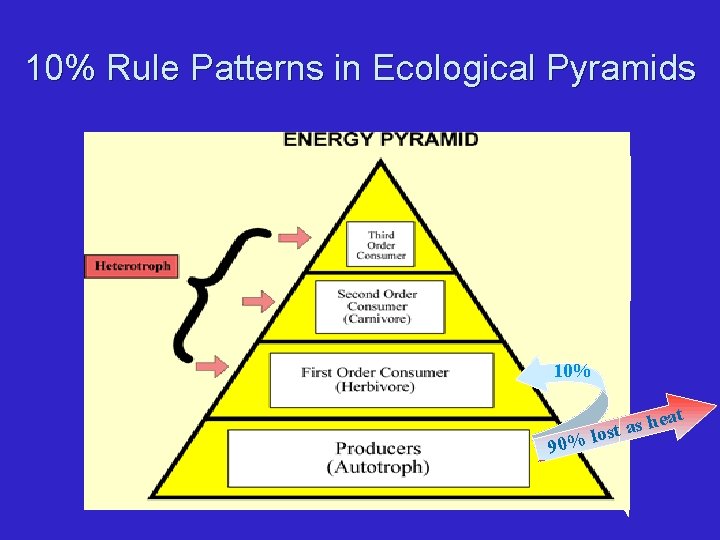
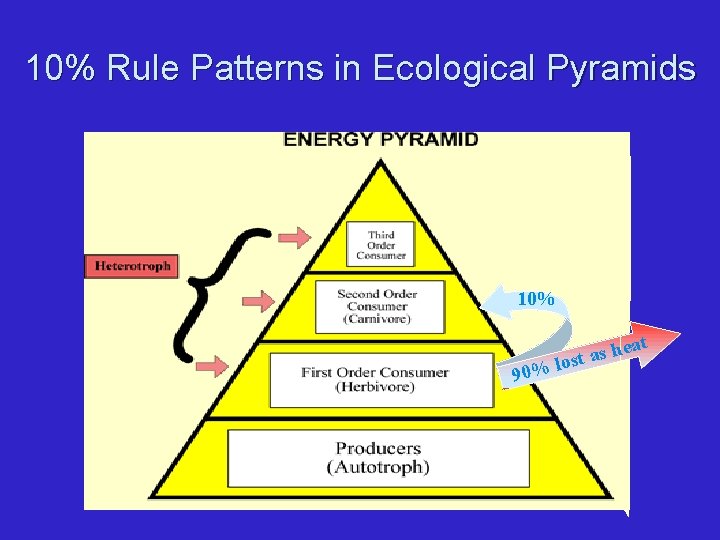
10 % Rule • the maximum amount of energy that passes from one trophic level to the next is 10 %
10 % Rule
10 % Rule • Why do you think only 10% of the total energy from 1 trophic level is passed to the next?
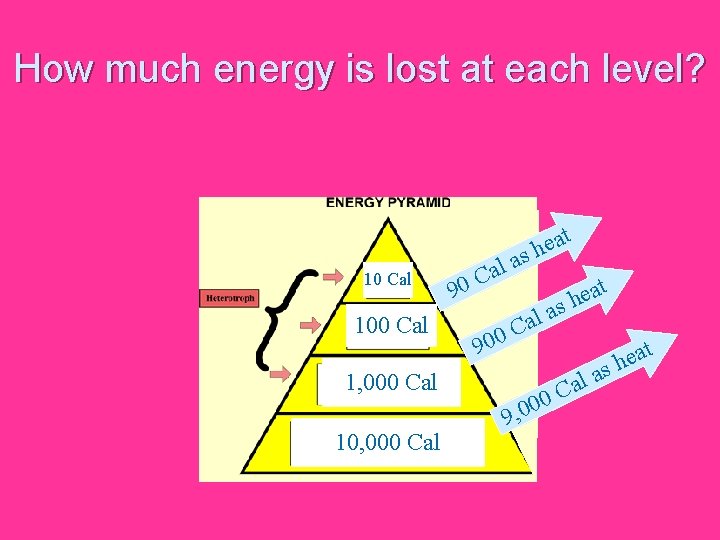
Reasons for Decrease in Energy • the remaining 90 % of the energy is not available to the next trophic level • • energy is “used up” for daily life activities not all organisms that die are eaten by animals in the next trophic level not all parts of an organism are eaten and digested for energy some energy is lost as heat created during cellular respiration
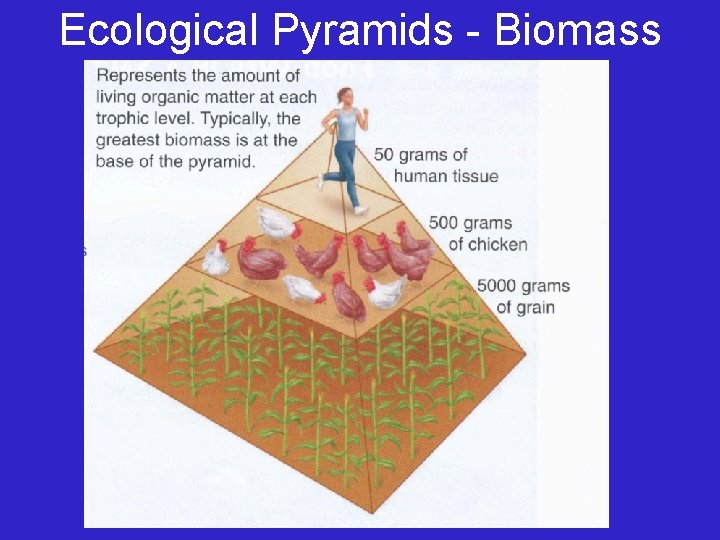
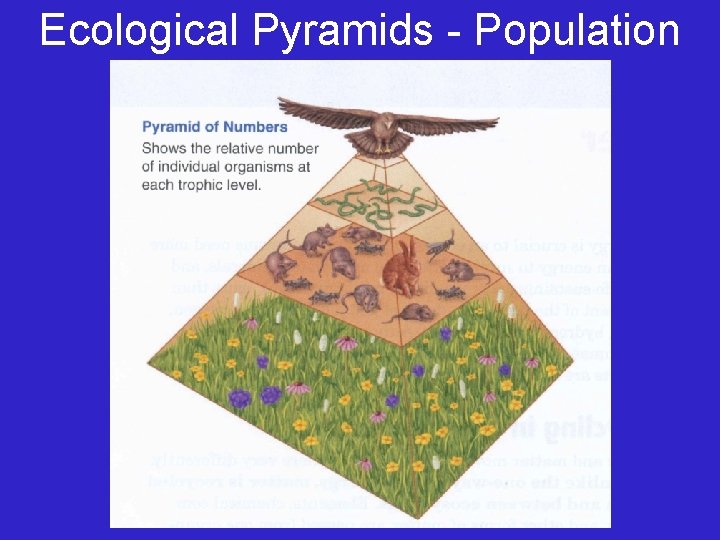
10 % Rule Predictions • can be used to predict the flow of energy, population numbers, and amounts of biomass • biomass – amount of biological matter
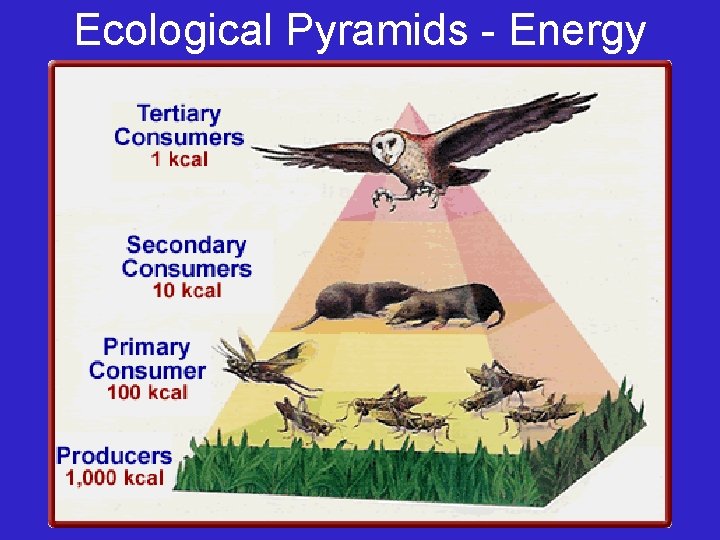
Ecological Pyramid • diagram that displays the 10% Rule and loss of energy, population numbers, or amounts of biomass
Ecological Pyramids - Energy
Ecological Pyramids - Biomass
Ecological Pyramids - Population
10% Rule Patterns in Ecological Pyramids 10% at 90% he s a t s lo
10% Rule Patterns in Ecological Pyramids 10% at 90% he s a t s lo
10% Rule Patterns in Ecological Pyramids 10% at 90% he s a t s lo
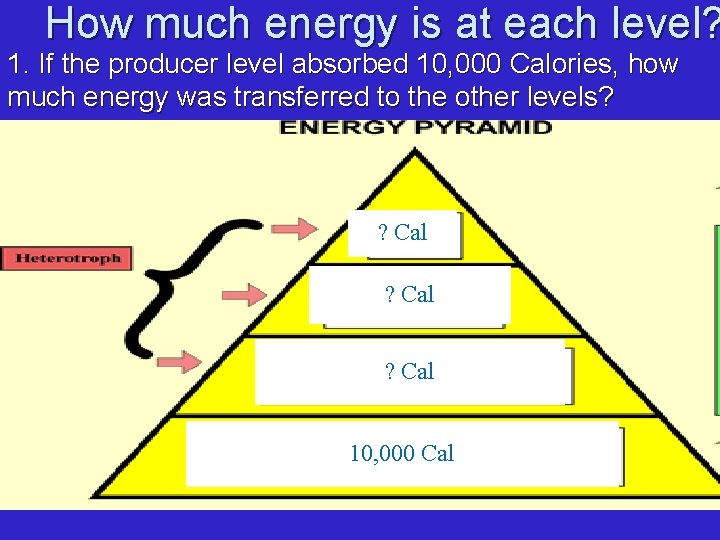
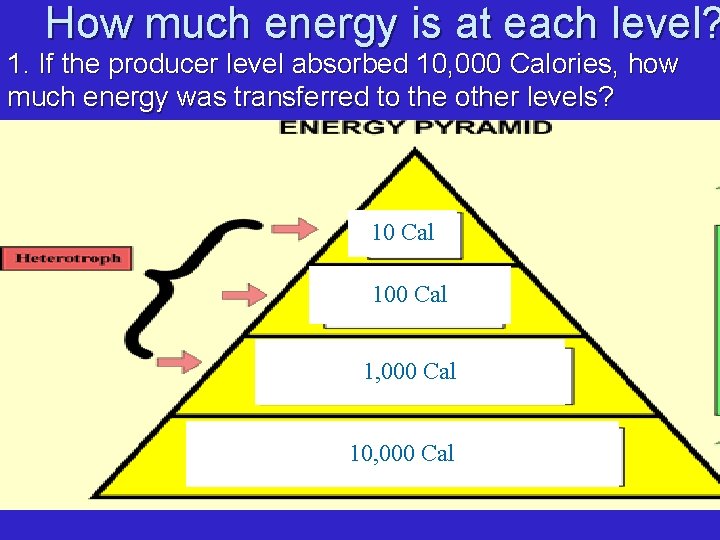
How much energy is at each level? 1. If the producer level absorbed 10, 000 Calories, how much energy was transferred to the other levels? ? Cal 10, 000 Cal
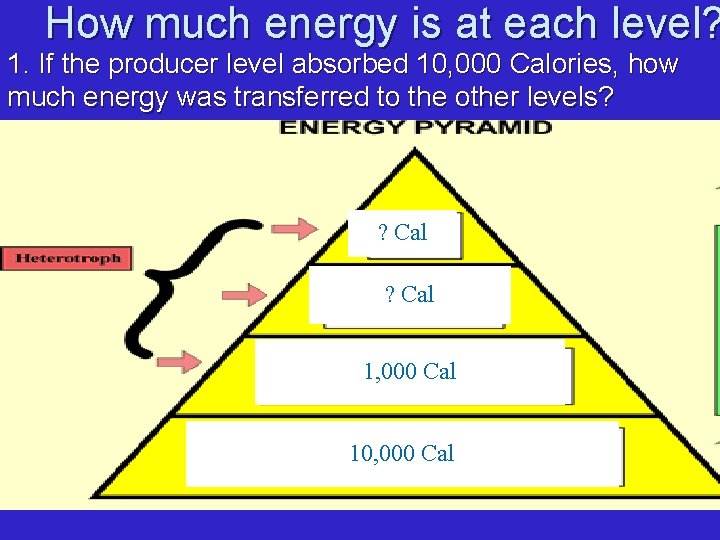
How much energy is at each level? 1. If the producer level absorbed 10, 000 Calories, how much energy was transferred to the other levels? ? Cal 1, 000 Cal 10, 000 Cal
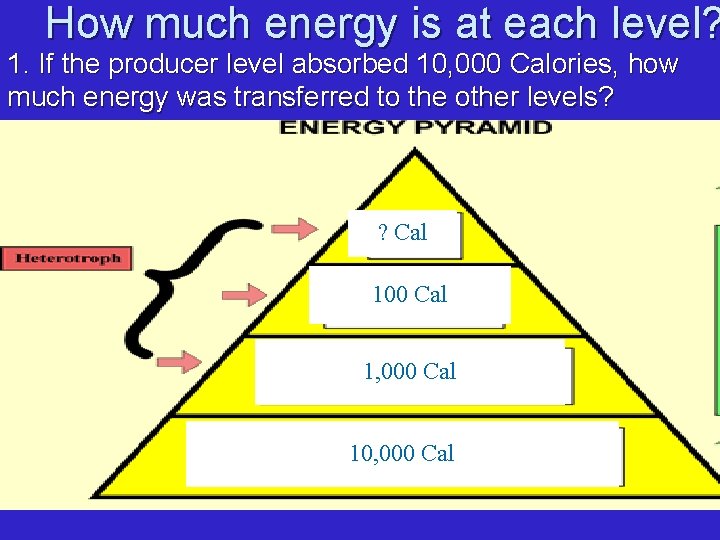
How much energy is at each level? 1. If the producer level absorbed 10, 000 Calories, how much energy was transferred to the other levels? ? Cal 100 Cal 1, 000 Cal 10, 000 Cal
How much energy is at each level? 1. If the producer level absorbed 10, 000 Calories, how much energy was transferred to the other levels? 10 Cal 100 Cal 1, 000 Cal 10, 000 Cal
How much energy is lost at each level? 10 Cal 100 Cal t a e sh a l a 0 C 9 900 a l a C 1, 000 Cal 10, 000 Cal al C 0 0 9, 0 t a e sh t a e h as
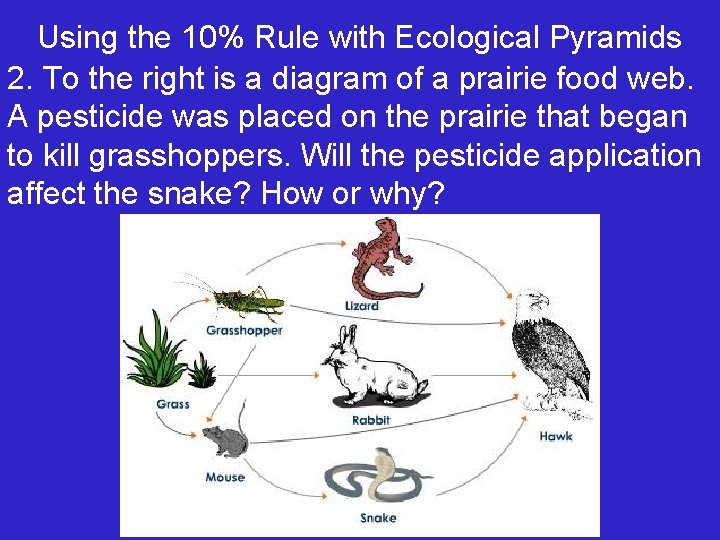
Using the 10% Rule with Ecological Pyramids 2. To the right is a diagram of a prairie food web. A pesticide was placed on the prairie that began to kill grasshoppers. Will the pesticide application affect the snake? How or why?
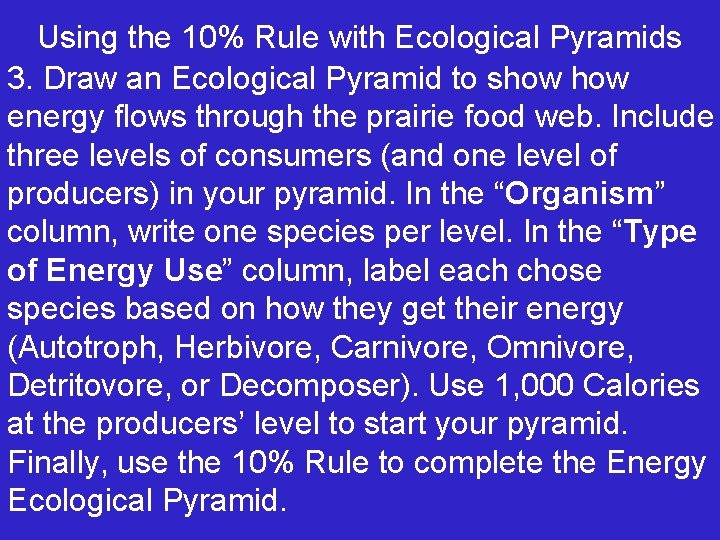
Using the 10% Rule with Ecological Pyramids 3. Draw an Ecological Pyramid to show energy flows through the prairie food web. Include three levels of consumers (and one level of producers) in your pyramid. In the “Organism” column, write one species per level. In the “Type of Energy Use” column, label each chose species based on how they get their energy (Autotroph, Herbivore, Carnivore, Omnivore, Detritovore, or Decomposer). Use 1, 000 Calories at the producers’ level to start your pyramid. Finally, use the 10% Rule to complete the Energy Ecological Pyramid.