
LOSER Antarctic Notothenioid Fishes by Priscilla WatsonWynn Antarctica
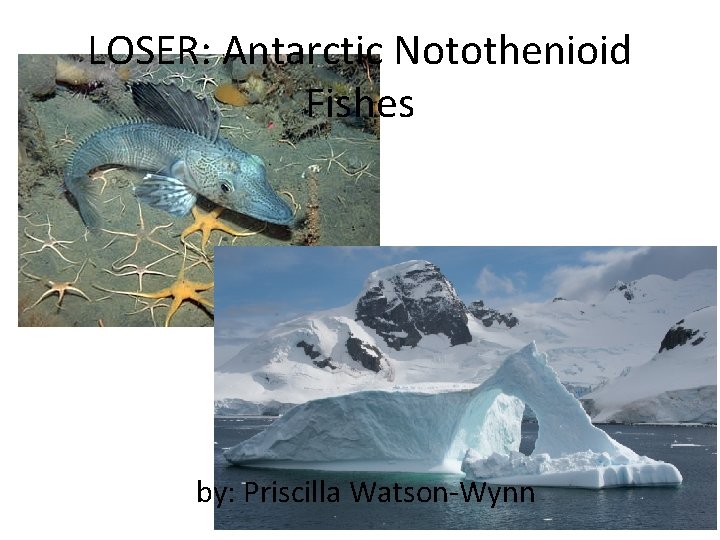
LOSER: Antarctic Notothenioid Fishes by: Priscilla Watson-Wynn
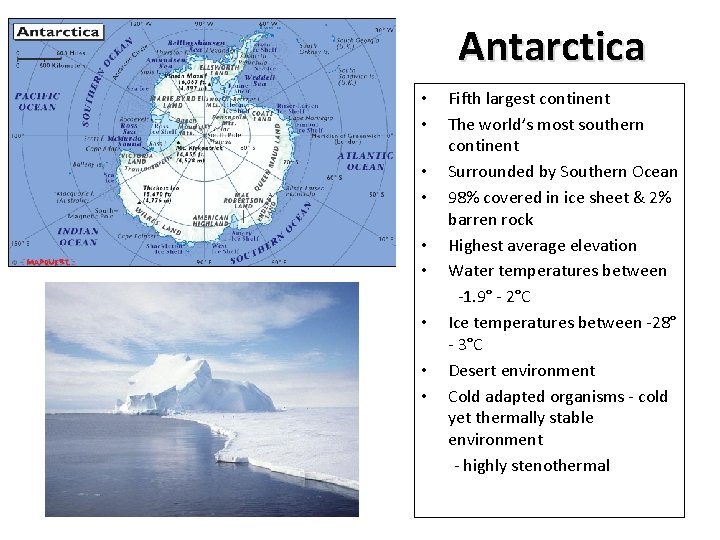
Antarctica • • • Fifth largest continent The world’s most southern continent Surrounded by Southern Ocean 98% covered in ice sheet & 2% barren rock Highest average elevation Water temperatures between -1. 9° - 2°C Ice temperatures between -28° - 3°C Desert environment Cold adapted organisms - cold yet thermally stable environment - highly stenothermal
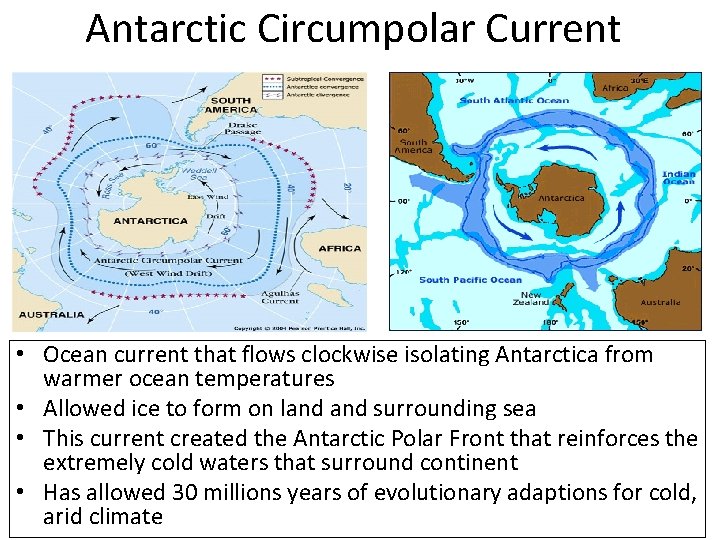
Antarctic Circumpolar Current • Ocean current that flows clockwise isolating Antarctica from warmer ocean temperatures • Allowed ice to form on land surrounding sea • This current created the Antarctic Polar Front that reinforces the extremely cold waters that surround continent • Has allowed 30 millions years of evolutionary adaptions for cold, arid climate
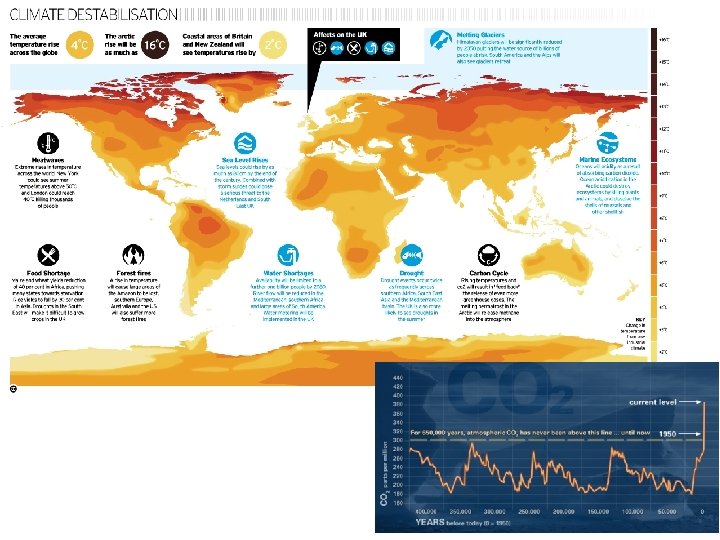
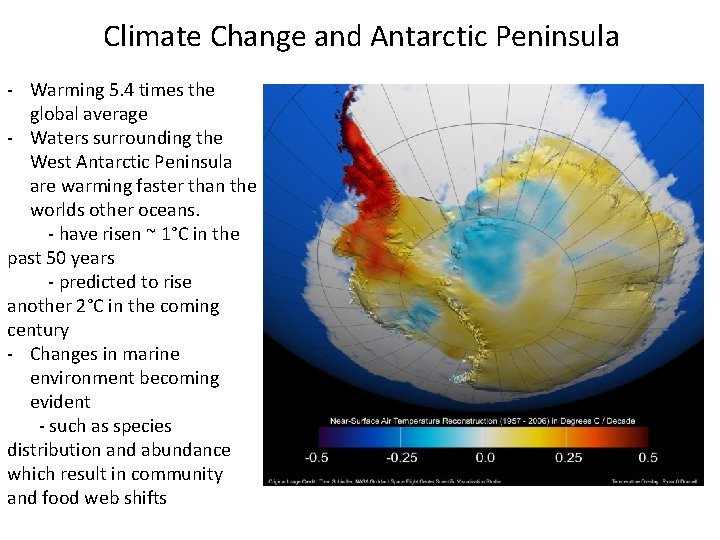
Climate Change and Antarctic Peninsula - Warming 5. 4 times the global average - Waters surrounding the West Antarctic Peninsula are warming faster than the worlds other oceans. - have risen ~ 1°C in the past 50 years - predicted to rise another 2°C in the coming century - Changes in marine environment becoming evident - such as species distribution and abundance which result in community and food web shifts
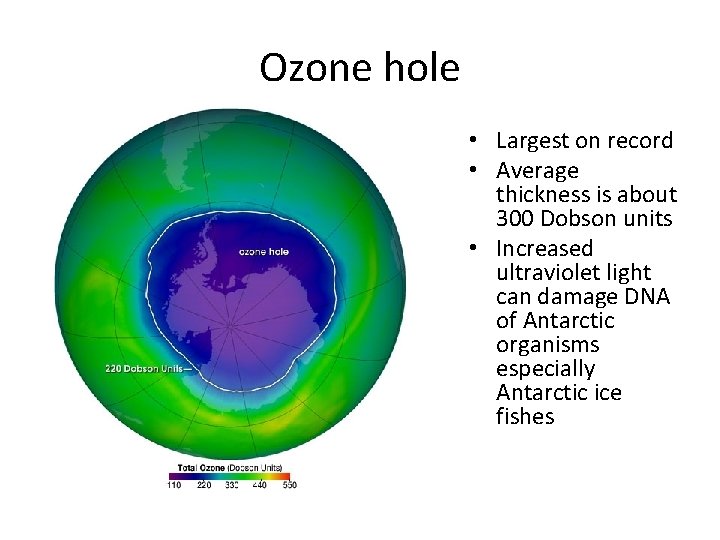
Ozone hole • Largest on record • Average thickness is about 300 Dobson units • Increased ultraviolet light can damage DNA of Antarctic organisms especially Antarctic ice fishes
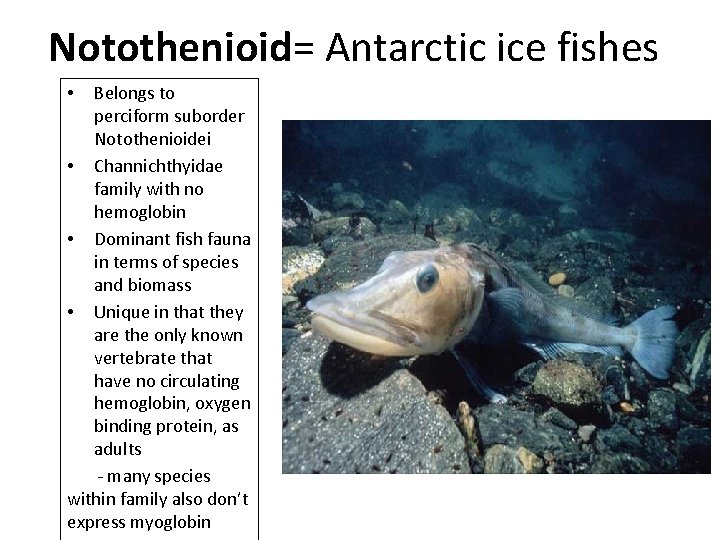
Notothenioid= Antarctic ice fishes Belongs to perciform suborder Notothenioidei • Channichthyidae family with no hemoglobin • Dominant fish fauna in terms of species and biomass • Unique in that they are the only known vertebrate that have no circulating hemoglobin, oxygen binding protein, as adults - many species within family also don’t express myoglobin •
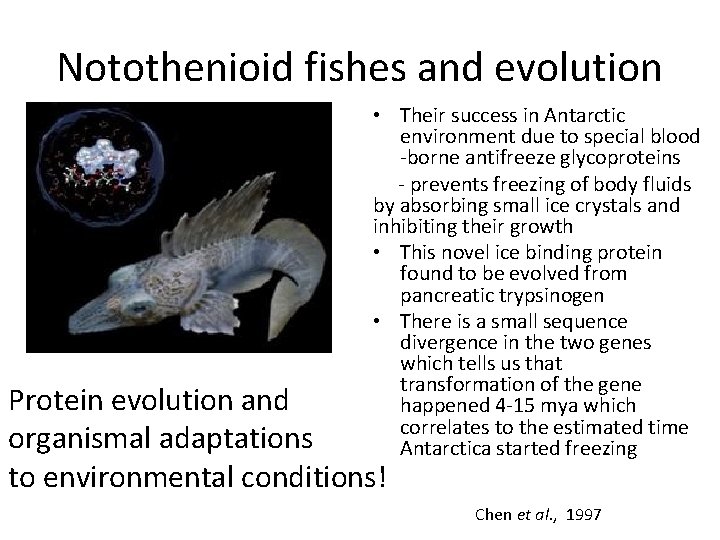
Notothenioid fishes and evolution • Their success in Antarctic environment due to special blood -borne antifreeze glycoproteins - prevents freezing of body fluids by absorbing small ice crystals and inhibiting their growth • This novel ice binding protein found to be evolved from pancreatic trypsinogen • There is a small sequence divergence in the two genes which tells us that transformation of the gene happened 4 -15 mya which correlates to the estimated time Antarctica started freezing Protein evolution and organismal adaptations to environmental conditions! Chen et al. , 1997
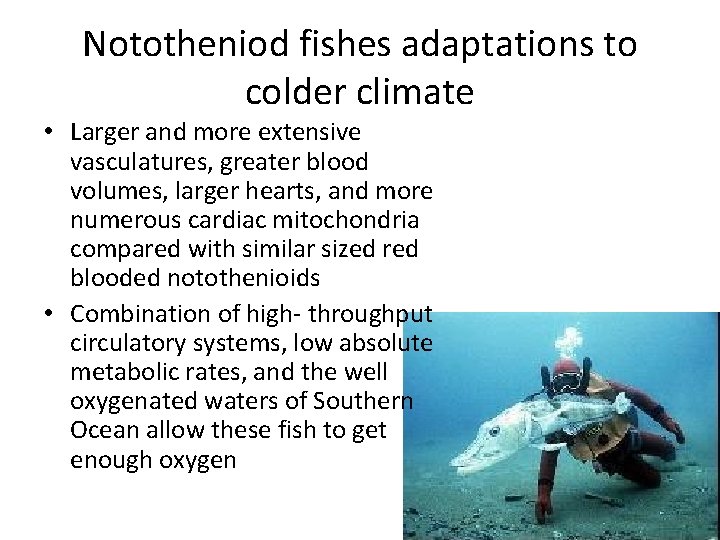
Nototheniod fishes adaptations to colder climate • Larger and more extensive vasculatures, greater blood volumes, larger hearts, and more numerous cardiac mitochondria compared with similar sized red blooded notothenioids • Combination of high- throughput circulatory systems, low absolute metabolic rates, and the well oxygenated waters of Southern Ocean allow these fish to get enough oxygen
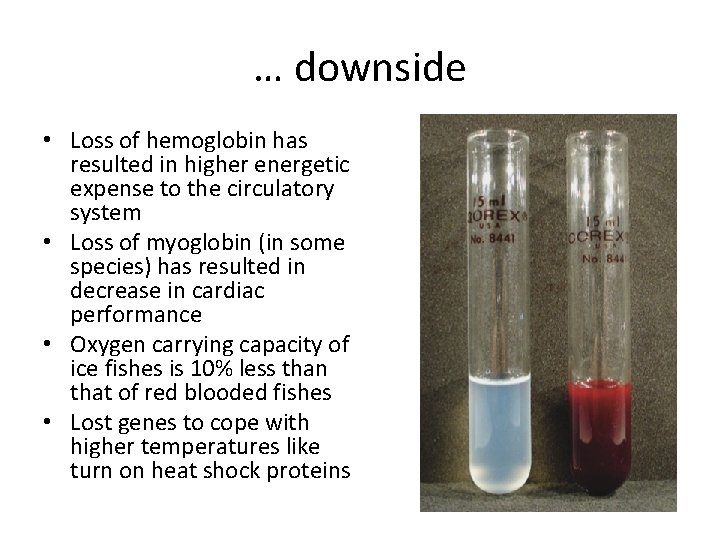
… downside • Loss of hemoglobin has resulted in higher energetic expense to the circulatory system • Loss of myoglobin (in some species) has resulted in decrease in cardiac performance • Oxygen carrying capacity of ice fishes is 10% less than that of red blooded fishes • Lost genes to cope with higher temperatures like turn on heat shock proteins
As temperatures rise… • Warmer water holds less dissolved oxygen, thus there will be less oxygen available to ice fish with no hemoglobin • This will result in metabolism increase creating a mismatch between oxygen supply and demand - aka hypoxia
Thermal Tolerance of Antarctic Notothenioid Fishes Correlates with Level of Circulating Hemoglobin ( Beers, J. , Sidell, B. , 2011) • Evaluate whethermal tolerance limits correlate with readily accessible metrics of blood oxygen- carrying capacity (e. g. , hematocrit) of both white and red-blooded species • Assess the capacity of a notothenioid species (Notothenia coriiceps) to adjust thermal limits in response to 1 week exposure at a modestly increased environmental temperature of 4°C
Methods • Five species of Antarctic notothenioid fishes from Antarctic peninsula, April-May 2007 and 2009 - Chaenocephalus aceratus, Chionodraco rastrospinosus, Notothenia coriiceps, Gobionotothen gibberisfrons, Lepidonotothen squamifrons • Thermal tolerance experiments -Temperature was elevated acutely from ambient temperatures at a constant rate of 3. 6°C h-1 - CTmax defined as the temperature where animals lost righting response (LRR) -exposed a group of N. coriiceps at 4°C for 1 week • Drew blood from fishes to determine plasma lactate concentration • Total RNA was extracted from brain, heart, and pectoral muscle tissue of C. rastrospinosus and N. coriiceps - measure the m. RNA levels for two hypoxia-inducible genes, HIF-1α and PHD 2
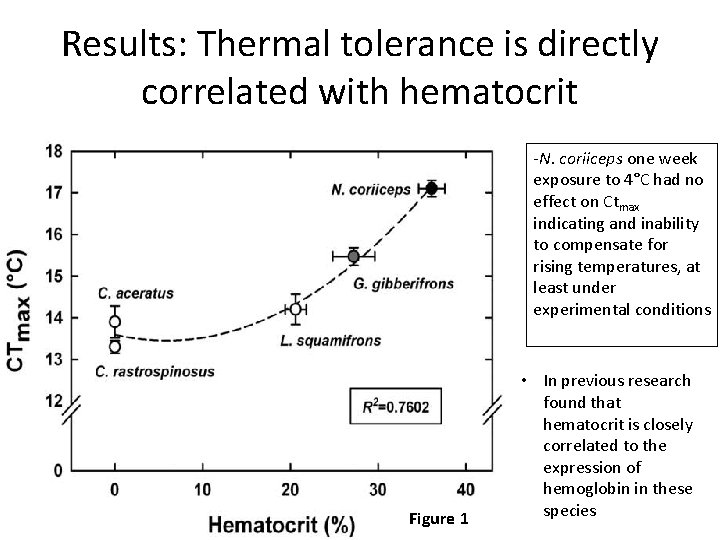
Results: Thermal tolerance is directly correlated with hematocrit -N. coriiceps one week exposure to 4°C had no effect on Ctmax indicating and inability to compensate for rising temperatures, at least under experimental conditions Figure 1 • In previous research found that hematocrit is closely correlated to the expression of hemoglobin in these species
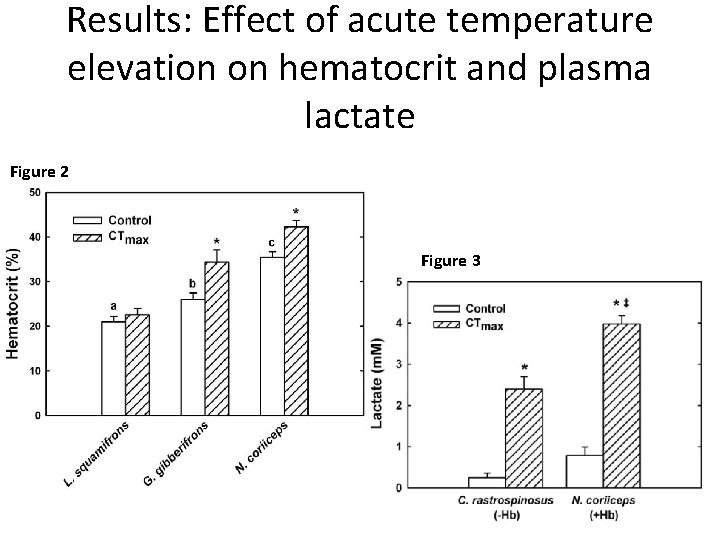
Results: Effect of acute temperature elevation on hematocrit and plasma lactate Figure 2 Figure 3
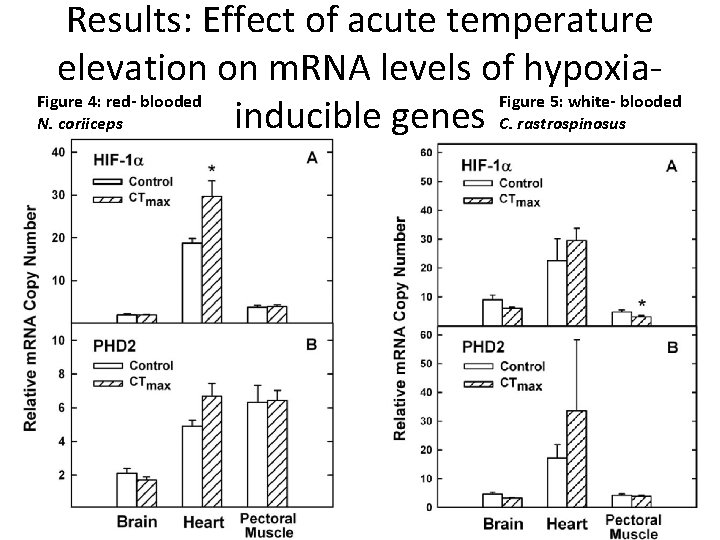
Results: Effect of acute temperature elevation on m. RNA levels of hypoxia. Figure 4: red- blooded Figure 5: white- blooded inducible genes C. rastrospinosus N. coriiceps
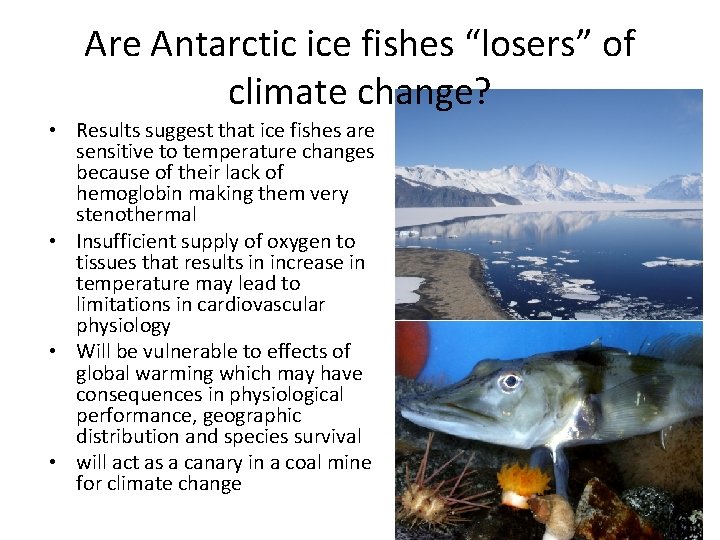
Are Antarctic ice fishes “losers” of climate change? • Results suggest that ice fishes are sensitive to temperature changes because of their lack of hemoglobin making them very stenothermal • Insufficient supply of oxygen to tissues that results in increase in temperature may lead to limitations in cardiovascular physiology • Will be vulnerable to effects of global warming which may have consequences in physiological performance, geographic distribution and species survival • will act as a canary in a coal mine for climate change
- Slides: 17