
Los verbos tener hacer y poner Las clases
Los verbos tener, hacer, y poner Las clases de Sra. Schwarz Realidades 1 Sra. Schwarz
El verbo tener The verb tener means “to have. ” Tener is a stem-changing verb with an irregular yo form. Because tener is irregular, its forms must be memorized. Let’s see how to conjugate tener! Sra. Schwarz
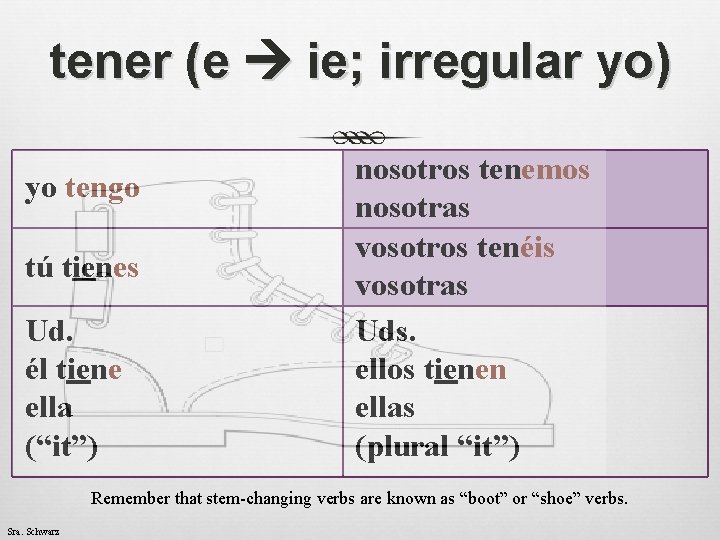
tener (e ie; irregular yo) yo tengo tú tienes Ud. él tiene ella (“it”) nosotros tenemos nosotras vosotros tenéis vosotras Uds. ellos tienen ellas (plural “it”) Remember that stem-changing verbs are known as “boot” or “shoe” verbs. Sra. Schwarz
El verbo tener The verb tener is used to show relationship or possession. Tengo un hermano mayor. I have an older brother. Tenemos un regalo para Teresa. We have a gift for Teresa. Sra. Schwarz
El verbo tener Some expressions in Spanish use tener where English uses “to be. ” Take note of these expressions because you will see them again. Sra. Schwarz
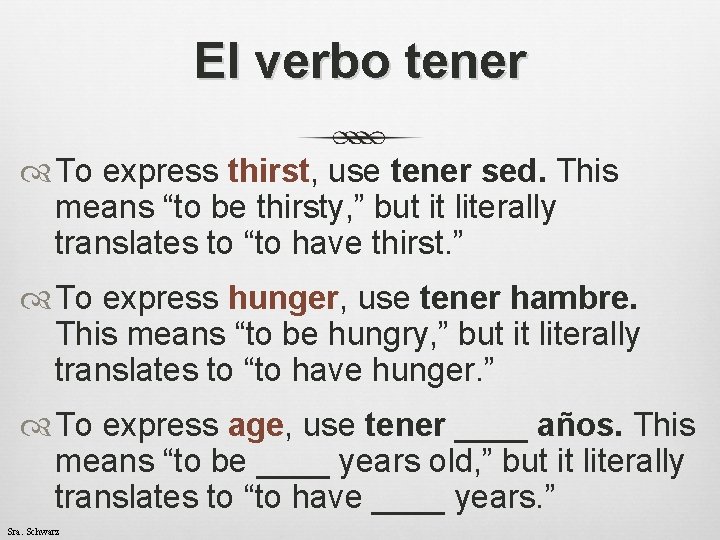
El verbo tener To express thirst, use tener sed. This means “to be thirsty, ” but it literally translates to “to have thirst. ” To express hunger, use tener hambre. This means “to be hungry, ” but it literally translates to “to have hunger. ” To express age, use tener ____ años. This means “to be ____ years old, ” but it literally translates to “to have ____ years. ” Sra. Schwarz
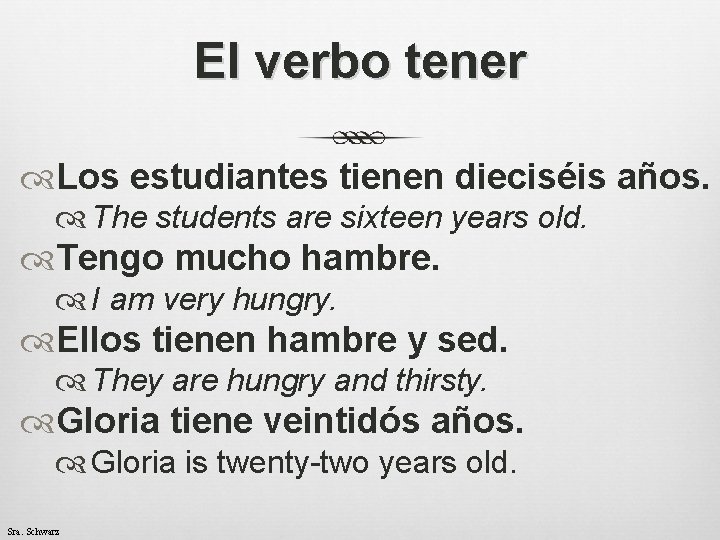
El verbo tener Los estudiantes tienen dieciséis años. The students are sixteen years old. Tengo mucho hambre. I am very hungry. Ellos tienen hambre y sed. They are hungry and thirsty. Gloria tiene veintidós años. Gloria is twenty-two years old. Sra. Schwarz
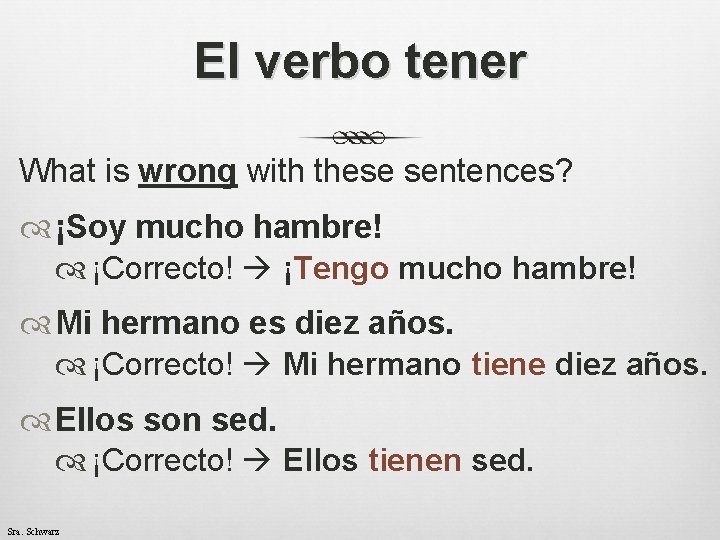
El verbo tener What is wrong with these sentences? ¡Soy mucho hambre! ¡Correcto! ¡Tengo mucho hambre! Mi hermano es diez años. ¡Correcto! Mi hermano tiene diez años. Ellos son sed. ¡Correcto! Ellos tienen sed. Sra. Schwarz
tener + que + infinitivo Tener + que + infinitivo means “to have to” (do something). Tenemos que hacer ejercicio cada día. We have to exercise every day. Tengo que ir a la escuela hasta son las tres de la tarde. I have to go to school until 3: 00 in the afternoon. Sra. Schwarz

Hacer y poner Although this chapter does not include the verbs hacer and poner, these verbs are very important to know. Tener, hacer, and poner are all part of a group of verbs called “yo go” verbs. Verbs in the “yo go” group have irregular yo forms that end in “go. ” Sra. Schwarz

Hacer y poner Hacer means “to make” or “to do. ” Poner means “to put, ” “to place, ” or “to set. ” Hacer and poner are regular ER verbs in the present tense except for their yo forms: (yo) pongo (yo) hago Recognize that their yo forms are irregular, and just add regular ER verb endings to conjugate these verbs. Sra. Schwarz
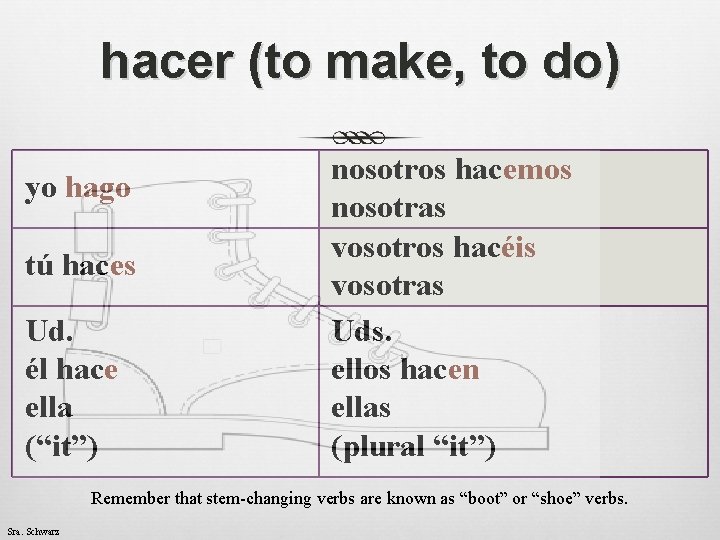
hacer (to make, to do) yo hago tú haces Ud. él hace ella (“it”) nosotros hacemos nosotras vosotros hacéis vosotras Uds. ellos hacen ellas (plural “it”) Remember that stem-changing verbs are known as “boot” or “shoe” verbs. Sra. Schwarz
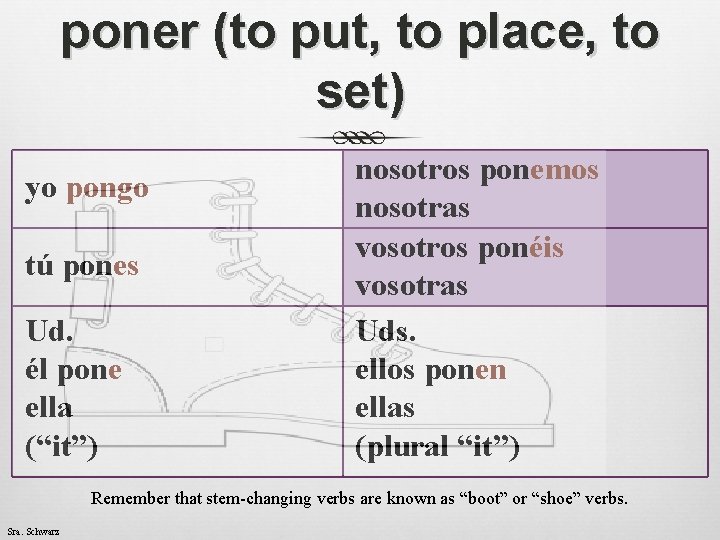
poner (to put, to place, to set) yo pongo tú pones Ud. él pone ella (“it”) nosotros ponemos nosotras vosotros ponéis vosotras Uds. ellos ponen ellas (plural “it”) Remember that stem-changing verbs are known as “boot” or “shoe” verbs. Sra. Schwarz
- Slides: 13