
Los Verbos Reflexivos Reflexive Verbs Unidad 2Etapa 1
Los Verbos Reflexivos (Reflexive Verbs) Unidad 2/Etapa 1 español 2
What is a reflexive verb? l It is a when the action of the verb is done to oneself. l Think about your daily routine like, brushing your hair, washing your face, dressing yourself, bathing, combing your hair, etc.
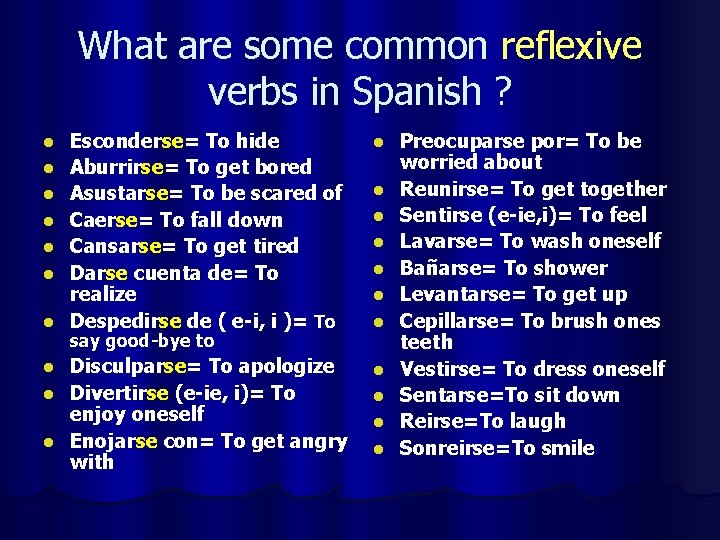
What are some common reflexive verbs in Spanish ? l l l l l Esconderse= To hide Aburrirse= To get bored Asustarse= To be scared of Caerse= To fall down Cansarse= To get tired Darse cuenta de= To realize Despedirse de ( e-i, i )= To l Disculparse= To apologize Divertirse (e-ie, i)= To enjoy oneself Enojarse con= To get angry with l say good-bye to l l l l l Preocuparse por= To be worried about Reunirse= To get together Sentirse (e-ie, i)= To feel Lavarse= To wash oneself Bañarse= To shower Levantarse= To get up Cepillarse= To brush ones teeth Vestirse= To dress oneself Sentarse=To sit down Reirse=To laugh Sonreirse=To smile
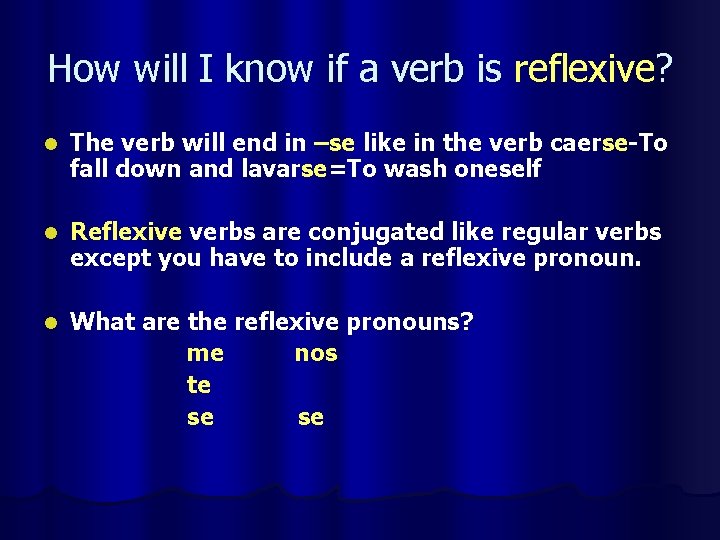
How will I know if a verb is reflexive? l The verb will end in –se like in the verb caerse-To fall down and lavarse=To wash oneself l Reflexive verbs are conjugated like regular verbs except you have to include a reflexive pronoun. l What are the reflexive pronouns? me nos te se se
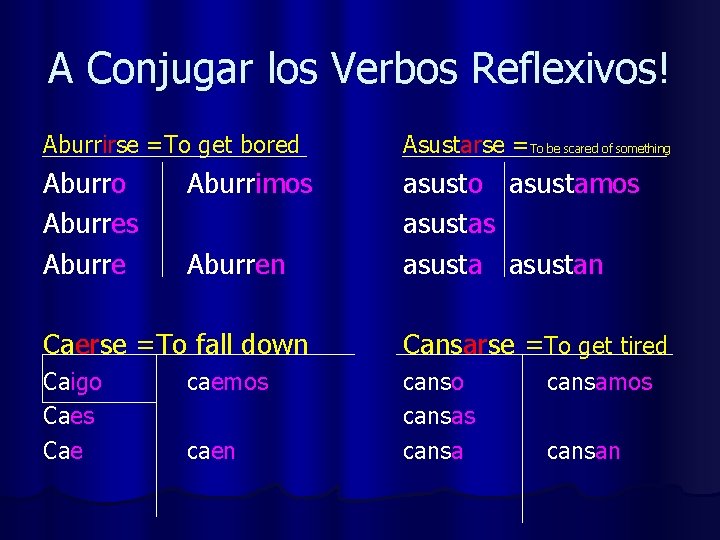
A Conjugar los Verbos Reflexivos! Aburrirse =To get bored Asustarse =To be scared of something Aburro Aburres Aburre asusto asustamos asustan Aburrimos Aburren Caerse =To fall down Cansarse =To get tired Caigo Caes Cae canso cansas cansa caemos caen cansamos cansan
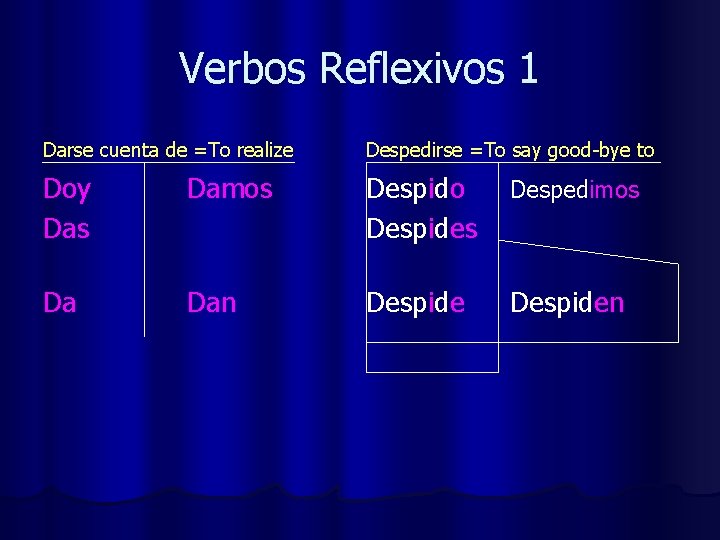
Verbos Reflexivos 1 Darse cuenta de =To realize Despedirse =To say good-bye to Doy Das Damos Despido Despides Despedimos Da Dan Despiden
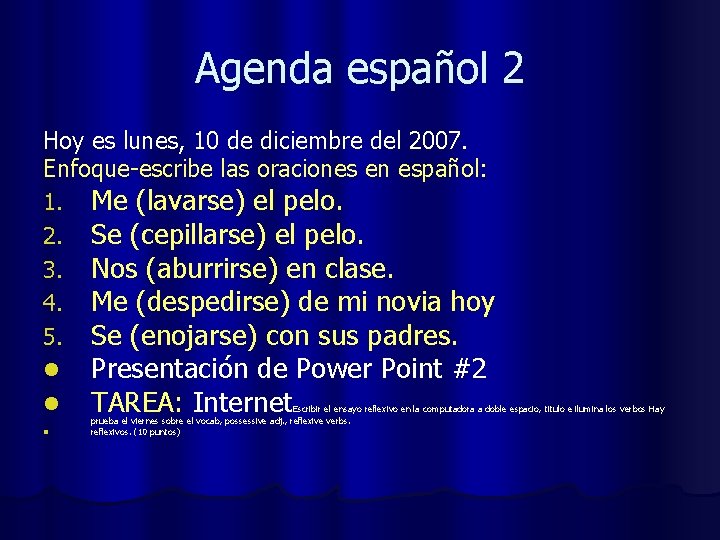
Agenda español 2 Hoy es lunes, 10 de diciembre del 2007. Enfoque-escribe las oraciones en español: 1. Me (lavarse) el pelo. 2. Se (cepillarse) el pelo. 3. Nos (aburrirse) en clase. 4. Me (despedirse) de mi novia hoy 5. Se (enojarse) con sus padres. l Presentación de Power Point #2 l TAREA: Internet l Escribir el ensayo reflexivo en la computadora a doble espacio, titulo e ilumina los verbos Hay prueba el viernes sobre el vocab, possessive adj. , reflexive verbs. reflexivos. (10 puntos)
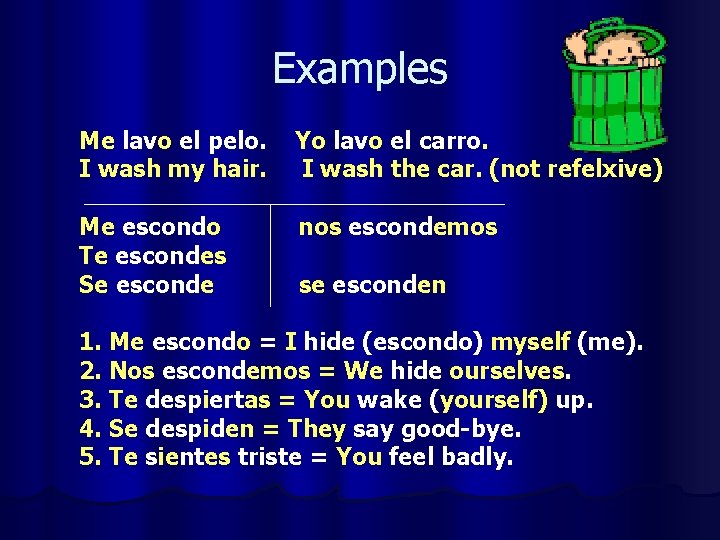
Examples Me lavo el pelo. I wash my hair. Yo lavo el carro. I wash the car. (not refelxive) Me escondo Te escondes Se esconde nos escondemos se esconden 1. Me escondo = I hide (escondo) myself (me). 2. Nos escondemos = We hide ourselves. 3. Te despiertas = You wake (yourself) up. 4. Se despiden = They say good-bye. 5. Te sientes triste = You feel badly.
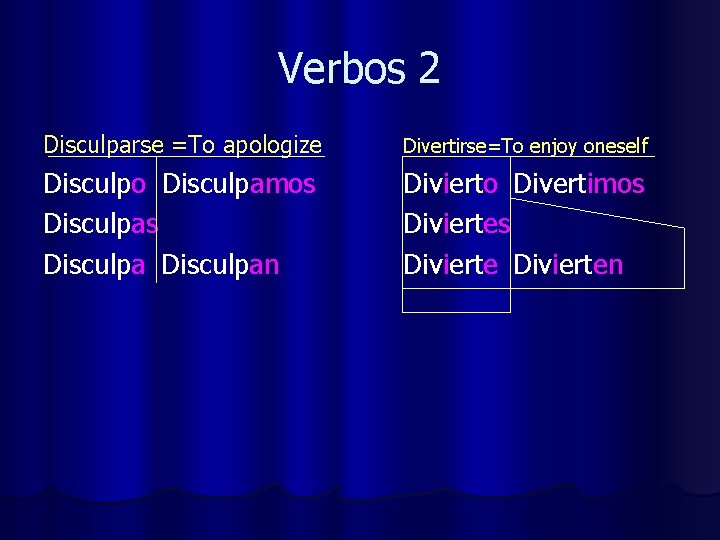
Verbos 2 Disculparse =To apologize Divertirse=To enjoy oneself Disculpo Disculpamos Disculpan Divierto Divertimos Divierten
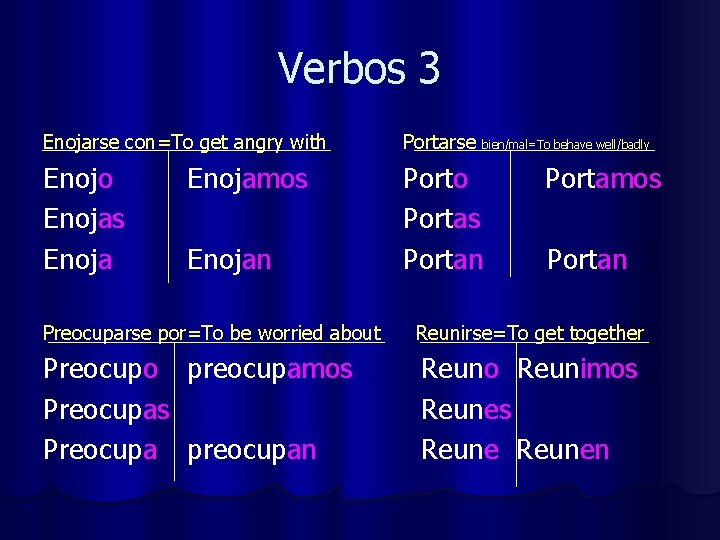
Verbos 3 Enojarse con=To get angry with Portarse bien/mal=To behave well/badly Enojo Enojas Enoja Porto Portas Portan Enojamos Enojan Portamos Portan Preocuparse por=To be worried about Reunirse=To get together Preocupo preocupamos Preocupa preocupan Reuno Reunimos Reunen

Verbos 4 Sentirse=To feel Siento Sentimos Sienten Lavarse=To wash oneself Lavo Lavamos Lavan Bañarse= To bathe oneself Baño Bañamos Bañan Levantarse=To get up Levanto Levantamos Levantan
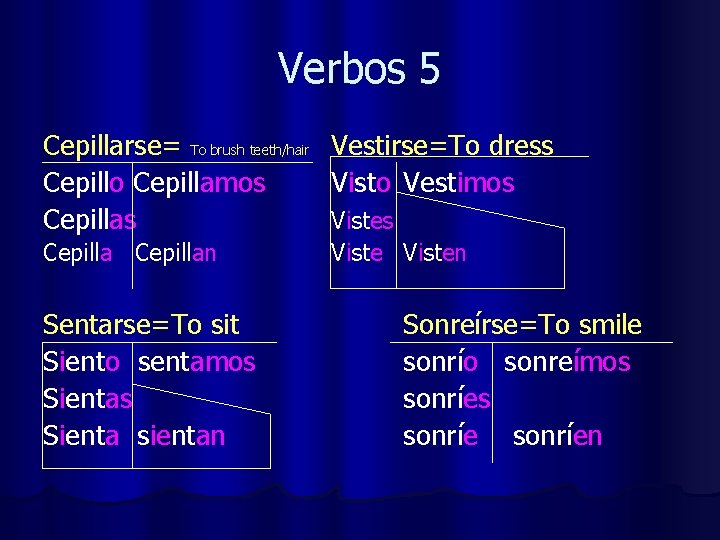
Verbos 5 Cepillarse= To brush teeth/hair Cepillo Cepillamos Cepillan Sentarse=To sit Siento sentamos Sienta sientan Vestirse=To dress Visto Vestimos Visten Sonreírse=To smile sonrío sonreímos sonríen
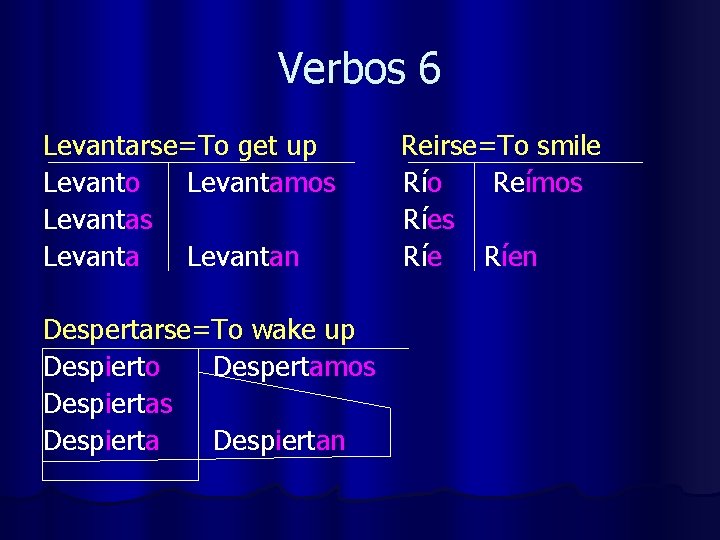
Verbos 6 Levantarse=To get up Levanto Levantamos Levantan Despertarse=To wake up Despierto Despertamos Despiertan Reirse=To smile Río Reímos Ríe Ríen
AGENDA l Hoy es lunes, 10 de diciembre del 2007. l Enfoque: Repasar l Actividades l Los adjetivos l La tarea esta en el internet. Necesitan los libros.
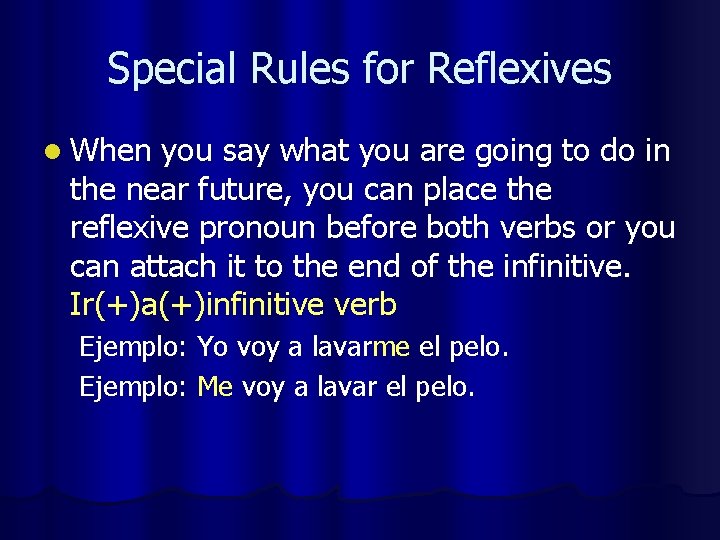
Special Rules for Reflexives l When you say what you are going to do in the near future, you can place the reflexive pronoun before both verbs or you can attach it to the end of the infinitive. Ir(+)a(+)infinitive verb Ejemplo: Yo voy a lavarme el pelo. Ejemplo: Me voy a lavar el pelo.
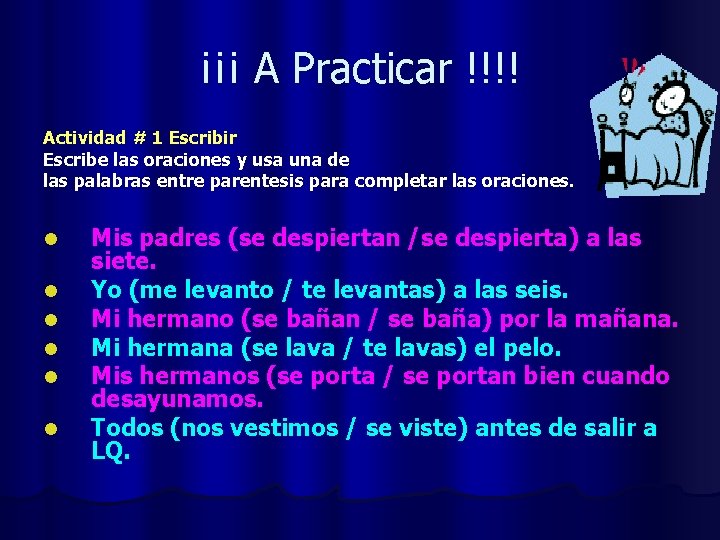
¡¡¡ A Practicar !!!! Actividad # 1 Escribir Escribe las oraciones y usa una de las palabras entre parentesis para completar las oraciones. l l l Mis padres (se despiertan /se despierta) a las siete. Yo (me levanto / te levantas) a las seis. Mi hermano (se bañan / se baña) por la mañana. Mi hermana (se lava / te lavas) el pelo. Mis hermanos (se porta / se portan bien cuando desayunamos. Todos (nos vestimos / se viste) antes de salir a LQ.
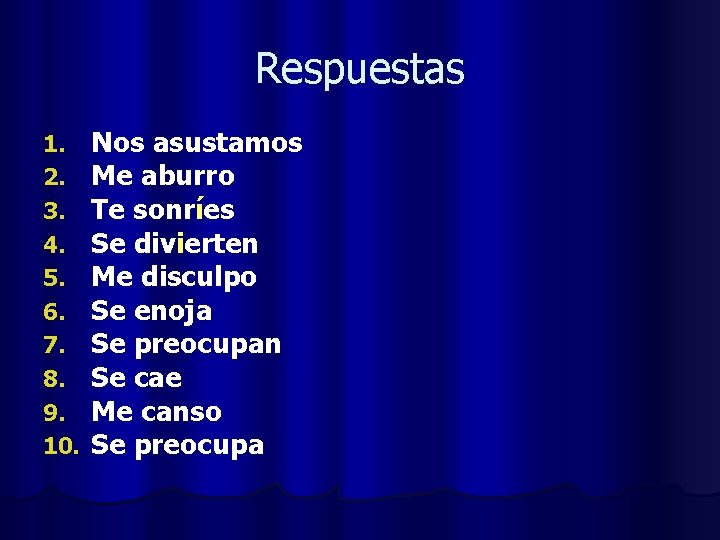
Respuestas 1. 2. 3. 4. 5. 6. 7. 8. 9. 10. Nos asustamos Me aburro Te sonríes Se divierten Me disculpo Se enoja Se preocupan Se cae Me canso Se preocupa
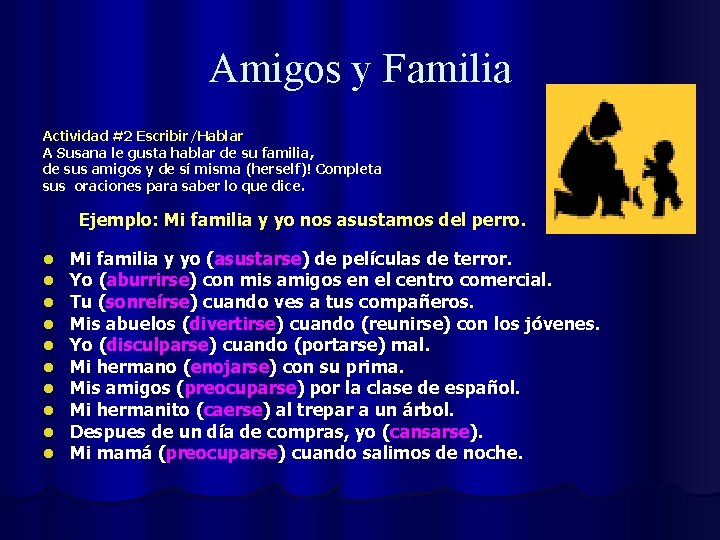
Amigos y Familia Actividad #2 Escribir/Hablar A Susana le gusta hablar de su familia, de sus amigos y de sí misma (herself)! Completa sus oraciones para saber lo que dice. Ejemplo: Mi familia y yo nos asustamos del perro. l l l l l Mi familia y yo (asustarse) de películas de terror. Yo (aburrirse) con mis amigos en el centro comercial. Tu (sonreírse) cuando ves a tus compañeros. Mis abuelos (divertirse) cuando (reunirse) con los jóvenes. Yo (disculparse) cuando (portarse) mal. Mi hermano (enojarse) con su prima. Mis amigos (preocuparse) por la clase de español. Mi hermanito (caerse) al trepar a un árbol. Despues de un día de compras, yo (cansarse). Mi mamá (preocuparse) cuando salimos de noche.
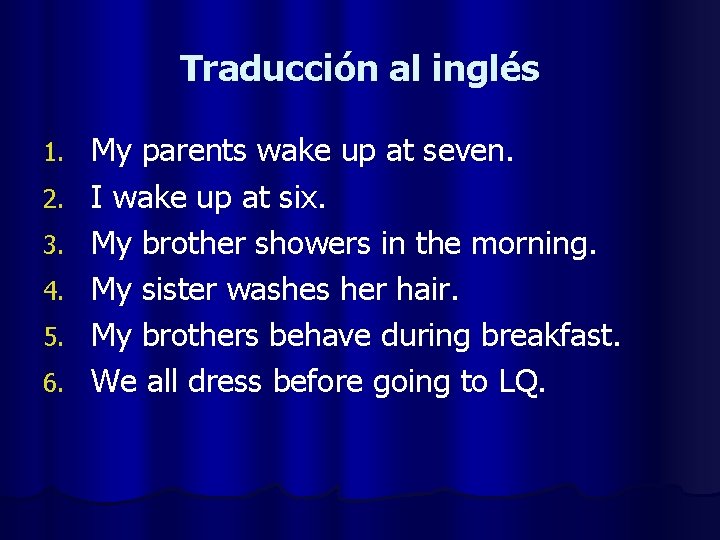
Traducción al inglés 1. 2. 3. 4. 5. 6. My parents wake up at seven. I wake up at six. My brother showers in the morning. My sister washes her hair. My brothers behave during breakfast. We all dress before going to LQ.
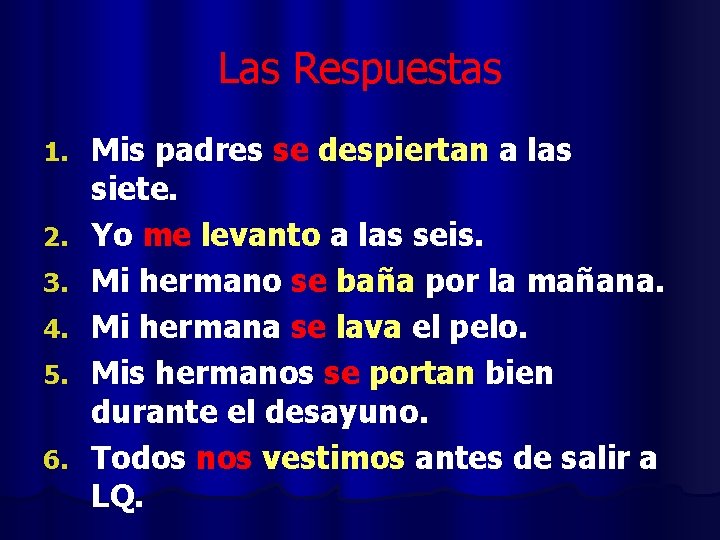
Las Respuestas 1. 2. 3. 4. 5. 6. Mis padres se despiertan a las siete. Yo me levanto a las seis. Mi hermano se baña por la mañana. Mi hermana se lava el pelo. Mis hermanos se portan bien durante el desayuno. Todos nos vestimos antes de salir a LQ.
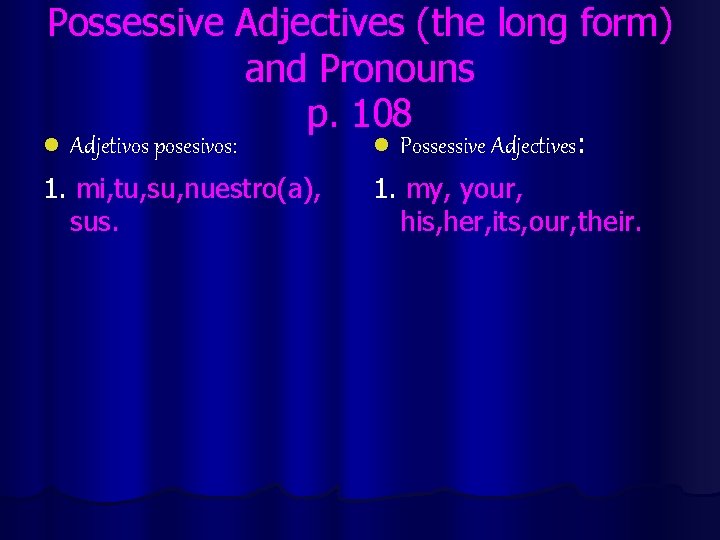
Possessive Adjectives (the long form) and Pronouns p. 108 l Adjetivos posesivos: 1. mi, tu, su, nuestro(a), sus. l Possessive Adjectives: 1. my, your, his, her, its, our, their.
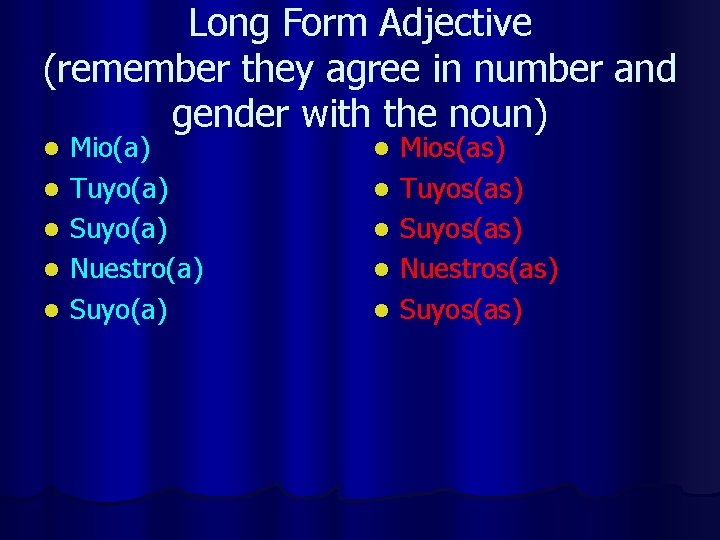
Long Form Adjective (remember they agree in number and gender with the noun) l l l Mio(a) Tuyo(a) Suyo(a) Nuestro(a) Suyo(a) l l l Mios(as) Tuyos(as) Suyos(as) Nuestros(as) Suyos(as)
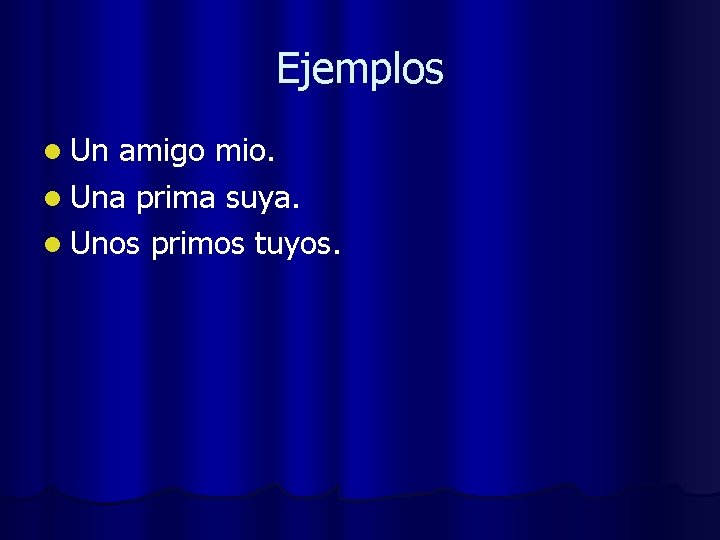
Ejemplos l Un amigo mio. l Una prima suya. l Unos primos tuyos.
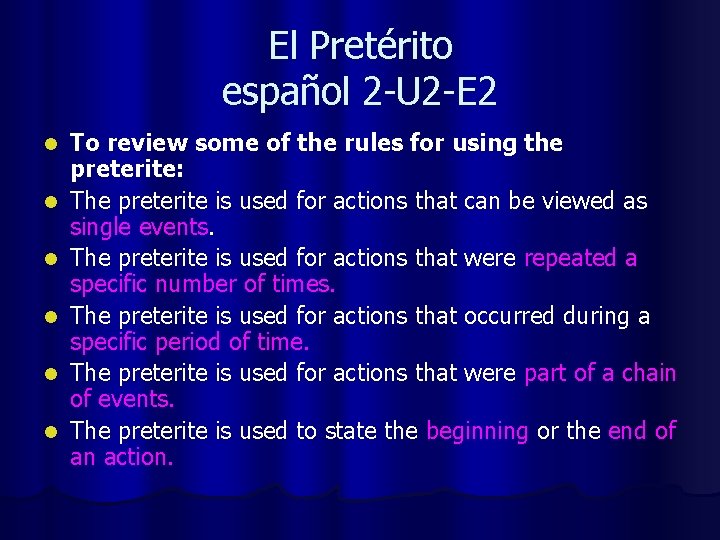
El Pretérito español 2 -U 2 -E 2 l l l To review some of the rules for using the preterite: The preterite is used for actions that can be viewed as single events. The preterite is used for actions that were repeated a specific number of times. The preterite is used for actions that occurred during a specific period of time. The preterite is used for actions that were part of a chain of events. The preterite is used to state the beginning or the end of an action.
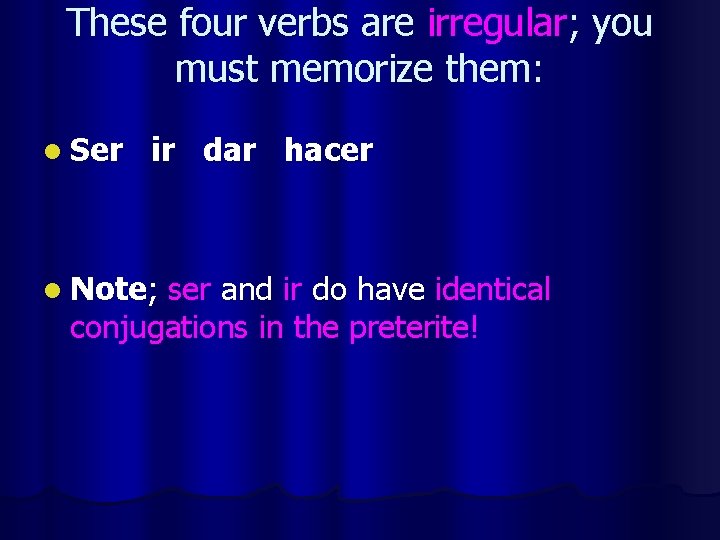
These four verbs are irregular; you must memorize them: l Ser ir dar hacer l Note; ser and ir do have identical conjugations in the preterite!
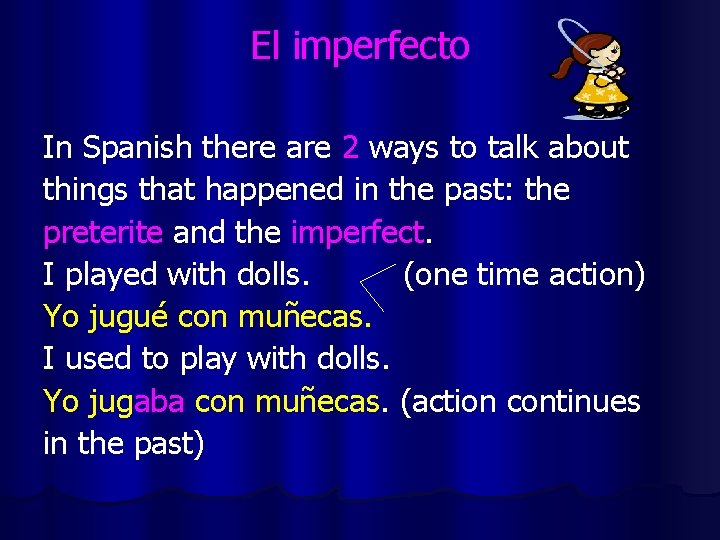
El imperfecto In Spanish there are 2 ways to talk about things that happened in the past: the preterite and the imperfect. I played with dolls. (one time action) Yo jugué con muñecas. I used to play with dolls. Yo jugaba con muñecas. (action continues in the past)
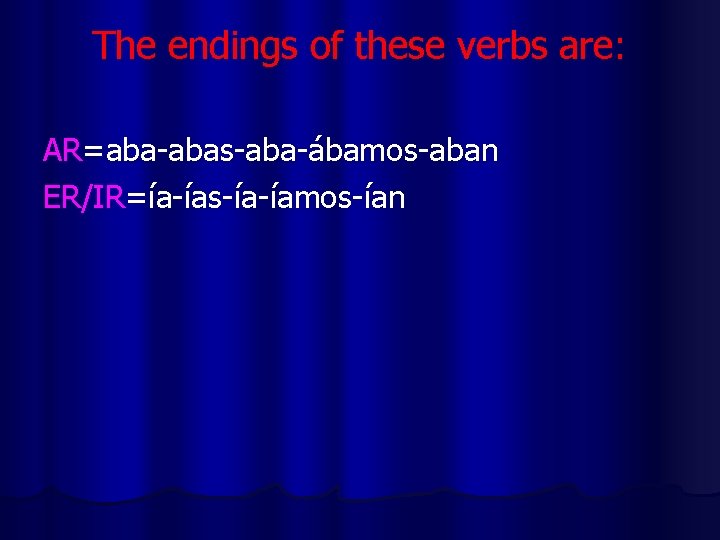
The endings of these verbs are: AR=aba-abas-aba-ábamos-aban ER/IR=ía-ías-ía-íamos-ían

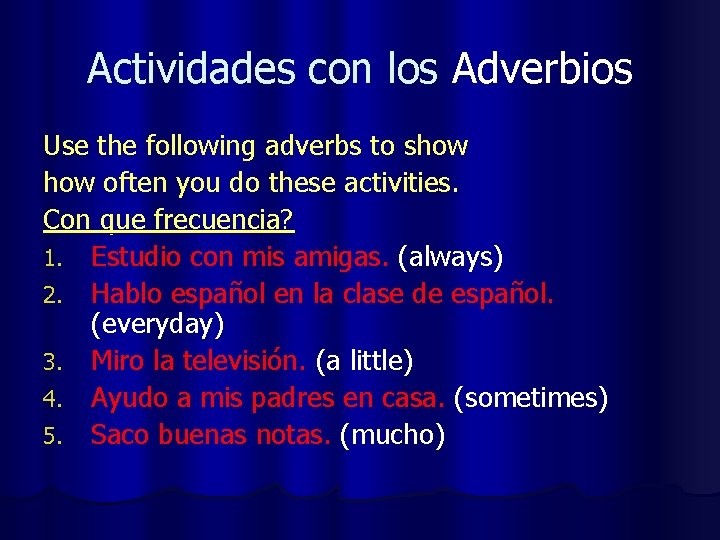
Actividades con los Adverbios Use the following adverbs to show often you do these activities. Con que frecuencia? 1. Estudio con mis amigas. (always) 2. Hablo español en la clase de español. (everyday) 3. Miro la televisión. (a little) 4. Ayudo a mis padres en casa. (sometimes) 5. Saco buenas notas. (mucho)
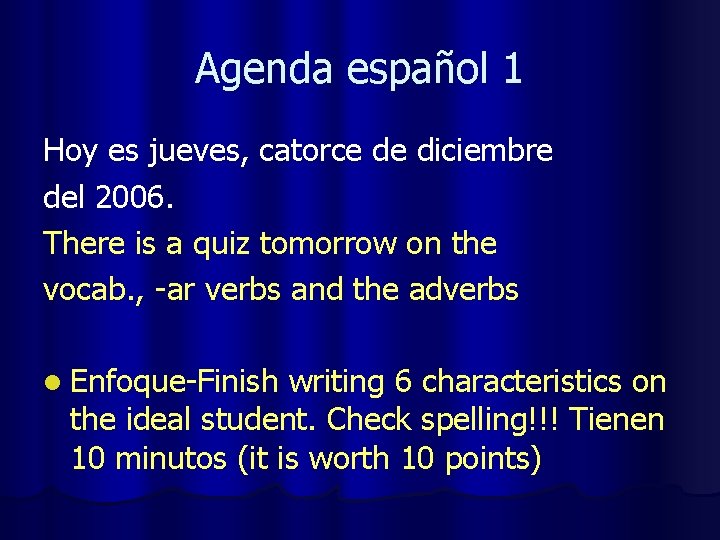
Agenda español 1 Hoy es jueves, catorce de diciembre del 2006. There is a quiz tomorrow on the vocab. , -ar verbs and the adverbs l Enfoque-Finish writing 6 characteristics on the ideal student. Check spelling!!! Tienen 10 minutos (it is worth 10 points)
Continuación… l Compartir pósteres l Actividades con los Adverbios l Juego: ¡¡¡¡¡Verbolandia!!!!! l TAREA: Estudiar!!!!!!!!!!!!!
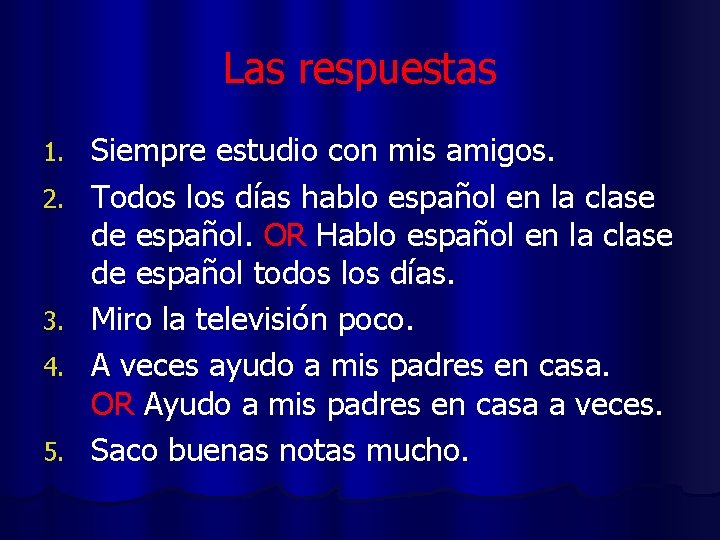
Las respuestas 1. 2. 3. 4. 5. Siempre estudio con mis amigos. Todos los días hablo español en la clase de español. OR Hablo español en la clase de español todos los días. Miro la televisión poco. A veces ayudo a mis padres en casa. OR Ayudo a mis padres en casa a veces. Saco buenas notas mucho.
Agenda español 1 Hoy es jueves, 14 de diciembre del 2006 Expressing Frequency with Adverbs l What are these adverbs used for? Use these when you want to say how often you do something. For example, saying how often you take out the trash, use My. Space or eat deep fried rats.
Activities for today… l Actividad doce página 108/Leer trece página 108/Hablar 14 en grupos de 4/Hablar/Escribir l Un Estudiante ideal l Tarea: Escribir una oración con un adverbio. Ejemplo: Yo siempre estudio arte.
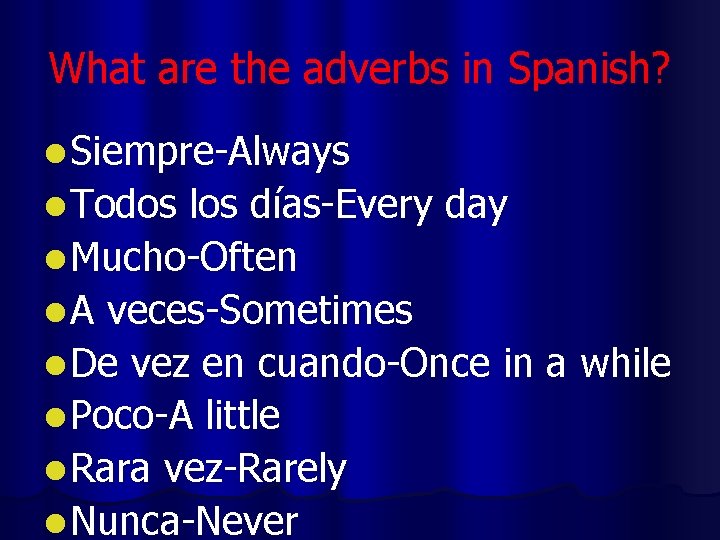
What are the adverbs in Spanish? l Siempre-Always l Todos los días-Every day l Mucho-Often l A veces-Sometimes l De vez en cuando-Once in a while l Poco-A little l Rara vez-Rarely l Nunca-Never









- Slides: 44