
los verbos reflexivos Reflexive verbs are used when
los verbos reflexivos Reflexive verbs are used when a person does something to or for him- or herself

Reflexive verbs have two parts 2 nd part verb form 1 st part reflexive pronoun

st 1 part 2 nd part reflexive Verb form Now, all you pronoun For example, have to do is put ducho duchamos me them nos together duchas ducháis te os se se duchan

¡OJO! REFLEXIVE PRONOUNS USUALLY GO BEFORE THE VERB, BUT THEY CAN BE ATTACHED TO AN INFINITIVE Ex. Me baño Me voy a bañarme Voy a USING REFLEXIVE VERBS TO TALK ABOUT BODY PARTS-WE USE THE DEFINITE ARTICLE Me lavo el pelo EX.
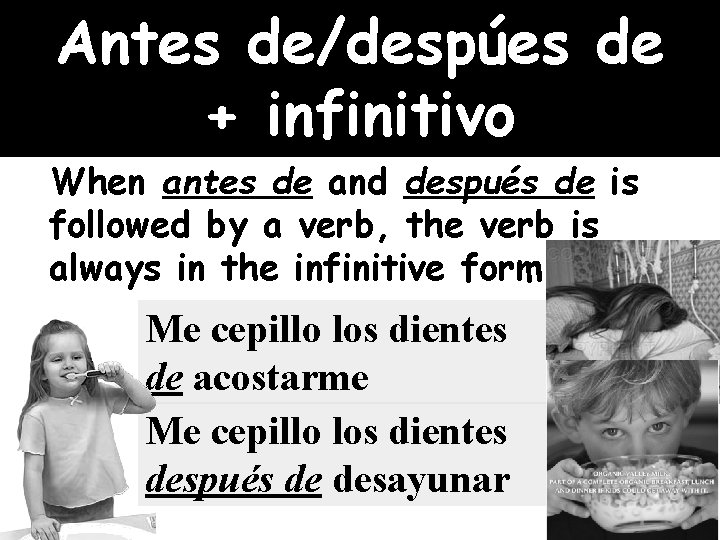
Antes de/despúes de + infinitivo When antes de and después de is followed by a verb, the verb is always in the infinitive form Me cepillo los dientes antes de acostarme Me cepillo los dientes después de desayunar

Follow the example: ducharse=to shower (yo) (tú) me ducho te duchas (Ud. /él/ella) se ducha (nosotros/as) nos duchamos (vosotros/as) os ducháis (Uds. /ellos/ellas) se duchan
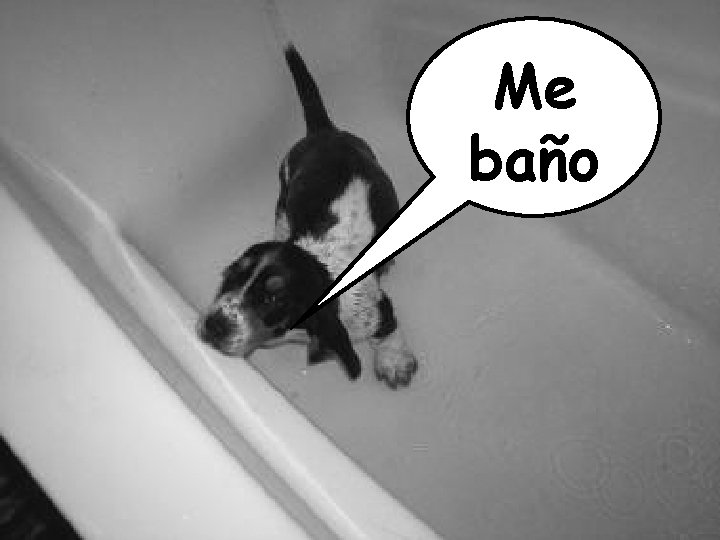
Me baño
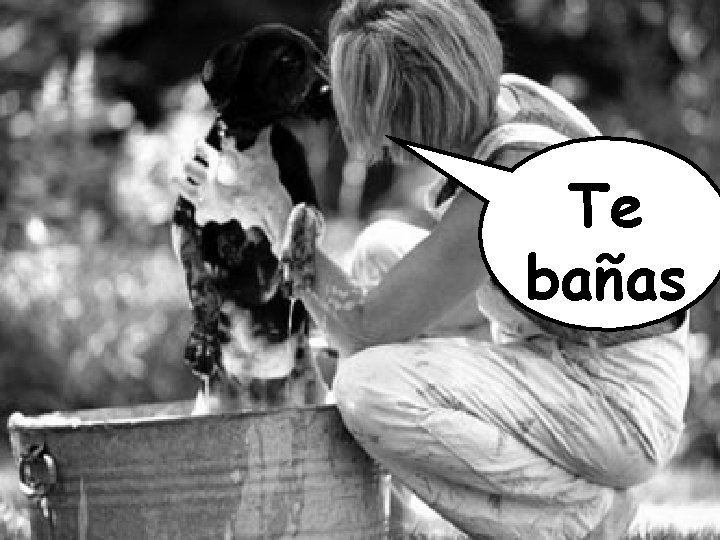
Te bañas
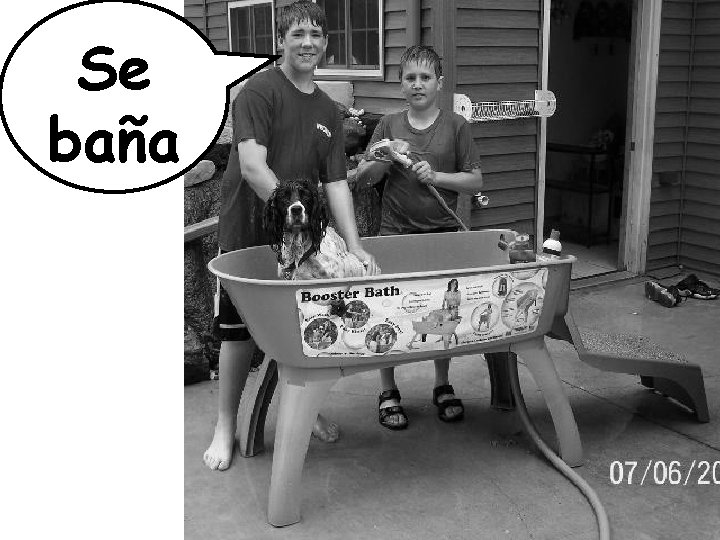
Se baña
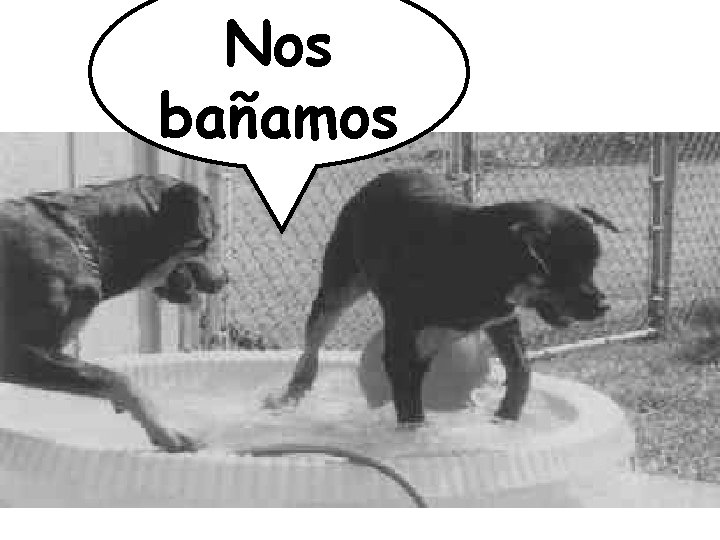
Nos bañamos
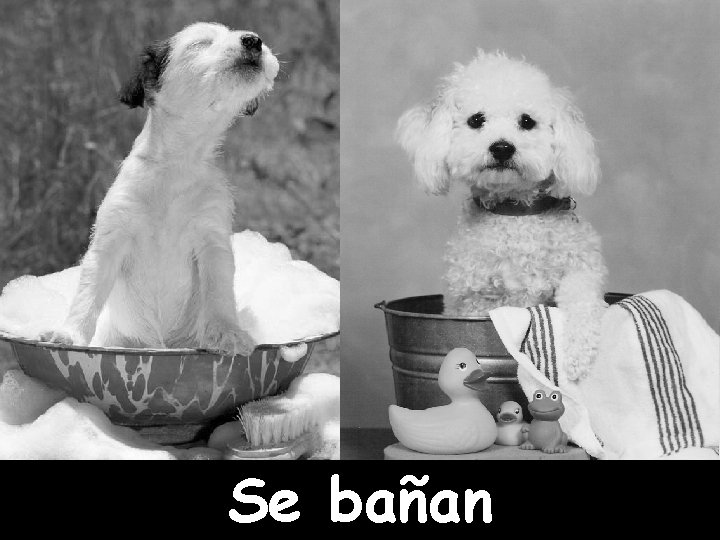
Se bañan
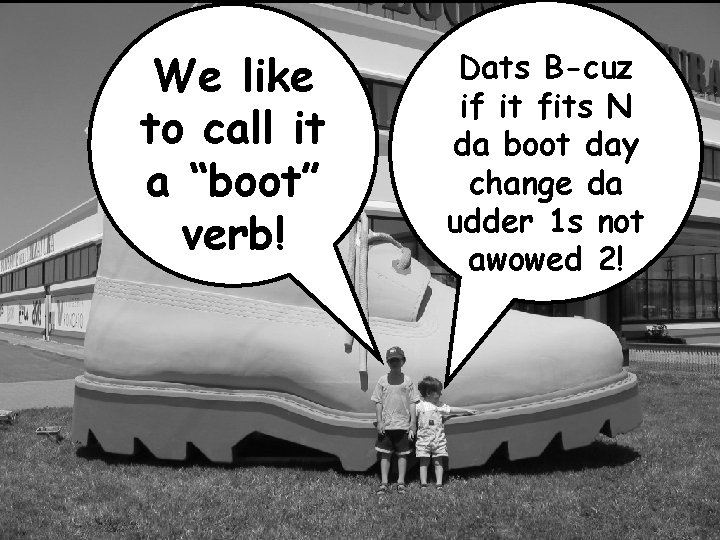
Verbos con los cambios Dats B-cuz We like if it fits N (e-ie y ito-ue dayboot e-i) to call day change da a “boot” There are 3 types of udder 1 s not Don’t forget we never verb! awowed 2! stem-changers Stem-change in the despertarse= wake up (e-ie) nosotros or tovosotros me despierto nos despertamos te despiertas os despertáis se despiertan
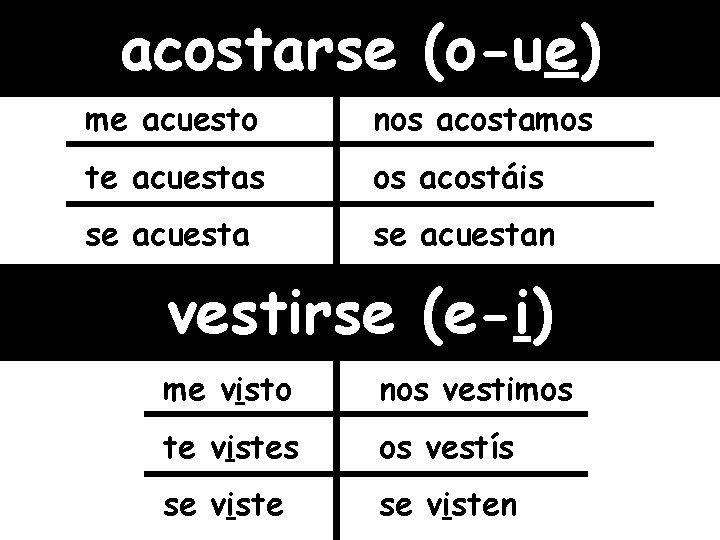
acostarse (o-ue) me acuesto nos acostamos te acuestas os acostáis se acuestan vestirse (e-i) me visto nos vestimos te vistes os vestís se visten

- Slides: 16