
Los Sustantivos Los Artculos Y Gnero Nouns Articles
![Los Sustantivos, Los Artículos Y Género [Nouns, Articles and Gender]](https://slidetodoc.com/presentation_image_h2/2cd358fc75f3dce66e053444630f4666/image-1.jpg "Los Sustantivos, Los Artículos Y Género [Nouns, Articles and Gender]")
![Los Sustantivos [NOUNS] ü Masculine nouns often ü Feminine words often end in –o.](https://slidetodoc.com/presentation_image_h2/2cd358fc75f3dce66e053444630f4666/image-3.jpg "Los Sustantivos [NOUNS] ü Masculine nouns often ü Feminine words often end in –o.")


- Slides: 57
Los Sustantivos, Los Artículos Y Género [Nouns, Articles and Gender]
In Spanish, all nouns have gender. That means they are either masculine or feminine. What is a noun? -A person, place, thing or idea.
Los Sustantivos [NOUNS] ü Masculine nouns often ü Feminine words often end in –o. end in –a, -d, or –ión. ü Words that refer to male persons are also female persons are masculine. also feminine. ejemplo: señor (man) mujer (woman) madre (mather) padre (father)
What happens when words don’t end with ‘typical’ masculine or feminine endings? ü These words must be learned individually. ü One cannot predict the gender of non-living things in Spanish. ü Do not try to analyze the nature of the object, looking for some inherent masculinity or femininity. It won't work!
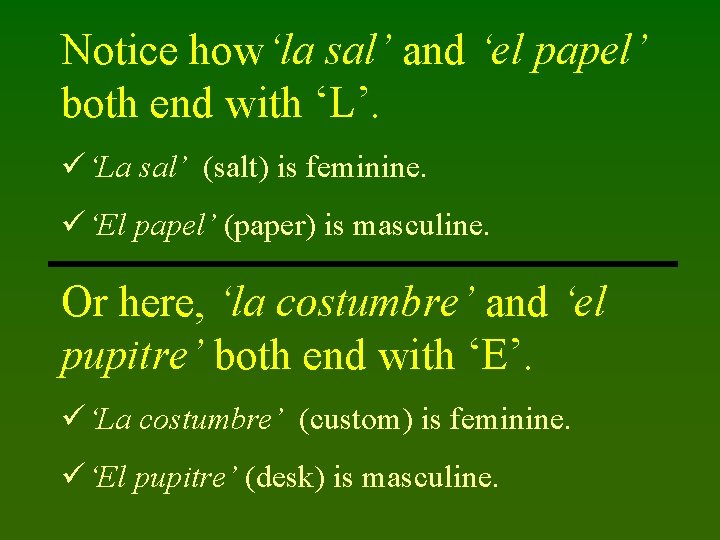
Notice how‘la sal’ and ‘el papel’ both end with ‘L’. ü‘La sal’ (salt) is feminine. ü‘El papel’ (paper) is masculine. Or here, ‘la costumbre’ and ‘el pupitre’ both end with ‘E’. ü‘La costumbre’ (custom) is feminine. ü‘El pupitre’ (desk) is masculine.
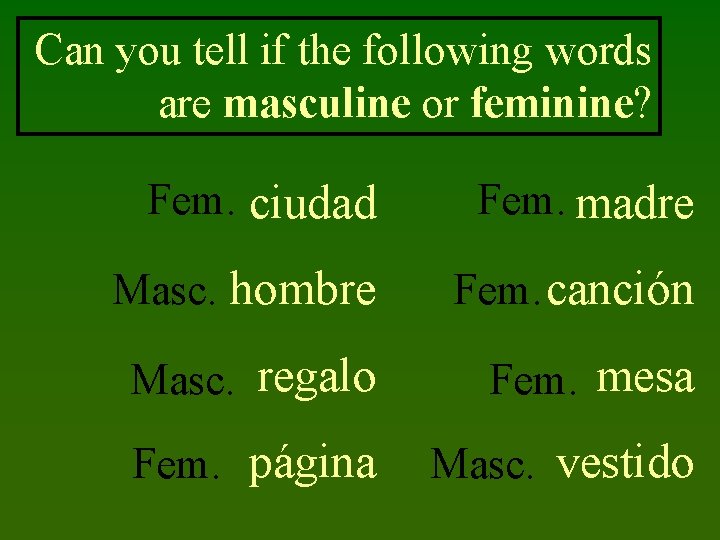
Can you tell if the following words are masculine or feminine? Fem. ciudad Fem. madre Masc. hombre Fem. canción Masc. regalo Fem. mesa Fem. página Masc. vestido
Articles So what is an ‘article’ anyway?
Well…. in English we have only ONE definite article! Do you know what it is? ‘THE’
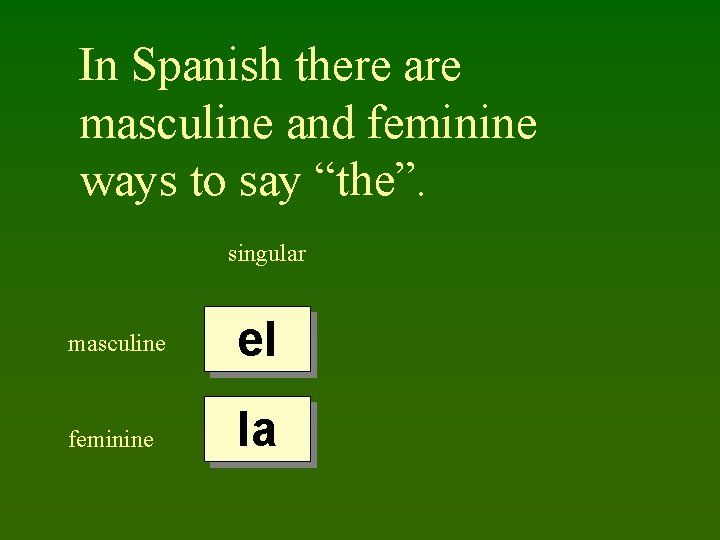
In Spanish there are masculine and feminine ways to say “the”. singular masculine el feminine la
üMasculine nouns in Spanish take masculine articles. üFeminine nouns in Spanish take feminine articles.
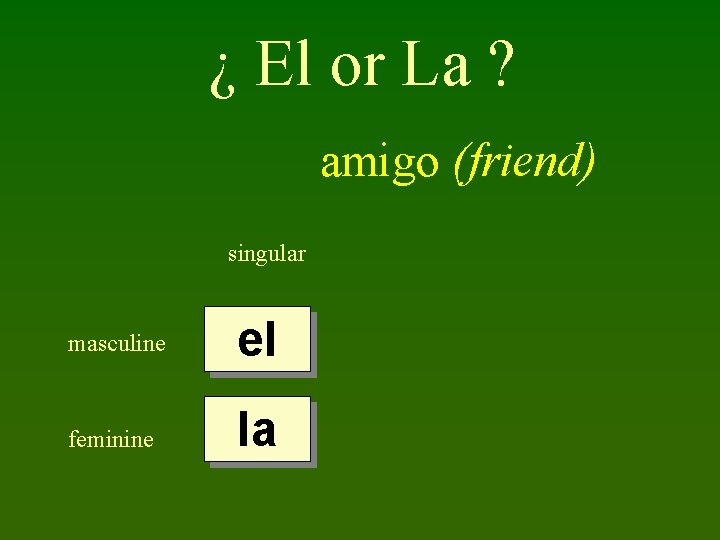
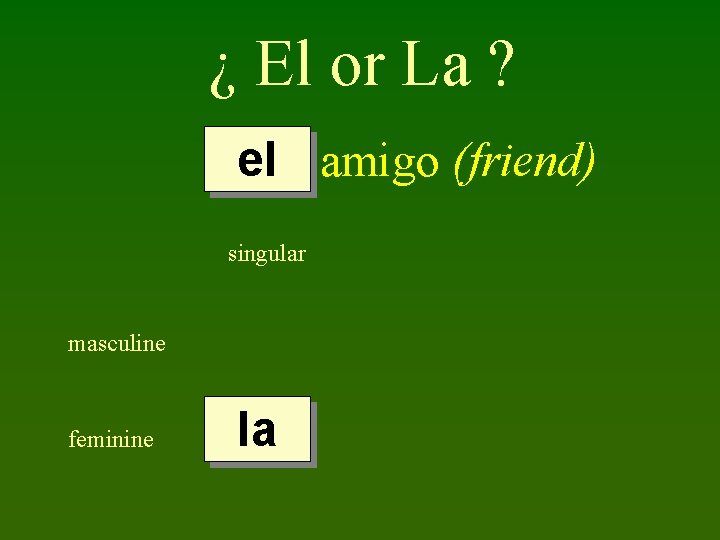
¿ El or La ? amigo (friend) singular masculine el feminine la
¿ El or La ? el amigo (friend) singular masculine feminine la
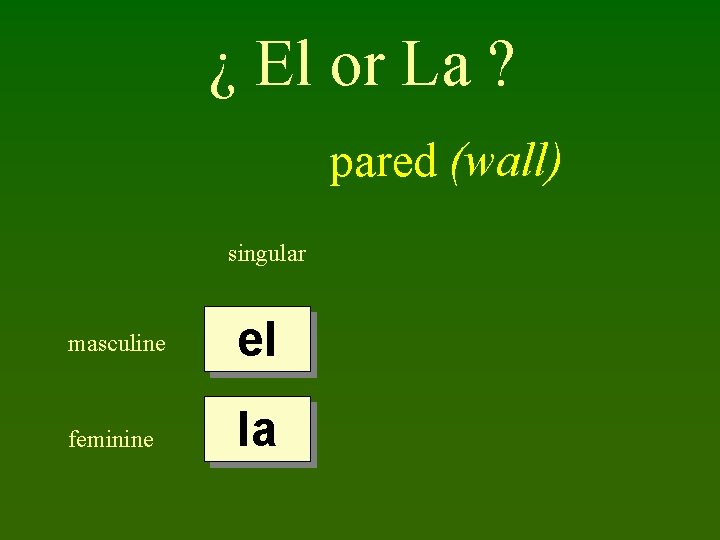
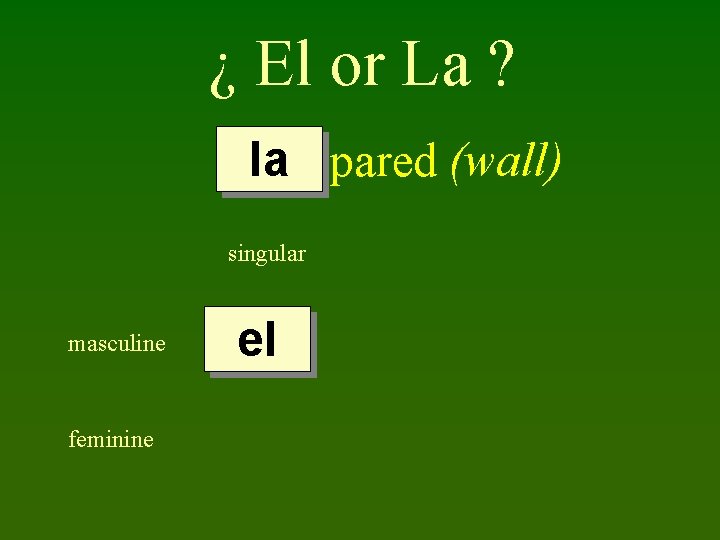
¿ El or La ? pared (wall) singular masculine el feminine la
¿ El or La ? la pared (wall) singular masculine feminine el
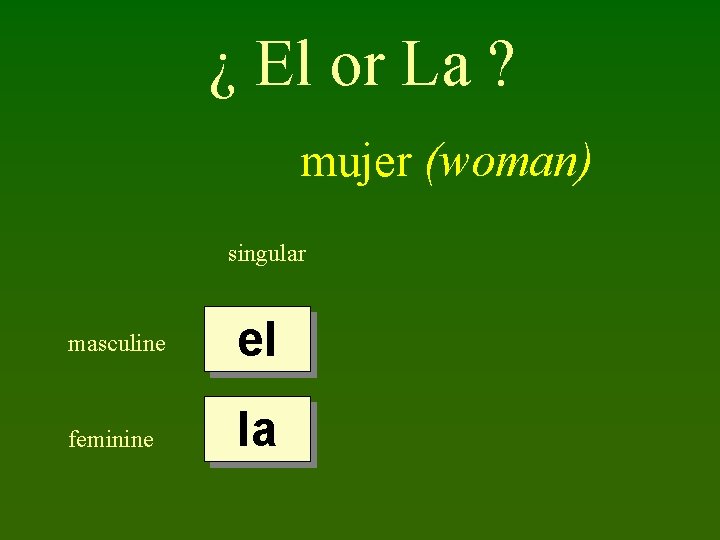
¿ El or La ? mujer (woman) singular masculine el feminine la
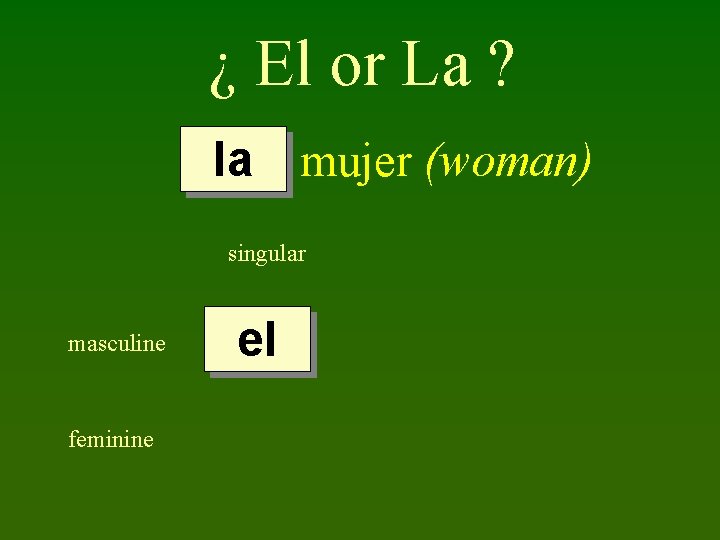
¿ El or La ? la mujer (woman) singular masculine feminine el
¿ El or La ? brazo (arm) singular masculine el feminine la
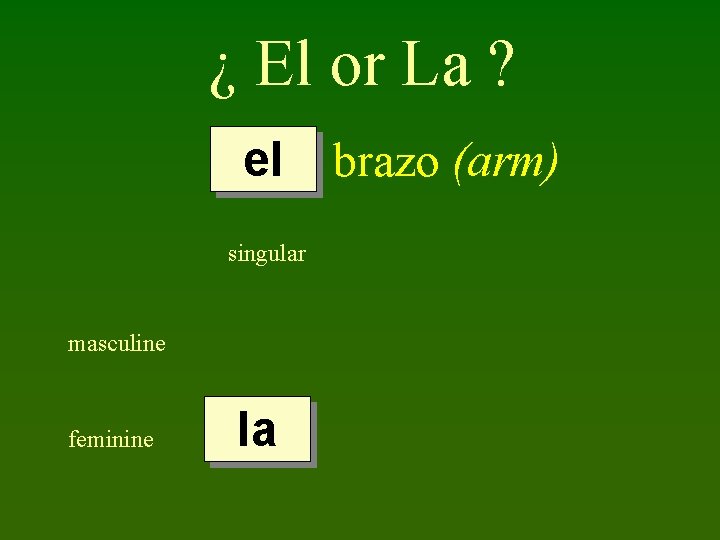
¿ El or La ? el singular masculine feminine la brazo (arm)
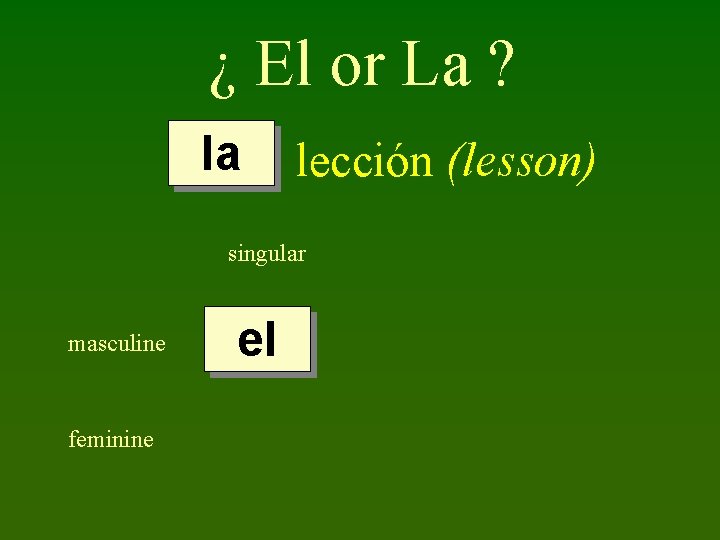
¿ El or La ? lección (lesson) singular masculine el feminine la
¿ El or La ? la lección (lesson) singular masculine feminine el
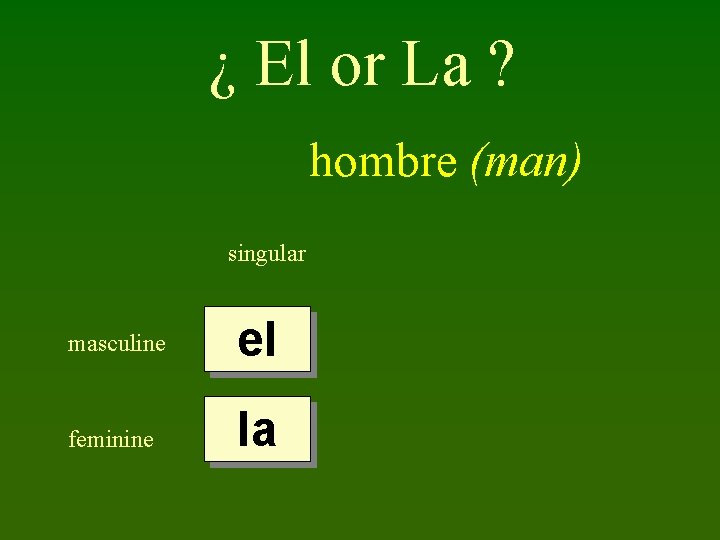
¿ El or La ? hombre (man) singular masculine el feminine la
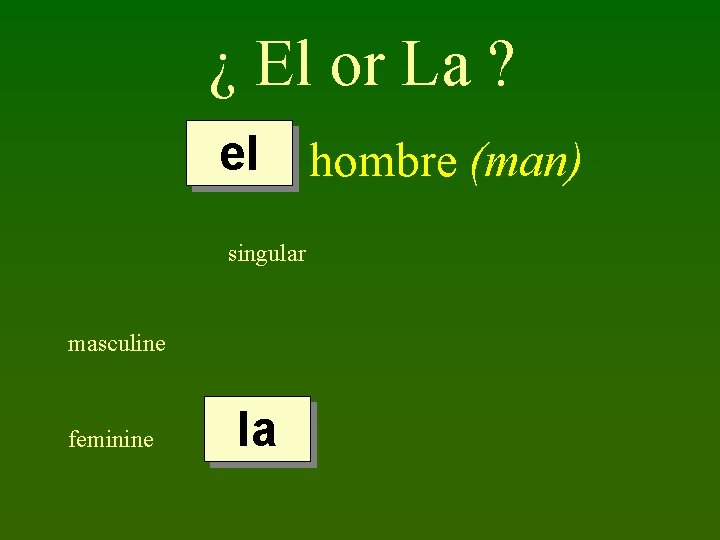
¿ El or La ? el singular masculine feminine la hombre (man)
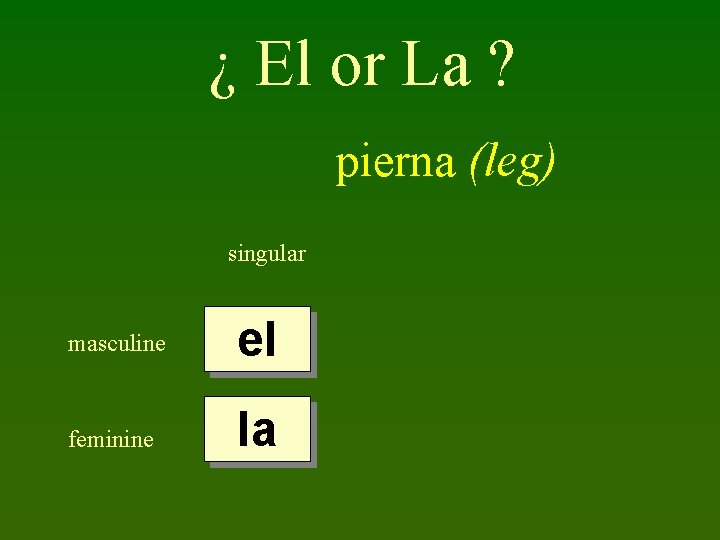
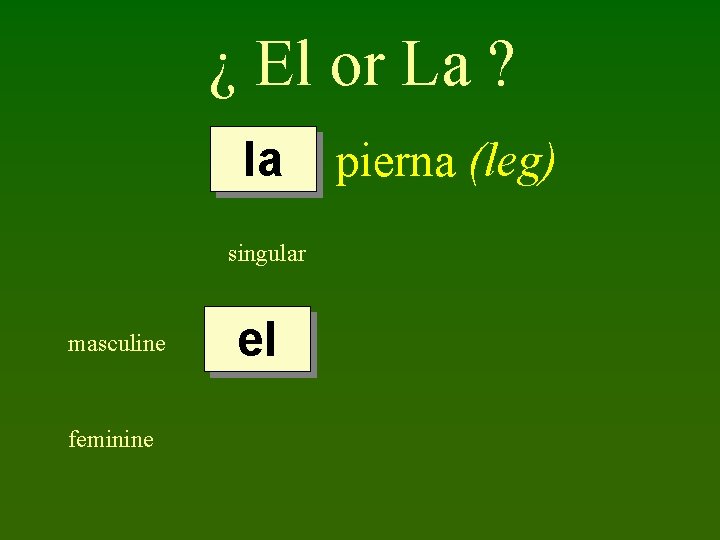
¿ El or La ? pierna (leg) singular masculine el feminine la
¿ El or La ? la singular masculine feminine el pierna (leg)
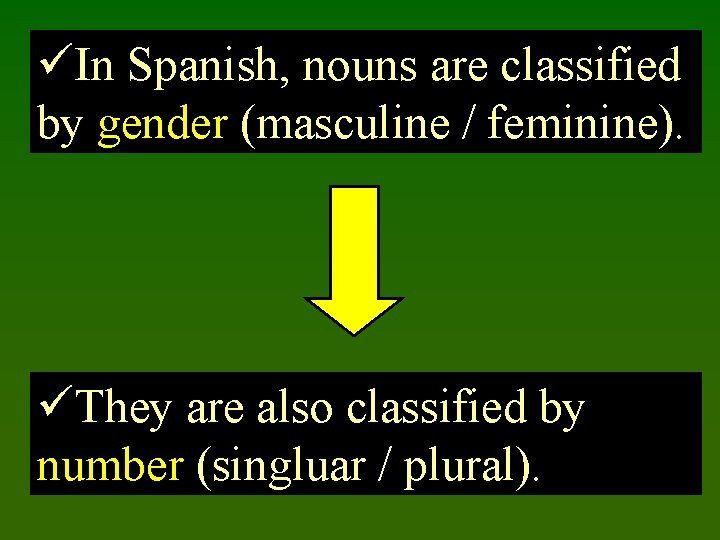
üIn Spanish, nouns are classified by gender (masculine / feminine). üThey are also classified by number (singluar / plural).
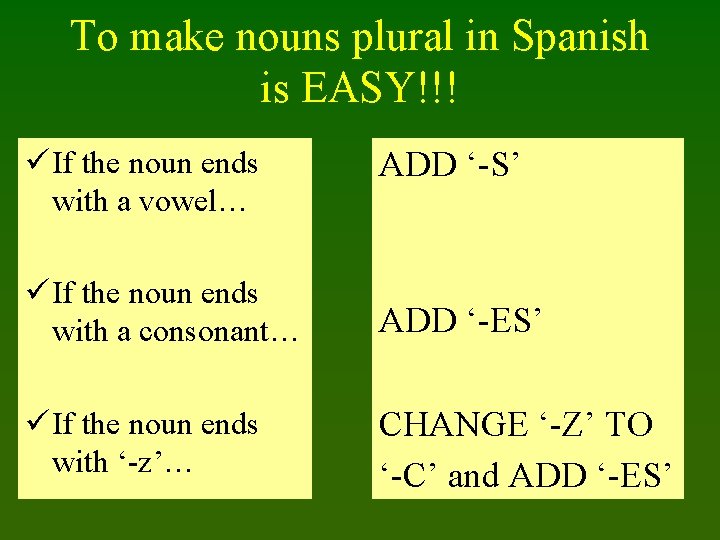
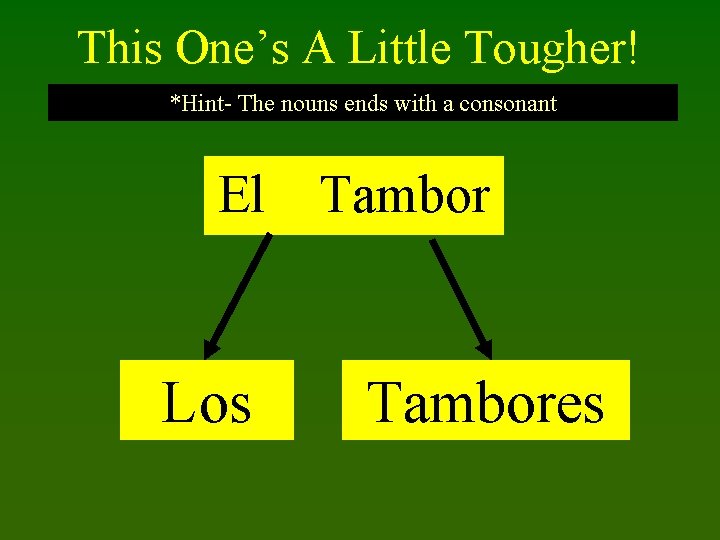
To make nouns plural in Spanish is EASY!!! ü If the noun ends with a vowel… ADD ‘-S’ ü If the noun ends with a consonant… ADD ‘-ES’ ü If the noun ends with ‘-z’… CHANGE ‘-Z’ TO ‘-C’ and ADD ‘-ES’
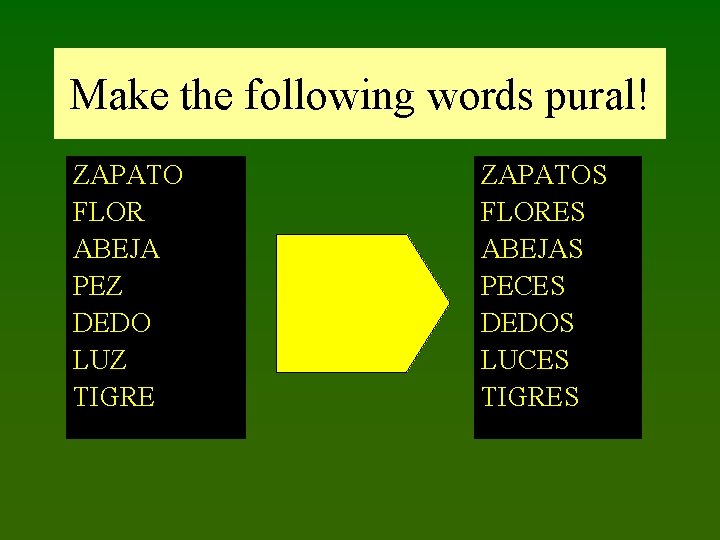
Make the following words pural! ZAPATO FLOR ABEJA PEZ DEDO LUZ TIGRE ZAPATOS FLORES ABEJAS PECES DEDOS LUCES TIGRES
In Spanish, when nouns are made plural, so must their article be made plural, too!!!
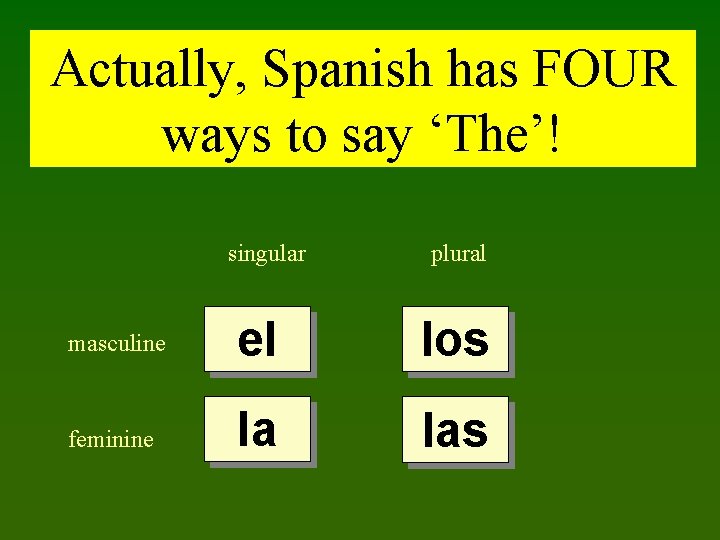
Actually, Spanish has FOUR ways to say ‘The’! singular plural masculine el los feminine la las
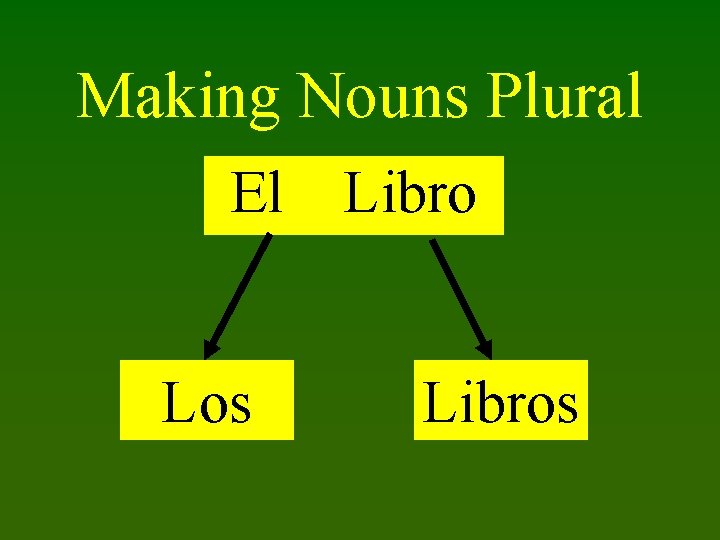
Making Nouns Plural El Los Libros
This One’s A Little Tougher! *Hint- The nouns ends with a consonant El Los Tambores
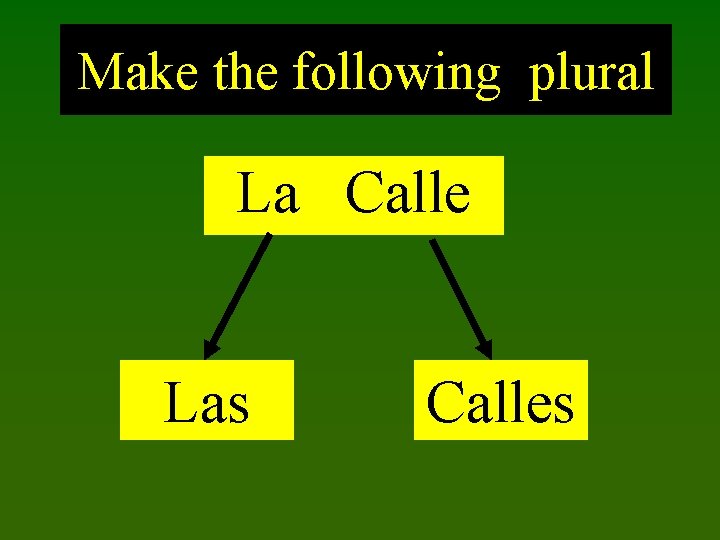
Make the following plural La Calle Las Calles
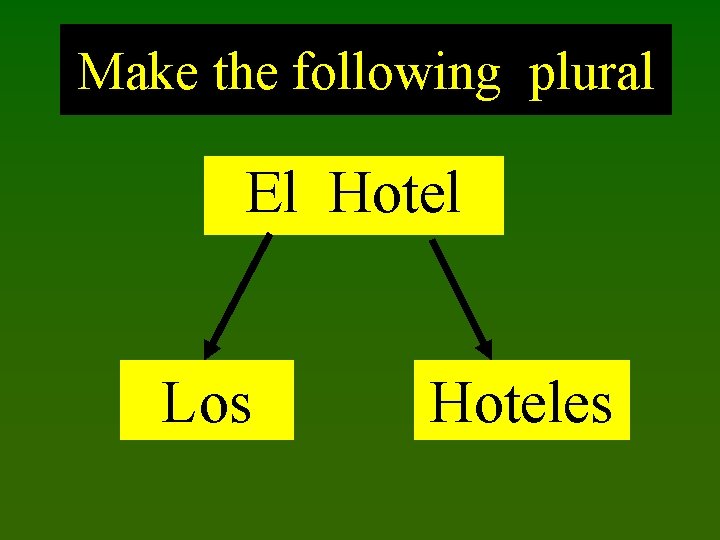
Make the following plural El Hotel Los Hoteles
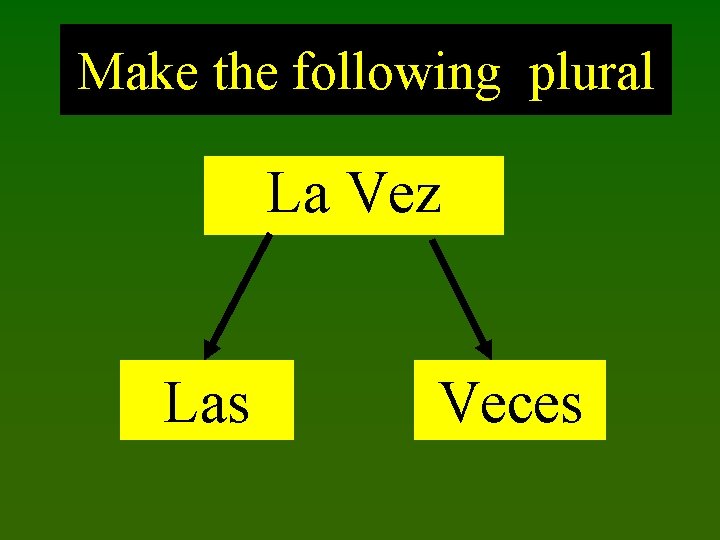
Make the following plural La Vez Las Veces
So, we know about definite articles in Spanish. How about the indefinite articles? Maybe we should start with English!
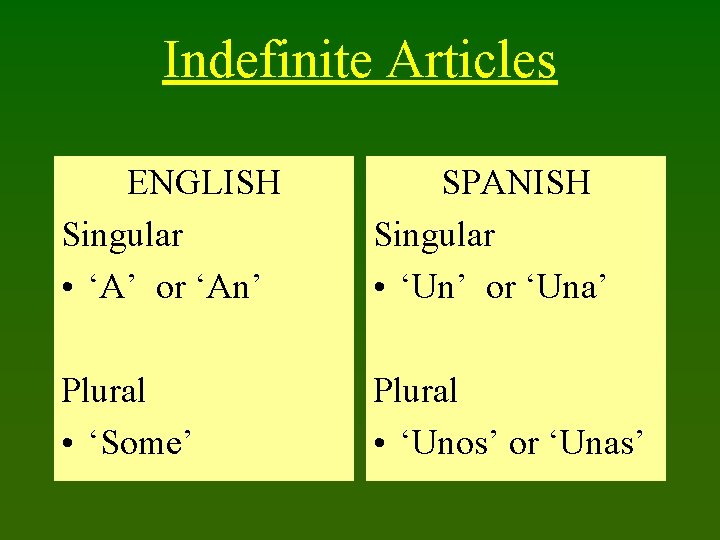
Indefinite Articles ENGLISH Singular • ‘A’ or ‘An’ SPANISH Singular • ‘Un’ or ‘Una’ Plural • ‘Some’ Plural • ‘Unos’ or ‘Unas’
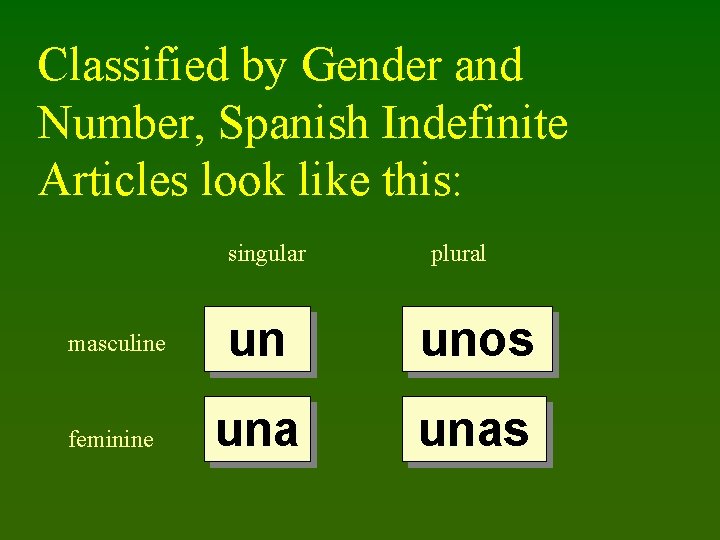
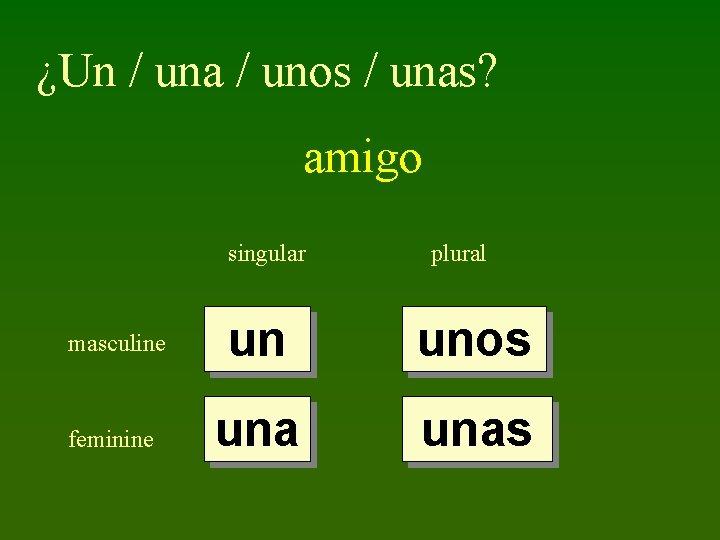
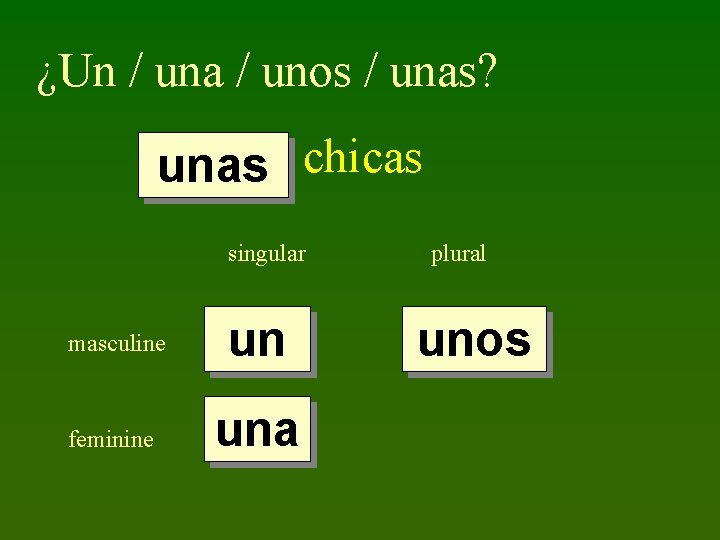
Classified by Gender and Number, Spanish Indefinite Articles look like this: singular plural masculine un unos feminine unas
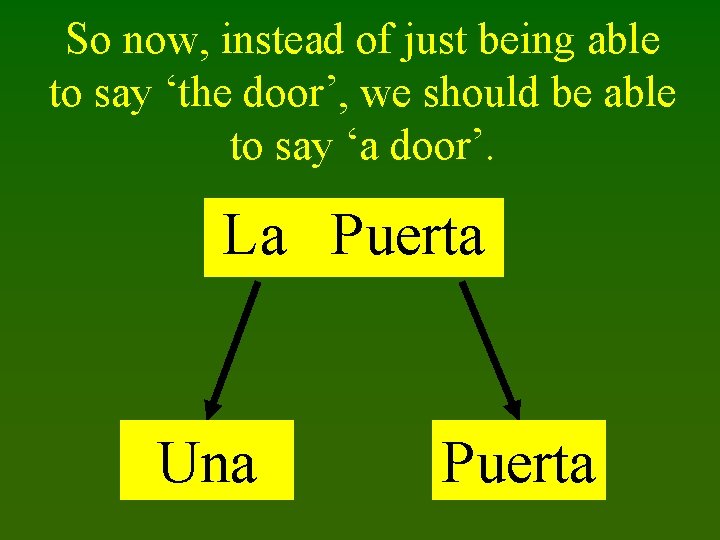
So now, instead of just being able to say ‘the door’, we should be able to say ‘a door’. La Puerta Una Puerta
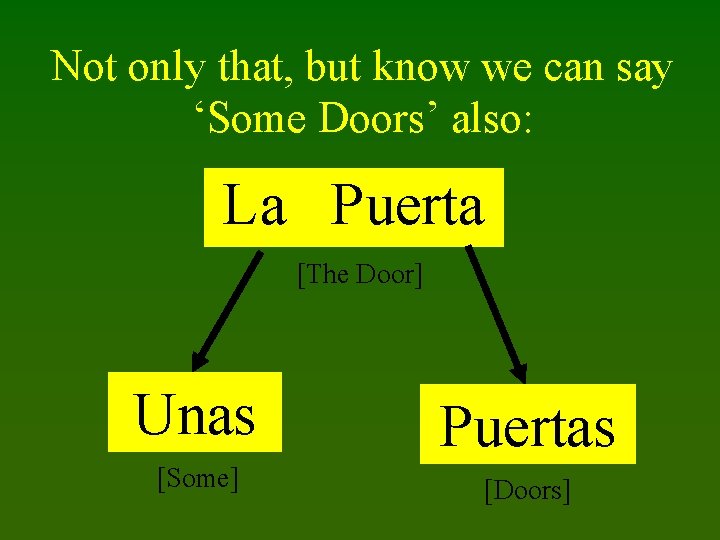
Not only that, but know we can say ‘Some Doors’ also: La Puerta [The Door] Unas Puertas [Some] [Doors]
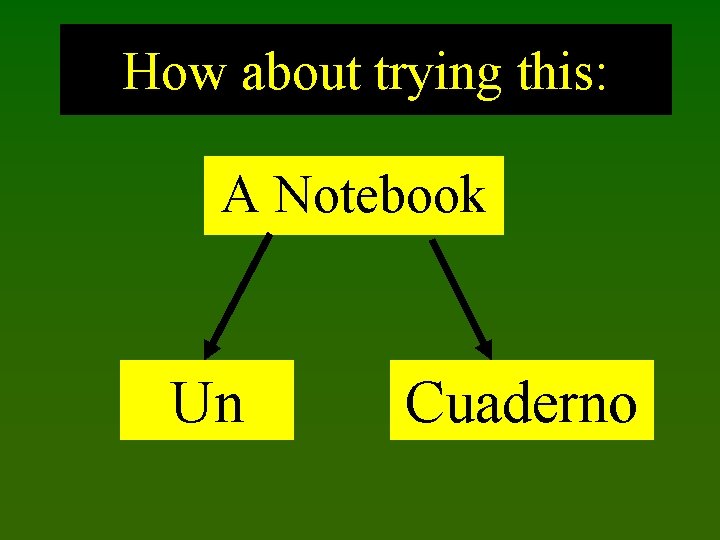
How about trying this: A Notebook Un Cuaderno
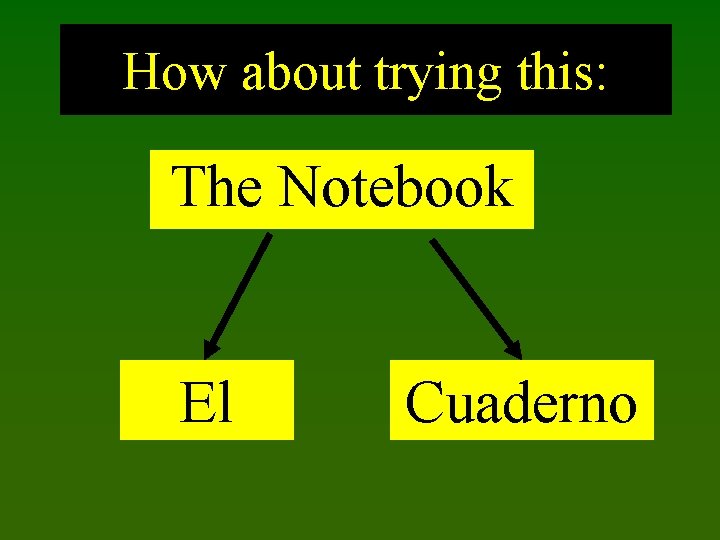
How about trying this: The Notebook El Cuaderno
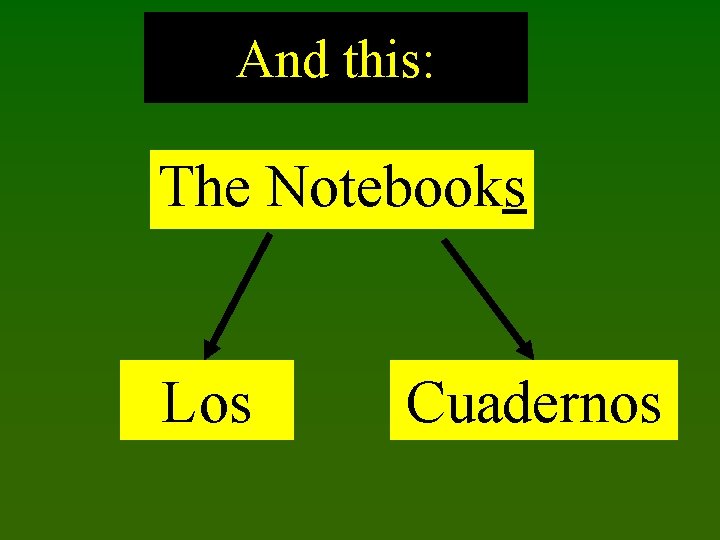
And this: The Notebooks Los Cuadernos
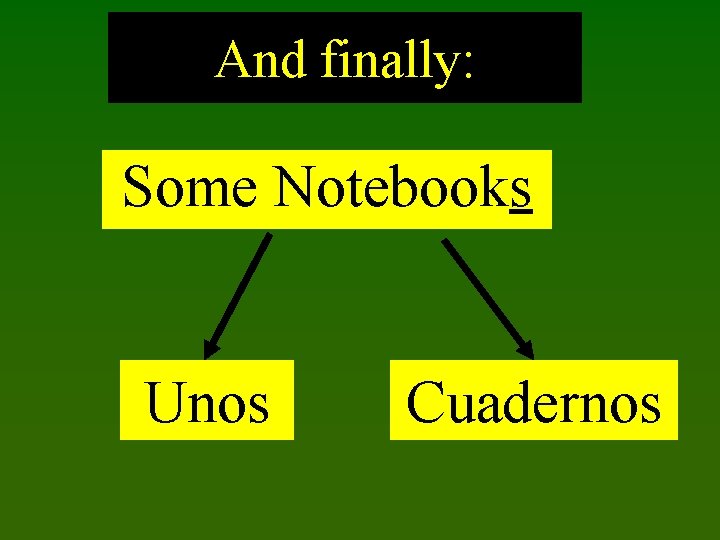
And finally: Some Notebooks Unos Cuadernos
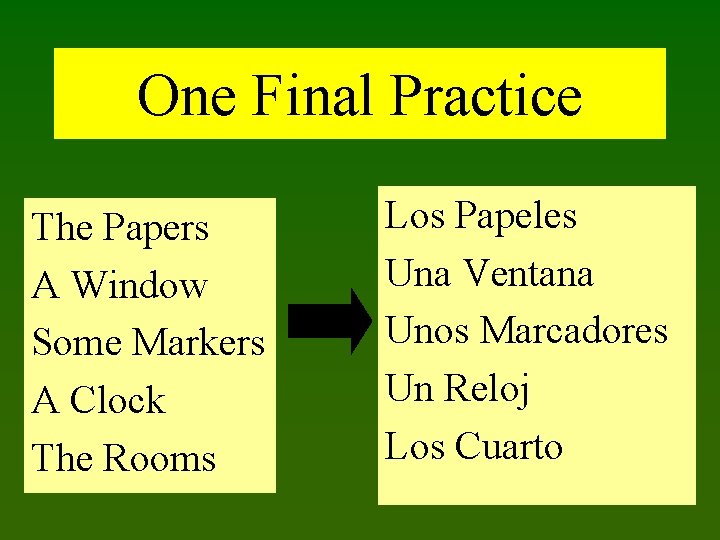
One Final Practice The Papers A Window Some Markers A Clock The Rooms Los Papeles Una Ventana Unos Marcadores Un Reloj Los Cuarto
¿Un / una / unos / unas? amigo singular plural masculine un unos feminine unas
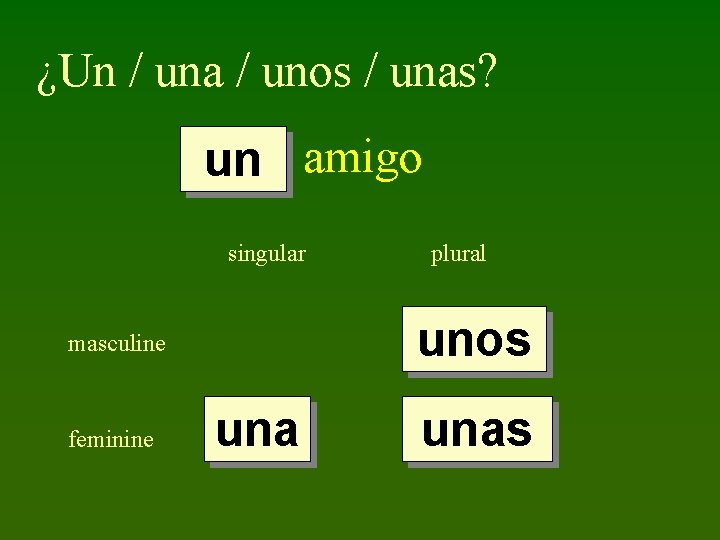
¿Un / una / unos / unas? un amigo singular unos masculine feminine plural unas
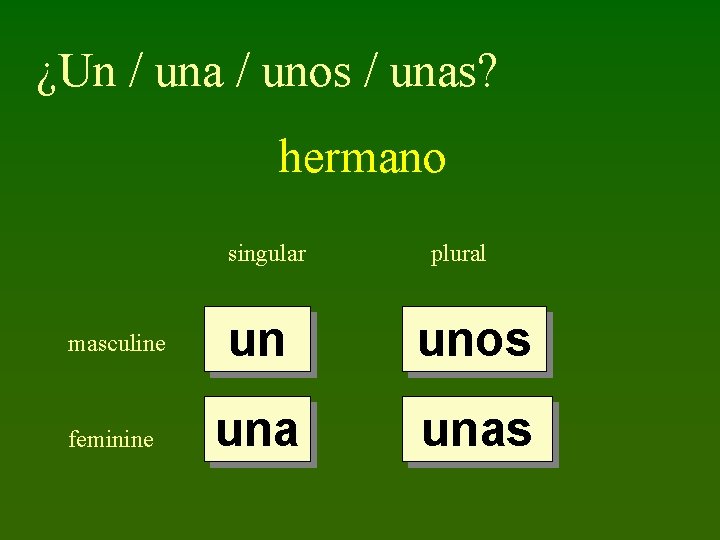
¿Un / una / unos / unas? hermano singular plural masculine un unos feminine unas
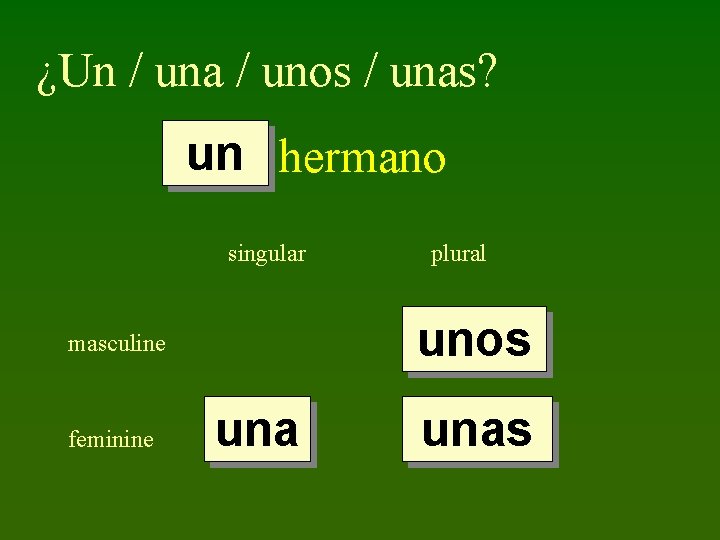
¿Un / una / unos / unas? un hermano singular unos masculine feminine plural unas
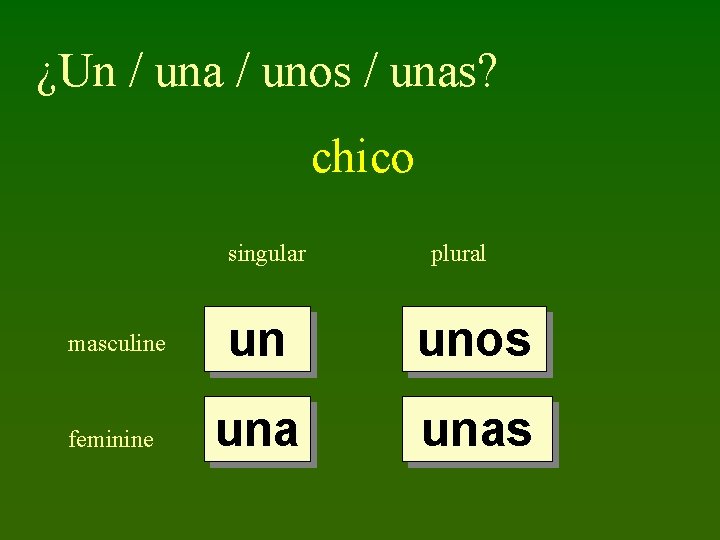
¿Un / una / unos / unas? chico singular plural masculine un unos feminine unas
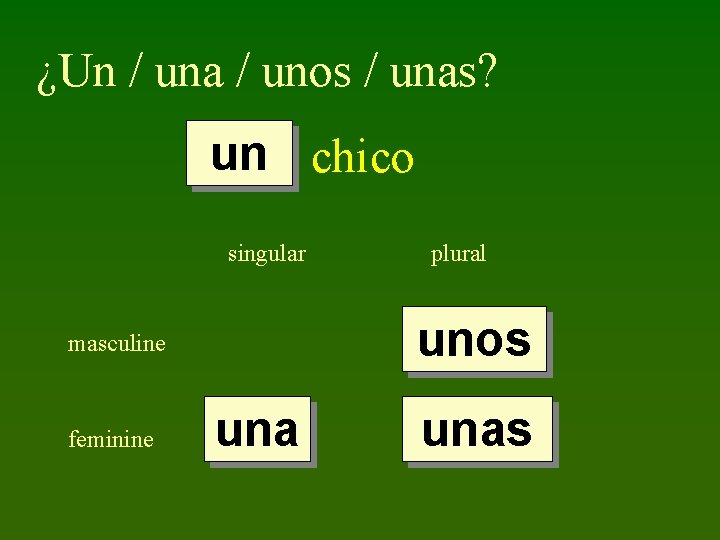
¿Un / una / unos / unas? un chico singular unos masculine feminine plural unas
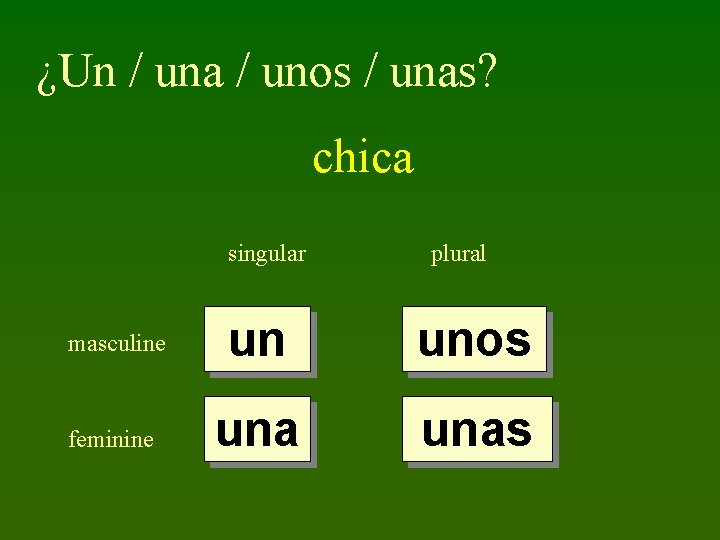
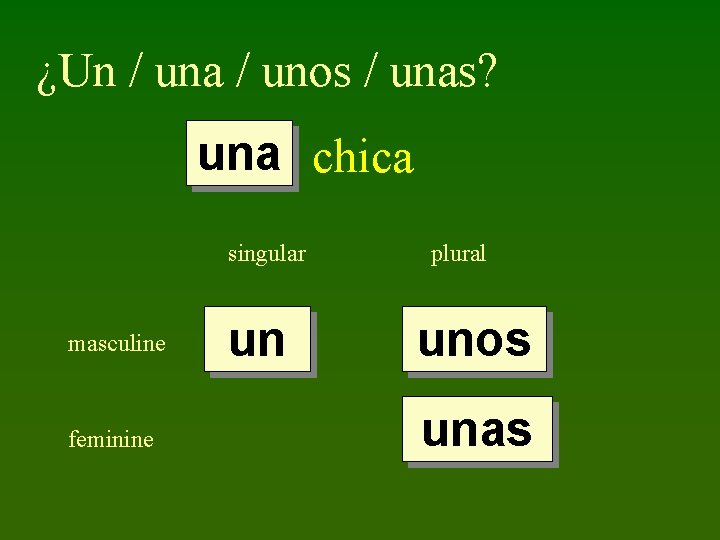
¿Un / una / unos / unas? chica singular plural masculine un unos feminine unas
¿Un / una / unos / unas? una chica singular masculine feminine un plural unos unas
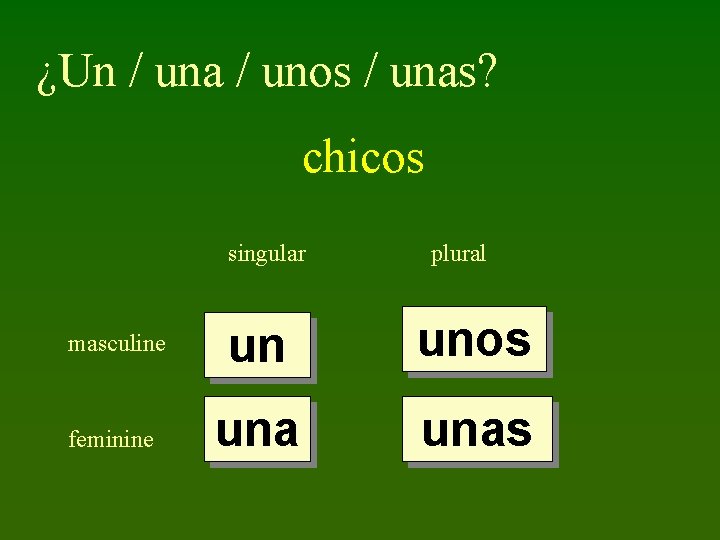
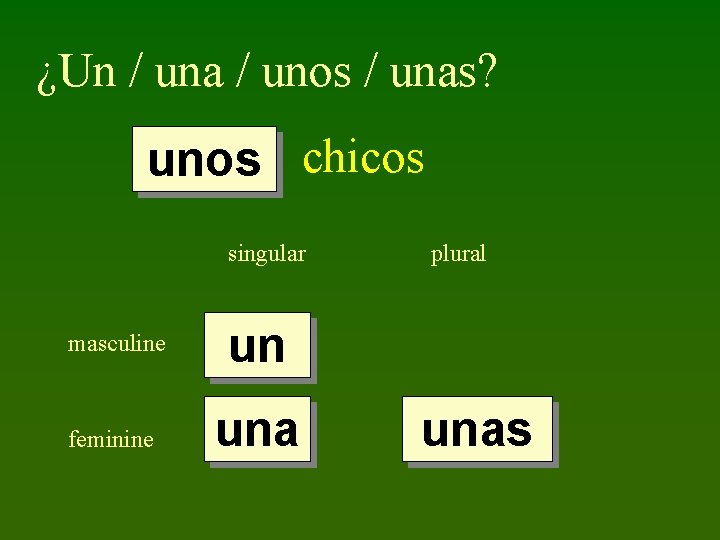
¿Un / una / unos / unas? chicos singular plural masculine un unos feminine unas
¿Un / una / unos / unas? unos chicos singular masculine un feminine una plural unas
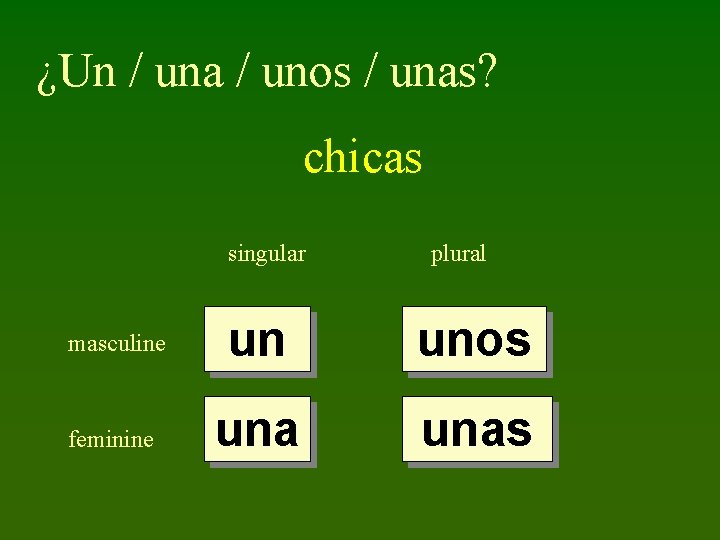
¿Un / una / unos / unas? chicas singular plural masculine un unos feminine unas
¿Un / una / unos / unas? unas chicas singular masculine un feminine una plural unos