
Los reflexivos You use the reflexive when the

- Slides: 22
Los reflexivos You use the reflexive when the action is being done to the person you are describing. For example: I wash myself. The infinitives have se attached to them. The se changes based on the subject (who you are talking about).
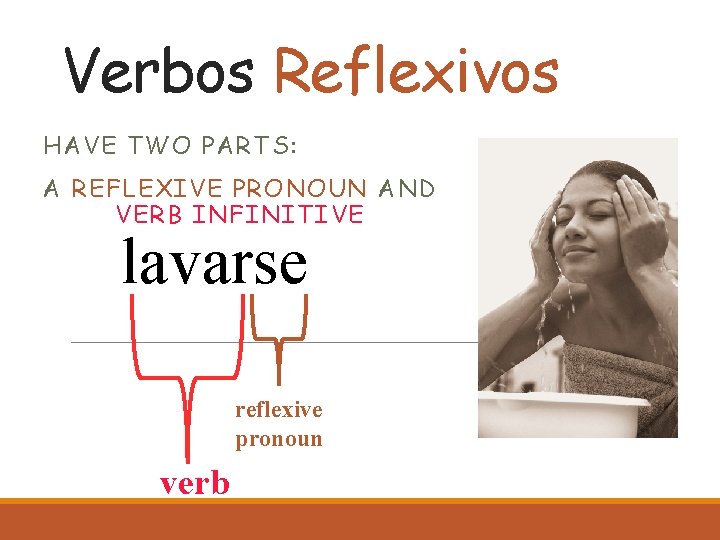
Verbos Reflexivos HAVE TWO PARTS: A REFLEXIVE PRONOUN AND VERB INFINITIVE lavarse reflexive pronoun verb
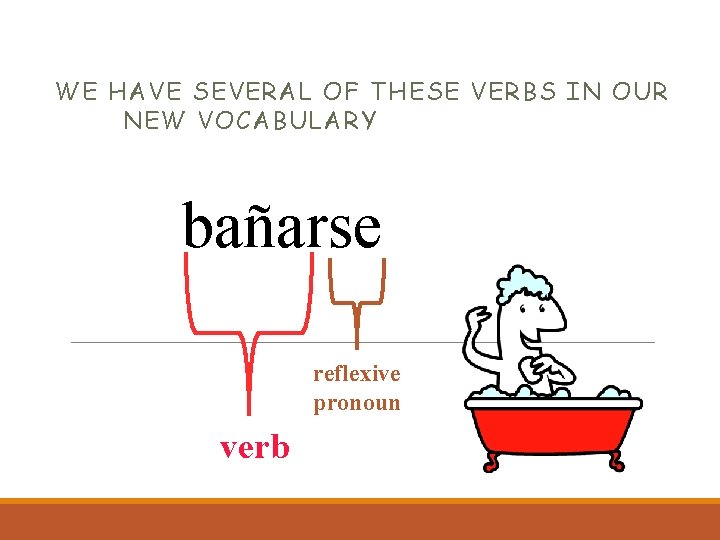
WE HAVE SEVERAL OF THESE VERBS IN OUR NEW VOCABULARY bañarse reflexive pronoun verb
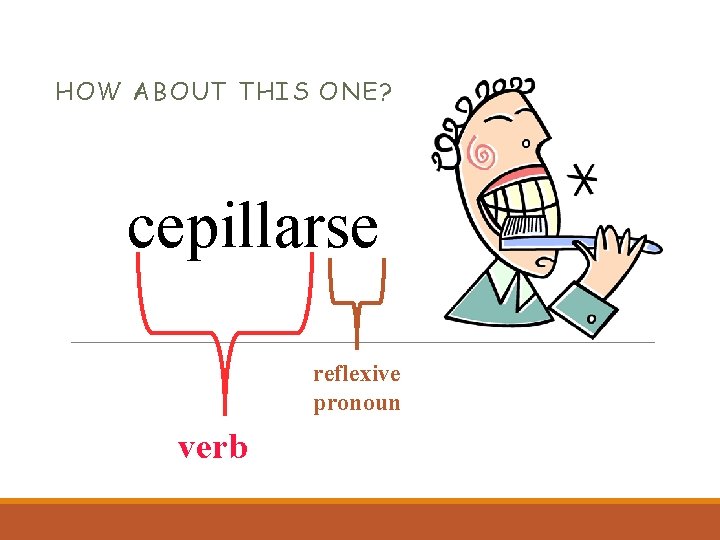
HOW ABOUT THIS ONE? cepillarse reflexive pronoun verb
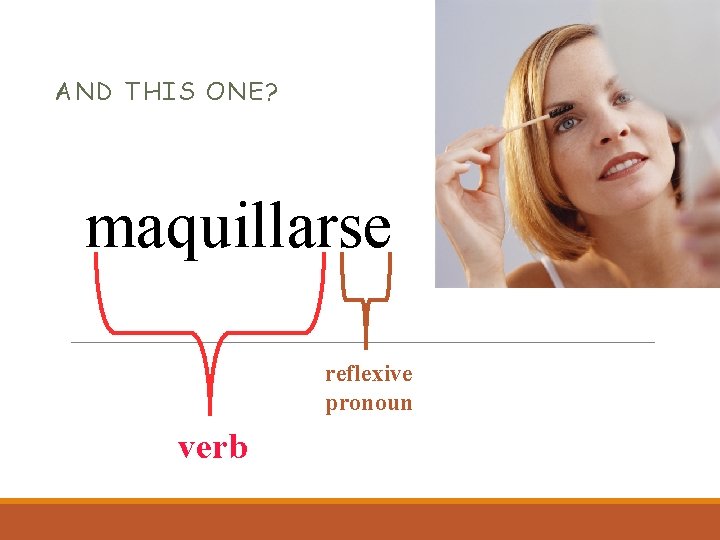
AND THIS ONE? maquillarse reflexive pronoun verb
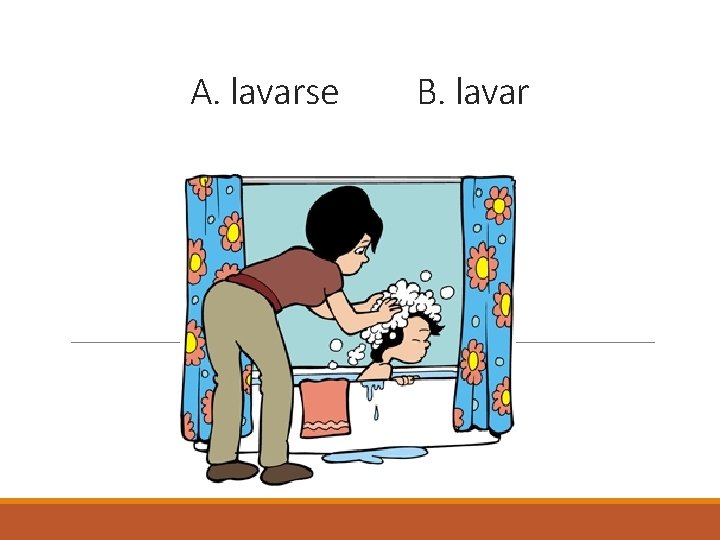
A. lavarse B. lavar
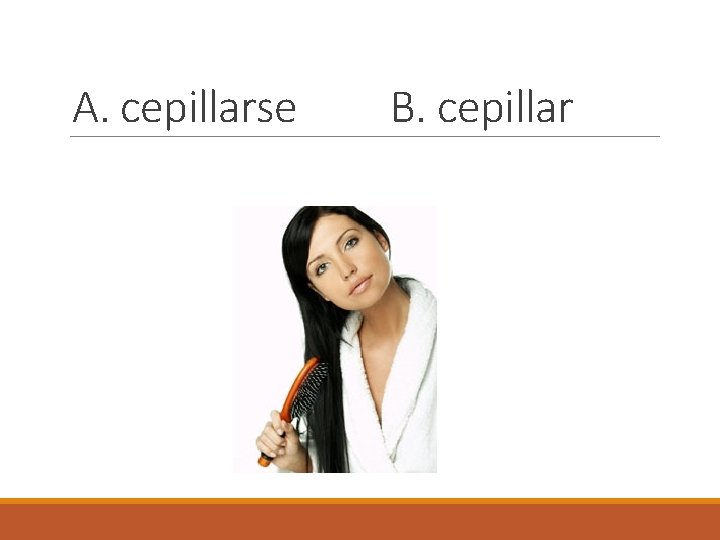
A. cepillarse B. cepillar
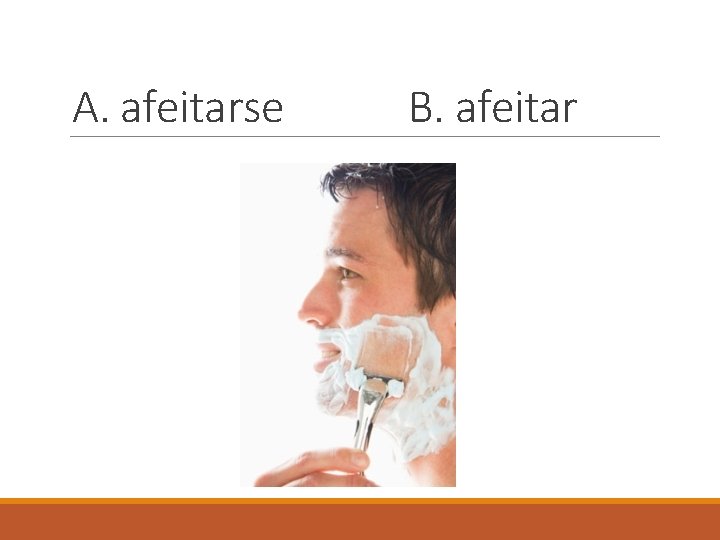
A. afeitarse B. afeitar
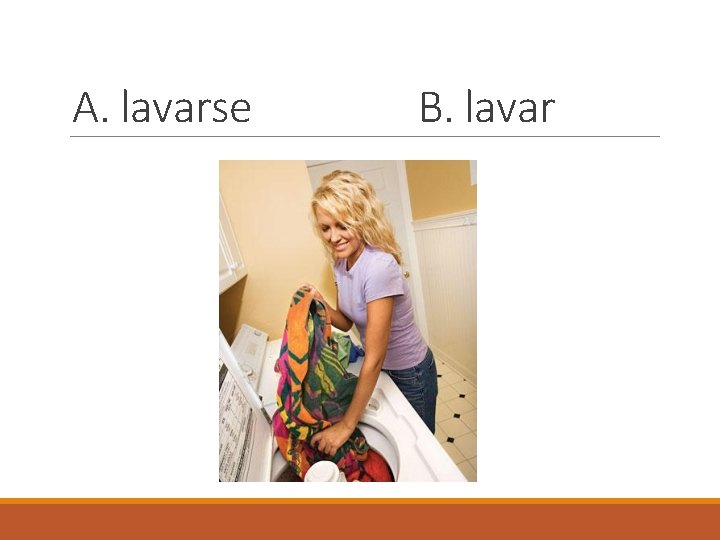
A. lavarse B. lavar
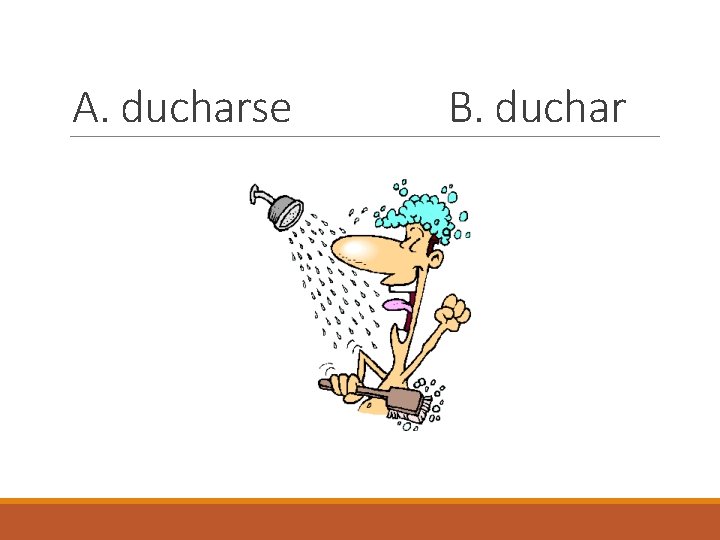
A. ducharse B. duchar
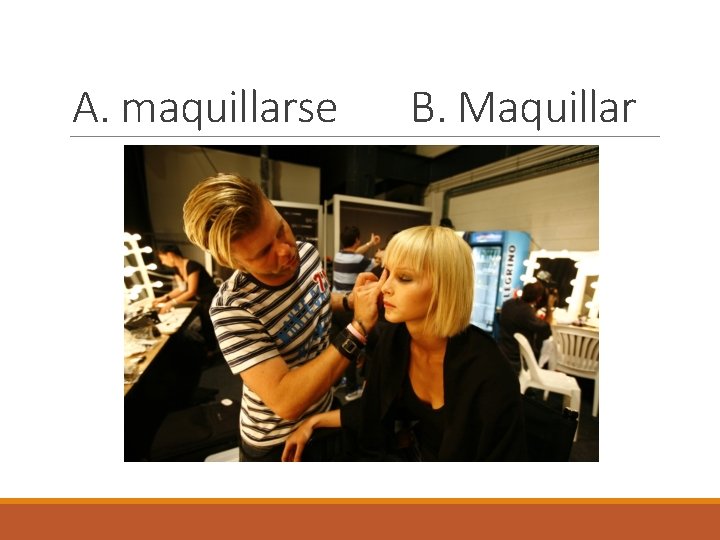
A. maquillarse B. Maquillar
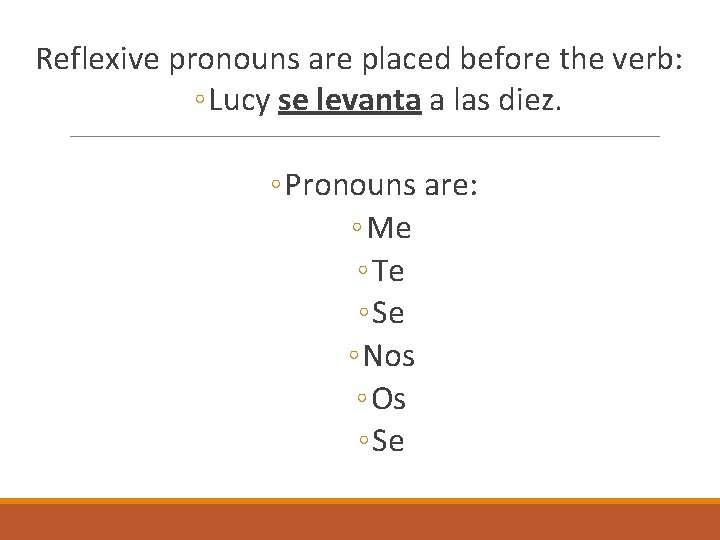
Reflexive pronouns are placed before the verb: ◦ Lucy se levanta a las diez. ◦ Pronouns are: ◦ Me ◦ Te ◦ Se ◦ Nos ◦ Os ◦ Se
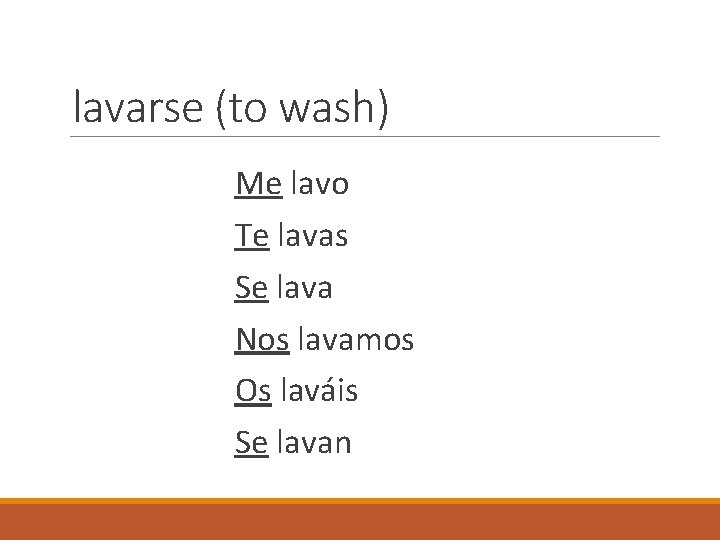
lavarse (to wash) Me lavo Te lavas Se lava Nos lavamos Os laváis Se lavan
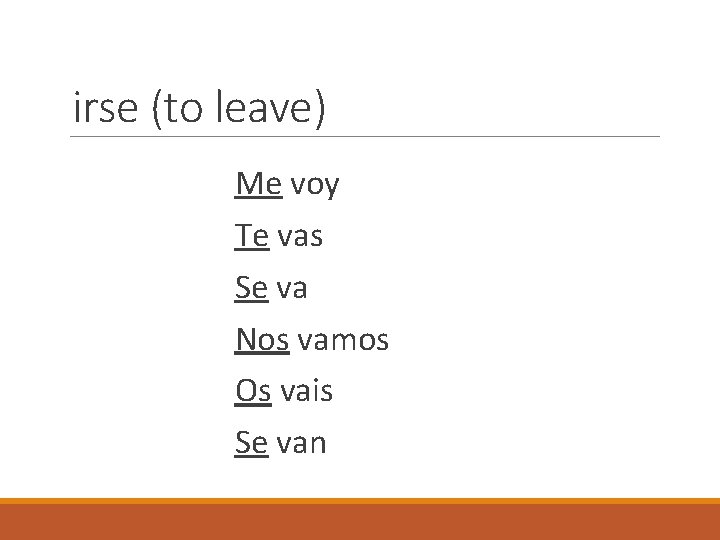
irse (to leave) Me voy Te vas Se va Nos vamos Os vais Se van
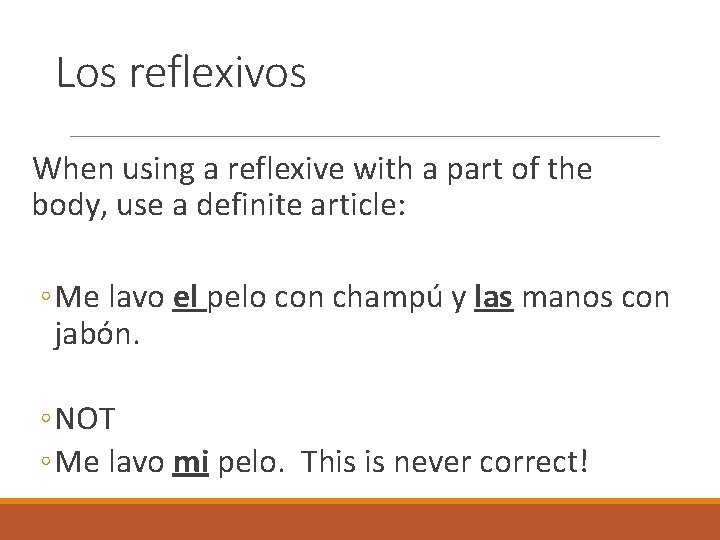
Los reflexivos When using a reflexive with a part of the body, use a definite article: ◦ Me lavo el pelo con champú y las manos con jabón. ◦ NOT ◦ Me lavo mi pelo. This is never correct!
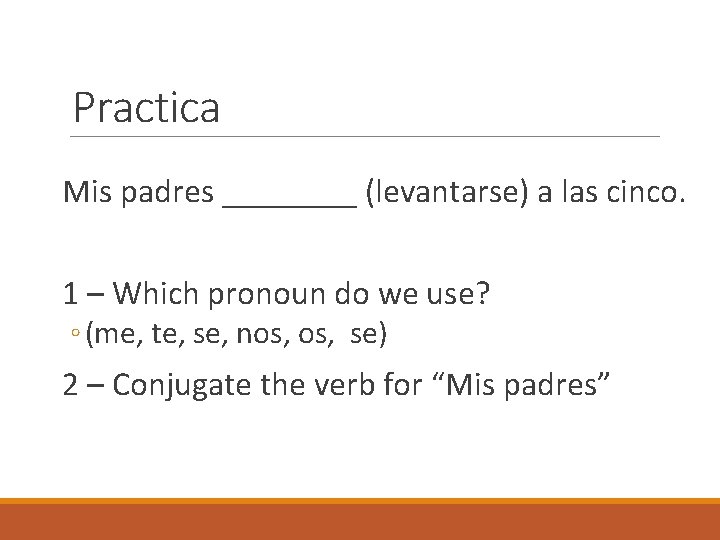
Practica Mis padres ____ (levantarse) a las cinco. 1 – Which pronoun do we use? ◦ (me, te, se, nos, se) 2 – Conjugate the verb for “Mis padres”
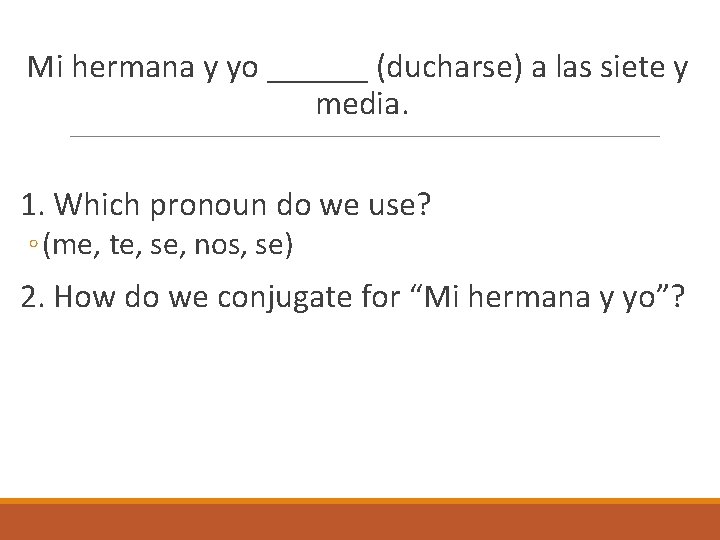
Mi hermana y yo ______ (ducharse) a las siete y media. 1. Which pronoun do we use? ◦ (me, te, se, nos, se) 2. How do we conjugate for “Mi hermana y yo”?
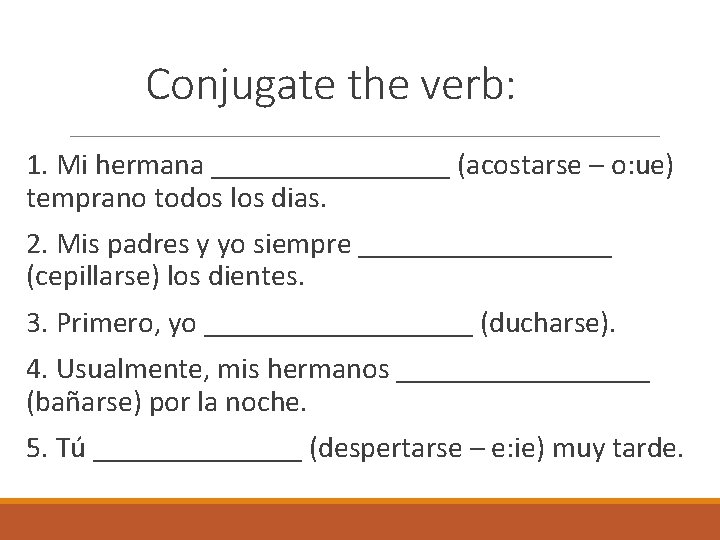
Conjugate the verb: 1. Mi hermana ________ (acostarse – o: ue) temprano todos los dias. 2. Mis padres y yo siempre _________ (cepillarse) los dientes. 3. Primero, yo _________ (ducharse). 4. Usualmente, mis hermanos _________ (bañarse) por la noche. 5. Tú _______ (despertarse – e: ie) muy tarde.
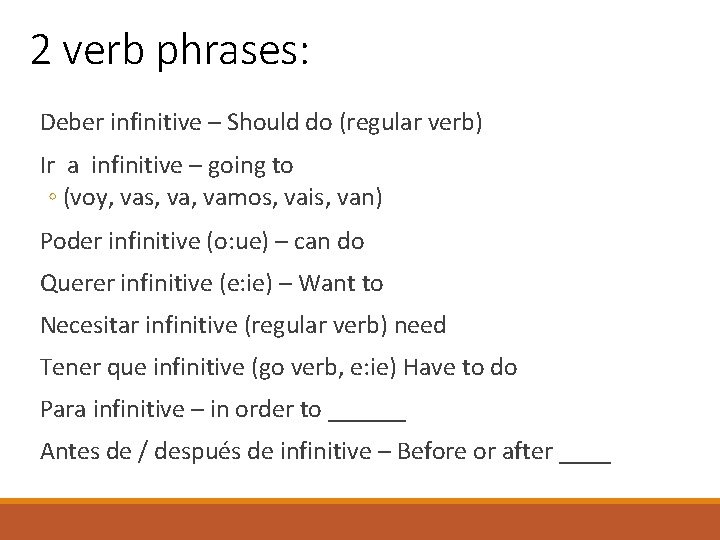
2 verb phrases: Deber infinitive – Should do (regular verb) Ir a infinitive – going to ◦ (voy, vas, vamos, vais, van) Poder infinitive (o: ue) – can do Querer infinitive (e: ie) – Want to Necesitar infinitive (regular verb) need Tener que infinitive (go verb, e: ie) Have to do Para infinitive – in order to ______ Antes de / después de infinitive – Before or after ____
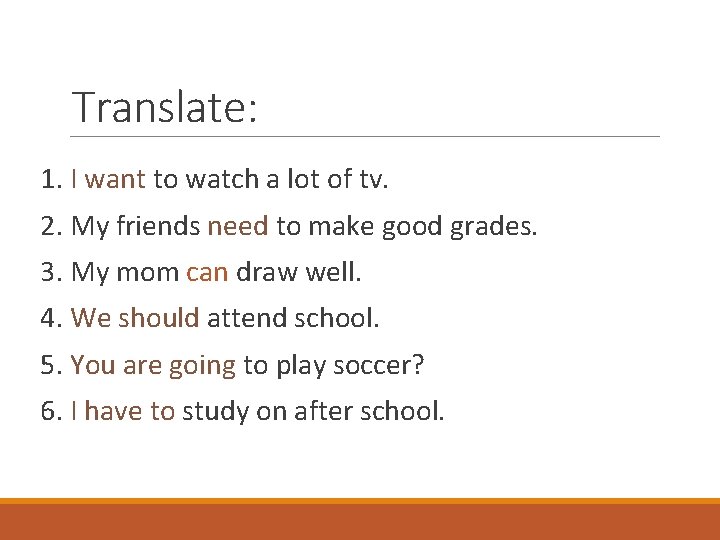
Translate: 1. I want to watch a lot of tv. 2. My friends need to make good grades. 3. My mom can draw well. 4. We should attend school. 5. You are going to play soccer? 6. I have to study on after school.
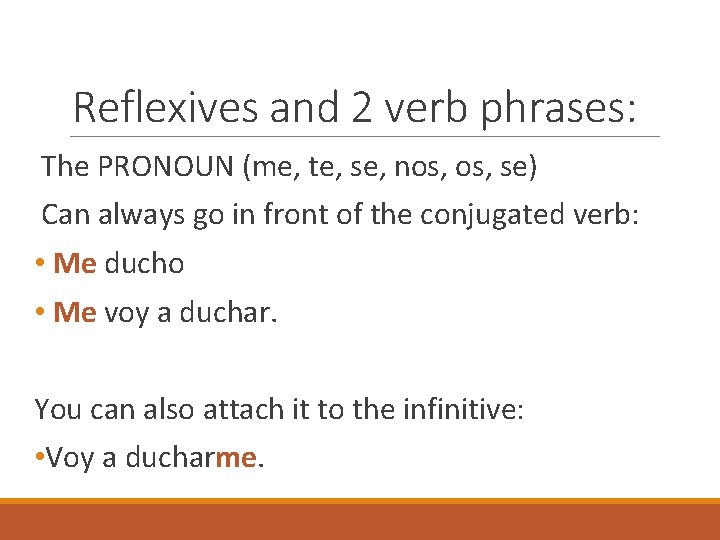
Reflexives and 2 verb phrases: The PRONOUN (me, te, se, nos, se) Can always go in front of the conjugated verb: • Me ducho • Me voy a duchar. You can also attach it to the infinitive: • Voy a ducharme.
Practice / skits