
Los PRONOMBRES PRONOUNS SUBJECT DIRECT OBJECT INDIRECT OBJECT
Los PRONOMBRES PRONOUNS SUBJECT DIRECT OBJECT INDIRECT OBJECT REFLEXIVE
PRONOUNS • Pronouns take the place of nouns. • The nouns may be Proper: (Enrique, María) • The nouns may be Common: profesora magnífica, el libro) (la
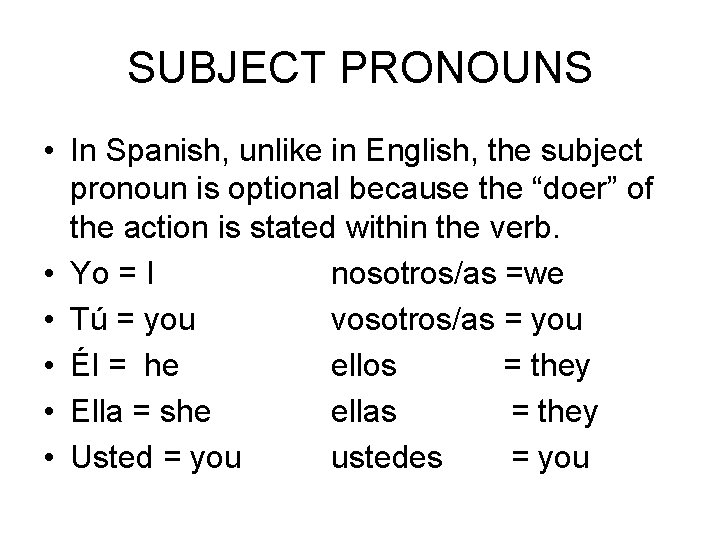
SUBJECT PRONOUNS • In Spanish, unlike in English, the subject pronoun is optional because the “doer” of the action is stated within the verb. • Yo = I nosotros/as =we • Tú = you vosotros/as = you • Él = he ellos = they • Ella = she ellas = they • Usted = you ustedes = you
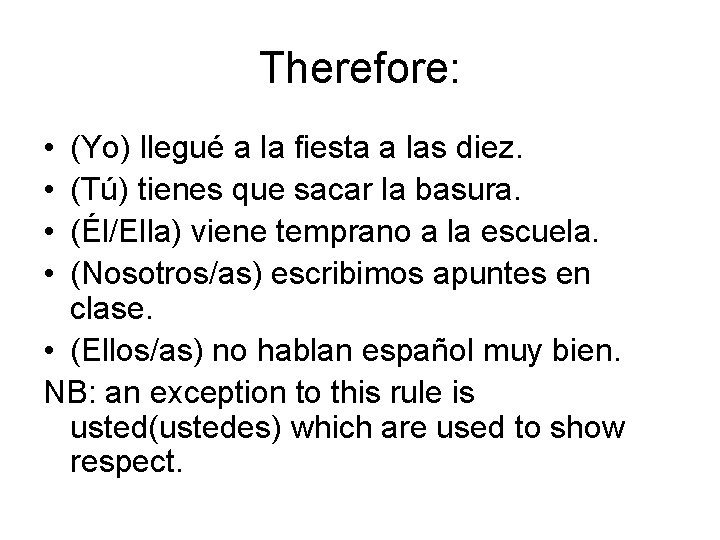
Therefore: • • (Yo) llegué a la fiesta a las diez. (Tú) tienes que sacar la basura. (Él/Ella) viene temprano a la escuela. (Nosotros/as) escribimos apuntes en clase. • (Ellos/as) no hablan español muy bien. NB: an exception to this rule is usted(ustedes) which are used to show respect.
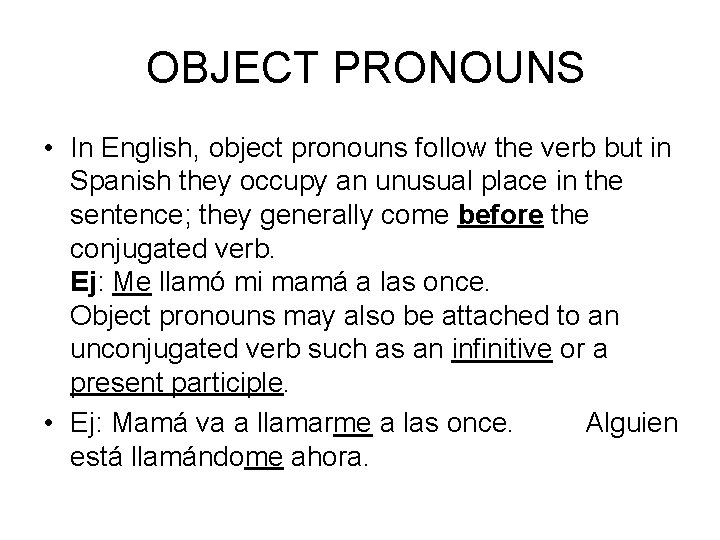
OBJECT PRONOUNS • In English, object pronouns follow the verb but in Spanish they occupy an unusual place in the sentence; they generally come before the conjugated verb. Ej: Me llamó mi mamá a las once. Object pronouns may also be attached to an unconjugated verb such as an infinitive or a present participle. • Ej: Mamá va a llamarme a las once. Alguien está llamándome ahora.
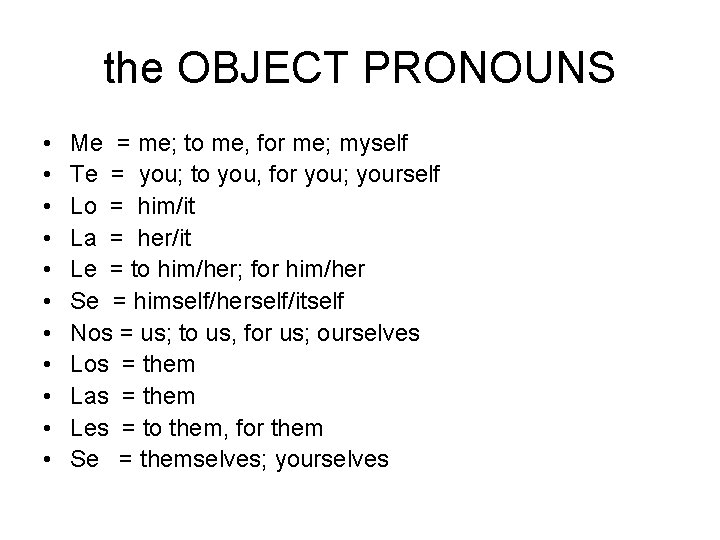
the OBJECT PRONOUNS • • • Me = me; to me, for me; myself Te = you; to you, for you; yourself Lo = him/it La = her/it Le = to him/her; for him/her Se = himself/herself/itself Nos = us; to us, for us; ourselves Los = them Las = them Les = to them, for them Se = themselves; yourselves
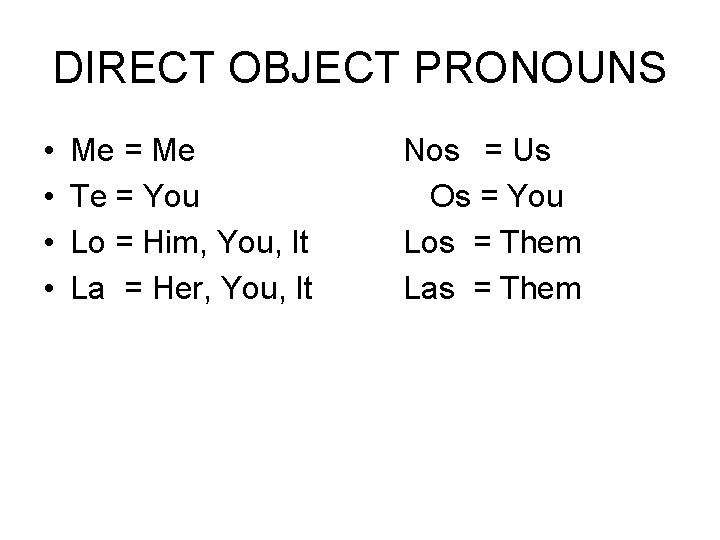
DIRECT OBJECT PRONOUNS • • Me = Me Te = You Lo = Him, You, It La = Her, You, It Nos = Us Os = You Los = Them Las = Them
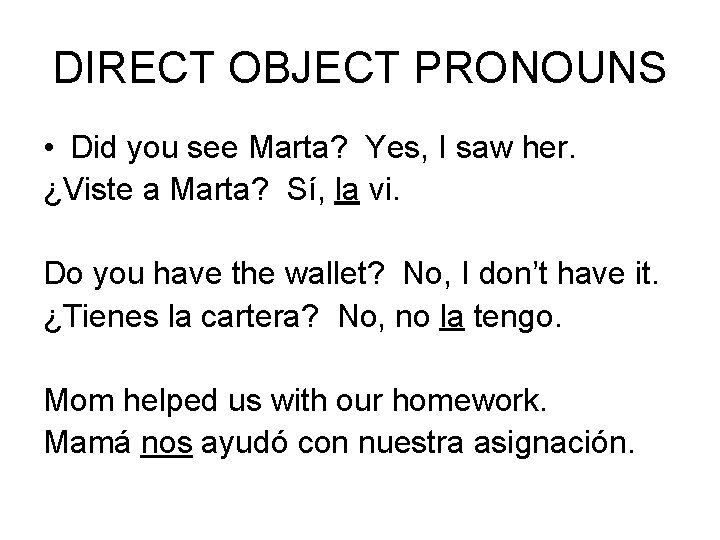
DIRECT OBJECT PRONOUNS • Did you see Marta? Yes, I saw her. ¿Viste a Marta? Sí, la vi. Do you have the wallet? No, I don’t have it. ¿Tienes la cartera? No, no la tengo. Mom helped us with our homework. Mamá nos ayudó con nuestra asignación.
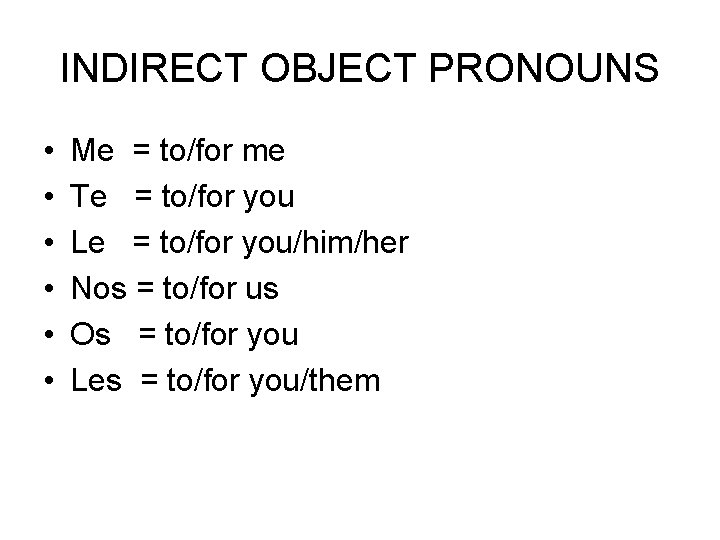
INDIRECT OBJECT PRONOUNS • • • Me = to/for me Te = to/for you Le = to/for you/him/her Nos = to/for us Os = to/for you Les = to/for you/them
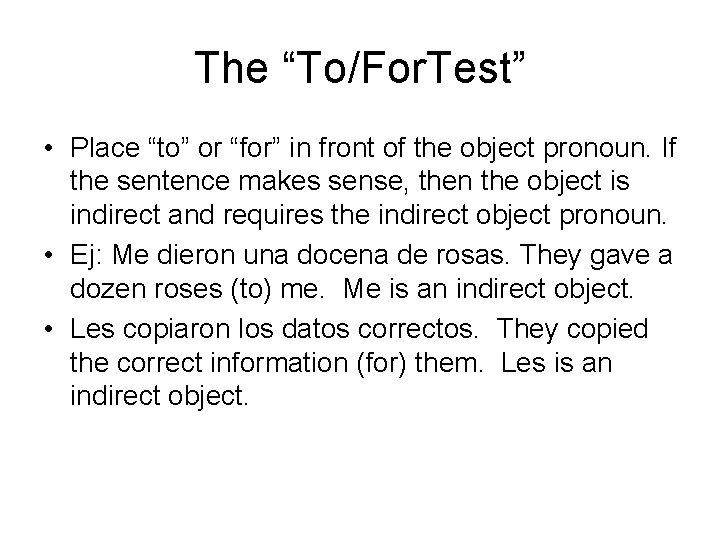
The “To/For. Test” • Place “to” or “for” in front of the object pronoun. If the sentence makes sense, then the object is indirect and requires the indirect object pronoun. • Ej: Me dieron una docena de rosas. They gave a dozen roses (to) me. Me is an indirect object. • Les copiaron los datos correctos. They copied the correct information (for) them. Les is an indirect object.
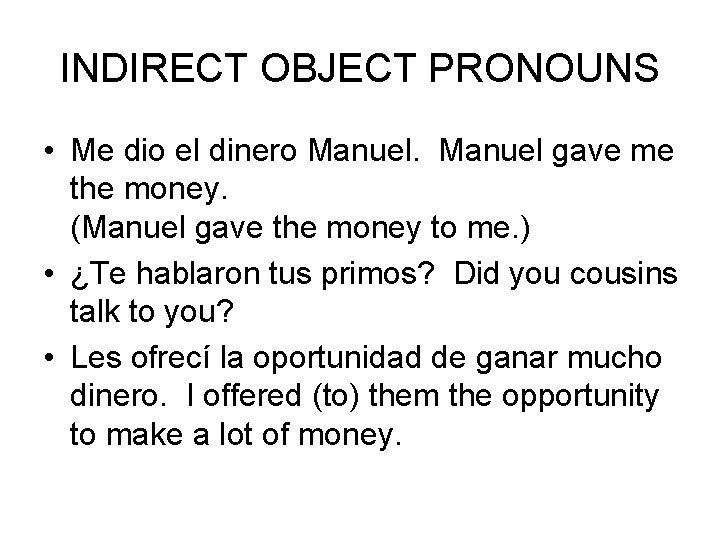
INDIRECT OBJECT PRONOUNS • Me dio el dinero Manuel gave me the money. (Manuel gave the money to me. ) • ¿Te hablaron tus primos? Did you cousins talk to you? • Les ofrecí la oportunidad de ganar mucho dinero. I offered (to) them the opportunity to make a lot of money.
TE TOCA A TI IT’S YOUR TURN • CHOOSE THE CORRECT OBJECT PRONOUN FOR EACH OF THE FOLLOWING SENTENCES. IT MAY BE DIRECT OR INDIRECT.
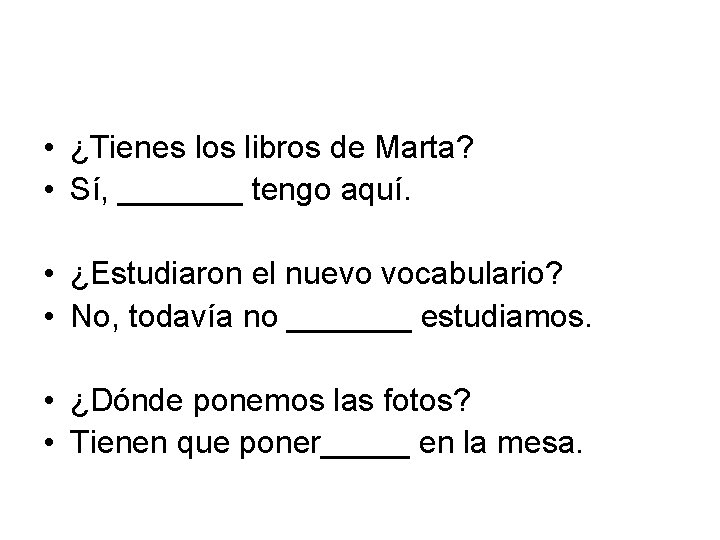
• ¿Tienes los libros de Marta? • Sí, _______ tengo aquí. • ¿Estudiaron el nuevo vocabulario? • No, todavía no _______ estudiamos. • ¿Dónde ponemos las fotos? • Tienen que poner_____ en la mesa.
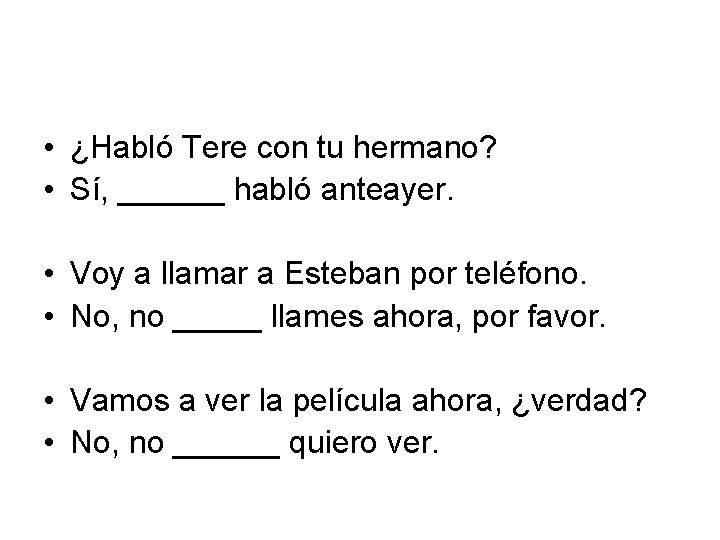
• ¿Habló Tere con tu hermano? • Sí, ______ habló anteayer. • Voy a llamar a Esteban por teléfono. • No, no _____ llames ahora, por favor. • Vamos a ver la película ahora, ¿verdad? • No, no ______ quiero ver.
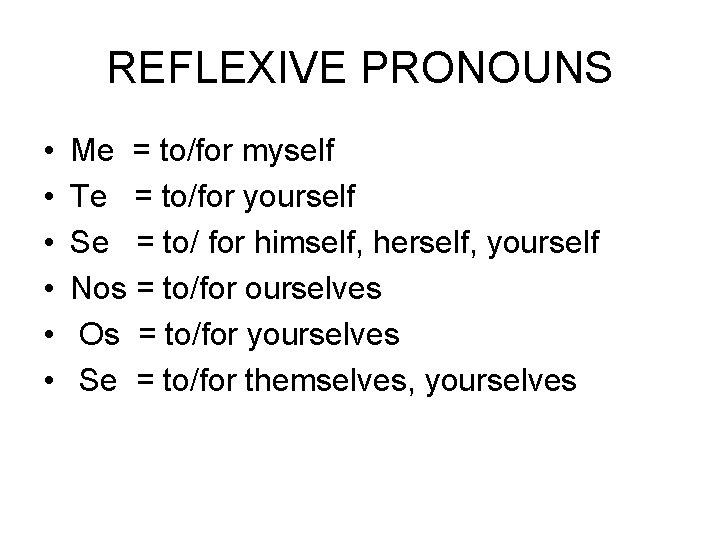
REFLEXIVE PRONOUNS • • • Me = to/for myself Te = to/for yourself Se = to/ for himself, herself, yourself Nos = to/for ourselves Os = to/for yourselves Se = to/for themselves, yourselves
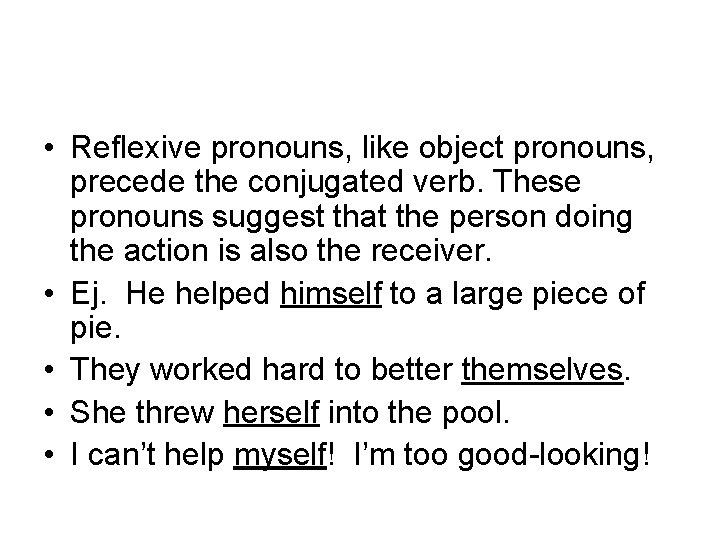
• Reflexive pronouns, like object pronouns, precede the conjugated verb. These pronouns suggest that the person doing the action is also the receiver. • Ej. He helped himself to a large piece of pie. • They worked hard to better themselves. • She threw herself into the pool. • I can’t help myself! I’m too good-looking!
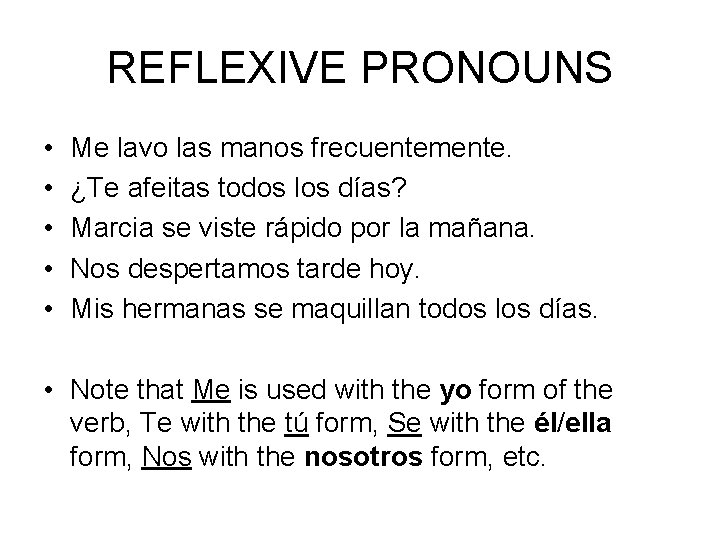
REFLEXIVE PRONOUNS • • • Me lavo las manos frecuentemente. ¿Te afeitas todos los días? Marcia se viste rápido por la mañana. Nos despertamos tarde hoy. Mis hermanas se maquillan todos los días. • Note that Me is used with the yo form of the verb, Te with the tú form, Se with the él/ella form, Nos with the nosotros form, etc.
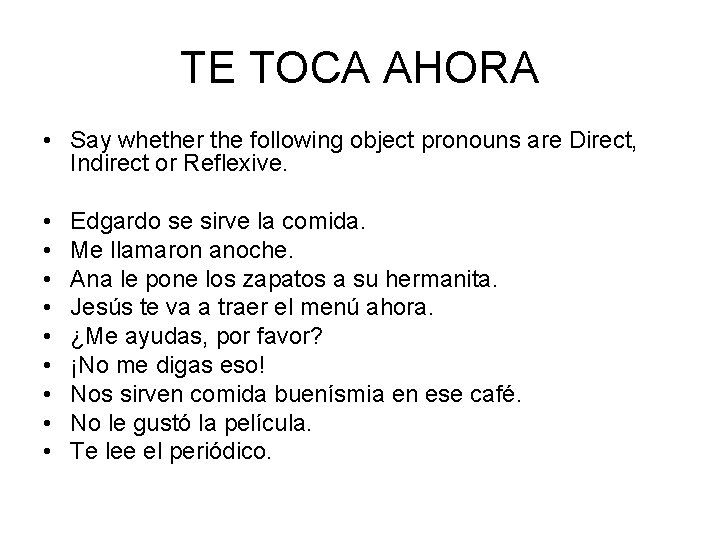
TE TOCA AHORA • Say whether the following object pronouns are Direct, Indirect or Reflexive. • • • Edgardo se sirve la comida. Me llamaron anoche. Ana le pone los zapatos a su hermanita. Jesús te va a traer el menú ahora. ¿Me ayudas, por favor? ¡No me digas eso! Nos sirven comida buenísmia en ese café. No le gustó la película. Te lee el periódico.
- Slides: 18