
Los Mandatos Positive Commands The command forms are

- Slides: 7
Los Mandatos + (Positive Commands) The command forms are used to give orders, warnings, or advise. Commands can be either: Formal (usted, ustedes, & General Warning) or Informal (tú)
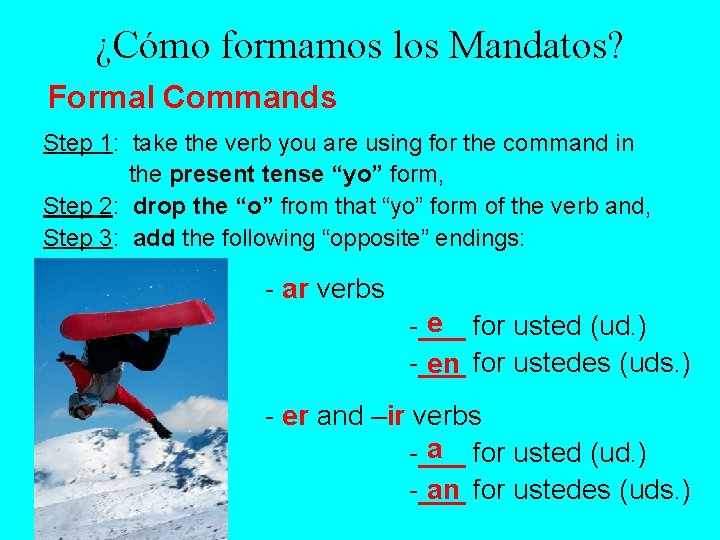
¿Cómo formamos los Mandatos? Formal Commands Step 1: take the verb you are using for the command in the present tense “yo” form, Step 2: drop the “o” from that “yo” form of the verb and, Step 3: add the following “opposite” endings: - ar verbs e for usted (ud. ) -___ en for ustedes (uds. ) - er and –ir verbs a for usted (ud. ) -___ an for ustedes (uds. )
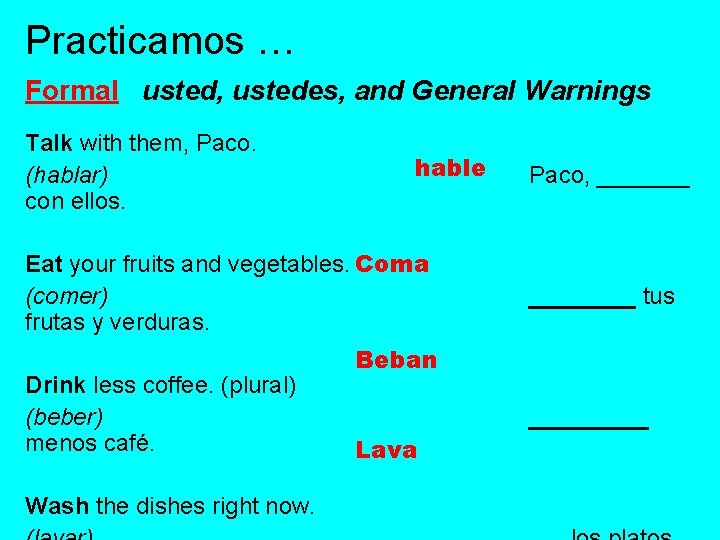
Practicamos … Formal usted, ustedes, and General Warnings Talk with them, Paco. (hablar) con ellos. hable Eat your fruits and vegetables. Coma (comer) frutas y verduras. Drink less coffee. (plural) (beber) menos café. Wash the dishes right now. Paco, ________ tus Beban _____ Lava
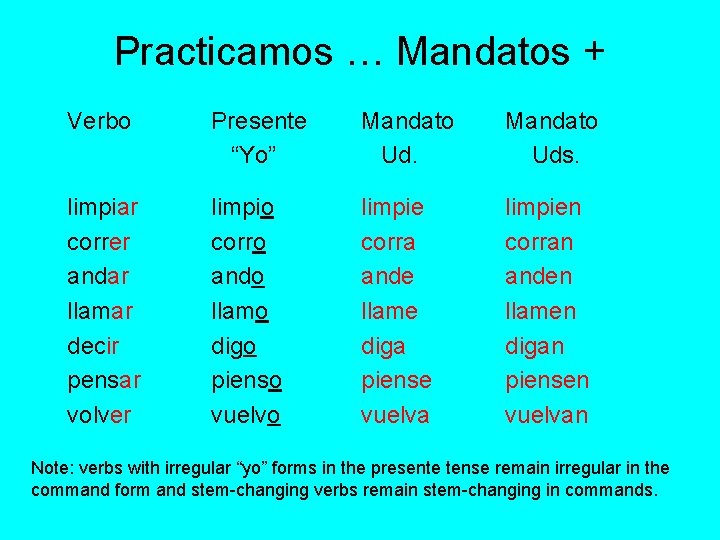
Practicamos … Mandatos + Verbo Presente “Yo” Mandato Uds. limpiar correr andar llamar decir pensar volver limpio corro ando llamo digo pienso vuelvo limpie corra ande llame diga piense vuelva limpien corran anden llamen digan piensen vuelvan Note: verbs with irregular “yo” forms in the presente tense remain irregular in the command form and stem-changing verbs remain stem-changing in commands.
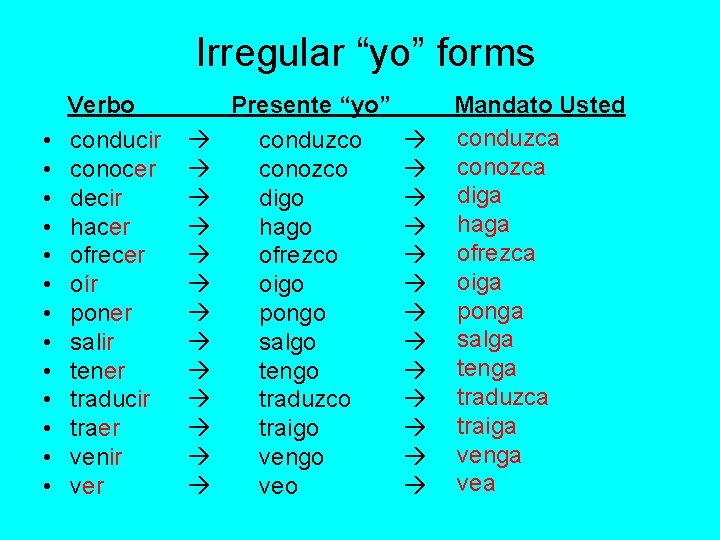
Irregular “yo” forms • • • • Verbo conducir conocer decir hacer ofrecer oír poner salir tener traducir traer venir ver Presente “yo” conduzco conozco digo hago ofrezco oigo pongo salgo tengo traduzco traigo vengo veo Mandato Usted conduzca conozca diga haga ofrezca oiga ponga salga tenga traduzca traiga venga vea
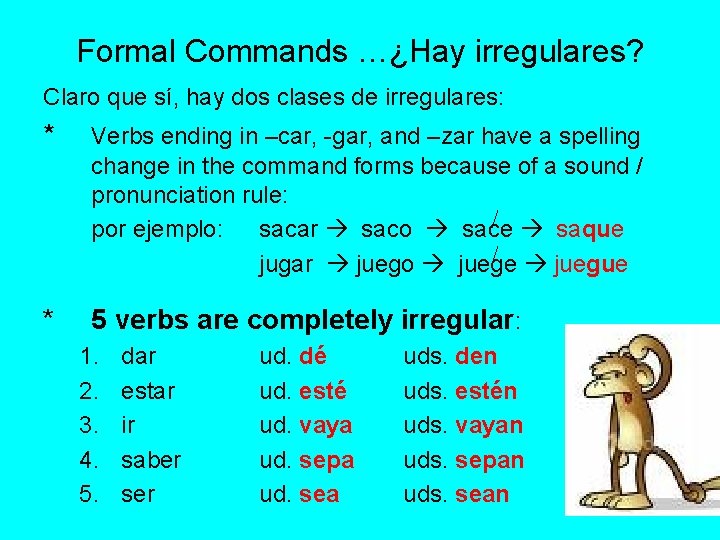
Formal Commands …¿Hay irregulares? Claro que sí, hay dos clases de irregulares: * Verbs ending in –car, -gar, and –zar have a spelling change in the command forms because of a sound / pronunciation rule: por ejemplo: sacar saco sace saque jugar juego juege juegue * 5 verbs are completely irregular: 1. 2. 3. 4. 5. dar estar ir saber ser ud. dé ud. esté ud. vaya ud. sepa ud. sea uds. den uds. estén uds. vayan uds. sepan uds. sean
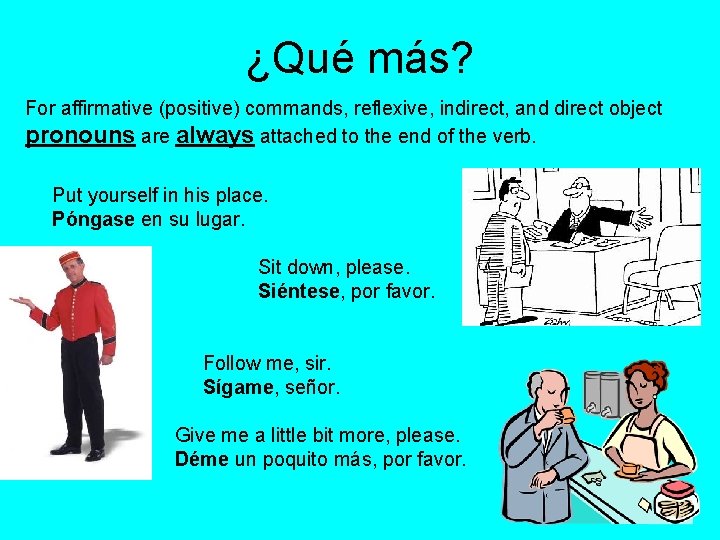
¿Qué más? For affirmative (positive) commands, reflexive, indirect, and direct object pronouns are always attached to the end of the verb. Put yourself in his place. Póngase en su lugar. Sit down, please. Siéntese, por favor. Follow me, sir. Sígame, señor. Give me a little bit more, please. Déme un poquito más, por favor.