
Los mandatos informales El sistema de conjugacin Mandatos




- Slides: 9
Los mandatos informales
El sistema de conjugación Mandatos afirmativos Tú Escribe Vosotros Escribid Mandatos negativos Tú No escribas Vosotros No escribáis Ud. / Uds. Escriba Ud. / Uds. No escriba/n Nosotros Escribamos Nosotros No escribamos* *(IR)
Los mandatos ¿Qué es un mandato? o Un mandato, or command, is a way of influencing others to do what we want them to. Consider the following examples: n n o o Juanito, (you) eat your vegetables! Petra, (you) don’t talk on the phone so long! In English we only have one form for commands; however, in Spanish remember that there are two ways to say you (tú vs. usted). Informal commands are used with persons to whom you address as tú.
Los mandatos informales afirmativos The affirmative tú commands are the easiest command form to make. You create them by smashing together the 2 nd informal subject with the 2 nd person formal present tense verb. Hablar: tú + habla (Ud. ) Comer: tú + come (Ud. ) Escribir: tú + escribe (Ud. )
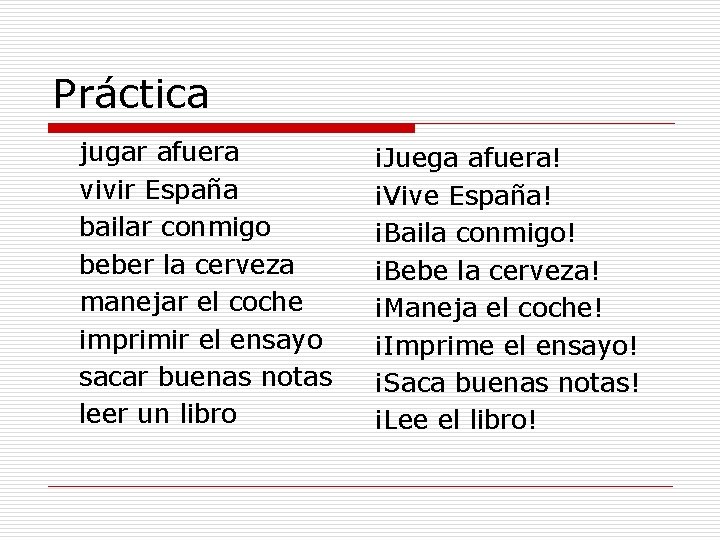
Práctica jugar afuera vivir España bailar conmigo beber la cerveza manejar el coche imprimir el ensayo sacar buenas notas leer un libro ¡Juega afuera! ¡Vive España! ¡Baila conmigo! ¡Bebe la cerveza! ¡Maneja el coche! ¡Imprime el ensayo! ¡Saca buenas notas! ¡Lee el libro!
Formas irregulares While the majority of the affirmative commands are regular, there a few irregular forms to be memorized: Decir: di Salir: sal Hacer: haz Ser: sé** Ir: ve* Tener: ten Poner: pon Venir: ven *Ojo: Los mandatos afirmativos de tú para ir and ver son iguales. ¿Cómo vamos a distinguirlos? ¡Ve esa película! vs. ¡Ve a casa ahora mismo! **Noten que hay un acento en el mandato de ser. ¿Por qué?
Los mandatos informales negativos The negative tú commands are formed in the same way as formal (Ud. ) commands: Formal Commands: (1) Begin with yo form Hablar hablo Comer como Vivir vivo (2) Take away yo form ending and add opposite verb ending Ar: -e Er/Ir: -a (3) The resulting form is the formal command: Hablar Comer Vivir hable(n) coma(n) viva(n)
Los mandatos informales negativos In order to make the negative tú commands, you follow the same steps but add one more: Add an “s”: Hablar: Comer: Vivir: no hables no comas no vivas
Los complementos You place the DOP and IOP as you would any command: In affirmative commands, add them to the end: ¡Cómelas! ¡Cállate! - Eat them - Shut up! (vegetables)! (yourself) In negative commands, place them in front as usual: ¡No las comas! ¡No te calles! - Don’t eat them! - Don’t shut up!