
Los Mandatos Formales Commands To form the singular
- Slides: 6
Los Mandatos Formales (Commands) To form the singular Formal (Ud) command of regular verbs: 1. start with the “yo”form of the Present 2. drop the “o” 3. for –AR verbs, add “e” for –ER and –IR verbs, add “a” To form the plural Formal (Uds) command, simply add “n” to the singular Formal command form.
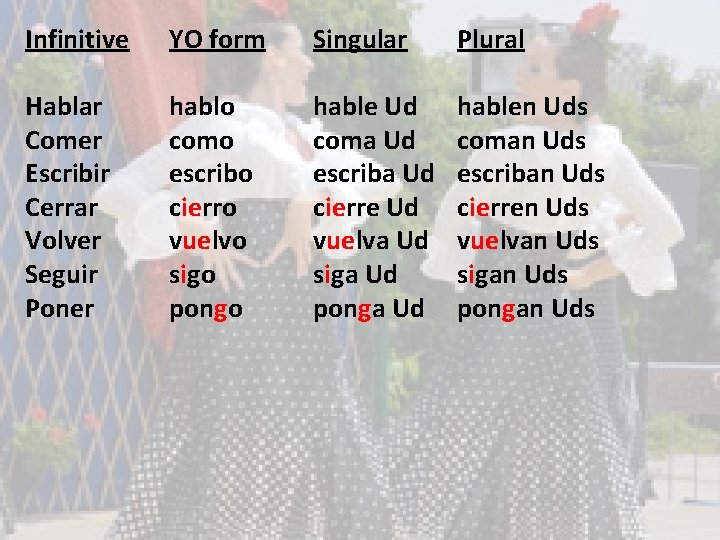
Infinitive YO form Singular Plural Hablar Comer Escribir Cerrar Volver Seguir Poner hablo como escribo cierro vuelvo sigo pongo hable Ud coma Ud escriba Ud cierre Ud vuelva Ud siga Ud ponga Ud hablen Uds coman Uds escriban Uds cierren Uds vuelvan Uds sigan Uds pongan Uds
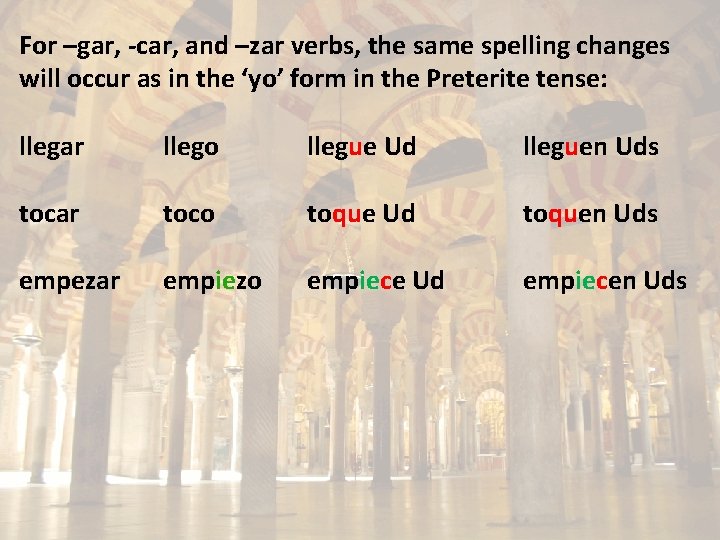
For –gar, -car, and –zar verbs, the same spelling changes will occur as in the ‘yo’ form in the Preterite tense: llegar llego llegue Ud lleguen Uds tocar toco toque Ud toquen Uds empezar empiezo empiece Ud empiecen Uds
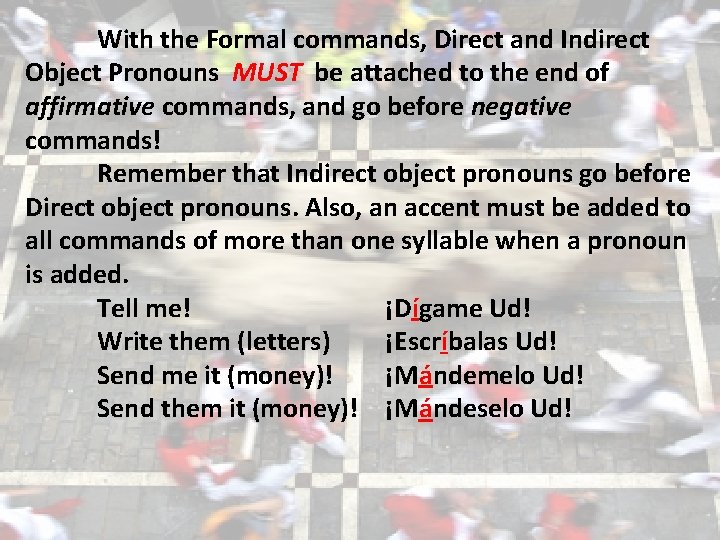
With the Formal commands, Direct and Indirect Object Pronouns MUST be attached to the end of affirmative commands, and go before negative commands! Remember that Indirect object pronouns go before Direct object pronouns. Also, an accent must be added to all commands of more than one syllable when a pronoun is added. Tell me! ¡Dígame Ud! Write them (letters) ¡Escríbalas Ud! Send me it (money)! ¡Mándemelo Ud! Send them it (money)! ¡Mándeselo Ud!
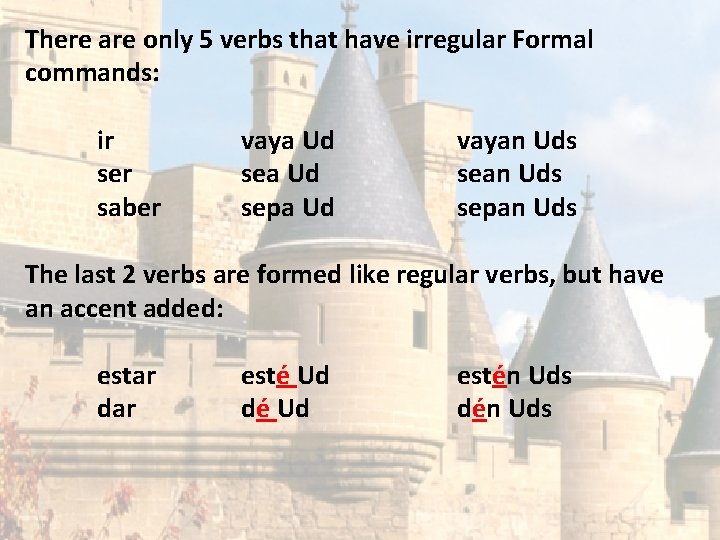
There are only 5 verbs that have irregular Formal commands: ir ser saber vaya Ud sepa Ud vayan Uds sepan Uds The last 2 verbs are formed like regular verbs, but have an accent added: estar dar esté Ud dé Ud estén Uds dén Uds
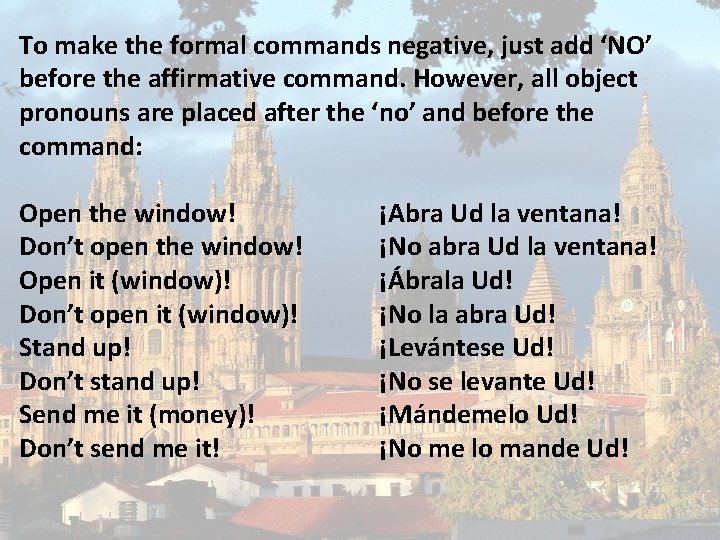
To make the formal commands negative, just add ‘NO’ before the affirmative command. However, all object pronouns are placed after the ‘no’ and before the command: Open the window! Don’t open the window! Open it (window)! Don’t open it (window)! Stand up! Don’t stand up! Send me it (money)! Don’t send me it! ¡Abra Ud la ventana! ¡No abra Ud la ventana! ¡Ábrala Ud! ¡No la abra Ud! ¡Levántese Ud! ¡No se levante Ud! ¡Mándemelo Ud! ¡No me lo mande Ud!