
Los mandatos el imperativo In Spanish all commands

- Slides: 10
Los mandatos: el imperativo • In Spanish all commands, positive or negative go back to the present tense “Yo” form of the verb, drop the “o” and add the opposite endings (EXCEPT when commanding the “tu” and “vosotros” positively. • Positive command: Eat your vegetables! • Negative command: Don’t eat dirt!
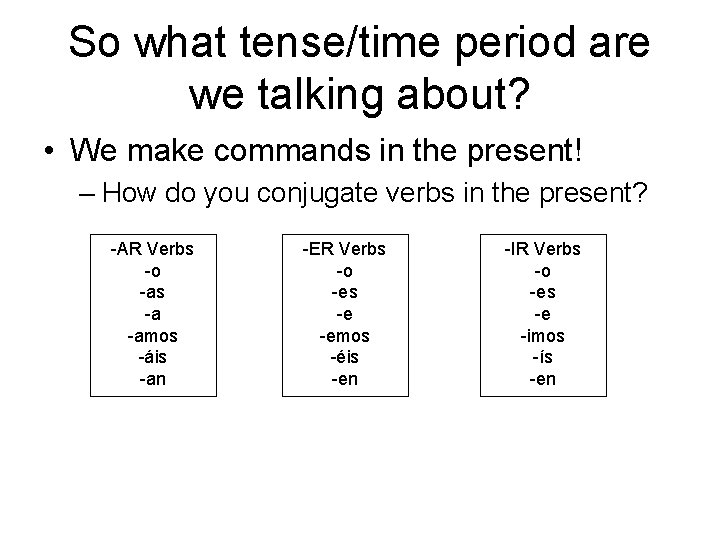
So what tense/time period are we talking about? • We make commands in the present! – How do you conjugate verbs in the present? -AR Verbs -o -as -a -amos -áis -an -ER Verbs -o -es -e -emos -éis -en -IR Verbs -o -es -e -imos -ís -en
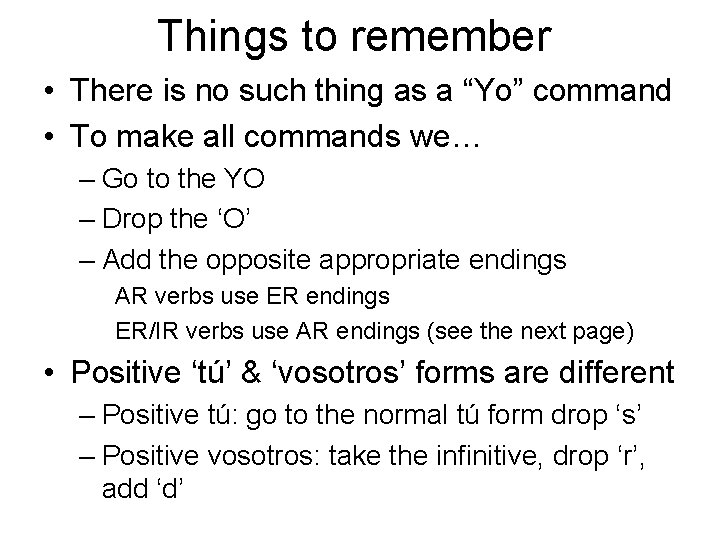
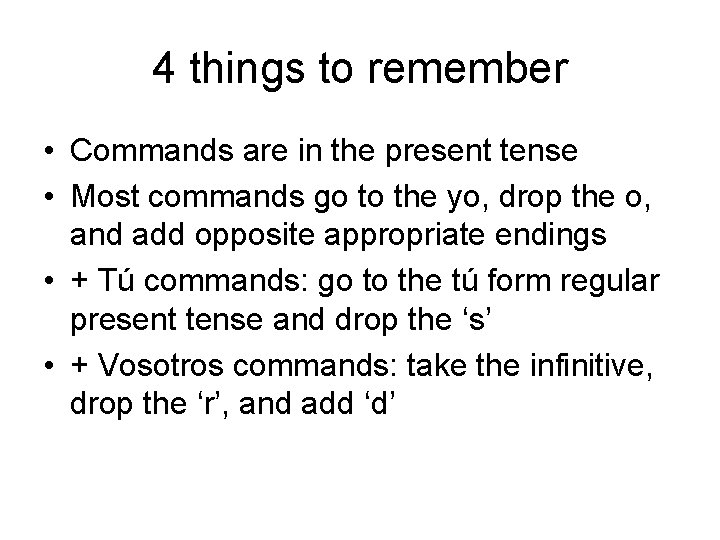
Things to remember • There is no such thing as a “Yo” command • To make all commands we… – Go to the YO – Drop the ‘O’ – Add the opposite appropriate endings AR verbs use ER endings ER/IR verbs use AR endings (see the next page) • Positive ‘tú’ & ‘vosotros’ forms are different – Positive tú: go to the normal tú form drop ‘s’ – Positive vosotros: take the infinitive, drop ‘r’, add ‘d’
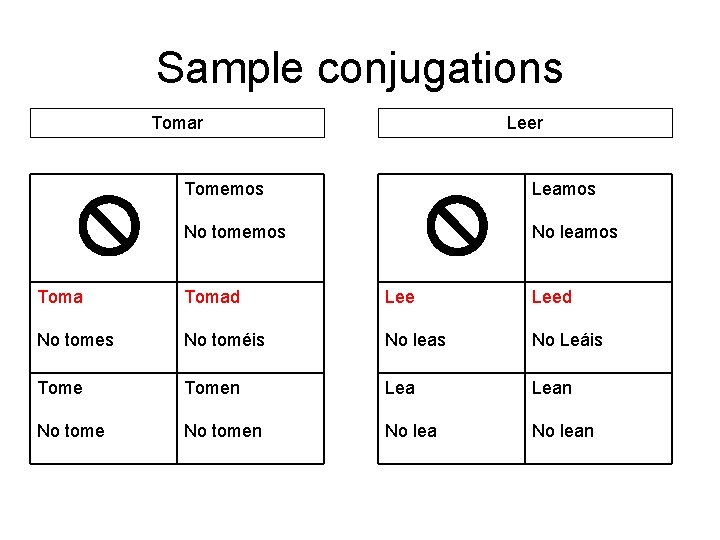
Sample conjugations Tomar Leer Tomemos No tomemos Leamos No leamos Tomad Leed No tomes No toméis No leas No Leáis Tomen Lean No tomen No lean
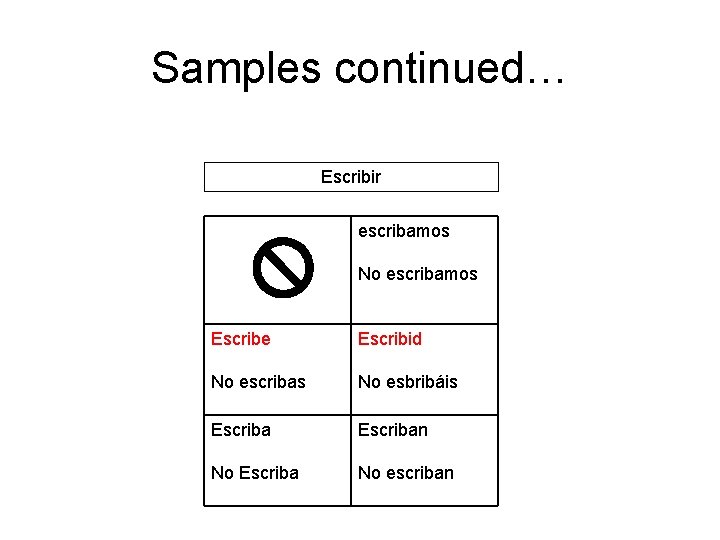
Samples continued… Escribir escribamos No escribamos Escribe Escribid No escribas No esbribáis Escriban No Escriba No escriban
4 things to remember • Commands are in the present tense • Most commands go to the yo, drop the o, and add opposite appropriate endings • + Tú commands: go to the tú form regular present tense and drop the ‘s’ • + Vosotros commands: take the infinitive, drop the ‘r’, and add ‘d’
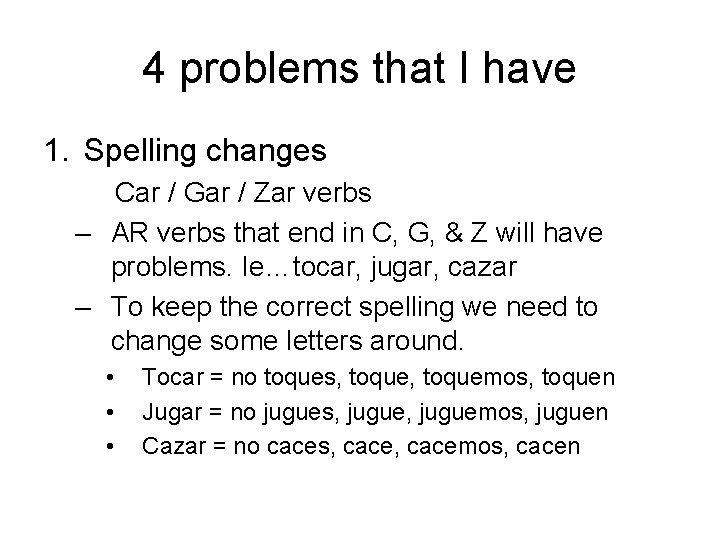
4 problems that I have 1. Spelling changes Car / Gar / Zar verbs – AR verbs that end in C, G, & Z will have problems. Ie…tocar, jugar, cazar – To keep the correct spelling we need to change some letters around. • • • Tocar = no toques, toquemos, toquen Jugar = no jugues, juguemos, juguen Cazar = no caces, cacemos, cacen
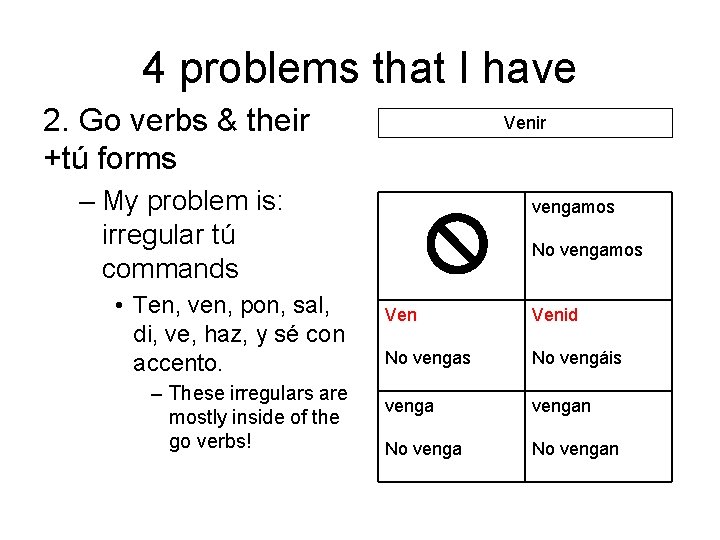
4 problems that I have 2. Go verbs & their +tú forms Venir – My problem is: irregular tú commands • Ten, ven, pon, sal, di, ve, haz, y sé con accento. – These irregulars are mostly inside of the go verbs! vengamos No vengamos Venid No vengas No vengáis vengan No vengan
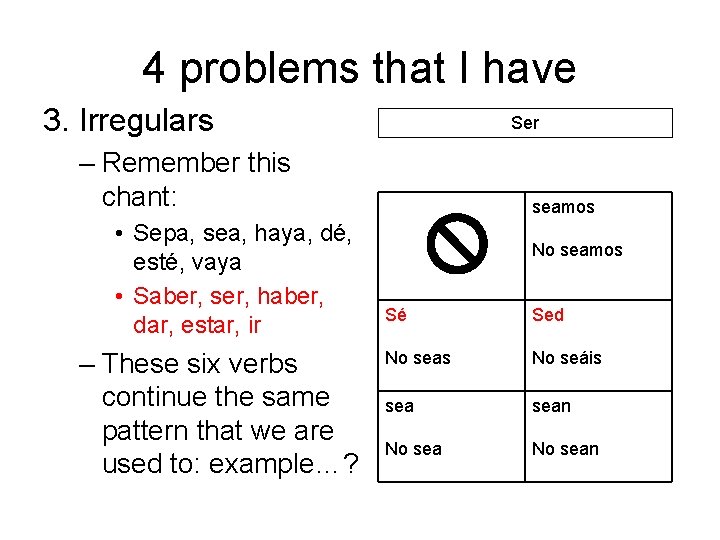
4 problems that I have 3. Irregulars Ser – Remember this chant: • Sepa, sea, haya, dé, esté, vaya • Saber, ser, haber, dar, estar, ir – These six verbs continue the same pattern that we are used to: example…? seamos No seamos Sé Sed No seas No seáis sean No sean
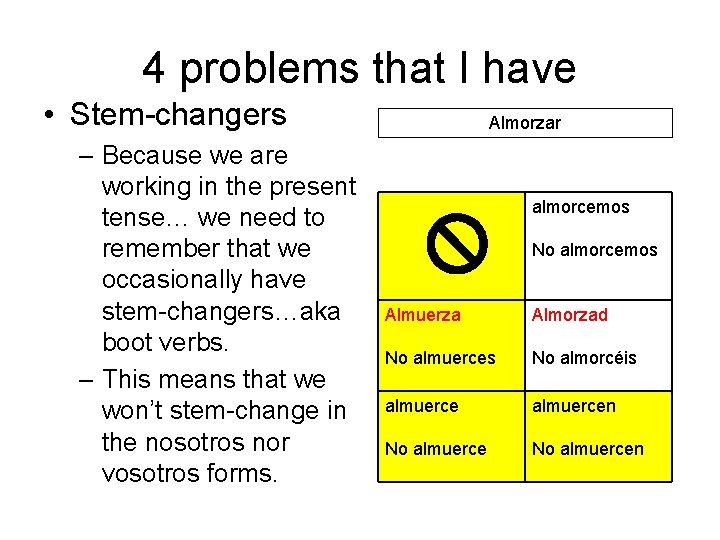
4 problems that I have • Stem-changers – Because we are working in the present tense… we need to remember that we occasionally have stem-changers…aka boot verbs. – This means that we won’t stem-change in the nosotros nor vosotros forms. Almorzar almorcemos No almorcemos Almuerza Almorzad No almuerces No almorcéis almuercen No almuercen