
Los Comparativos HOW DO I MAKE A COMPARISON
- Slides: 16
Los Comparativos HOW DO I MAKE A COMPARISON IN SPANISH?
What is a comparison? �We use comparisons to show 2 objects or people equate to each other. EX: The teacher is taller than the students. The girls are more athletic than the boys. This shirt is less pretty than that shirt. That car is as fast as this car.
¿Y en el español? �Use the following expressions with ADJECTIVES to compare things in Spanish: 1. 2. más + adjective + que menos + adjective + que ¿Cómo uso los comparativos? more…than less…than
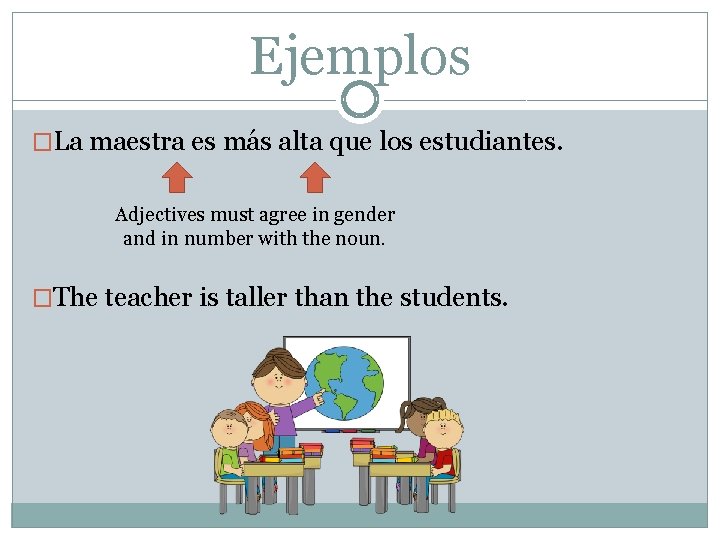
Ejemplos �La maestra es más alta que los estudiantes. Adjectives must agree in gender and in number with the noun. �The teacher is taller than the students.
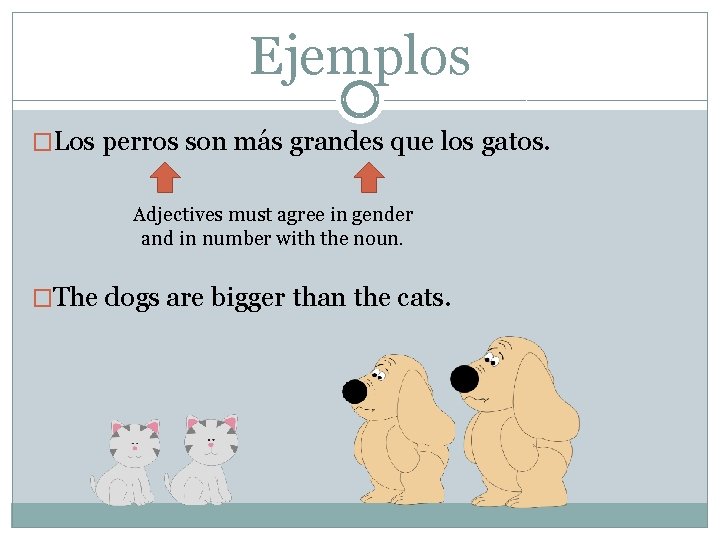
Ejemplos �Los perros son más grandes que los gatos. Adjectives must agree in gender and in number with the noun. �The dogs are bigger than the cats.
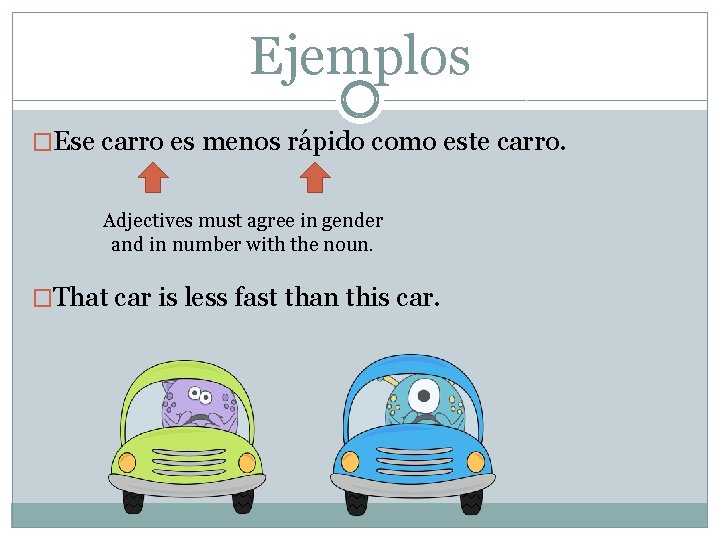
Ejemplos �Ese carro es menos rápido como este carro. Adjectives must agree in gender and in number with the noun. �That car is less fast than this car.
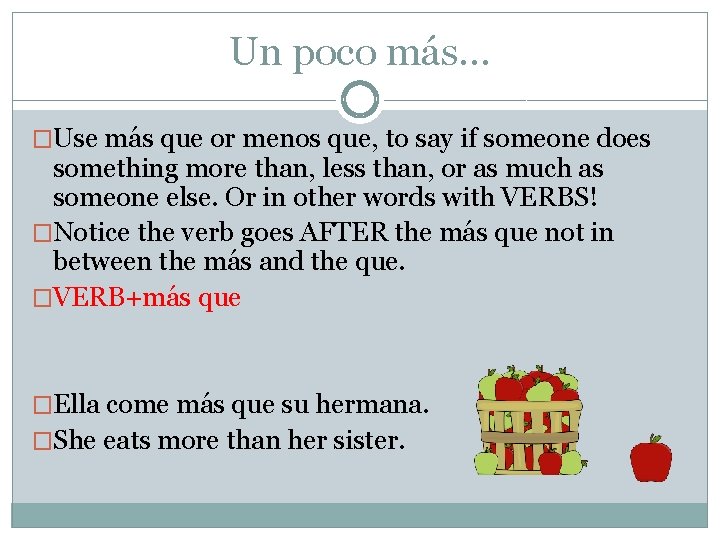
Un poco más… �Use más que or menos que, to say if someone does something more than, less than, or as much as someone else. Or in other words with VERBS! �Notice the verb goes AFTER the más que not in between the más and the que. �VERB+más que �Ella come más que su hermana. �She eats more than her sister.
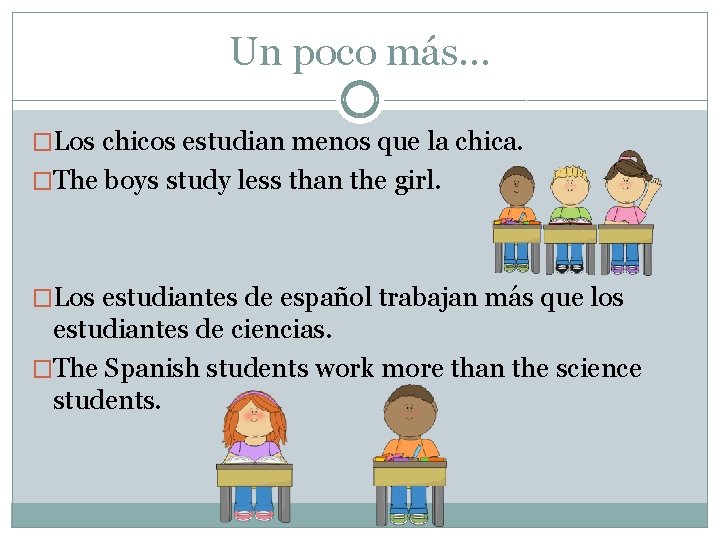
Un poco más… �Los chicos estudian menos que la chica. �The boys study less than the girl. �Los estudiantes de español trabajan más que los estudiantes de ciencias. �The Spanish students work more than the science students.
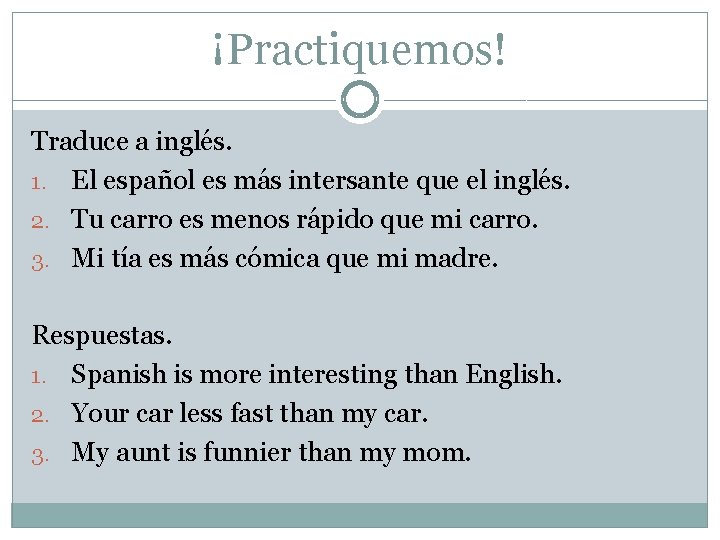
¡Practiquemos! Traduce a inglés. 1. El español es más intersante que el inglés. 2. Tu carro es menos rápido que mi carro. 3. Mi tía es más cómica que mi madre. Respuestas. 1. Spanish is more interesting than English. 2. Your car less fast than my car. 3. My aunt is funnier than my mom.
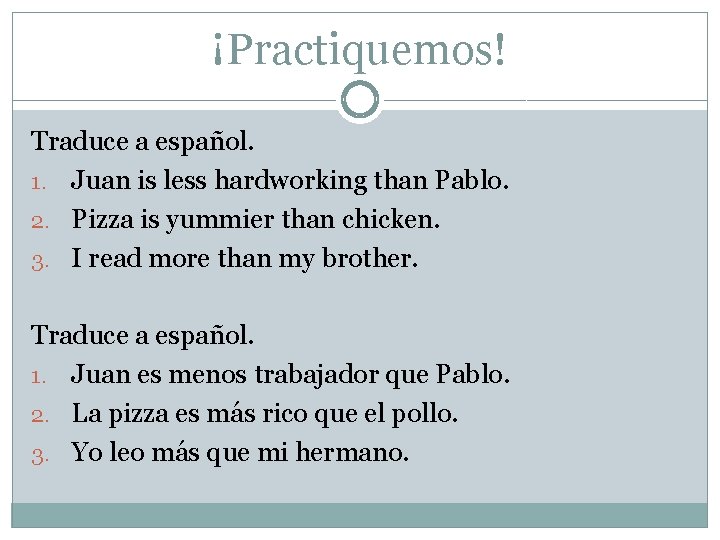
¡Practiquemos! Traduce a español. 1. Juan is less hardworking than Pablo. 2. Pizza is yummier than chicken. 3. I read more than my brother. Traduce a español. 1. Juan es menos trabajador que Pablo. 2. La pizza es más rico que el pollo. 3. Yo leo más que mi hermano.
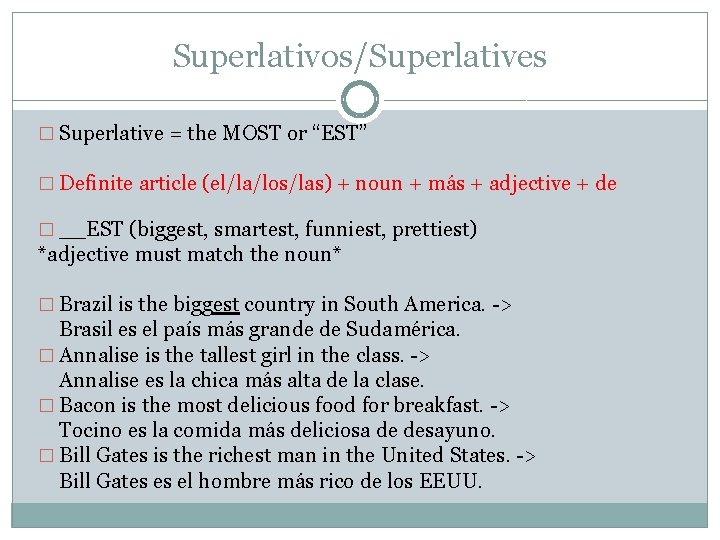
Superlativos/Superlatives � Superlative = the MOST or “EST” � Definite article (el/la/los/las) + noun + más + adjective + de � __EST (biggest, smartest, funniest, prettiest) *adjective must match the noun* � Brazil is the biggest country in South America. -> Brasil es el país más grande de Sudamérica. � Annalise is the tallest girl in the class. -> Annalise es la chica más alta de la clase. � Bacon is the most delicious food for breakfast. -> Tocino es la comida más deliciosa de desayuno. � Bill Gates is the richest man in the United States. -> Bill Gates es el hombre más rico de los EEUU.
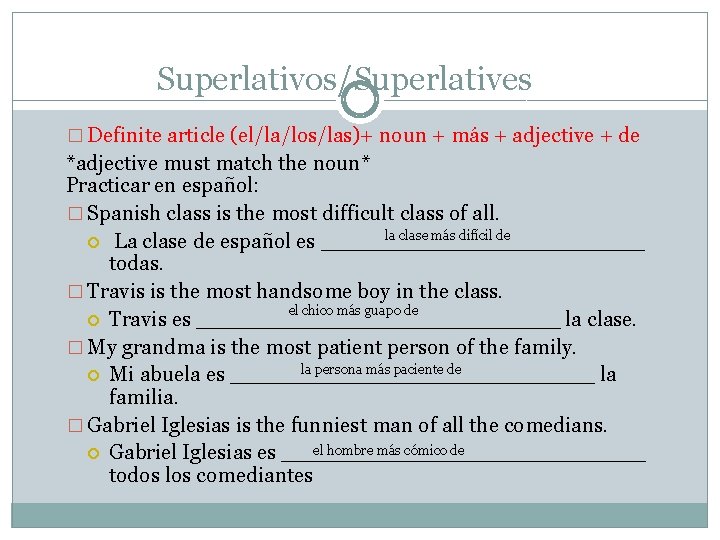
Superlativos/Superlatives � Definite article (el/la/los/las)+ noun + más + adjective + de *adjective must match the noun* Practicar en español: � Spanish class is the most difficult class of all. la clase más difícil de La clase de español es ____________ todas. � Travis is the most handsome boy in the class. el chico más guapo de Travis es ______________ la clase. � My grandma is the most patient person of the family. la persona más paciente de Mi abuela es ______________ la familia. � Gabriel Iglesias is the funniest man of all the comedians. el hombre más cómico de Gabriel Iglesias es ______________ todos los comediantes
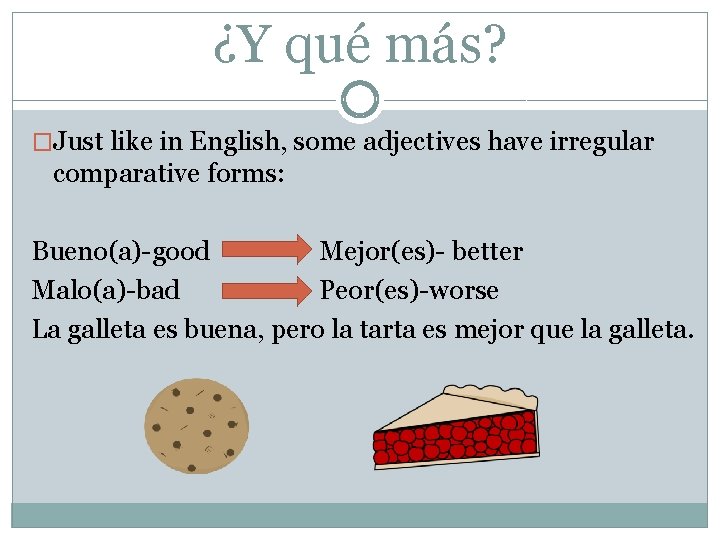
¿Y qué más? �Just like in English, some adjectives have irregular comparative forms: Bueno(a)-good Mejor(es)- better Malo(a)-bad Peor(es)-worse La galleta es buena, pero la tarta es mejor que la galleta.
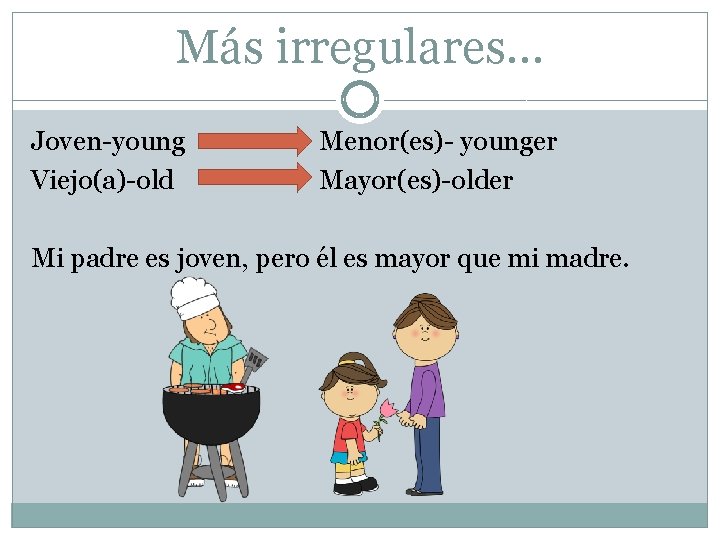
Más irregulares… Joven-young Viejo(a)-old Menor(es)- younger Mayor(es)-older Mi padre es joven, pero él es mayor que mi madre.
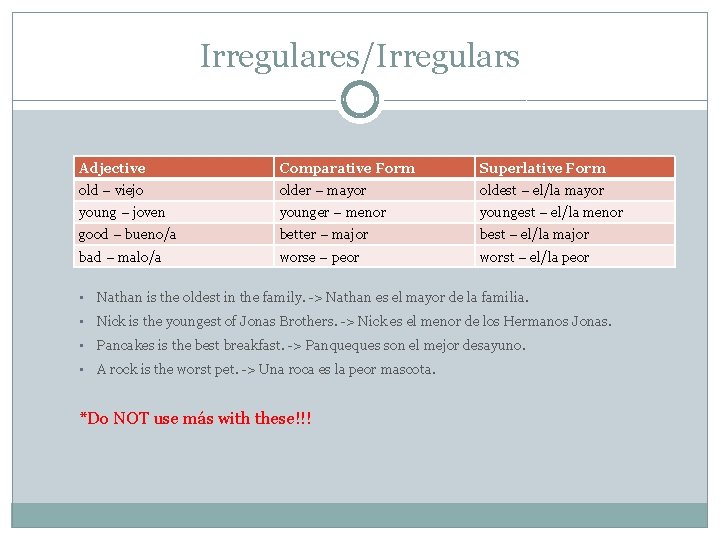
Irregulares/Irregulars Adjective Comparative Form Superlative Form old – viejo older – mayor oldest – el/la mayor young – joven younger – menor youngest – el/la menor good – bueno/a better – major best – el/la major bad – malo/a worse – peor worst – el/la peor • Nathan is the oldest in the family. -> Nathan es el mayor de la familia. • Nick is the youngest of Jonas Brothers. -> Nick es el menor de los Hermanos Jonas. • Pancakes is the best breakfast. -> Panqueques son el mejor desayuno. • A rock is the worst pet. -> Una roca es la peor mascota. *Do NOT use más with these!!!
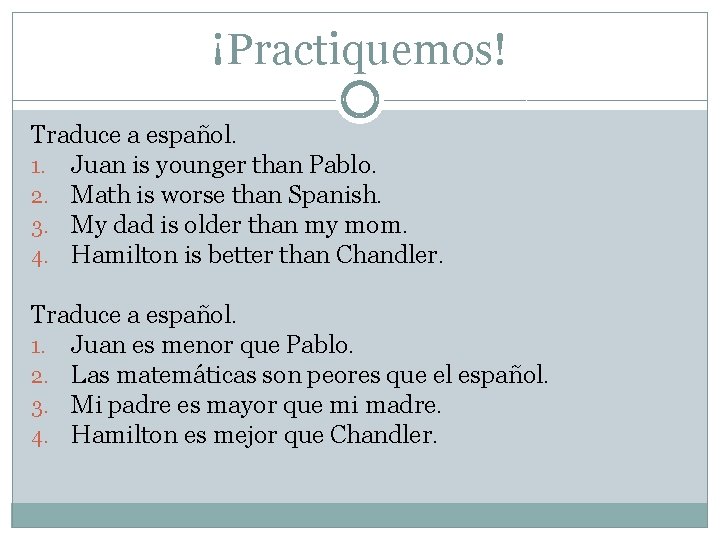
¡Practiquemos! Traduce a español. 1. Juan is younger than Pablo. 2. Math is worse than Spanish. 3. My dad is older than my mom. 4. Hamilton is better than Chandler. Traduce a español. 1. Juan es menor que Pablo. 2. Las matemáticas son peores que el español. 3. Mi padre es mayor que mi madre. 4. Hamilton es mejor que Chandler.