
Lorenzo Ghiberti nasceu em Pelago provncia de Florena
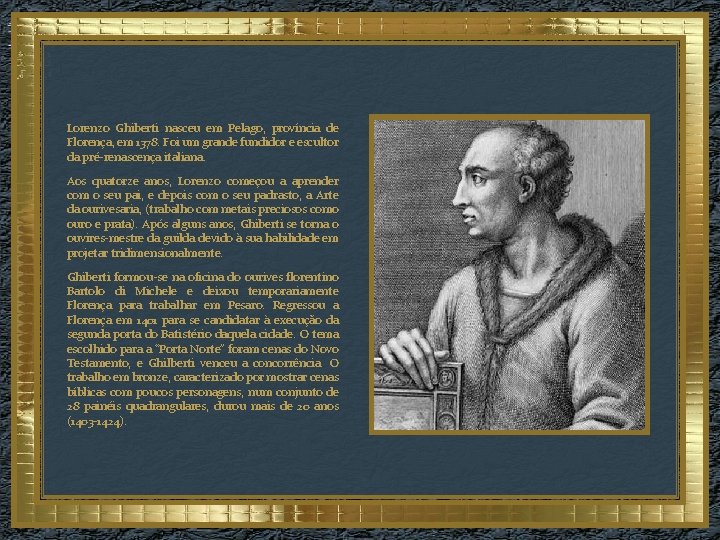
Lorenzo Ghiberti nasceu em Pelago, província de Florença, em 1378. Foi um grande fundidor e escultor da pré-renascença italiana. Aos quatorze anos, Lorenzo começou a aprender com o seu pai, e depois com o seu padrasto, a Arte da ourivesaria, (trabalho com metais preciosos como ouro e prata). Após alguns anos, Ghiberti se torna o ouvires-mestre da guilda devido à sua habilidade em projetar tridimensionalmente. Ghiberti formou-se na oficina do ourives florentino Bartolo di Michele e deixou temporariamente Florença para trabalhar em Pesaro. Regressou a Florença em 1401 para se candidatar à execução da segunda porta do Batistério daquela cidade. O tema escolhido para a “Porta Norte” foram cenas do Novo Testamento, e Ghilberti venceu a concorrência. O trabalho em bronze, caracterizado por mostrar cenas bíblicas com poucos personagens, num conjunto de 28 painéis quadrangulares, durou mais de 20 anos (1403 -1424).
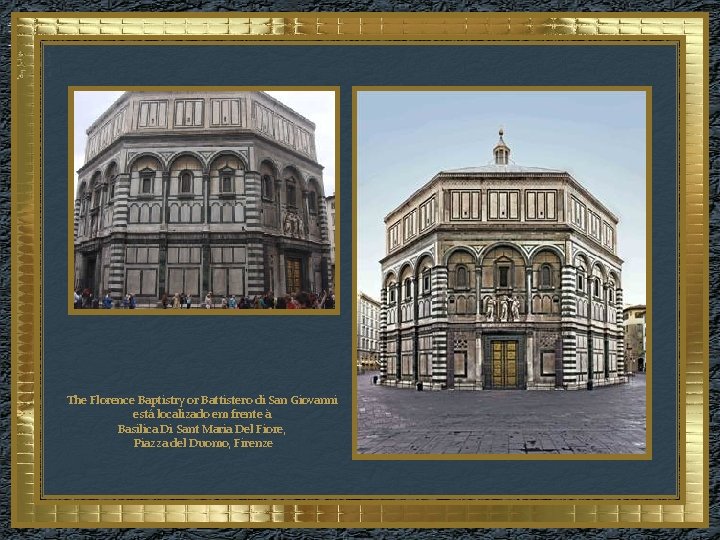
The Florence Baptistry or Battistero di San Giovanni está localizado em frente à Basilica Di Sant Maria Del Fiore, Piazza del Duomo, Firenze
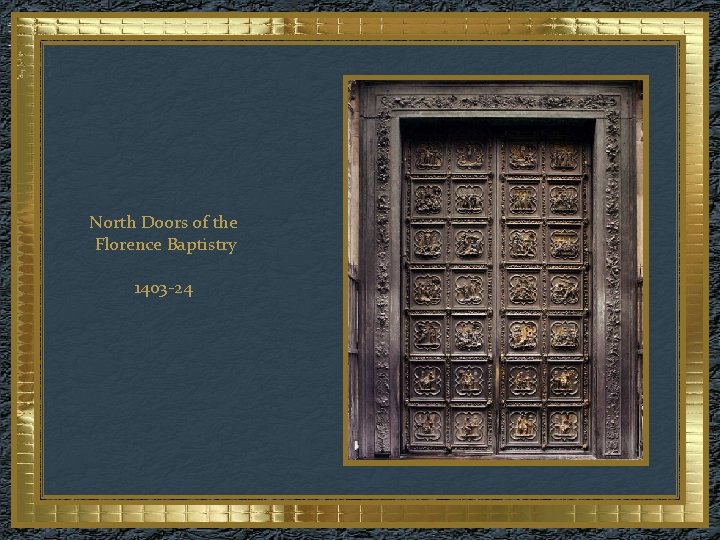
North Doors of the Florence Baptistry 1403 -24
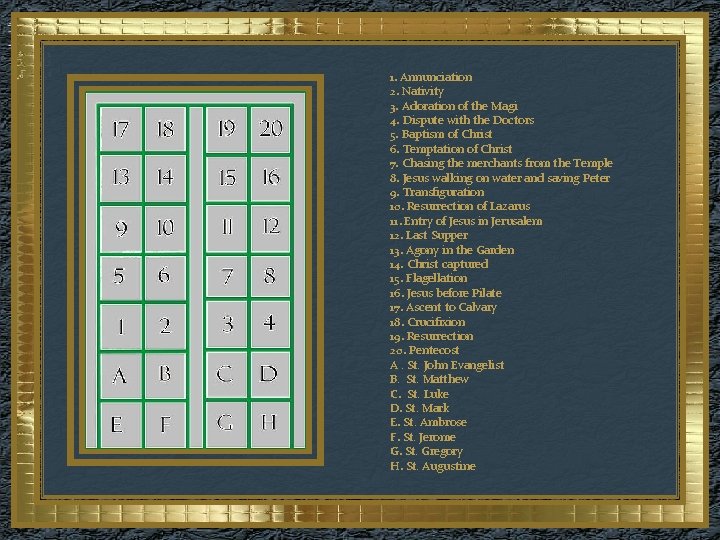
1. Annunciation 2. Nativity 3. Adoration of the Magi 4. Dispute with the Doctors 5. Baptism of Christ 6. Temptation of Christ 7. Chasing the merchants from the Temple 8. Jesus walking on water and saving Peter 9. Transfiguration 10. Resurrection of Lazarus 11. Entry of Jesus in Jerusalem 12. Last Supper 13. Agony in the Garden 14. Christ captured 15. Flagellation 16. Jesus before Pilate 17. Ascent to Calvary 18. Crucifixion 19. Resurrection 20. Pentecost A. St. John Evangelist B. St. Matthew C. St. Luke D. St. Mark E. St. Ambrose F. St. Jerome G. St. Gregory H. St. Augustine
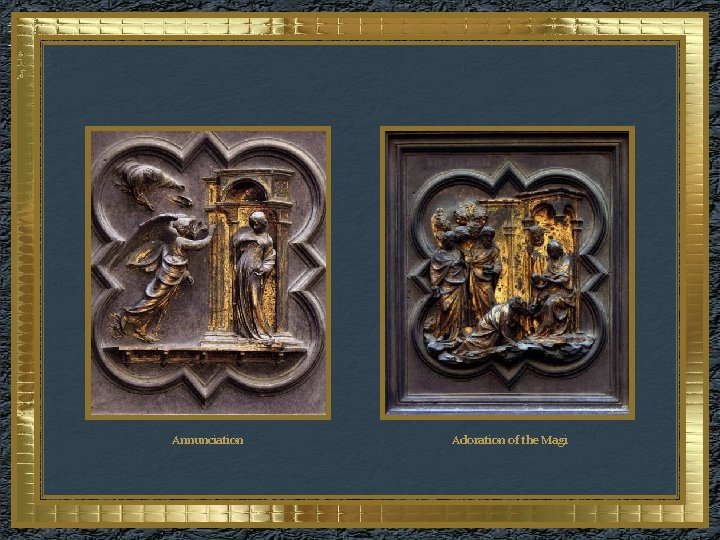
Annunciation Adoration of the Magi
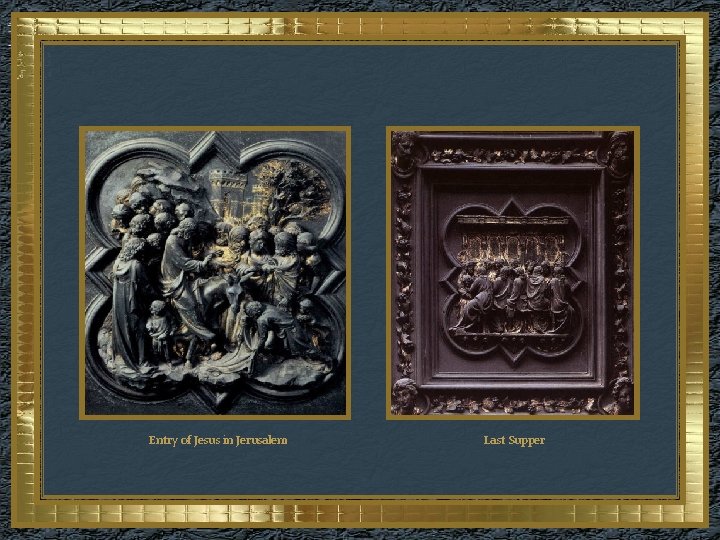
Entry of Jesus in Jerusalem Last Supper
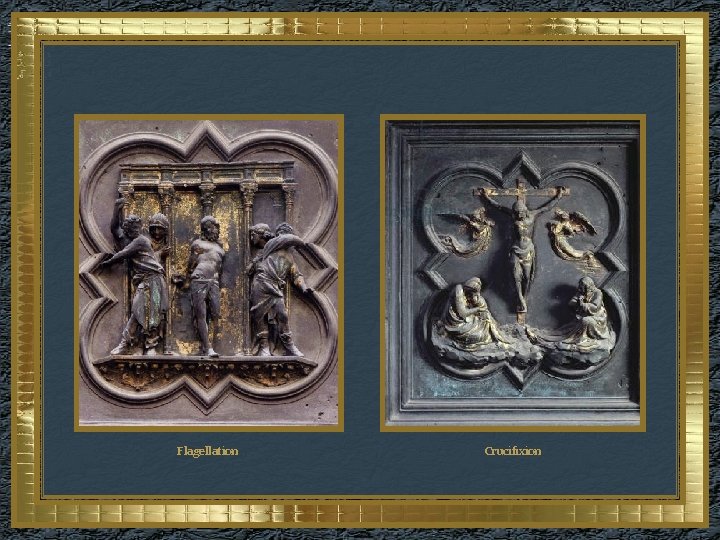
Flagellation Crucifixion
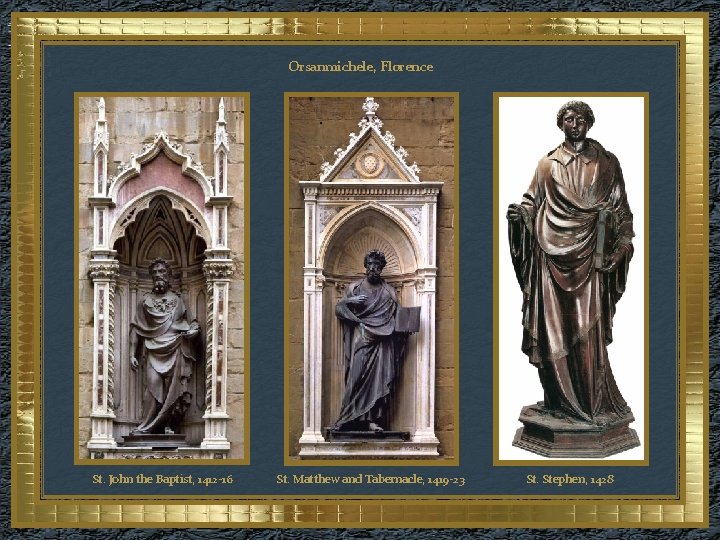
Orsanmichele, Florence St. John the Baptist, 1412 -16 St. Matthew and Tabernacle, 1419 -23 St. Stephen, 1428
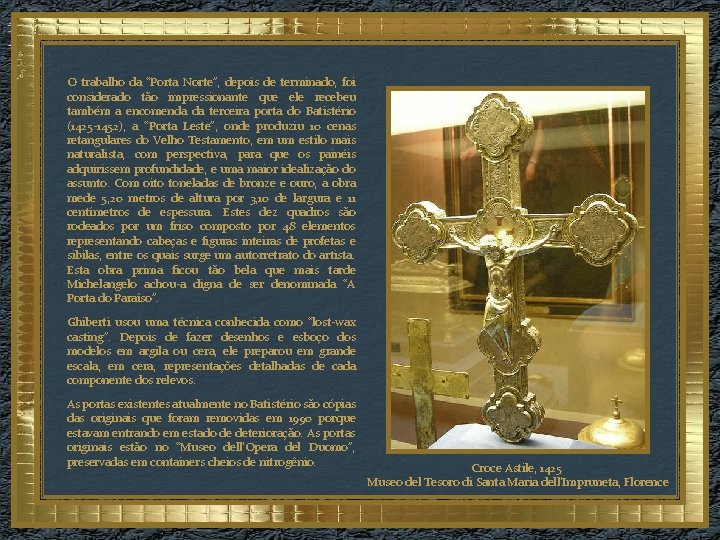
O trabalho da “Porta Norte”, depois de terminado, foi considerado tão impressionante que ele recebeu também a encomenda da terceira porta do Batistério (1425 -1452), a “Porta Leste”, onde produziu 10 cenas retangulares do Velho Testamento, em um estilo mais naturalista, com perspectiva, para que os painéis adquirissem profundidade, e uma maior idealização do assunto. Com oito toneladas de bronze e ouro, a obra mede 5, 20 metros de altura por 3, 10 de largura e 11 centímetros de espessura. Estes dez quadros são rodeados por um friso composto por 48 elementos representando cabeças e figuras inteiras de profetas e sibilas, entre os quais surge um autorretrato do artista. Esta obra prima ficou tão bela que mais tarde Michelangelo achou-a digna de ser denominada “A Porta do Paraíso”. Ghiberti usou uma técnica conhecida como “lost-wax casting”. Depois de fazer desenhos e esboço dos modelos em argila ou cera, ele preparou em grande escala, em cera, representações detalhadas de cada componente dos relevos. As portas existentes atualmente no Batistério são cópias das originais que foram removidas em 1990 porque estavam entrando em estado de deterioração. As portas originais estão no “Museo dell'Opera del Duomo”, preservadas em containers cheios de nitrogênio. Croce Astile, 1425 Museo del Tesoro di Santa Maria dell'Impruneta, Florence
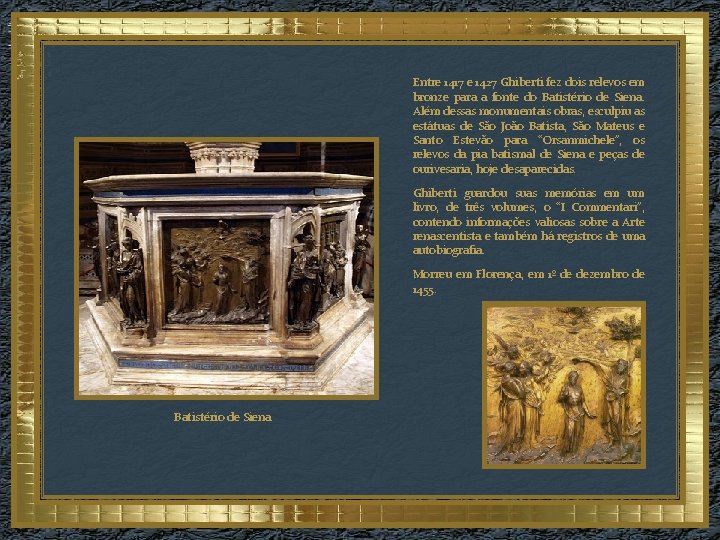
Entre 1417 e 1427 Ghiberti fez dois relevos em bronze para a fonte do Batistério de Siena. Além dessas monumentais obras, esculpiu as estátuas de São João Batista, São Mateus e Santo Estevão para “Orsanmichele”, os relevos da pia batismal de Siena e peças de ourivesaria, hoje desaparecidas. Ghiberti guardou suas memórias em um livro, de três volumes, o “I Commentari”, contendo informações valiosas sobre a Arte renascentista e também há registros de uma autobiografia. Morreu em Florença, em 1º de dezembro de 1455. Batistério de Siena
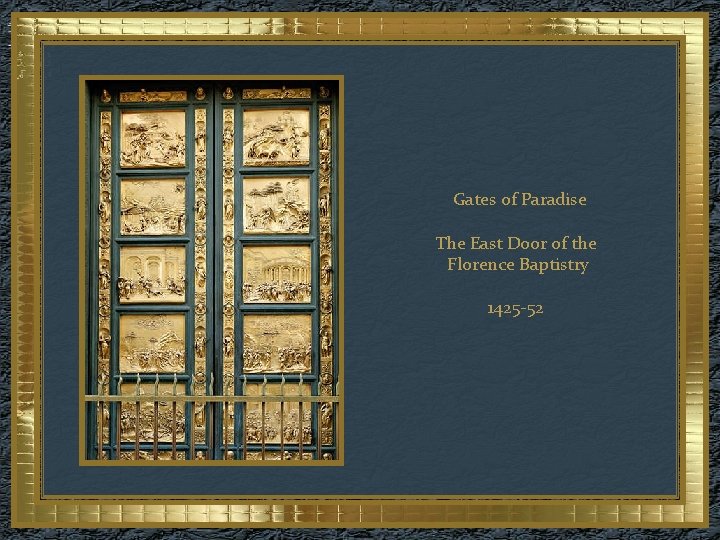
Gates of Paradise The East Door of the Florence Baptistry 1425 -52
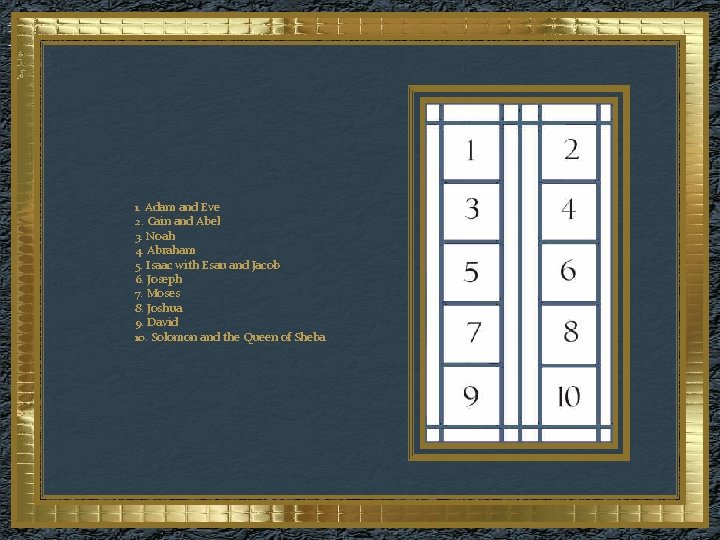
1. Adam and Eve 2. Cain and Abel 3. Noah 4. Abraham 5. Isaac with Esau and Jacob 6. Joseph 7. Moses 8. Joshua 9. David 10. Solomon and the Queen of Sheba
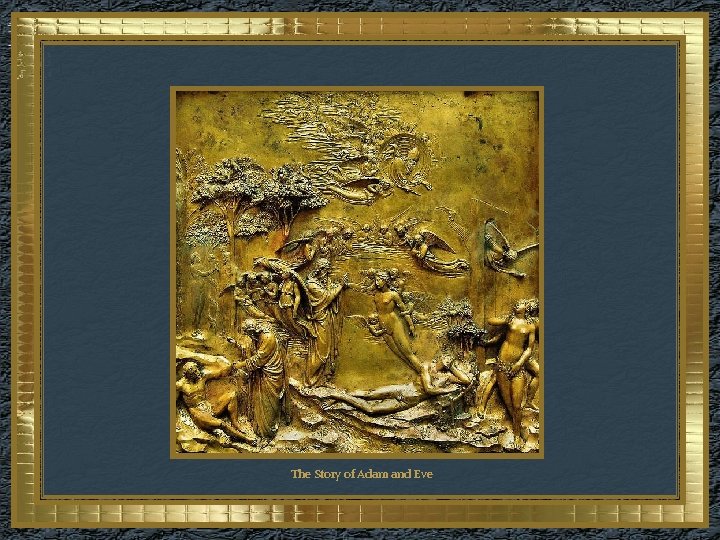
The Story of Adam and Eve
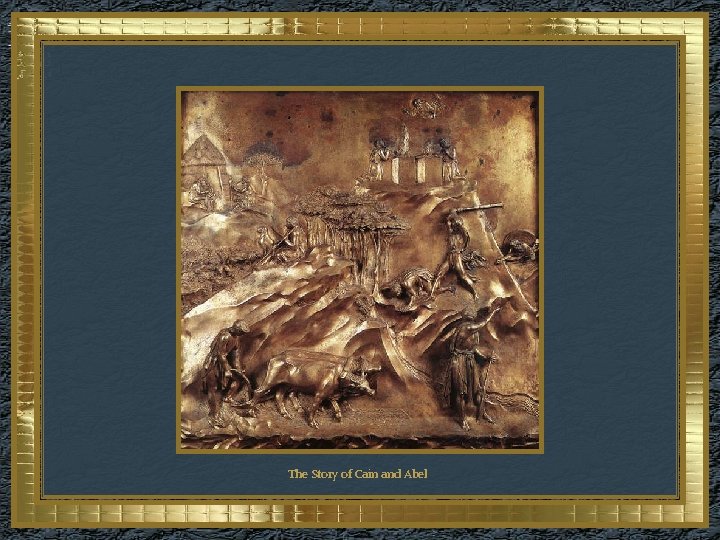
The Story of Cain and Abel
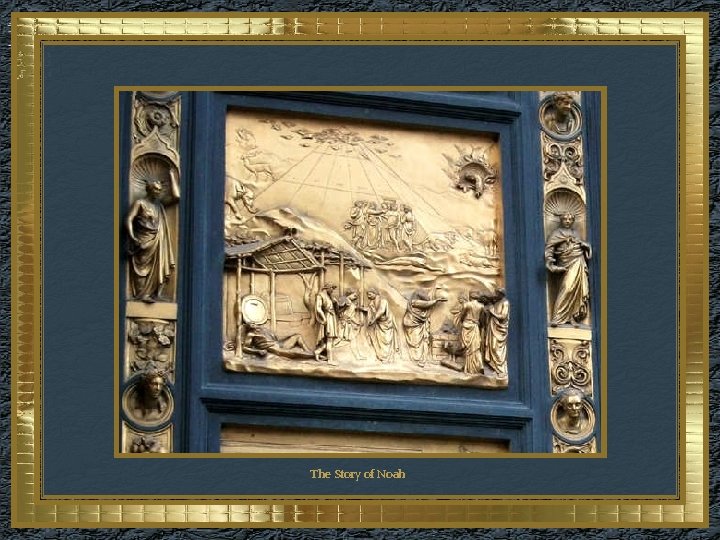
The Story of Noah
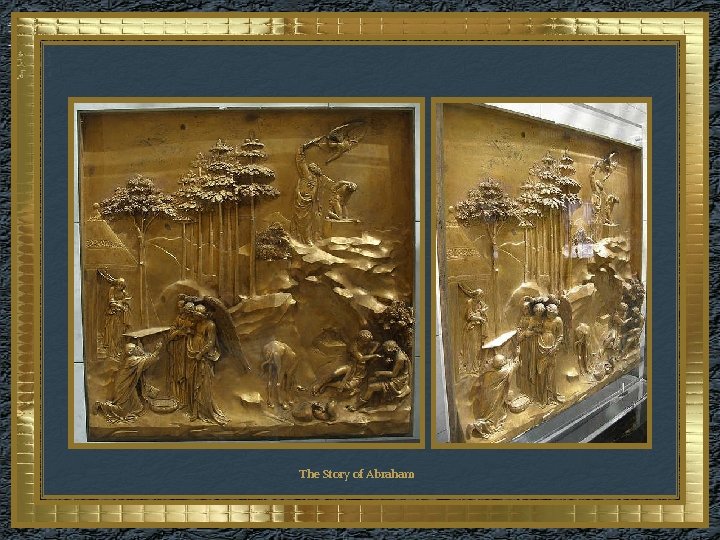
The Story of Abraham
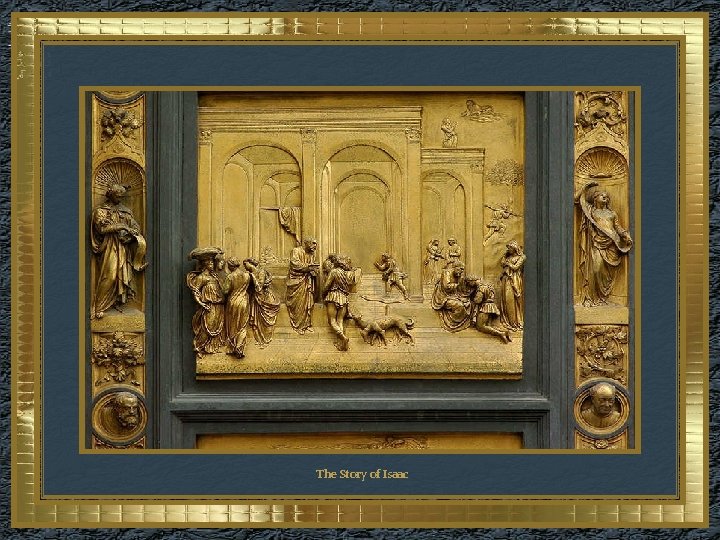
The Story of Isaac
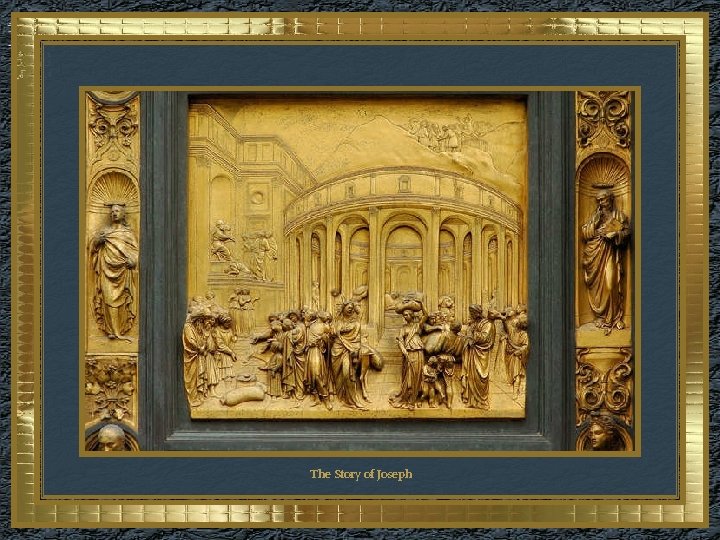
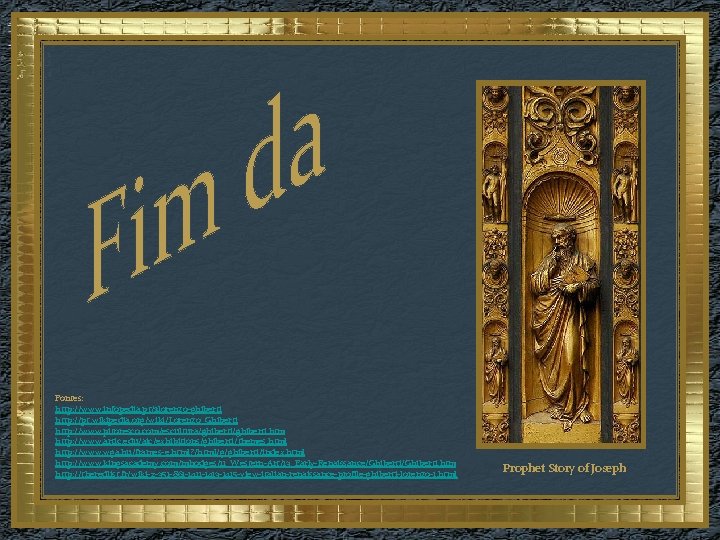
The Story of Joseph
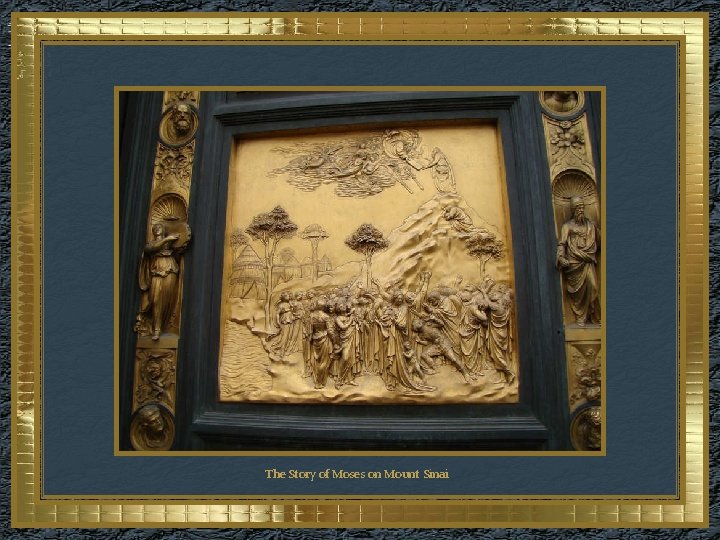
The Story of Moses on Mount Sinai
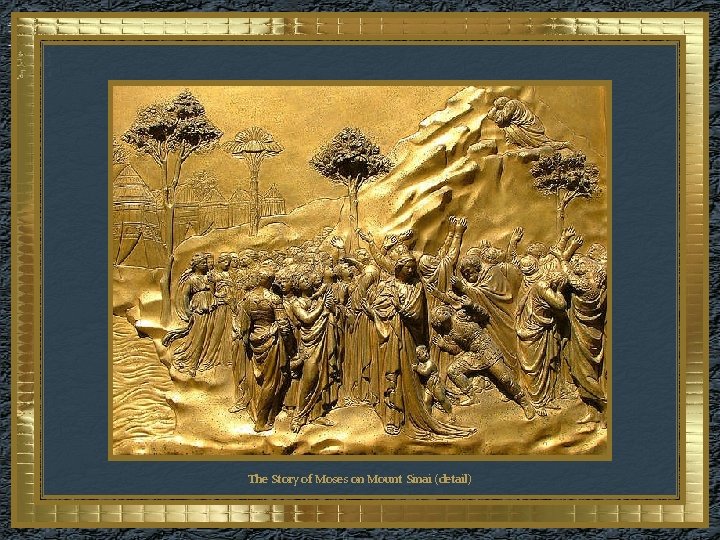
The Story of Moses on Mount Sinai (detail)
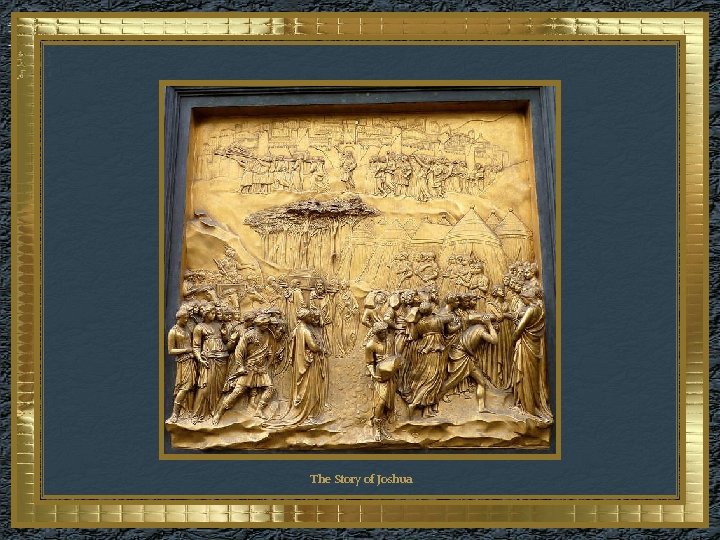
The Story of Joshua
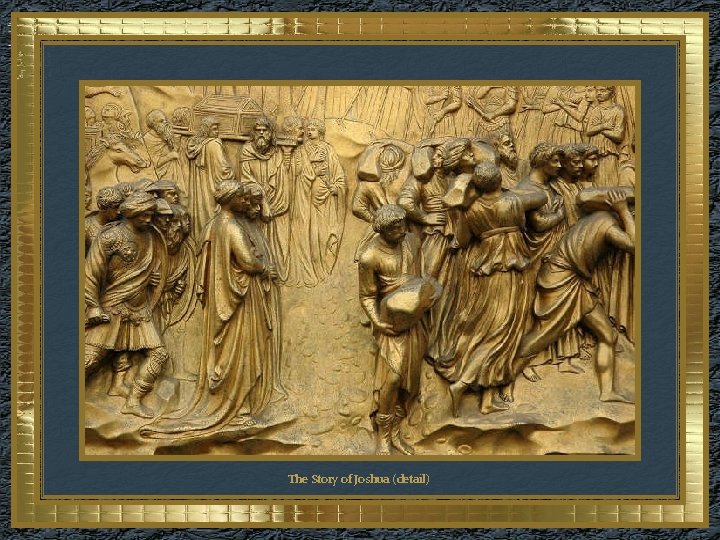
The Story of Joshua (detail)
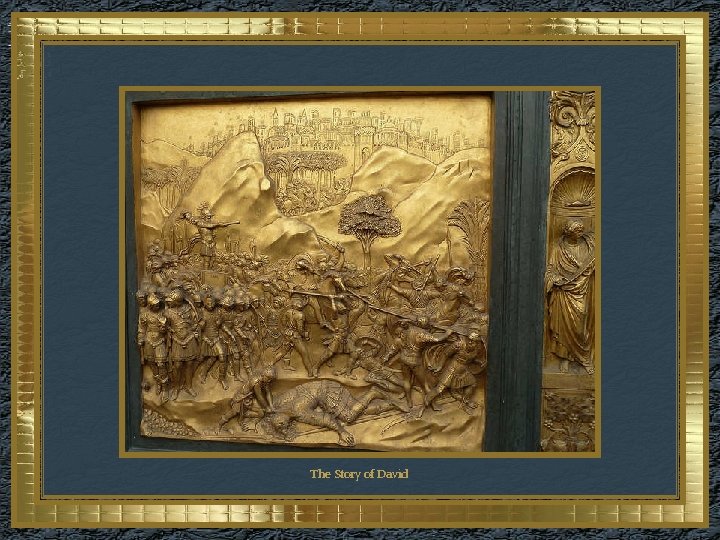
The Story of David
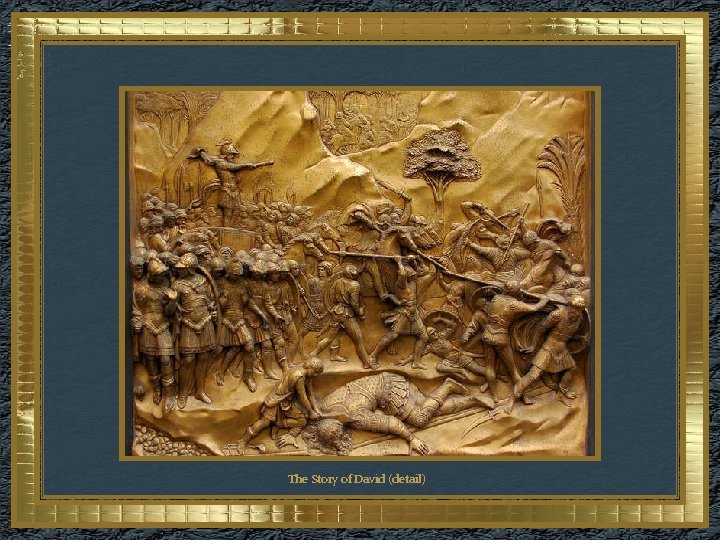
The Story of David (detail)
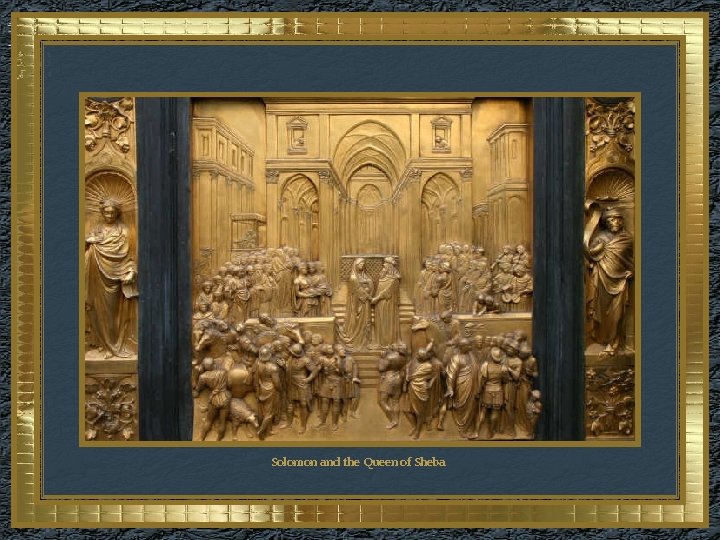
Solomon and the Queen of Sheba
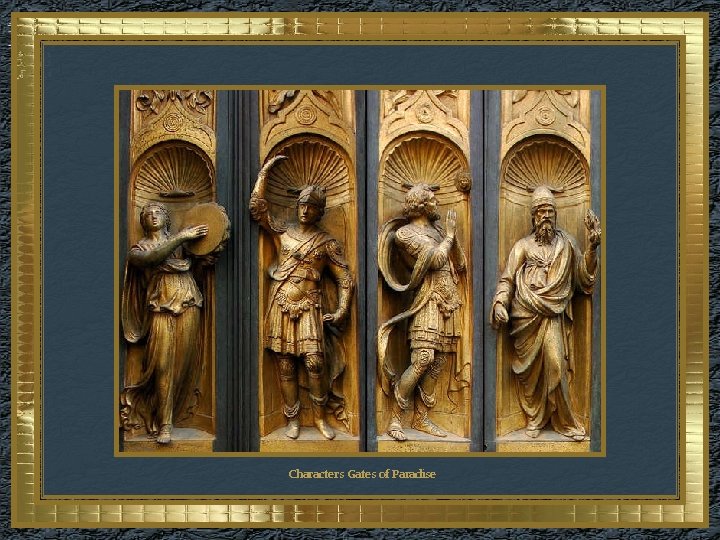
Characters Gates of Paradise
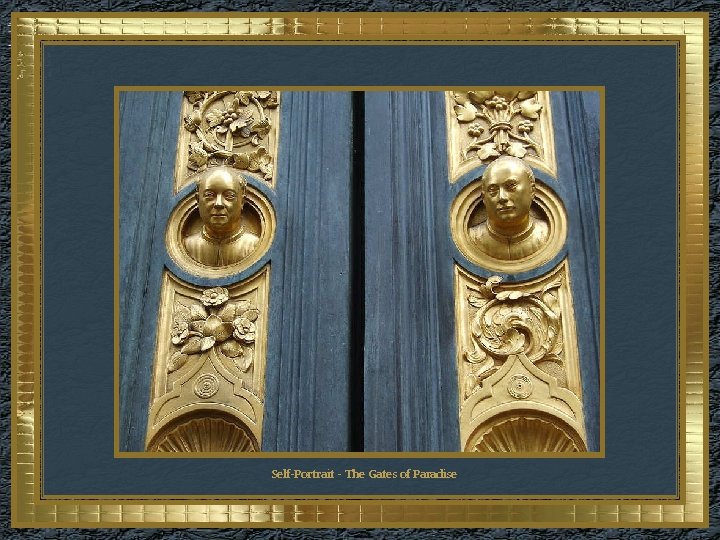
Self-Portrait - The Gates of Paradise
Biography: Lorenzo Ghiberti was born in Pelago, Province of Florença, in 1378. He has been a great pre-Renaissance Italian sculptor and goldsmith. At fourteen, Lorenzo began to learn with his father, and afterwards with his step-father, the Art of Jewlery (work with precious metals, as gold and silver). After some years, Gilbert became the Master of the guild due to his hability to Project three-dimensionally. Gilbert graduated from the Florentine workshop Bartolo di Michele and left Florence for a time in order to work in Pesaro. He came back to Florence in 1401 to aply himself to the implementation of the second door of the Baptistery of Florence. The theme which was chosen for the “North Gate” was scenes from the New Testament, and Ghilbert won the competition. The bronze work lasted more than 20 years (1403 -1424) and was caractherized for showing biblical scenes with few characeres, a set of 28 square panels. The work of the “North Gate”, after finished, was considered so impressive that Ghiberti also received a commission of the third door of the Baptistery (1425 -1452), the “East Gate”, where he produced 10 retangular scenes from the Old Testament, in a more naturalist style, with a perspective to achieve depth and a greater idealization of the subject. With eight tons of bronze and gold, the work measures 5, 20 meters high by 3. 10 wide and 11 centimetres thick. These ten scenes are surrounded by a frieze composed of 48 elements representing heads and whole figures of prophets and sibyls, from where emerges a self-portrait of the artist. This masterpiece is so beautiful the Michelangelo later found it worthy of being called “The Gate of Paradise”. Ghiberti used the technique known as “lost-wax casting”. After making drawings and wax or clay outline of the models, he prepared wax detailed representation of each component of the reliefs on a large scale. The doors at present on the Baptistery are copies of originals that were removed in 1990 because they were becaming in a state of deterioration. The original doors are in the “Museo dell’Opera del Duomo”, preserved in containers filled with nitrogen.
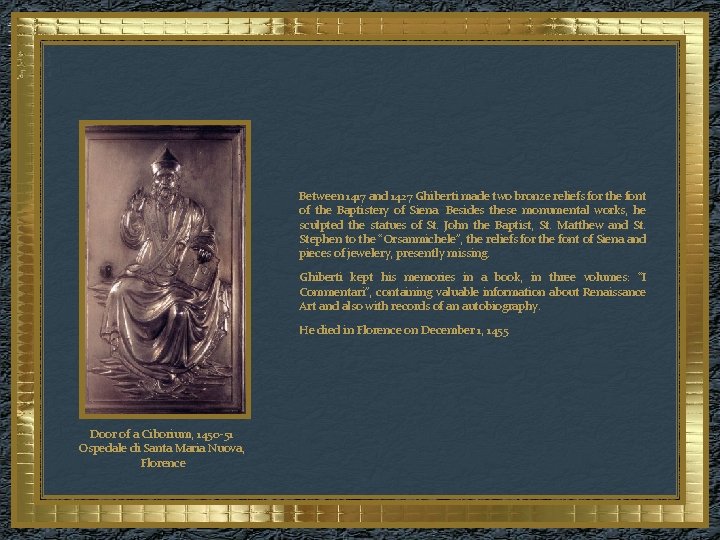
Between 1417 and 1427 Ghiberti made two bronze reliefs for the font of the Baptistery of Siena. Besides these monumental works, he sculpted the statues of St. John the Baptist, St. Matthew and St. Stephen to the “Orsanmichele”, the reliefs for the font of Siena and pieces of jewelery, presently missing. Ghiberti kept his memories in a book, in three volumes: “I Commentari”, containing valuable information about Renaissance Art and also with records of an autobiography. He died in Florence on December 1, 1455 Door of a Ciborium, 1450 -51 Ospedale di Santa Maria Nuova, Florence
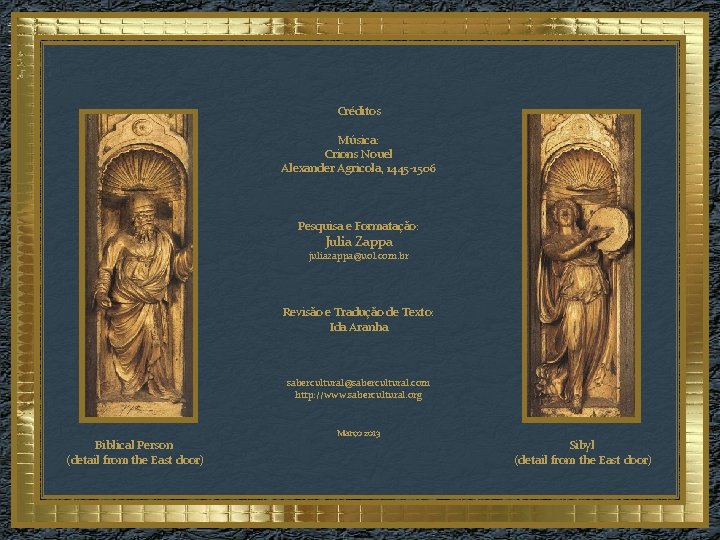
Créditos Música: Crions Nouel Alexander Agricola, 1445 -1506 Pesquisa e Formatação: Julia Zappa juliazappa@uol. com. br Revisão e Tradução de Texto: Ida Aranha sabercultural@sabercultural. com http: //www. sabercultural. org Biblical Person (detail from the East door) Março 2013 Sibyl (detail from the East door)
Fontes: http: //www. infopedia. pt/$lorenzo-ghiberti http: //pt. wikipedia. org/wiki/Lorenzo_Ghiberti http: //www. pitoresco. com/escultura/ghiberti. htm http: //www. artic. edu/aic/exhibitions/ghiberti/themes. html http: //www. wga. hu/frames-e. html? /html/g/ghiberti/index. html http: //www. kingsacademy. com/mhodges/11_Western-Art/13_Early-Renaissance/Ghiberti. htm http: //theredlist. fr/wiki-2 -351 -861 -1413 -1415 -view-italian-renaissance-profile-ghiberti-lorenzo-1. html Prophet Story of Joseph
- Slides: 32