
Loratadine for GCSF Induced Bone Pain Nurses Knowledge
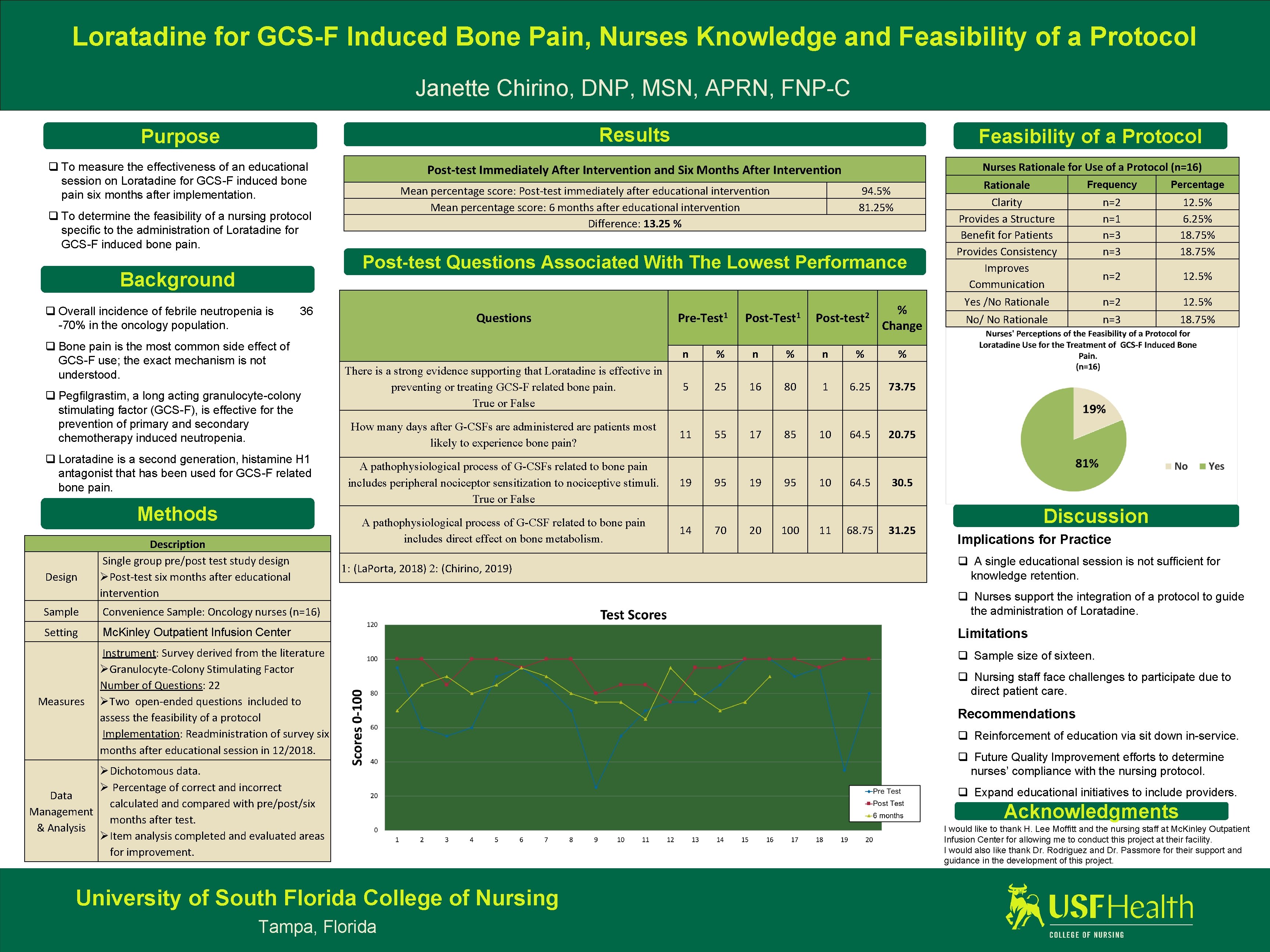
Loratadine for GCS-F Induced Bone Pain, Nurses Knowledge and Feasibility of a Protocol Janette Chirino, DNP, MSN, APRN, FNP-C Purpose Results Feasibility of a Protocol q To measure the effectiveness of an educational session on Loratadine for GCS-F induced bone pain six months after implementation. Post-test Immediately After Intervention and Six Months After Intervention Nurses Rationale for Use of a Protocol (n=16) Mean percentage score: Post-test immediately after educational intervention Mean percentage score: 6 months after educational intervention Difference: 13. 25 % q To determine the feasibility of a nursing protocol specific to the administration of Loratadine for GCS-F induced bone pain. Post-test Questions Associated With The Lowest Performance Background q Overall incidence of febrile neutropenia is -70% in the oncology population. 36 q Bone pain is the most common side effect of GCS-F use; the exact mechanism is not understood. q Pegfilgrastim, a long acting granulocyte-colony stimulating factor (GCS-F), is effective for the prevention of primary and secondary chemotherapy induced neutropenia. q Loratadine is a second generation, histamine H 1 antagonist that has been used for GCS-F related bone pain. Methods Design 94. 5% 81. 25% Description Single group pre/post test study design Post-test six months after educational intervention Questions Pre-Test 1 Post-test 2 % Change n % n % % There is a strong evidence supporting that Loratadine is effective in preventing or treating GCS-F related bone pain. True or False 5 25 16 80 1 6. 25 73. 75 How many days after G-CSFs are administered are patients most likely to experience bone pain? 11 55 17 85 10 64. 5 20. 75 A pathophysiological process of G-CSFs related to bone pain includes peripheral nociceptor sensitization to nociceptive stimuli. True or False 19 95 10 64. 5 30. 5 A pathophysiological process of G-CSF related to bone pain includes direct effect on bone metabolism. 14 1: (La. Porta, 2018) 2: (Chirino, 2019) 70 20 100 11 68. 75 31. 25 Rationale Clarity Provides a Structure Benefit for Patients Provides Consistency Improves Communication Frequency Percentage n=2 n=1 n=3 12. 5% 6. 25% 18. 75% n=2 12. 5% Yes /No Rationale n=2 12. 5% No/ No Rationale n=3 18. 75% Discussion Implications for Practice q A single educational session is not sufficient for knowledge retention. Sample Convenience Sample: Oncology nurses (n=16) q Nurses support the integration of a protocol to guide the administration of Loratadine. Setting Mc. Kinley Outpatient Infusion Center Limitations Instrument: Survey derived from the literature Granulocyte-Colony Stimulating Factor Number of Questions: 22 Two open-ended questions included to assess the feasibility of a protocol Implementation: Readministration of survey six months after educational session in 12/2018. q Sample size of sixteen. Measures Dichotomous data. Percentage of correct and incorrect Data calculated and compared with pre/post/six Management months after test. & Analysis Item analysis completed and evaluated areas for improvement. University of South Florida College of Nursing Tampa, Florida q Nursing staff face challenges to participate due to direct patient care. Recommendations q Reinforcement of education via sit down in-service. q Future Quality Improvement efforts to determine nurses’ compliance with the nursing protocol. q Expand educational initiatives to include providers. Acknowledgments I would like to thank H. Lee Moffitt and the nursing staff at Mc. Kinley Outpatient Infusion Center for allowing me to conduct this project at their facility. I would also like thank Dr. Rodriguez and Dr. Passmore for their support and guidance in the development of this project.
- Slides: 1