
Loop of Henle Spec c i the structure



- Slides: 21
Loop of Henle
Spec • (c) (i) the structure, mechanisms of action and functions of the mammalian kidney (ii) the dissection, examination and drawing of the external and internal structure of the kidney (iii) the examination and drawing of stained sections to show the histology of nephrons – To include the gross structure and histology of the kidney including the detailed structure of a nephron and its associated blood vessels AND the processes of ultrafiltration, selective reabsorption and the production of urine. PAG 1, PAG 2
Control, Coordination & Homeostasis Learning Objective: 1. To Know The Roles of the Loop of Henle & Collecting Duct Success Criteria: 1. Explain Reabsorption in the Loop Of Henley & Collecting Ducts
Starter • WITHOUT looking at your notes: • Sketch the nephron and label on the parts • Include the division between cortex and medulla
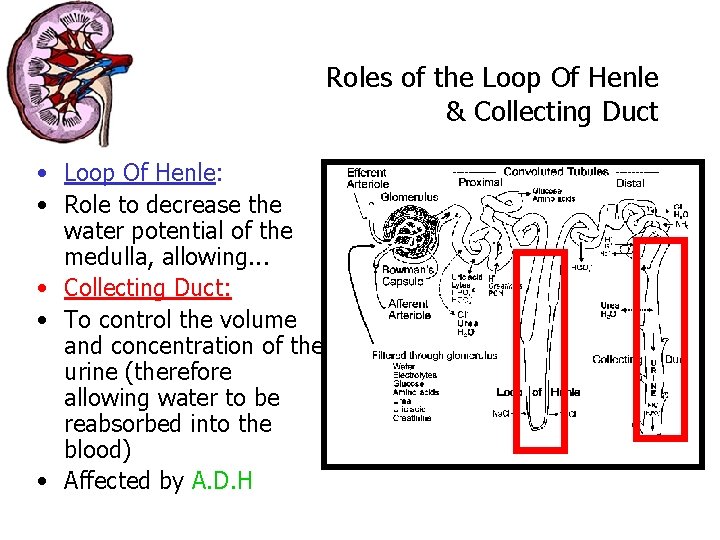
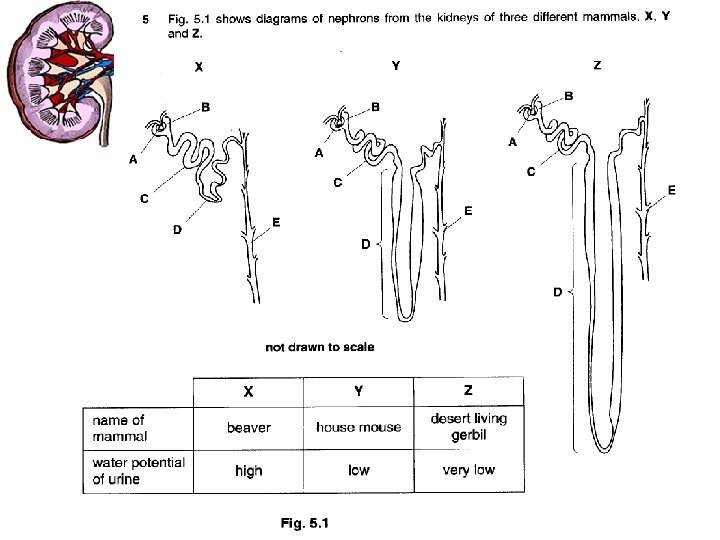
Roles of the Loop Of Henle & Collecting Duct • Loop Of Henle: • Role to decrease the water potential of the medulla, allowing. . . • Collecting Duct: • To control the volume and concentration of the urine (therefore allowing water to be reabsorbed into the blood) • Affected by A. D. H
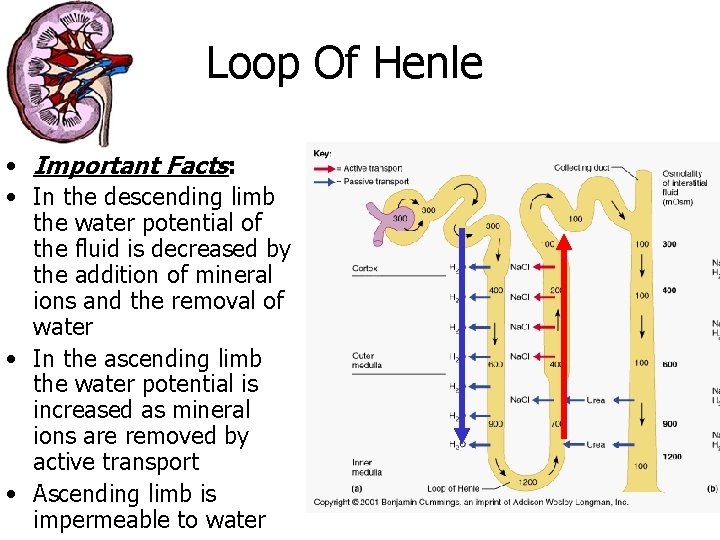
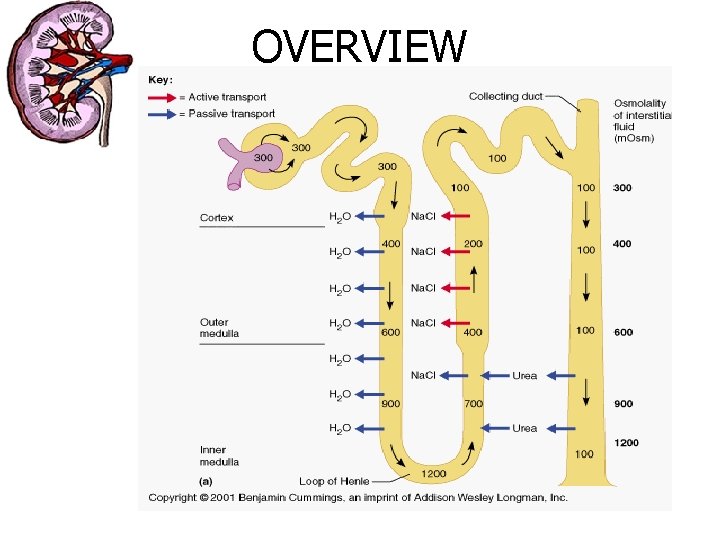
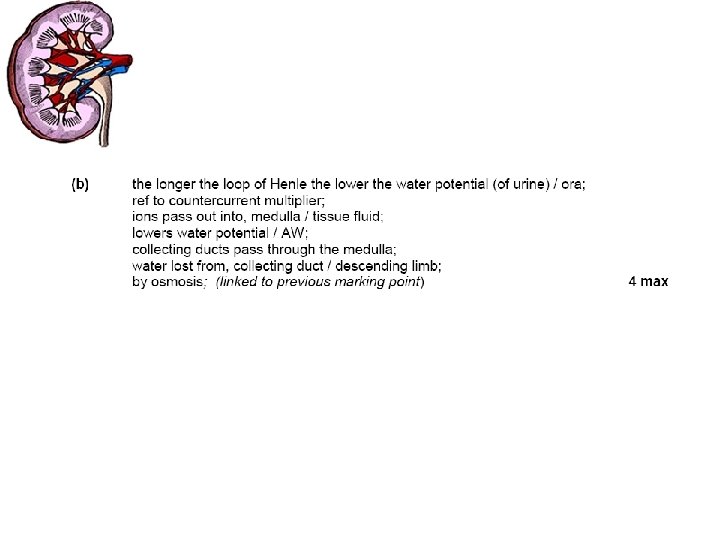
Loop Of Henle • Important Facts: • In the descending limb the water potential of the fluid is decreased by the addition of mineral ions and the removal of water • In the ascending limb the water potential is increased as mineral ions are removed by active transport • Ascending limb is impermeable to water
Stage 1 • Na+ and Cl- are actively transported out of the ascending limb
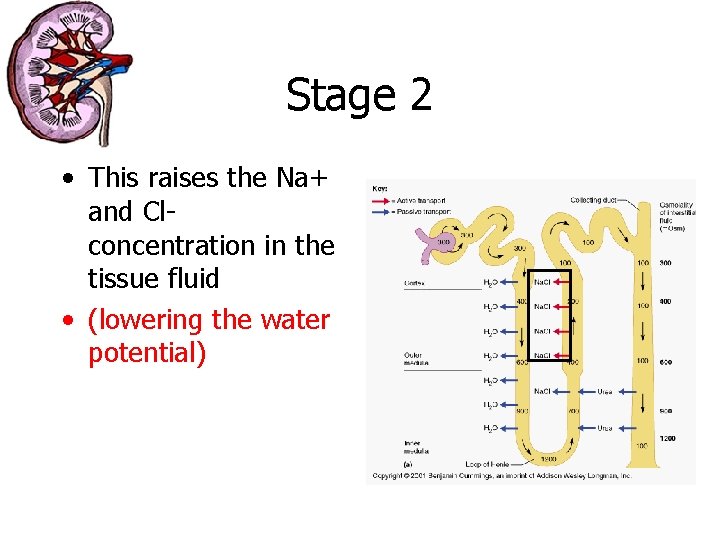
Stage 2 • This raises the Na+ and Clconcentration in the tissue fluid • (lowering the water potential)
Stage 3 • Water is drawn out of the descending limb by OSMOSIS……… • And Na+ and Cldiffuse in down a concentration gradient
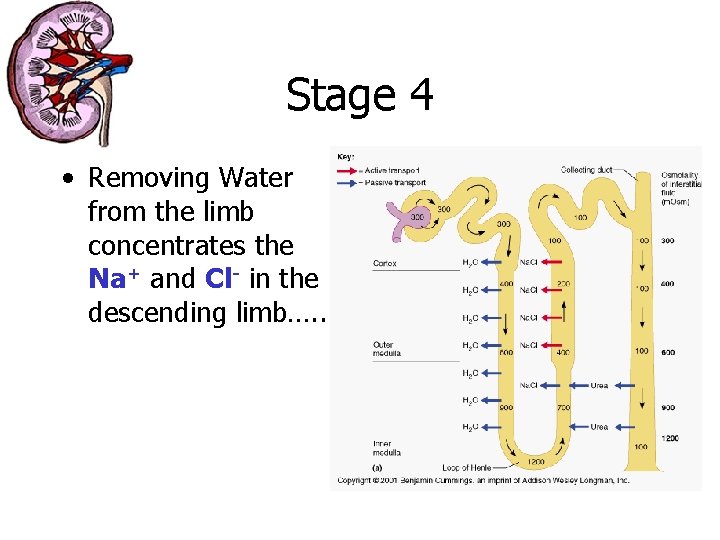
Stage 4 • Removing Water from the limb concentrates the Na+ and Cl- in the descending limb…. .
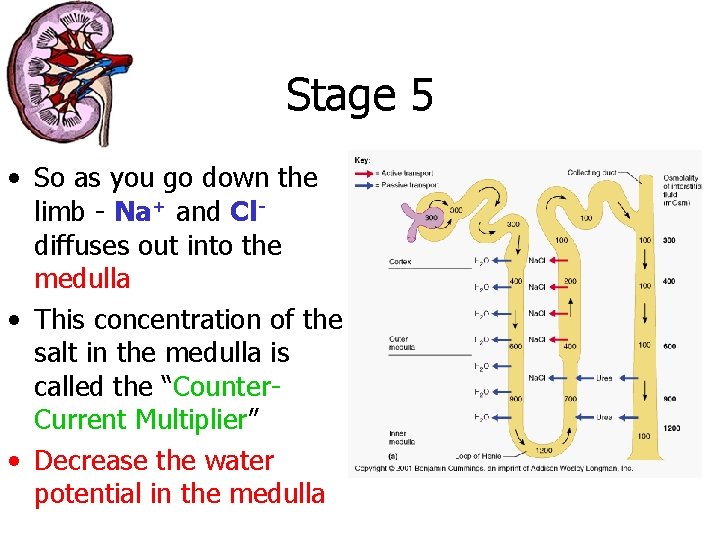
Stage 5 • So as you go down the limb - Na+ and Cldiffuses out into the medulla • This concentration of the salt in the medulla is called the “Counter. Current Multiplier” • Decrease the water potential in the medulla
OVERVIEW
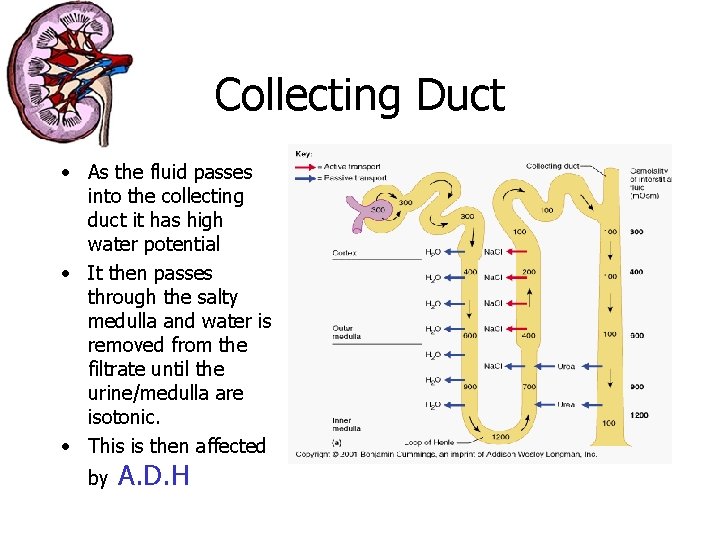
Collecting Duct • As the fluid passes into the collecting duct it has high water potential • It then passes through the salty medulla and water is removed from the filtrate until the urine/medulla are isotonic. • This is then affected by A. D. H
Group Task • Model the processes which happen in the Loop of Henle and the Collecting duct. • Draw an outline of the nephron onto A 3 paper, put a dashed line where the cortex/medulla divide is • Use different colour playdohs for: – Salts (Na and Cl ions) – Water
Plenary • PPQs
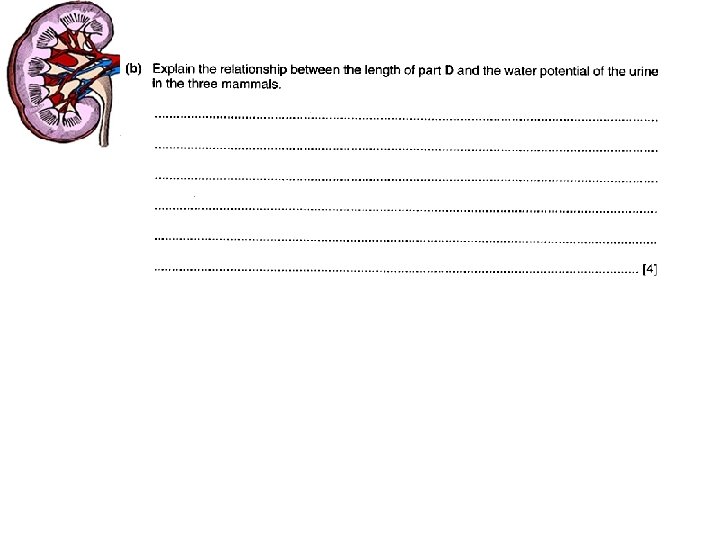
PPQ • See print out
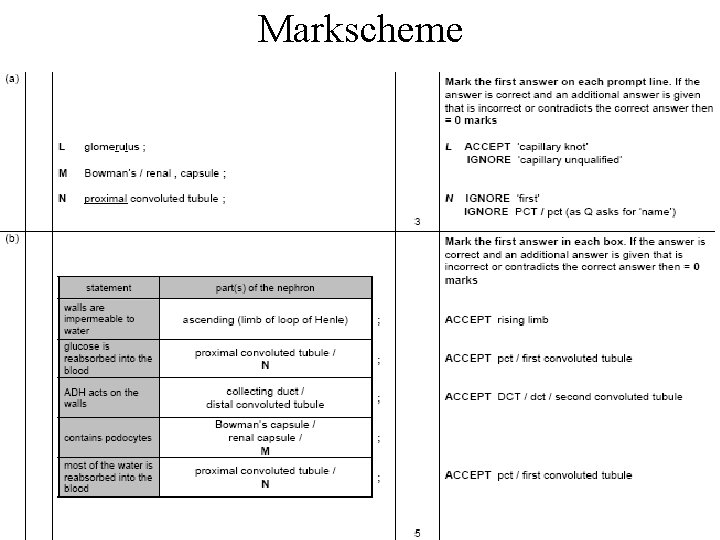
Markscheme
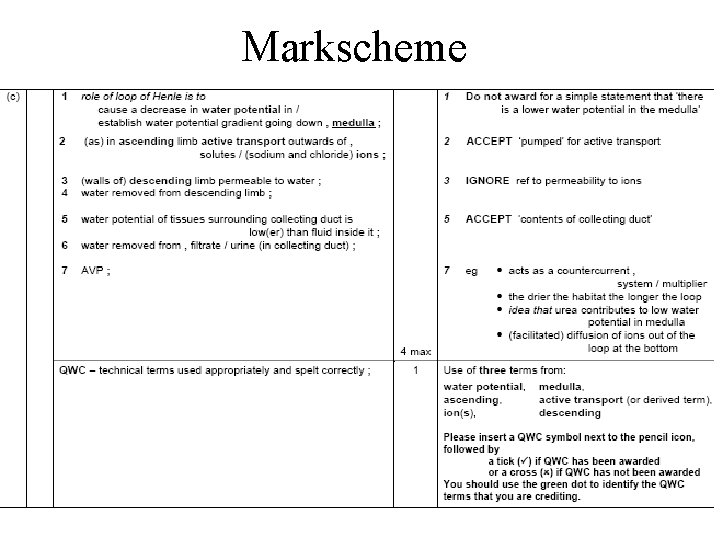
Markscheme