
Look think speak Look at the images that
- Slides: 12
Look, think, speak. Look at the images that follow and think about the effects TV might have on us.
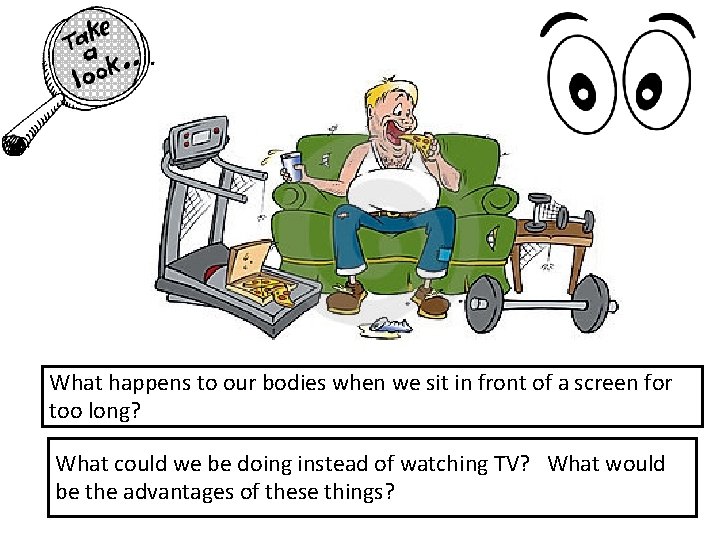
Look carefully at each picture! Ask yourself: • What exactly do I see? (List the objects or people you can see in the picture. ) • Describe each one of these things in detail e. g. ‘an overweight, sad man sitting in his pajamas and eating pizza’. • What do the objects represent? e. g. pizza = fast food = unhealthy
• Describe the action taking place in the picture. What is happening? Why? • Are there any words in the picture? Why are they there? What do they mean? • What is the message of the picture? What is the artist trying to say to us?
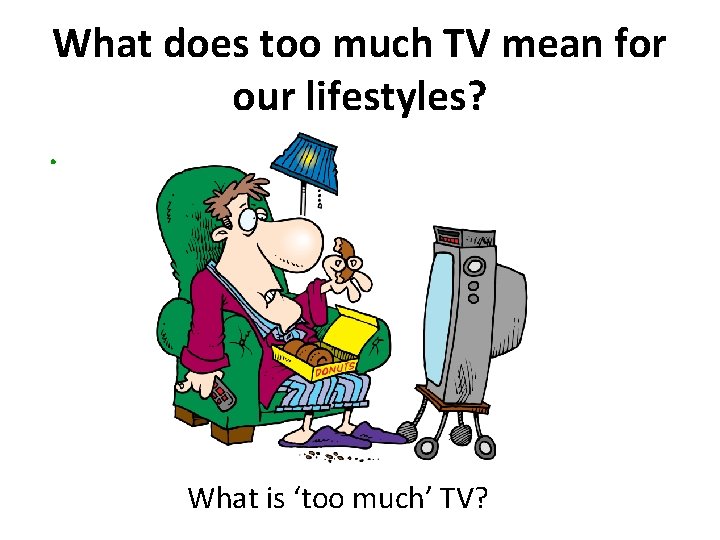
What does too much TV mean for our lifestyles? . What is ‘too much’ TV?
What happens to our bodies when we sit in front of a screen for too long? What could we be doing instead of watching TV? What would be the advantages of these things?
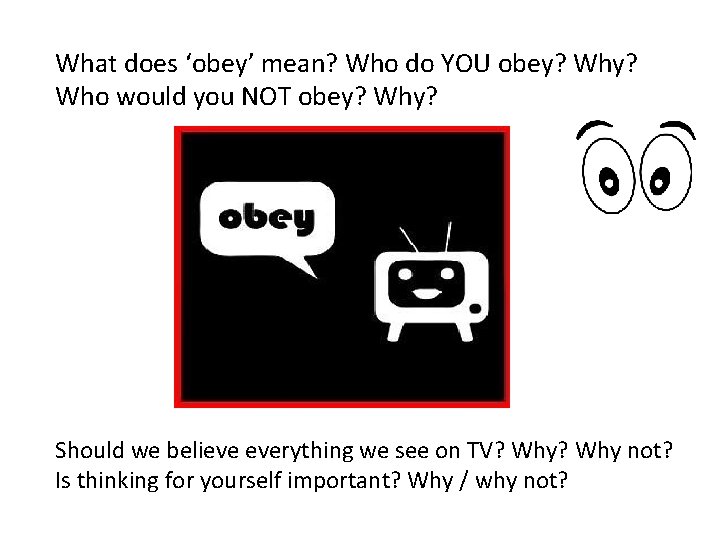
What does ‘obey’ mean? Who do YOU obey? Who would you NOT obey? Why? Should we believe everything we see on TV? Why not? Is thinking for yourself important? Why / why not?
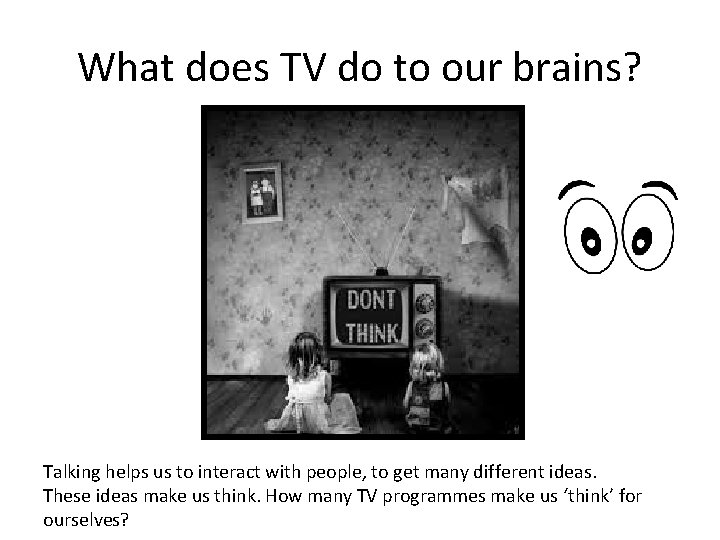
What does TV do to our brains? Talking helps us to interact with people, to get many different ideas. These ideas make us think. How many TV programmes make us ‘think’ for ourselves?
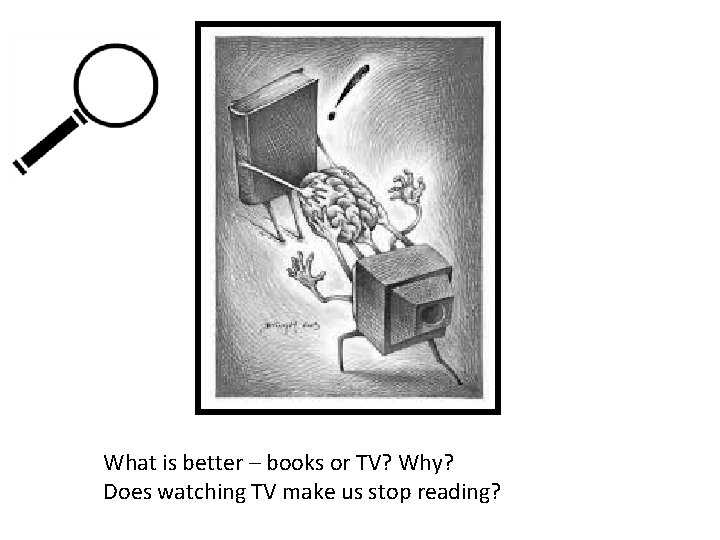
What is better – books or TV? Why? Does watching TV make us stop reading?
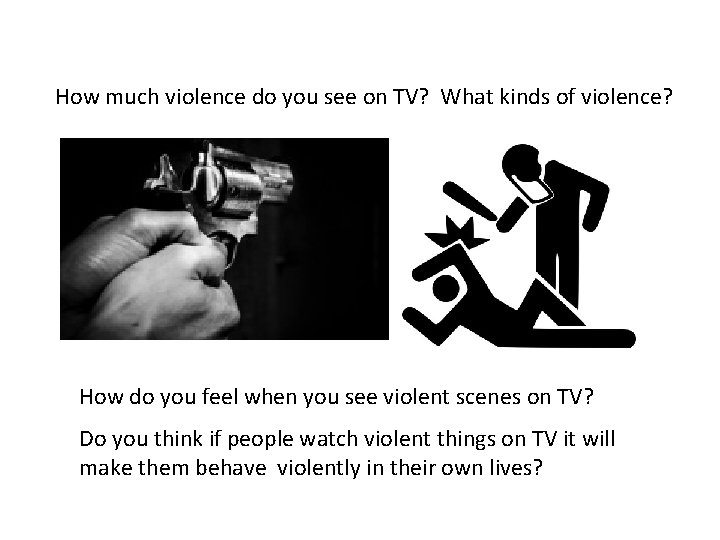
How much violence do you see on TV? What kinds of violence? How do you feel when you see violent scenes on TV? Do you think if people watch violent things on TV it will make them behave violently in their own lives?
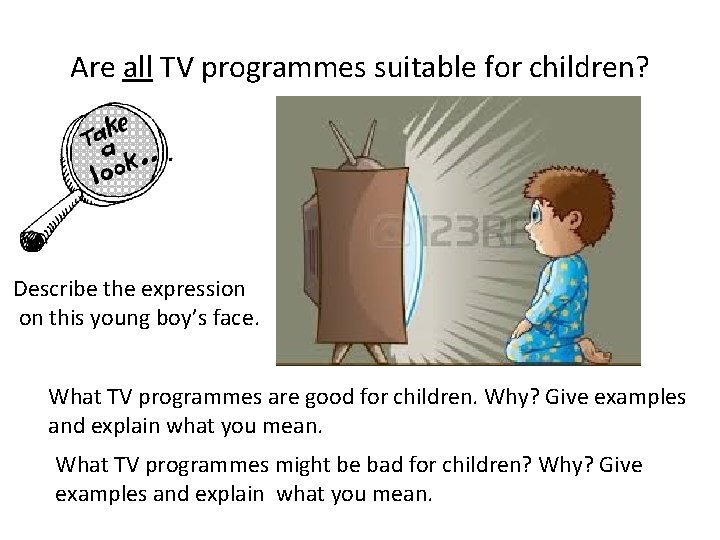
Are all TV programmes suitable for children? Describe the expression on this young boy’s face. What TV programmes are good for children. Why? Give examples and explain what you mean. What TV programmes might be bad for children? Why? Give examples and explain what you mean.
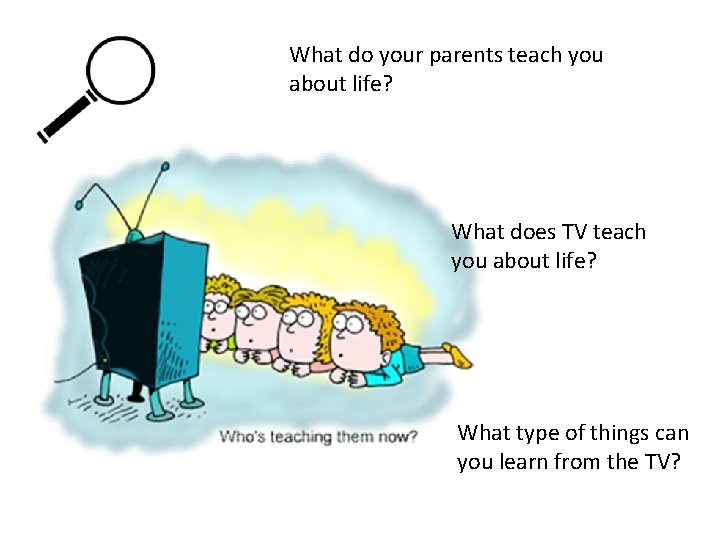
What do your parents teach you about life? What does TV teach you about life? What type of things can you learn from the TV?
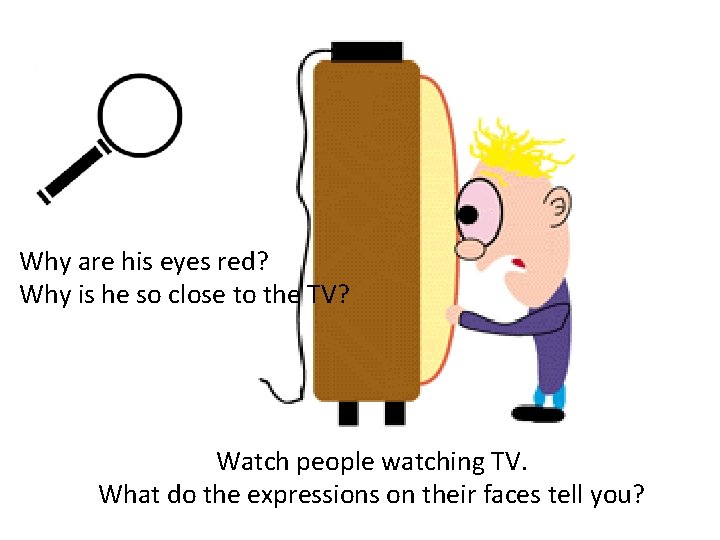
Why are his eyes red? Why is he so close to the TV? Watch people watching TV. What do the expressions on their faces tell you?