
Longitudinal Compression Second Generation DES What You Need

- Slides: 27
Longitudinal Compression Second Generation DES: What You Need to Know Ian T. Meredith MBBS, Ph. D, FRACP, FCSANZ, FACC, FSCAI, FAPSIC, FAHA Professor and Director of Monash Heart Monash Medical Centre, Melbourne Australia
Ian T Meredith, MD, Ph. D §Honoraria: §Abbott Vascular §Boston Scientific Corporation §Medtronic, Inc.
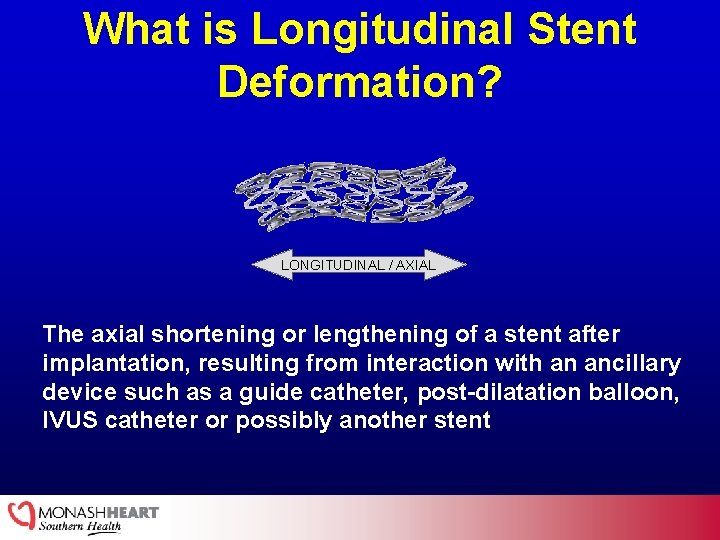
What is Longitudinal Stent Deformation? LONGITUDINAL / AXIAL The axial shortening or lengthening of a stent after implantation, resulting from interaction with an ancillary device such as a guide catheter, post-dilatation balloon, IVUS catheter or possibly another stent
Longitudinal Stent Deformation Should Not Be Confused With. . Foreshortening Inherent change in stent’s length occurring during implantation and expansion. Recoil Change in stent’s diameter due to mechanical and radial forces. Stent Fracture Cracking or breaking of a stent strut.
Is Longitudinal Stent Deformation a New Problem? No The axial shortening or lengthening of a stent after implantation, resulting from interaction with another device balloon or stent reported 18 yrs ago Chalet et. al. , Cathet Cardiovasc Interv 1994; 32: 376 -9 Bhargava et. al. , J Invasive Cardiol 1996; 8: 447 -9 Experienced clinically and anecdotally with: Wiktor Stent, GR 1 and GR 2, Cordis Tantalum Stent and others
Can Procedural Technique Contribute to Longitudinal Stent Deformation? Yes shortening or lengthening probably occurs when an ancillary device bumps or catches a malapposed strut during re-cross or subsequent withdrawal. Likely procedural Factors When nominal inflation pressure and diameter are not attained initially leading to under-deployment and mal-apposition of stent struts When the lesion tapers, leading to malapposition of struts When the stent is undersized Where there is wire bias or significant curvature resulting in poor coaxial alignment of the second device Deep seated guide catheter. .
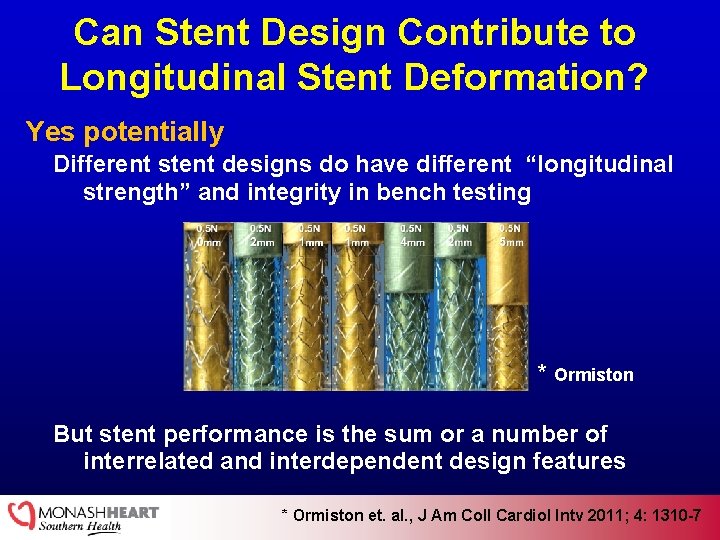
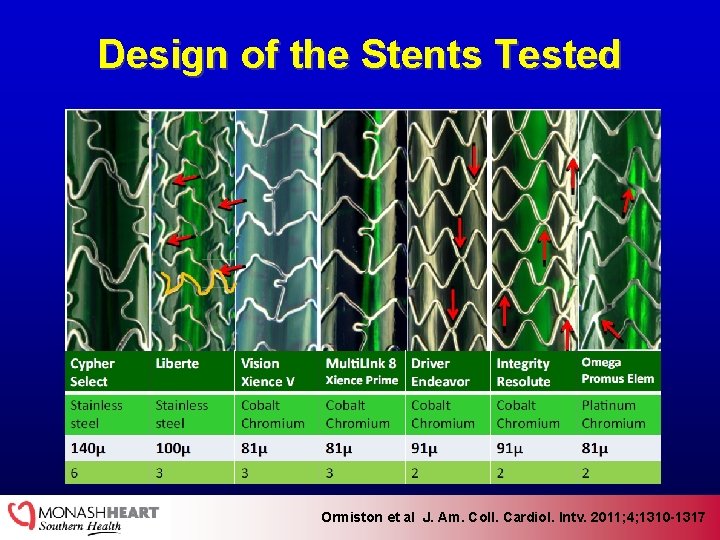
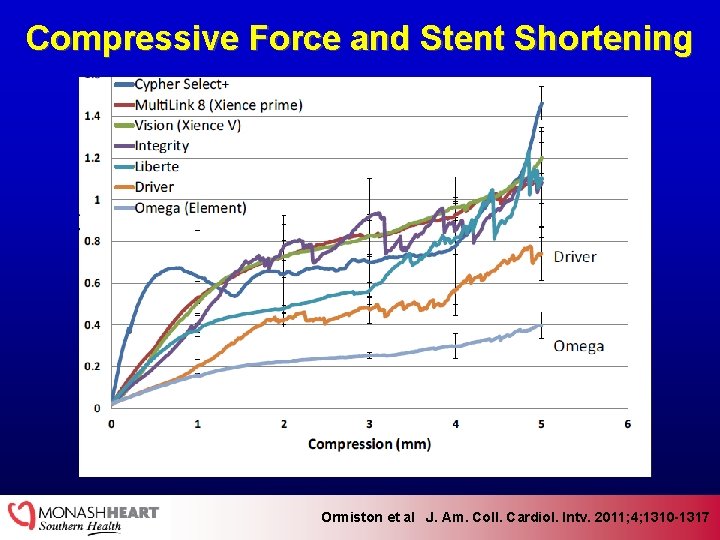
Can Stent Design Contribute to Longitudinal Stent Deformation? Yes potentially Different stent designs do have different “longitudinal strength” and integrity in bench testing * Ormiston But stent performance is the sum or a number of interrelated and interdependent design features * Ormiston et. al. , J Am Coll Cardiol Intv 2011; 4: 1310 -7
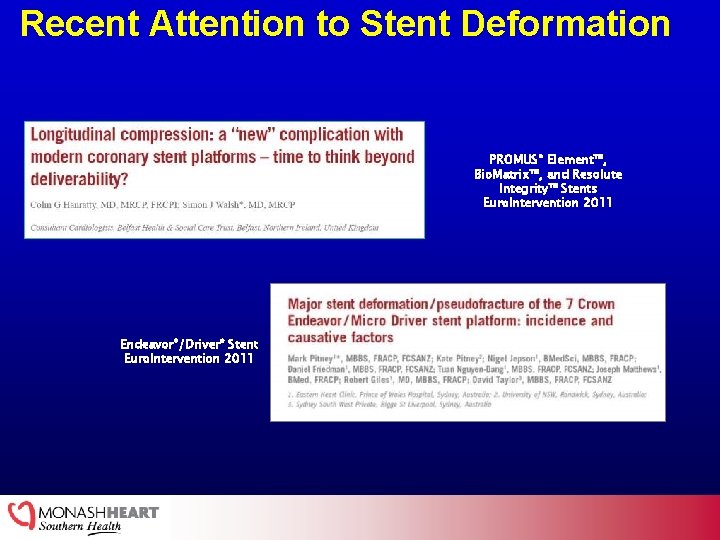
Recent Attention to Stent Deformation PROMUS® Element™, Bio. Matrix™, and Resolute Integrity™ Stents Euro. Intervention 2011 Endeavor®/Driver® Stent Euro. Intervention 2011
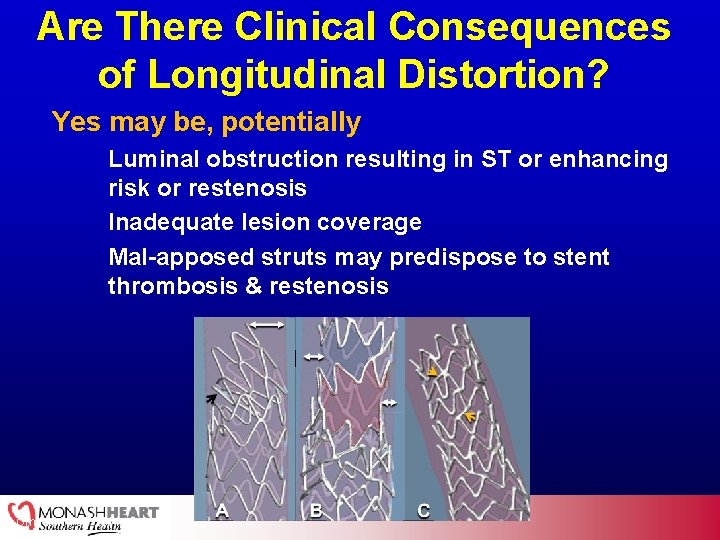
Are There Clinical Consequences of Longitudinal Distortion? Yes may be, potentially Luminal obstruction resulting in ST or enhancing risk or restenosis Inadequate lesion coverage Mal-apposed struts may predispose to stent thrombosis & restenosis Ormiston TCT 2011
Are There Clinical Consequences of Longitudinal Distortion? Yes may be, potentially Luminal obstruction resulting in ST or enhancing risk or restenosis Inadequate lesion coverage Mal-apposed struts may predispose to stent thrombosis & restenosis But This assumes ìt is unrecognized and untreated Post-dilatation to correct luminal obstruction and appose struts or additional stenting of uncovered lesion may suffice Importantly the evidence thus far is anecdotal Ormiston TCT 2011
Stent Design in Perspective (Delivery & Acute performance) Stent design are a series of “sinusoidal hoops” and “connectors” Hoops may be “in phase” or “out of phase” influence radial strength and scaffolding and to a lesser extent flexibility and conformability Connectors the number, orientation, shape, thickness and composition influence flexibility, deliverability and conformability and tissue coverage and influence longitudinal strength Ormiston TCT 2011
Stent Design in Perspective (Outcome) Stent design effects the vascular responses stent deployment Strut orientation and cell design influence magnitude of stent induced platelet activation and inflammatory neo-intimal response Strut thickness and alloy composition also influence extent of stent-induced vessel injury and inflammation Strut thickness RCT and registry evidence of a relationship between strut thickness and ISR Ormiston TCT 2011
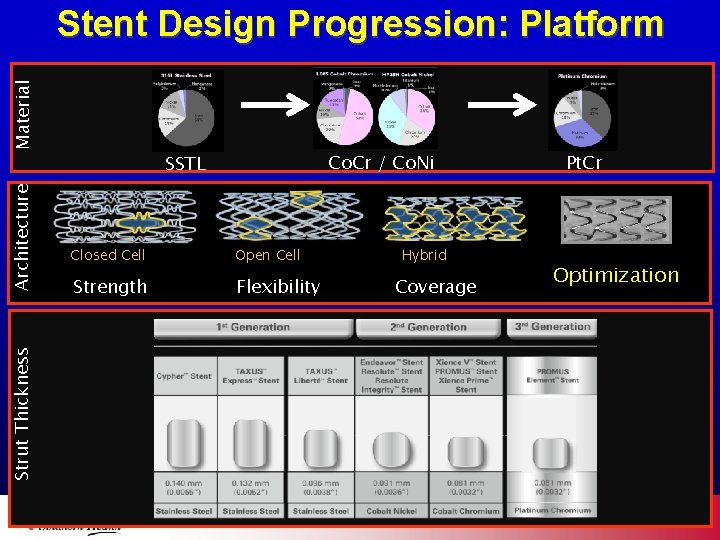
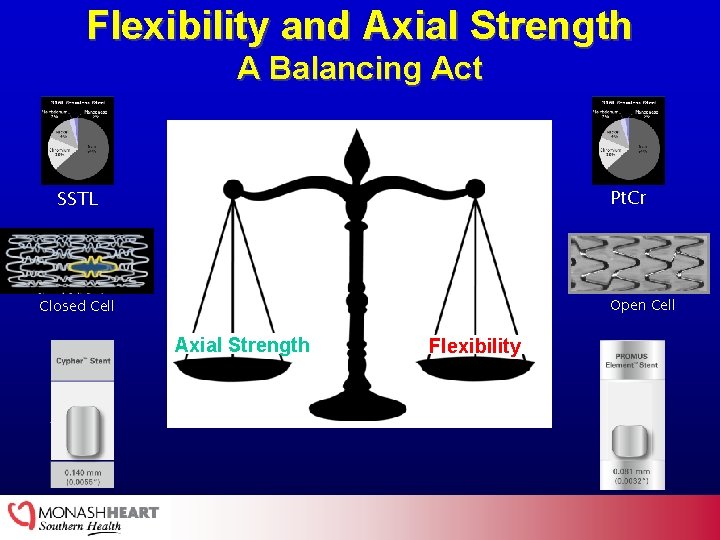
Material Stent Design Progression: Platform Co. Cr / Co. Ni Strut Thickness Architecture SSTL Closed Cell Open Cell Strength Flexibility Hybrid Coverage Pt. Cr Optimization
Design of the Stents Tested Ormiston et al J. Am. Coll. Cardiol. Intv. 2011; 4; 1310 -1317
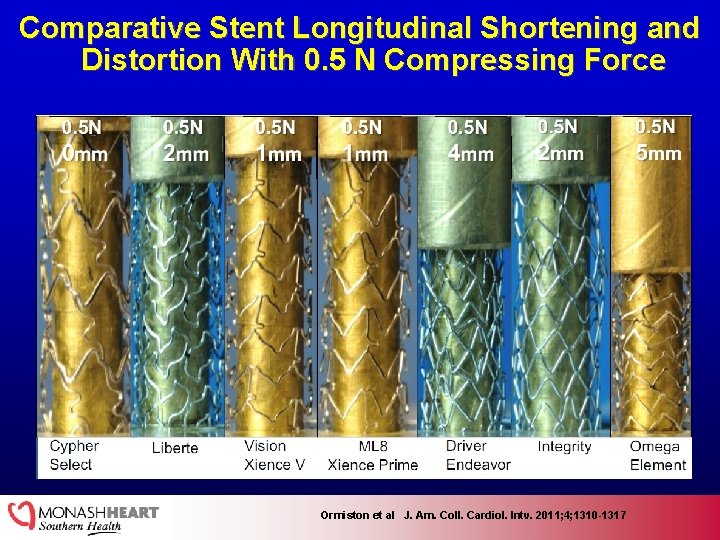
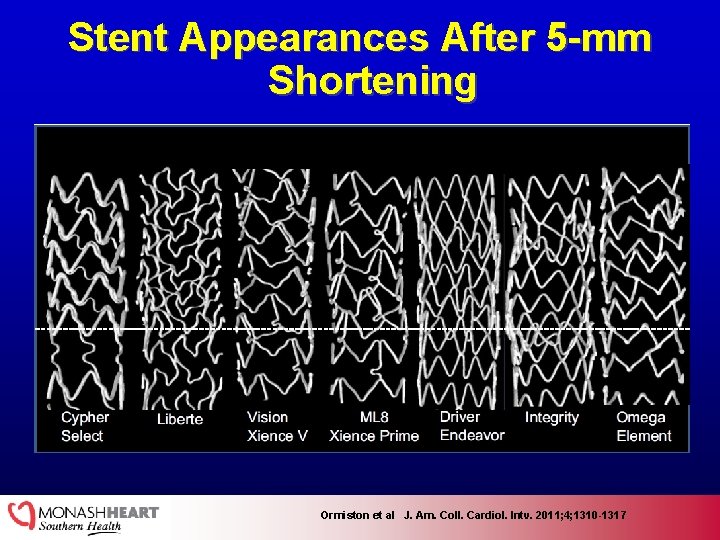
Comparative Stent Longitudinal Shortening and Distortion With 0. 5 N Compressing Force Ormiston et al J. Am. Coll. Cardiol. Intv. 2011; 4; 1310 -1317
Compressive Force and Stent Shortening Ormiston et al J. Am. Coll. Cardiol. Intv. 2011; 4; 1310 -1317
Flexibility and Axial Strength A Balancing Act Pt. Cr SSTL Open Cell Closed Cell Axial Strength Flexibility
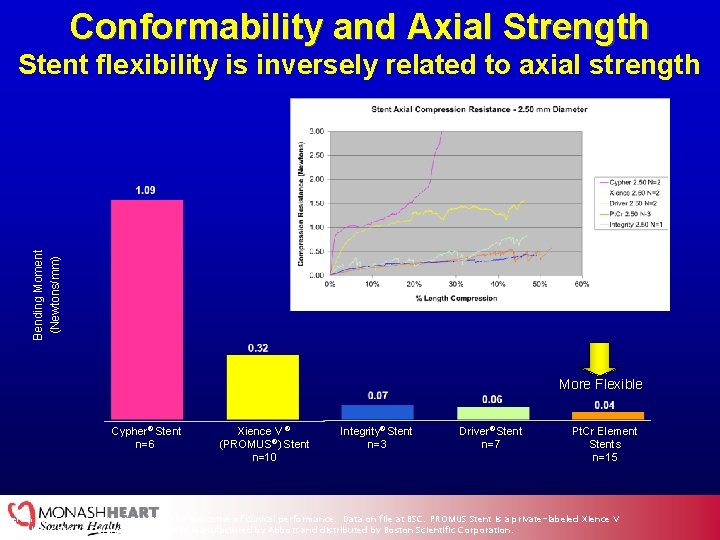
Conformability and Axial Strength Bending Moment (Newtons/mm) Stent flexibility is inversely related to axial strength More Flexible Cypher® Stent n=6 Xience V ® (PROMUS®) Stent n=10 Integrity® Stent n=3 Driver® Stent n=7 Pt. Cr Element Stents n=15 Bench test results may not necessarily be indicative of clinical performance. Data on file at BSC. PROMUS Stent is a private-labeled Xience V Everolimus Eluting Coronary Stent System manufactured by Abbott and distributed by Boston Scientific Corporation.
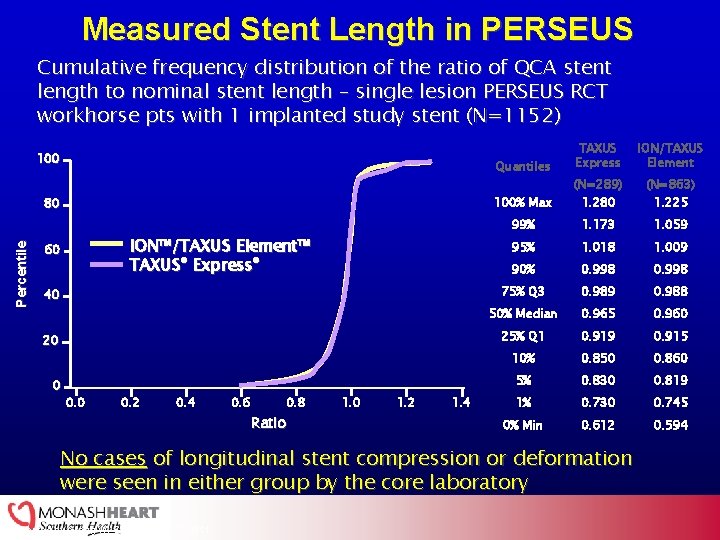
Measured Stent Length in PERSEUS Cumulative frequency distribution of the ratio of QCA stent length to nominal stent length – single lesion PERSEUS RCT workhorse pts with 1 implanted study stent (N=1152) 100 ION/TAXUS Element (N=289) (N=863) 99% 1. 173 1. 059 95% 1. 018 1. 009 90% 0. 998 75% Q 3 0. 989 0. 988 50% Median 0. 965 0. 960 25% Q 1 0. 919 0. 915 10% 0. 850 0. 860 5% 0. 830 0. 819 1% 0. 730 0. 745 0% Min 0. 612 0. 594 Quantiles 100% Max 80 Percentile TAXUS Express ION™/TAXUS Element™ TAXUS® Express® 60 40 20 0 0. 2 0. 4 0. 6 0. 8 Ratio 1. 0 1. 2 1. 4 1. 280 No cases of longitudinal stent compression or deformation were seen in either group by the core laboratory Presented by Gregg W. Stone, MD, TCT 2011. 1. 225
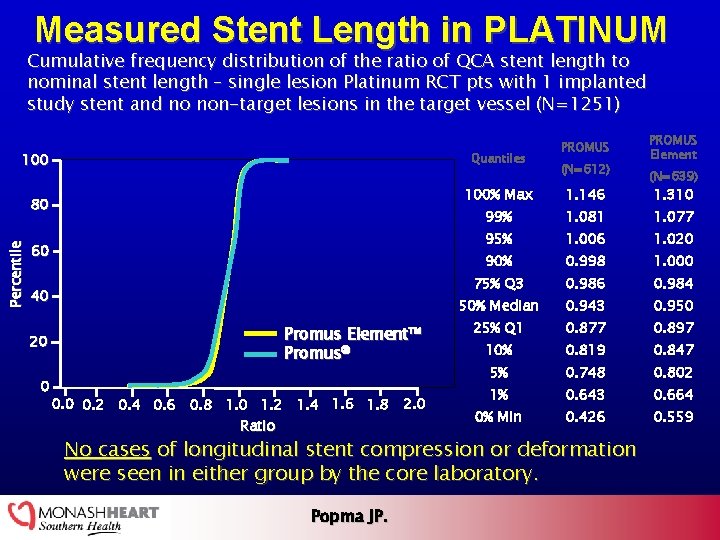
Measured Stent Length in PLATINUM Cumulative frequency distribution of the ratio of QCA stent length to nominal stent length – single lesion Platinum RCT pts with 1 implanted study stent and no non-target lesions in the target vessel (N=1251) 100 Quantiles Percentile 80 60 40 Promus Element™ Promus 20 0 0. 2 0. 4 0. 6 0. 8 1. 0 1. 2 1. 4 1. 6 1. 8 Ratio 2. 0 PROMUS (N=612) (N=639) 100% Max 1. 146 99% 1. 081 1. 077 95% 1. 006 1. 020 90% 0. 998 1. 000 75% Q 3 0. 986 0. 984 50% Median 0. 943 0. 950 25% Q 1 0. 877 0. 897 10% 0. 819 0. 847 5% 0. 748 0. 802 1% 0. 643 0. 664 0% Min 0. 426 0. 559 No cases of longitudinal stent compression or deformation were seen in either group by the core laboratory. Popma JP. PROMUS Element 1. 310
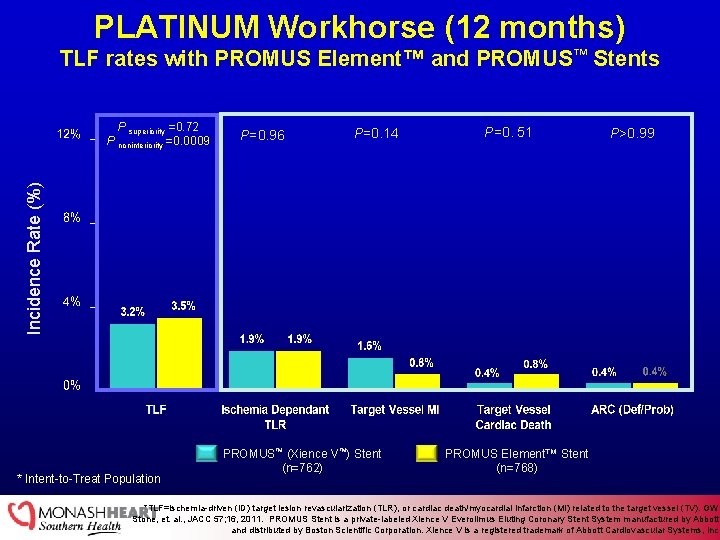
PLATINUM Workhorse (12 months) TLF rates with PROMUS Element™ and PROMUS™ Stents P=0. 96 P=0. 14 P=0. 51 P>0. 99 Incidence Rate (%) P superiority =0. 72 P noninferiority =0. 0009 * Intent-to-Treat Population PROMUS™ (Xience V™) Stent (n=762) PROMUS Element™ Stent (n=768) *TLF=Ischemia-driven (ID) target lesion revascularization (TLR), or cardiac death/myocardial infarction (MI) related to the target vessel (TV). GW Stone, et. al. , JACC 57; 16, 2011. PROMUS Stent is a private-labeled Xience V Everolimus Eluting Coronary Stent System manufactured by Abbott and distributed by Boston Scientific Corporation. Xience V is a registered trademark of Abbott Cardiovascular Systems, Inc.
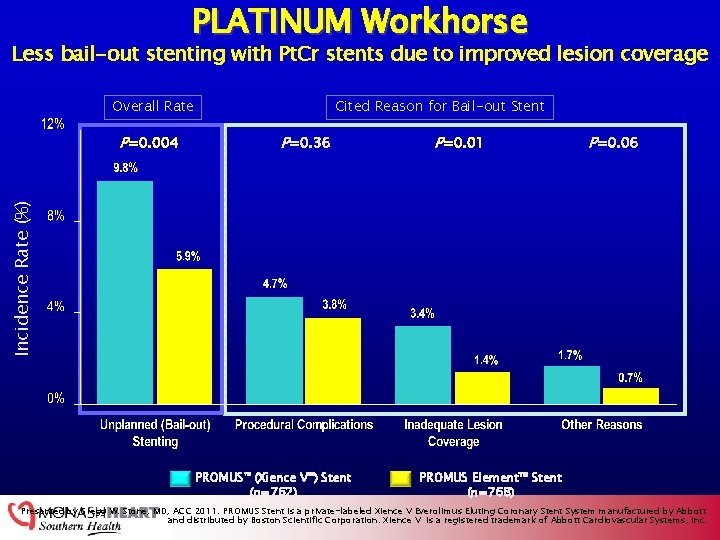
PLATINUM Workhorse Less bail-out stenting with Pt. Cr stents due to improved lesion coverage Overall Rate P=0. 36 P=0. 01 P=0. 06 Incidence Rate (%) P=0. 004 Cited Reason for Bail-out Stent PROMUS™ (Xience V™) Stent (n=762) PROMUS Element™ Stent (n=768) Presented by Gregg W. Stone, MD, ACC 2011. PROMUS Stent is a private-labeled Xience V Everolimus Eluting Coronary Stent System manufactured by Abbott and distributed by Boston Scientific Corporation. Xience V is a registered trademark of Abbott Cardiovascular Systems, Inc.
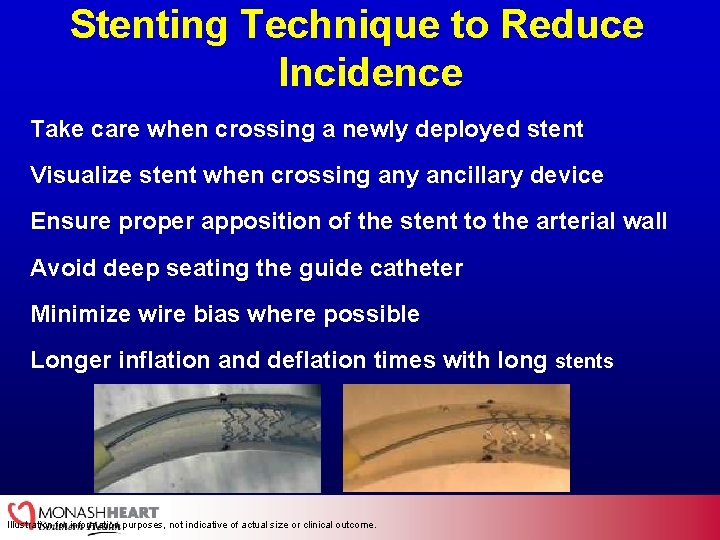
Stenting Technique to Reduce Incidence Take care when crossing a newly deployed stent Visualize stent when crossing any ancillary device Ensure proper apposition of the stent to the arterial wall Avoid deep seating the guide catheter Minimize wire bias where possible Longer inflation and deflation times with long stents Illustration for information purposes, not indicative of actual size or clinical outcome.
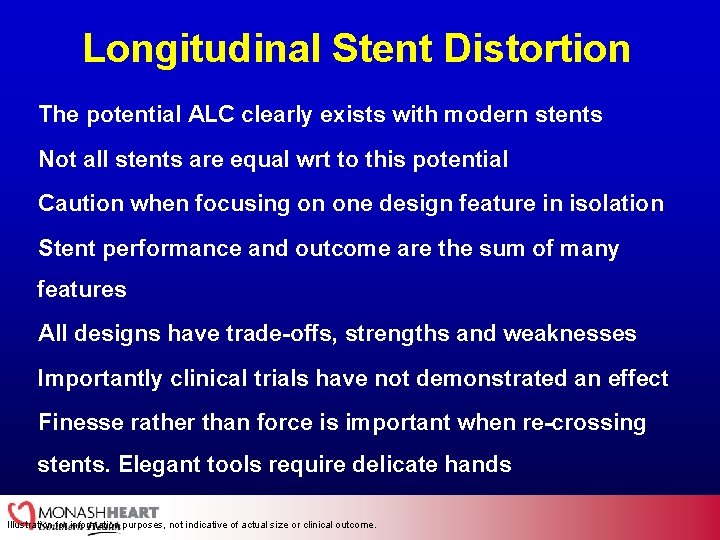
Longitudinal Stent Distortion The potential ALC clearly exists with modern stents Not all stents are equal wrt to this potential Caution when focusing on one design feature in isolation Stent performance and outcome are the sum of many features All designs have trade-offs, strengths and weaknesses Importantly clinical trials have not demonstrated an effect Finesse rather than force is important when re-crossing stents. Elegant tools require delicate hands Illustration for information purposes, not indicative of actual size or clinical outcome.
Thank You
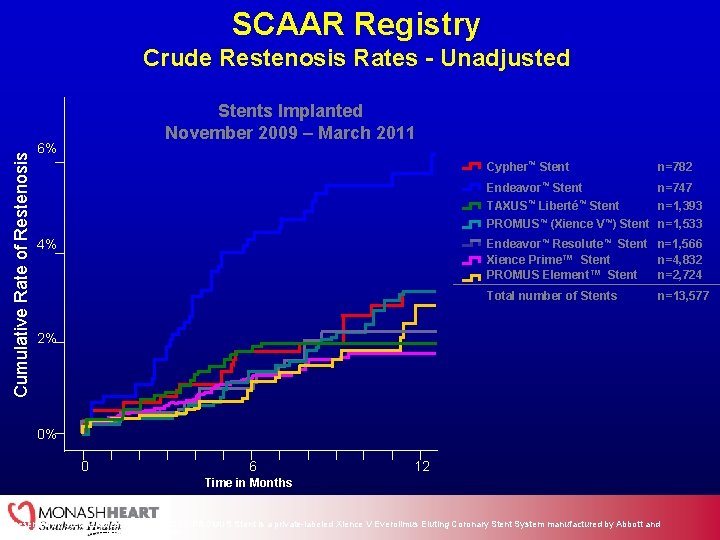
SCAAR Registry Cumulative Rate of Restenosis Crude Restenosis Rates - Unadjusted Stents Implanted November 2009 – March 2011 6% Cypher™ Stent n=782 Endeavor™ Stent TAXUS™ Liberté™ Stent n=747 n=1, 393 PROMUS™ (Xience V™) Stent n=1, 533 4% Endeavor™ Resolute™ Stent n=1, 566 Xience Prime™ Stent n=4, 832 PROMUS Element™ Stent n=2, 724 Total number of Stents n=13, 577 2% 0% 0 6 12 Time in Months Presented by Stefan James, MD, ACC 2011. PROMUS Stent is a private-labeled Xience V Everolimus Eluting Coronary Stent System manufactured by Abbott and distributed by Boston Scientific Corporation.
Stent Appearances After 5 -mm Shortening Ormiston et al J. Am. Coll. Cardiol. Intv. 2011; 4; 1310 -1317