
Long intermediate and short pebble diameters are measured
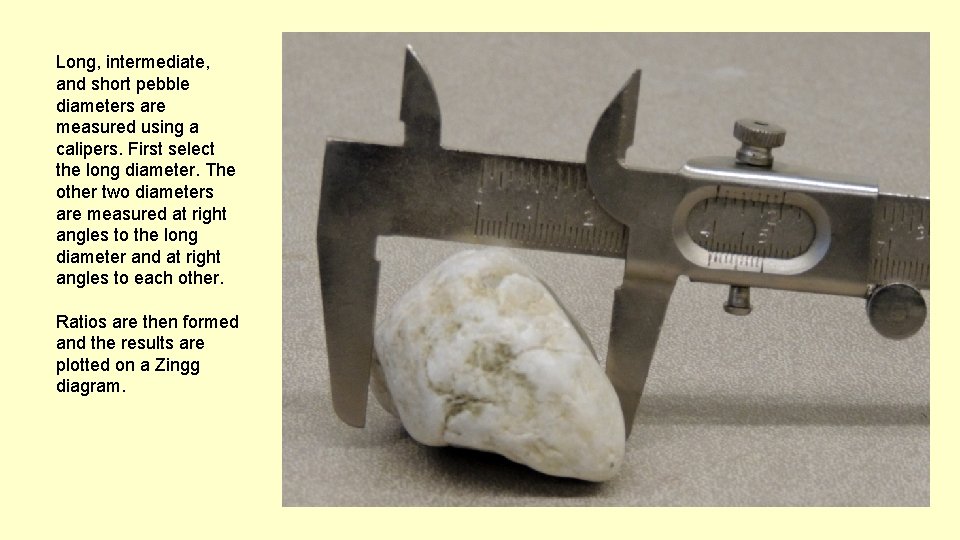
Long, intermediate, and short pebble diameters are measured using a calipers. First select the long diameter. The other two diameters are measured at right angles to the long diameter and at right angles to each other. Ratios are then formed and the results are plotted on a Zingg diagram.


Pebble roundness is estimated using a roundness chart. Values range from 0. 1 to 0. 9.

A

B

C

D
The pebble shape and size laboratory will be done in groups • The groups are listed on the spreadsheet on the class web site • Identify the members of your group • Each group member is assigned a specific tray. Estimate the roundness for each pebble in your tray • For your assigned pebble set (tray) calculate the Zingg parameters. The diameter measurements for each pebble set are found on the spreadsheet on the class web site • Determine the rock type for your pebble set. There are four possibilities: basalt, granite, quartzite, or rhyolite • Do the calculations, graphs, and answer the questions in the Gravel Shape and Sedimentary Environment laboratory exercise found on the course web site • To complete the exercise you will need to share results and ideas with the other members of your group. On Friday during class time there will be a 20 minute breakout session for you to discuss your results and ideas with your group. • The exercise, submitted individually, will be due by 12 noon, Monday, March 30. Submit your exercise by e-mail to Clara (Clara_Cogswell@uml. edu)
- Slides: 8