
LONCAPA Open Source Course Management and Assessment System
![Student Discussion (cont. ) […] • Student H: : sigh: Wow. So, many, little](https://slidetodoc.com/presentation_image_h2/a1a30d109a5f270898dcceb1aa0ea9a0/image-47.jpg "Student Discussion (cont. ) […] • Student H: : sigh: Wow. So, many, little")
- Slides: 63
LON-CAPA: Open Source Course Management and Assessment System Gerd Kortemeyer Michigan State University
Resource Sharing
Sharing of Resources • Creating online • • resources (web pages, images, homework problems) is a lot of work Doing so for use in just one course is a waste of time and effort Many resources could be used among a number of courses and across institutions
Key to Re-Usability • The key to re-usability is to create course • • context free resources In other words, same resource can be used in different contexts This means: § No button “next resource” § No button “back to course menu” § No wording such as “as we have previously seen” § etc
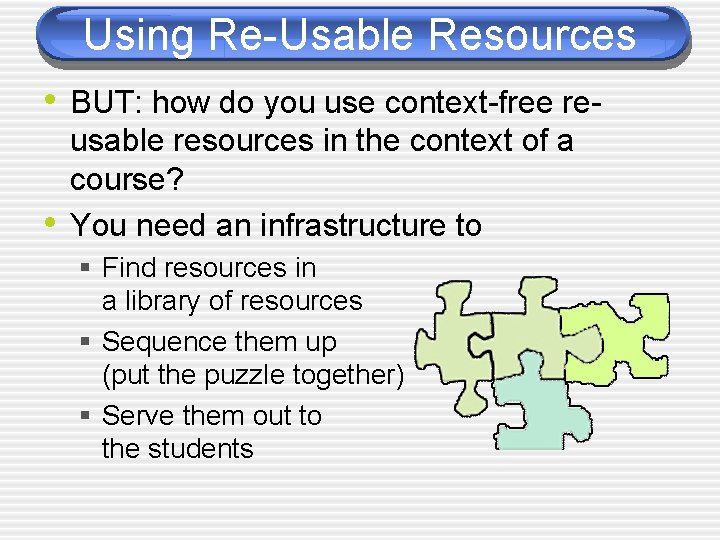
Using Re-Usable Resources • BUT: how do you use context-free re • usable resources in the context of a course? You need an infrastructure to § Find resources in a library of resources § Sequence them up (put the puzzle together) § Serve them out to the students
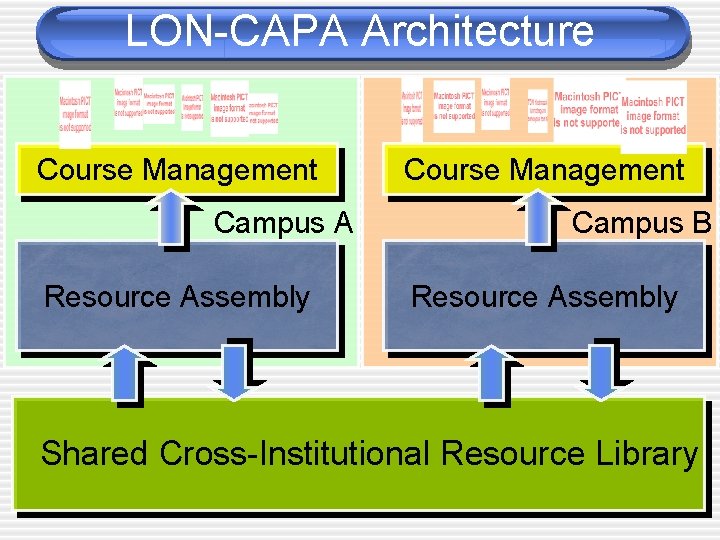
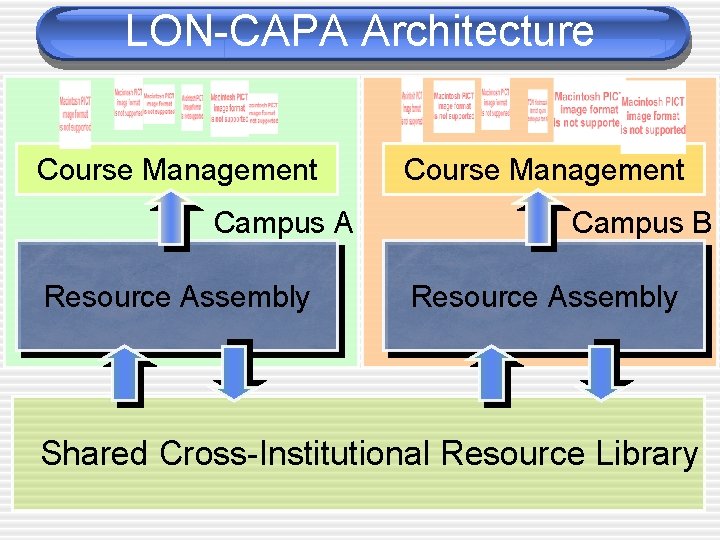
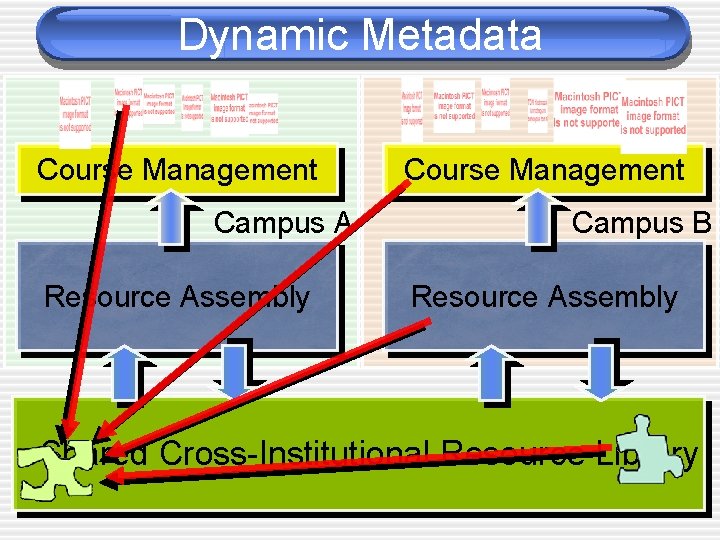
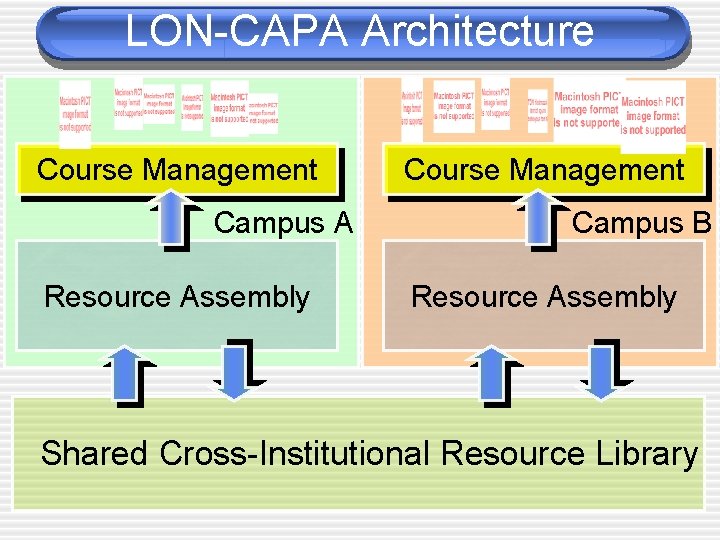
LON-CAPA Architecture Course Management Campus A Resource Assembly Course Management Campus B Resource Assembly Shared Cross-Institutional Resource Library
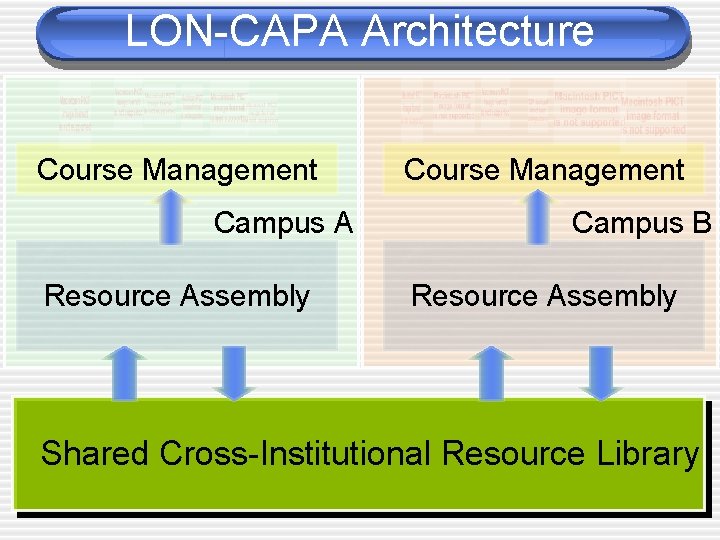
LON-CAPA Architecture Course Management Campus A Resource Assembly Course Management Campus B Resource Assembly Shared Cross-Institutional Resource Library
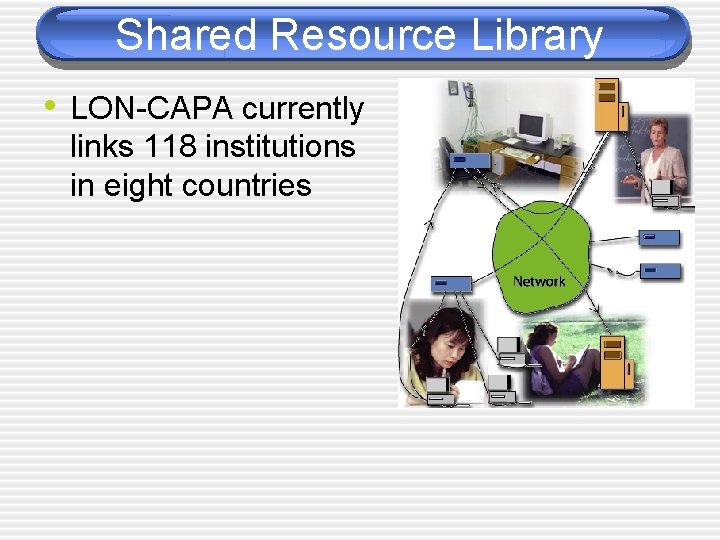
Shared Resource Library • LON-CAPA currently links 118 institutions in eight countries
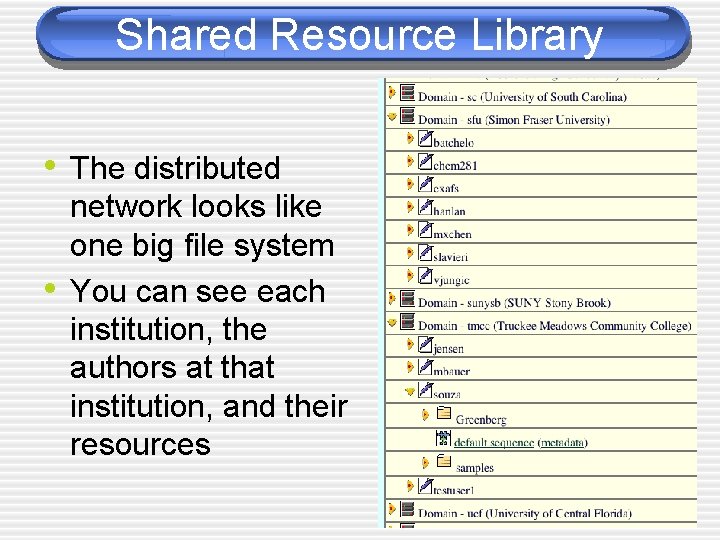
Shared Resource Library • The distributed • network looks like one big file system You can see each institution, the authors at that institution, and their resources
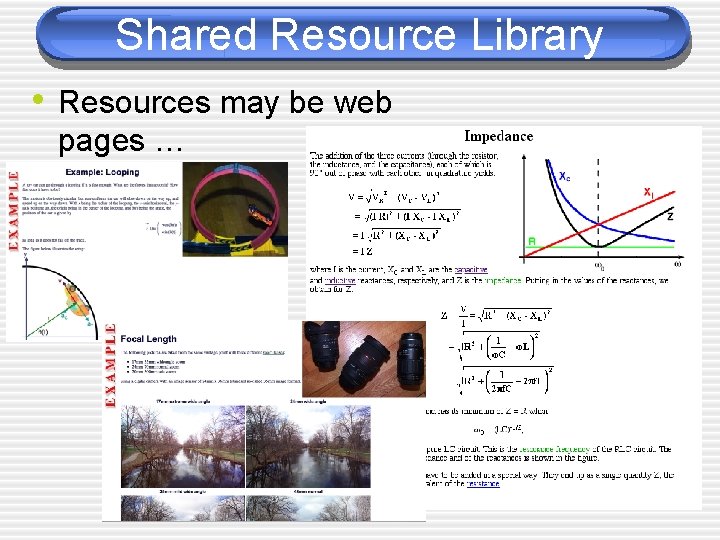
Shared Resource Library • Resources may be web pages …
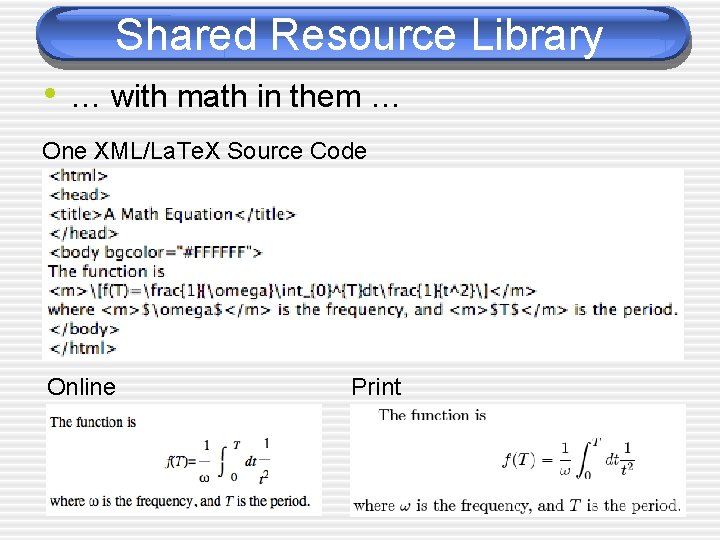
Shared Resource Library • … with math in them … One XML/La. Te. X Source Code Online Print
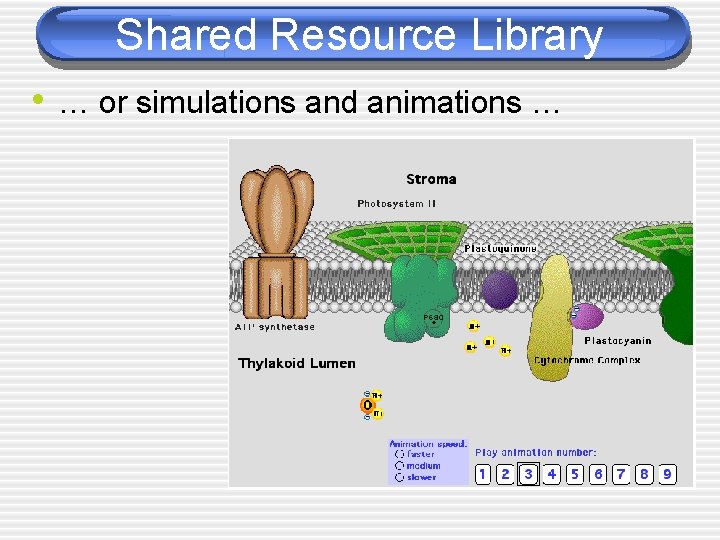
Shared Resource Library • … or simulations and animations …
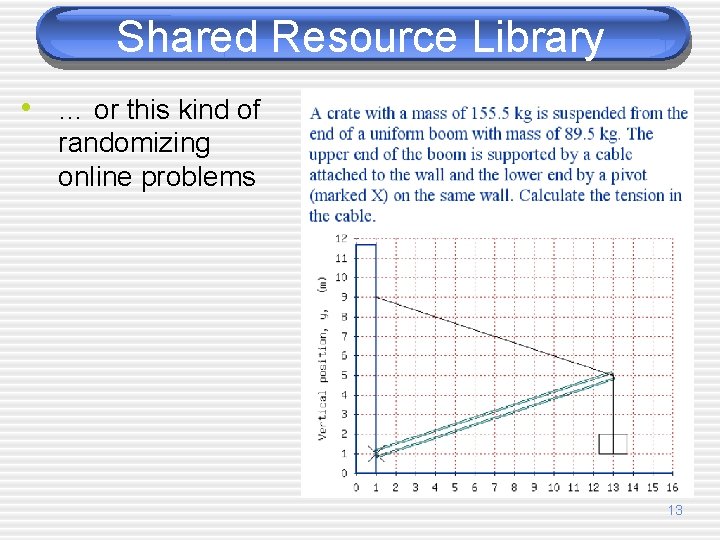
Shared Resource Library • … or this kind of randomizing online problems 13
Shared Resource Library • …special emphasis on math …
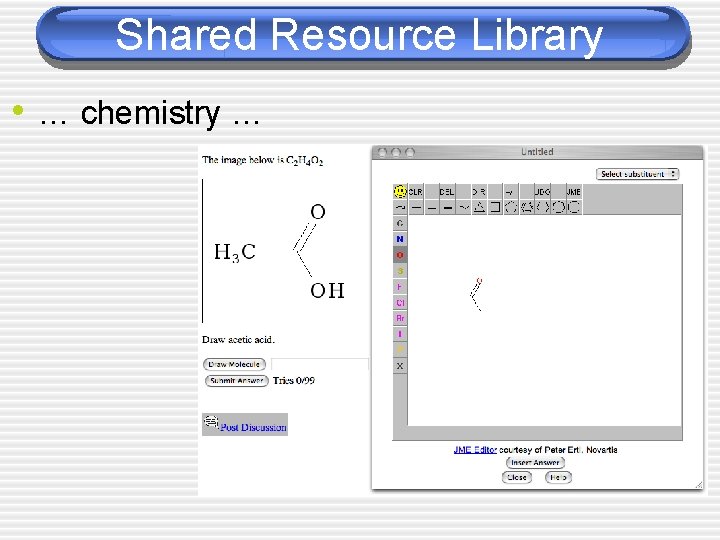
Shared Resource Library • … chemistry …
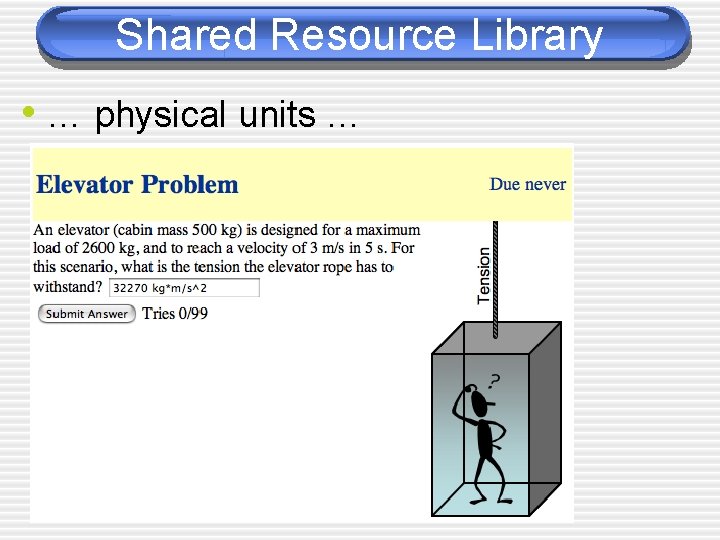
Shared Resource Library • … physical units …
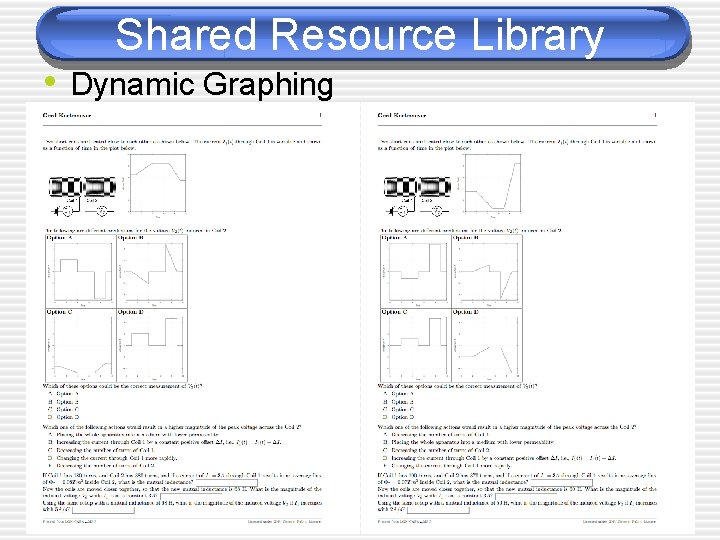
Shared Resource Library • Dynamic Graphing
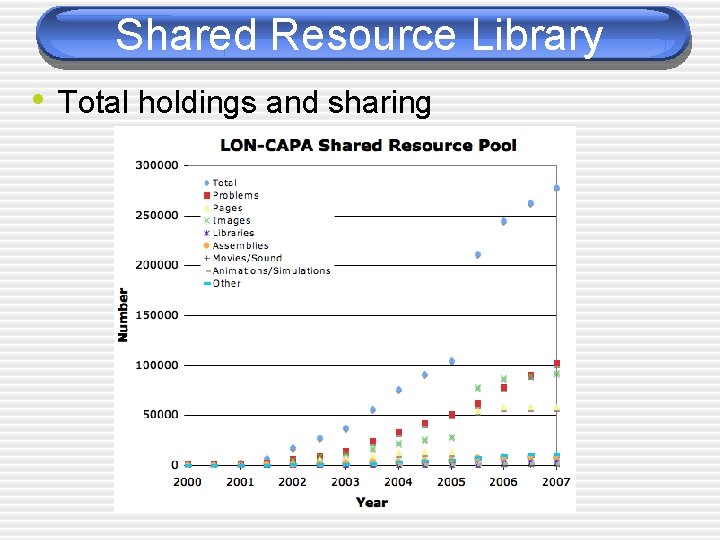
Shared Resource Library • Total holdings and sharing
LON-CAPA Architecture Course Management Campus A Resource Assembly Course Management Campus B Resource Assembly Shared Cross-Institutional Resource Library
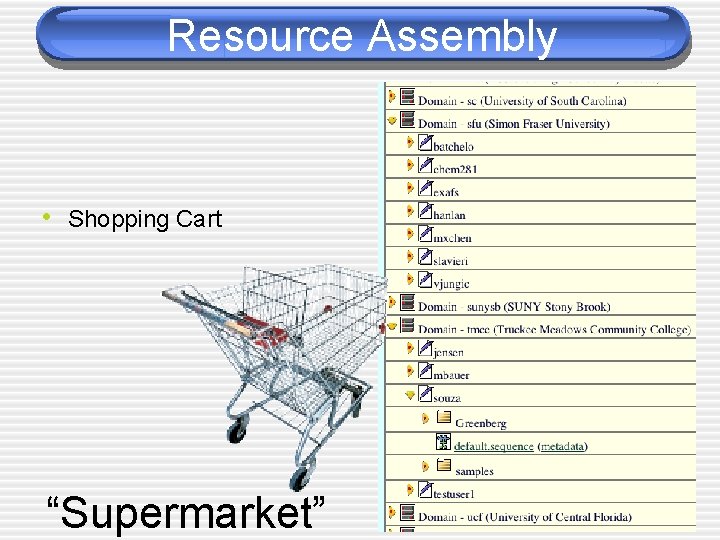
Resource Assembly • Shopping Cart “Supermarket”
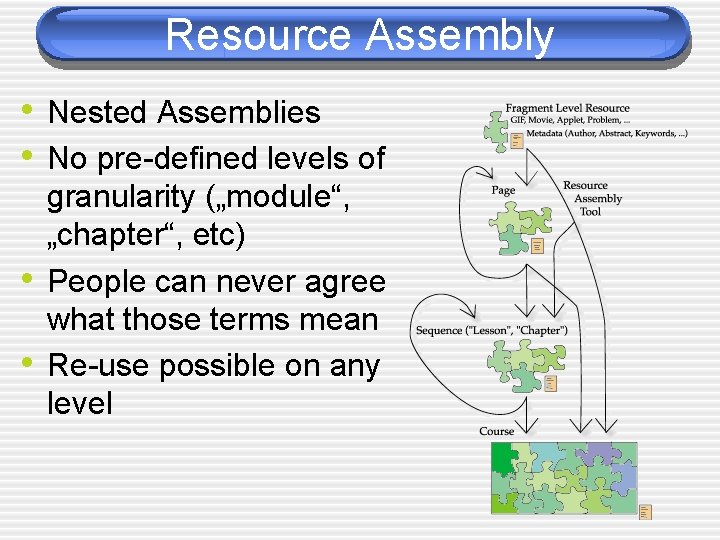
Resource Assembly • Nested Assemblies • No pre-defined levels of • • granularity („module“, „chapter“, etc) People can never agree what those terms mean Re-use possible on any level
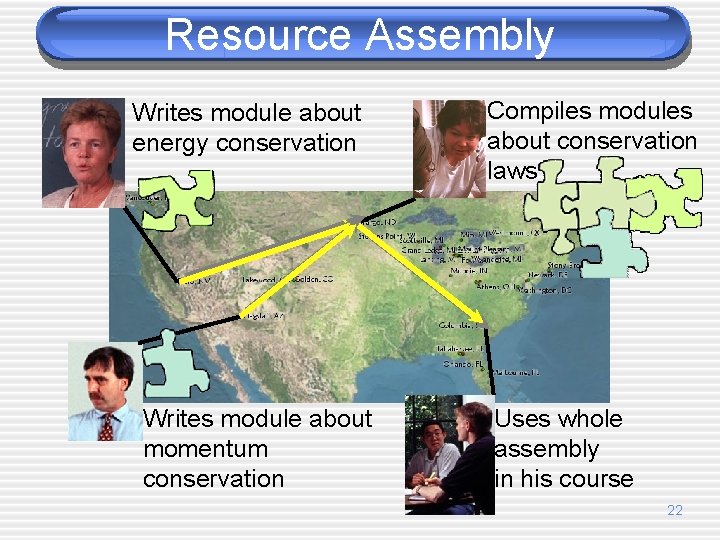
Resource Assembly Writes module about energy conservation Writes module about momentum conservation Compiles modules about conservation laws Uses whole assembly in his course 22
Dynamic Metadata Course Management Campus A Resource Assembly Course Management Campus B Resource Assembly Shared Cross-Institutional Resource Library
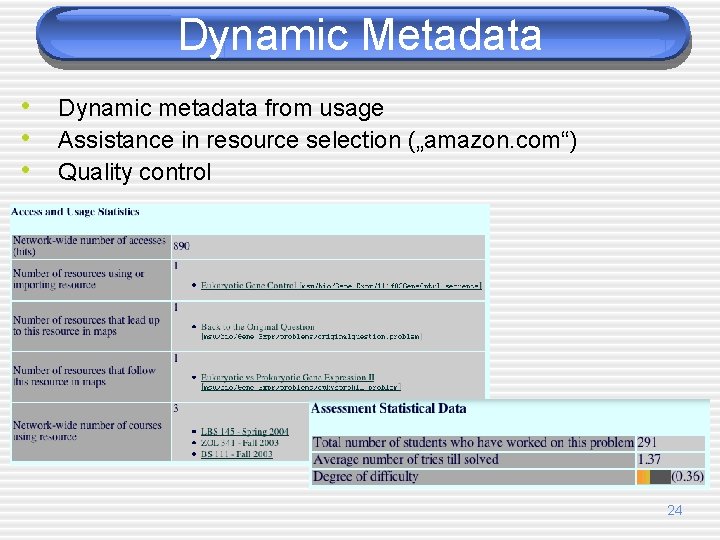
Dynamic Metadata • Dynamic metadata from usage • Assistance in resource selection („amazon. com“) • Quality control 24
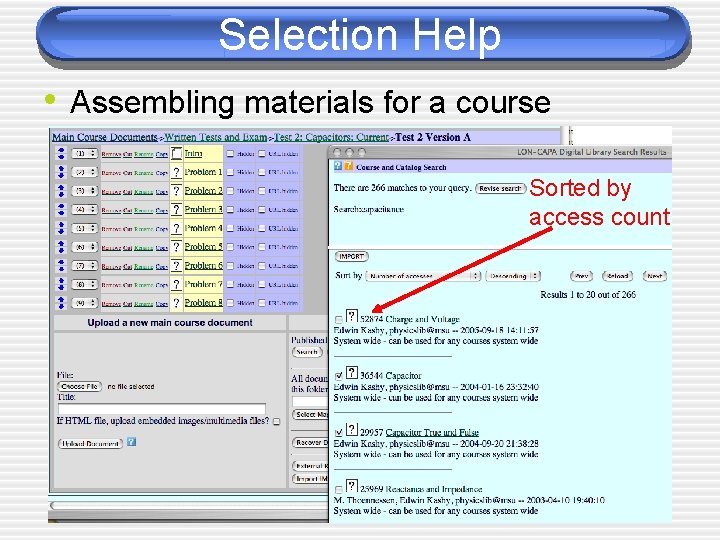
Selection Help • Assembling materials for a course Sorted by access count
LON-CAPA Architecture Course Management Campus A Resource Assembly Course Management Campus B Resource Assembly Shared Cross-Institutional Resource Library
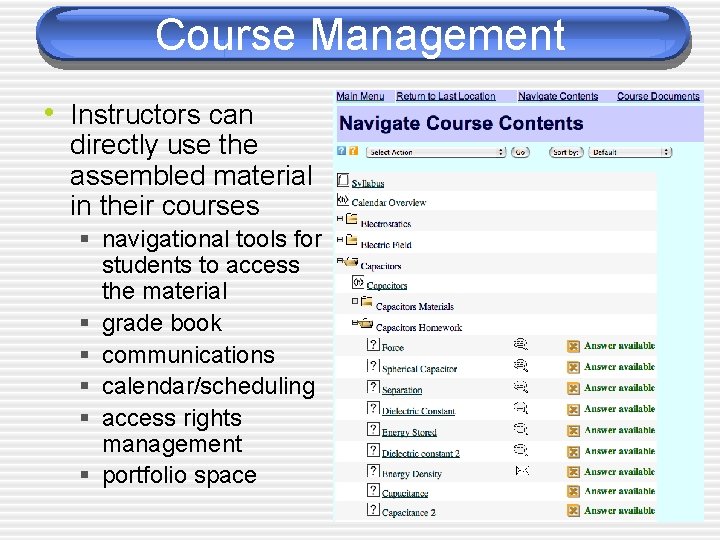
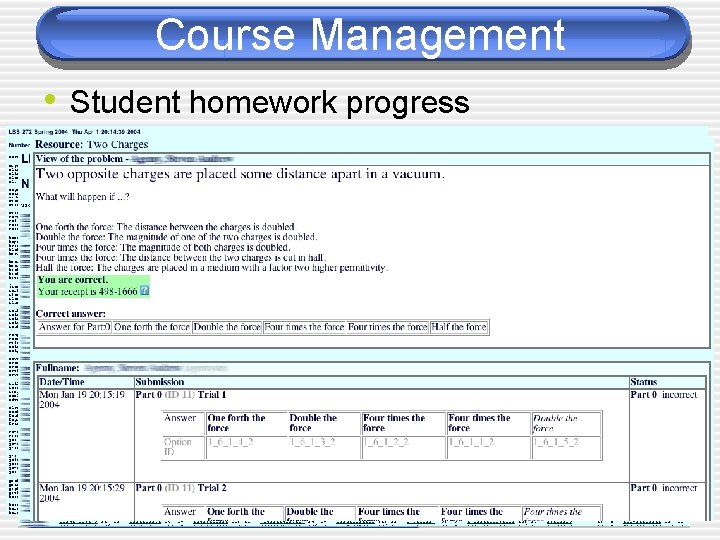
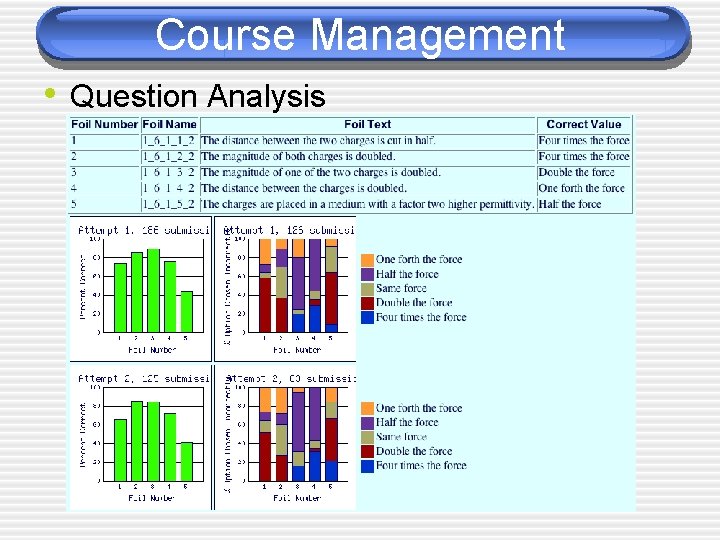
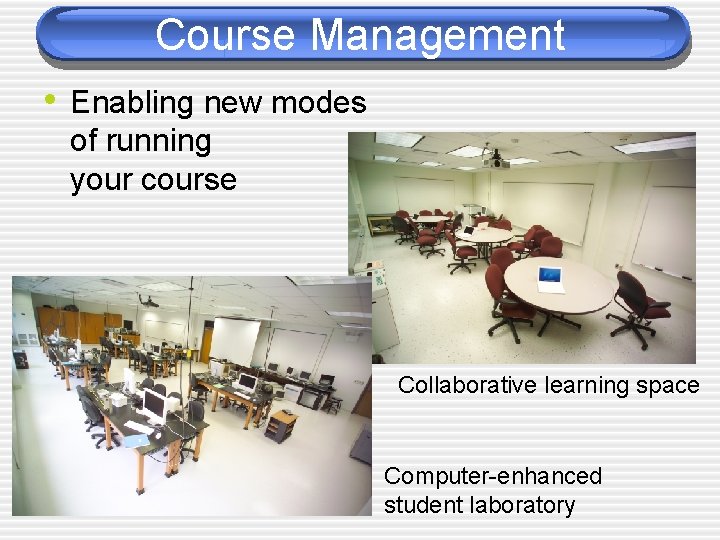
Course Management • Instructors can directly use the assembled material in their courses § navigational tools for students to access the material § grade book § communications § calendar/scheduling § access rights management § portfolio space
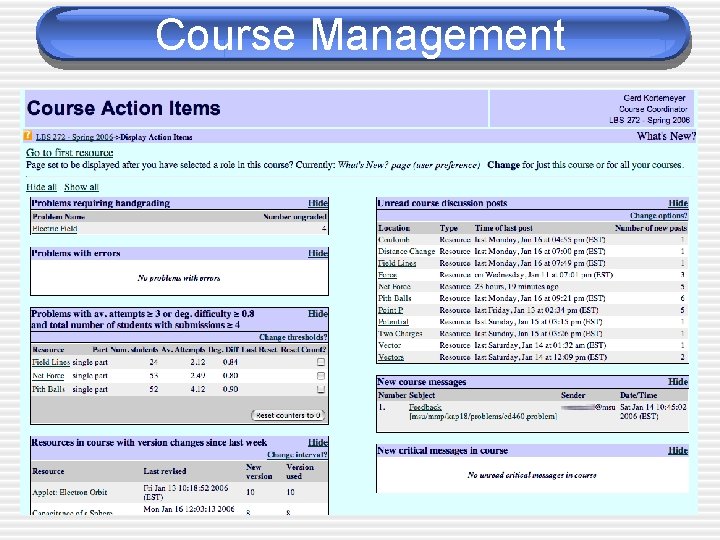
Course Management
Course Management • Student homework progress
Course Management • Question Analysis
Course Management • Enabling new modes of running your course Collaborative learning space Computer-enhanced student laboratory
Communities of Practice
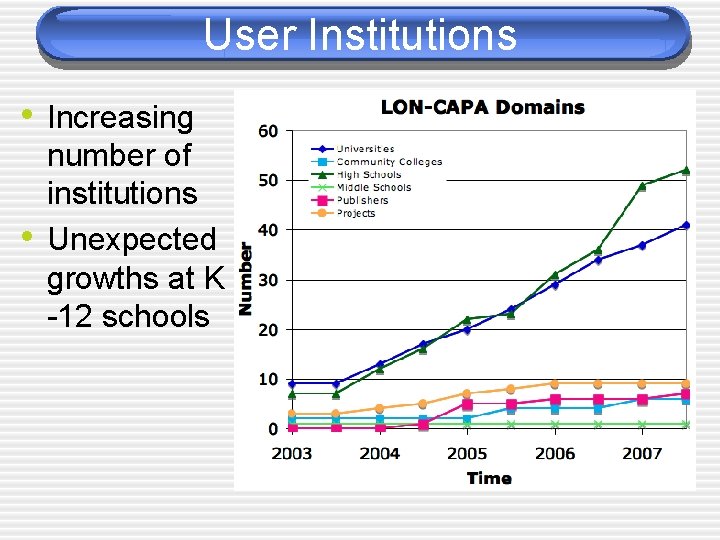
User Institutions • Increasing • number of institutions Unexpected growths at K -12 schools
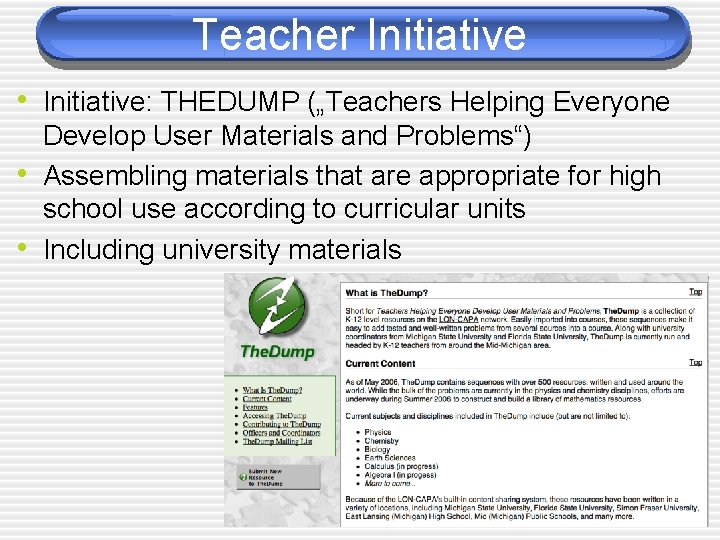
Teacher Initiative • Initiative: THEDUMP („Teachers Helping Everyone • • Develop User Materials and Problems“) Assembling materials that are appropriate for high school use according to curricular units Including university materials
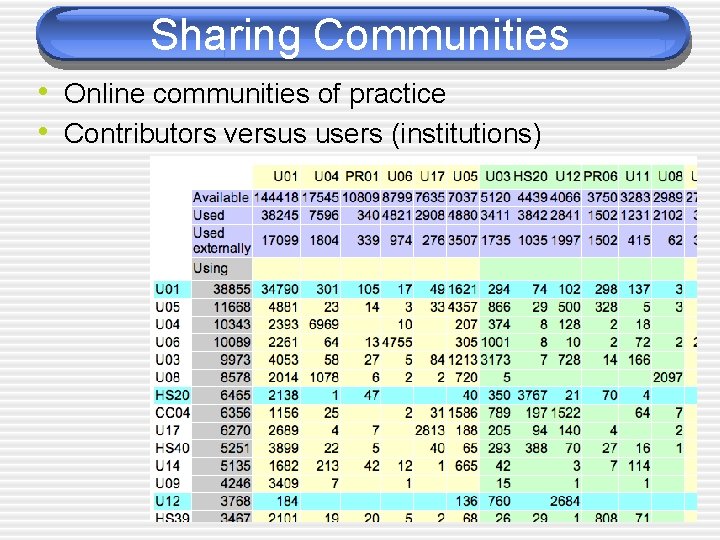
Sharing Communities • Online communities of practice • Contributors versus users (institutions)
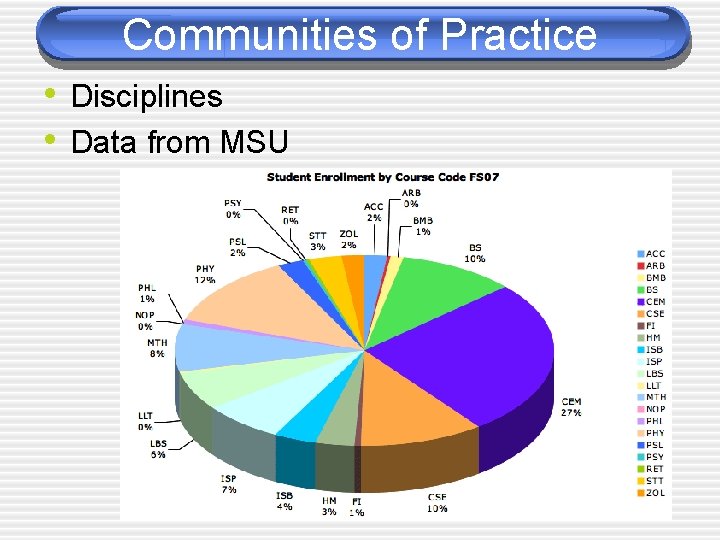
Communities of Practice • Disciplines • Data from MSU
Some OLD Results - Still True
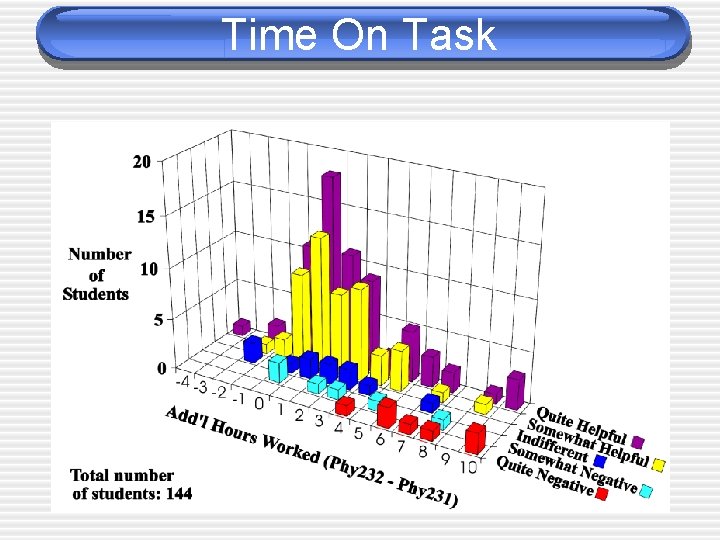
Time On Task
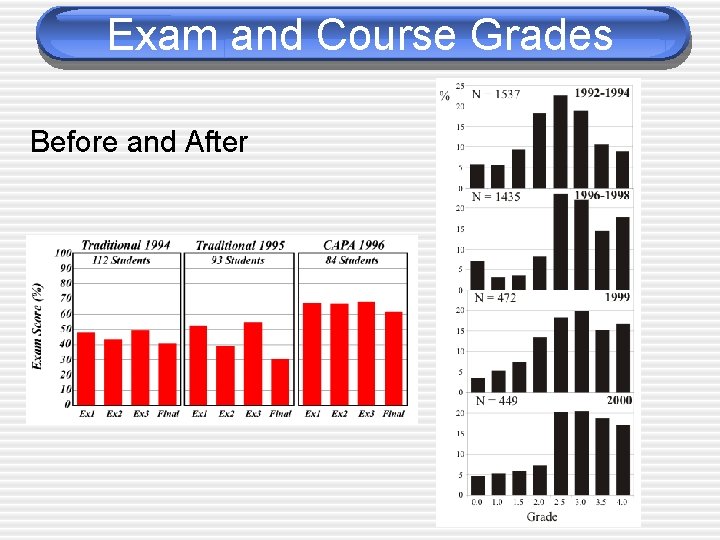
Exam and Course Grades Before and After
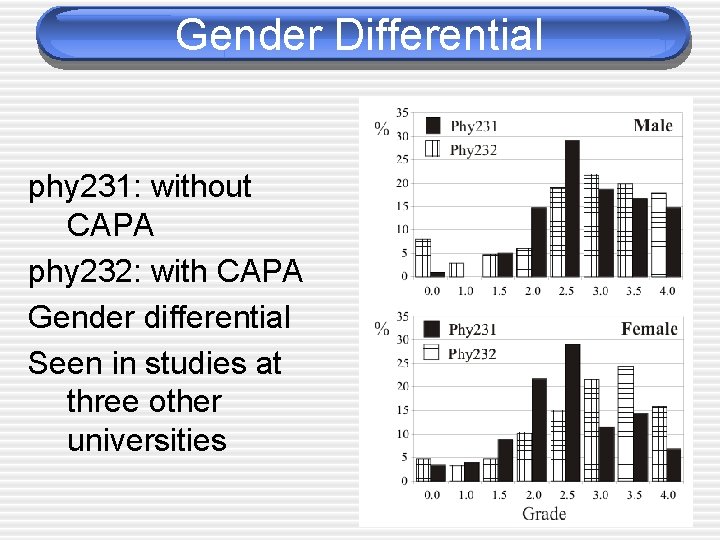
Gender Differential phy 231: without CAPA phy 232: with CAPA Gender differential Seen in studies at three other universities
Discussion Analysis
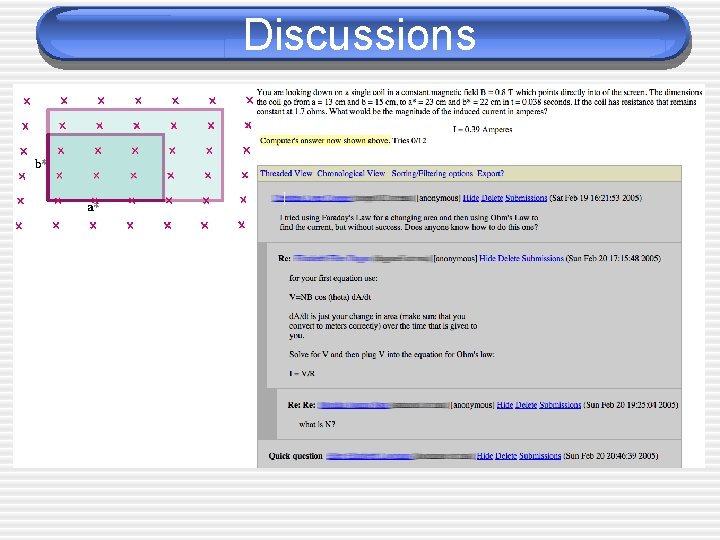
Discussions
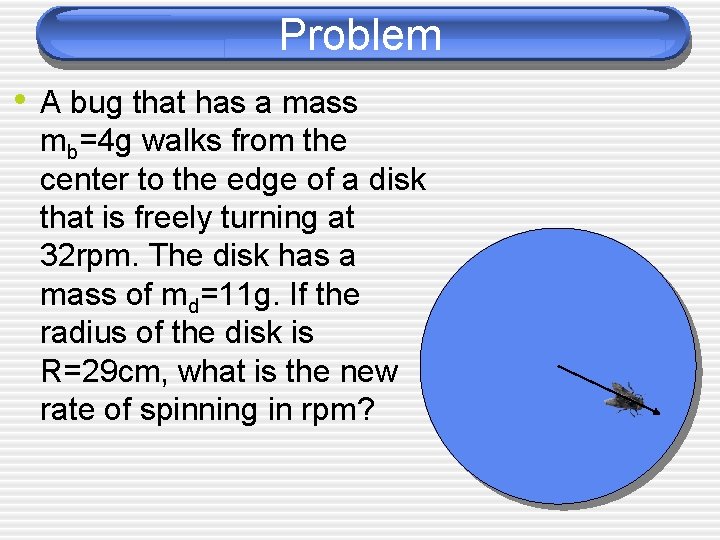
Problem • A bug that has a mass mb=4 g walks from the center to the edge of a disk that is freely turning at 32 rpm. The disk has a mass of md=11 g. If the radius of the disk is R=29 cm, what is the new rate of spinning in rpm?
Solution • No external torque, angular momentum is • conserved Bug is small compared to disk, can be seen as point mass
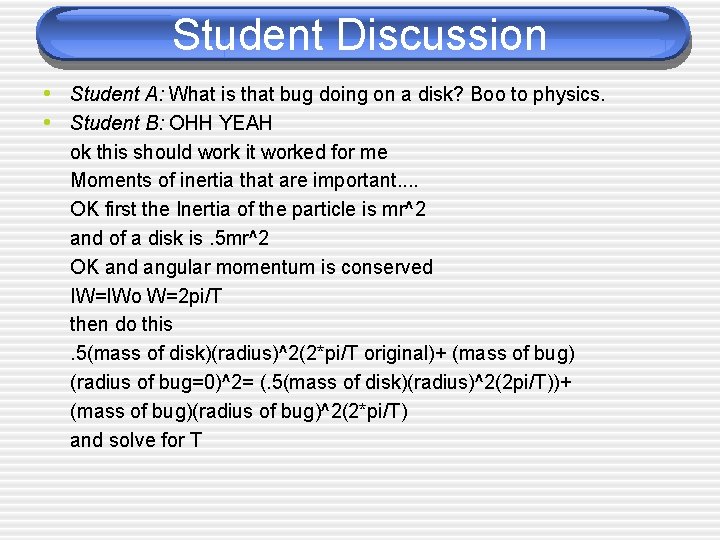
Student Discussion • Student A: What is that bug doing on a disk? Boo to physics. • Student B: OHH YEAH ok this should work it worked for me Moments of inertia that are important. . OK first the Inertia of the particle is mr^2 and of a disk is. 5 mr^2 OK and angular momentum is conserved IW=IWo W=2 pi/T then do this. 5(mass of disk)(radius)^2(2*pi/T original)+ (mass of bug) (radius of bug=0)^2= (. 5(mass of disk)(radius)^2(2 pi/T))+ (mass of bug)(radius of bug)^2(2*pi/T) and solve for T
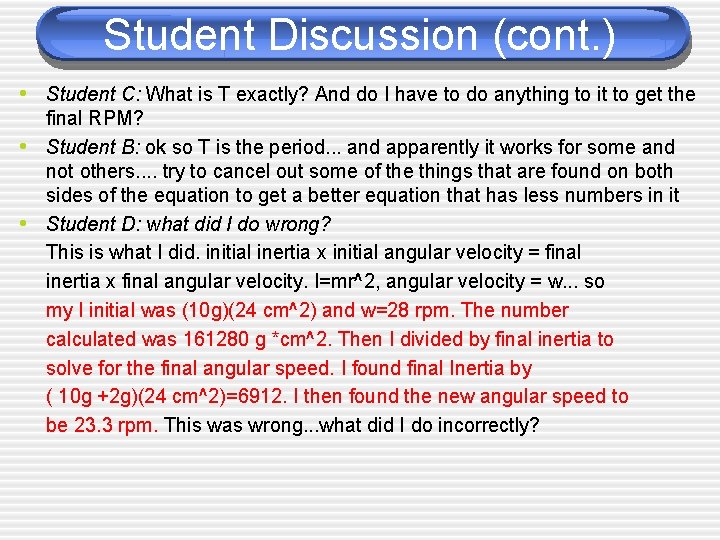
Student Discussion (cont. ) • Student C: What is T exactly? And do I have to do anything to it to get the • • final RPM? Student B: ok so T is the period. . . and apparently it works for some and not others. . try to cancel out some of the things that are found on both sides of the equation to get a better equation that has less numbers in it Student D: what did I do wrong? This is what I did. initial inertia x initial angular velocity = final inertia x final angular velocity. I=mr^2, angular velocity = w. . . so my I initial was (10 g)(24 cm^2) and w=28 rpm. The number calculated was 161280 g *cm^2. Then I divided by final inertia to solve for the final angular speed. I found final Inertia by ( 10 g +2 g)(24 cm^2)=6912. I then found the new angular speed to be 23. 3 rpm. This was wrong. . . what did I do incorrectly?
Student Discussion (cont. ) […] • Student H: : sigh: Wow. So, many, little things, can go wrong in calculating this. Be careful. […] • None of the students commented on § § § Bug being point mass Result being independent of radius No unit conversions needed Several wondered about the “radius of the bug” Plug in numbers asap Nobody just posted the symbolic answer • Lots of unnecessary pain
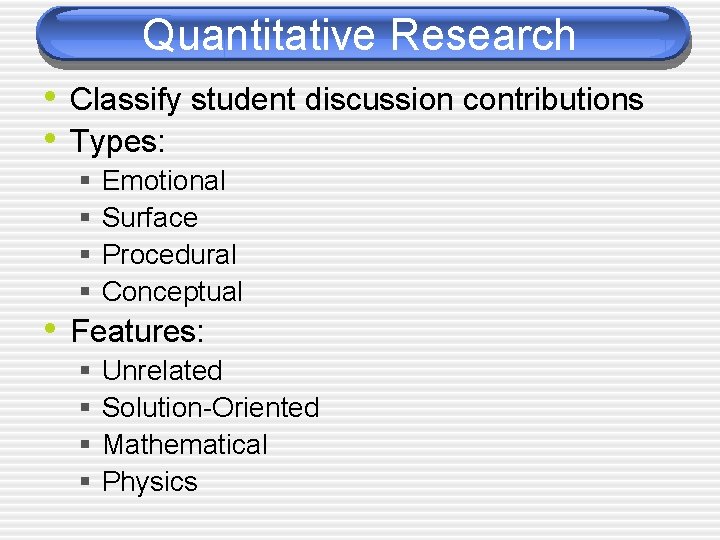
Quantitative Research • Classify student discussion contributions • Types: § § Emotional Surface Procedural Conceptual • Features: § § Unrelated Solution-Oriented Mathematical Physics
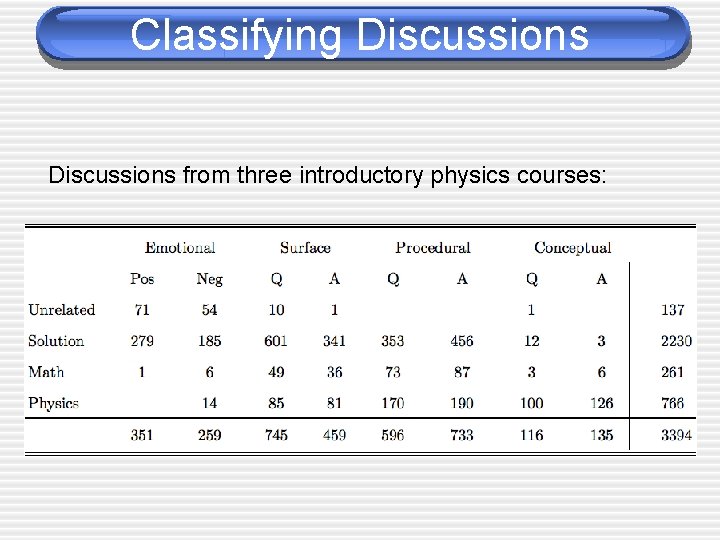
Classifying Discussions from three introductory physics courses:
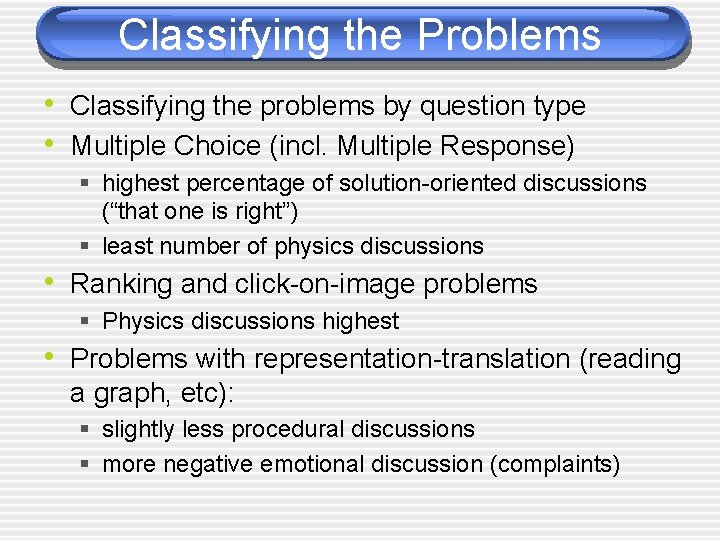
Classifying the Problems • Classifying the problems by question type • Multiple Choice (incl. Multiple Response) § highest percentage of solution-oriented discussions (“that one is right”) § least number of physics discussions • Ranking and click-on-image problems § Physics discussions highest • Problems with representation-translation (reading a graph, etc): § slightly less procedural discussions § more negative emotional discussion (complaints)
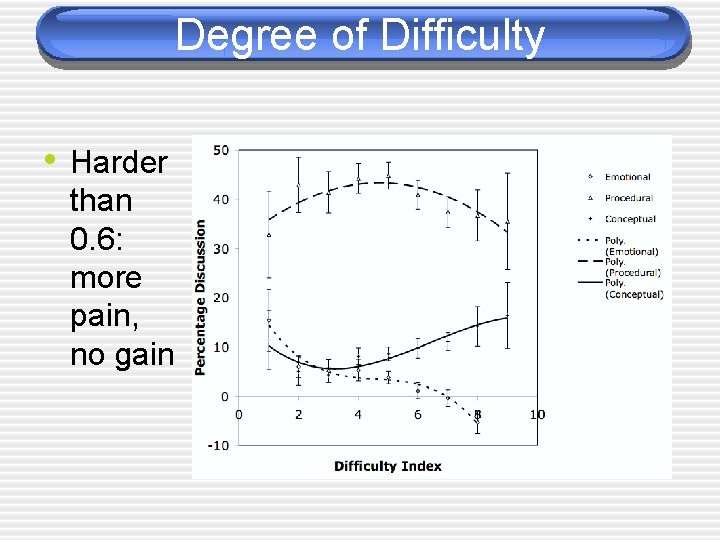
Degree of Difficulty • Harder than 0. 6: more pain, no gain
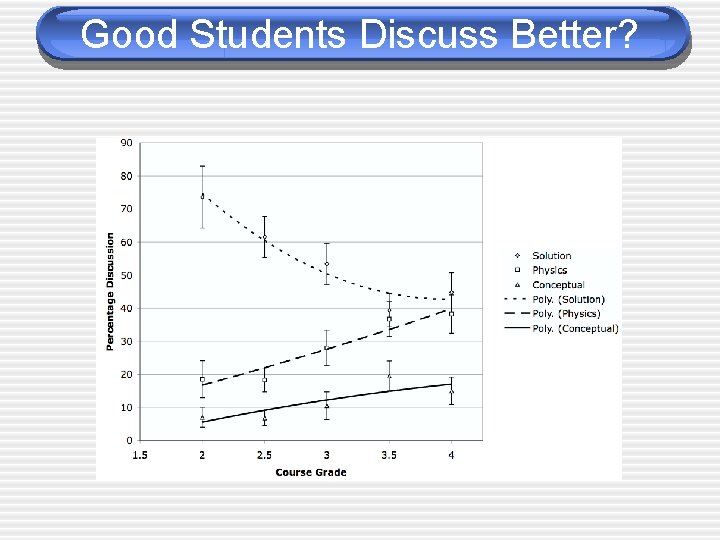
Good Students Discuss Better?
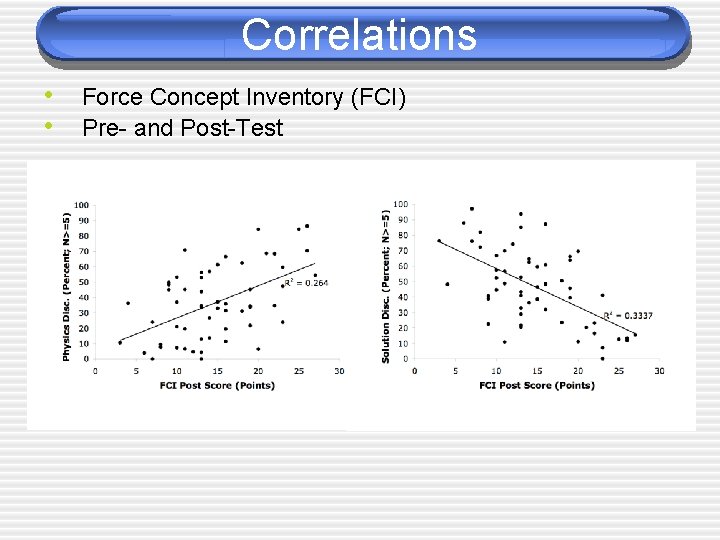
Correlations • Force Concept Inventory (FCI) • Pre- and Post-Test
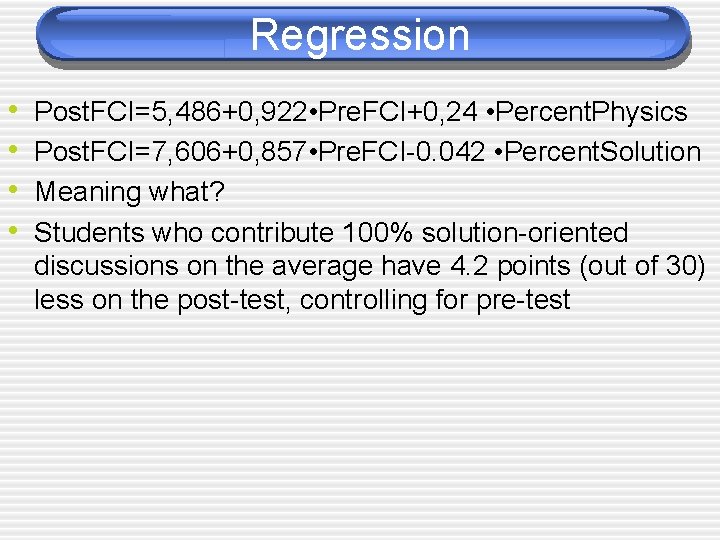
Regression • • Post. FCI=5, 486+0, 922 • Pre. FCI+0, 24 • Percent. Physics Post. FCI=7, 606+0, 857 • Pre. FCI-0. 042 • Percent. Solution Meaning what? Students who contribute 100% solution-oriented discussions on the average have 4. 2 points (out of 30) less on the post-test, controlling for pre-test
Sustainability
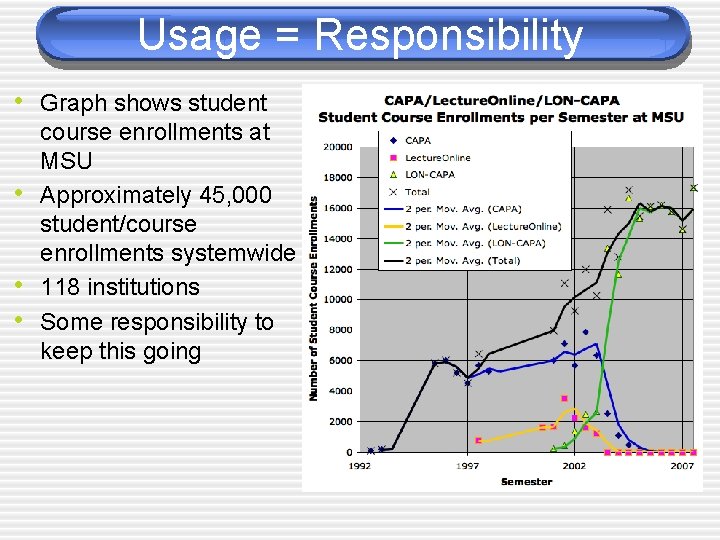
Usage = Responsibility • Graph shows student • • • course enrollments at MSU Approximately 45, 000 student/course enrollments systemwide 118 institutions Some responsibility to keep this going
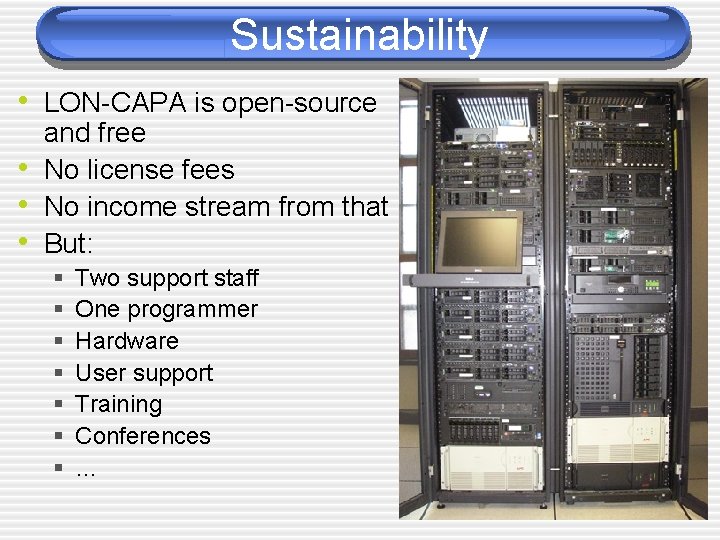
Sustainability • LON-CAPA is open-source • • • and free No license fees No income stream from that But: § § § § Two support staff One programmer Hardware User support Training Conferences …
Sustainability • Sustainability § Grant funding § Commercial Spin-Off § LON-CAPA Academic Consortium
Grant Funding • Over the last decade, LON-CAPA and its • • • predecessors attracted approx. $4 M in grants and sponsorships Not a reliable source of income Problem: you can get money for doing something new, never for the upkeep of something existing This is not really a sustainability concept
Spin-Off • edu. Cog, LLC • Founded 2005 • Hosting LON-CAPA for § 2 Universities § 32 Schools § 6 Publishing Companies
Academic Consortium • Founding members: Michigan • • State University and University of Illinois at Urbana-Champaign Associate Member: Simon Fraser University Total commitments of $2. 15 M over the next five years
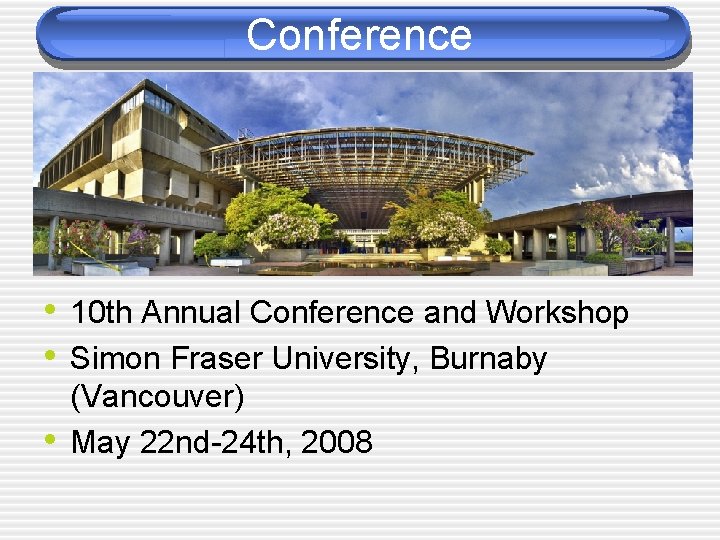
Conference • 10 th Annual Conference and Workshop • Simon Fraser University, Burnaby • (Vancouver) May 22 nd-24 th, 2008
Acknowledgements and Website • Support provided by § § § National Science Foundation Michigan State University The Alfred P. Sloan Foundation The Andrew W. Mellon Foundation Our partner universities Visit us at http: //www. lon-capa. org/