
Logistics Safety Assurance Slobodan Lazic Logistics HSE and
Logistics Safety Assurance Slobodan Lazic Logistics HSE and Road Safety Consultant
Topics - Objectives - Consequences - Challenges - Logistics Safety MS - KPIs - Safety Assurance (Levels, Model, Scope and Tool) - Group Discussion

Objective • Safe, secure and compliant logistics practices • Effective Safety Assurance Program o o o Prerequisites (Policies and Procedures) Roles and responsibilities Country driven, Industry driven , facility driven, operations driven KPIs Safety Assurance Tool
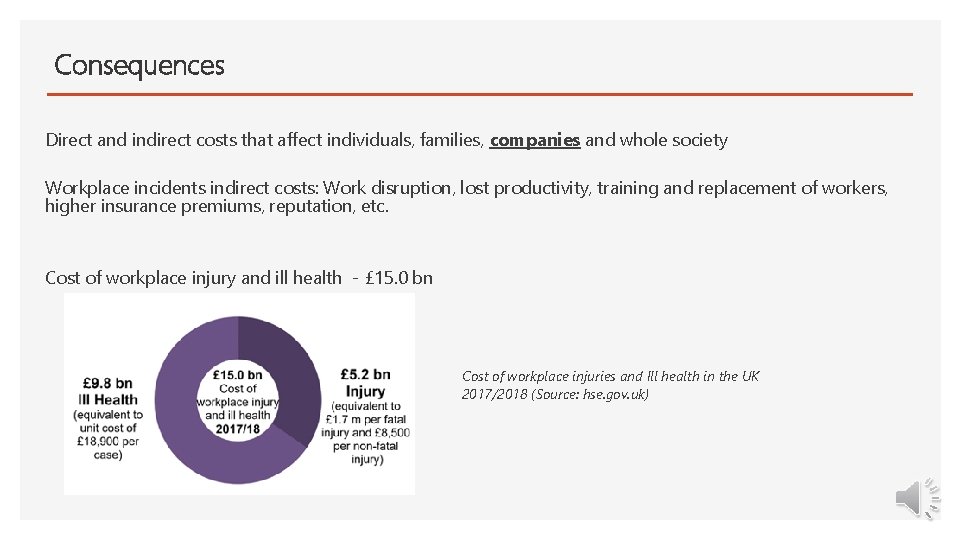
Consequences Direct and indirect costs that affect individuals, families, companies and whole society Workplace incidents indirect costs: Work disruption, lost productivity, training and replacement of workers, higher insurance premiums, reputation, etc. Cost of workplace injury and ill health - £ 15. 0 bn Cost of workplace injuries and Ill health in the UK 2017/2018 (Source: hse. gov. uk)

Challenges • Safety is still regarded as a compliance-driven task in many logistics environments (Safety Practice over Safety Culture) • Training and professional development may be seen as additional financial burden, rather than investment • Lack of driving personal accountability to all levels within the organization • Ineffective Safety Assurance programs (Confrontational over Learning environment)
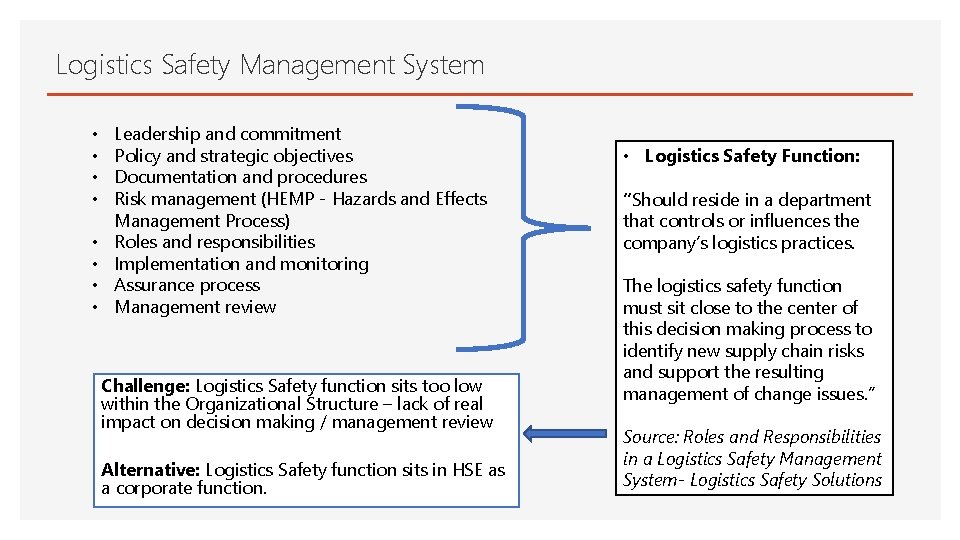
Logistics Safety Management System • • Leadership and commitment Policy and strategic objectives Documentation and procedures Risk management (HEMP - Hazards and Effects Management Process) Roles and responsibilities Implementation and monitoring Assurance process Management review Challenge: Logistics Safety function sits too low within the Organizational Structure – lack of real impact on decision making / management review Alternative: Logistics Safety function sits in HSE as a corporate function. • Logistics Safety Function: “Should reside in a department that controls or influences the company’s logistics practices. The logistics safety function must sit close to the center of this decision making process to identify new supply chain risks and support the resulting management of change issues. ” Source: Roles and Responsibilities in a Logistics Safety Management System- Logistics Safety Solutions
Key Performance Indicators (KPIs) Main objectives of KPIs: • • • Prevent incidents Improve reliability of the transport and logistics operations - direct impact on financial performance Communicate performance through definition of measurable parameters Provision for benchmarking and comparison Ensure consistent and standardised reporting across the industry Incidents: - Definitions and Scope (Work related vs non-Work Related / Recordable vs Reportable) - Severity categories (Minor, Major, Catastrophic, Fatal/ Lost time / Medical treatment, etc. )
Lagging KPIs– road transport model (performance – output) (A) Risk Exposure: Number of Light Vehicles (LV) Light Vehicle Kilometres Driven (LVKM) Number of Heavy Vehicles (HV) Heavy Vehicles Kilometres Driven (HVKM) Total Number of Vehicles (NV) = LV + HV Total Number of Kilometres Driven (E) = LVKM + HVKM (B) Incidents Frequency Rate (e. g. Recordable incidents per million KM driven) (C) Drivers Behaviour / Driving Performance (Observation / IVMS) (D) Other Operational KPIs Driver turnover Hours of driving Number of trips Fuel consumption (litres) per kilometre Freight turnover (ton-kilometres) Number of passengers transported Passenger – kilometres
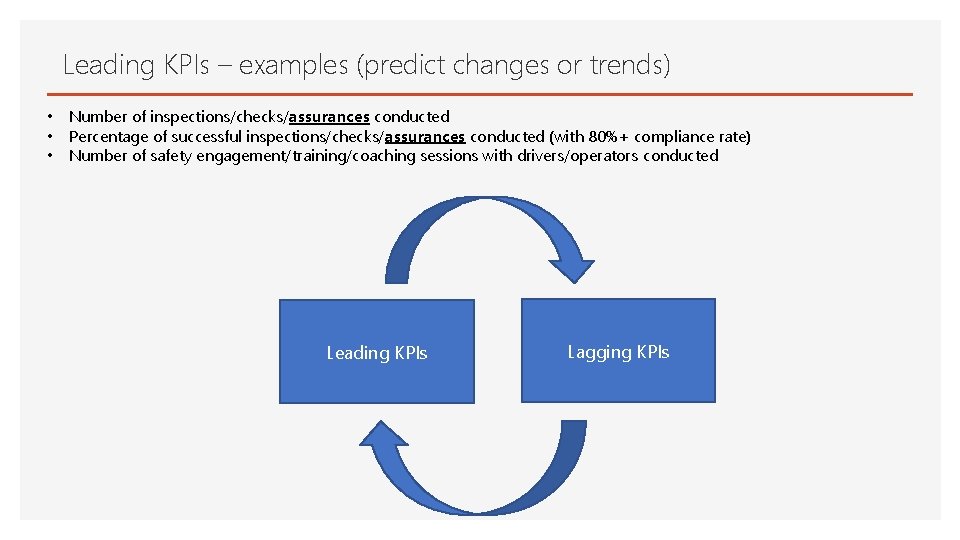
Leading KPIs – examples (predict changes or trends) • • • Number of inspections/checks/assurances conducted Percentage of successful inspections/checks/assurances conducted (with 80%+ compliance rate) Number of safety engagement/training/coaching sessions with drivers/operators conducted Leading KPIs Lagging KPIs
Safety Assurance Levels • Level 1: Audit or review activities where the HSE Board have no discretion, as they are required for external reasons • Level 2: Audit or review activities where the HSE Board have discretion to decide whether or not to do an audit, depending on its assurance needs (cross-functional organizations) • Level 3: Self assurance activities managed by asset / project / department / functions, with a system or process focus (Logistics / Road Safety). • Level 4: Self assurance activities, managed by asset / project / department / functions, to identify specific non-compliances with work instructions, procedures and controls, (one or two safety elements in scope e. g. Vehicle / Equipment or Drivers Management System) • Generally referred to as inspections, health checks, reviews, and verifications
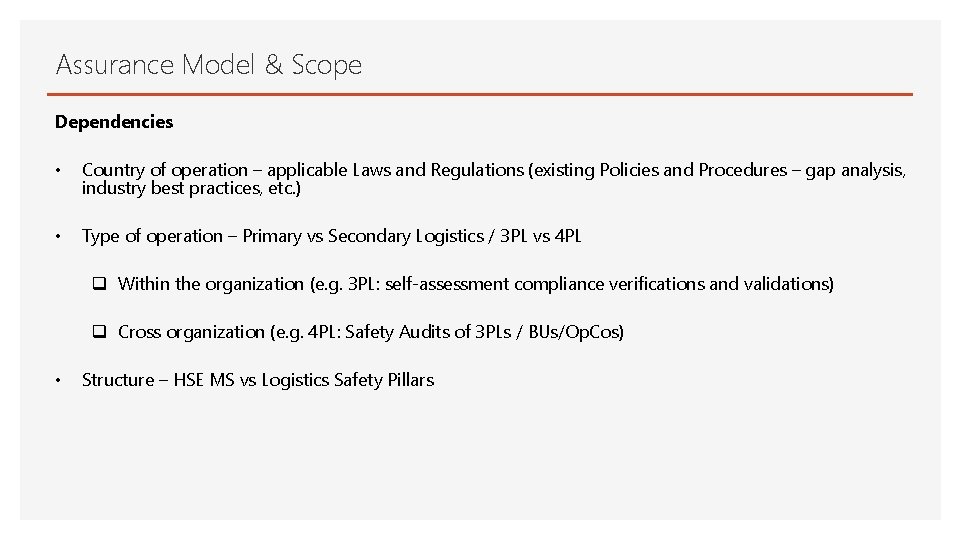
Assurance Model & Scope Dependencies • Country of operation – applicable Laws and Regulations (existing Policies and Procedures – gap analysis, industry best practices, etc. ) • Type of operation – Primary vs Secondary Logistics / 3 PL vs 4 PL q Within the organization (e. g. 3 PL: self-assessment compliance verifications and validations) q Cross organization (e. g. 4 PL: Safety Audits of 3 PLs / BUs/Op. Cos) • Structure – HSE MS vs Logistics Safety Pillars
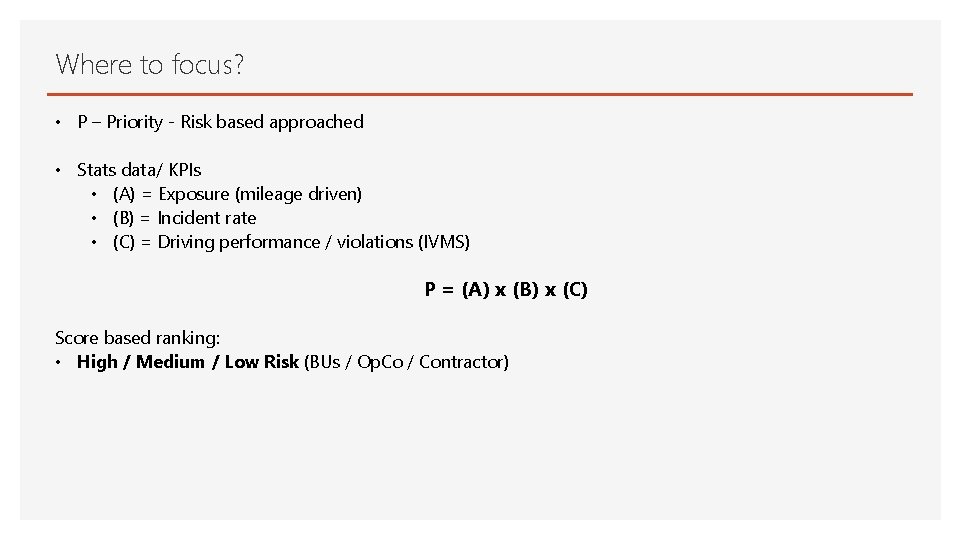
Where to focus? • P – Priority - Risk based approached • Stats data/ KPIs • (A) = Exposure (mileage driven) • (B) = Incident rate • (C) = Driving performance / violations (IVMS) P = (A) x (B) x (C) Score based ranking: • High / Medium / Low Risk (BUs / Op. Co / Contractor)
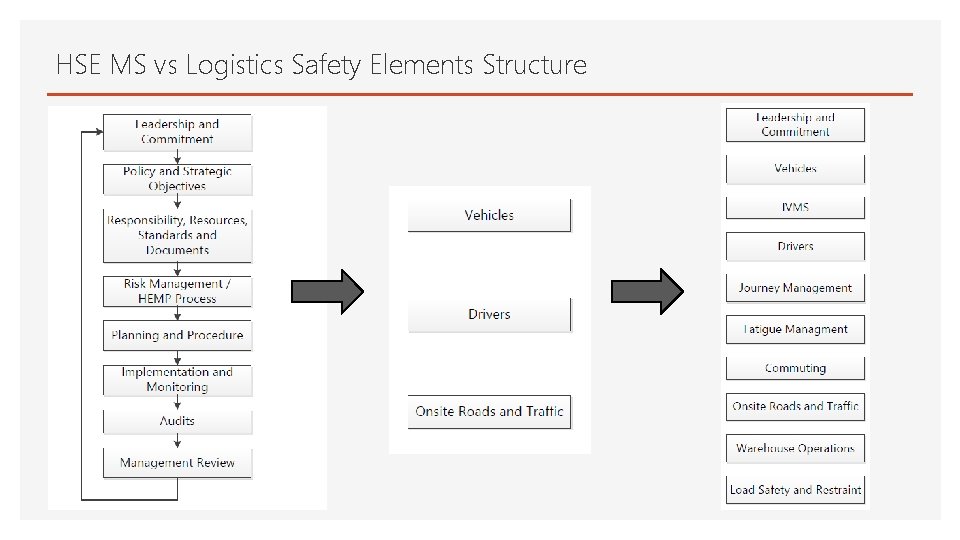
HSE MS vs Logistics Safety Elements Structure
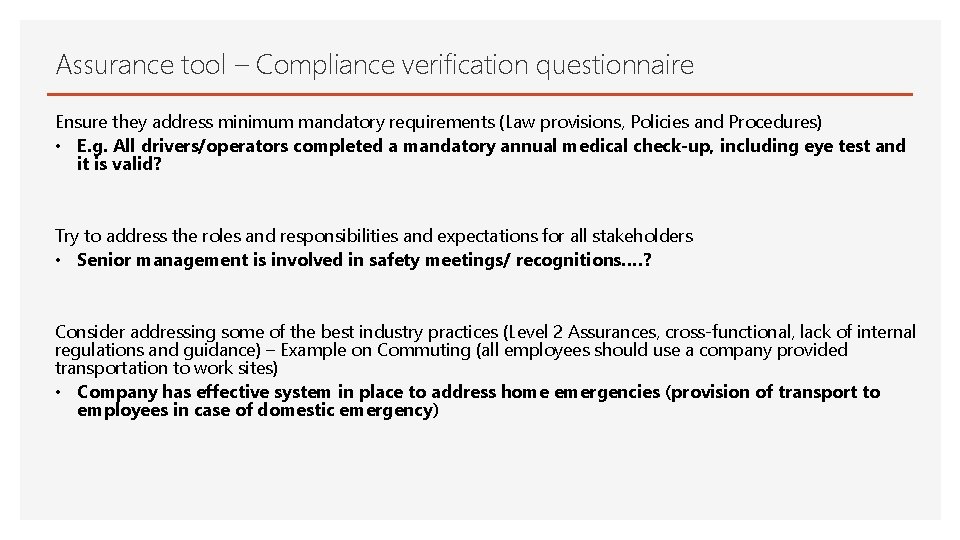
Assurance tool – Compliance verification questionnaire Ensure they address minimum mandatory requirements (Law provisions, Policies and Procedures) • E. g. All drivers/operators completed a mandatory annual medical check-up, including eye test and it is valid? Try to address the roles and responsibilities and expectations for all stakeholders • Senior management is involved in safety meetings/ recognitions…. ? Consider addressing some of the best industry practices (Level 2 Assurances, cross-functional, lack of internal regulations and guidance) – Example on Commuting (all employees should use a company provided transportation to work sites) • Company has effective system in place to address home emergencies (provision of transport to employees in case of domestic emergency)
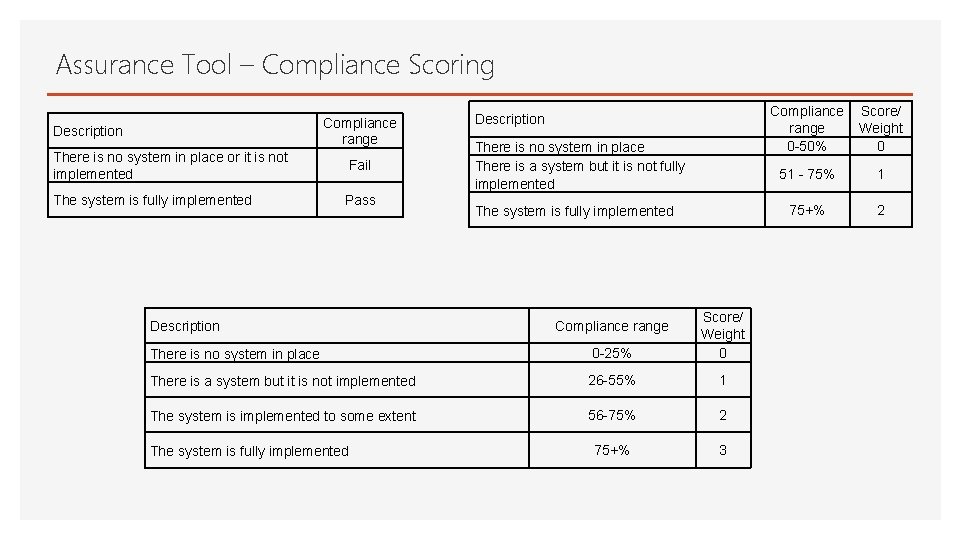
Assurance Tool – Compliance Scoring Compliance range Description There is no system in place or it is not implemented The system is fully implemented Fail Pass Description There is no system in place There is a system but it is not fully implemented The system is fully implemented There is no system in place 0 -25% Score/ Weight 0 There is a system but it is not implemented 26 -55% 1 The system is implemented to some extent 56 -75% 2 75+% 3 Description The system is fully implemented Compliance range 0 -50% Score/ Weight 0 51 - 75% 1 75+% 2
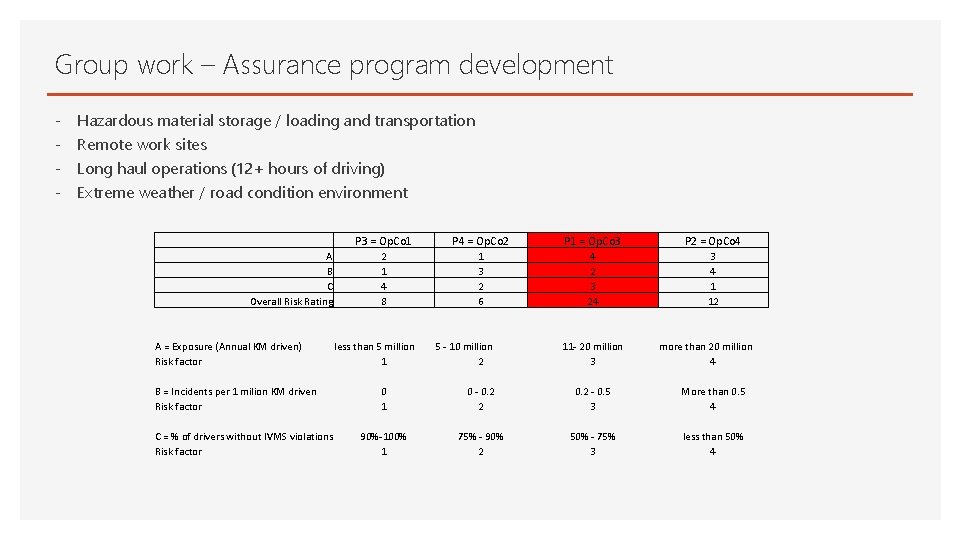
Group work – Assurance program development - Hazardous material storage / loading and transportation Remote work sites Long haul operations (12+ hours of driving) Extreme weather / road condition environment A B C Overall Risk Rating A = Exposure (Annual KM driven) Risk factor B = Incidents per 1 milion KM driven Risk factor C = % of drivers without IVMS violations Risk factor P 3 = Op. Co 1 P 4 = Op. Co 2 P 1 = Op. Co 3 P 2 = Op. Co 4 2 1 4 8 1 3 2 6 4 2 3 24 3 4 1 12 less than 5 million 1 5 - 10 million 2 11 - 20 million 3 more than 20 million 4 0 1 0 - 0. 2 2 0. 2 - 0. 5 3 More than 0. 5 4 90%-100% 1 75% - 90% 2 50% - 75% 3 less than 50% 4
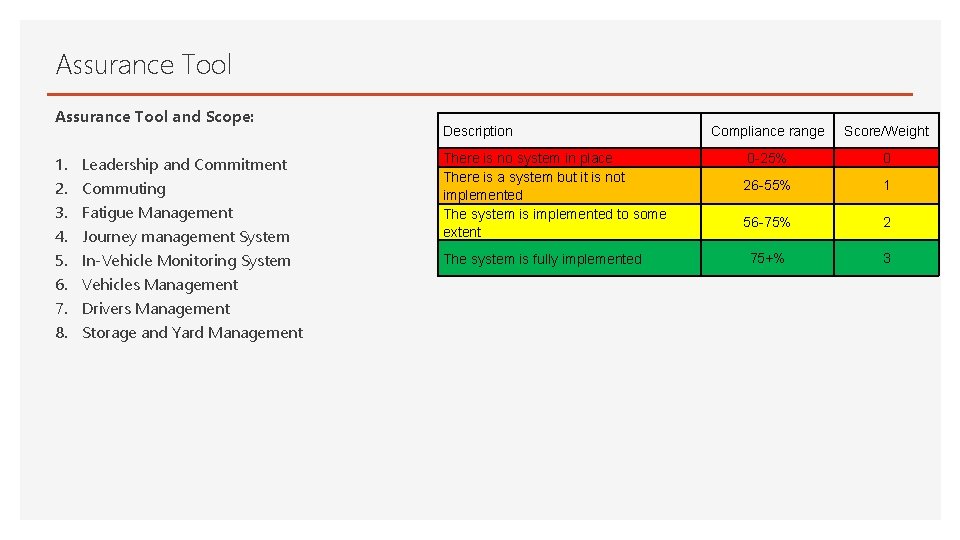
Assurance Tool and Scope: 1. 2. 3. 4. 5. 6. 7. 8. Leadership and Commitment Commuting Fatigue Management Journey management System In-Vehicle Monitoring System Vehicles Management Drivers Management Storage and Yard Management Description There is no system in place There is a system but it is not implemented The system is implemented to some extent The system is fully implemented Compliance range Score/Weight 0 -25% 0 26 -55% 1 56 -75% 2 75+% 3
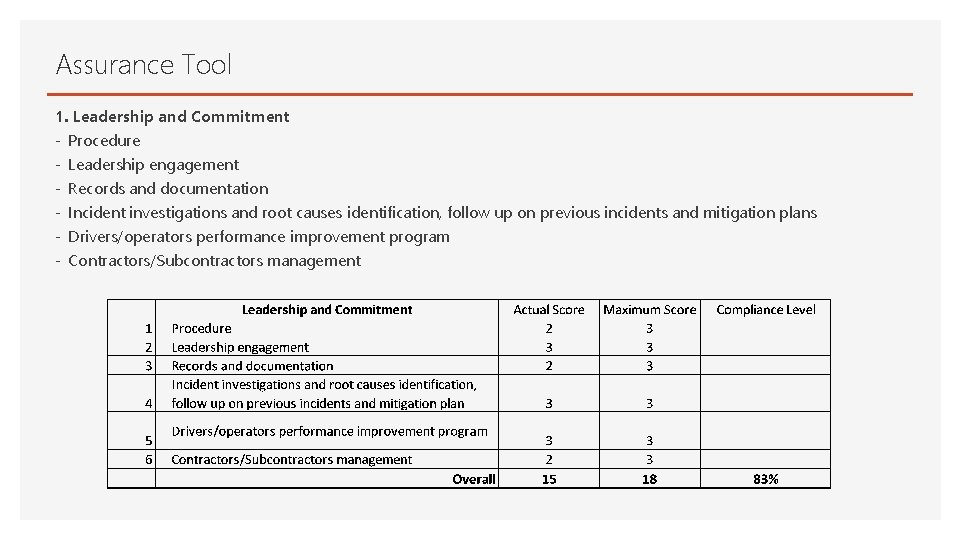
Assurance Tool 1. Leadership and Commitment - Procedure - Leadership engagement - Records and documentation - Incident investigations and root causes identification, follow up on previous incidents and mitigation plans - Drivers/operators performance improvement program - Contractors/Subcontractors management
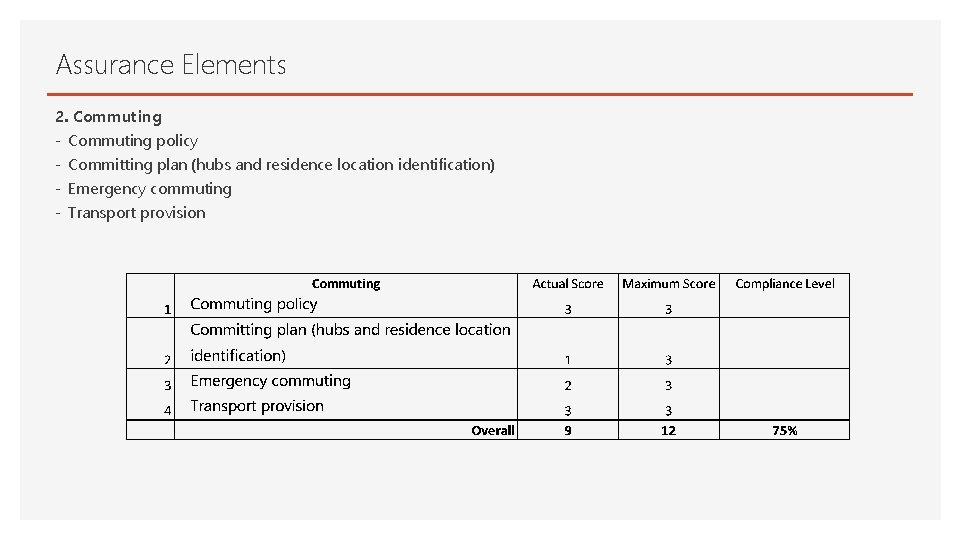
Assurance Elements 2. Commuting - Commuting policy - Committing plan (hubs and residence location identification) - Emergency commuting - Transport provision
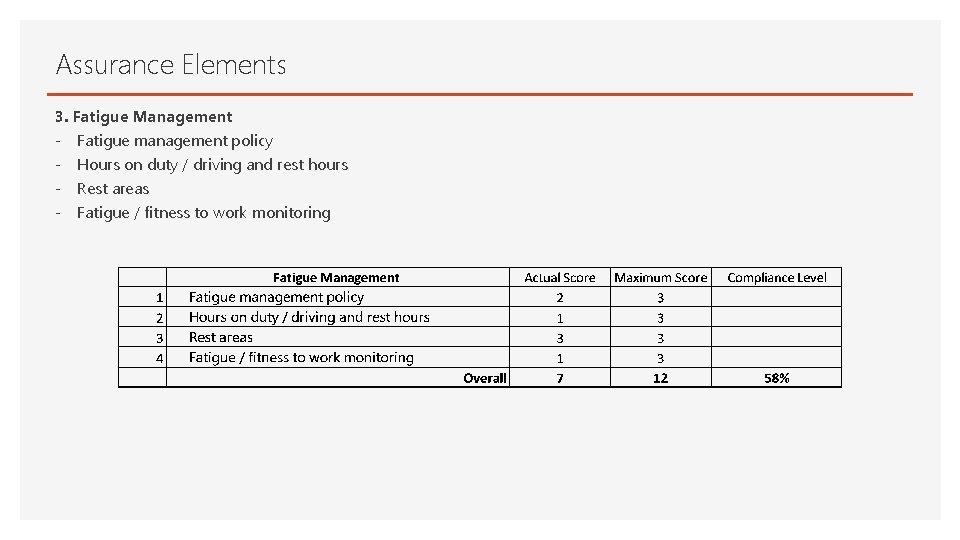
Assurance Elements 3. Fatigue Management - Fatigue management policy - Hours on duty / driving and rest hours - Rest areas - Fatigue / fitness to work monitoring
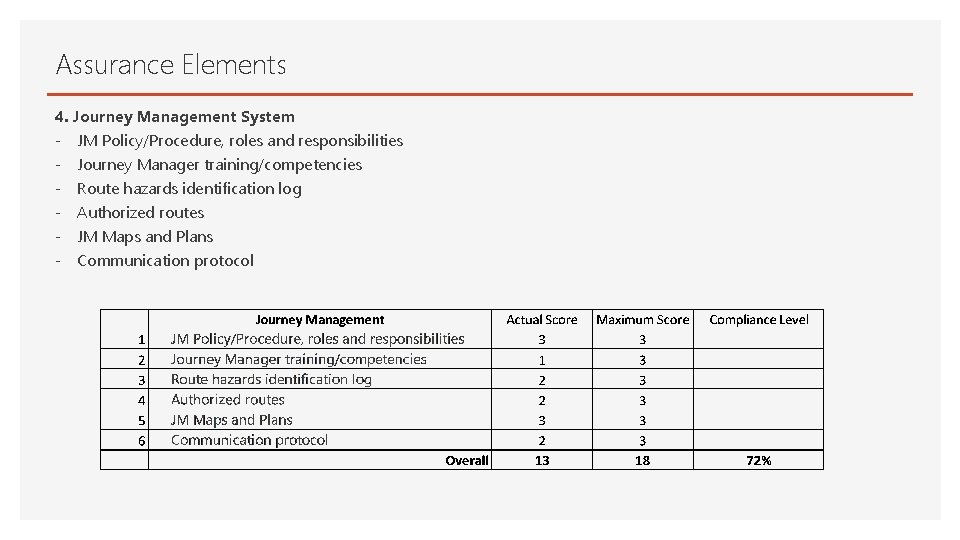
Assurance Elements 4. Journey Management System - JM Policy/Procedure, roles and responsibilities - Journey Manager training/competencies - Route hazards identification log - Authorized routes - JM Maps and Plans - Communication protocol
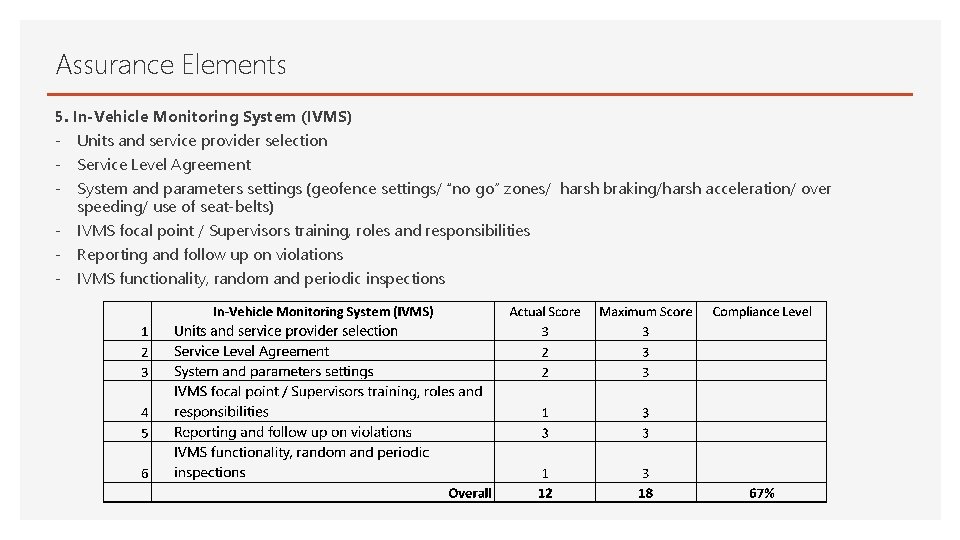
Assurance Elements 5. In-Vehicle Monitoring System (IVMS) - Units and service provider selection - Service Level Agreement - System and parameters settings (geofence settings/ “no go” zones/ harsh braking/harsh acceleration/ over speeding/ use of seat-belts) - IVMS focal point / Supervisors training, roles and responsibilities - Reporting and follow up on violations - IVMS functionality, random and periodic inspections
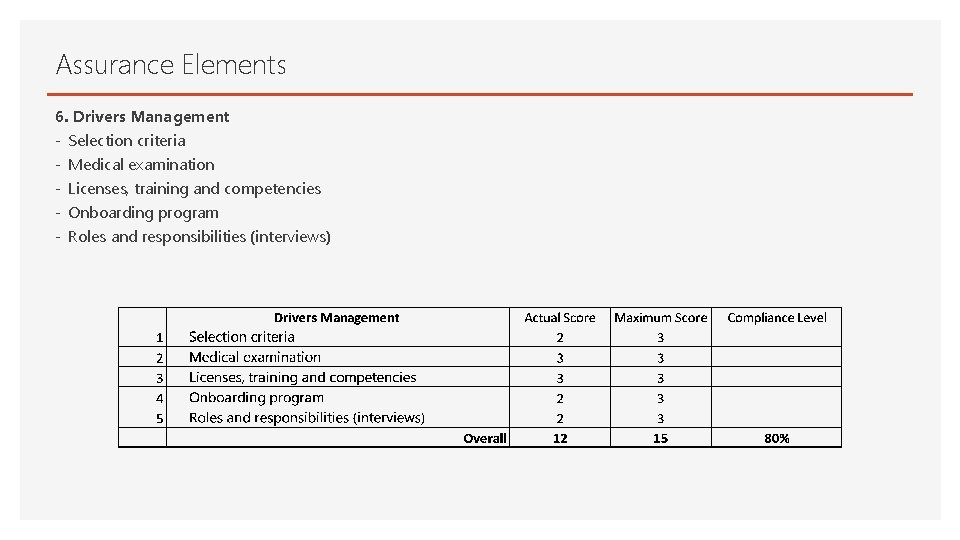
Assurance Elements 6. Drivers Management - Selection criteria - Medical examination - Licenses, training and competencies - Onboarding program - Roles and responsibilities (interviews)
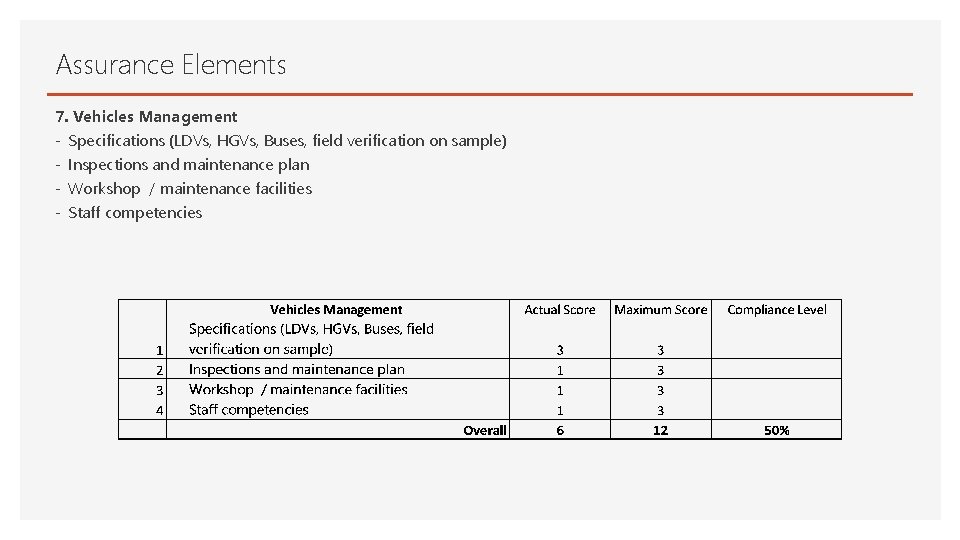
Assurance Elements 7. Vehicles Management - Specifications (LDVs, HGVs, Buses, field verification on sample) - Inspections and maintenance plan - Workshop / maintenance facilities - Staff competencies
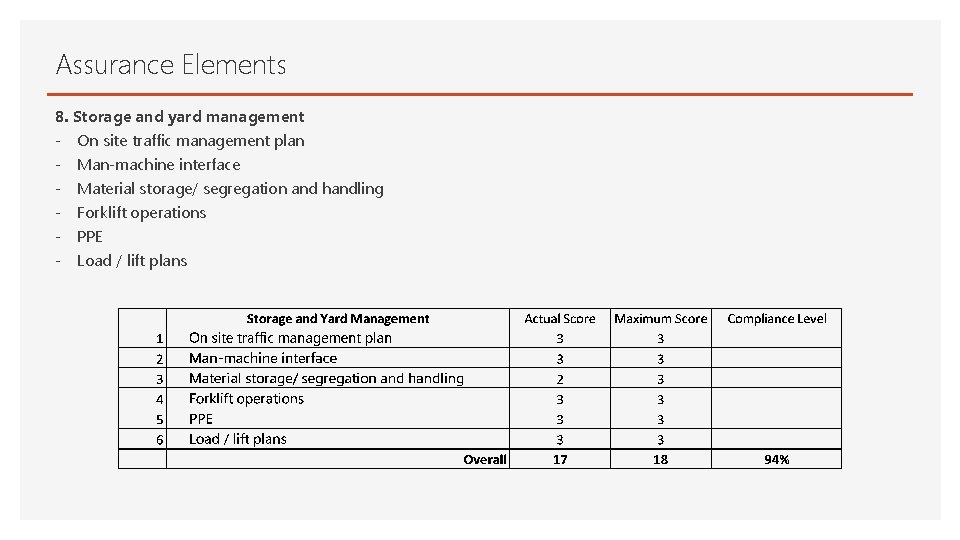
Assurance Elements 8. Storage and yard management - On site traffic management plan - Man-machine interface - Material storage/ segregation and handling - Forklift operations - PPE - Load / lift plans
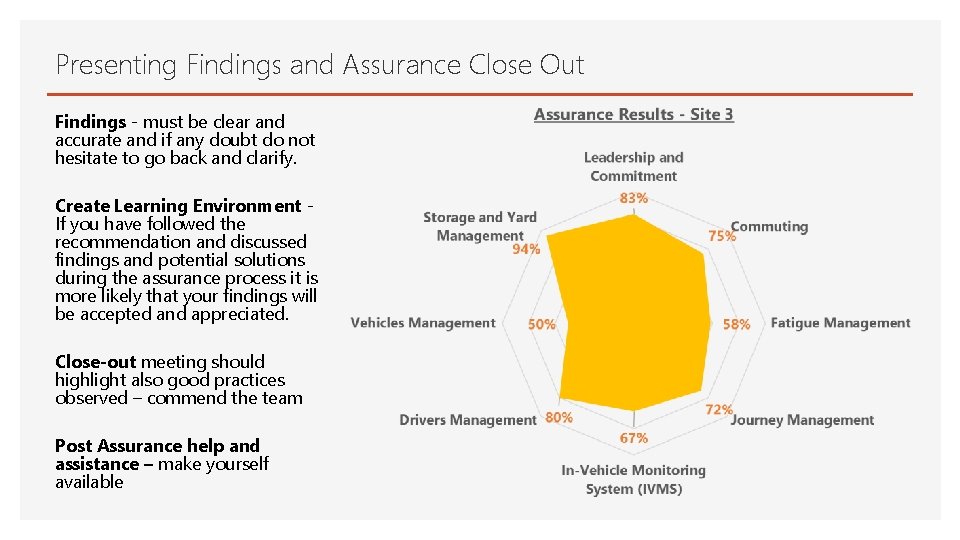
Presenting Findings and Assurance Close Out Findings - must be clear and accurate and if any doubt do not hesitate to go back and clarify. Create Learning Environment If you have followed the recommendation and discussed findings and potential solutions during the assurance process it is more likely that your findings will be accepted and appreciated. Close-out meeting should highlight also good practices observed – commend the team Post Assurance help and assistance – make yourself available
Questions? Slobodan Lazic Email: dan. lazic@gmail. com
- Slides: 27