
Logic Models for Early Childhood Education Research Evaluation


- Slides: 16
Logic Models for Early Childhood Education Research & Evaluation Division Strategic Planning and Implementation Kameha Schools Nolan Malone & Summer Keli‘ipio 12 April 2007
Icebreaker Use one word or phrase to express how you feel about logic models
Today’s Schedule • Logic Models 101 – – Definitions and purposes Uses (and abuses) Types Content • Large Group Activity • Small Group Activity • Questions
Logic Models 101: Definitions • Official definitions (Kellogg Foundation): – A picture of how your program works • Links outcomes with activities – Facilitates planning, implementation, and evaluation
Logic Models 101: Purposes • Why create a logic model? – To visually describe the sequence of change you hope to see in participants – To learn continually about and improve your program – To facilitate sharing what works in your program and why • Bottom line: What do you do, and what are the consequences?
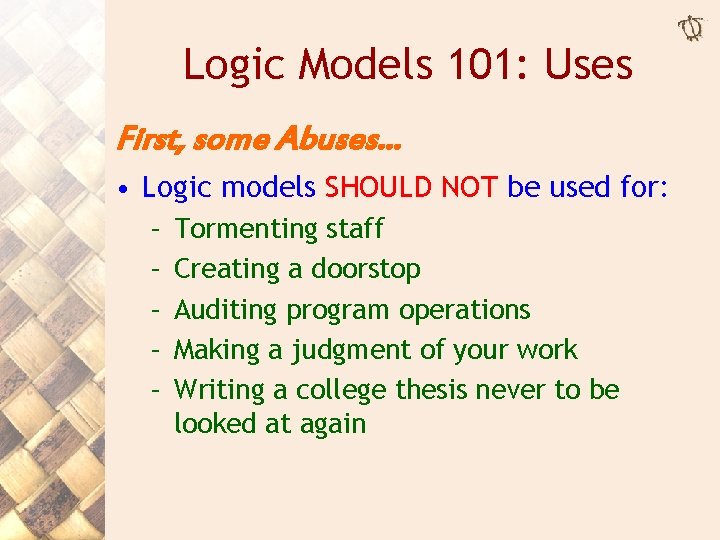
Logic Models 101: Uses First, some Abuses… • Logic models SHOULD NOT be used for: – – – Tormenting staff Creating a doorstop Auditing program operations Making a judgment of your work Writing a college thesis never to be looked at again
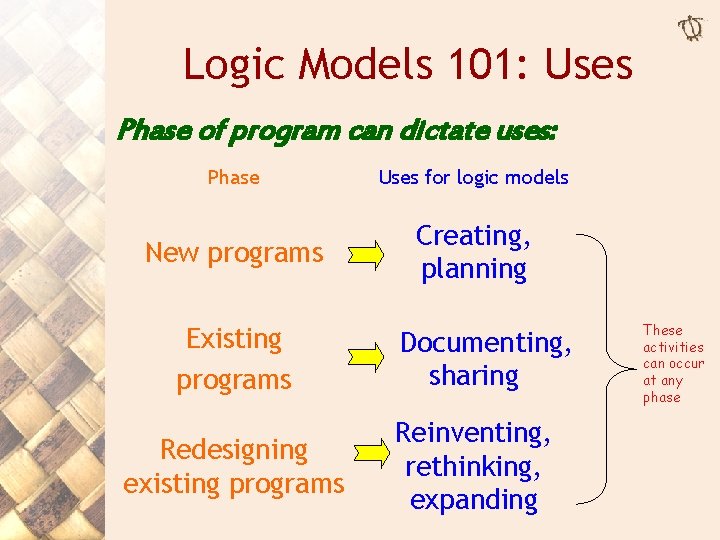
Logic Models 101: Uses Phase of program can dictate uses: Phase Uses for logic models New programs Creating, planning Existing programs Redesigning existing programs Documenting, sharing Reinventing, rethinking, expanding These activities can occur at any phase
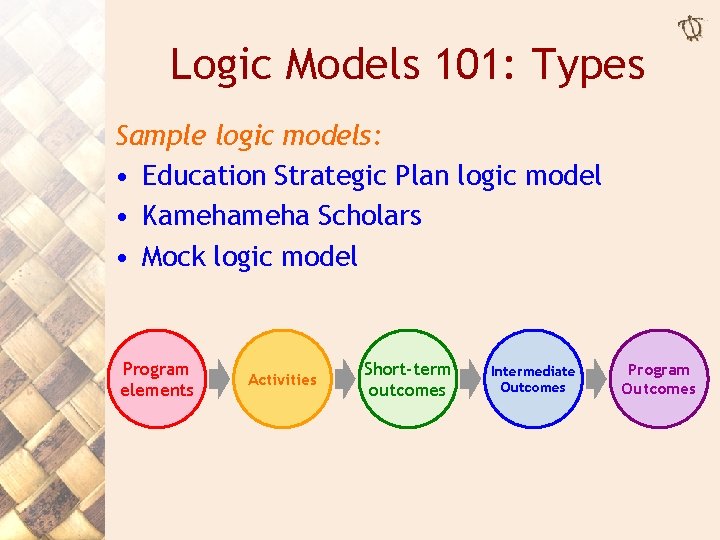
Logic Models 101: Types Generally, logic models are flow charts – They may look different – They may contain different information – At minimum they include activities and outcomes
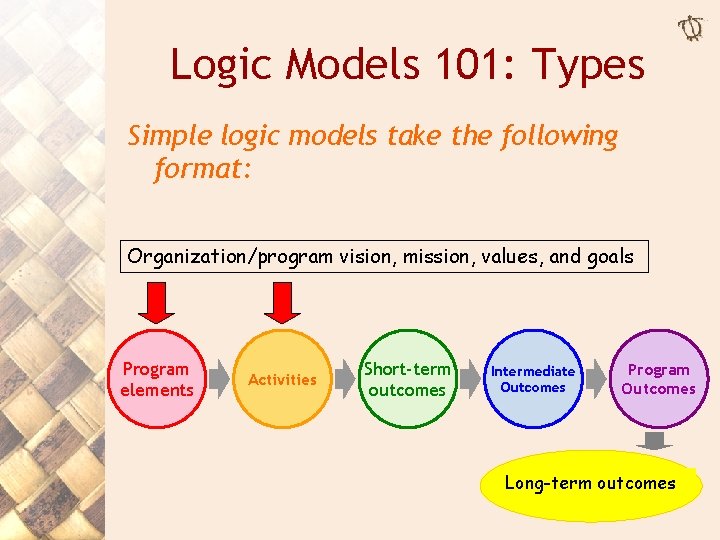
Logic Models 101: Types Simple logic models take the following format: Organization/program vision, mission, values, and goals Program elements Activities Short-term outcomes Intermediate Outcomes Program Outcomes Long-term outcomes
Logic Models 101: Types Sample logic models: • Education Strategic Plan logic model • Kameha Scholars • Mock logic model Program elements Activities Short-term outcomes Intermediate Outcomes Program Outcomes
Today’s Schedule • Logic Models 101 – Definitions and purposes – Uses (and abuses) – Types • Group Activity II • Questions
Group Activity I Now that you know the basic elements, let’s try one strand. Name some CBECE program elements:
Today’s Schedule • Logic Models 101 – Definitions and purposes – Uses (and abuses) – Types • Group Activity II • Questions
Group Activity II With colleagues from your program, take one of the other CBECE elements and expand. Instructions: Use the post-its provided on your table to write an activity and short, intermediate, and program outcomes for the element you chose. Bring your post-its up to the front to place on the poster board.
Wrap Up Now… use one word or phrase to express how you feel about logic models
Mahalo a nui loa Nolan Malone 534 -3849 nomalone@ksbe. edu Additional questions? Summer Keli‘ipio 534 -3964 sukeliip@ksbe. edu Wendy Kekahio 523 -6373 wekekahi@ksbe. edu