
Loggerhead Turtle Melissa Bart Habitat Hatchlings live in
Loggerhead Turtle Melissa Bart
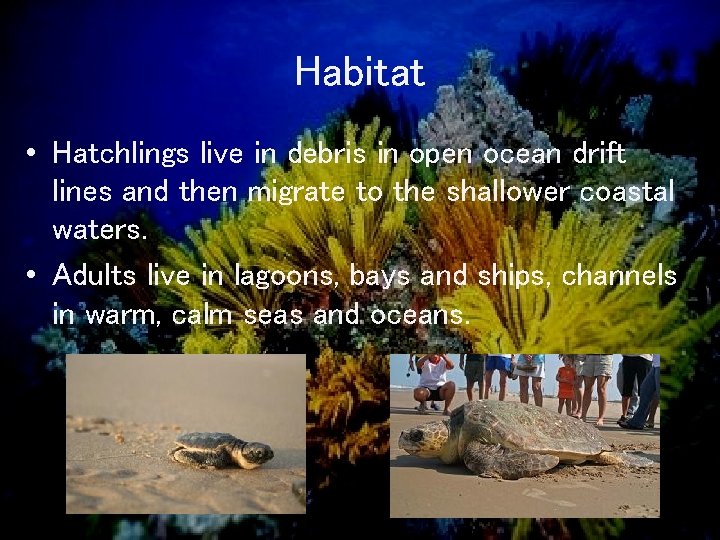
Habitat • Hatchlings live in debris in open ocean drift lines and then migrate to the shallower coastal waters. • Adults live in lagoons, bays and ships, channels in warm, calm seas and oceans.
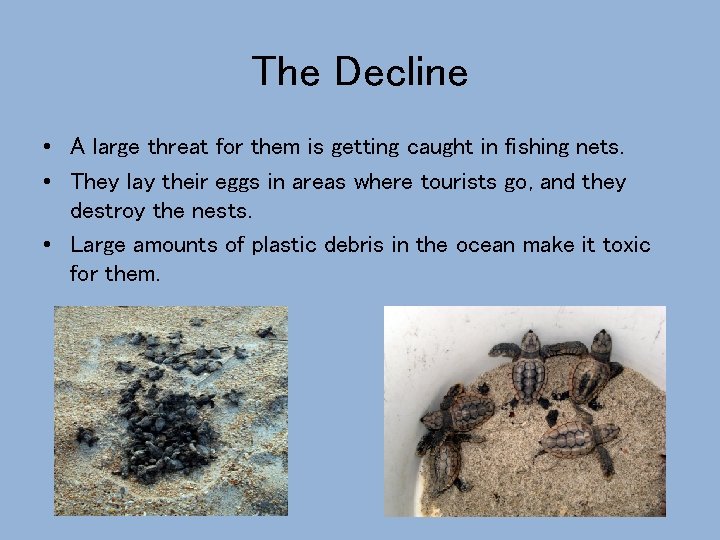
The Decline • A large threat for them is getting caught in fishing nets. • They lay their eggs in areas where tourists go, and they destroy the nests. • Large amounts of plastic debris in the ocean make it toxic for them.
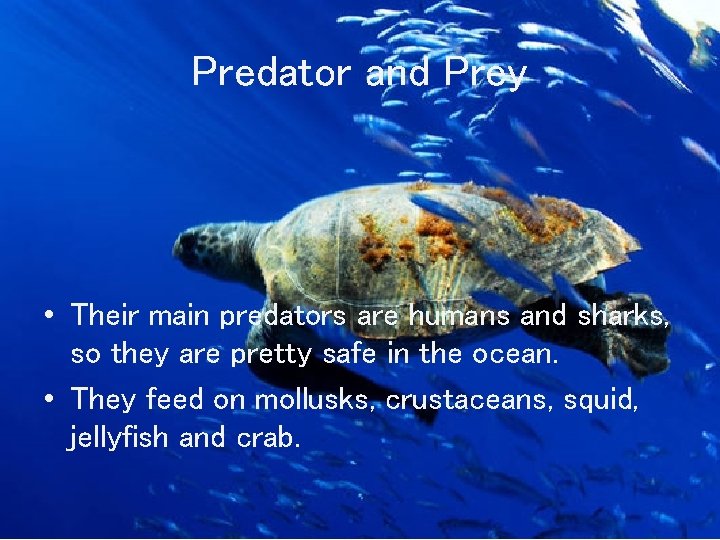
Predator and Prey • Their main predators are humans and sharks, so they are pretty safe in the ocean. • They feed on mollusks, crustaceans, squid, jellyfish and crab.
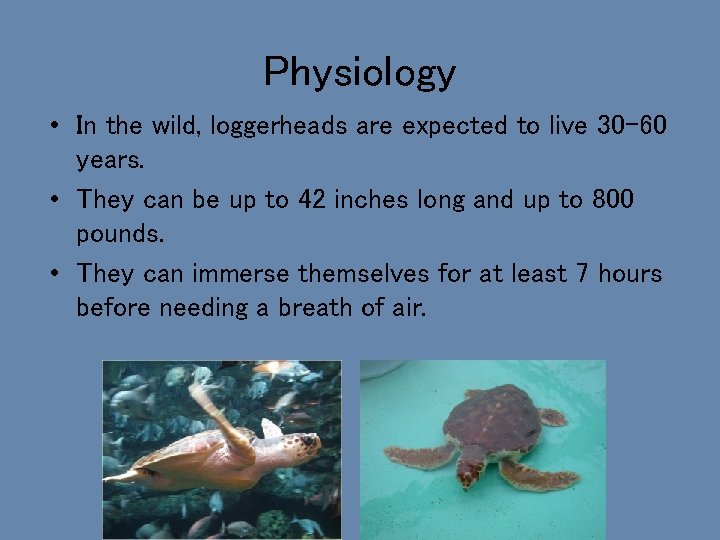
Physiology • In the wild, loggerheads are expected to live 30 -60 years. • They can be up to 42 inches long and up to 800 pounds. • They can immerse themselves for at least 7 hours before needing a breath of air.
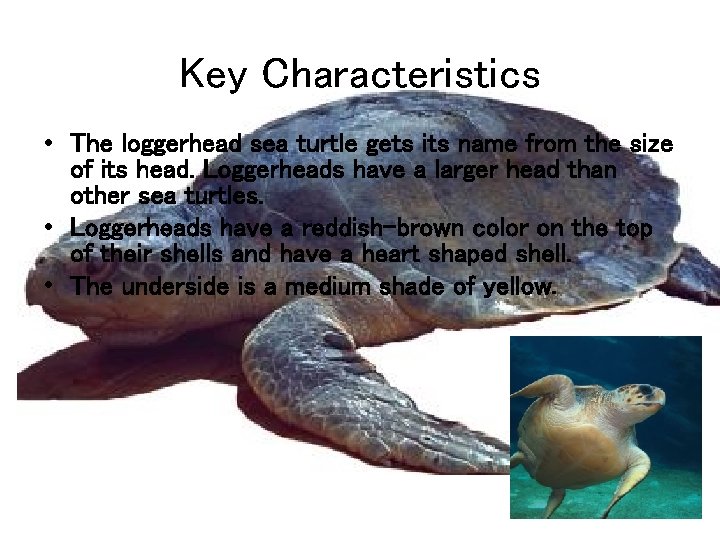
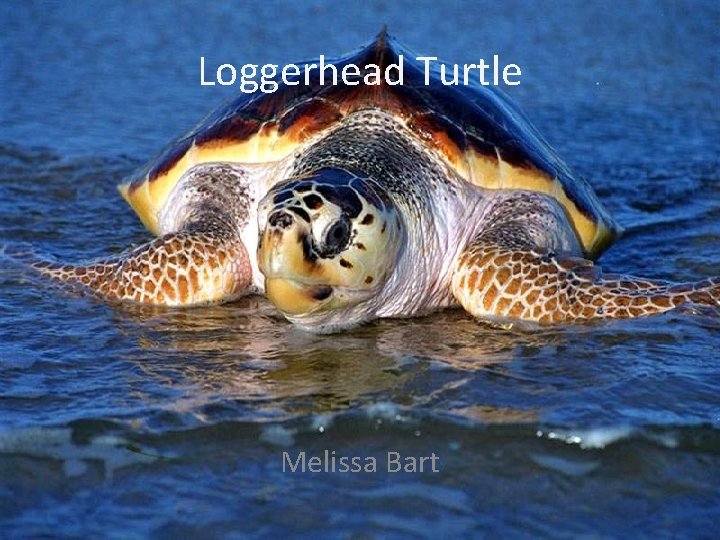
Key Characteristics • The loggerhead sea turtle gets its name from the size of its head. Loggerheads have a larger head than other sea turtles. • Loggerheads have a reddish-brown color on the top of their shells and have a heart shaped shell. • The underside is a medium shade of yellow.
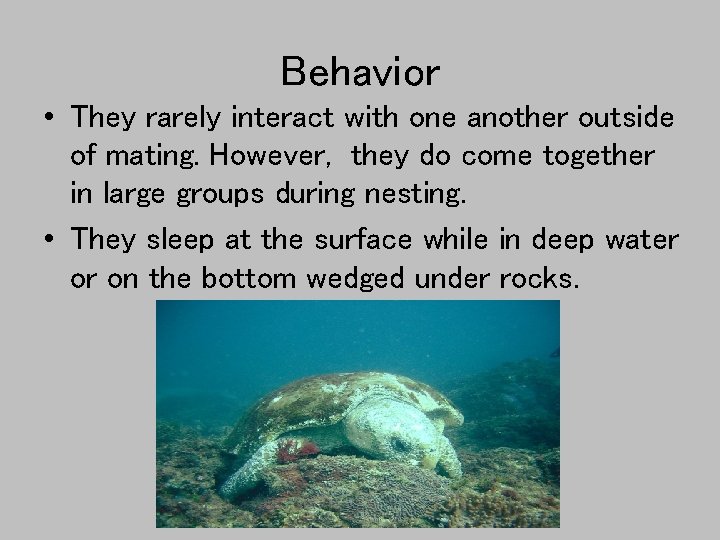
Behavior • They rarely interact with one another outside of mating. However, they do come together in large groups during nesting. • They sleep at the surface while in deep water or on the bottom wedged under rocks.

Economic Value • They are helpful for businesses because tourists dive or snorkel with them or to watch them nest. • In some countries their eggs and the turtles themselves are exploited for food. However, they are considered endangered species, making trade and consumption of them illegal.
- Slides: 8