
Lockheed Martin Part Optimization Kaine Muhammad Rachel John


- Slides: 14
Lockheed Martin Part Optimization Kaine, Muhammad, Rachel, John, Junfeng Ma April 26 th 2016
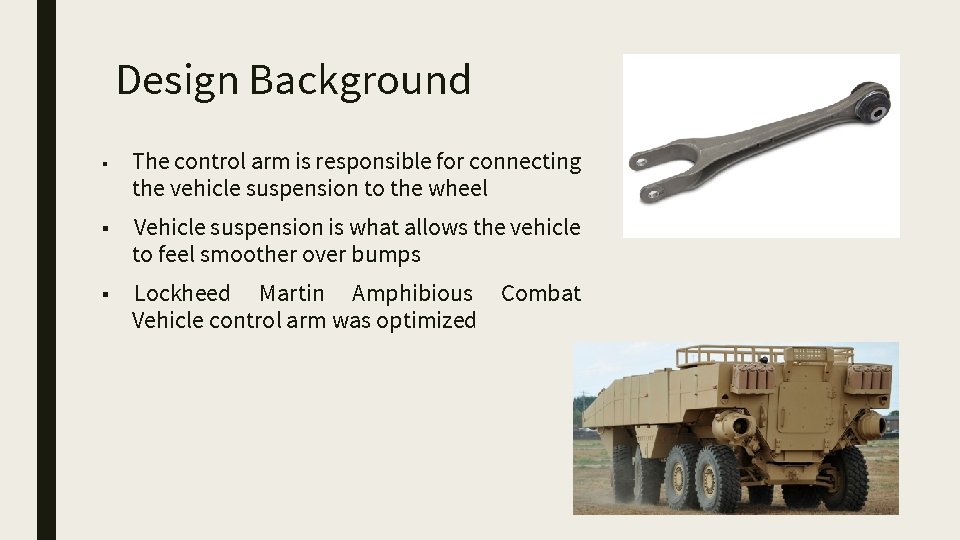
Design Background ■ The control arm is responsible for connecting the vehicle suspension to the wheel ■ Vehicle suspension is what allows the vehicle to feel smoother over bumps ■ Lockheed Martin Amphibious Combat Vehicle control arm was optimized
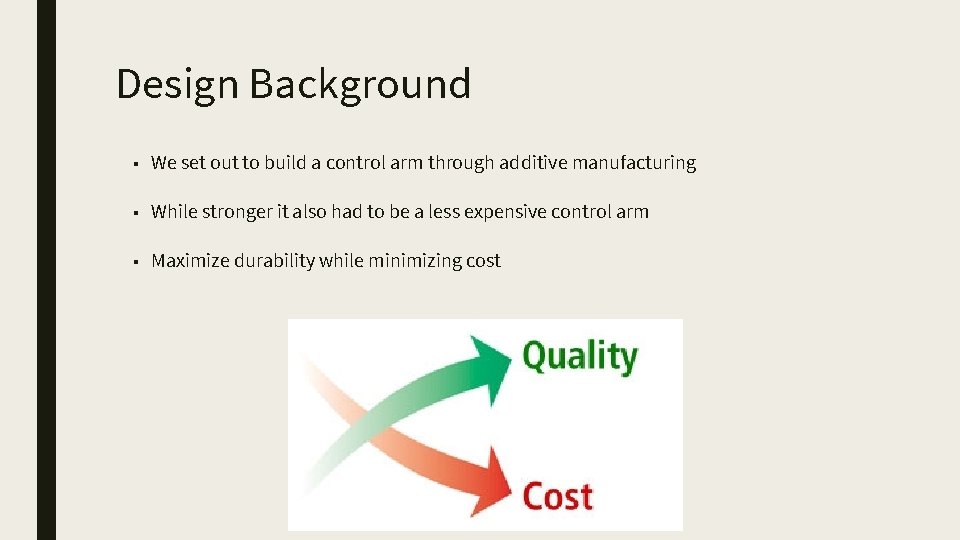
Design Background ■ We set out to build a control arm through additive manufacturing ■ While stronger it also had to be a less expensive control arm ■ Maximize durability while minimizing cost
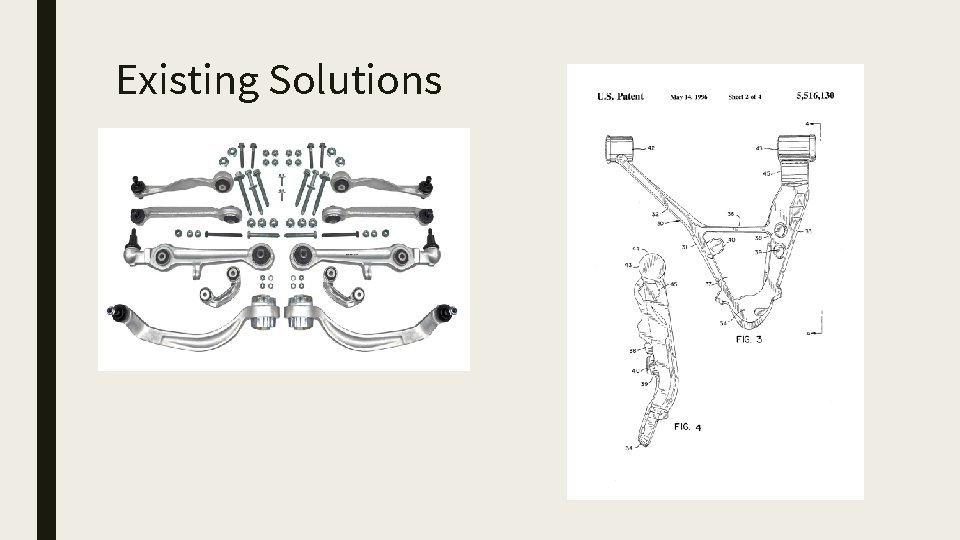
Existing Solutions
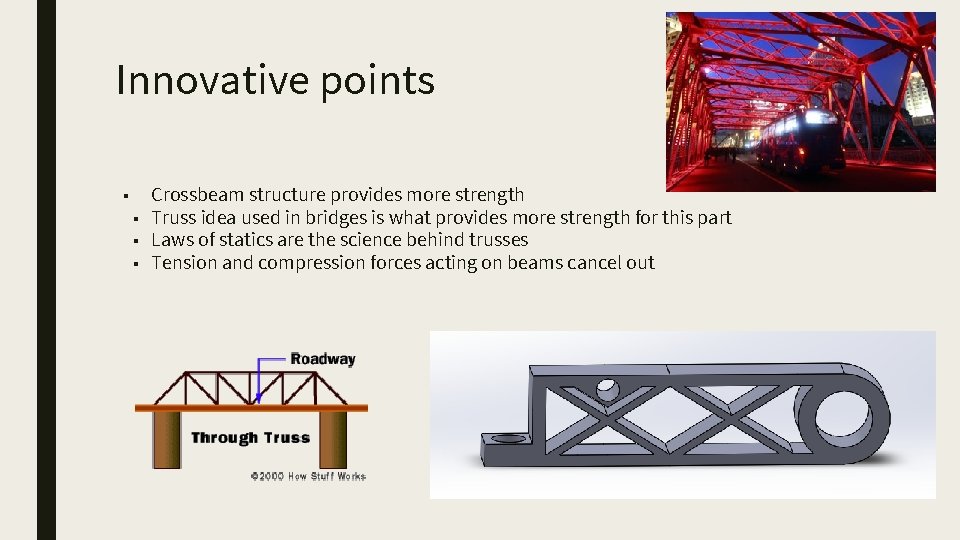
Innovative points ■ Crossbeam structure provides more strength ■ Truss idea used in bridges is what provides more strength for this part ■ Laws of statics are the science behind trusses ■ Tension and compression forces acting on beams cancel out
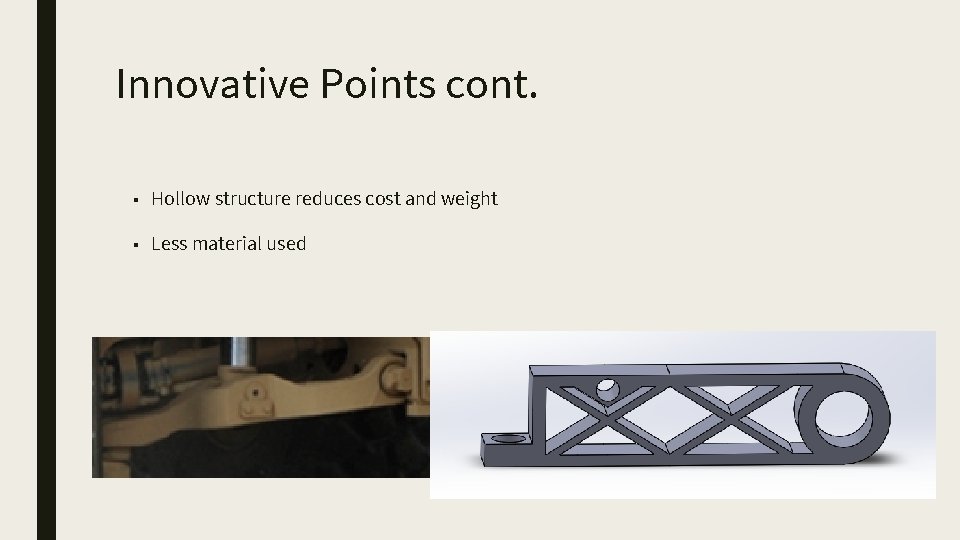
Innovative Points cont. ■ Hollow structure reduces cost and weight ■ Less material used
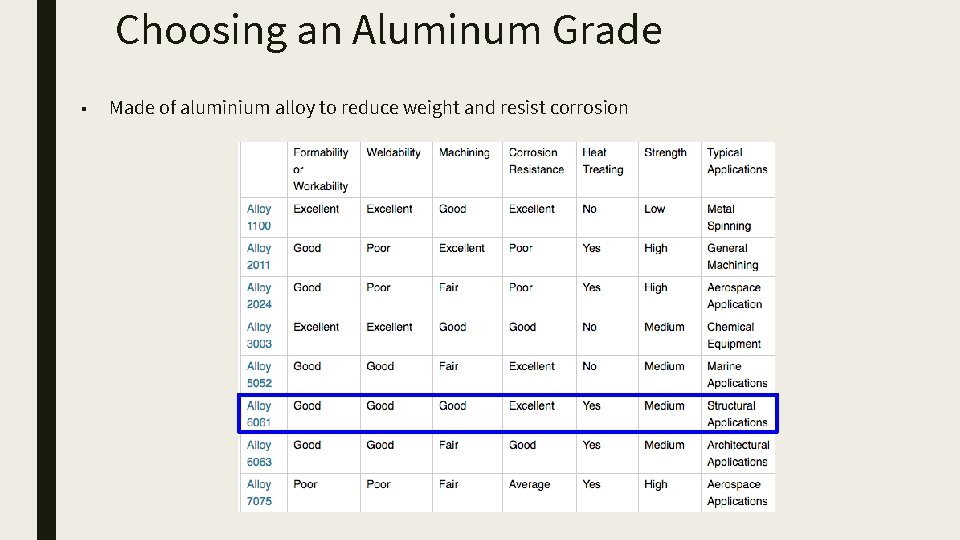
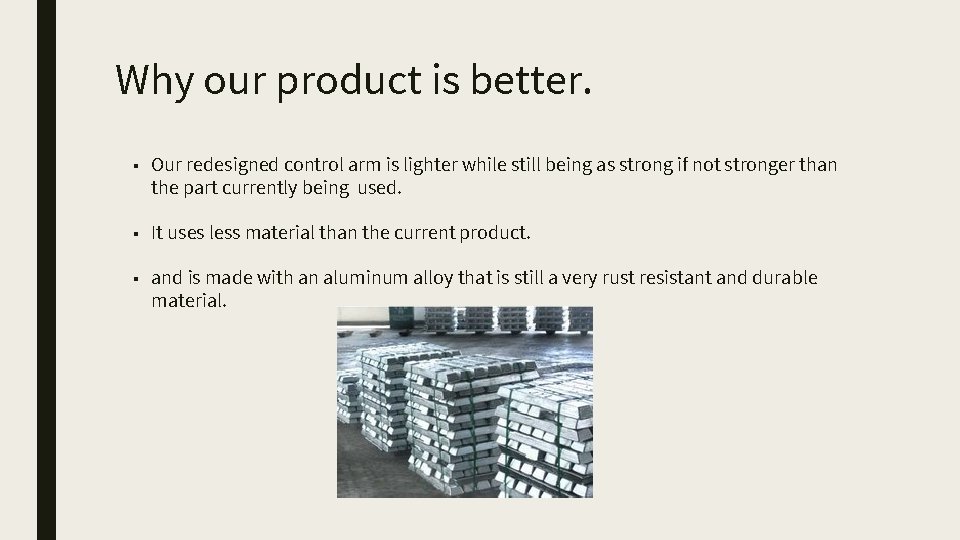
Choosing an Aluminum Grade ■ Made of aluminium alloy to reduce weight and resist corrosion
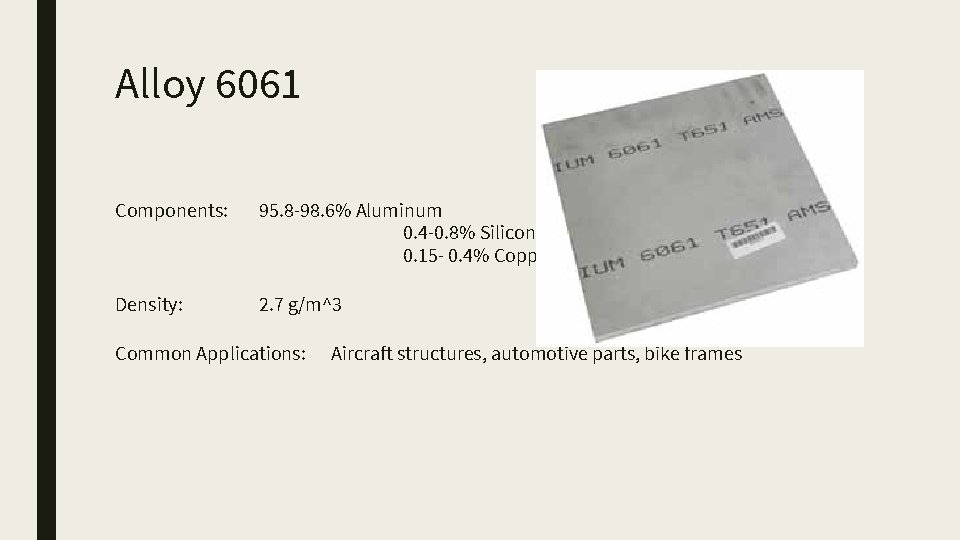
Alloy 6061 Components: 95. 8 -98. 6% Aluminum 0. 4 -0. 8% Silicon 0. 15 - 0. 4% Copper Density: 2. 7 g/m^3 Common Applications: Aircraft structures, automotive parts, bike frames
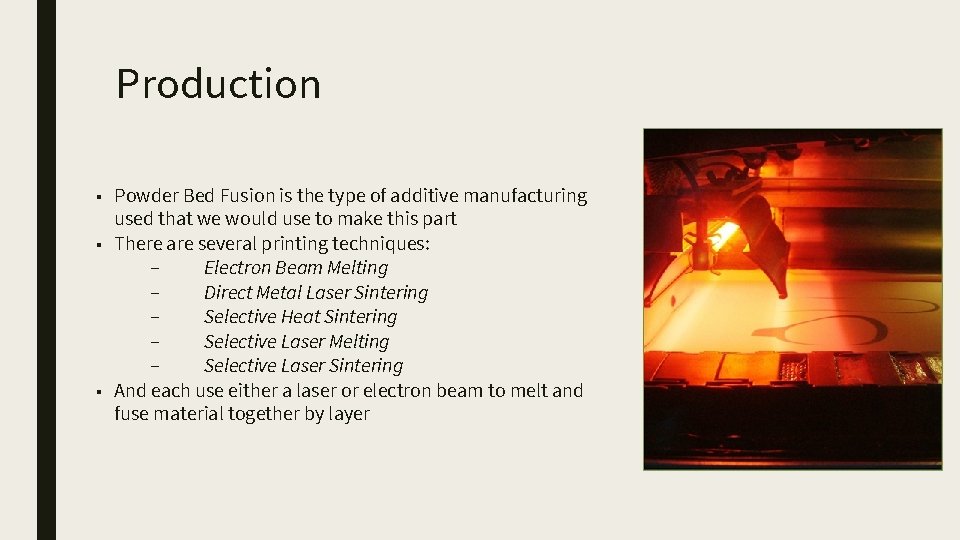
Production ■ Powder Bed Fusion is the type of additive manufacturing used that we would use to make this part ■ There are several printing techniques: – Electron Beam Melting – Direct Metal Laser Sintering – Selective Heat Sintering – Selective Laser Melting – Selective Laser Sintering ■ And each use either a laser or electron beam to melt and fuse material together by layer
Why our product is better. ■ Our redesigned control arm is lighter while still being as strong if not stronger than the part currently being used. ■ It uses less material than the current product. ■ and is made with an aluminum alloy that is still a very rust resistant and durable material.
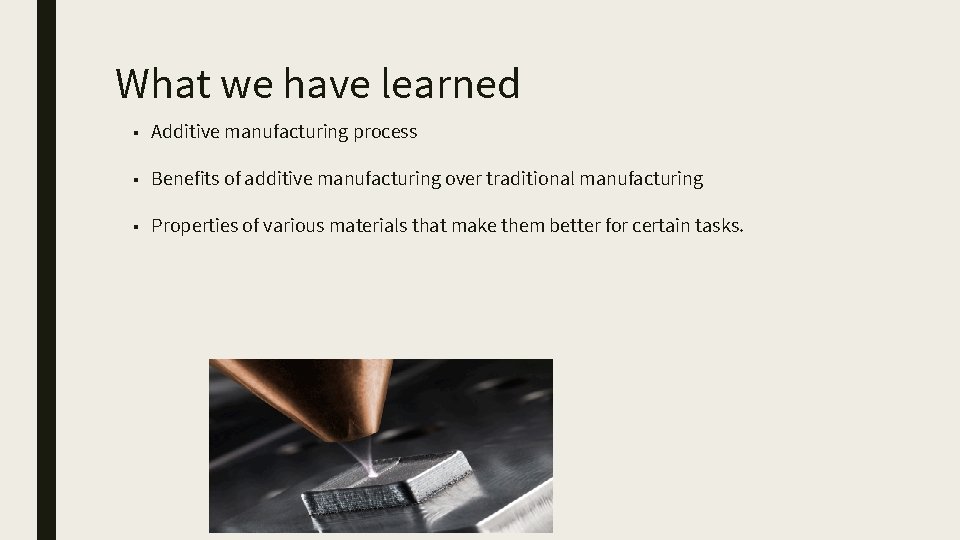
What we have learned ■ Additive manufacturing process ■ Benefits of additive manufacturing over traditional manufacturing ■ Properties of various materials that make them better for certain tasks.
Difficulties ■ Finding, and agreeing on a Lockheed Martin part to redesign ■ Brainstorming a good product and agreeing on a single solution ■ Communicating our ideas about the project to one another
Conclusion In conclusion, we set out to optimize part of Lockheed Martin’s Amphibious Combat Vehicle and we feel that we successfully created an advanced control arm for the suspension. We believe that our product will be less expensive, stronger, rust resistant, and lightweight. We hope that these qualities will allow Lockheed Martin to produce a better vehicle in the future.
Thank you. Any questions?