
Lockheed Martin Additive Manufacturing Introduction to Engineering Design





- Slides: 10
Lockheed Martin Additive Manufacturing Introduction to Engineering Design EDGSN 100 Section ### Design Team 6 Lisa Livote, http: //www. personal. psu. edu/lvl 5360/index. html, lvl 5360@psu. edu Ashvath Rajmohan, http: //www. personal. psu. edu/akr 5273/index. html, akr 5273@psu. edu Theodore Calnon, http: //www. personal. psu. edu/tjc 5621/index. html, tjc 5621@psu. edu Jerrell Hill, http: //www. personal. psu. edu/jjh 5802/index. html, jjh 5802@psu. edu Insert a DP 2 Photo here Insert Your Design Team Photo here Presented to: Prof. Berezniak Date: 04/29/2015
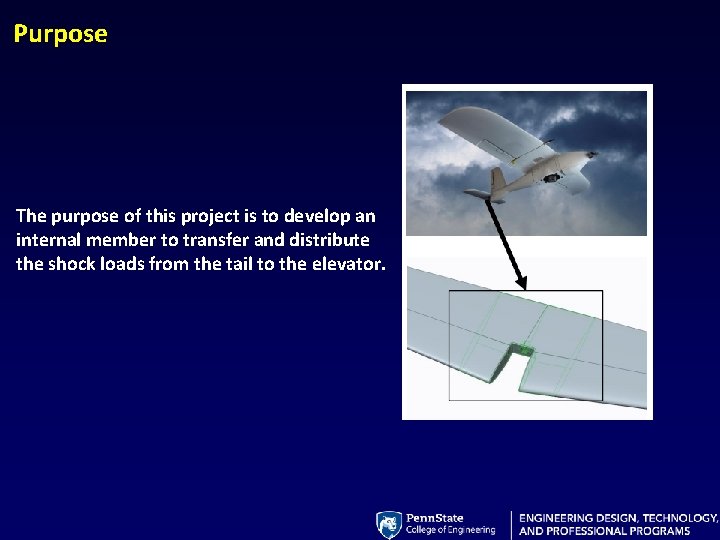
Purpose The purpose of this project is to develop an internal member to transfer and distribute the shock loads from the tail to the elevator.
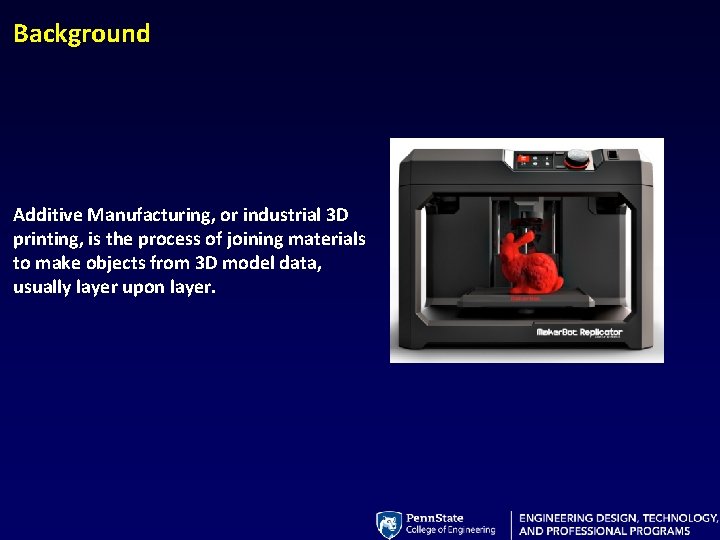
Background Additive Manufacturing, or industrial 3 D printing, is the process of joining materials to make objects from 3 D model data, usually layer upon layer.
Sponsor Lockheed Martin is an American global aerospace, defense, security and advanced technologies company with worldwide interests.
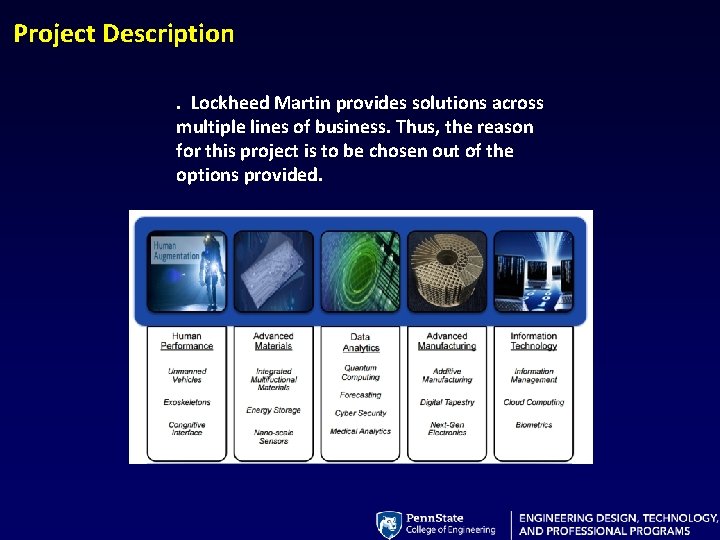
Project Description. Lockheed Martin provides solutions across multiple lines of business. Thus, the reason for this project is to be chosen out of the options provided.
Procedures (1 of 2) The first step in the project was to develop an internal member for the unmanned aircraft within in the parameters provided.
Procedures (2 of 2) The design must prevent internal members from bending as well as disperse vibrations.
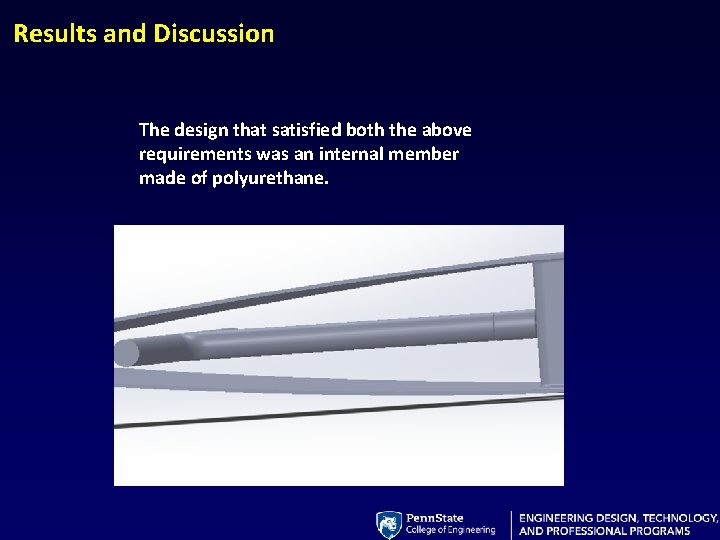
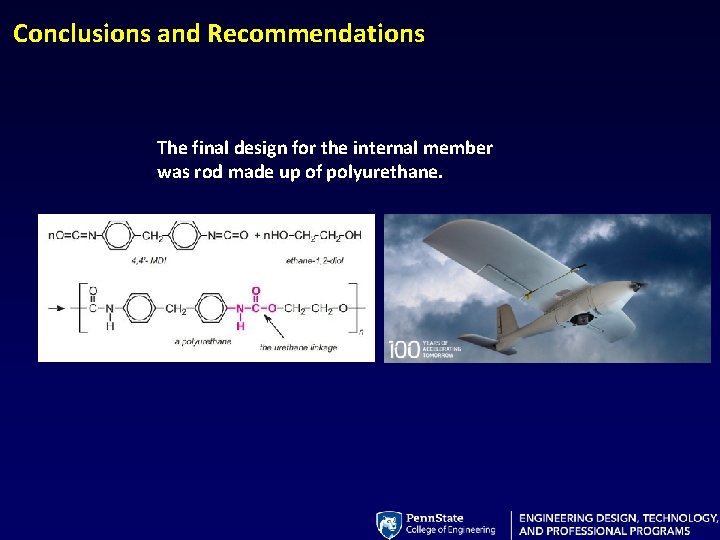
Results and Discussion The design that satisfied both the above requirements was an internal member made of polyurethane.
Conclusions and Recommendations The final design for the internal member was rod made up of polyurethane.
Closing Any questions? ? ?