
Local Government Types of councilkey rolesfunctionsservices What is



- Slides: 41
Local Government Types of council/key roles/functions/services
What is a council? • A tier of local government • A large, geographically-defined, multi-functional organisation • Provides local services to local people – mandatory and discretionary • Has limited tax raising powers • Is a democratically-elected organisation – in other words, councils are political • 465 in total: 388 in England; 22 Wales; 29 Scotland; 26 Northern Ireland
Local government – big business • Councils provide more than 700 different functions & services • Employ 2. 5 million people in 400 different occupations (Tesco – 472, 000 worldwide) • Big spenders - £ 169 billion in 2013/14 – a quarter of all public revenue expenditure • If ranked by expenditure, 100 councils would rank along side 500 top companies • 22, 000 elected local councillors – but only 650 MPs • Only Walmart, Chinese People’s Liberation Front+Indian railways employ more than local government in UK
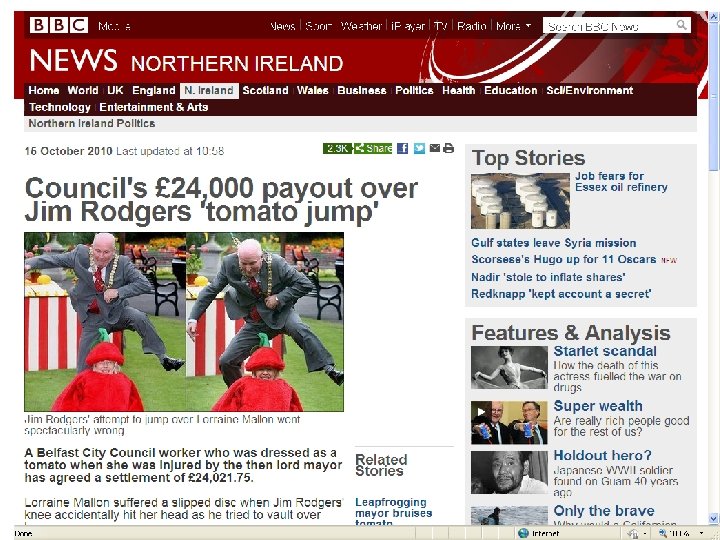
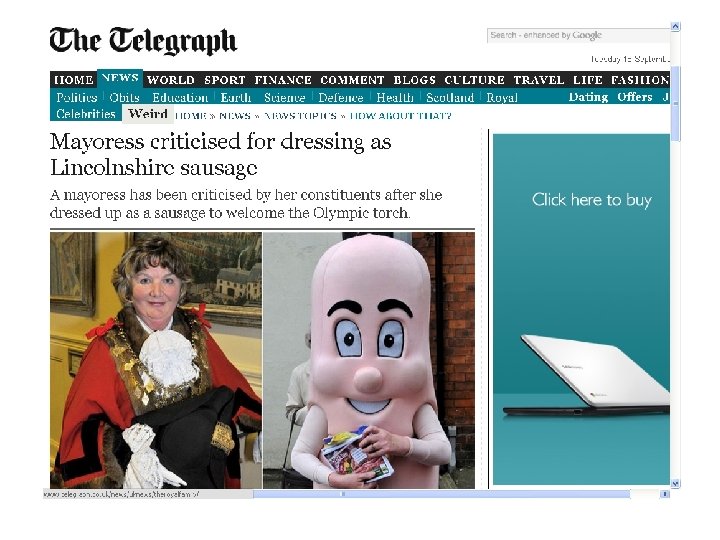
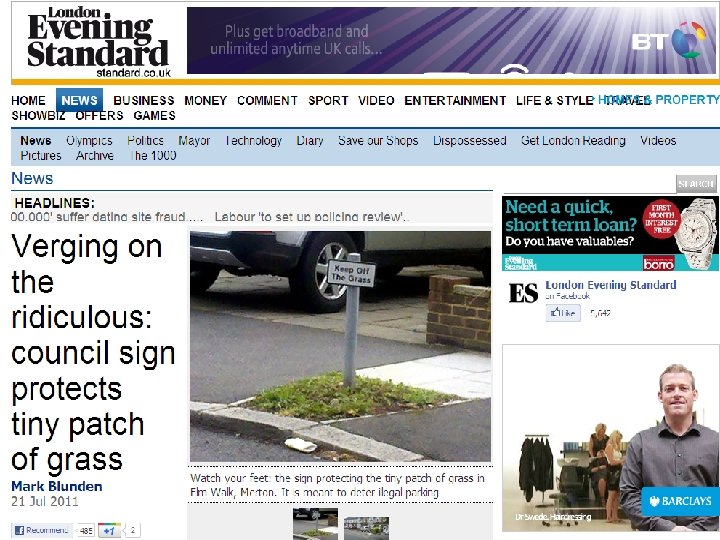
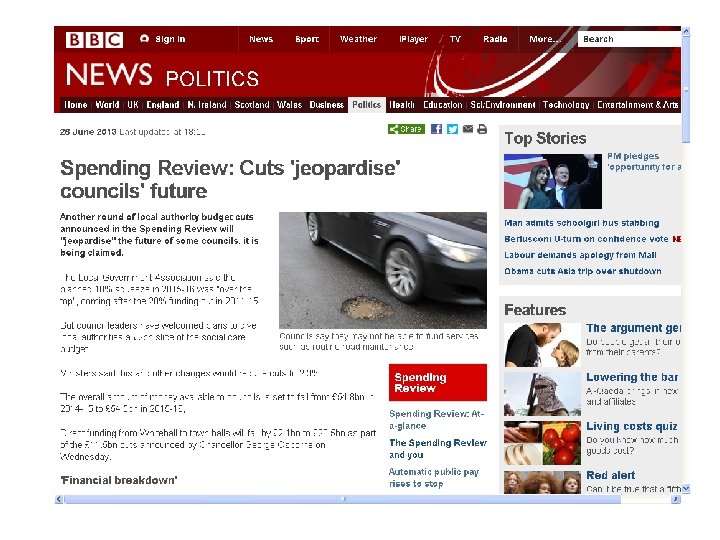
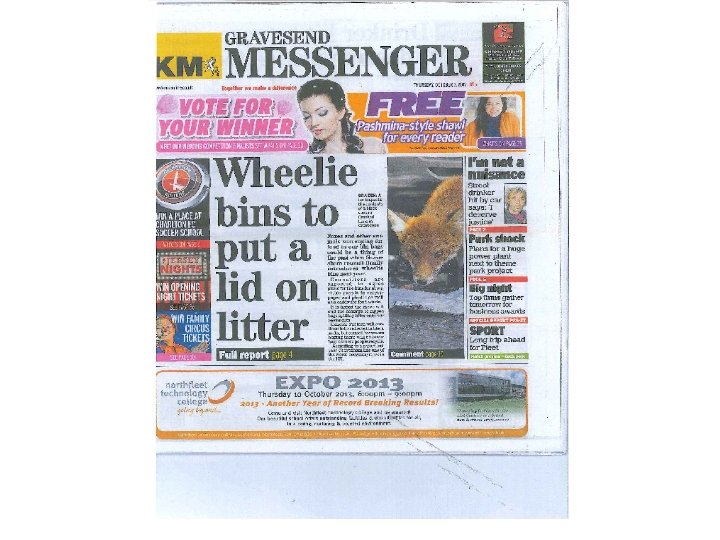
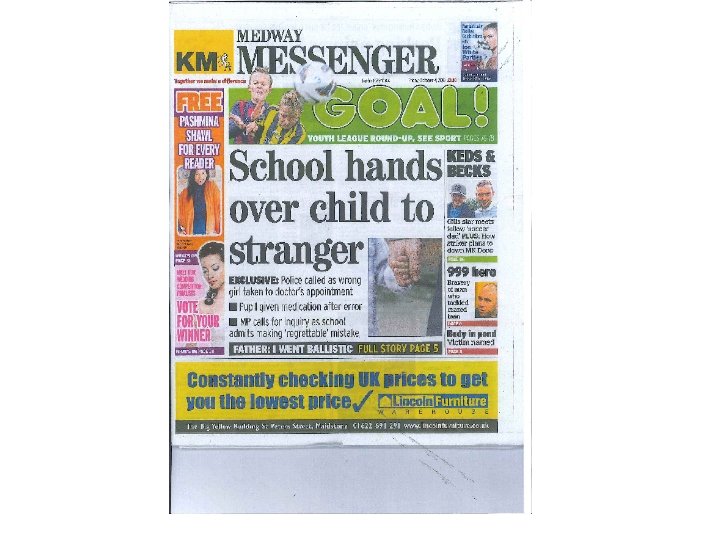
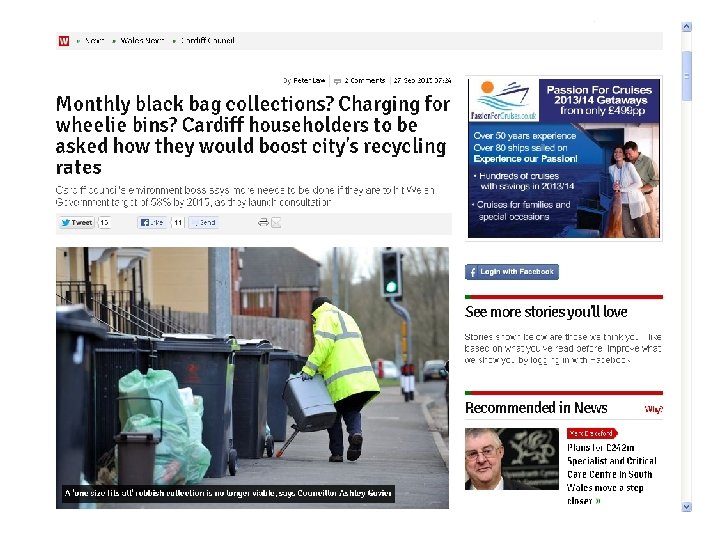
The media perspective…
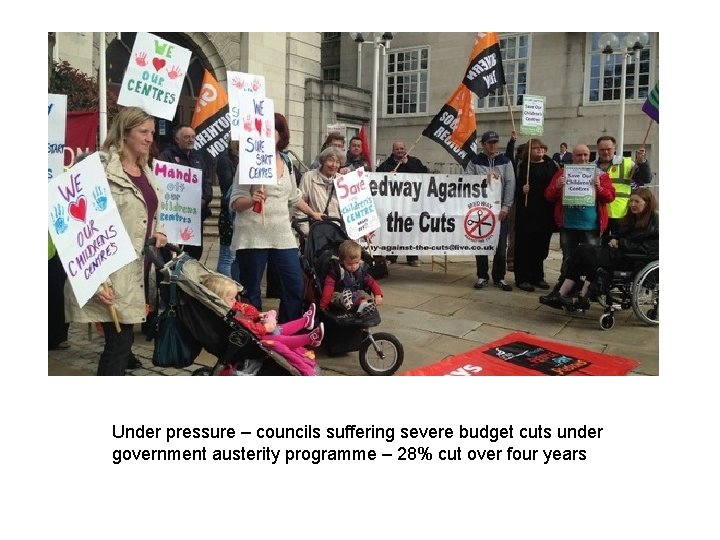
Under pressure – councils suffering severe budget cuts under government austerity programme – 28% cut over four years
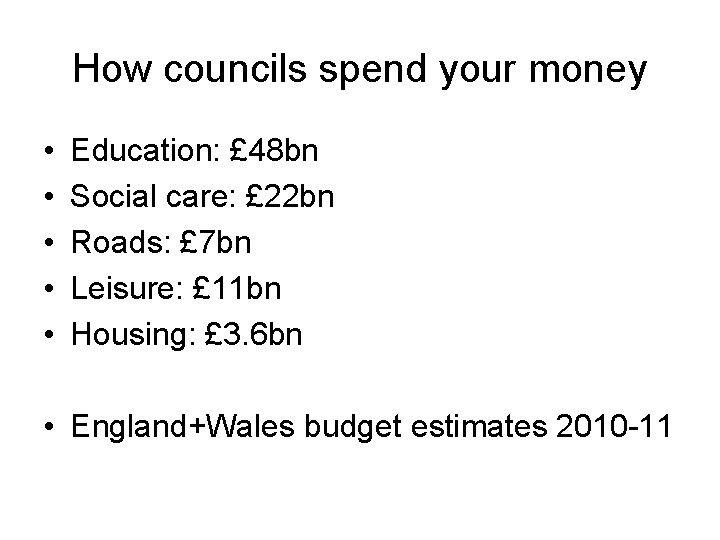
How councils spend your money • • • Education: £ 48 bn Social care: £ 22 bn Roads: £ 7 bn Leisure: £ 11 bn Housing: £ 3. 6 bn • England+Wales budget estimates 2010 -11
Why is it important? • Democratically-elected institutions – our political representatives at local level • Spend LARGE sums of public money – equivalent to average £ 1, 000 per resident annually • Councillors decide and therefore have direct impact on key frontline services • Media has key role holding councils to account, scrutinising and challenging – checks and balances
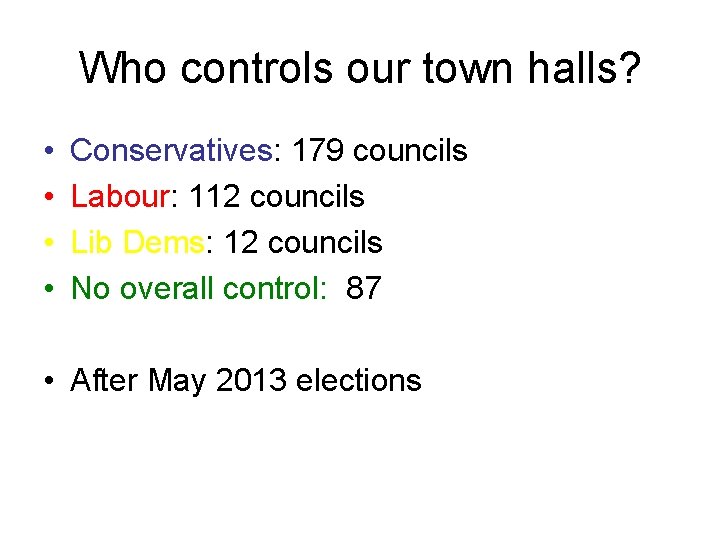
Who controls our town halls? • • Conservatives: 179 councils Labour: 112 councils Lib Dems: 12 councils No overall control: 87 • After May 2013 elections
Types of council • • • County councils District/borough councils Unitary councils Metropolitan councils London boroughs All these are known as “principal local authorities”
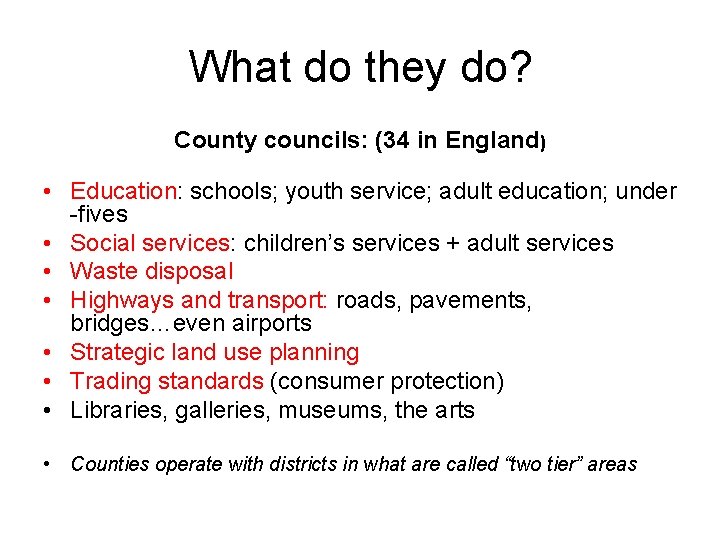
What do they do? County councils: (34 in England) • Education: schools; youth service; adult education; under -fives • Social services: children’s services + adult services • Waste disposal • Highways and transport: roads, pavements, bridges…even airports • Strategic land use planning • Trading standards (consumer protection) • Libraries, galleries, museums, the arts • Counties operate with districts in what are called “two tier” areas
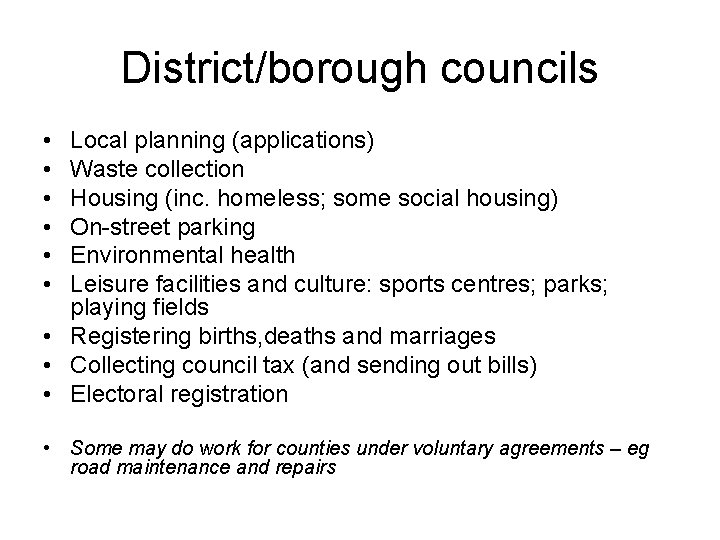
District/borough councils • • • Local planning (applications) Waste collection Housing (inc. homeless; some social housing) On-street parking Environmental health Leisure facilities and culture: sports centres; parks; playing fields • Registering births, deaths and marriages • Collecting council tax (and sending out bills) • Electoral registration • Some may do work for counties under voluntary agreements – eg road maintenance and repairs
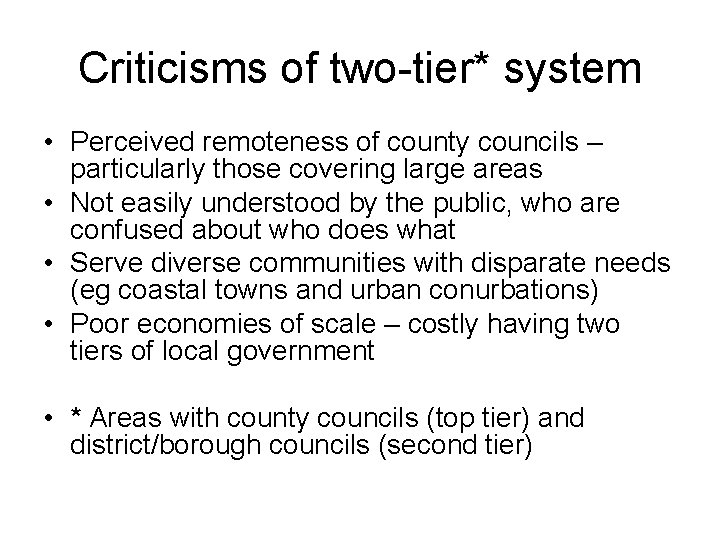
Criticisms of two-tier* system • Perceived remoteness of county councils – particularly those covering large areas • Not easily understood by the public, who are confused about who does what • Serve diverse communities with disparate needs (eg coastal towns and urban conurbations) • Poor economies of scale – costly having two tiers of local government • * Areas with county councils (top tier) and district/borough councils (second tier)
Advantages of two-tier system • More accountability (more councillors) • Districts/boroughs closer to communities they serve • Separation of services means councils not overloaded
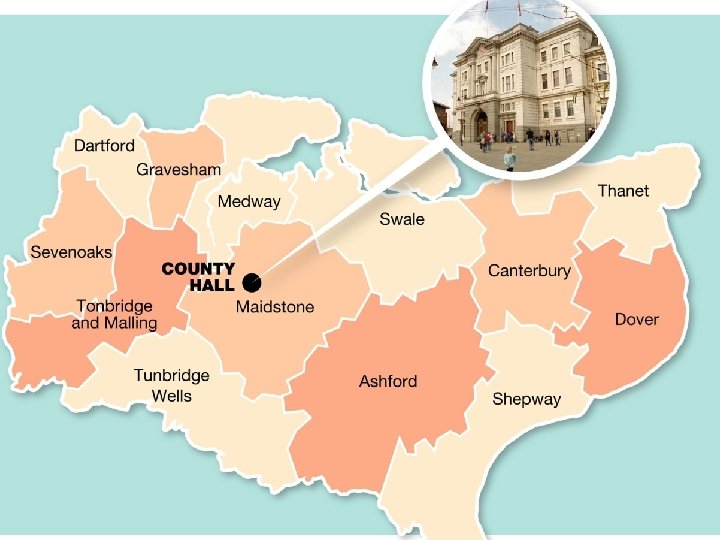
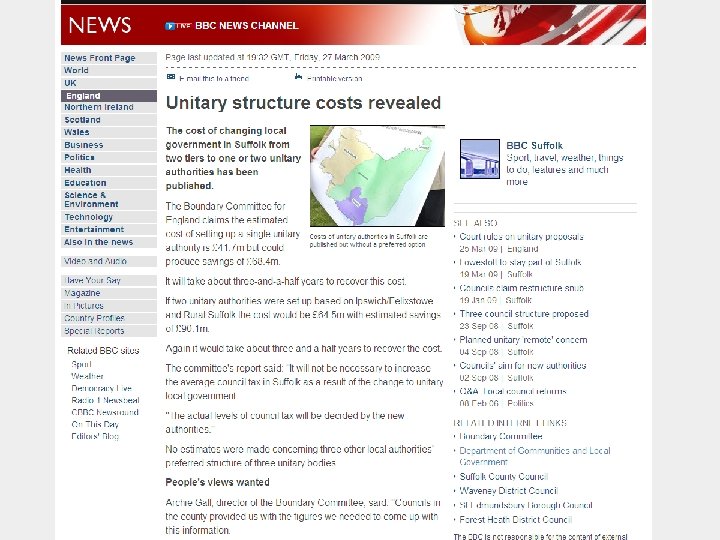
Unitary councils • Bring together all services (county + district) • Created to simplify structures • First set up in 1990 s • “Hybrid” structure in some areas: some unitaries exist within existing county boundaries (eg Kent)
Most recent unitaries… • Seven created in 2009: • Cheshire*, Bedfordshire*, Cornwall, Northumberland, Durham, Shropshire and Wiltshire • Replaced 44 districts and counties, saving £ 100 million • Affected 3. 2 million residents • But coalition stopped creation of others in 2010
Unitaries…the pluses • Generally better understood by residents – one council for all services • Less complex in terms of decision-making • Provide better sense of “community identity” – better defined geographical area; less remote • More financially efficient (? )
Metropolitan councils • 36 – covering main English cities (Leeds, Birmingham, Sheffield) • Effectively operate as unitary authorities • Have ‘joint boards’ to oversee some services, eg transport, emergency services, waste
London Boroughs • 33 – effectively act as unitary authorities • Also: • GLA/Boris Johnson provides London-wide government, including: • Policing • Transport • Strategic planning • Fire
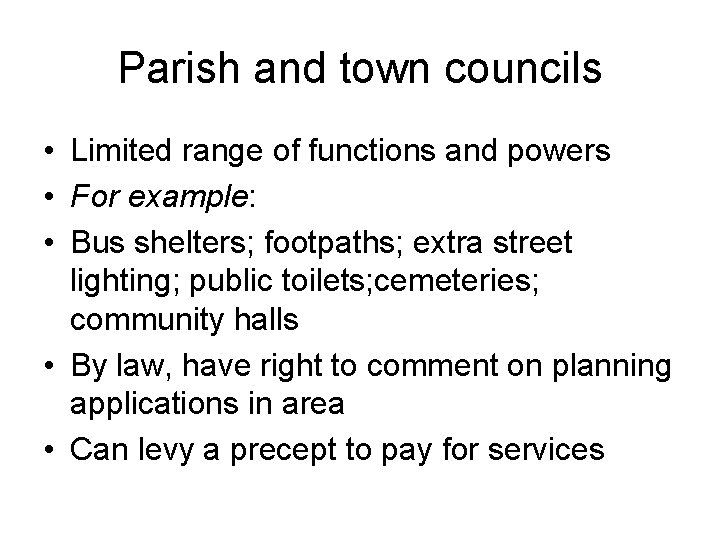
Parish and town councils • Limited range of functions and powers • For example: • Bus shelters; footpaths; extra street lighting; public toilets; cemeteries; community halls • By law, have right to comment on planning applications in area • Can levy a precept to pay for services
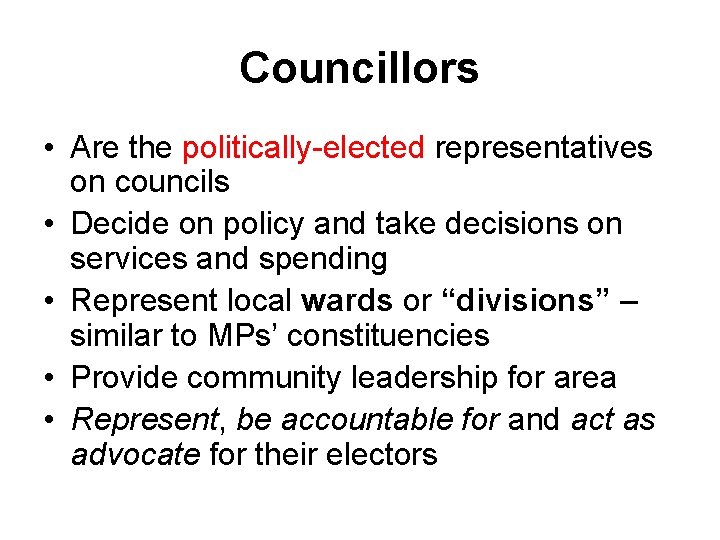
Councillors • Are the politically-elected representatives on councils • Decide on policy and take decisions on services and spending • Represent local wards or “divisions” – similar to MPs’ constituencies • Provide community leadership for area • Represent, be accountable for and act as advocate for their electors
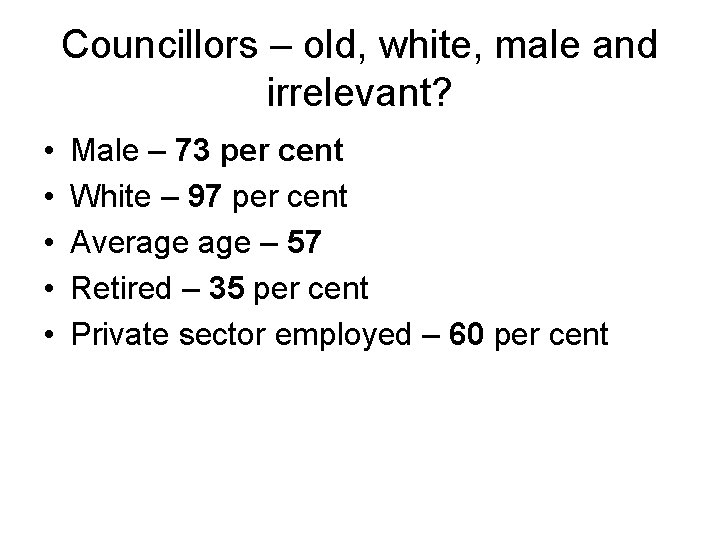
Councillors – old, white, male and irrelevant? • • • Male – 73 per cent White – 97 per cent Average – 57 Retired – 35 per cent Private sector employed – 60 per cent
Councillors • • • 13 per cent have children under age of 16 50 per cent have a degree or higher qualification More women councillors than MPs More women councillors than senior officers Most spend an average 20 hours work a week on council business • Represent average of 3, 020 constituents (France 118; Holland 1, 713)
But they are important… • Our democratically-elected representatives • Often wield more power than MPs • Take decisions on important services, the local economy and our money • Offer community and strategic leadership • Take up residents’ concerns • Have a watchdog role • Paid out of the public purse (allowances)
The role of councillors • Executive councillors: Legal ability to make certain decisions, collectively or individually • Non-executive councillors: No decisionmaking powers but hold executive (cabinet to account) – a watchdog role All councillors are: • Residents’ advocates • Community advocates • Policy advocates
Council officers • Paid, professional employees – unlike councillors, are not elected and are politically neutral • Deliver services in line with politicians’ priorities and budget (like local civil servants) • Responsible to the council rather than electorate • Senior officers can receive large salaries • Cabinet govt. means senior officers much closer to ruling political administration
Key senior officers • The Chief Executive – head of paid service – most senior official • The Chief Financial Officer (finance director) • The Monitoring Officer • Director of Children’s Services • Most councils have a corporate board made up of senior officers
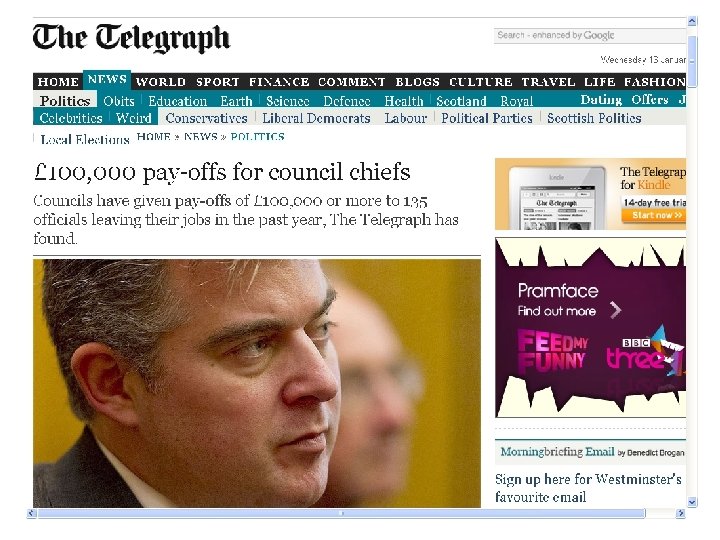
The Chief Executive • Paid officer who heads the executive of the council, leads chief officers management team and advises councillors • Ensures council policy is implemented and will advise councillors of legality and feasibility of their policies/plans • May be the returning officer at election time • Is a politically-restricted post • Can often be highly paid – six-figure salaries!
Mayors • • • Ceremonial figure-head for a council No real powers Chairs meetings of the full council Represents council at civic functions Usually wears chains of office London and some cities have Lord Mayors (but do same job) • Elected by fellow councillors each year • Known as “chairmen” in county councils