
Local Government Finance in the Philippines Milwida M
- Slides: 8
Local Government Finance in the Philippines Milwida M. Guevara Synergeia www. synergeia. org. ph
The Philippines • 2, 100 islands • 76. 5 million people in 2000; 2. 4 per cent growth annually (88. 7 million by July 2007) • 38 percent urban estimated to increase to 82 percent in 2020
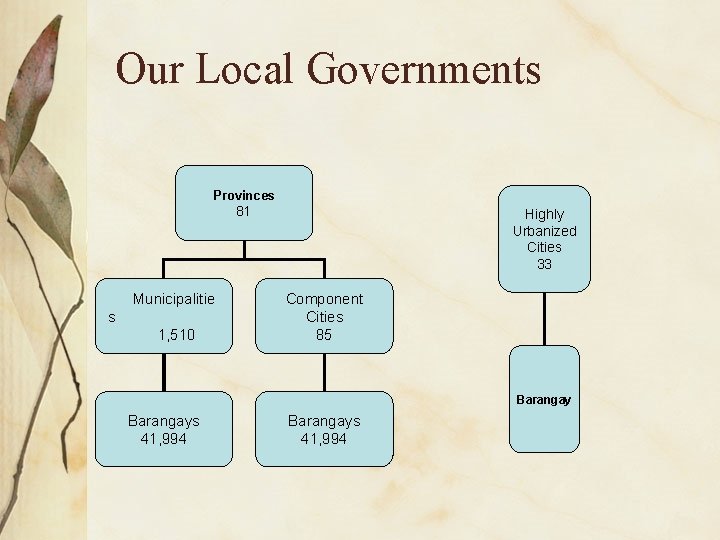
Our Local Governments Provinces 81 Municipalitie s 1, 510 Highly Urbanized Cities 33 Component Cities 85 Barangays 41, 994
Who does what? • Provinces: Hospital and tertiary health services; Low cost housing; telecommunications; Infra from local funds; social welfare services • Municipalities: Primary health care; school building; solid waste disposal; cultural centers, parks, tourism facilities • Barangay (Village) : health center, day care, solid waste collection, reading center • Cities: All of the above
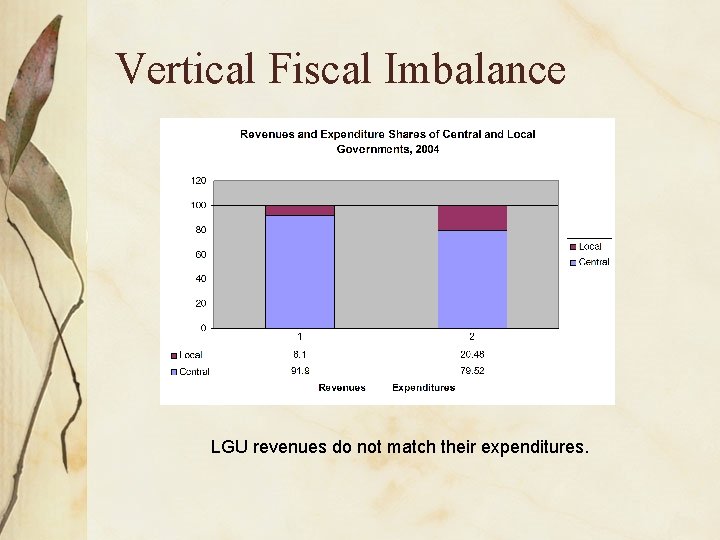
Vertical Fiscal Imbalance LGU revenues do not match their expenditures.
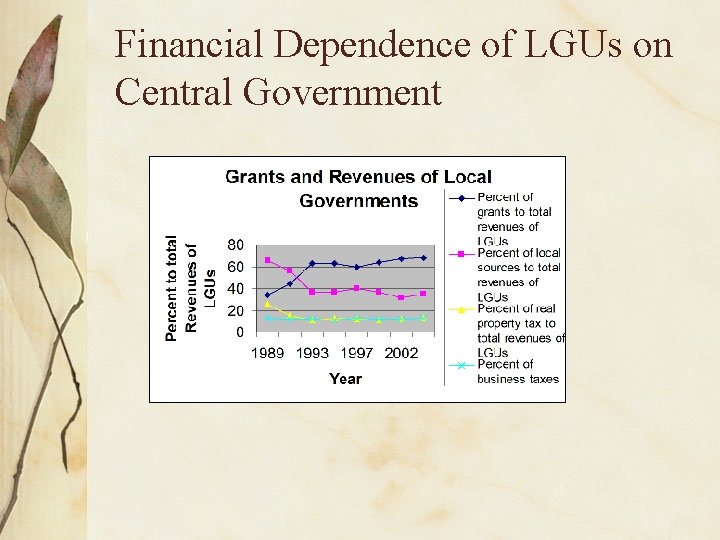
Financial Dependence of LGUs on Central Government
The Road to a Robust Local Finance • Definition of Minimum standards for public services, e. g. P 10, 000 per elementary student • Grant system that equalizes needs and resources • Productive, flat and simple to administer local taxes • Systems and processes that promote tax compliance and transparency
Out of the Box Strategies—Policy framework that supports: • Public-private sector partnerships • Development of a credit market * Special Purpose Vehicles * Bond financing * Credit rating for LGUs * Local Government Guarantee Corporation * Municipal/City Banks? • Municipal Development fund for less capable LGUs