
Local Employment Planning Council LEPC Background Community Labour
Local Employment Planning Council • • • LEPC Background Community Labour Market Plan Highly Skilled Workforce Report LEPC 2 Potential Deliverables Milestones and Due Dates
• Providing authoritative research • Identifying employment trends • Targeting workforce opportunities • Initiating development projects • Bringing people together
LEPC: new world for workforce planning boards Intended to improve local labour market conditions through research and labour market information to drive innovation in service delivery based on solid, local evidence. Strategic approach is important to respond to factors: • aging workforce • current and projected labor shortages • a desire to increase productivity • evolution of technology and tools
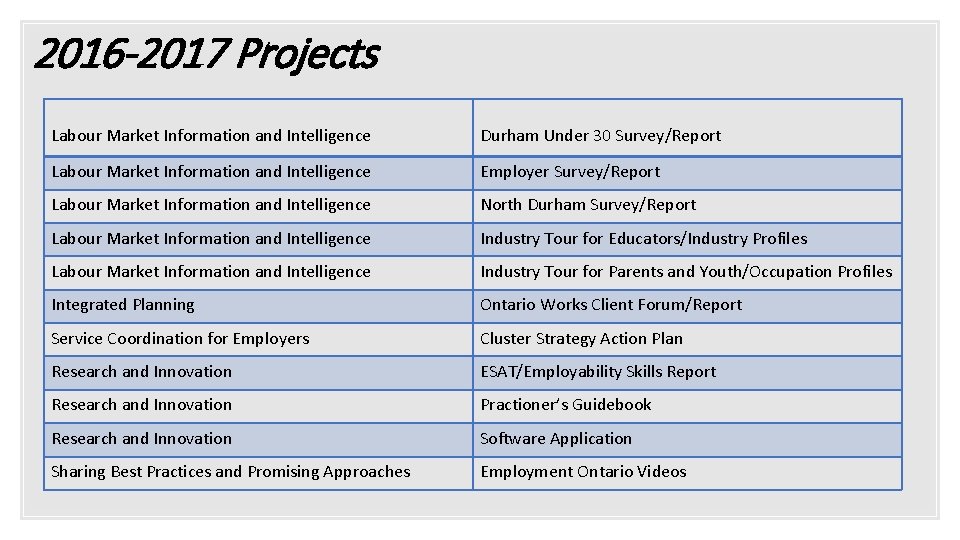
2016 -2017 Projects Labour Market Information and Intelligence Durham Under 30 Survey/Report Labour Market Information and Intelligence Employer Survey/Report Labour Market Information and Intelligence North Durham Survey/Report Labour Market Information and Intelligence Industry Tour for Educators/Industry Profiles Labour Market Information and Intelligence Industry Tour for Parents and Youth/Occupation Profiles Integrated Planning Ontario Works Client Forum/Report Service Coordination for Employers Cluster Strategy Action Plan Research and Innovation ESAT/Employability Skills Report Research and Innovation Practioner’s Guidebook Research and Innovation Software Application Sharing Best Practices and Promising Approaches Employment Ontario Videos
LEPC Deliverables Labour Market Information and Intelligence: NEW must be completed on or before May 31, 2018. • • Expand understanding of local labour market issues and needs Improve access to labour market information resources for various community audiences Analyse & interpret current data sources – NHS, LFS, EO service data, DWA LEPC Custom Data Gather, LMI, and analyse and interpret community impacts in a number of priority areas: • • • Changes to community workforce characteristics Industry, human resources or socioeconomic trends affecting the local labour market Training needs and employment opportunities in the community or in local industries Potential skill set misalignments between in-demand occupations and local labour market supply Relevant labour market information, ensuring that the information is understandable and tailored to specific audiences • In-depth analysis & interpretation of local labour market information to develop strategies to address identified local issues. • Information must be disseminated to local stakeholders for the purposes of effective evidence-based business and service decision-making. • LMI could be gathered through surveys, focus groups, social media and other forums.
LEPC Deliverables Service Coordination for Employers: • LEPCs to take a leadership role in establishing themselves as a hub for connecting employers, industry associations, sector groups and unions to local employment and training services and initiatives that could address their labour market or workforce development needs. LEPCs are required to conduct service coordination with employers including: • Developing strategies with local employment and training service providers to encourage streamlined and simplified access to programming for employers. • Engaging employers regarding employment and training services available to them in the community and making timely referrals to relevant services. Examples • Work with employment service providers to better coordinate job matching and development services so that employers are not contacted by multiple service providers exploring job matching and placement opportunities. • Engage employers through social media, outreach events, or developing an online platform or forum. Research and Innovation • Collaboration and innovation with community stakeholders to develop projects related to the research and piloting of innovative approaches to addressing local labour market issues or opportunities.
LEPC Deliverables Integrated Planning: • LEPC to serve as key mobilizer of employers, service providers, other ministries and levels of government operating locally, and other community groups to engage in more collaborative local planning. • Areas of focus should include: Service planning (with Employment Ontario and non-Employment Ontario organizations) to identify and address service gaps and challenges for clients accessing services. Examples of actions might include: • Conduct research to gain a better understanding of local labour market and employment policies, programs or initiatives operating in the community and develop recommendations as to how they might more effectively work together. • Lead development of an employment and training service “footprint” (both Employment Ontario and non. Employment Ontario services) that helps support local delivery providers plan and coordinate their services. • Workforce development planning with local industry and community stakeholders, supported by local labour market information, to determine skills needs/future skills requirements and/or prevent skills shortages in growth sectors. Example of actions might include: • Research and forecast human resource needs in dominant or high-growth industries; • Bring together local businesses, municipal economic development and community and industry sectors to prepare for future skills requirements and/or to prevent skills shortages; • Promote literacy and essential skills development within local workforces; and • Identify and address workforce and training needs in areas experiencing lay-offs or extensive workforce realignment.
LEPC Deliverables Research and Innovation: • Collaborating with community stakeholders in the design and development of projects to research and test, where possible, innovative approaches to addressing local labour market issues or opportunities. • LEPCs are required to fund a minimum of one research and innovation project within the community. LEPCs should outline a fair and transparent process to select a local stakeholder to carry out actions that address local needs. Request for Service vs Call for Proposal: • A Request for Service (RFS) is when there is a defined project, which clearly articulates a product or service that is required for purchase. An RFS is clear on the scope of work and the required deliverables. • A Call for Proposal (CFP) is when there is a problem or a need and it is up to other organizations to make a proposal on how they will fulfil the requirement.
LEPC Community Labour Market Planning Report
The framework would be a two to three page report outlining the following: CLMP Framework Overview • • Background Conceptual Approach Partners – Who’s involved/consulted? Methodology Impact and Outcomes Limitations Data Sources 10
Community Labour Market Planning Report • Report of collaborative community-based actions to address labour market challenges and opportunities. • LEPCs are responsible for completing the Community Labour Market Planning Report • Final report is peer-reviewed by members of the central planning table. • As required, sections of the report must be reviewed by appropriate members of the subject-matter working groups to validate its findings and overall quality. • intended audience is much broader, and includes the range of community stakeholders that LEPCs are required to partner with locally. 11
Plan Framework • LEPCs submit a Community Labour Market Planning (CLMP) framework strategy on July 31, 2017 • July - framework that outlines background information : purpose, vision, guiding principles: • • Improving service coordination Integrating local planning Collecting and disseminating local labour market knowledge Addressing identified local labour market challenges and opportunities • An explicit ‘what’s next’ focus that is informed by and supported with explicit reference to the evidence they have gathered through their LMI related activities in the first phase. • Final CLMP report on January 31, 2018. 12

BUILDING THE WORKFORCE OF TOMORROW Ontario’s Highly Skilled Workforce Strategy Ministry of Advanced Education and Skills Development Highly Skilled Workforce Division
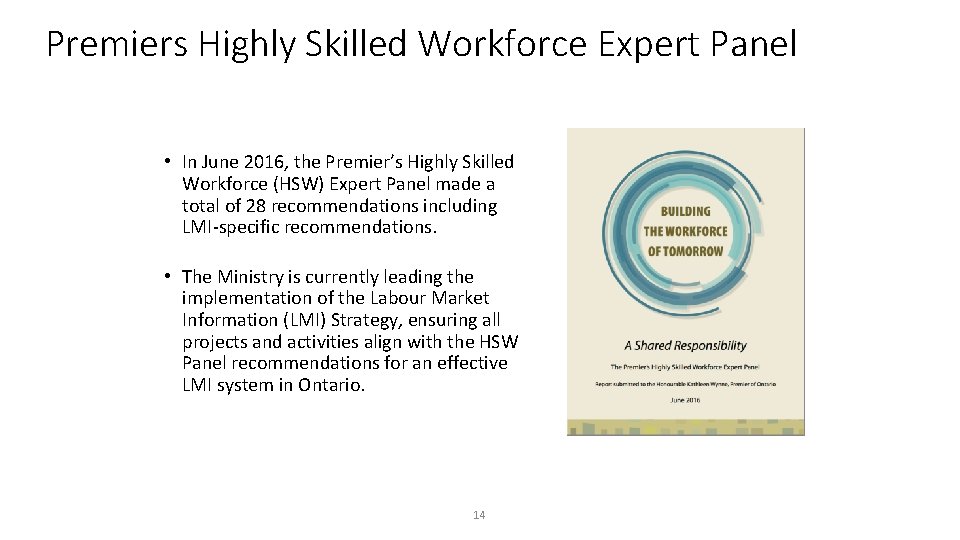
Premiers Highly Skilled Workforce Expert Panel • In June 2016, the Premier’s Highly Skilled Workforce (HSW) Expert Panel made a total of 28 recommendations including LMI-specific recommendations. • The Ministry is currently leading the implementation of the Labour Market Information (LMI) Strategy, ensuring all projects and activities align with the HSW Panel recommendations for an effective LMI system in Ontario. 14
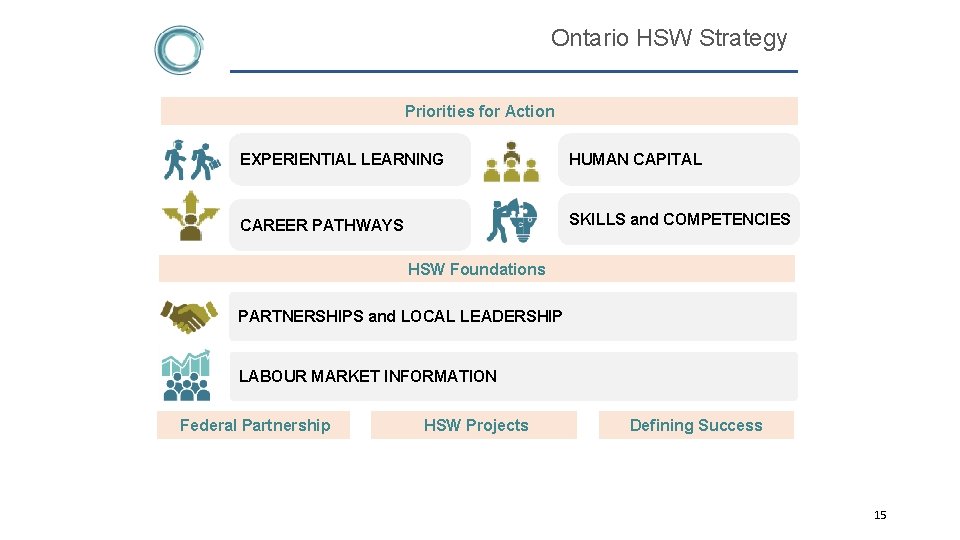
Ontario HSW Strategy Priorities for Action EXPERIENTIAL LEARNING HUMAN CAPITAL CAREER PATHWAYS SKILLS and COMPETENCIES HSW Foundations PARTNERSHIPS and LOCAL LEADERSHIP LABOUR MARKET INFORMATION Federal Partnership HSW Projects Defining Success 15
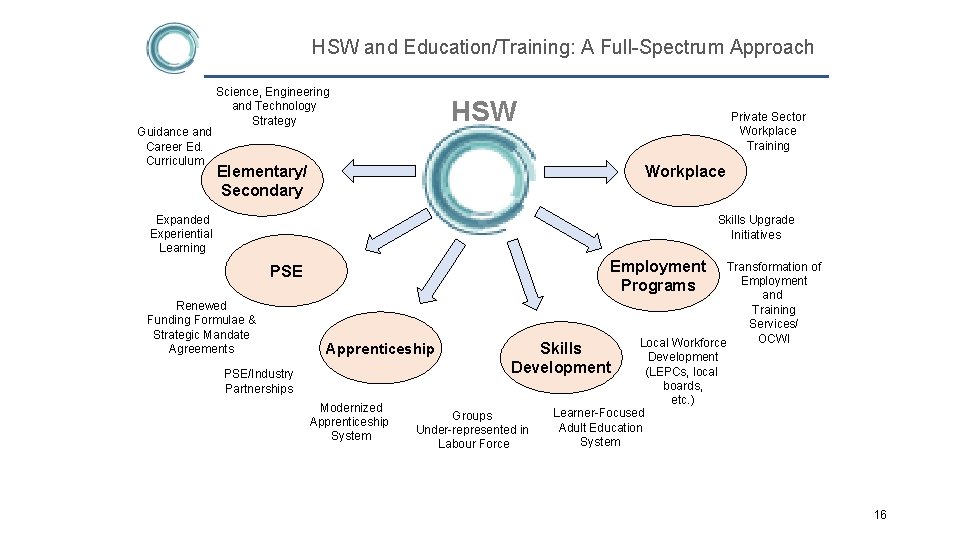
HSW and Education/Training: A Full-Spectrum Approach Guidance and Career Ed. Curriculum Science, Engineering and Technology Strategy HSW Private Sector Workplace Training Elementary/ Secondary Workplace Expanded Experiential Learning Skills Upgrade Initiatives Employment Programs PSE Renewed Funding Formulae & Strategic Mandate Agreements Apprenticeship PSE/Industry Partnerships Modernized Apprenticeship System Skills Development Groups Under-represented in Labour Force Transformation of Employment and Training Services/ OCWI Local Workforce Development (LEPCs, local boards, etc. ) Learner-Focused Adult Education System 16
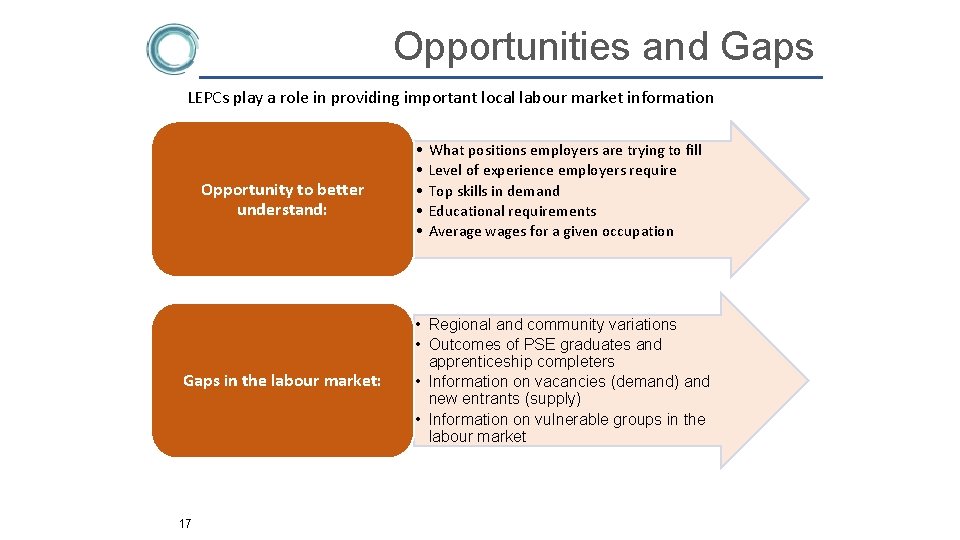
Opportunities and Gaps LEPCs play a role in providing important local labour market information Opportunity to better understand: Gaps in the labour market: 17 • • • What positions employers are trying to fill Level of experience employers require Top skills in demand Educational requirements Average wages for a given occupation • Regional and community variations • Outcomes of PSE graduates and apprenticeship completers • Information on vacancies (demand) and new entrants (supply) • Information on vulnerable groups in the labour market
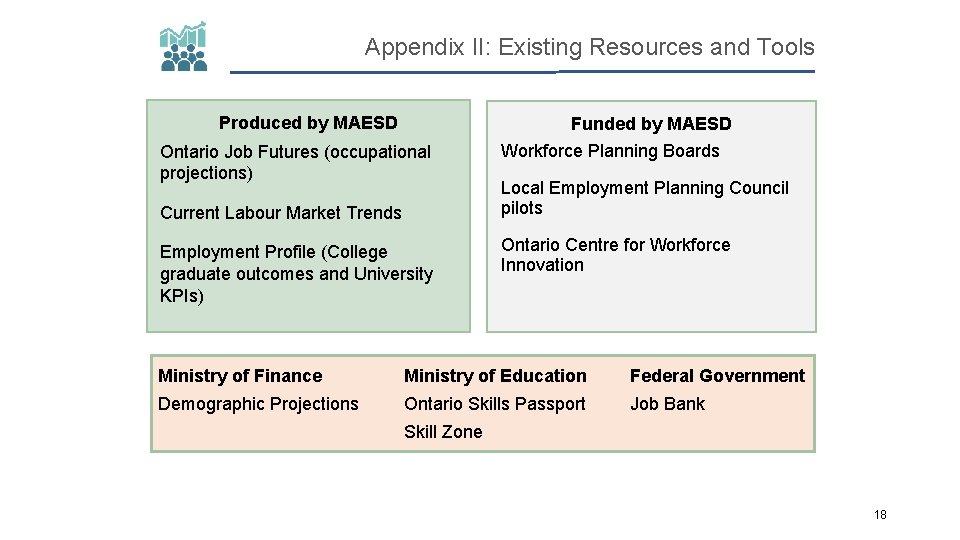
Appendix II: Existing Resources and Tools Produced by MAESD Ontario Job Futures (occupational projections) Current Labour Market Trends Employment Profile (College graduate outcomes and University KPIs) Ministry of Finance Funded by MAESD Workforce Planning Boards Local Employment Planning Council pilots Ontario Centre for Workforce Innovation Ministry of Education Federal Government Demographic Projections Ontario Skills Passport Job Bank Skill Zone 18
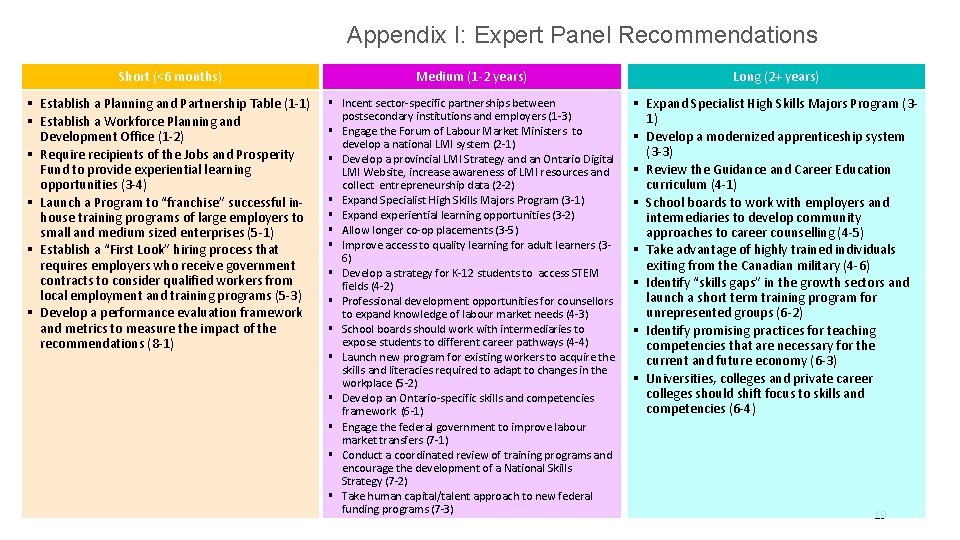
Appendix I: Expert Panel Recommendations Short (<6 months) Medium (1 -2 years) Long (2+ years) § Establish a Planning and Partnership Table (1 -1) § Establish a Workforce Planning and Development Office (1 -2) § Require recipients of the Jobs and Prosperity Fund to provide experiential learning opportunities (3 -4) § Launch a Program to “franchise” successful inhouse training programs of large employers to small and medium sized enterprises (5 -1) § Establish a “First Look” hiring process that requires employers who receive government contracts to consider qualified workers from local employment and training programs (5 -3) § Develop a performance evaluation framework and metrics to measure the impact of the recommendations (8 -1) § Incent sector-specific partnerships between postsecondary institutions and employers (1 -3) § Engage the Forum of Labour Market Ministers to develop a national LMI system (2 -1) § Develop a provincial LMI Strategy and an Ontario Digital LMI Website, increase awareness of LMI resources and collect entrepreneurship data (2 -2) § Expand Specialist High Skills Majors Program (3 -1) § Expand experiential learning opportunities (3 -2) § Allow longer co-op placements (3 -5) § Improve access to quality learning for adult learners (36) § Develop a strategy for K-12 students to access STEM fields (4 -2) § Professional development opportunities for counsellors to expand knowledge of labour market needs (4 -3) § School boards should work with intermediaries to expose students to different career pathways (4 -4) § Launch new program for existing workers to acquire the skills and literacies required to adapt to changes in the workplace (5 -2) § Develop an Ontario-specific skills and competencies framework (6 -1) § Engage the federal government to improve labour market transfers (7 -1) § Conduct a coordinated review of training programs and encourage the development of a National Skills Strategy (7 -2) § Take human capital/talent approach to new federal funding programs (7 -3) § Expand Specialist High Skills Majors Program (31) § Develop a modernized apprenticeship system (3 -3) § Review the Guidance and Career Education curriculum (4 -1) § School boards to work with employers and intermediaries to develop community approaches to career counselling (4 -5) § Take advantage of highly trained individuals exiting from the Canadian military (4 -6) § Identify “skills gaps” in the growth sectors and launch a short term training program for unrepresented groups (6 -2) § Identify promising practices for teaching competencies that are necessary for the current and future economy (6 -3) § Universities, colleges and private career colleges should shift focus to skills and competencies (6 -4) 19
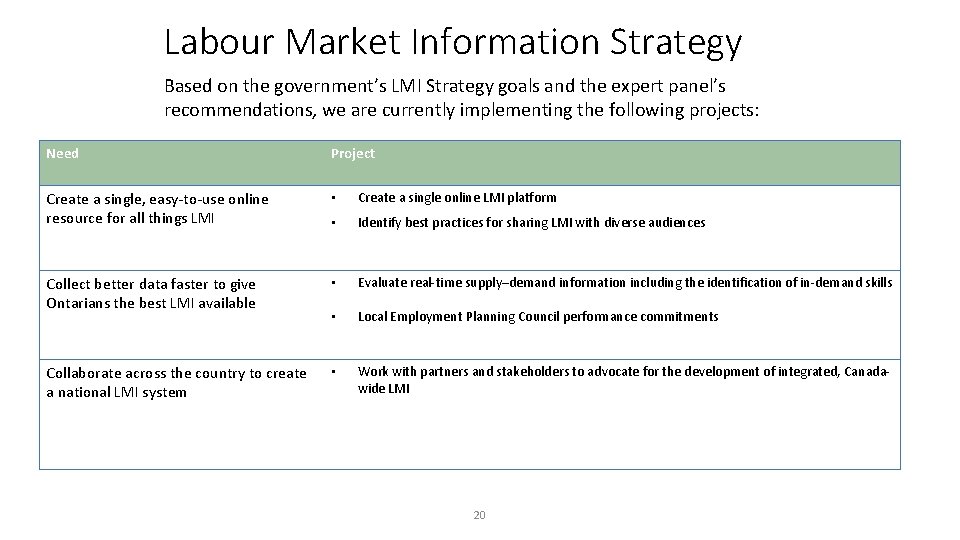
Labour Market Information Strategy Based on the government’s LMI Strategy goals and the expert panel’s recommendations, we are currently implementing the following projects: Need Project Create a single, easy-to-use online resource for all things LMI • Create a single online LMI platform • Identify best practices for sharing LMI with diverse audiences Collect better data faster to give Ontarians the best LMI available • Evaluate real-time supply–demand information including the identification of in-demand skills • Local Employment Planning Council performance commitments Collaborate across the country to create a national LMI system • Work with partners and stakeholders to advocate for the development of integrated, Canadawide LMI 20
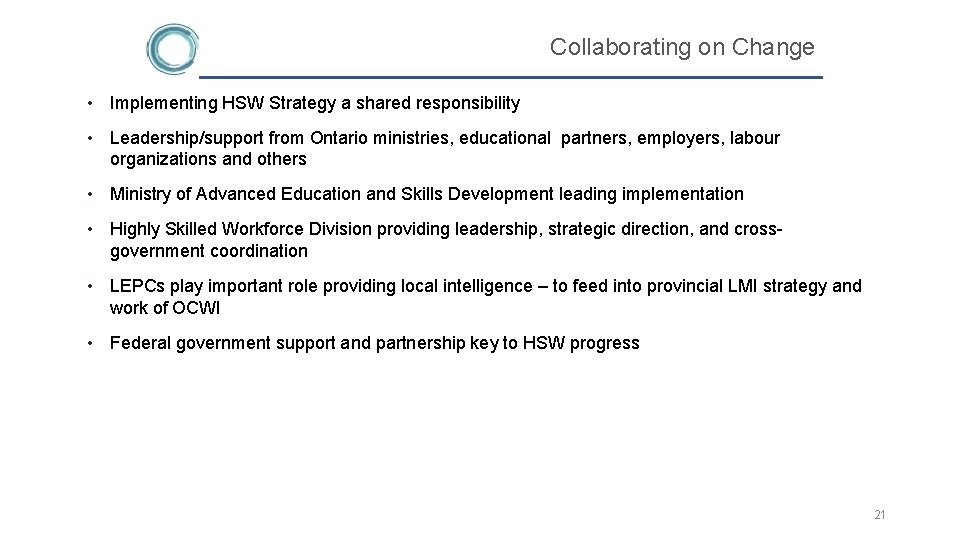
Collaborating on Change • Implementing HSW Strategy a shared responsibility • Leadership/support from Ontario ministries, educational partners, employers, labour organizations and others • Ministry of Advanced Education and Skills Development leading implementation • Highly Skilled Workforce Division providing leadership, strategic direction, and crossgovernment coordination • LEPCs play important role providing local intelligence – to feed into provincial LMI strategy and work of OCWI • Federal government support and partnership key to HSW progress 21
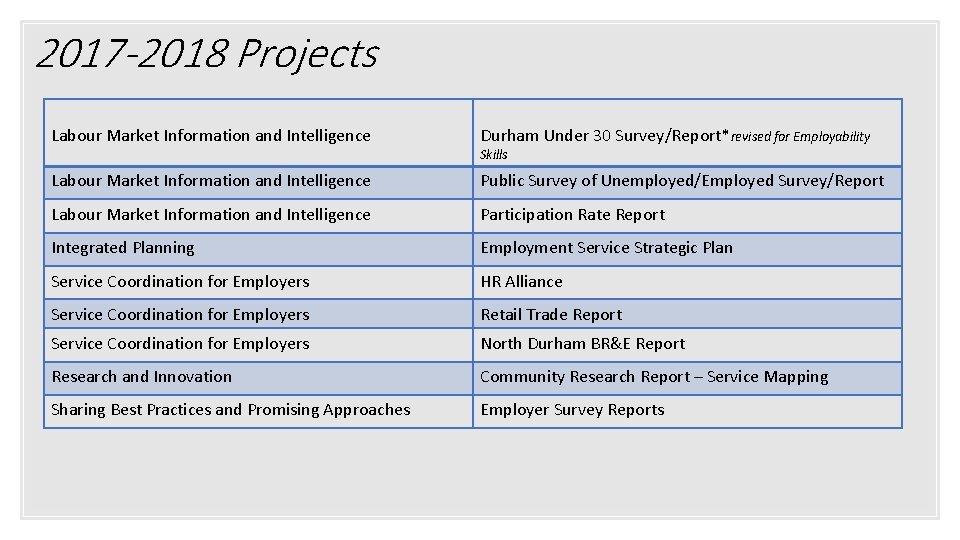
2017 -2018 Projects Labour Market Information and Intelligence Durham Under 30 Survey/Report*revised for Employability Labour Market Information and Intelligence Public Survey of Unemployed/Employed Survey/Report Labour Market Information and Intelligence Participation Rate Report Integrated Planning Employment Service Strategic Plan Service Coordination for Employers HR Alliance Service Coordination for Employers Retail Trade Report Service Coordination for Employers North Durham BR&E Report Research and Innovation Community Research Report – Service Mapping Sharing Best Practices and Promising Approaches Employer Survey Reports Skills
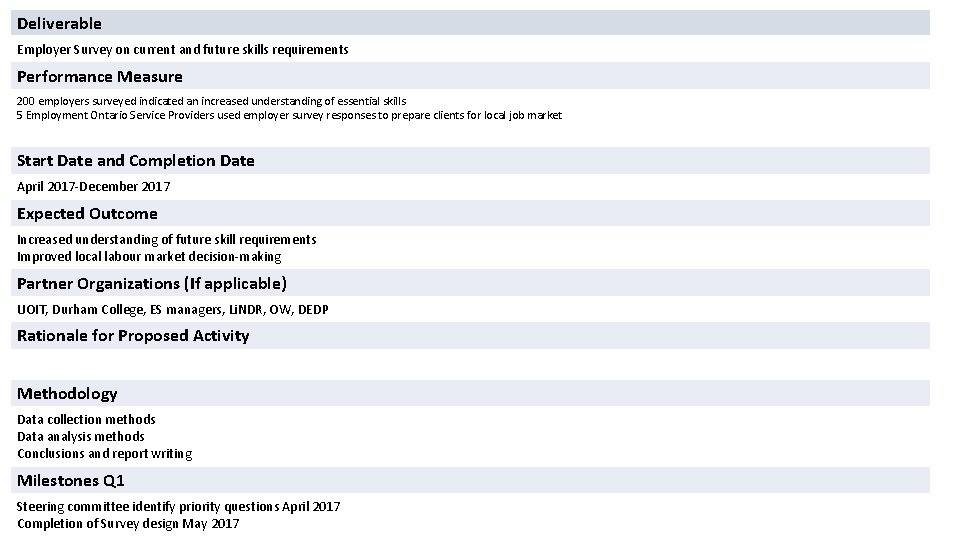
Deliverable Employer Survey on current and future skills requirements Performance Measure 200 employers surveyed indicated an increased understanding of essential skills 5 Employment Ontario Service Providers used employer survey responses to prepare clients for local job market Start Date and Completion Date April 2017 -December 2017 Expected Outcome Increased understanding of future skill requirements Improved local labour market decision-making Partner Organizations (If applicable) UOIT, Durham College, ES managers, Li. NDR, OW, DEDP Rationale for Proposed Activity Methodology Data collection methods Data analysis methods Conclusions and report writing Milestones Q 1 Steering committee identify priority questions April 2017 Completion of Survey design May 2017
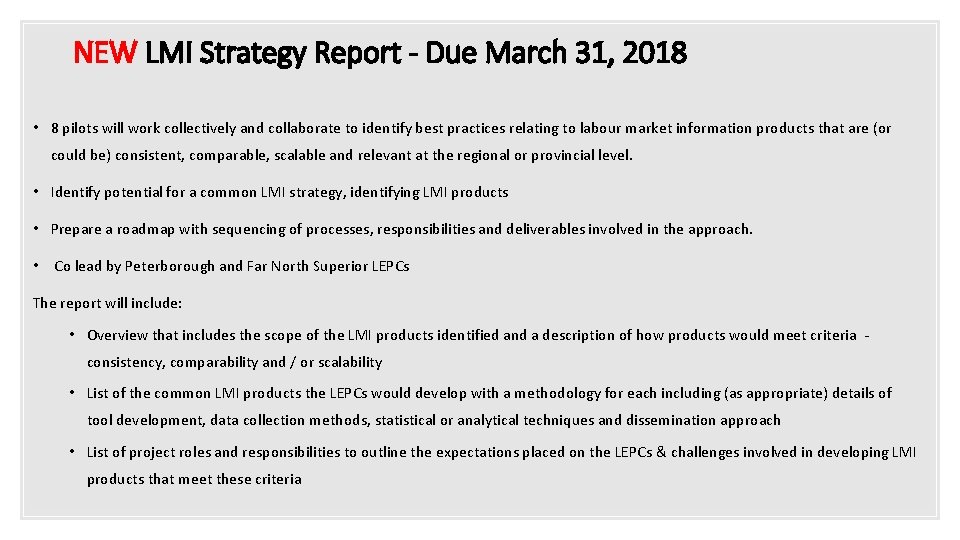
NEW LMI Strategy Report - Due March 31, 2018 • 8 pilots will work collectively and collaborate to identify best practices relating to labour market information products that are (or could be) consistent, comparable, scalable and relevant at the regional or provincial level. • Identify potential for a common LMI strategy, identifying LMI products • Prepare a roadmap with sequencing of processes, responsibilities and deliverables involved in the approach. • Co lead by Peterborough and Far North Superior LEPCs The report will include: • Overview that includes the scope of the LMI products identified and a description of how products would meet criteria - consistency, comparability and / or scalability • List of the common LMI products the LEPCs would develop with a methodology for each including (as appropriate) details of tool development, data collection methods, statistical or analytical techniques and dissemination approach • List of project roles and responsibilities to outline the expectations placed on the LEPCs & challenges involved in developing LMI products that meet these criteria

Milestones and Due Dates 2017 -2018 Business Plan • Draft to Employment Training Consultant April 13, 2017 • Review by Central Planning Table – electronic by April 10, 2017 • Review by DWA Board of Directors April 26, 2017 • Final submission May 5, 2017 • Community Planning Report • Outline due July 31, 2017 • Outline Review by DWA Board of Directors June 21, 2017 • Outline Review by Central Planning Table June 14, 2017 • Final report due to MAESD February 28, 2018 • Graphic Design and Translation March 31, 2018
- Slides: 25