
LOCAL CONTROL ACCOUNTABILITY PLAN LCAP COMMITTEE Woodland Joint
LOCAL CONTROL ACCOUNTABILITY PLAN (LCAP) COMMITTEE Woodland Joint Unified School District September 17, 2018
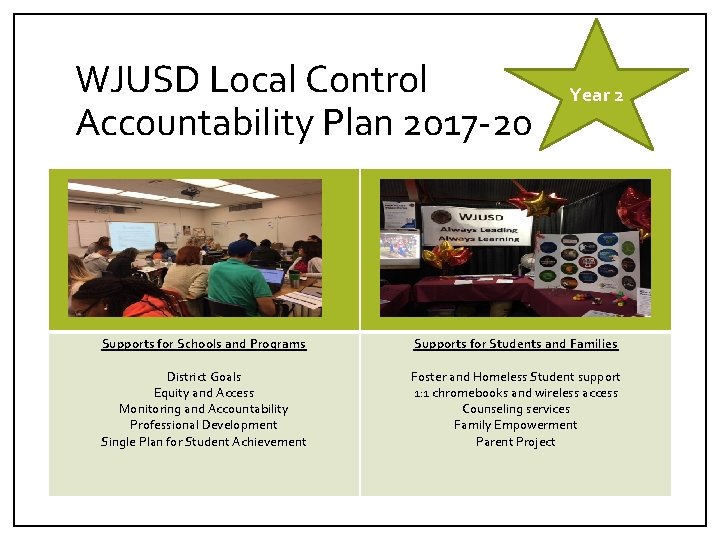
WJUSD Local Control Accountability Plan 2017 -20 Year 2 Supports for Schools and Programs Supports for Students and Families District Goals Equity and Access Monitoring and Accountability Professional Development Single Plan for Student Achievement Foster and Homeless Student support 1: 1 chromebooks and wireless access Counseling services Family Empowerment Parent Project
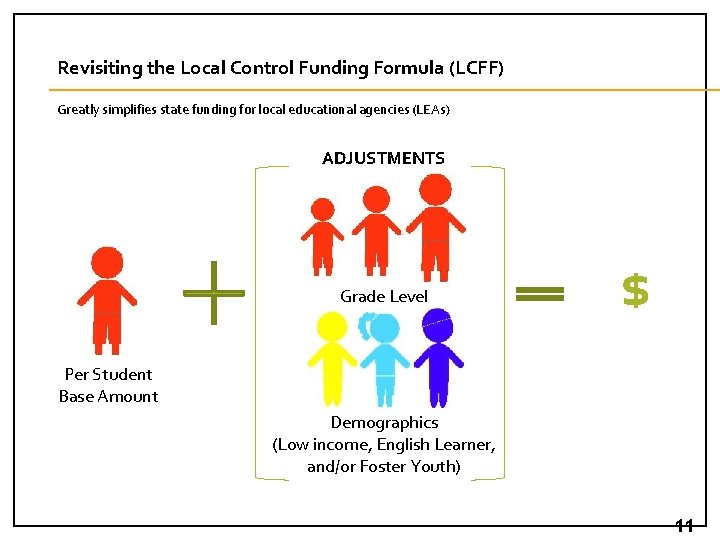
Revisiting the Local Control Funding Formula (LCFF) Greatly simplifies state funding for local educational agencies (LEAs) ADJUSTMENTS Grade Level $ Per Student Base Amount Demographics (Low income, English Learner, and/or Foster Youth) 11

Linked To
LCAP Big Ideas • LCAP is a 3 -year plan, intended to be an iterative, data-driven and student-centered process • The LCAP describes the actions which lead towards the goals and the budget that is aligned to those goals • Actions must be evaluated for effectiveness especially in regards to low income, foster youth, and English Learners • LCAP development and review occurs in consultation with multiple stakeholder groups • LCAP will be taken for Board approval in June
What does it mean to be datadriven and student-centered? • Data-driven = a culture of shared accountability • Teachers and administrators regularly review data on student progress, with a focus on student achievement using nationally normed assessments • Outcomes are agreed upon and actions are evaluated for effectiveness at specified times • Plans are adjusted based on results
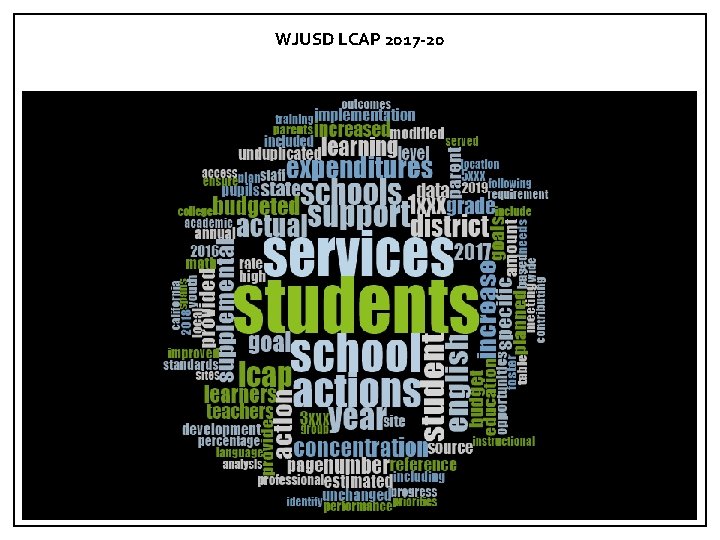
WJUSD LCAP 2017 -20
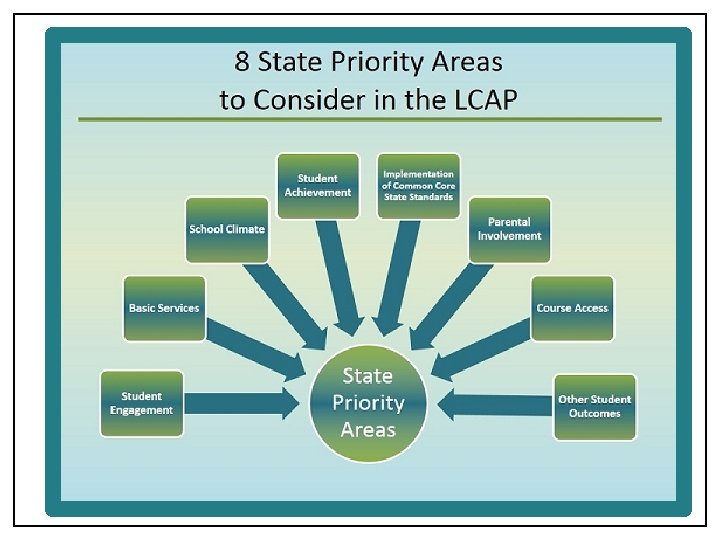
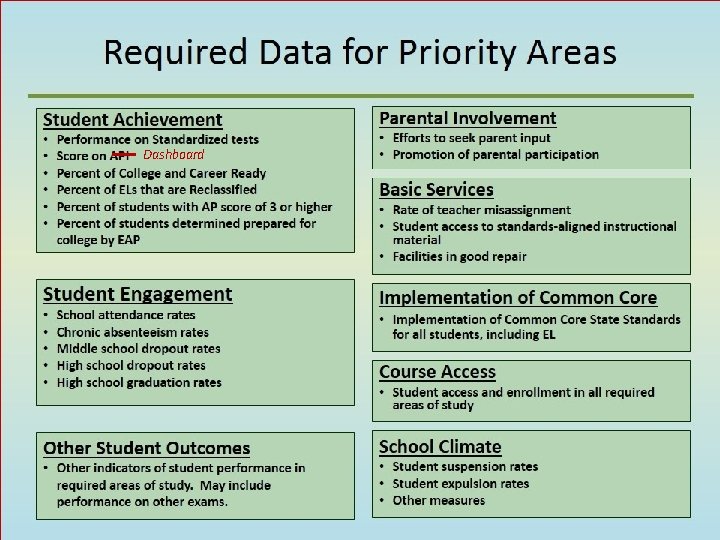
Dashboard
Process • Input is collected from staff, students, administrators, parents, and stakeholder groups through surveys and facilitated meetings • LCAP is developed and input is considered in the development of the plan
The Committee’s Role • Advise and contribute your knowledge and experience • Provide input and make recommendations • Represent the interests of our schools and our students • Support WJUSD in achieving the LCAP Goals
Highlights • Alignment of Career Technical Education pathways and development of course outlines that meet the 2013 Model CTE Standards • Professional learning to support the district instructional focus • Decrease in chronic absenteeism • Decreases in suspensions • Decrease in expulsions • Development of Ethnic Studies course options to support the Ethnic Studies graduation requirement; development of a statement of purpose and standards for Ethnic Studies courses
Highlights • Development and consistent use of common district assessments in Reading, Math, and Social-Emotional wellbeing • Development of a Memorandum of Understanding for dual enrollment with Woodland Community College • Development of partnerships with community organizations and agencies, including a partnership with the City of Woodland to establish Summer at City Hall • Increases in the number of parent workshops through Parent Empowerment • Increases in the Graduation Rate for English Learner, Low Income, and Students with Disabilities • Increase in the number of students meeting a-g requirements • Increase in the number of students at the Prepared level on the College and Career Indicator • Increase in the number of State Seals of Biliteracy awarded
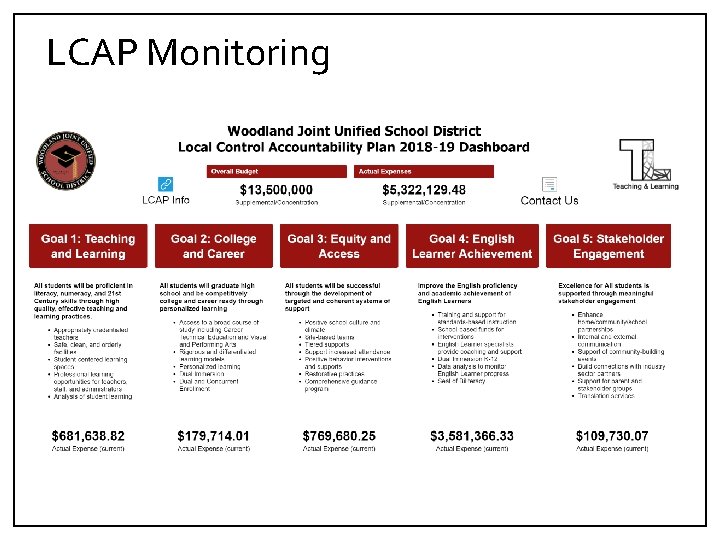
LCAP Monitoring
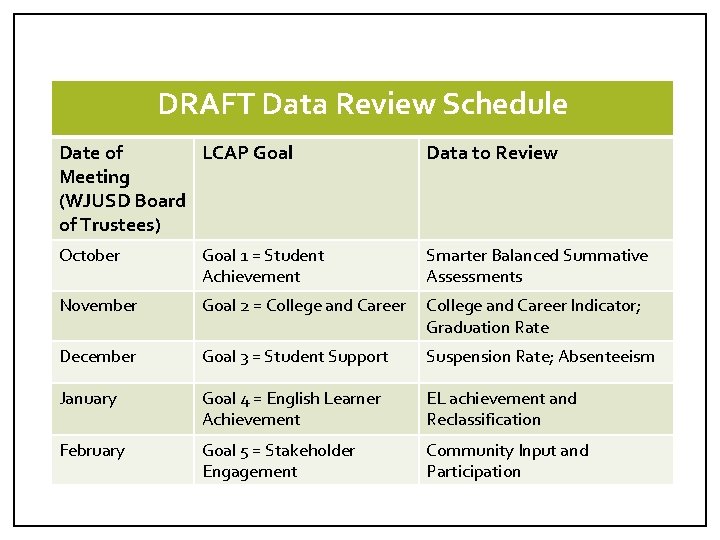
DRAFT Data Review Schedule Date of LCAP Goal Meeting (WJUSD Board of Trustees) Data to Review October Goal 1 = Student Achievement Smarter Balanced Summative Assessments November Goal 2 = College and Career Indicator; Graduation Rate December Goal 3 = Student Support Suspension Rate; Absenteeism January Goal 4 = English Learner Achievement EL achievement and Reclassification February Goal 5 = Stakeholder Engagement Community Input and Participation
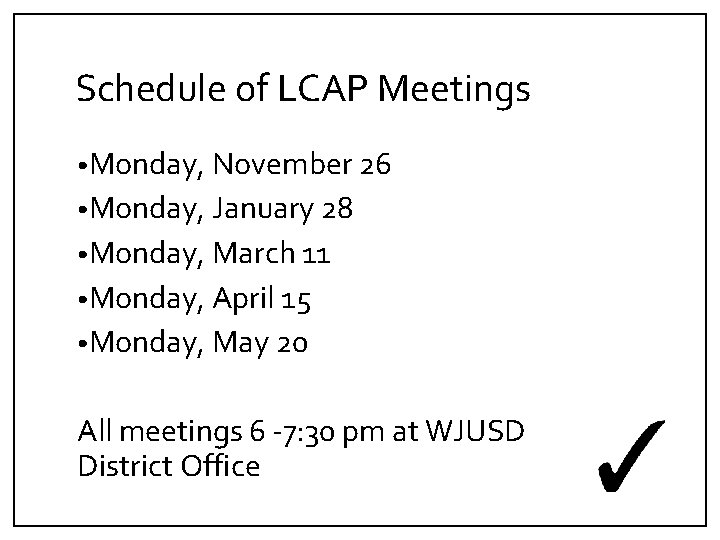
Schedule of LCAP Meetings • Monday, November 26 • Monday, January 28 • Monday, March 11 • Monday, April 15 • Monday, May 20 All meetings 6 -7: 30 pm at WJUSD District Office
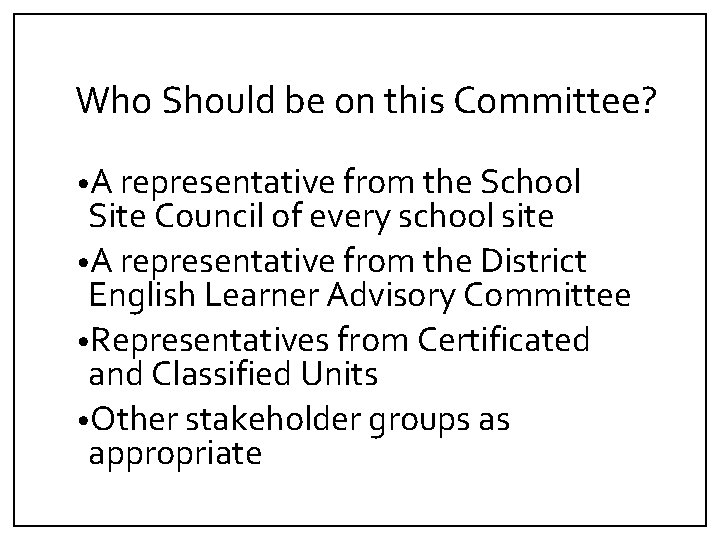
Who Should be on this Committee? • A representative from the School Site Council of every school site • A representative from the District English Learner Advisory Committee • Representatives from Certificated and Classified Units • Other stakeholder groups as appropriate

QUESTIONS?
- Slides: 18