
LOCAL ANESTHESIA CONSTITUENTS AND ARMAMENTARIUM Lec 3 cont





- Slides: 19
LOCAL ANESTHESIA (CONSTITUENTS AND ARMAMENTARIUM) Lec. 3 (cont. ) Dr. Noor Sahban
Constituents of local anesthetic solution: � � � Local anesthetic agent Vasoconstrictor Reducing agent Preservative Fungicide Vehicle
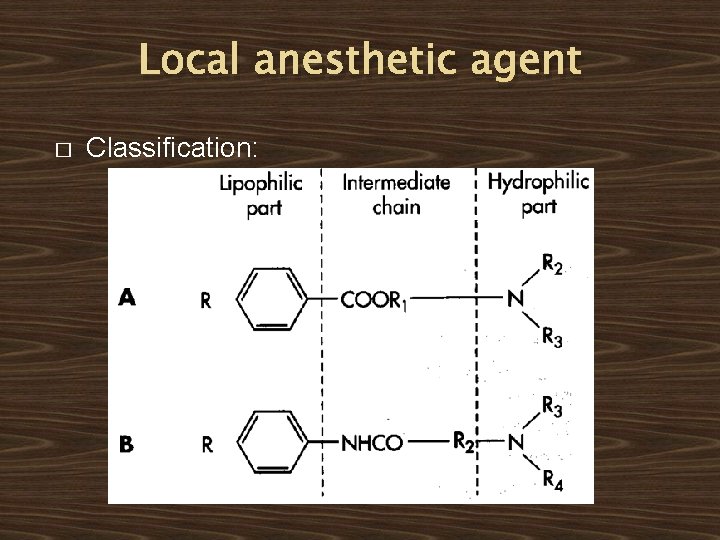
Local anesthetic agent � Classification:
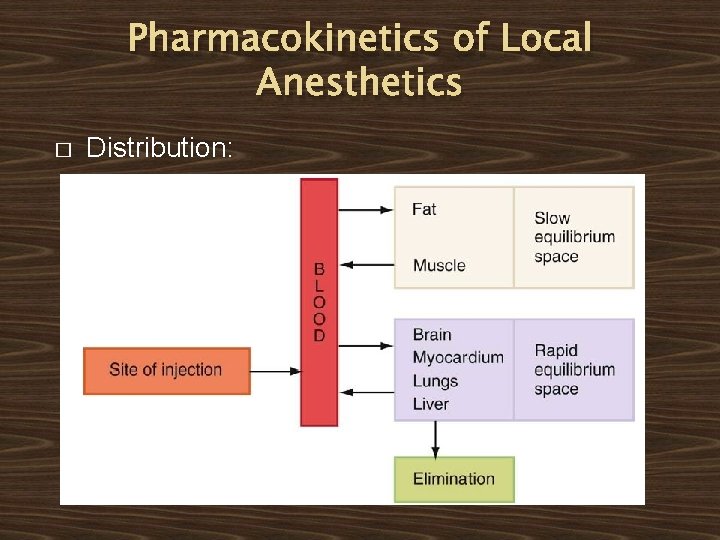
Pharmacokinetics of Local Anesthetics � Distribution:
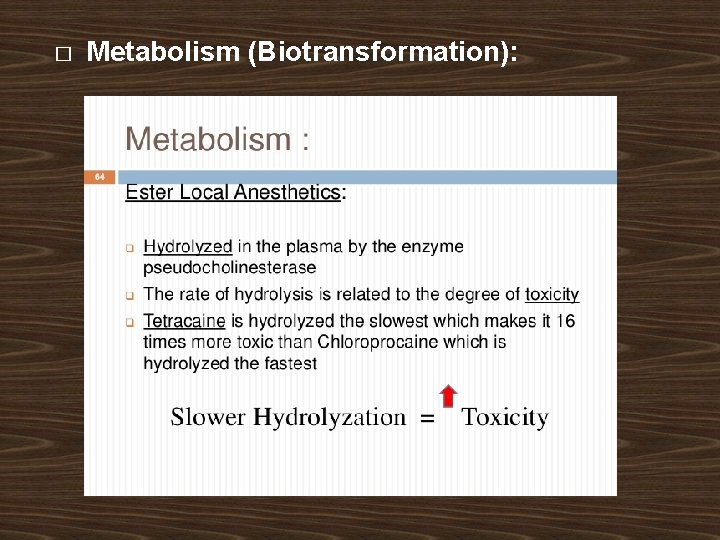
� Metabolism (Biotransformation):
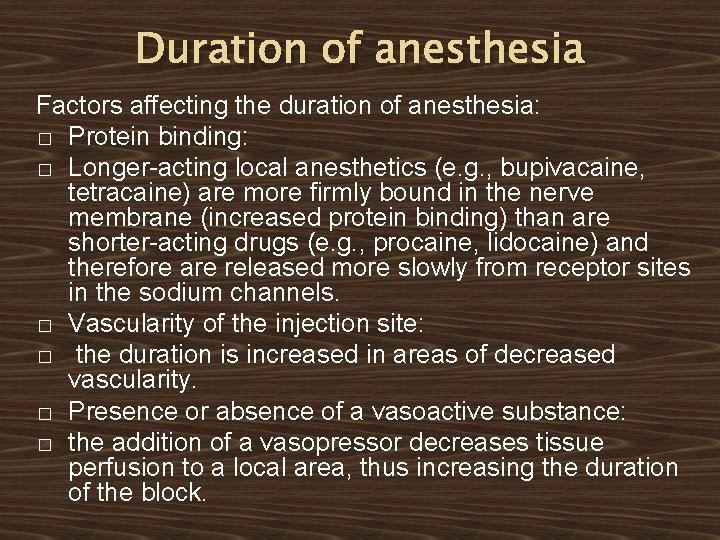
Duration of anesthesia Factors affecting the duration of anesthesia: � Protein binding: � Longer-acting local anesthetics (e. g. , bupivacaine, tetracaine) are more firmly bound in the nerve membrane (increased protein binding) than are shorter-acting drugs (e. g. , procaine, lidocaine) and therefore are released more slowly from receptor sites in the sodium channels. � Vascularity of the injection site: � the duration is increased in areas of decreased vascularity. � Presence or absence of a vasoactive substance: � the addition of a vasopressor decreases tissue perfusion to a local area, thus increasing the duration of the block.
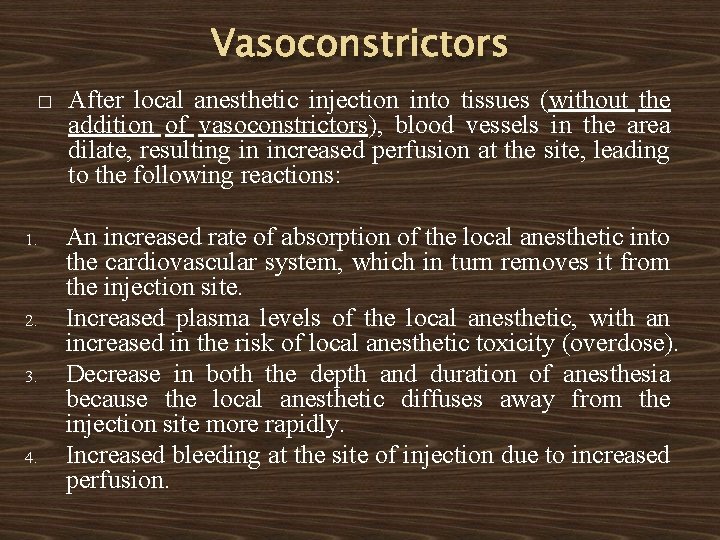
Vasoconstrictors � 1. 2. 3. 4. After local anesthetic injection into tissues (without the addition of vasoconstrictors), blood vessels in the area dilate, resulting in increased perfusion at the site, leading to the following reactions: An increased rate of absorption of the local anesthetic into the cardiovascular system, which in turn removes it from the injection site. Increased plasma levels of the local anesthetic, with an increased in the risk of local anesthetic toxicity (overdose). Decrease in both the depth and duration of anesthesia because the local anesthetic diffuses away from the injection site more rapidly. Increased bleeding at the site of injection due to increased perfusion.
The advantages of addition of vasoconstrictors to a local anesthetic solution: 1. 2. 3. 4. 5. By vasoconstricting blood vessels, vasoconstrictors decrease blood flow (perfusion) to the site of injection. Absorption of the local anesthetic into the cardiovascular system is slowed, resulting in lower anesthetic blood levels. Lower local anesthetic blood levels decrease the risk of local anesthetic toxicity. Higher volumes of local anesthetic agent remain in and around the nerve for longer periods, thereby increasing the duration of action of local anesthetics. Vasoconstrictors decrease bleeding at the site of injection; therefore they are useful when increased bleeding is anticipated (e. g. , during a surgical procedure).
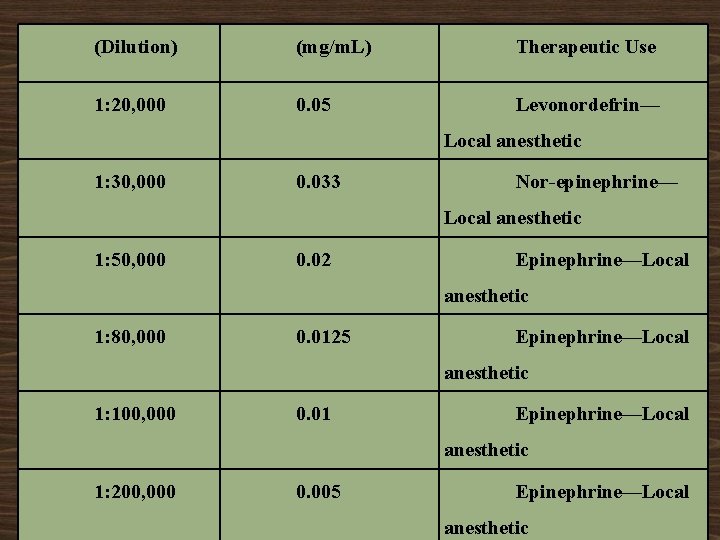
The Dilutions of Vasoconstrictors � � The dilution of vasoconstrictors is commonly referred to as a ratio (e. g. , 1 to 1000 [written 1: 1000]). A concentration of 1: 1000 means that 1 g (1000 mg) of solute (drug) is contained in 1000 ml of solution.
(Dilution) (mg/m. L) Therapeutic Use 1: 20, 000 0. 05 Levonordefrin— Local anesthetic 1: 30, 000 0. 033 Nor-epinephrine— Local anesthetic 1: 50, 000 0. 02 Epinephrine—Local anesthetic 1: 80, 000 0. 0125 Epinephrine—Local anesthetic 1: 100, 000 0. 01 Epinephrine—Local anesthetic 1: 200, 000 0. 005 Epinephrine—Local anesthetic
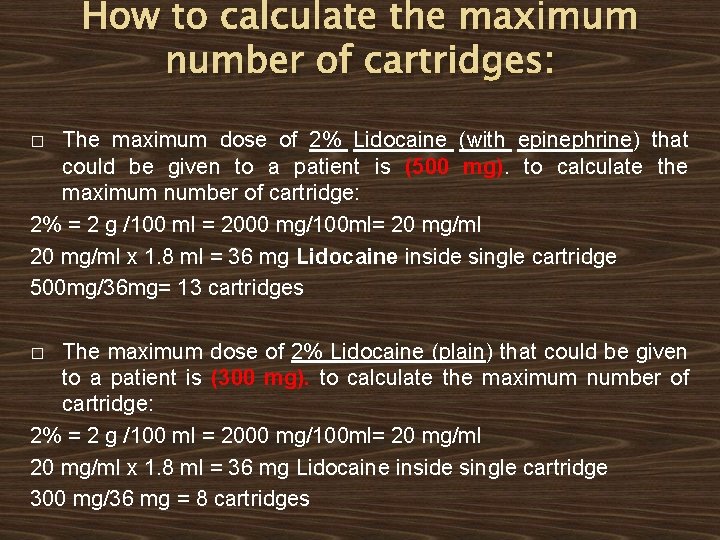
How to calculate the maximum number of cartridges: The maximum dose of 2% Lidocaine (with epinephrine) that could be given to a patient is (500 mg). to calculate the maximum number of cartridge: 2% = 2 g /100 ml = 2000 mg/100 ml= 20 mg/ml x 1. 8 ml = 36 mg Lidocaine inside single cartridge 500 mg/36 mg= 13 cartridges � The maximum dose of 2% Lidocaine (plain) that could be given to a patient is (300 mg). to calculate the maximum number of cartridge: 2% = 2 g /100 ml = 2000 mg/100 ml= 20 mg/ml x 1. 8 ml = 36 mg Lidocaine inside single cartridge 300 mg/36 mg = 8 cartridges �
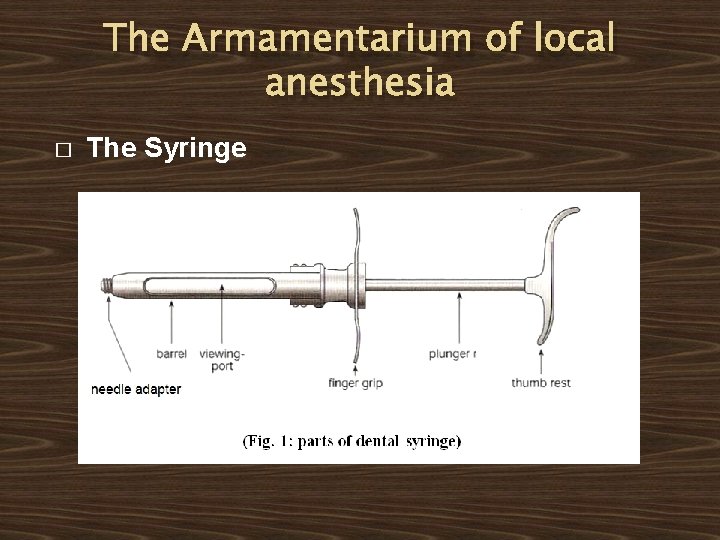
The Armamentarium of local anesthesia � The Syringe
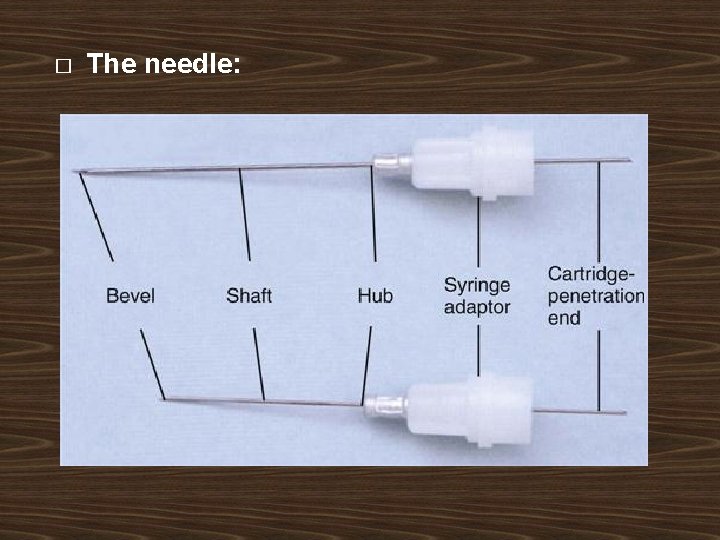
� The needle:
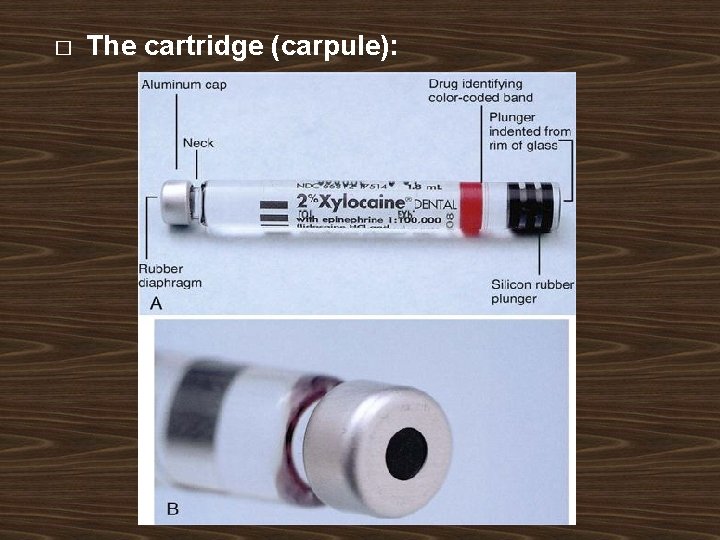
� The cartridge (carpule):
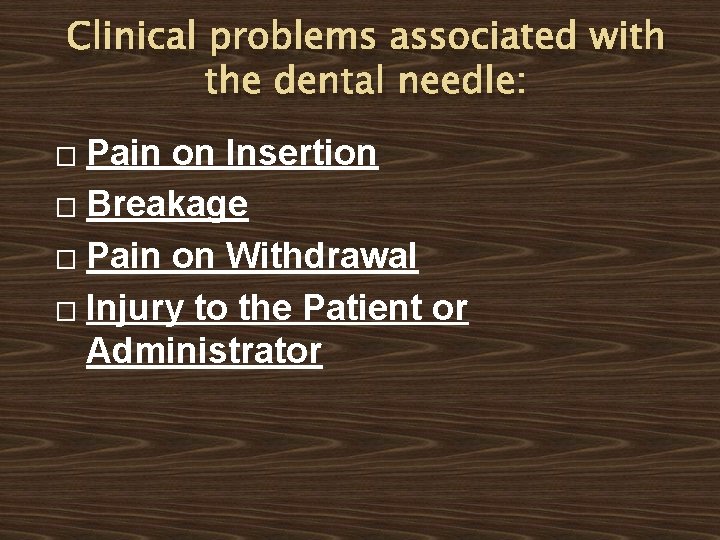
Clinical problems associated with the dental needle: Pain on Insertion � Breakage � Pain on Withdrawal � Injury to the Patient or Administrator �
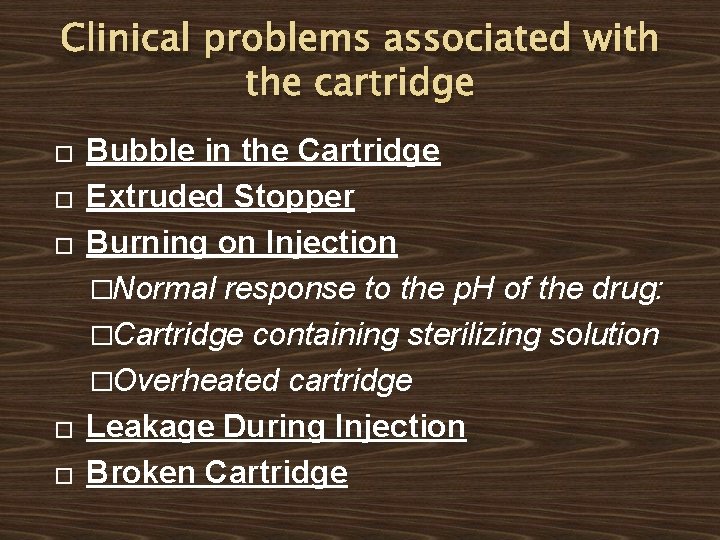
Clinical problems associated with the cartridge � � � Bubble in the Cartridge Extruded Stopper Burning on Injection �Normal response to the p. H of the drug: �Cartridge containing sterilizing solution �Overheated cartridge Leakage During Injection Broken Cartridge