
Loads and Reactions Dr Eng Ahmed Abd Elraheem
Loads and Reactions Dr. Eng. Ahmed Abd. Elraheem Farghaly
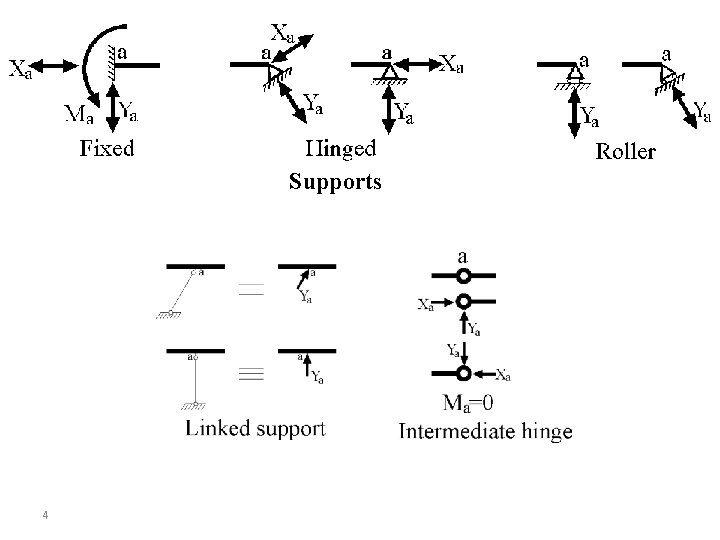
Supports 4
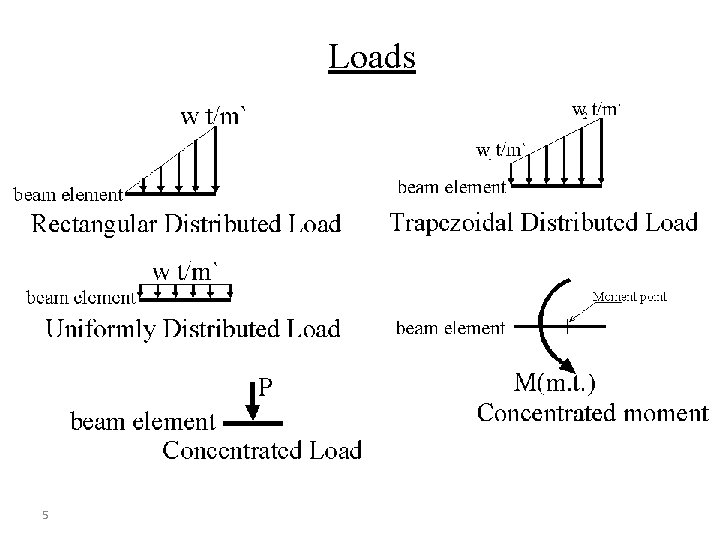
Loads 5
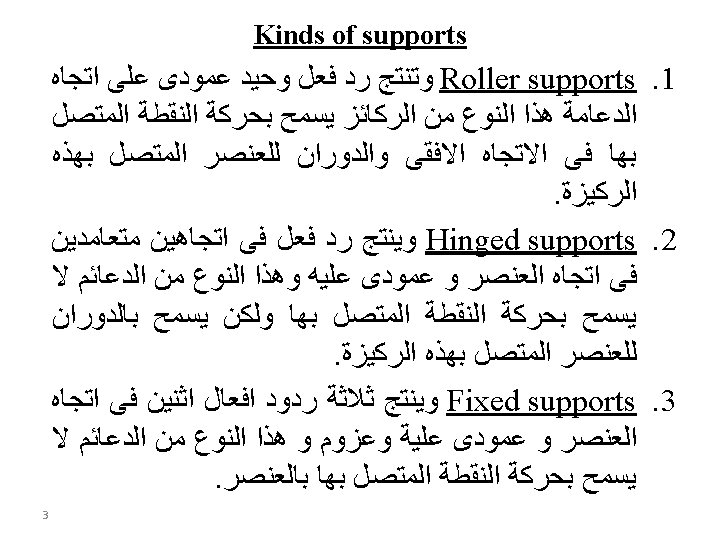
conclusion A roller support at point a provides one reaction component Ya , a hinge support provides two components Xa, and Ya while a fixed support provides three reactions components Xa, Ya and Ma. it must be remembered that one or more of these reaction components may be zero for structures under particular cases of loading. Further it is to be known that a reaction component may act in either sense, i. e. the vertical component Y may act upwards or downwards, and finally the moment may act to the right or to the left. 6
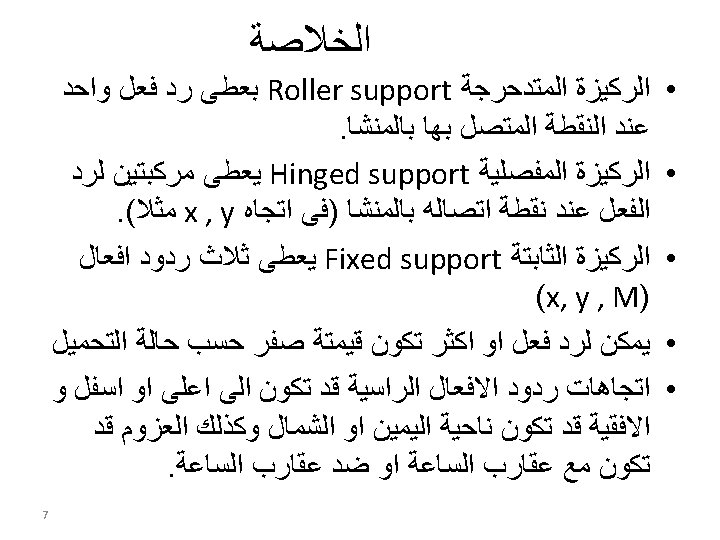
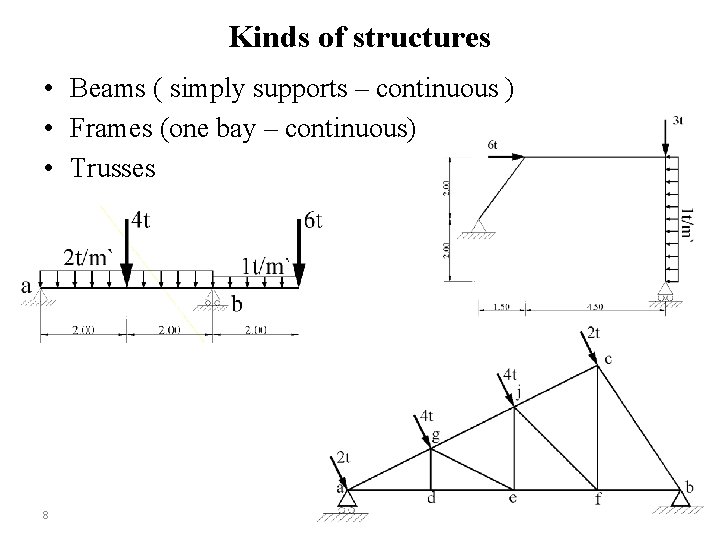
Kinds of structures • Beams ( simply supports – continuous ) • Frames (one bay – continuous) • Trusses 8
Stability and determinacy • There are two main types of stability and determinacy of structures: external concerned with the reactions and internal concerned with the internal forces and moments. This discussion will be confined to external stability and determinancy. • A stable structure is one which can support a general system of loads elastically and immediately on its application. 9
• Since there are three possible movements of a structure under a general case of loading; translation in the horizontal and vertical directions and rotation, no less than three reaction components can make a structure stable. However three or even more reaction components are not always sufficient to make a structure stable. For example, when the lines action of the reaction components are concurrent or parallel the structure is not completely restrained and will tend to rotate about the point of concurrency and in the second case it has no restraint to prevent any tendency of the structure to move normal to the direction of the links. 11
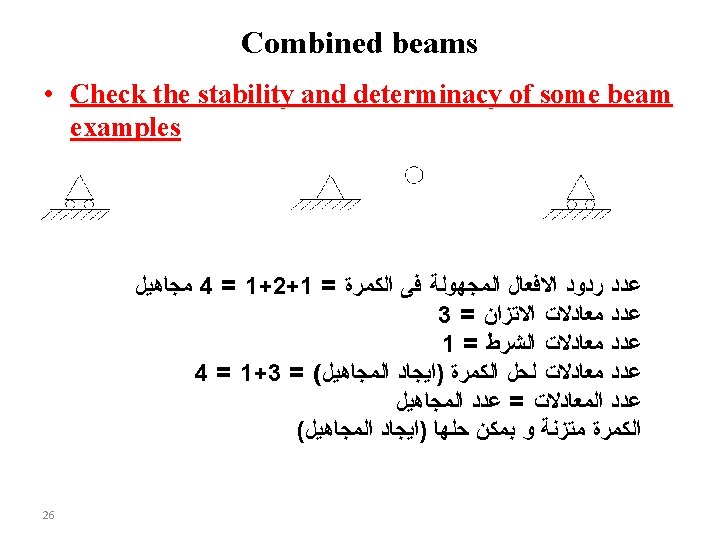
• A determinate structure is defined as one for a determinate structure is defined as one for which the reaction can be determined by the application of the equations of equilibrium in addition to condition equations, if any, introduced by special constructional details. • If number of the available equations is fewer than the number of the unknown reaction components, the structure is said to be statically indeterminate. The degree of in determinancy corresponds to the number of the reaction components in excess to number of the available equations is more than the number of the reaction components, the structure is unstable. 12
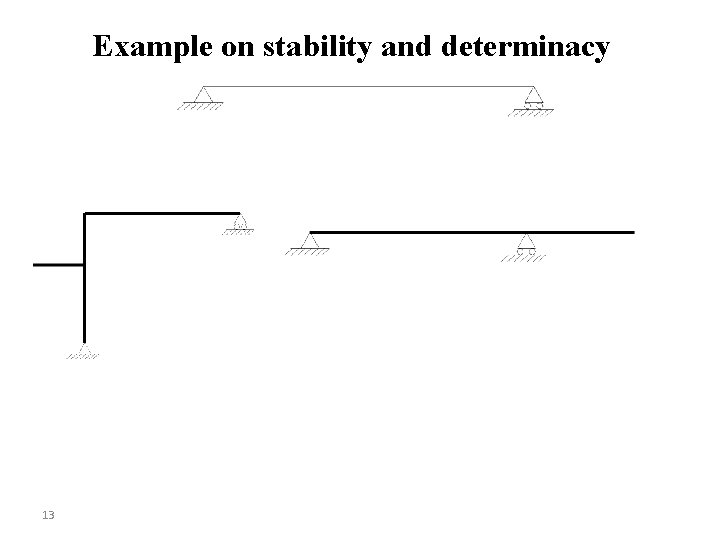
Example on stability and determinacy 13
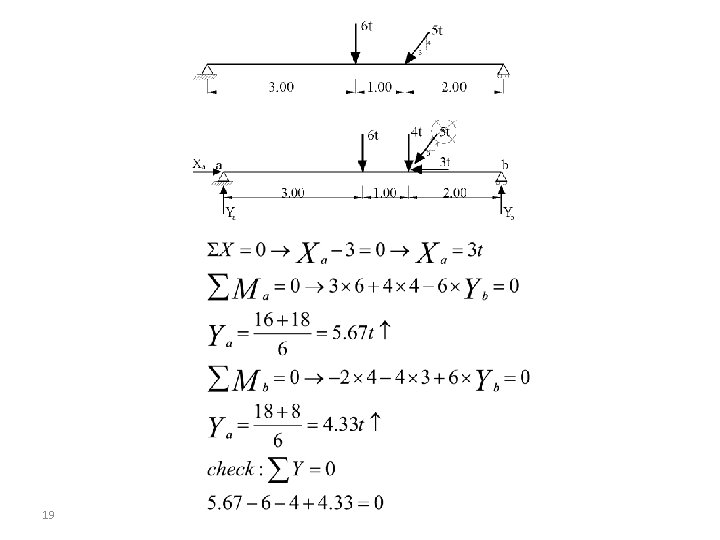
General Remarks 1) Inclined forces are usually replaced with their horizontal and vertical components. Also, distributed loads are replaced with equivalent concentrated loads acting in the centroids of the parts they replace. 2) For direct computation of the reactions of some structures, the conventional equations of equilibrium; ∑X=0, ∑Y=0 and ∑M=0, may be replaced with any other three convenient forms. 3) If the answer of a reaction component comes out plus, it acts in the assumed direction. If, however, it comes out minus, the component acts opposite to the direction assumed. 14
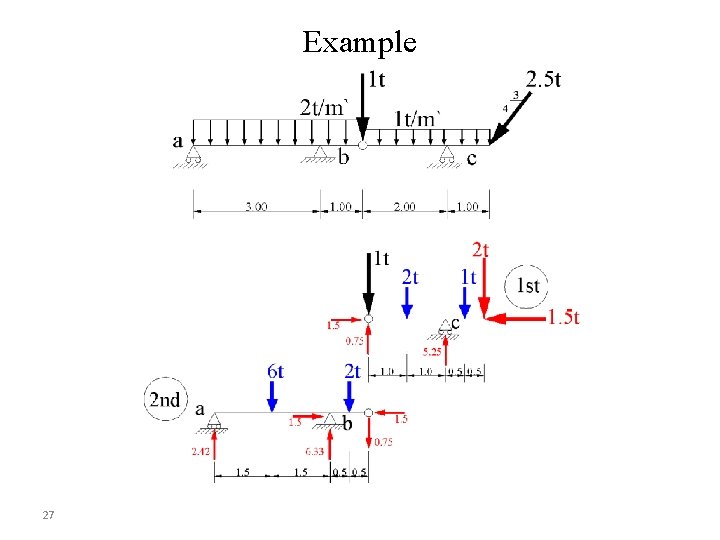
4) In problems including condition equations where it is sometimes convenient to break up the given structure into separate component parts, the interacting forces between adjacent parts may be assumed to act in either sense, for vertical components upwards or downwards, and for horizontal components to the right or to the left, but they must act in opposite senses on two adjacent parts. 5) A check on the results is always desirable. Indicate the results by underlining them and showing the units and directions of the forces. 15
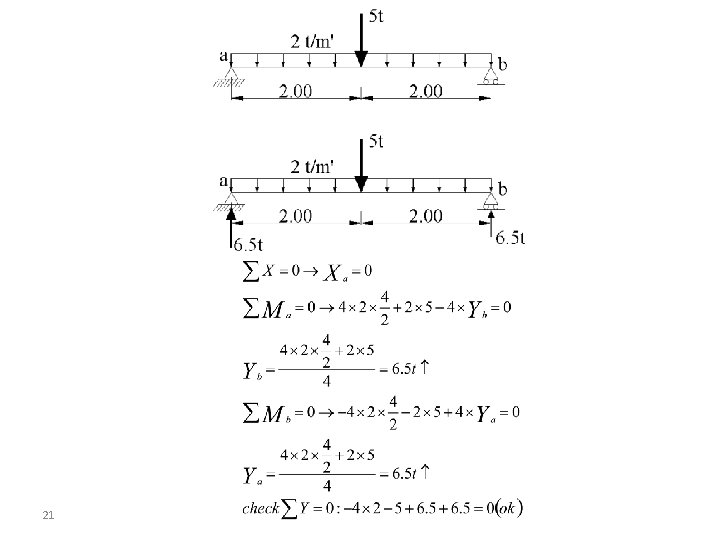
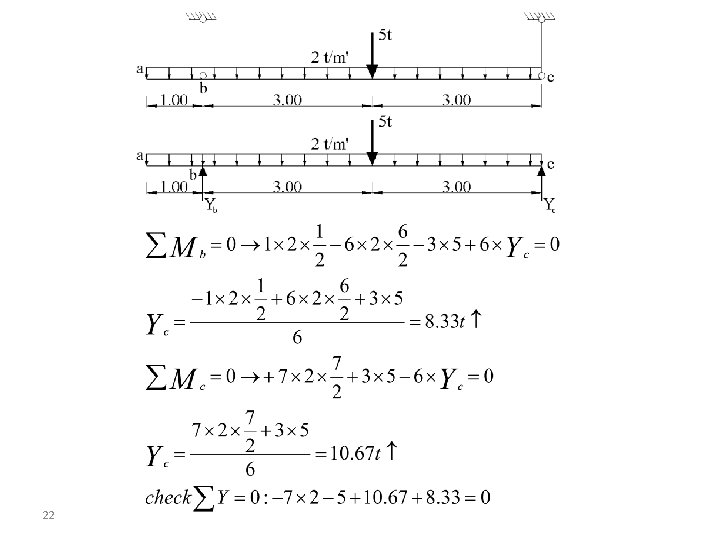
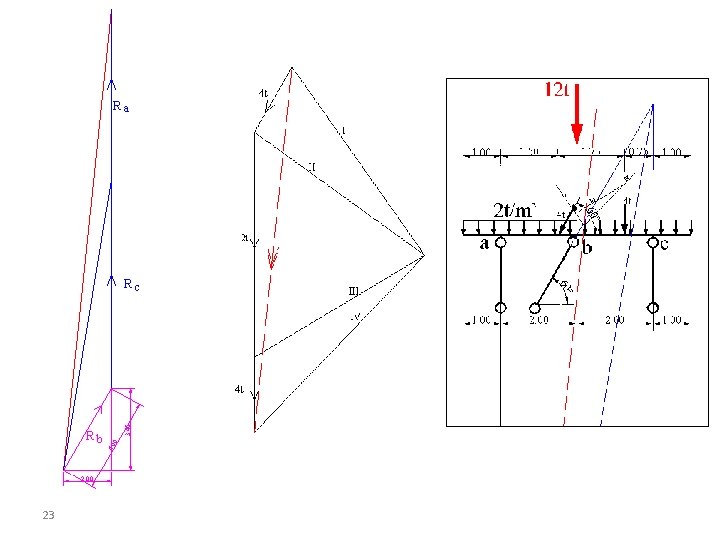
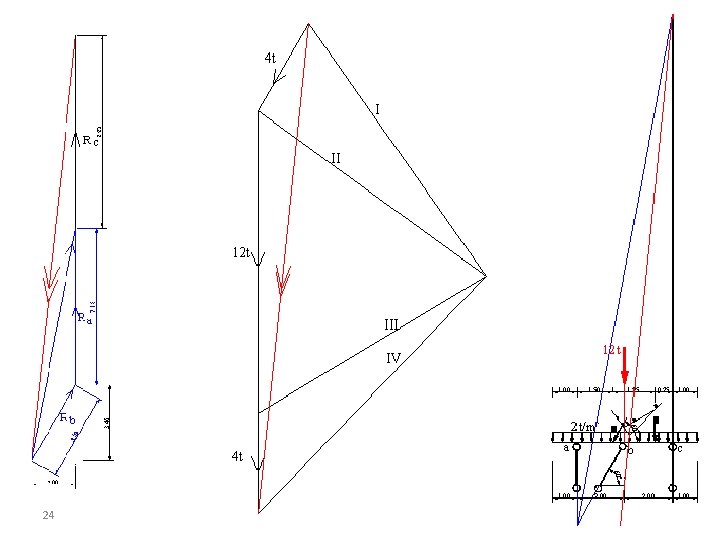
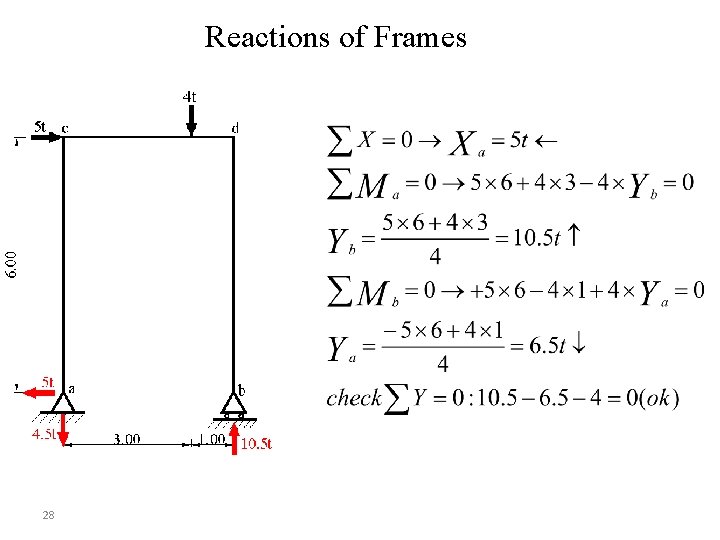
Calculation of Reactions In general a structure is acted upon by a system of non-concurrent forces consisting of the known applied loads and the unknown reactions, which as mentioned before are the equilibrants of the loads. Hence, if the structure is to remain in equilibrium the three equations of equilibrium, ∑X=0, ∑Y=0 and ∑M=0 must be fulfilled simultaneously by the loads and reactions. The application of these equations to several problems is illustrated. 17
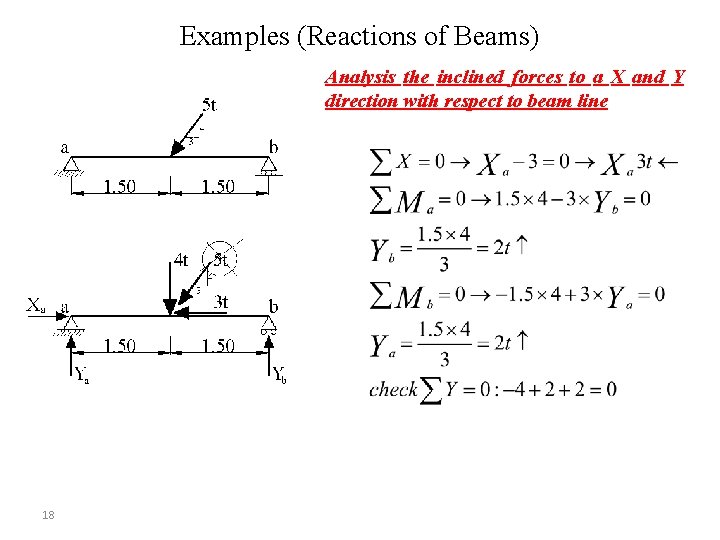
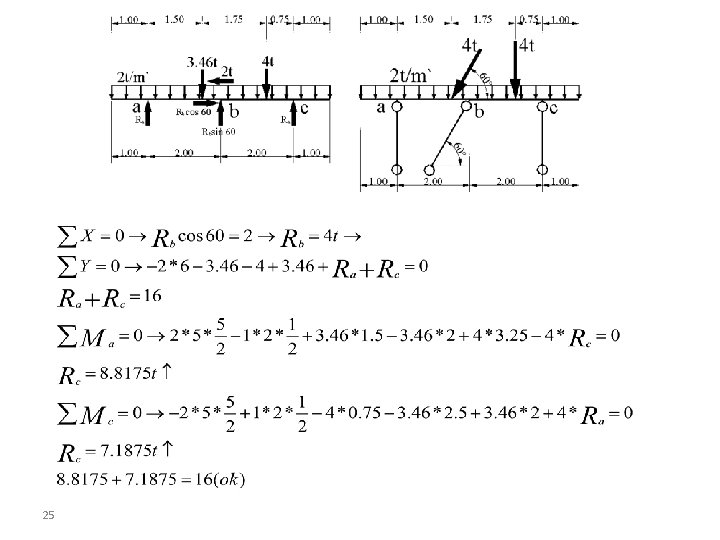
Examples (Reactions of Beams) Analysis the inclined forces to a X and Y direction with respect to beam line 18
19
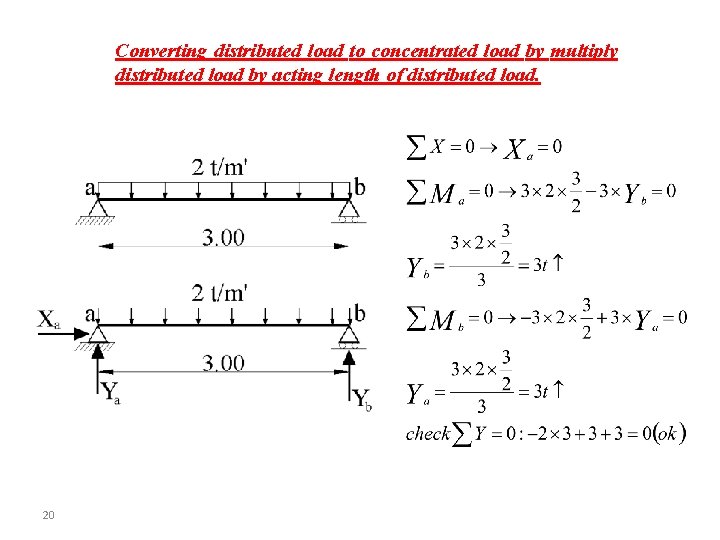
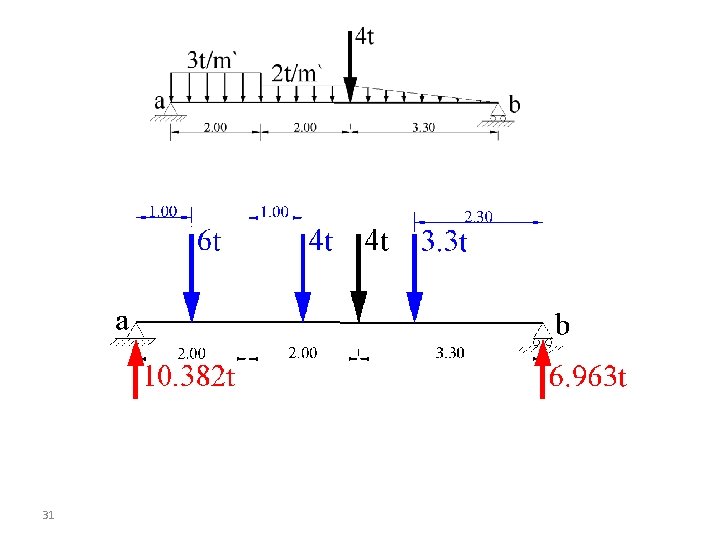
Converting distributed load to concentrated load by multiply distributed load by acting length of distributed load. 20
21
22
23
24
25
Example 27
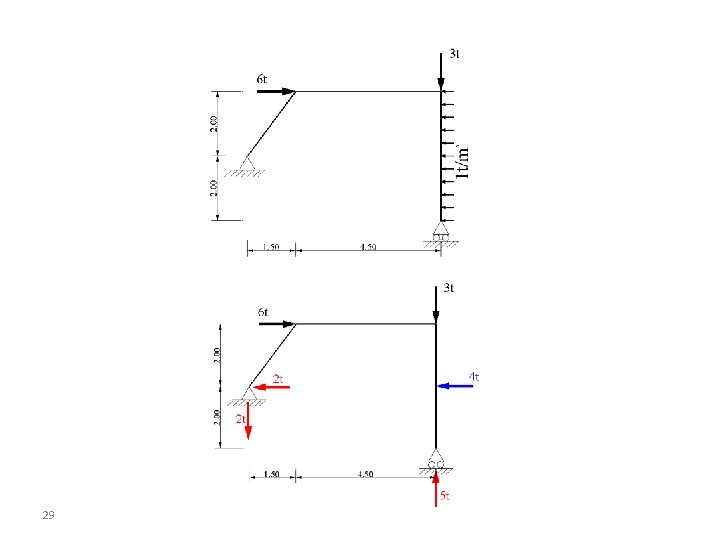
Reactions of Frames 28
29
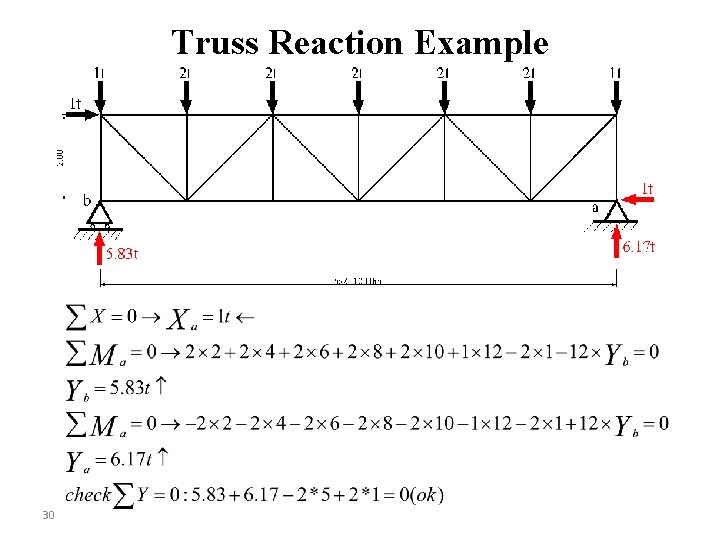
Truss Reaction Example 30
31
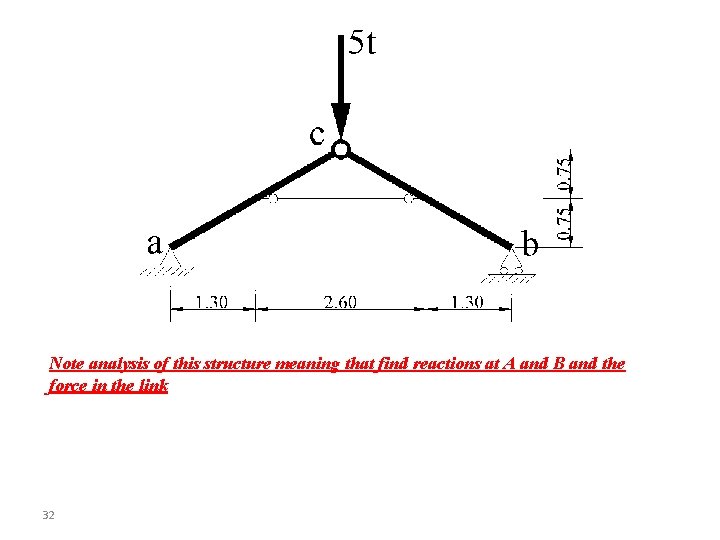
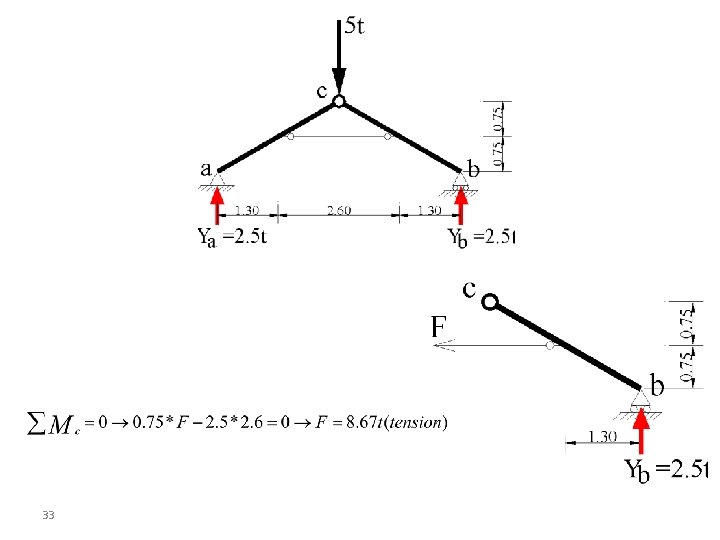
Note analysis of this structure meaning that find reactions at A and B and the force in the link 32
33
34
35
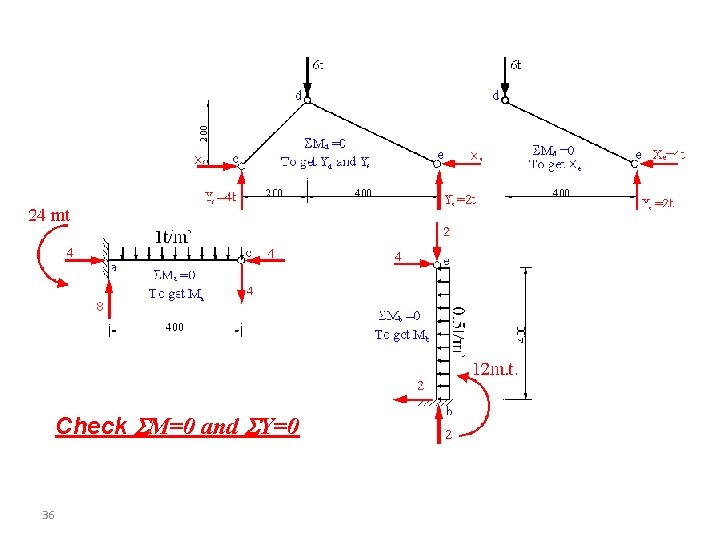
Check SM=0 and SY=0 36
- Slides: 36