
LO to identify and describe the different stages
• LO: to identify and describe the different stages of the water cycle. • I can explain the role of evaporation and condensation in the water cycle.
Watch this film to find out more about the water cycle. How much of the Earth's surface is water? While you are watching, listen out for the answers to these questions… What causes some of this water to evaporate? What form is the water in once it has evaporated? What are clouds made from? When do the water droplets in clouds fall? What do these water droplets fall as? How much water falls on dry land each day?
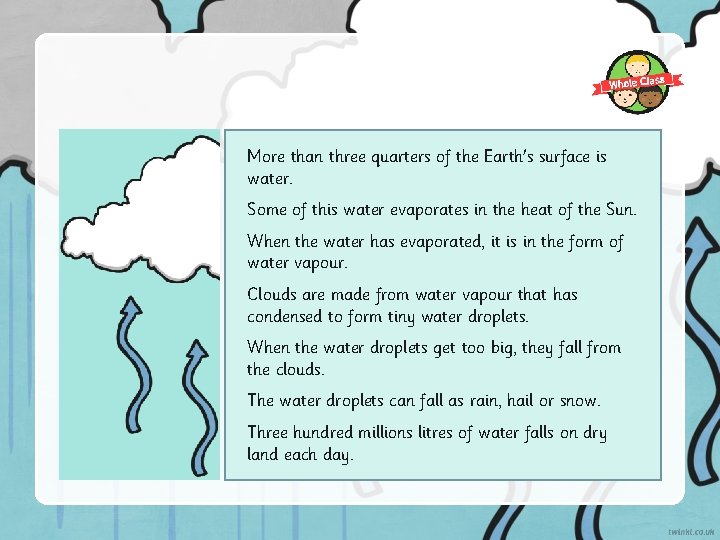
More than three quarters of the Earth's surface is water. Some of this water evaporates in the heat of the Sun. When the water has evaporated, it is in the form of water vapour. Clouds are made from water vapour that has condensed to form tiny water droplets. When the water droplets get too big, they fall from the clouds. The water droplets can fall as rain, hail or snow. Three hundred millions litres of water falls on dry land each day.
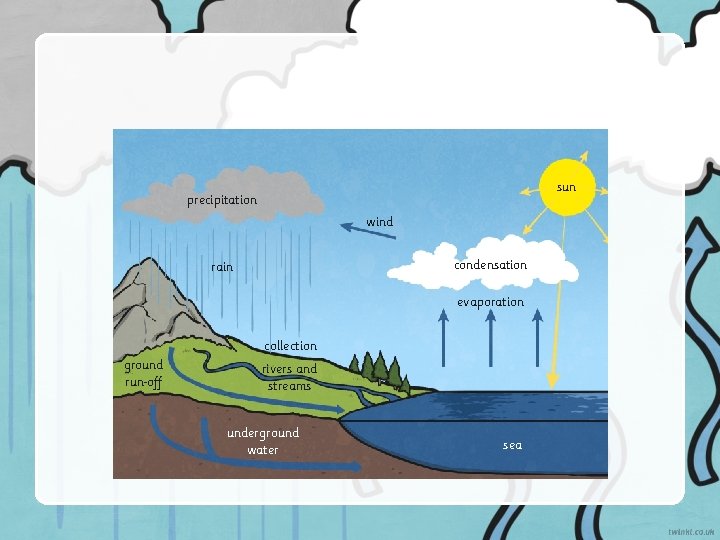
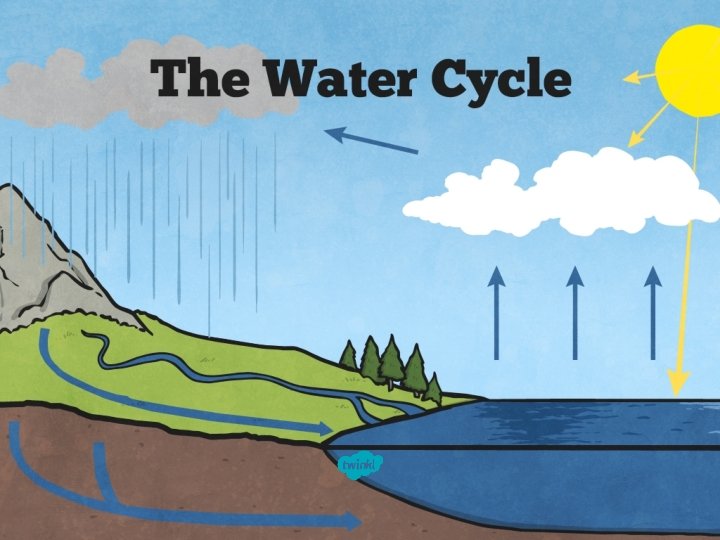
sun precipitation wind condensation rain evaporation collection ground run off rivers and streams underground water sea
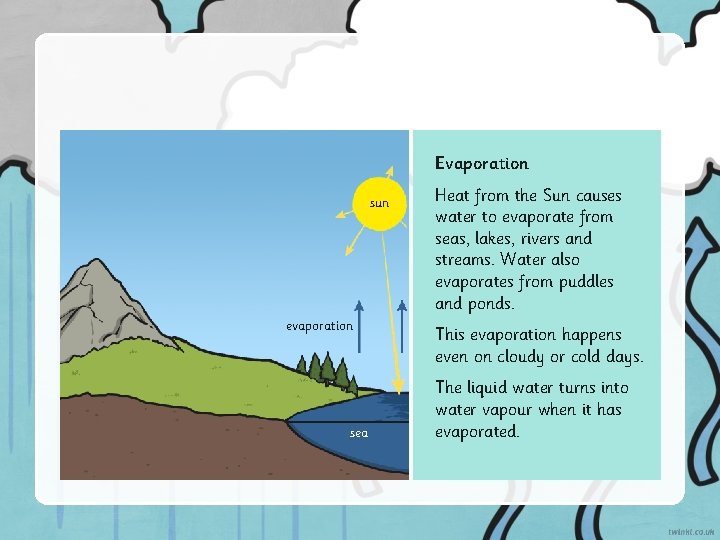
Evaporation sun evaporation sea Heat from the Sun causes water to evaporate from seas, lakes, rivers and streams. Water also evaporates from puddles and ponds. This evaporation happens even on cloudy or cold days. The liquid water turns into water vapour when it has evaporated.
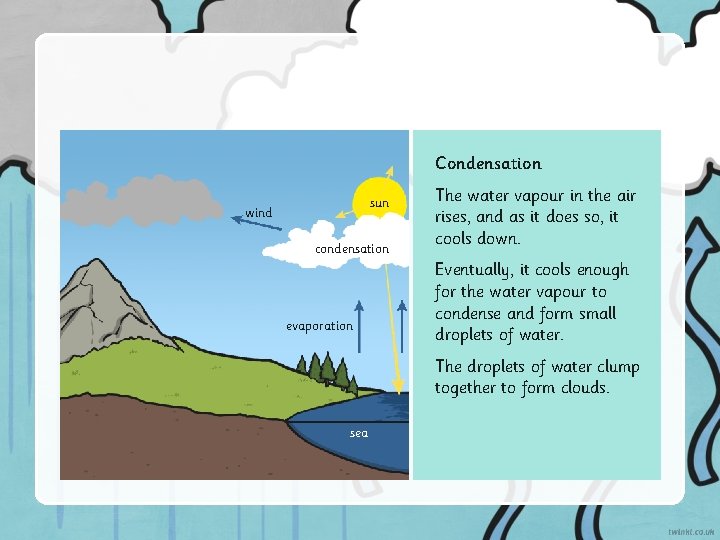
Condensation sun wind condensation evaporation The water vapour in the air rises, and as it does so, it cools down. Eventually, it cools enough for the water vapour to condense and form small droplets of water. The droplets of water clump together to form clouds. sea
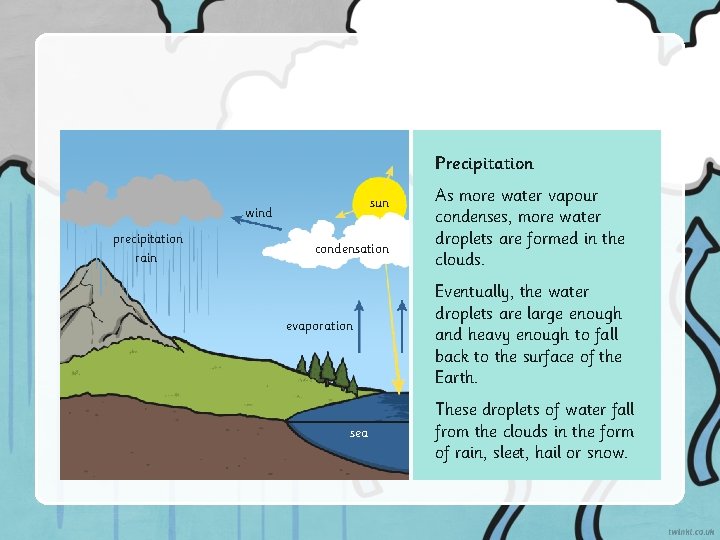
Precipitation precipitation rain sun wind condensation evaporation sea As more water vapour condenses, more water droplets are formed in the clouds. Eventually, the water droplets are large enough and heavy enough to fall back to the surface of the Earth. These droplets of water fall from the clouds in the form of rain, sleet, hail or snow.
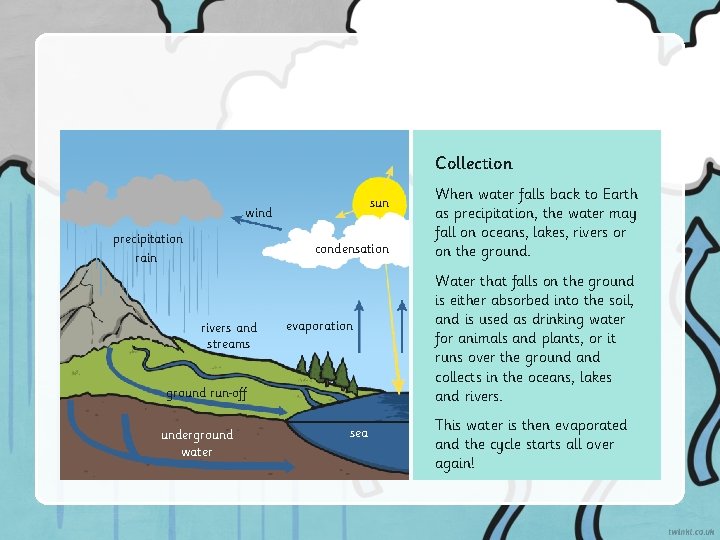
Collection sun wind precipitation rain condensation rivers and streams evaporation ground run off underground water sea When water falls back to Earth as precipitation, the water may fall on oceans, lakes, rivers or on the ground. Water that falls on the ground is either absorbed into the soil, and is used as drinking water for animals and plants, or it runs over the ground and collects in the oceans, lakes and rivers. This water is then evaporated and the cycle starts all over again!
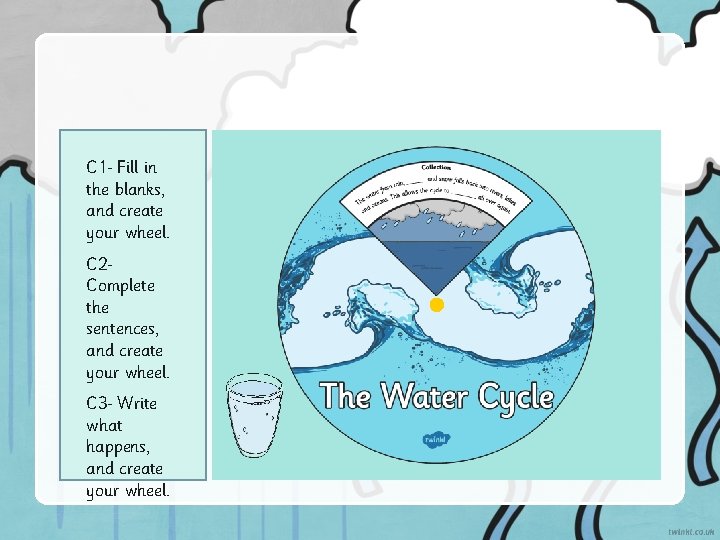
C 1 Fill in the blanks, and create your wheel. C 2 Complete the sentences, and create your wheel. C 3 Write what happens, and create your wheel.
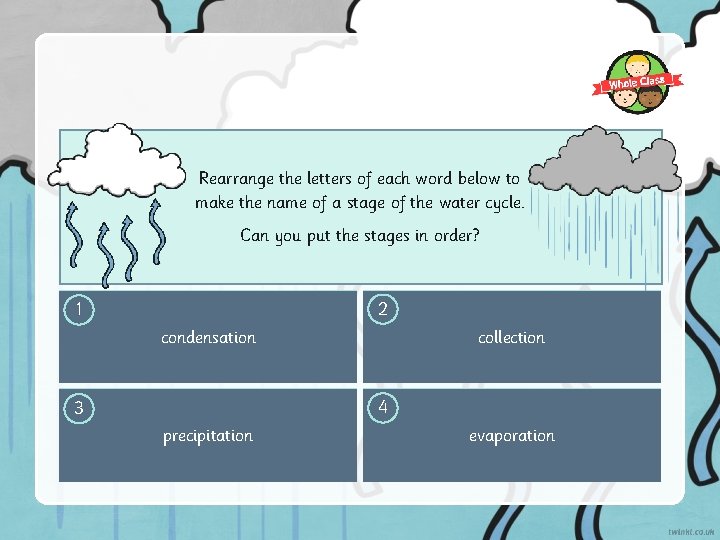
Rearrange the letters of each word below to make the name of a stage of the water cycle. Can you put the stages in order? 2 1 donsaictenon condensation lictencool collection 4 3 cronitpitpeia precipitation vaintoreapo evaporation

C 1 – Colour and complete your sheet using the words on the lest hand Side. Get your teacher to trim it before sticking it in your book. C 2 – Complete and colour in your sheet the trim and stick. C 3 – Use the sheet to help you, but draw the water cycle in your Book using the correct scientific terminology.
- Slides: 12