
LO 4 Capital Cost Allowance CCA CCA is
- Slides: 6
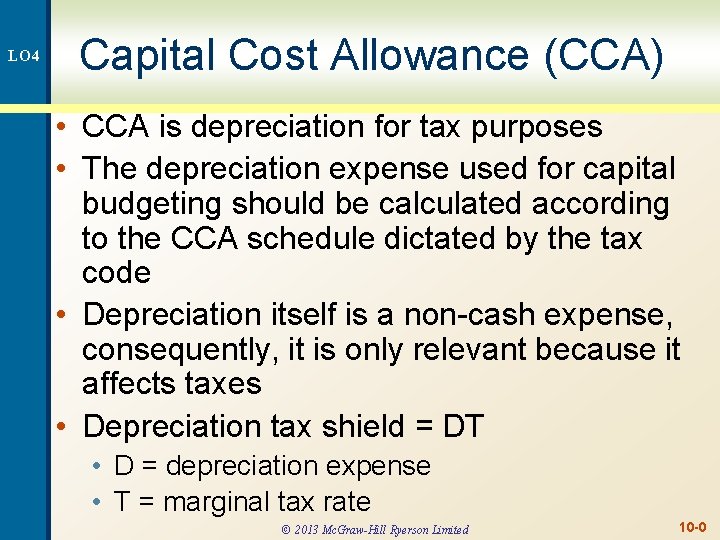
LO 4 Capital Cost Allowance (CCA) • CCA is depreciation for tax purposes • The depreciation expense used for capital budgeting should be calculated according to the CCA schedule dictated by the tax code • Depreciation itself is a non-cash expense, consequently, it is only relevant because it affects taxes • Depreciation tax shield = DT • D = depreciation expense • T = marginal tax rate © 2013 Mc. Graw-Hill Ryerson Limited 10 -0
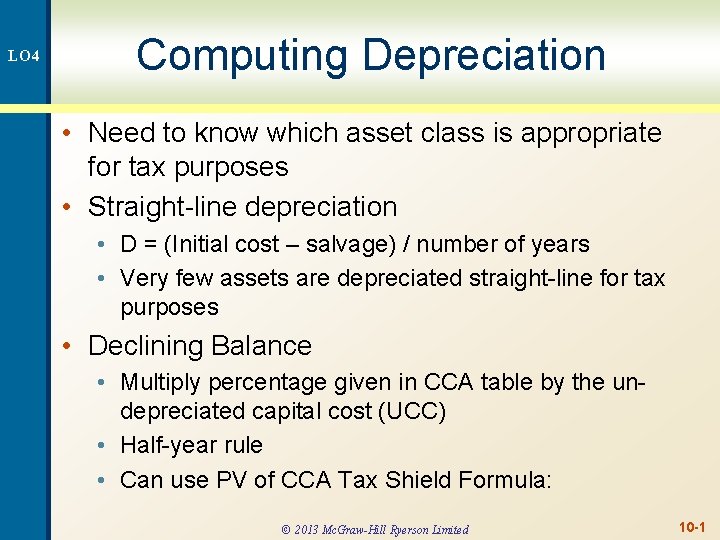
LO 4 Computing Depreciation • Need to know which asset class is appropriate for tax purposes • Straight-line depreciation • D = (Initial cost – salvage) / number of years • Very few assets are depreciated straight-line for tax purposes • Declining Balance • Multiply percentage given in CCA table by the undepreciated capital cost (UCC) • Half-year rule • Can use PV of CCA Tax Shield Formula: © 2013 Mc. Graw-Hill Ryerson Limited 10 -1
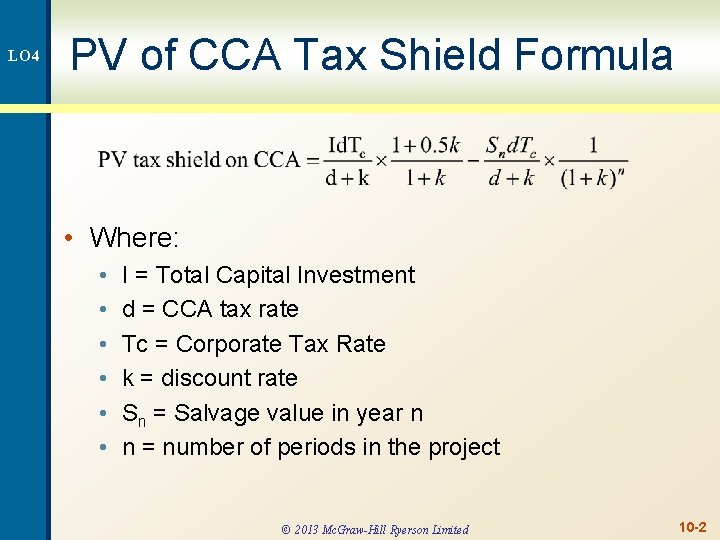
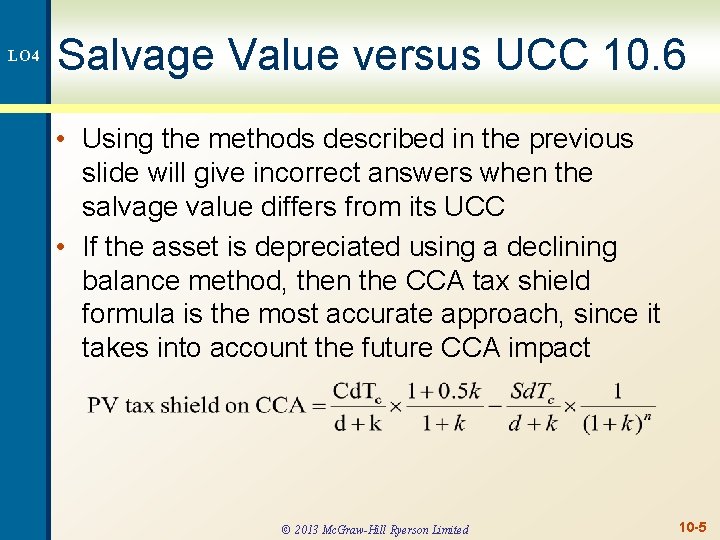
LO 4 PV of CCA Tax Shield Formula • Where: • • • I = Total Capital Investment d = CCA tax rate Tc = Corporate Tax Rate k = discount rate Sn = Salvage value in year n n = number of periods in the project © 2013 Mc. Graw-Hill Ryerson Limited 10 -2
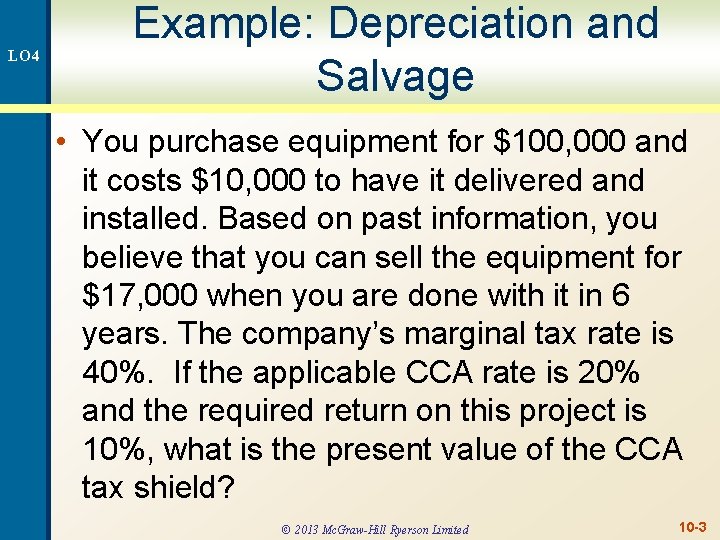
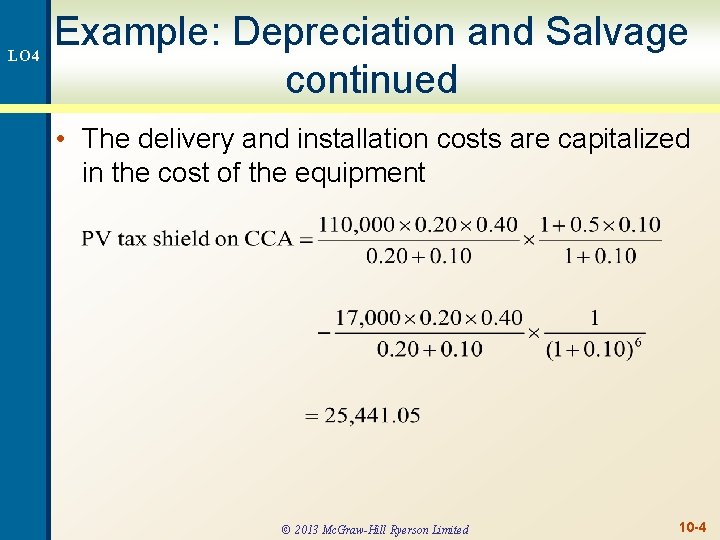
LO 4 Example: Depreciation and Salvage • You purchase equipment for $100, 000 and it costs $10, 000 to have it delivered and installed. Based on past information, you believe that you can sell the equipment for $17, 000 when you are done with it in 6 years. The company’s marginal tax rate is 40%. If the applicable CCA rate is 20% and the required return on this project is 10%, what is the present value of the CCA tax shield? © 2013 Mc. Graw-Hill Ryerson Limited 10 -3
LO 4 Example: Depreciation and Salvage continued • The delivery and installation costs are capitalized in the cost of the equipment © 2013 Mc. Graw-Hill Ryerson Limited 10 -4
LO 4 Salvage Value versus UCC 10. 6 • Using the methods described in the previous slide will give incorrect answers when the salvage value differs from its UCC • If the asset is depreciated using a declining balance method, then the CCA tax shield formula is the most accurate approach, since it takes into account the future CCA impact © 2013 Mc. Graw-Hill Ryerson Limited 10 -5