
LNG systems for natural gas propelled ships Jaroslaw
- Slides: 27
LNG systems for natural gas propelled ships Jaroslaw Polinski, Maciej Chorowski, Pawel Duda, Janusz Skrzypacz Wrocław University of Technology, Poland Cryogenic Engineering Conference (CEC 25) Tucson, AZ, USA – June 28 - July 02 2015
Outline • • • Problem’s background Dual fuel engines Marine LNG tanks Gas fuel system overview Samso Ferry fuel gas system Conclusions
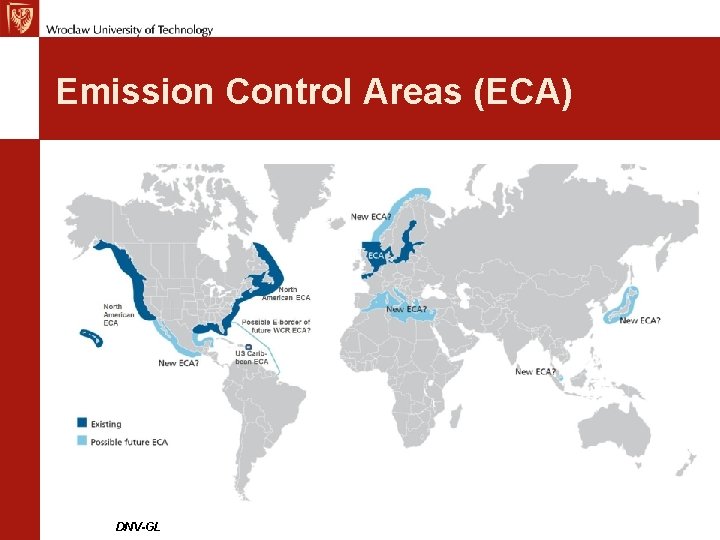
Emission Control Areas (ECA) DNV-GL
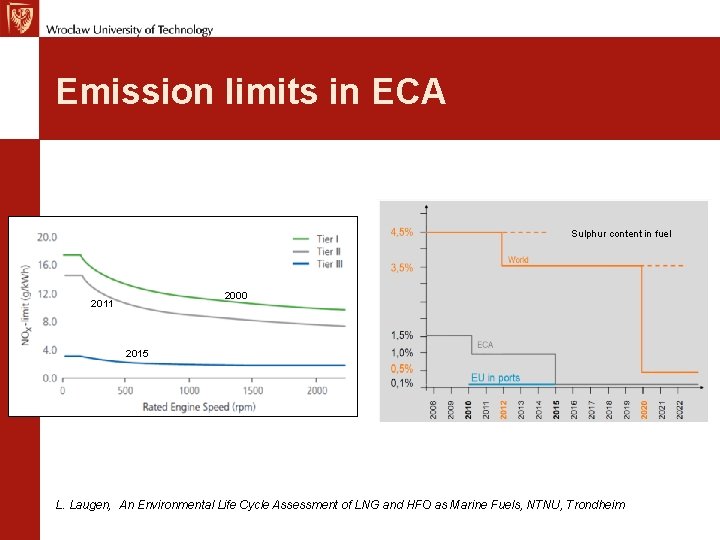
Emission limits in ECA Sulphur content in fuel 2000 2011 2015 L. Laugen, An Environmental Life Cycle Assessment of LNG and HFO as Marine Fuels, NTNU, Trondheim
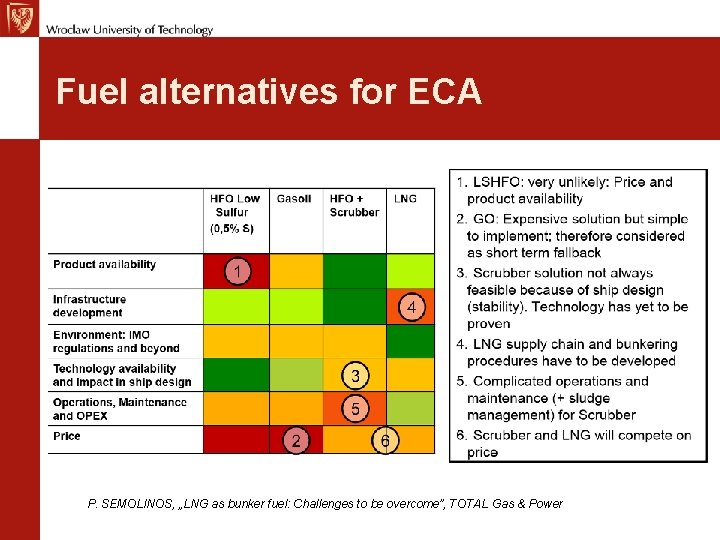
Fuel alternatives for ECA P. SEMOLINOS, „LNG as bunker fuel: Challenges to be overcome”, TOTAL Gas & Power
Outline • • • Problem’s background Dual fuel engines Marine LNG tanks Gas fuel system overview Samso Ferry fuel gas system Conclusions
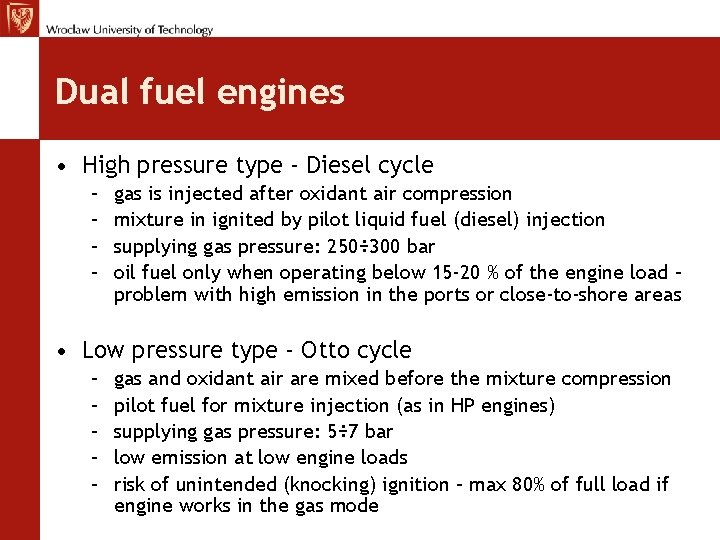
Dual fuel engines • High pressure type - Diesel cycle – – gas is injected after oxidant air compression mixture in ignited by pilot liquid fuel (diesel) injection supplying gas pressure: 250÷ 300 bar oil fuel only when operating below 15 -20 % of the engine load – problem with high emission in the ports or close-to-shore areas • Low pressure type - Otto cycle – – – gas and oxidant air are mixed before the mixture compression pilot fuel for mixture injection (as in HP engines) supplying gas pressure: 5÷ 7 bar low emission at low engine loads risk of unintended (knocking) ignition – max 80% of full load if engine works in the gas mode
Outline • • Problem’s background Dual fuel engines Marine LNG tanks Gas fuel system overview Gas utilization systems overview Samso Ferry fuel gas system Conclusions
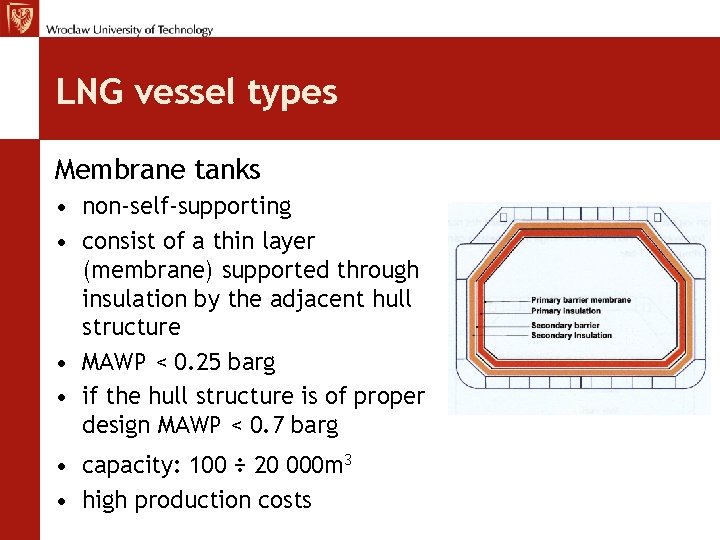
LNG vessel types Membrane tanks • non-self-supporting • consist of a thin layer (membrane) supported through insulation by the adjacent hull structure • MAWP < 0. 25 barg • if the hull structure is of proper design MAWP < 0. 7 barg • capacity: 100 ÷ 20 000 m 3 • high production costs
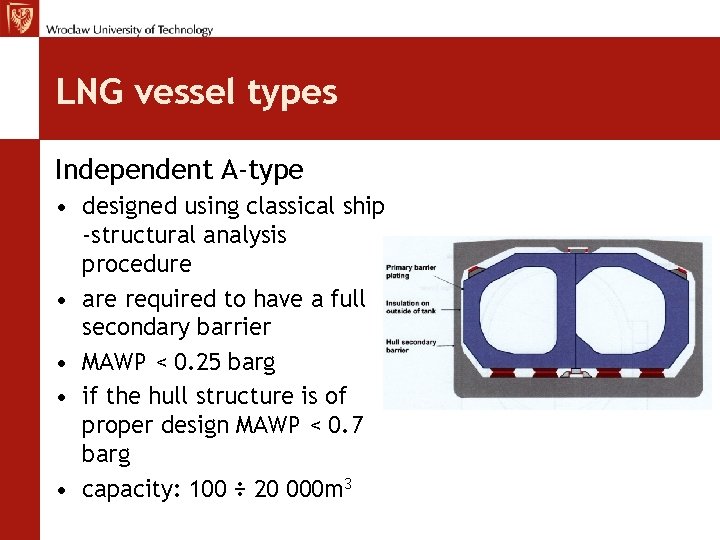
LNG vessel types Independent A-type • designed using classical ship -structural analysis procedure • are required to have a full secondary barrier • MAWP < 0. 25 barg • if the hull structure is of proper design MAWP < 0. 7 barg • capacity: 100 ÷ 20 000 m 3
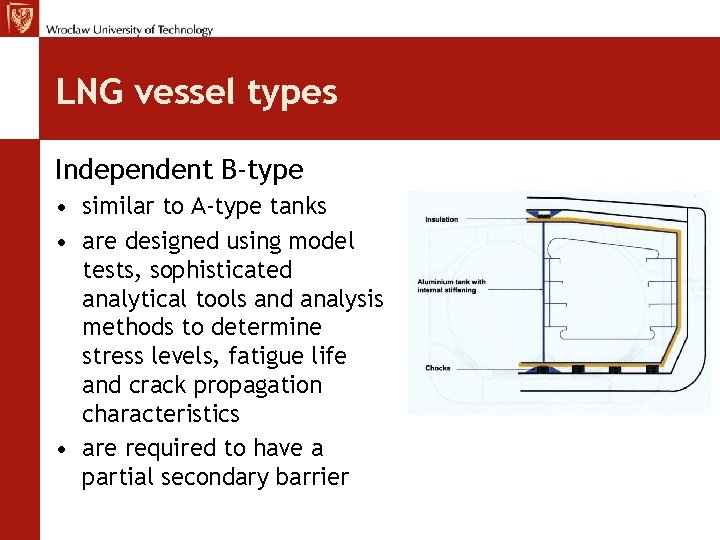
LNG vessel types Independent B-type • similar to A-type tanks • are designed using model tests, sophisticated analytical tools and analysis methods to determine stress levels, fatigue life and crack propagation characteristics • are required to have a partial secondary barrier
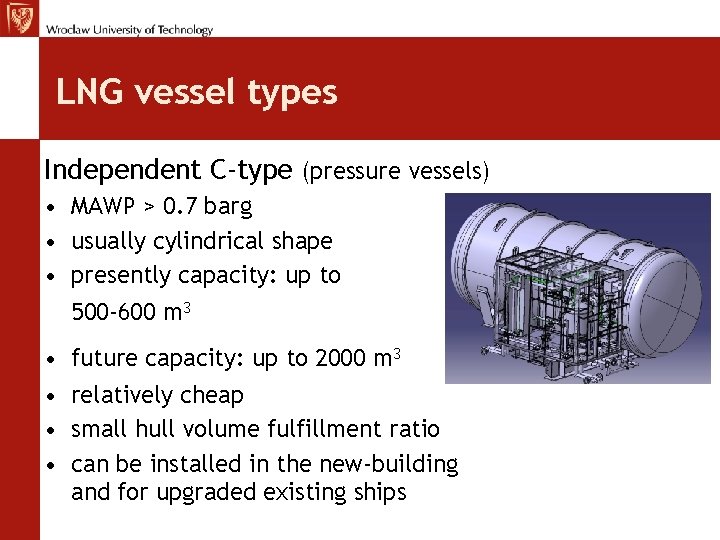
LNG vessel types Independent C-type (pressure vessels) • MAWP > 0. 7 barg • usually cylindrical shape • presently capacity: up to 500 -600 m 3 • • future capacity: up to 2000 m 3 relatively cheap small hull volume fulfillment ratio can be installed in the new-building and for upgraded existing ships
Outline • • • Problem’s background Dual fuel engines Marine LNG tanks Gas fuel system overview Samso Ferry fuel gas system Conclusions
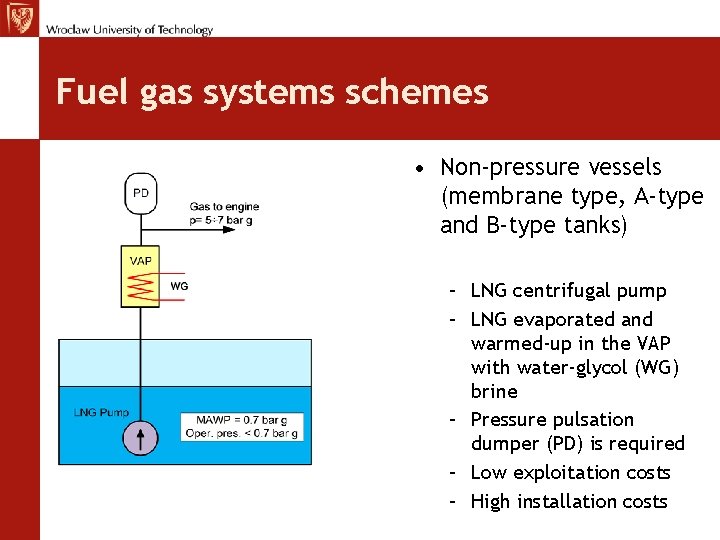
Fuel gas systems schemes • Non-pressure vessels (membrane type, A-type and B-type tanks) – LNG centrifugal pump – LNG evaporated and warmed-up in the VAP with water-glycol (WG) brine – Pressure pulsation dumper (PD) is required – Low exploitation costs – High installation costs
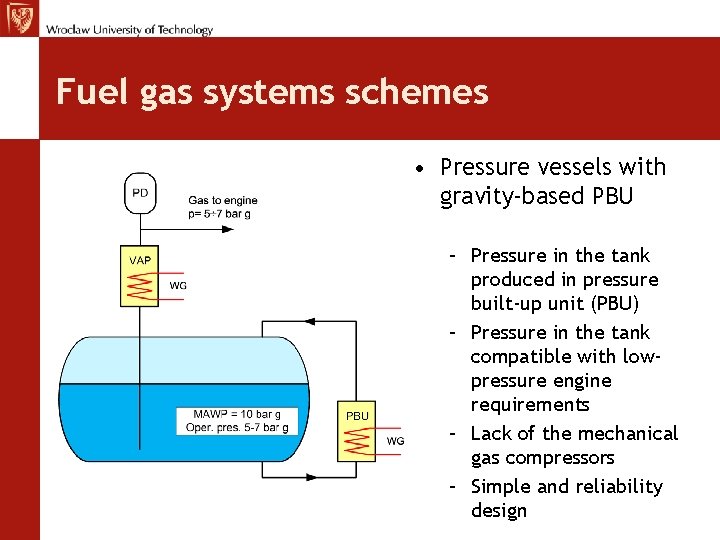
Fuel gas systems schemes • Pressure vessels with gravity-based PBU – Pressure in the tank produced in pressure built-up unit (PBU) – Pressure in the tank compatible with lowpressure engine requirements – Lack of the mechanical gas compressors – Simple and reliability design
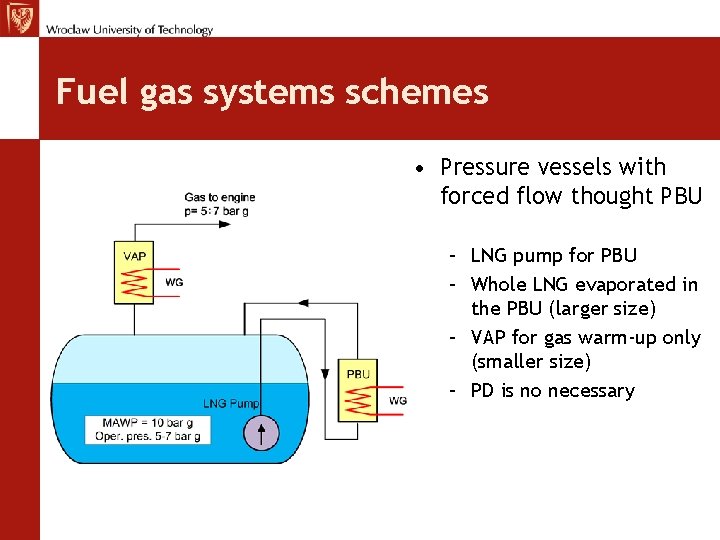
Fuel gas systems schemes • Pressure vessels with forced flow thought PBU – LNG pump for PBU – Whole LNG evaporated in the PBU (larger size) – VAP for gas warm-up only (smaller size) – PD is no necessary
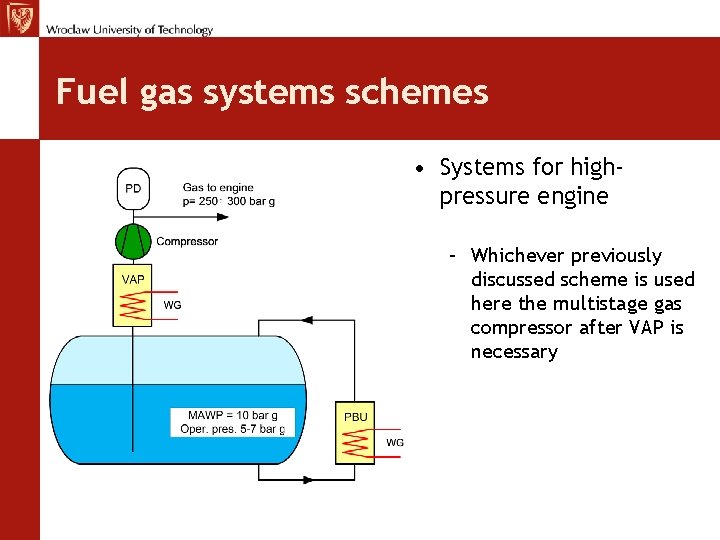
Fuel gas systems schemes • Systems for highpressure engine – Whichever previously discussed scheme is used here the multistage gas compressor after VAP is necessary
Outline • • • Problem’s background Dual fuel engines Marine LNG tanks Gas fuel system overview Samso Ferry fuel gas system Conclusions
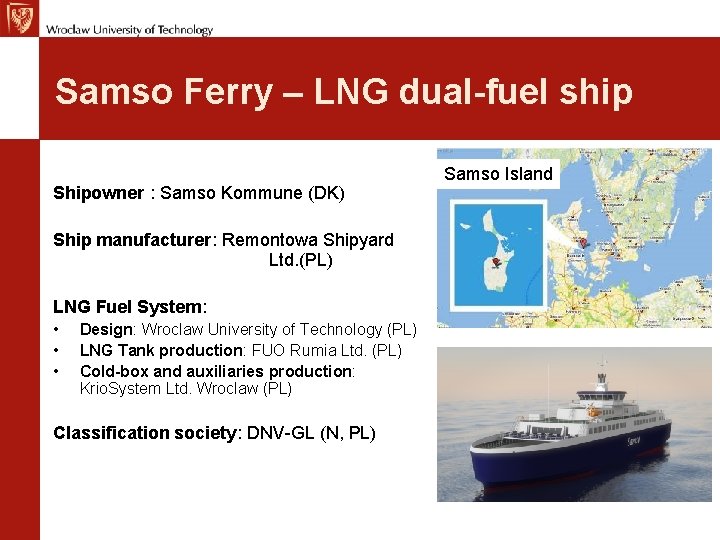
Samso Ferry – LNG dual-fuel ship Shipowner : Samso Kommune (DK) Ship manufacturer: Remontowa Shipyard Ltd. (PL) LNG Fuel System: • • • Design: Wroclaw University of Technology (PL) LNG Tank production: FUO Rumia Ltd. (PL) Cold-box and auxiliaries production: Krio. System Ltd. Wroclaw (PL) Classification society: DNV-GL (N, PL) Samso Island
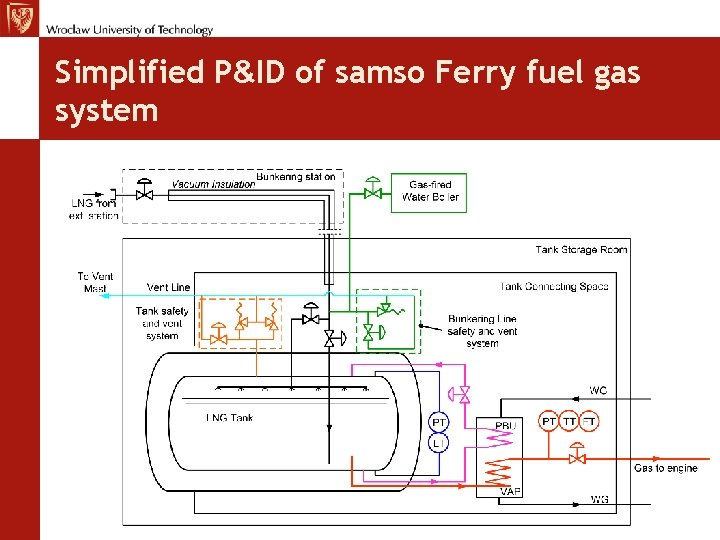
Simplified P&ID of samso Ferry fuel gas system
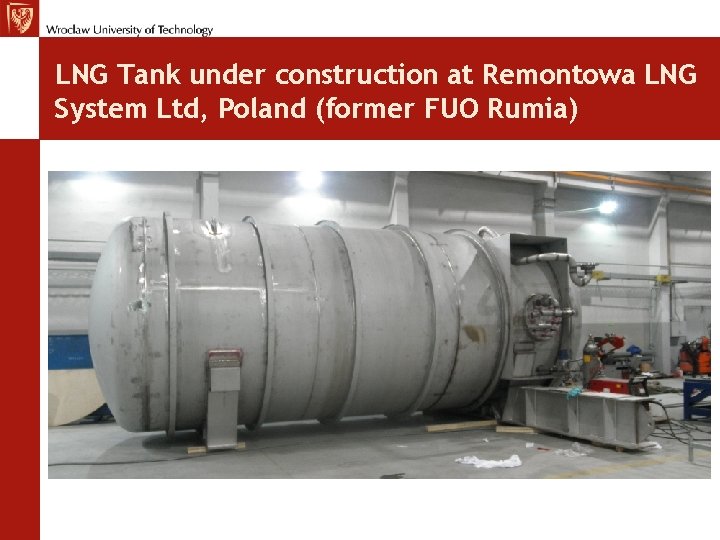
LNG Tank under construction at Remontowa LNG System Ltd, Poland (former FUO Rumia)
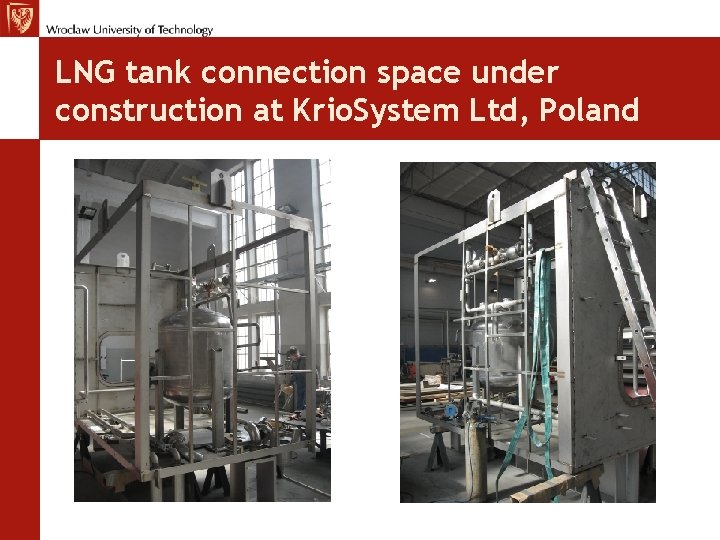
LNG tank connection space under construction at Krio. System Ltd, Poland
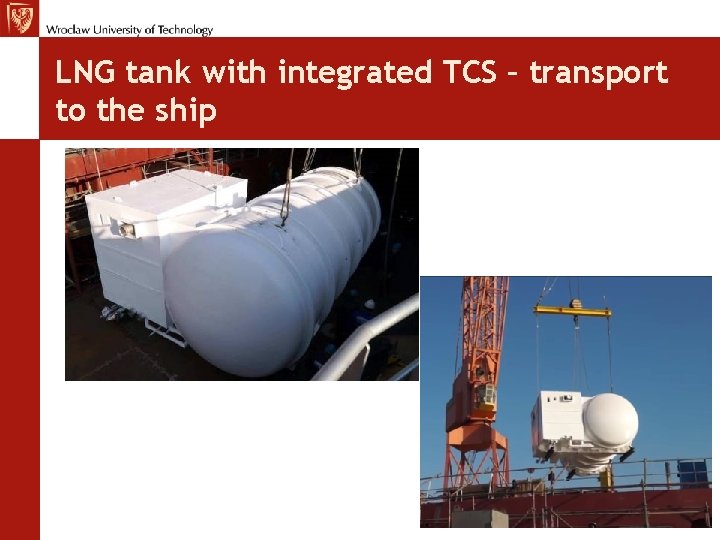
LNG tank with integrated TCS – transport to the ship
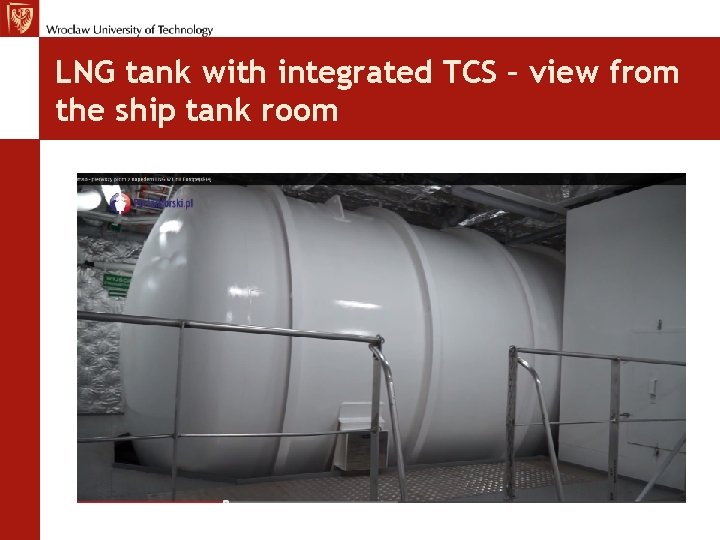
LNG tank with integrated TCS – view from the ship tank room
Outline • • • Problem’s background Dual fuel engines Marine LNG tanks Gas fuel system overview Samso Ferry fuel gas system Conclusions
Conclusions • LNG is the most prospectus marine fuel in Emission Control Areas • The selection of the fuel gas system should be made in respect of: – ship size, design and application – gas engine type – expected sailing range in the gas mode • Wr. UT in cooperation with Polish industry have developed, designed, produced, installed and successfully commissioned the first Polish fuel gas system for ship’s propulsion purpose
LNG TANK you for your attention