
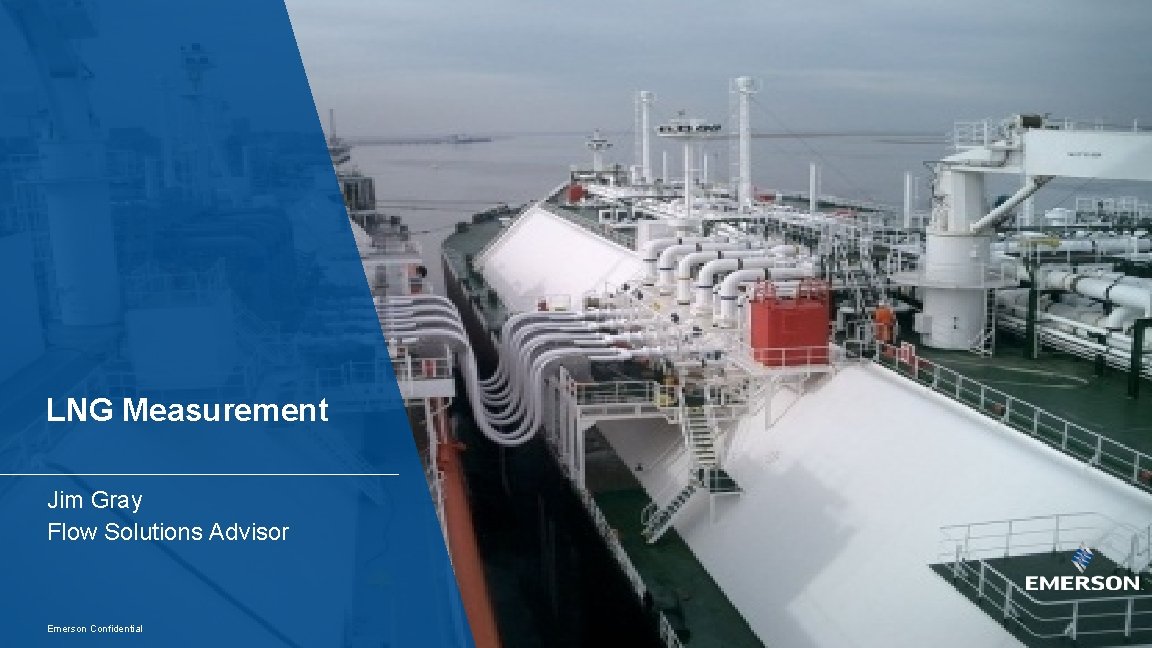
LNG Measurement Jim Gray Flow Solutions Advisor Emerson


- Slides: 30
LNG Measurement Jim Gray Flow Solutions Advisor Emerson Confidential
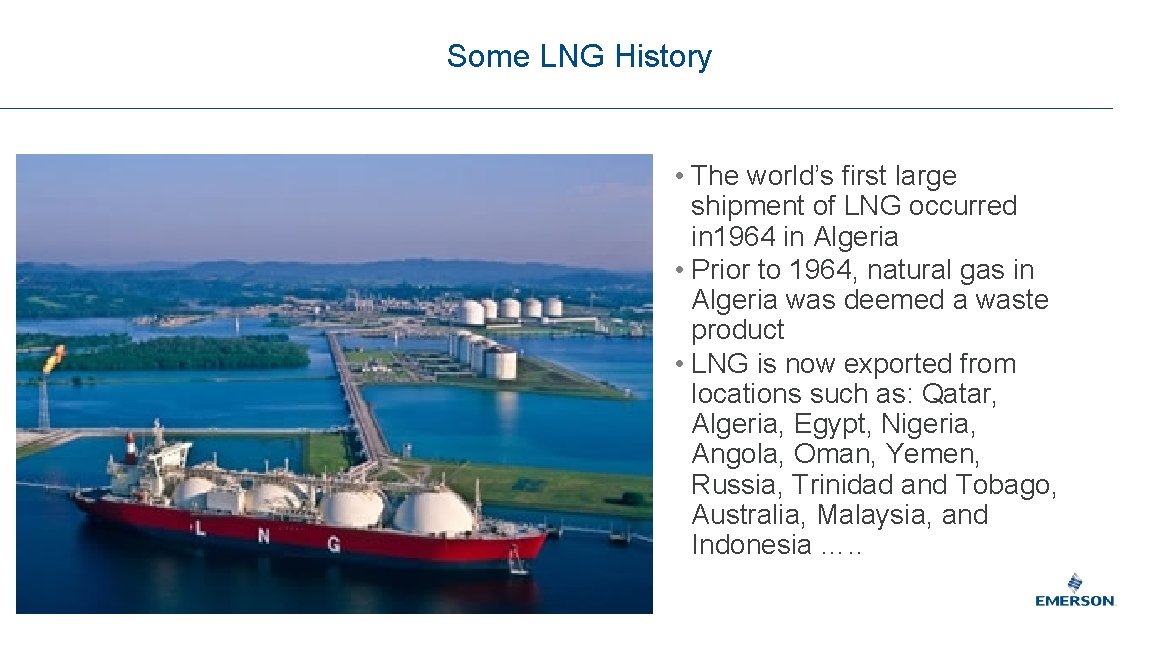
Some LNG History • The world’s first large shipment of LNG occurred in 1964 in Algeria • Prior to 1964, natural gas in Algeria was deemed a waste product • LNG is now exported from locations such as: Qatar, Algeria, Egypt, Nigeria, Angola, Oman, Yemen, Russia, Trinidad and Tobago, Australia, Malaysia, and Indonesia …. .
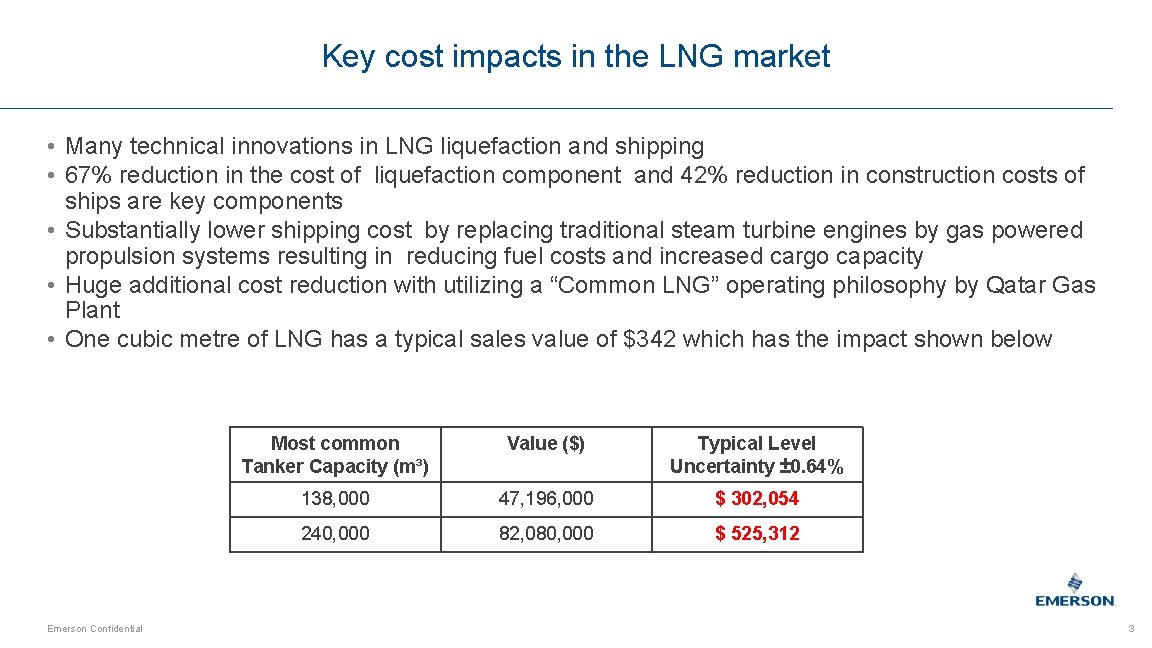
Key cost impacts in the LNG market • Many technical innovations in LNG liquefaction and shipping • 67% reduction in the cost of liquefaction component and 42% reduction in construction costs of ships are key components • Substantially lower shipping cost by replacing traditional steam turbine engines by gas powered propulsion systems resulting in reducing fuel costs and increased cargo capacity • Huge additional cost reduction with utilizing a “Common LNG” operating philosophy by Qatar Gas Plant • One cubic metre of LNG has a typical sales value of $342 which has the impact shown below Emerson Confidential Most common Tanker Capacity (m³) Value ($) Typical Level Uncertainty ± 0. 64% 138, 000 47, 196, 000 $ 302, 054 240, 000 82, 080, 000 $ 525, 312 3
LNG Measurement • The primary measurement of LNG is Energy value • Also required are Volume, Mass, Density, and Gross Calorific Value • For correct overall measurement Boil Off Gas (BOG) requires metering during all LNG movement, except latest Q Max tankers which have their own BOG recovery system • With modern LNG tankers gas consumed as fuel source for the LNG tanker engines is also required to validate the correct LNG mass balance Emerson Confidential 4
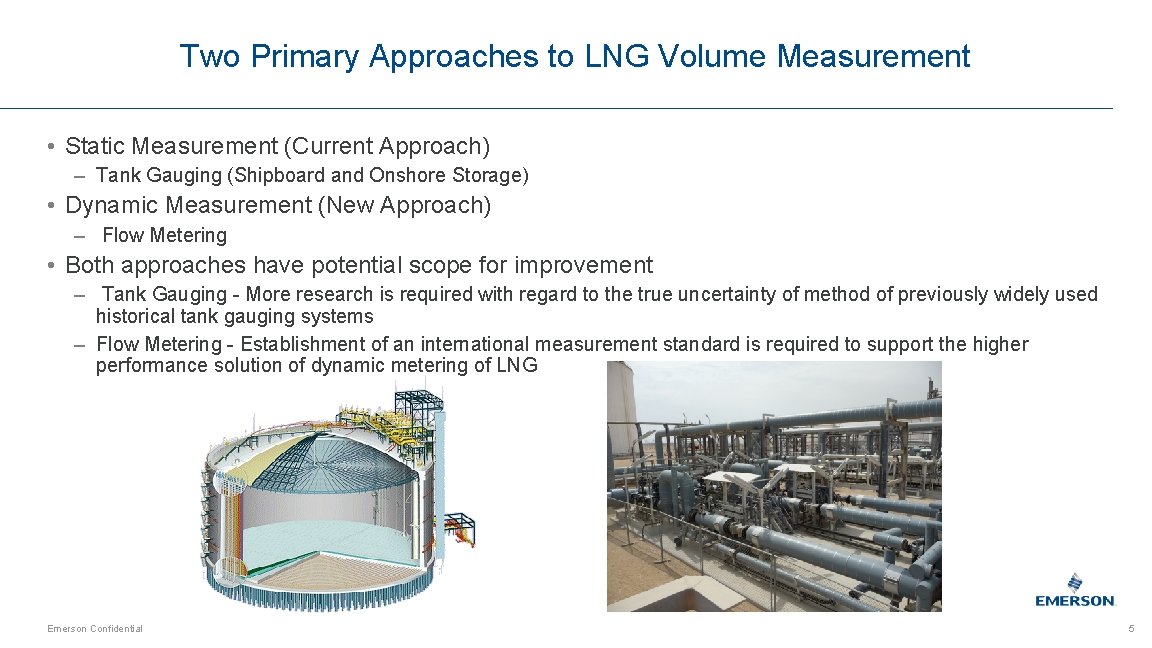
Two Primary Approaches to LNG Volume Measurement • Static Measurement (Current Approach) – Tank Gauging (Shipboard and Onshore Storage) • Dynamic Measurement (New Approach) – Flow Metering • Both approaches have potential scope for improvement – Tank Gauging - More research is required with regard to the true uncertainty of method of previously widely used historical tank gauging systems – Flow Metering - Establishment of an international measurement standard is required to support the higher performance solution of dynamic metering of LNG Emerson Confidential 5
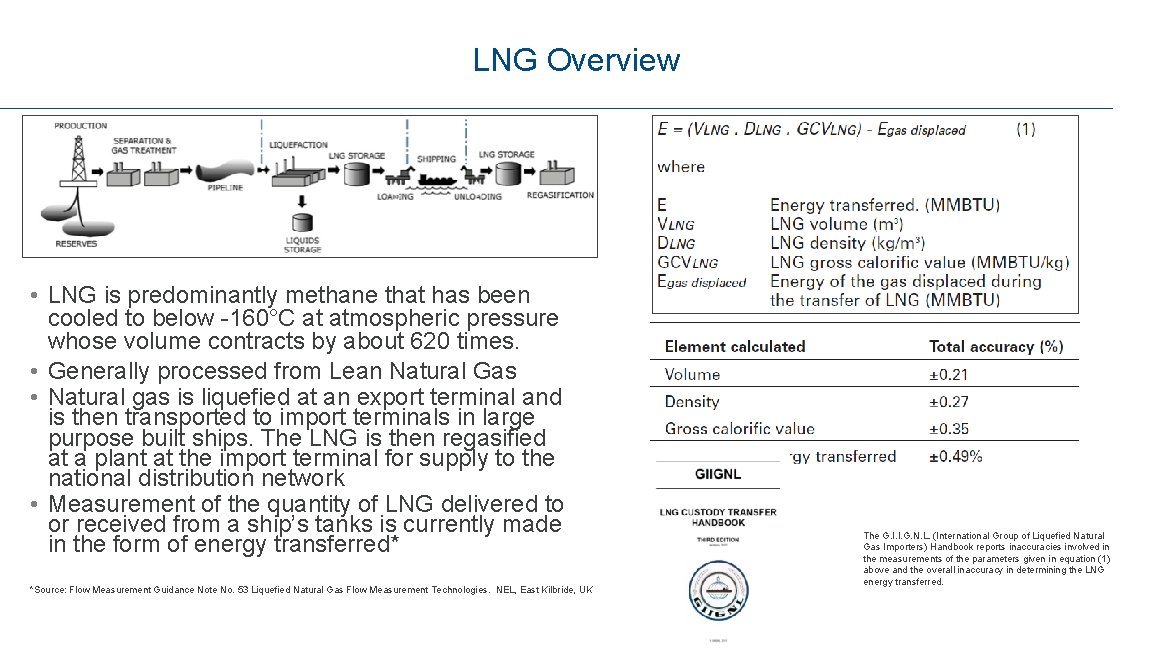
LNG Overview • LNG is predominantly methane that has been cooled to below -160°C at atmospheric pressure whose volume contracts by about 620 times. • Generally processed from Lean Natural Gas • Natural gas is liquefied at an export terminal and is then transported to import terminals in large purpose built ships. The LNG is then regasified at a plant at the import terminal for supply to the national distribution network • Measurement of the quantity of LNG delivered to or received from a ship’s tanks is currently made in the form of energy transferred* *Source: Flow Measurement Guidance Note No. 53 Liquefied Natural Gas Flow Measurement Technologies. NEL, East Kilbride, UK The G. I. I. G. N. L. (International Group of Liquefied Natural Gas Importers) Handbook reports inaccuracies involved in the measurements of the parameters given in equation (1) above and the overall inaccuracy in determining the LNG energy transferred.
Evaluation of Dynamic Flow Measurement • A jointly funded evaluation project was launched by 3 of the major IOC’s prior to detail engineering for a LNG project • The qualification tests were performed at a LNG plant located in Kenai, Alaska 11 years ago • The basic pre-qualification requirements that resulted in choosing Ultrasonic and Coriolis meter technologies for evaluation were as follows: – – – – No wetted or rotating parts No external tubing required Improved surveillance via advanced diagnostics Proven reliability Documented accuracy in liquid custody transfer applications Reduced annual maintenance Operational Expenditure savings • Results from these tests demonstrated repeatability of better than ± 0. 125% for both USM and Coriolis measurement technologies. A key result from this research was the agreement of the two technologies calibrated in different ways to < 0. 1%, (3 times better than the on-site validation method) • Above represents a significant improvement in uncertainty of method relative to Tank Gauging for LNG measurement Emerson Confidential 7
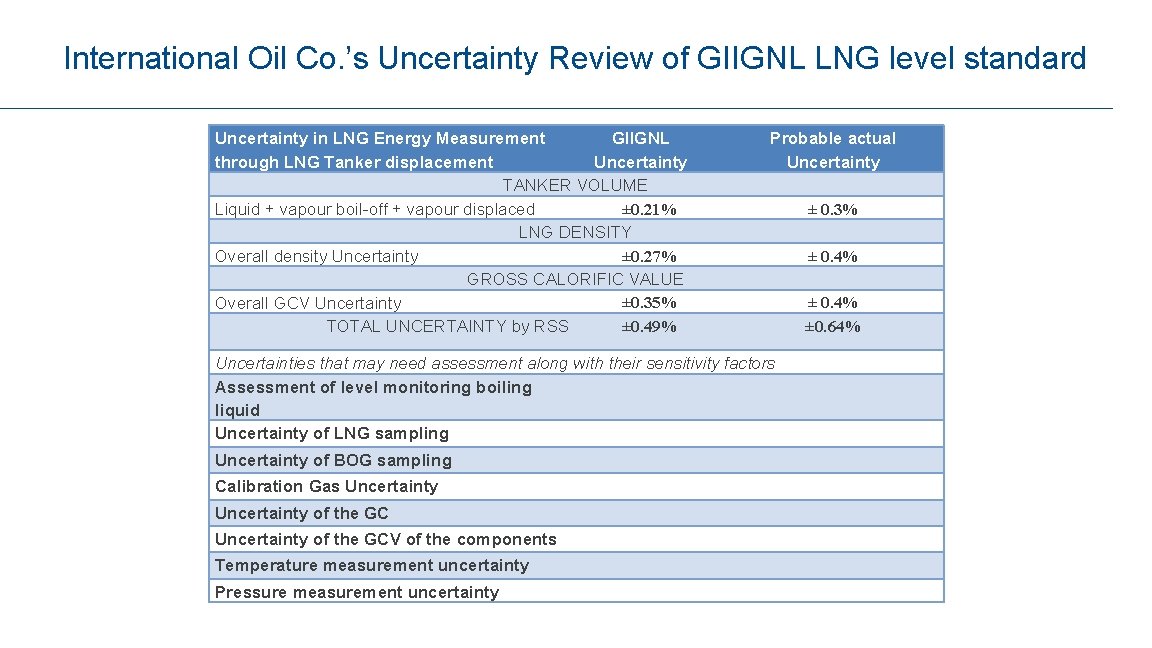
International Oil Co. ’s Uncertainty Review of GIIGNL LNG level standard Uncertainty in LNG Energy Measurement GIIGNL through LNG Tanker displacement Uncertainty TANKER VOLUME ± 0. 21% Liquid + vapour boil-off + vapour displaced LNG DENSITY ± 0. 27% Overall density Uncertainty GROSS CALORIFIC VALUE ± 0. 35% Overall GCV Uncertainty ± 0. 49% TOTAL UNCERTAINTY by RSS Probable actual Uncertainty ± 0. 3% ± 0. 4% ± 0. 64% Uncertainties that may need assessment along with their sensitivity factors Assessment of level monitoring boiling liquid Uncertainty of LNG sampling Uncertainty of BOG sampling Calibration Gas Uncertainty of the GCV of the components Temperature measurement uncertainty Pressure measurement uncertainty
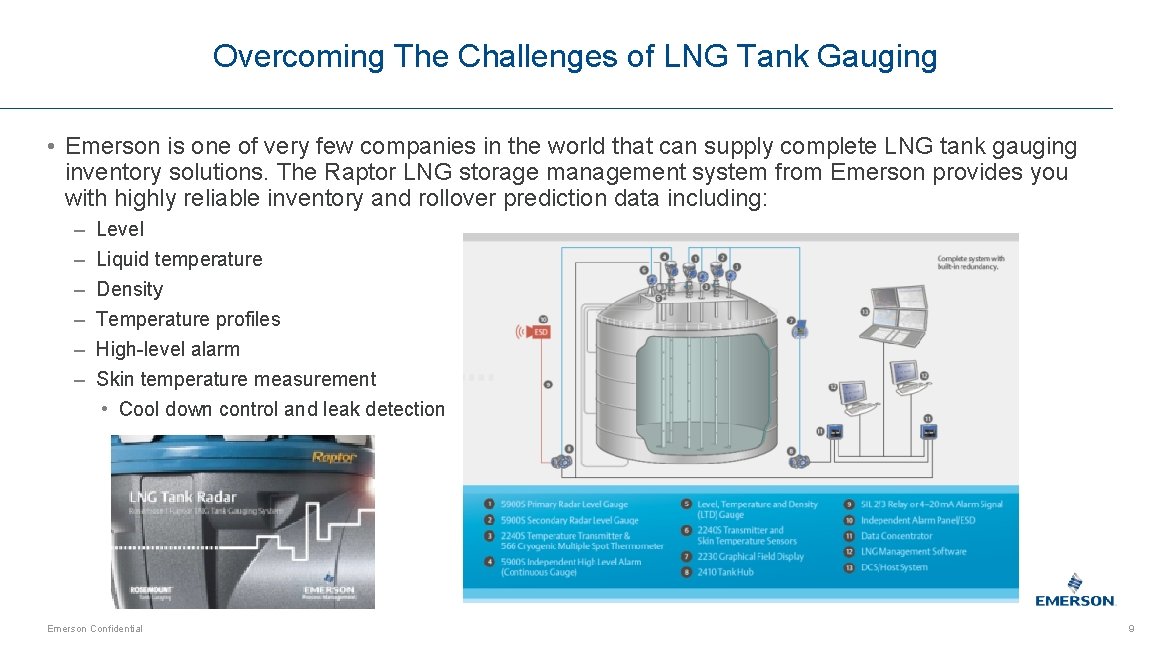
Overcoming The Challenges of LNG Tank Gauging • Emerson is one of very few companies in the world that can supply complete LNG tank gauging inventory solutions. The Raptor LNG storage management system from Emerson provides you with highly reliable inventory and rollover prediction data including: – – – Level Liquid temperature Density Temperature profiles High-level alarm Skin temperature measurement • Cool down control and leak detection Emerson Confidential 9
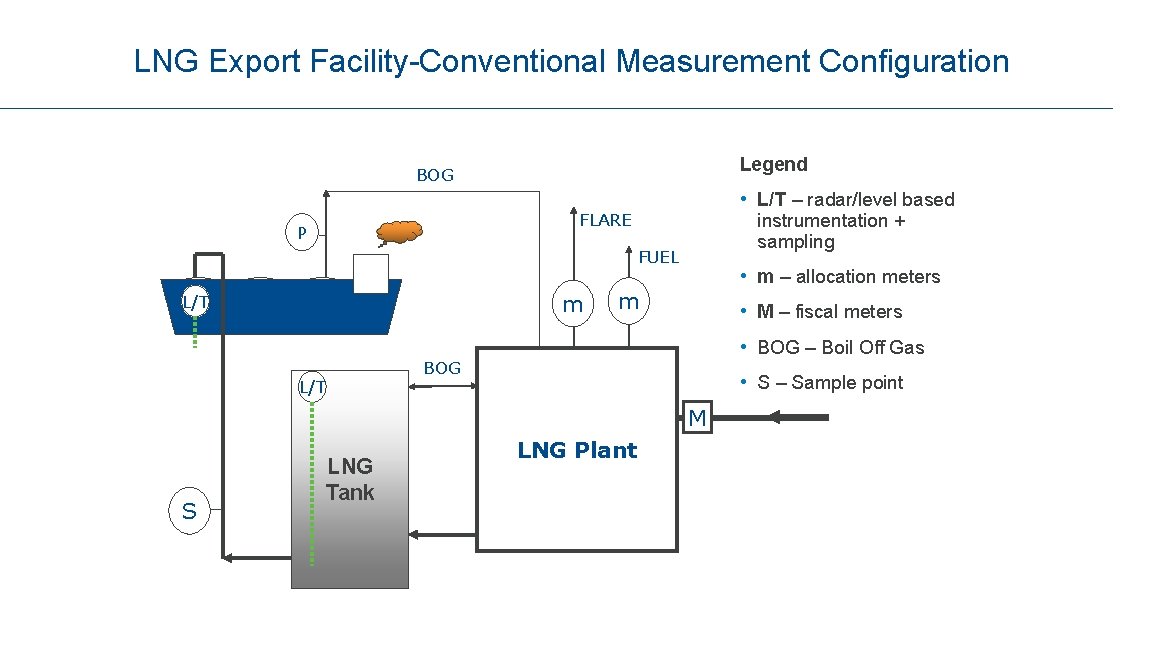
LNG Export Facility-Conventional Measurement Configuration Legend BOG • L/T – radar/level based instrumentation + sampling FLARE P FUEL L/T m LNG Tanker L/T • m – allocation meters m • M – fiscal meters • BOG – Boil Off Gas BOG • S – Sample point M S LNG Tank LNG Plant
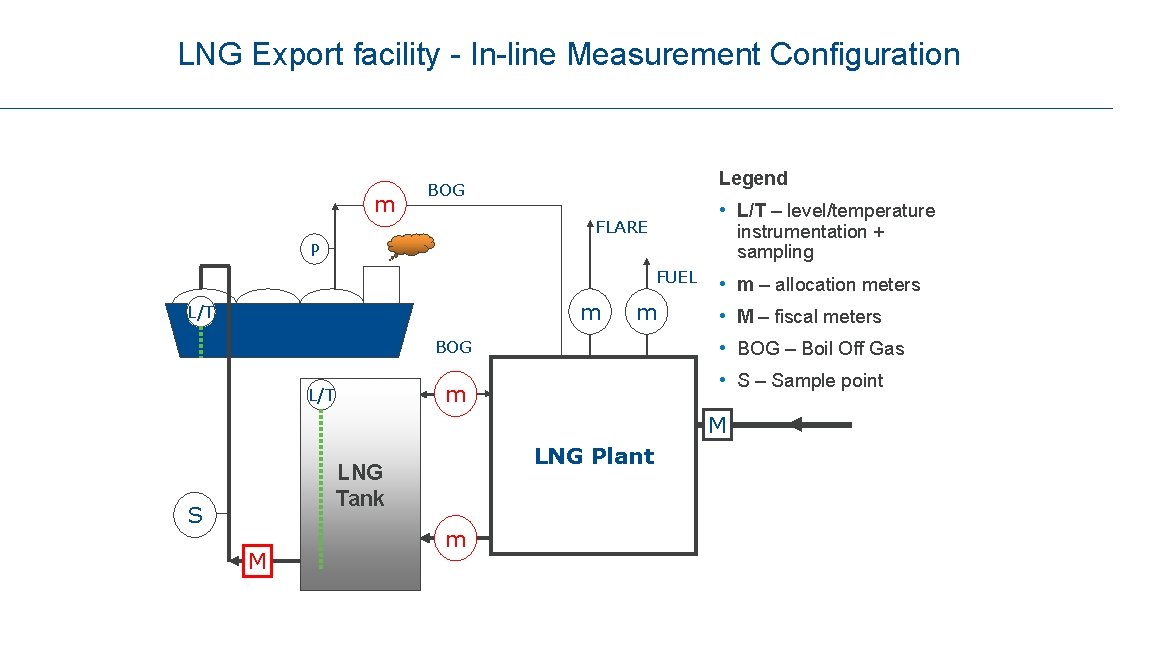
LNG Export facility - In-line Measurement Configuration m Legend BOG • L/T – level/temperature instrumentation + sampling FLARE P FUEL L/T LNG Tanker m m BOG • M – fiscal meters • BOG – Boil Off Gas • S – Sample point m L/T • m – allocation meters M LNG Plant LNG Tank S M m
Upstream LNG Ultrasonic Meters Emerson Confidential
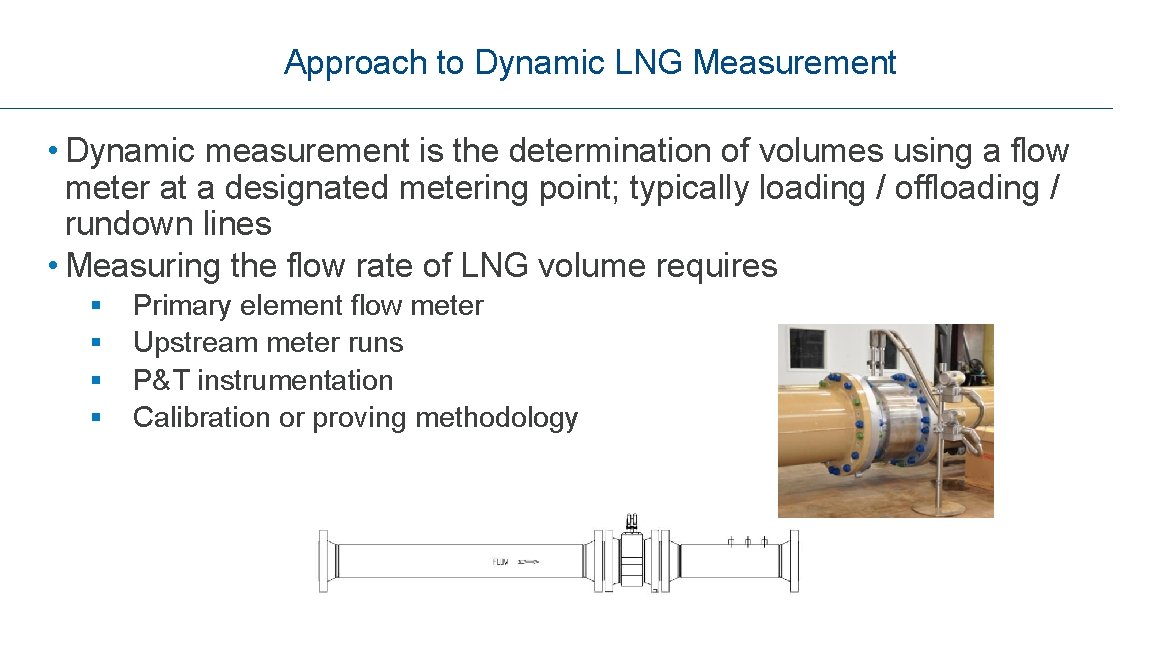
Approach to Dynamic LNG Measurement • Dynamic measurement is the determination of volumes using a flow meter at a designated metering point; typically loading / offloading / rundown lines • Measuring the flow rate of LNG volume requires § § Primary element flow meter Upstream meter runs P&T instrumentation Calibration or proving methodology
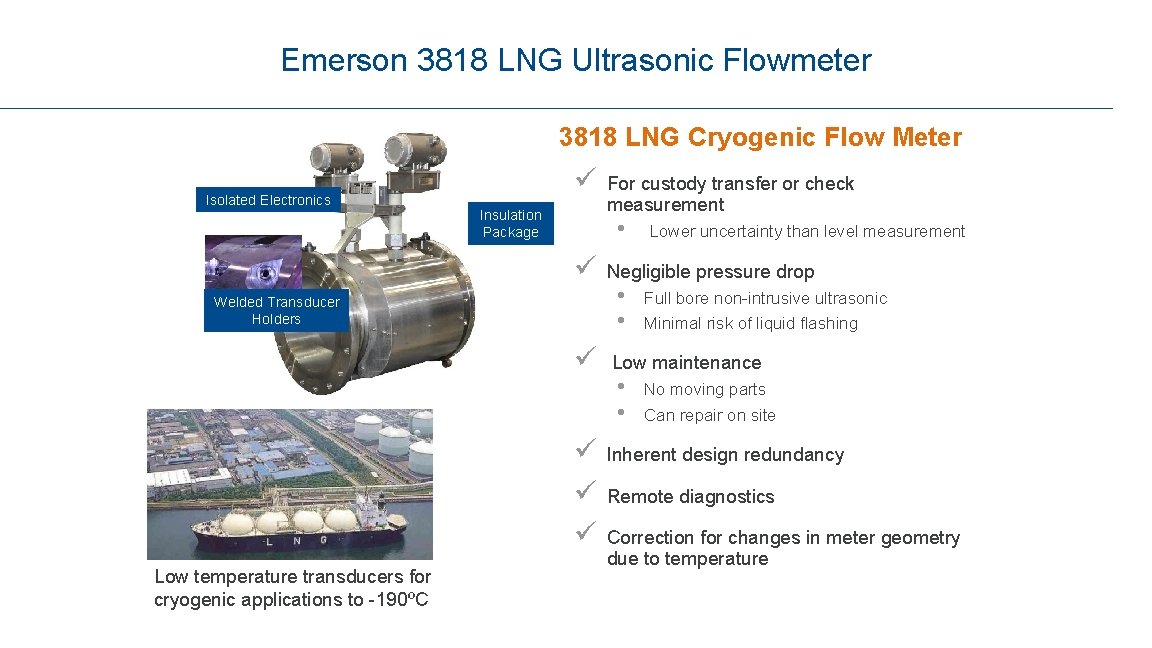
Emerson 3818 LNG Ultrasonic Flowmeter 3818 LNG Cryogenic Flow Meter Isolated Electronics ü Insulation Package • ü Welded Transducer Holders ü ü Low temperature transducers for cryogenic applications to -190ºC For custody transfer or check measurement Lower uncertainty than level measurement Negligible pressure drop • • Full bore non-intrusive ultrasonic Minimal risk of liquid flashing Low maintenance • • No moving parts Can repair on site Inherent design redundancy Remote diagnostics Correction for changes in meter geometry due to temperature
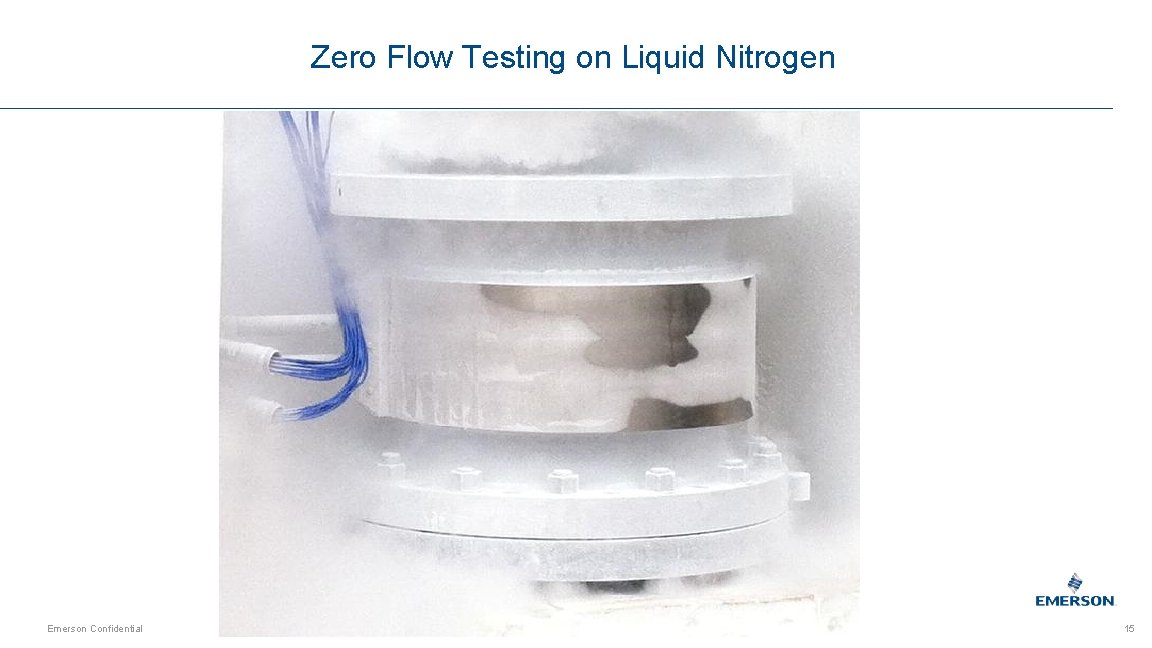
Zero Flow Testing on Liquid Nitrogen Emerson Confidential 15
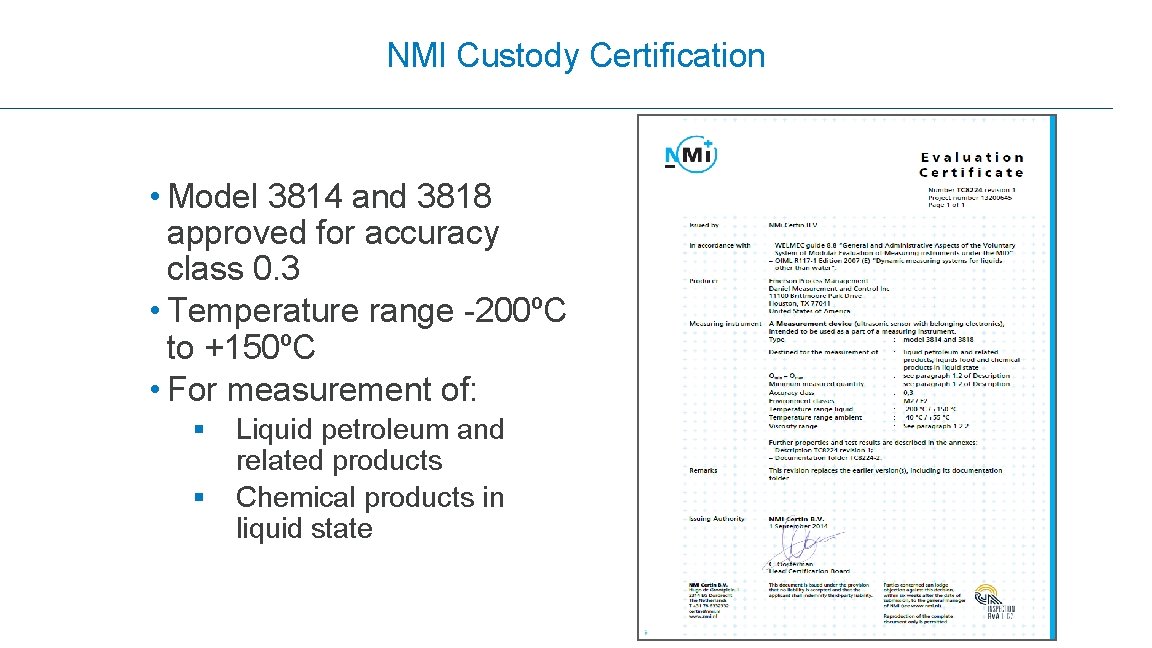
NMI Custody Certification • Model 3814 and 3818 approved for accuracy class 0. 3 • Temperature range -200ºC to +150ºC • For measurement of: § § Liquid petroleum and related products Chemical products in liquid state
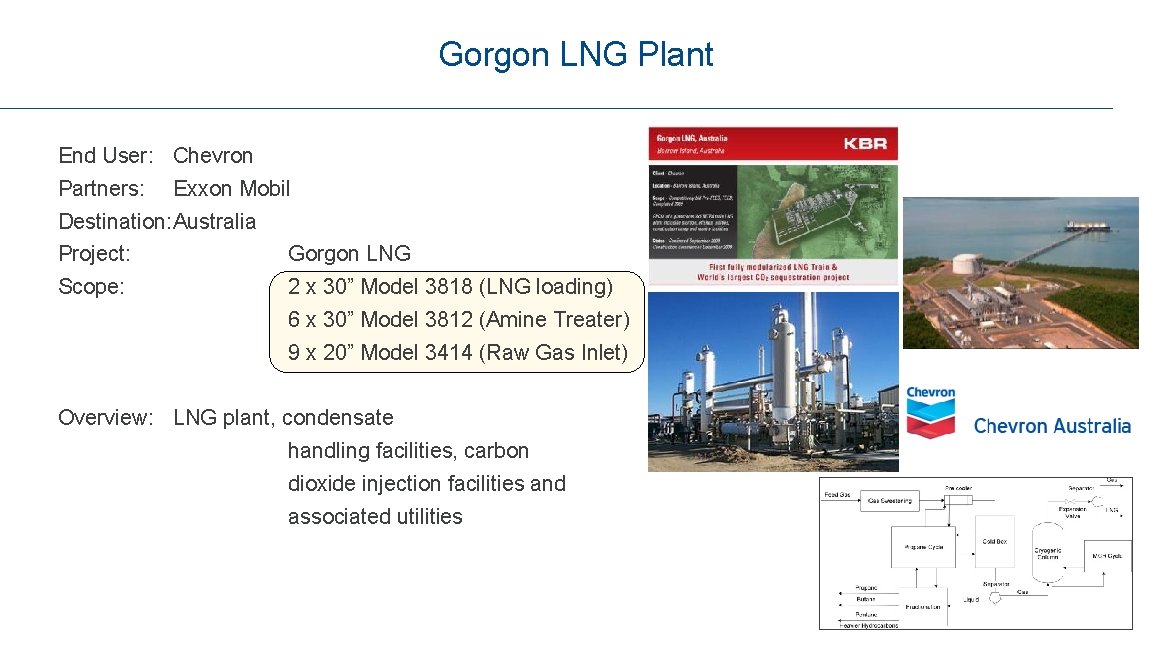
Gorgon LNG Plant End User: Chevron Partners: Exxon Mobil Destination: Australia Project: Gorgon LNG Scope: 2 x 30” Model 3818 (LNG loading) 6 x 30” Model 3812 (Amine Treater) 9 x 20” Model 3414 (Raw Gas Inlet) Overview: LNG plant, condensate handling facilities, carbon dioxide injection facilities and associated utilities
LNG Coriolis Meters Emerson Confidential
LNG Measurement Philosophy • LNG is traditionally traded on the basis of long-term contracts. Volume measurement relies on tank gauging – Calibration tables – Corrections for list, trim, tank contraction, level device … • In future, LNG will also be traded on short term (spot) contracts typically representing smaller volumes – Dynamic measurement in transfer lines per typical custody transfer systems can provide accurate volume measurement of these smaller quantities Emerson Confidential 19
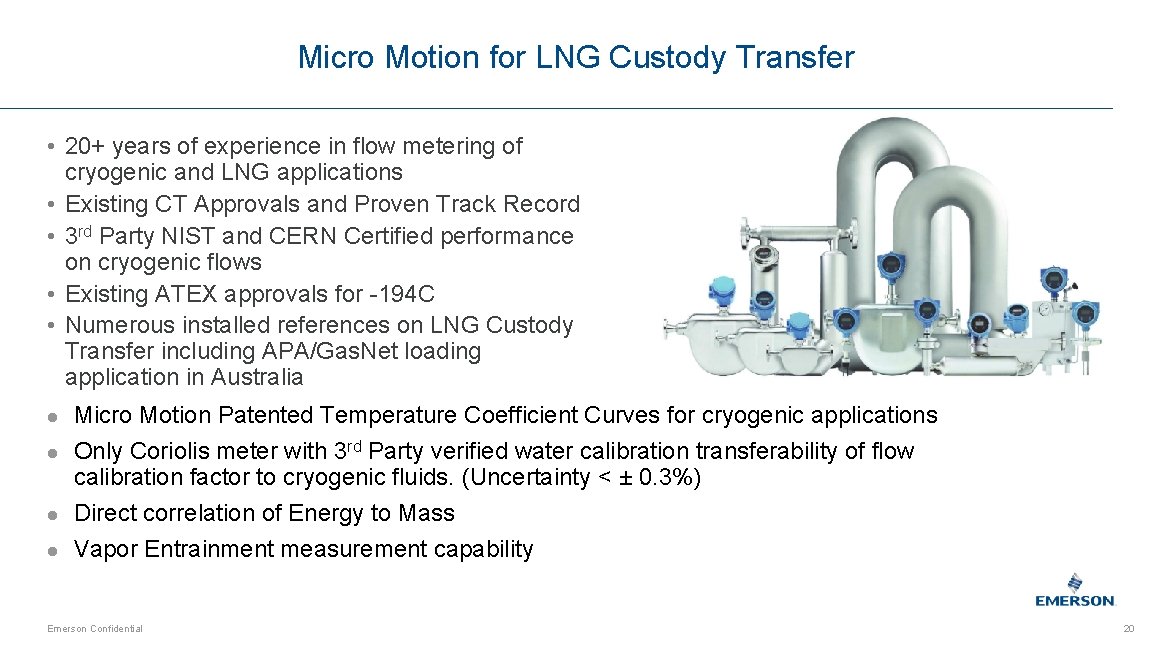
Micro Motion for LNG Custody Transfer • 20+ years of experience in flow metering of cryogenic and LNG applications • Existing CT Approvals and Proven Track Record • 3 rd Party NIST and CERN Certified performance on cryogenic flows • Existing ATEX approvals for -194 C • Numerous installed references on LNG Custody Transfer including APA/Gas. Net loading application in Australia l l Micro Motion Patented Temperature Coefficient Curves for cryogenic applications Only Coriolis meter with 3 rd Party verified water calibration transferability of flow calibration factor to cryogenic fluids. (Uncertainty < ± 0. 3%) Direct correlation of Energy to Mass Vapor Entrainment measurement capability Emerson Confidential 20
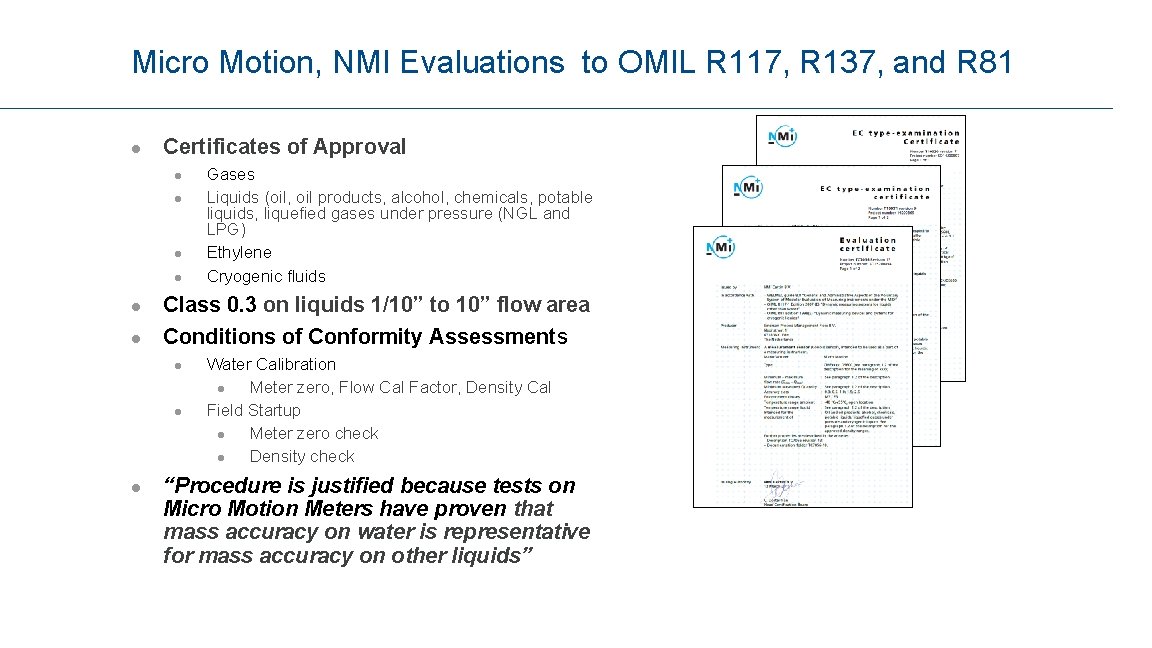
Micro Motion, NMI Evaluations to OMIL R 117, R 137, and R 81 l Certificates of Approval l l Gases Liquids (oil, oil products, alcohol, chemicals, potable liquids, liquefied gases under pressure (NGL and LPG) Ethylene Cryogenic fluids l Class 0. 3 on liquids 1/10” to 10” flow area l Conditions of Conformity Assessments l l l Water Calibration l Meter zero, Flow Cal Factor, Density Cal Field Startup l Meter zero check l Density check “Procedure is justified because tests on Micro Motion Meters have proven that mass accuracy on water is representative for mass accuracy on other liquids”
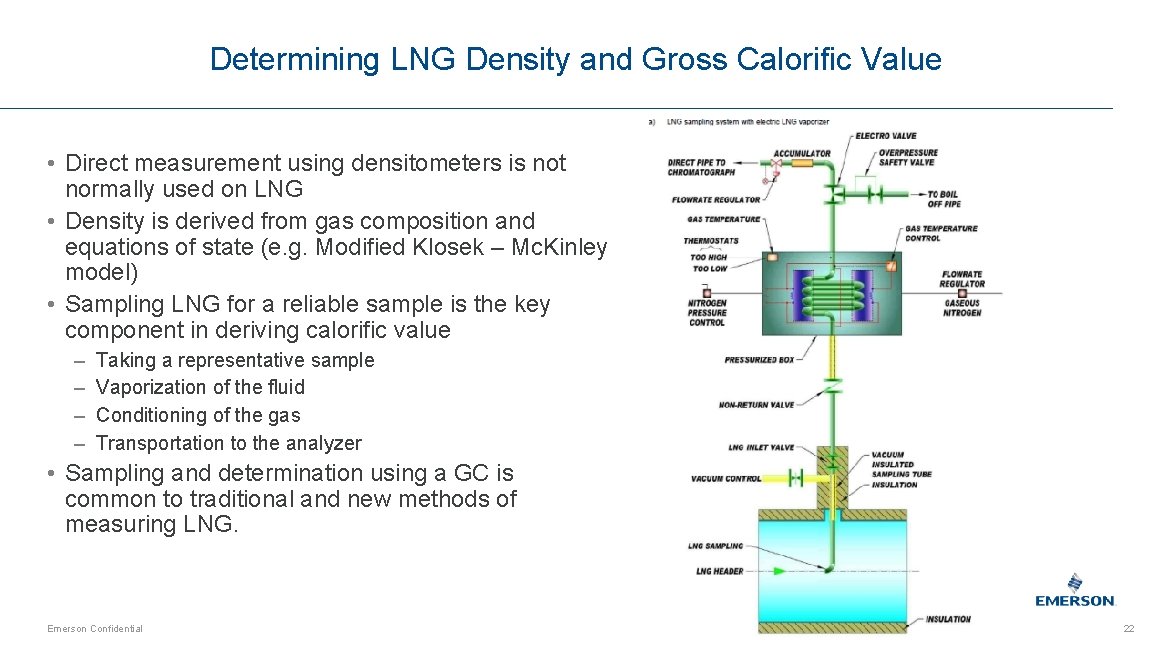
Determining LNG Density and Gross Calorific Value • Direct measurement using densitometers is not normally used on LNG • Density is derived from gas composition and equations of state (e. g. Modified Klosek – Mc. Kinley model) • Sampling LNG for a reliable sample is the key component in deriving calorific value – – Taking a representative sample Vaporization of the fluid Conditioning of the gas Transportation to the analyzer • Sampling and determination using a GC is common to traditional and new methods of measuring LNG. Emerson Confidential 22
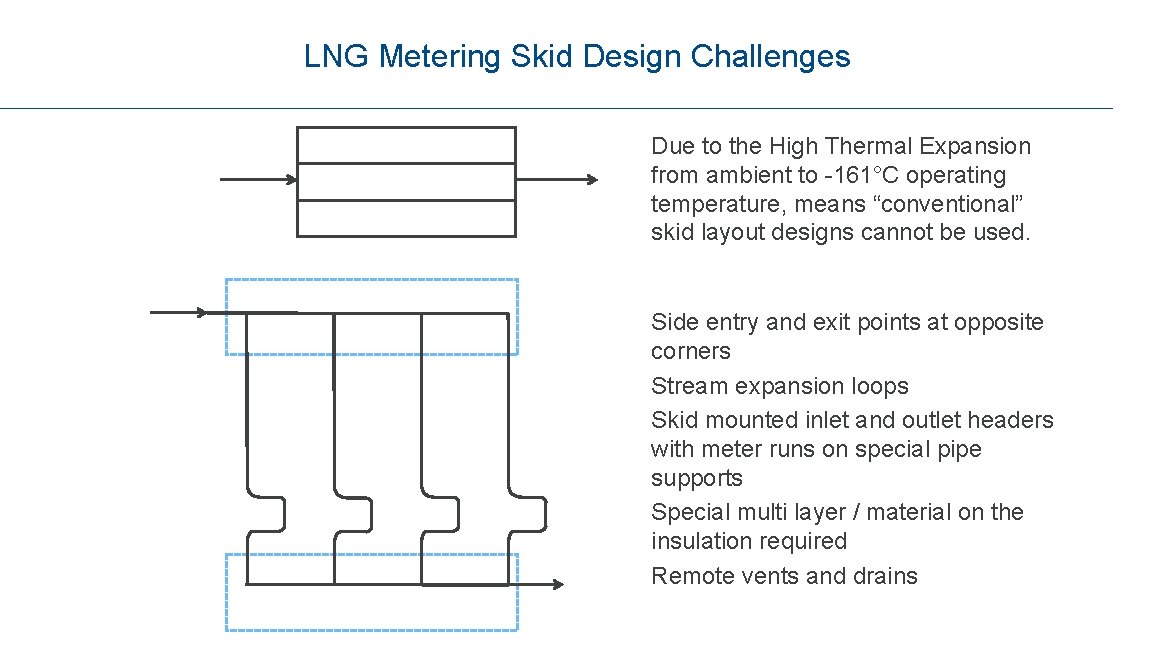
LNG Metering Skid Design Challenges Due to the High Thermal Expansion from ambient to -161°C operating temperature, means “conventional” skid layout designs cannot be used. Side entry and exit points at opposite corners Stream expansion loops Skid mounted inlet and outlet headers with meter runs on special pipe supports Special multi layer / material on the insulation required Remote vents and drains
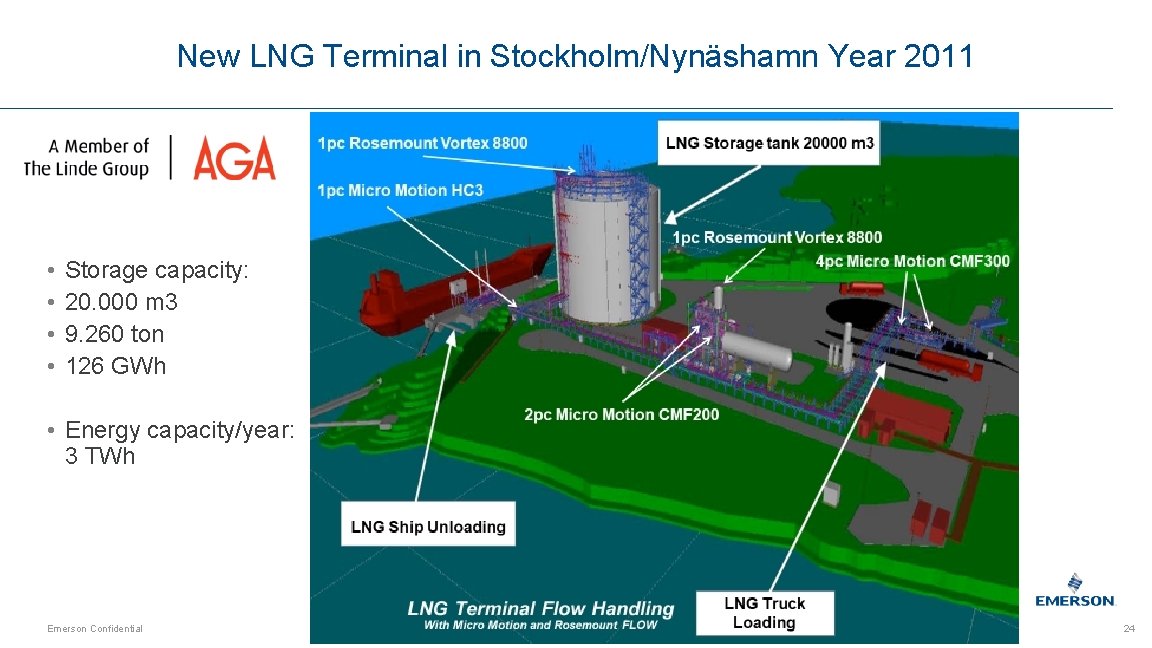
New LNG Terminal in Stockholm/Nynäshamn Year 2011 • • Storage capacity: 20. 000 m 3 9. 260 ton 126 GWh • Energy capacity/year: 3 TWh Emerson Confidential 24
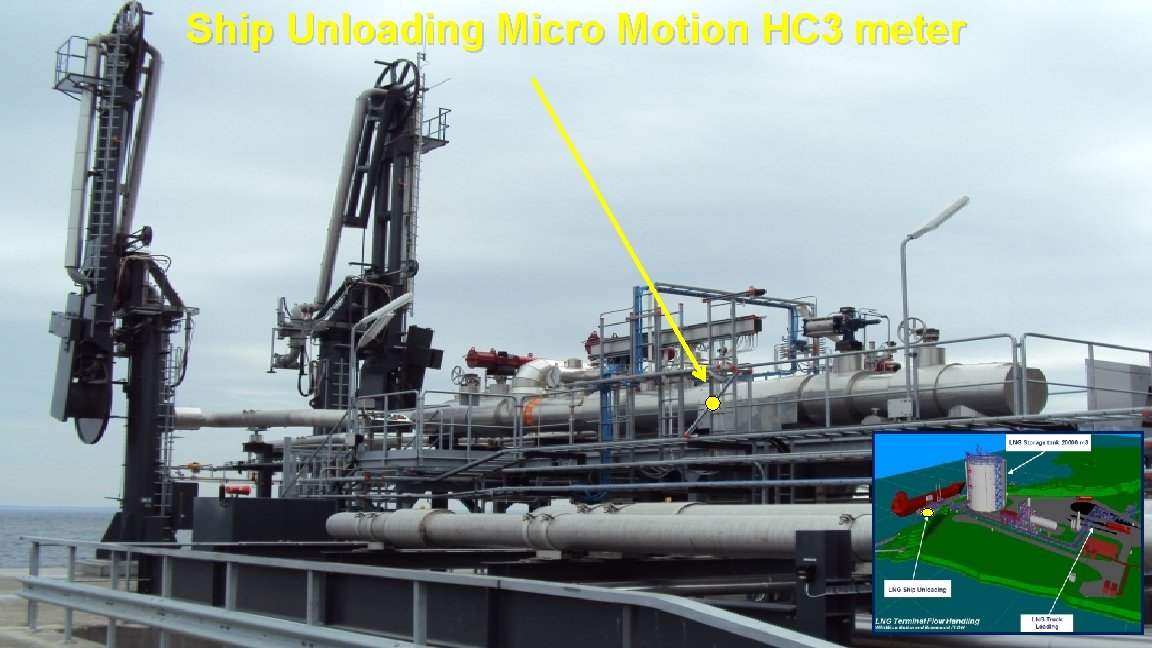
Ship Unloading Micro Motion HC 3 meter
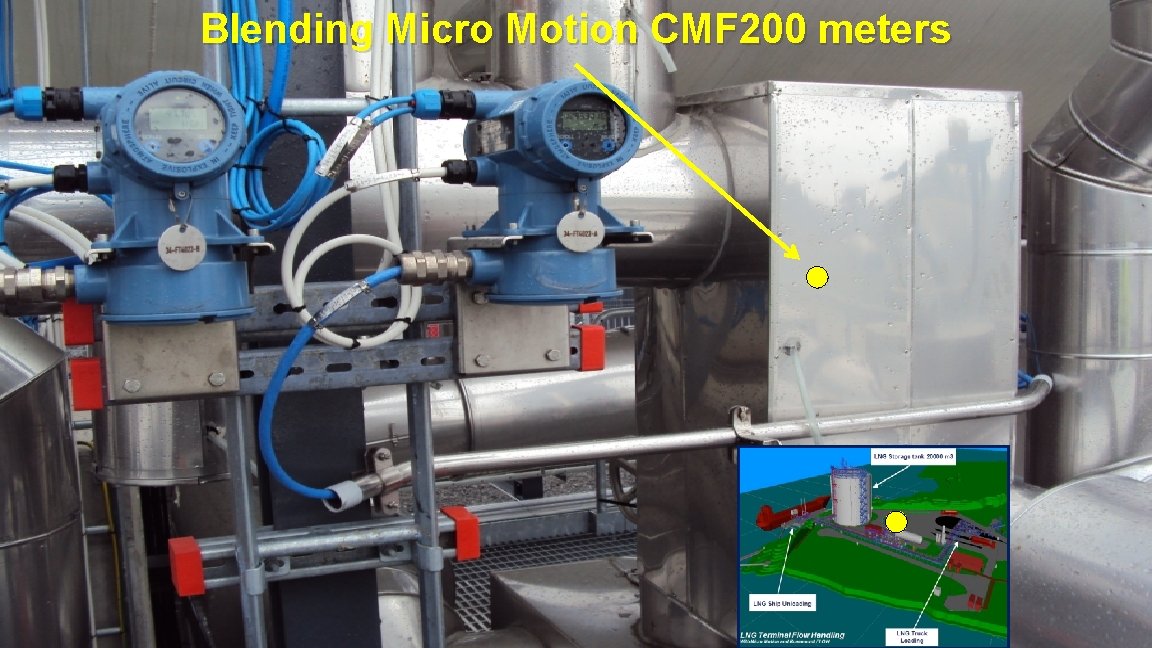
Blending Micro Motion CMF 200 meters
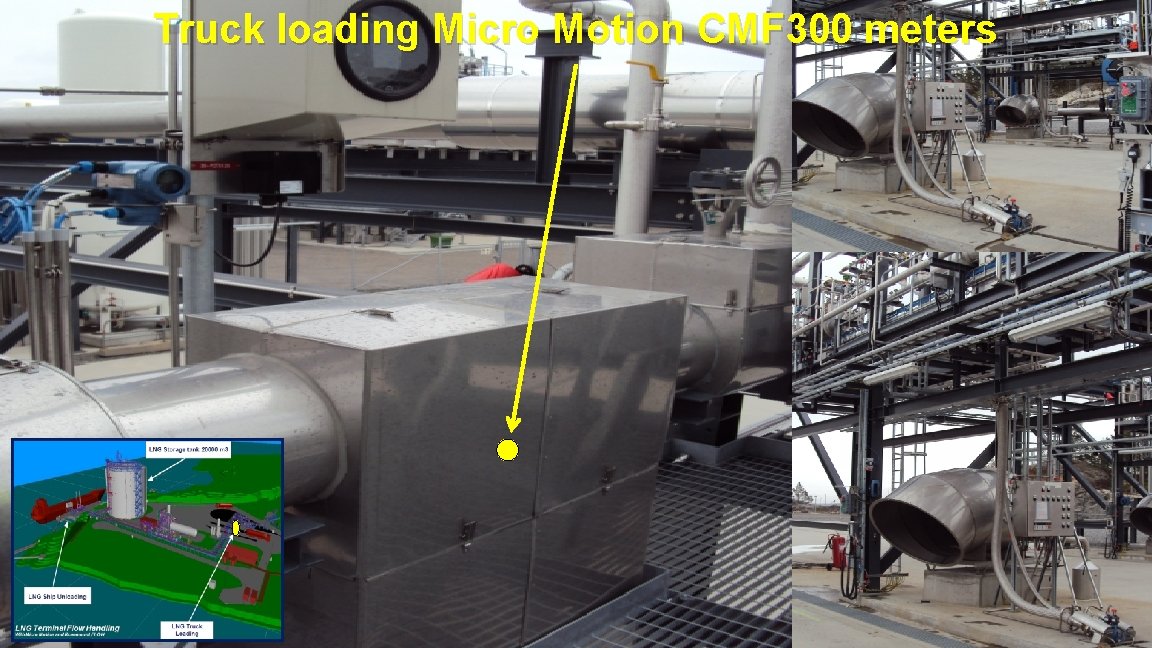
Truck loading Micro Motion CMF 300 meters
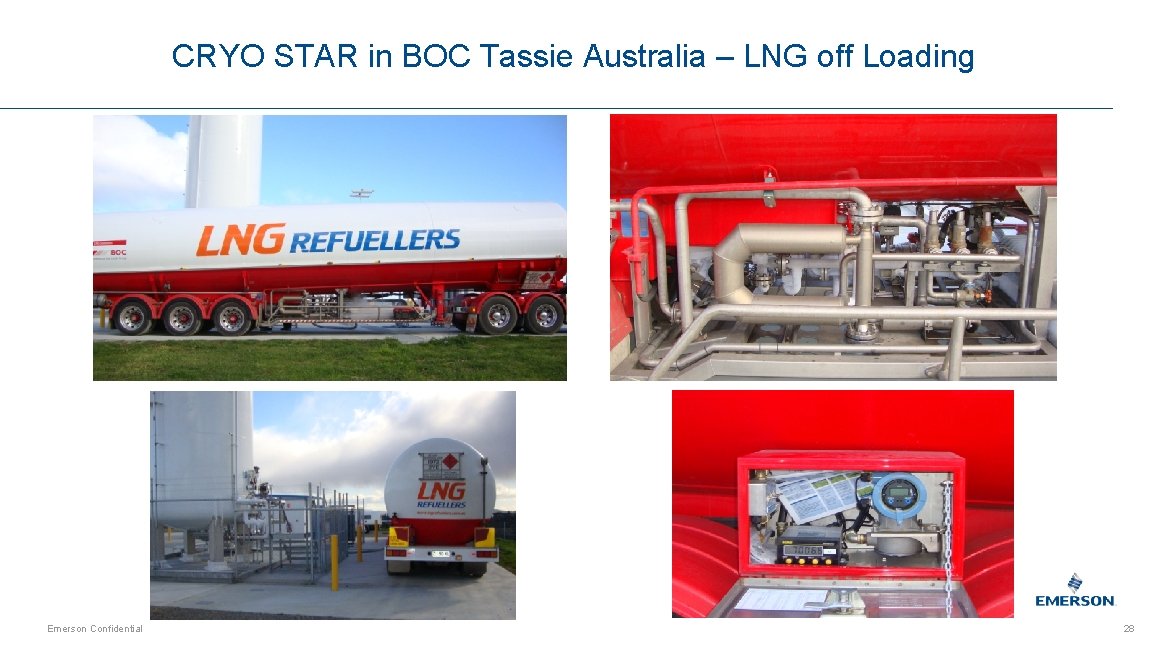
CRYO STAR in BOC Tassie Australia – LNG off Loading Emerson Confidential 28
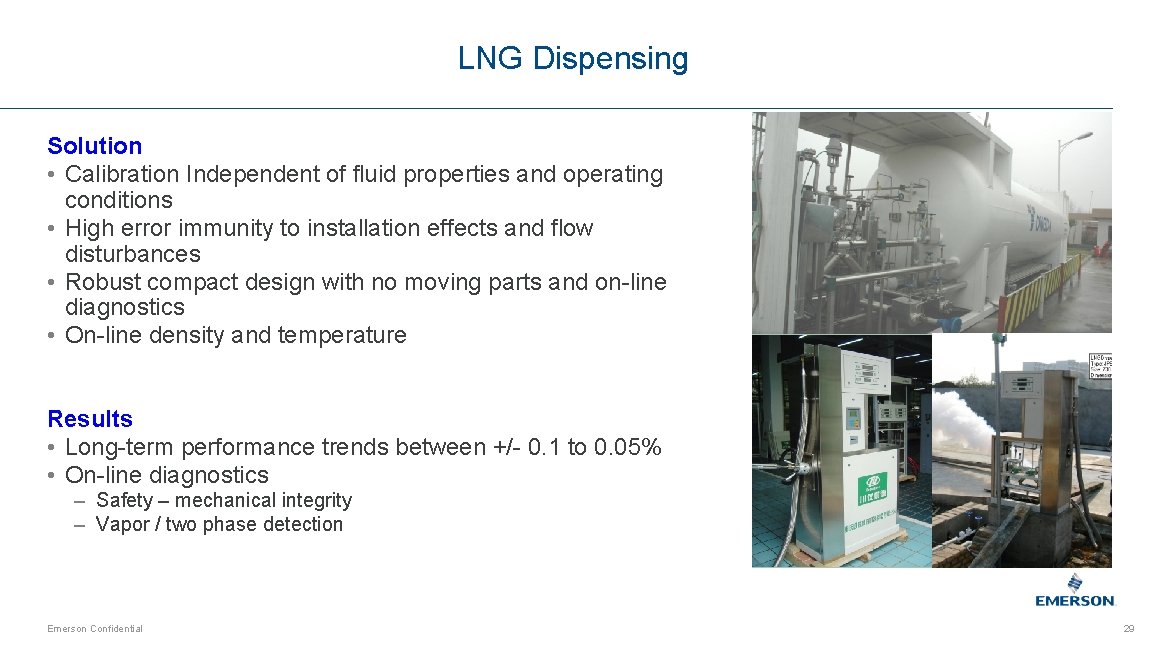
LNG Dispensing Solution • Calibration Independent of fluid properties and operating conditions • High error immunity to installation effects and flow disturbances • Robust compact design with no moving parts and on-line diagnostics • On-line density and temperature Results • Long-term performance trends between +/- 0. 1 to 0. 05% • On-line diagnostics – Safety – mechanical integrity – Vapor / two phase detection Emerson Confidential 29
Conclusion • Improved total system uncertainty on LNG by utilising dynamic measurement • Comparison between TG & dynamic measurement highlights the improved performance that can be achieved with dynamic measurement, especially if both are provided as a fully integrated solution on this high value product • A large capacity LNG calibration facility, together with the release of a new ISO standard for dynamic measurement, will further accelerate the adoption of dynamic measurement • We intend to increase our investment on all measurement aspects of LNG measurement • We look forward to the opportunity of sharing our experience and knowledge of LNG metering Emerson Confidential 30