
LLWR Environmental Update Presentation to the Environmental Health

- Slides: 11
LLWR Environmental Update Presentation to the Environmental Health Sub-committee November 2019 Contents • Aerial Discharges • Liquid Discharges • Retrospective Dose • Waste Disposals • Ongoing Disposals • Repository Development Programme • Summary
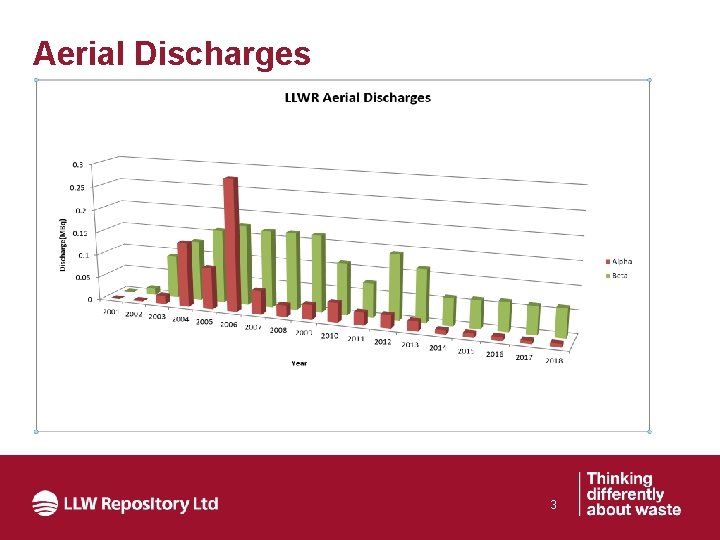
Aerial Discharges 3
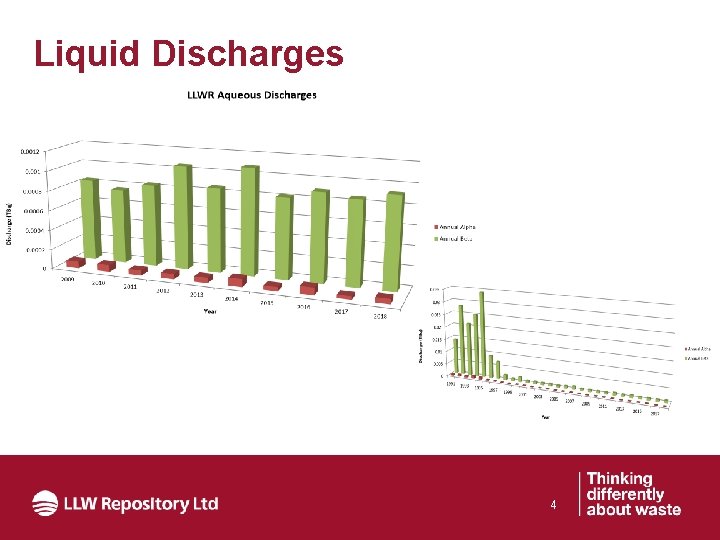
Liquid Discharges 4
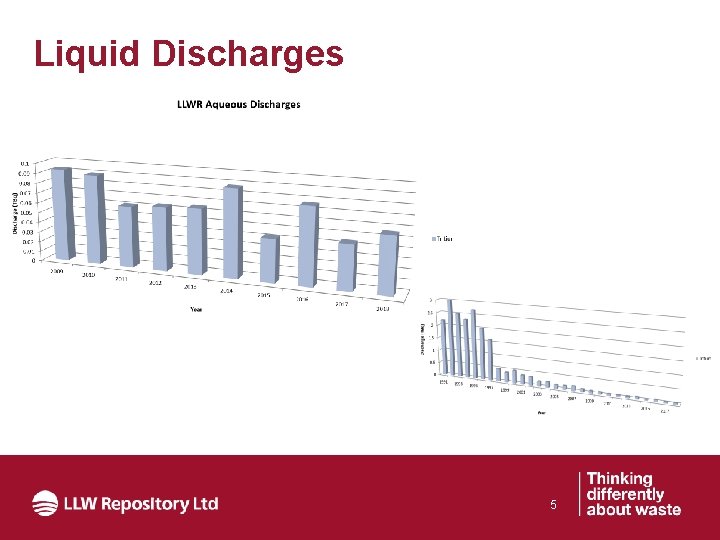
Liquid Discharges 5
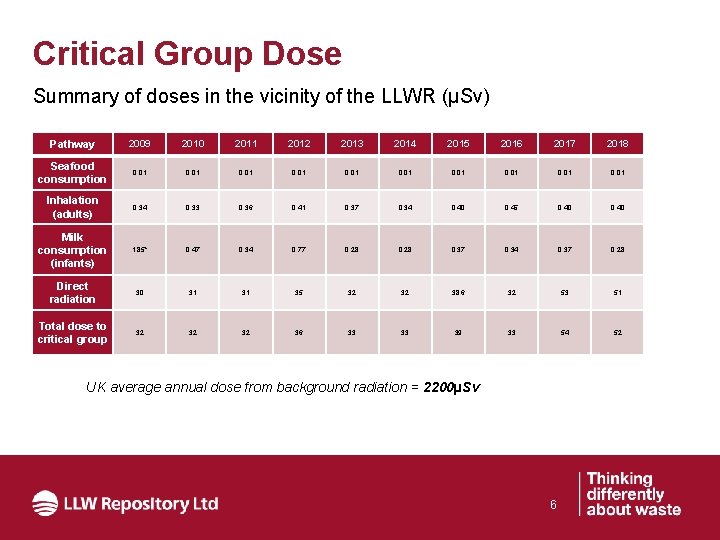
Critical Group Dose Summary of doses in the vicinity of the LLWR (µSv) Pathway 2009 2010 2011 2012 2013 2014 2015 2016 2017 2018 Seafood consumption 0. 01 0. 01 Inhalation (adults) 0. 34 0. 33 0. 36 0. 41 0. 37 0. 34 0. 40 0. 45 0. 40 Milk consumption (infants) 1. 85* 0. 47 0. 34 0. 77 0. 28 0. 37 0. 34 0. 37 0. 28 Direct radiation 30 31 31 35 32 32 38. 6 32 53 51 Total dose to critical group 32 32 32 36 33 33 39 33 54 52 UK average annual dose from background radiation = 2200µSv. 6
Direct Dose How it measured: • Direct / external dose measurement via Thermo Luminescent Dosimeters (TLD’s) ‘permanently’ deployed at the site perimeter. • Measured values used to calculate the reported ‘Direct dose’ following correction to remove background (based on fixed value gained from PHE measurements in the vicinity of the site) What’s changed (or not since 2017): • Confirm cause is predominantly due to Clean slate deployed on the perimeter track (at one TLD location in particular). Plans: • Data collection for background review ongoing. • Revised TLD position being utilised for 2019 (previous position retained for info). 7
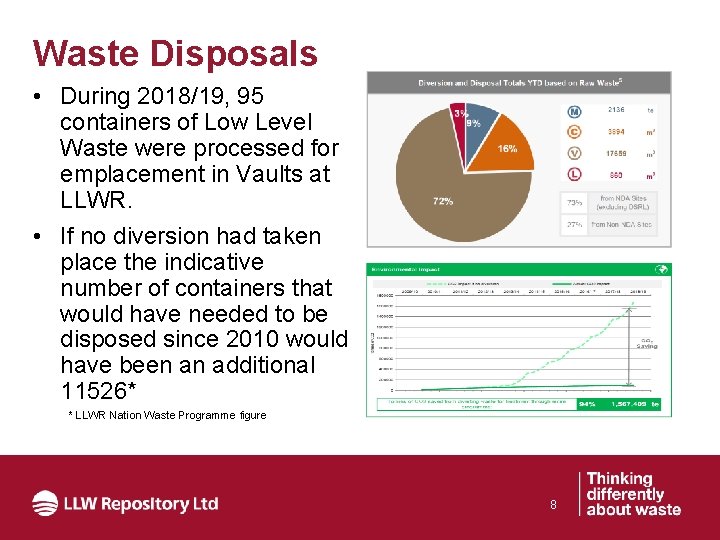
Waste Disposals • During 2018/19, 95 containers of Low Level Waste were processed for emplacement in Vaults at LLWR. • If no diversion had taken place the indicative number of containers that would have needed to be disposed since 2010 would have been an additional 11526* * LLWR Nation Waste Programme figure 8
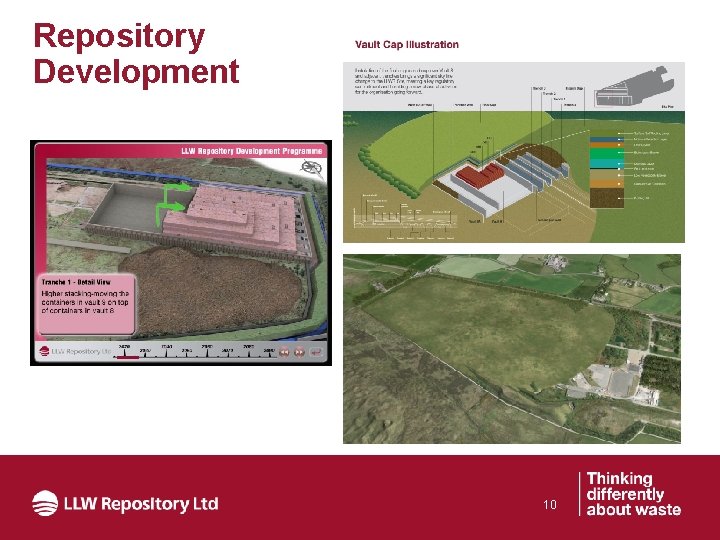
Ongoing Disposals • Mis-Consignment remains a key risk for LLWR. • LLWR Project work ongoing. • Link to EA Task and Finish work. • Repository Development Programme • Tranche 1 (final capping (northern area of trenches & Vault 8)): • • Optimisation and design work undertaken. Enabling works started: • GCN Survey, trapping and relocation completed under licence. Tree clearance progressing. • Next steps – Noise Barriers, Material Movement and Import, Drainage, Haul Roads 9
Repository Development 10
Summary • Discharge and Doses remain very low • Waste receipt continues to be managed safely. • Diversions of waste to treatment service continues to minimise disposals to the repository. • Repository Development and closure activities are ongoing. 11