
LLL L The Latimore Company LLC Leading Successful
- Slides: 26
LLL L The Latimore Company, LLC Leading Successful Change Initiatives WABO Summer Business Meeting Professional Development Segment Ocean Shores, WA July 13, 2018 Kurt Latimore, The Latimore Company
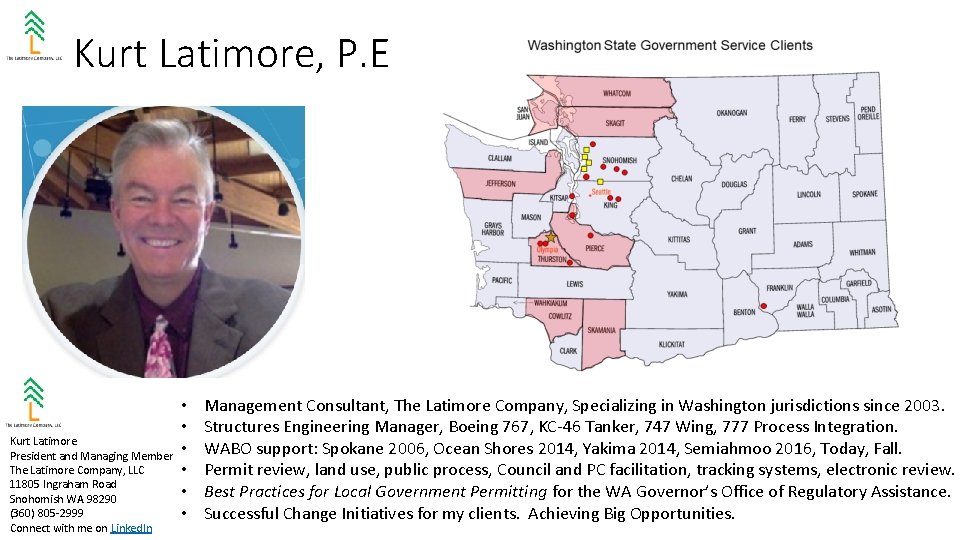
Kurt Latimore, P. E. Kurt Latimore President and Managing Member The Latimore Company, LLC 11805 Ingraham Road Snohomish WA 98290 (360) 805 -2999 Connect with me on Linked. In • • • Management Consultant, The Latimore Company, Specializing in Washington jurisdictions since 2003. Structures Engineering Manager, Boeing 767, KC-46 Tanker, 747 Wing, 777 Process Integration. WABO support: Spokane 2006, Ocean Shores 2014, Yakima 2014, Semiahmoo 2016, Today, Fall. Permit review, land use, public process, Council and PC facilitation, tracking systems, electronic review. Best Practices for Local Government Permitting for the WA Governor’s Office of Regulatory Assistance. Successful Change Initiatives for my clients. Achieving Big Opportunities.
Implementing Change • Today we’ll learn about the crucial steps that differentiate successful from unsuccessful initiatives. • See examples of how these affect success. • A few short videos. • Q&A. • Flyer to take home with you. • Summertime homework assignment. • Return in the Fall for Part Two.
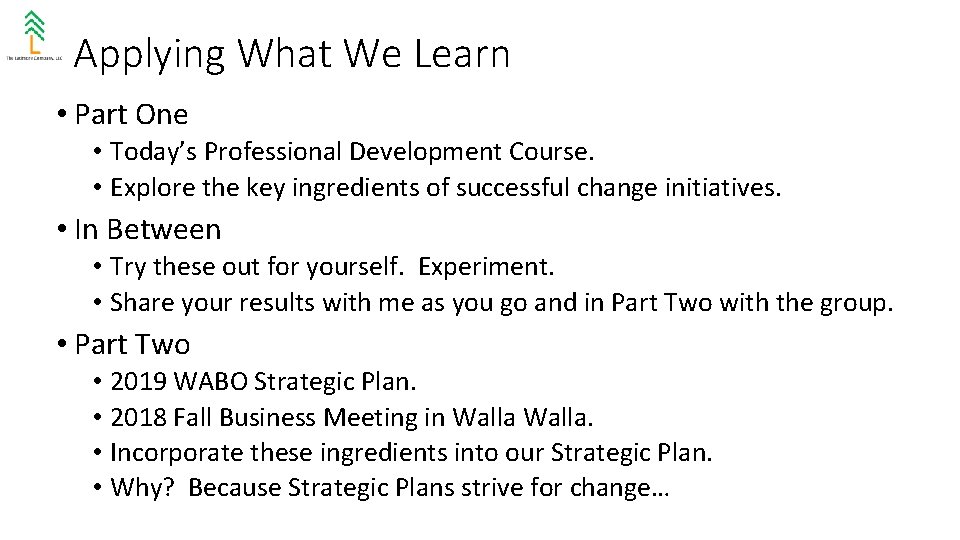
Applying What We Learn • Part One • Today’s Professional Development Course. • Explore the key ingredients of successful change initiatives. • In Between • Try these out for yourself. Experiment. • Share your results with me as you go and in Part Two with the group. • Part Two • 2019 WABO Strategic Plan. • 2018 Fall Business Meeting in Walla. • Incorporate these ingredients into our Strategic Plan. • Why? Because Strategic Plans strive for change…
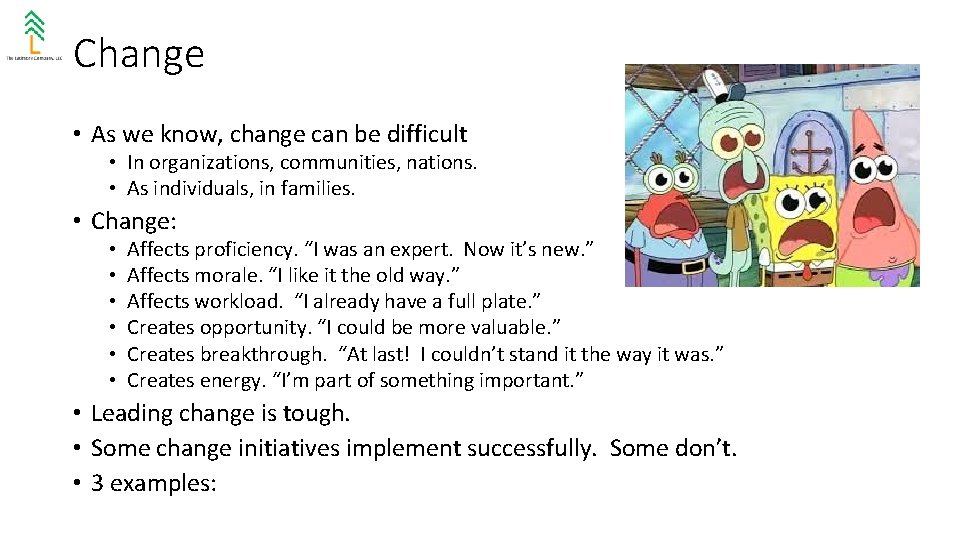
Change • As we know, change can be difficult • In organizations, communities, nations. • As individuals, in families. • Change: • • • Affects proficiency. “I was an expert. Now it’s new. ” Affects morale. “I like it the old way. ” Affects workload. “I already have a full plate. ” Creates opportunity. “I could be more valuable. ” Creates breakthrough. “At last! I couldn’t stand it the way it was. ” Creates energy. “I’m part of something important. ” • Leading change is tough. • Some change initiatives implement successfully. Some don’t. • 3 examples:
Some Initiatives Work, Some Don’t • Netflix • "Netflix's business model is unsustainable in the face of price competition from better-capitalized Blockbuster, " writes Mr. Pachter, who has a $3 price target on the stock and recommends investors "continue to avoid Netflix shares. ” WSJ, May 25, 2005 • Netflix's fundamentals don't look good, and investors should stay away, Michael Pachter of Wedbush Securities said Wednesday on CNBC. "This is a worse company today than it was a couple of years ago, " he said. "They have destroyed their DVD business, which is the source of three-quarters of their operating profit. CNBC, Mar 06, 2013 • Imagine the turmoil as experts in DVD logistics face this “internet thing” • Imagine throwing away ¾ of your business
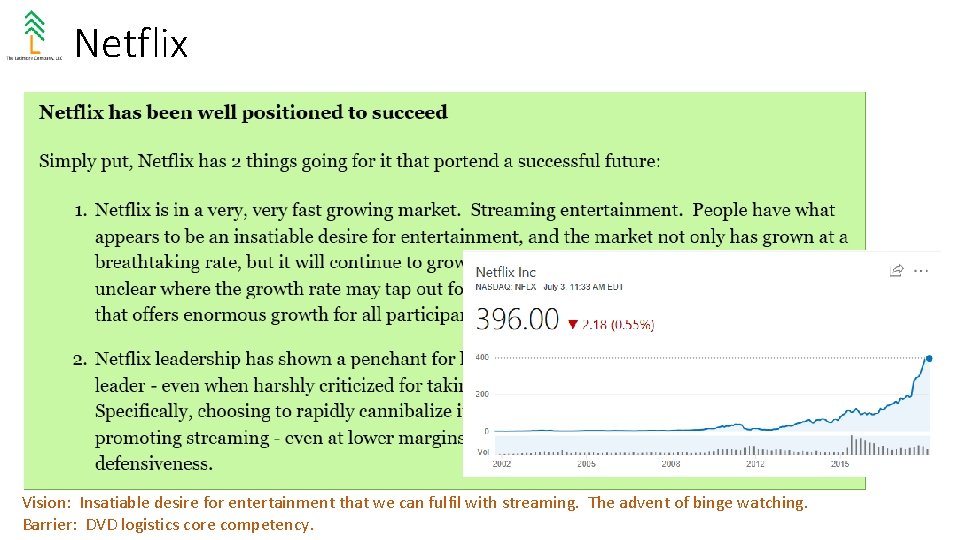
Netflix Adam Hartung, Forbes Jan 29, 2013 Vision: Insatiable desire for entertainment that we can fulfil with streaming. The advent of binge watching. Barrier: DVD logistics core competency.
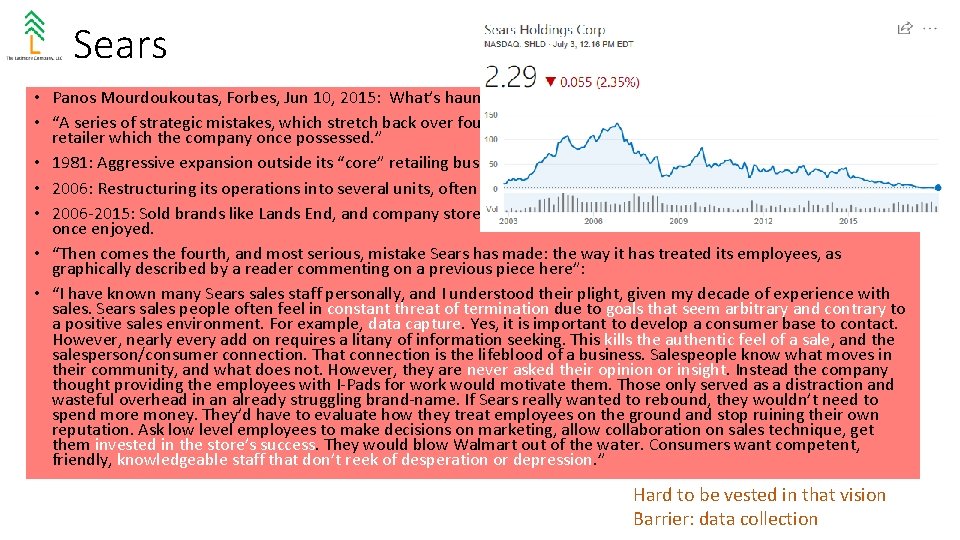
Sears • Panos Mourdoukoutas, Forbes, Jun 10, 2015: What’s haunting Sears? • “A series of strategic mistakes, which stretch back over four decades, and have damaged the status of great retailer which the company once possessed. ” • 1981: Aggressive expansion outside its “core” retailing business (Dean Witter, Coldwell Banker) • 2006: Restructuring its operations into several units, often run by people with little retailing experience. • 2006 -2015: Sold brands like Lands End, and company stores, losing the brand scale advantages the company once enjoyed. • “Then comes the fourth, and most serious, mistake Sears has made: the way it has treated its employees, as graphically described by a reader commenting on a previous piece here”: • “I have known many Sears sales staff personally, and I understood their plight, given my decade of experience with sales. Sears sales people often feel in constant threat of termination due to goals that seem arbitrary and contrary to a positive sales environment. For example, data capture. Yes, it is important to develop a consumer base to contact. However, nearly every add on requires a litany of information seeking. This kills the authentic feel of a sale, and the salesperson/consumer connection. That connection is the lifeblood of a business. Salespeople know what moves in their community, and what does not. However, they are never asked their opinion or insight. Instead the company thought providing the employees with I-Pads for work would motivate them. Those only served as a distraction and wasteful overhead in an already struggling brand-name. If Sears really wanted to rebound, they wouldn’t need to spend more money. They’d have to evaluate how they treat employees on the ground and stop ruining their own reputation. Ask low level employees to make decisions on marketing, allow collaboration on sales technique, get them invested in the store’s success. They would blow Walmart out of the water. Consumers want competent, friendly, knowledgeable staff that don’t reek of desperation or depression. ” Hard to be vested in that vision Barrier: data collection
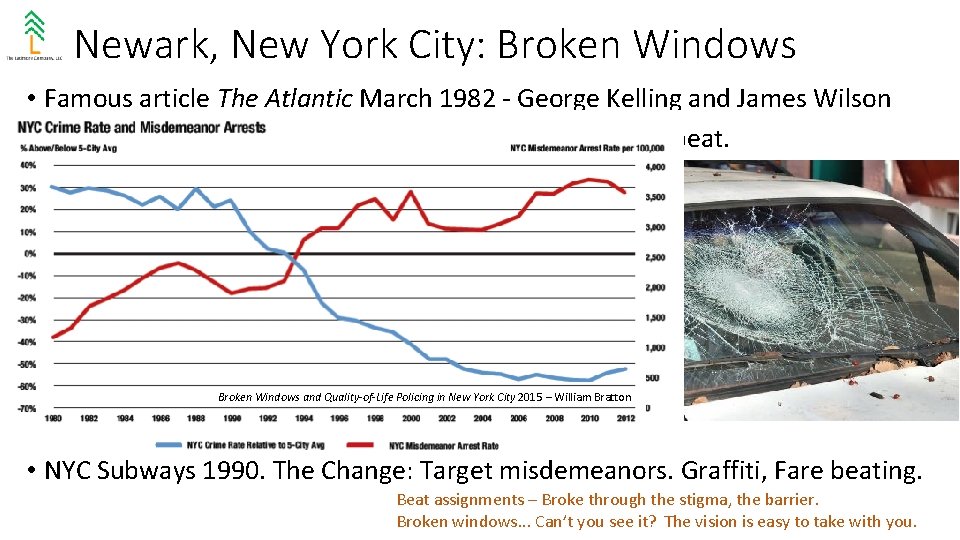
Newark, New York City: Broken Windows • Famous article The Atlantic March 1982 - George Kelling and James Wilson • Newark NJ. The Change: State funded a police walking beat. • Traditionally a punishment. • Crime stats flat. But, Locals felt better. The little things. • Broken window: The rest will soon be broken. • A signal no one cares. Disorder encourages more disorder. Broken Windows and Quality-of-Life Policing in New York City 2015 – William Bratton NY Times • The Breakthrough: The reverse is true too. • NYC Subways 1990. The Change: Target misdemeanors. Graffiti, Fare beating. Beat assignments – Broke through the stigma, the barrier. Broken windows. . . Can’t you see it? The vision is easy to take with you.
Why are Some Initiatives Successful while Others Aren’t? • Talent? • Timing? • Resources? • Luck? Why?
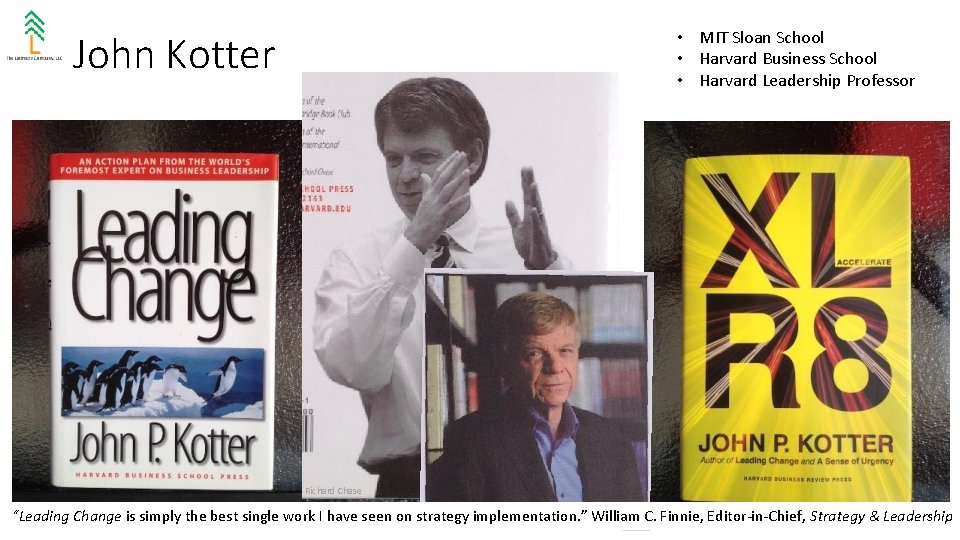
• MIT Sloan School • Harvard Business School • Harvard Leadership Professor John Kotter Richard Chase “Leading Change is simply the best single work I have seen on strategy implementation. ” William C. Finnie, Editor-in-Chief, Strategy & Leadership Scott Areman
Leading Change Preface John Kotter • “In the summer of 1994, I wrote an article for the Harvard Business Review entitled ‘Leading Change: Why Transformation Efforts Fail. ’ • It was based on my analysis of dozens of initiatives over the prior fifteen years to produce significant useful change in organizations via restructuring, reengineering, restrategizing, acquisitions, downsizing, quality programs, and cultural renewal. • Even as I was finishing that piece I knew I wanted to write more on the subject, so I began this book shortly thereafter. ”
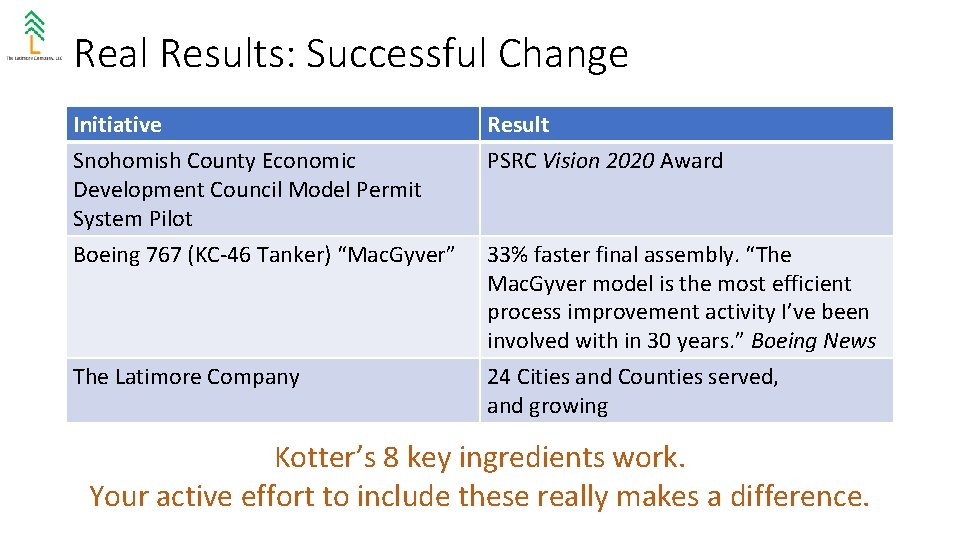
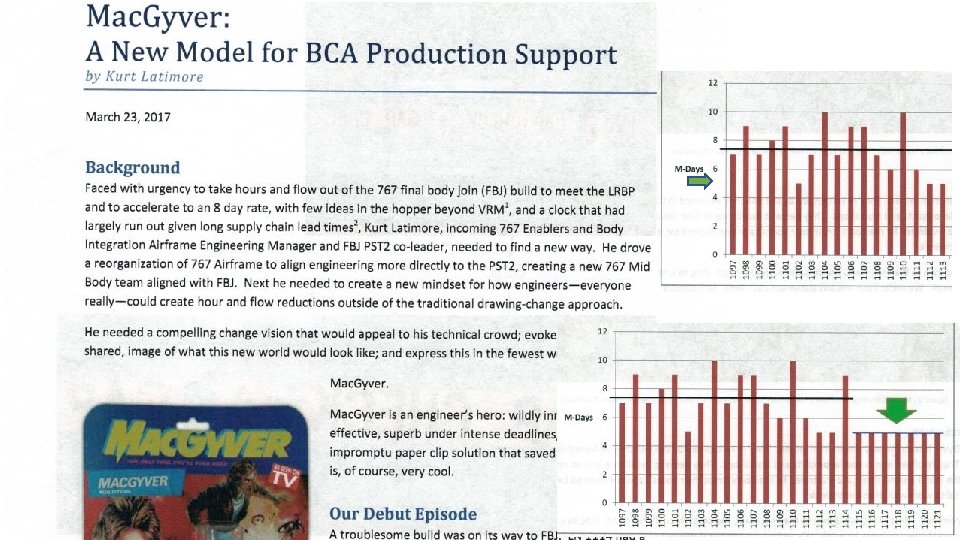
Real Results: Successful Change Initiative Snohomish County Economic Development Council Model Permit System Pilot Result PSRC Vision 2020 Award Boeing 767 (KC-46 Tanker) “Mac. Gyver” 33% faster final assembly. “The Mac. Gyver model is the most efficient process improvement activity I’ve been involved with in 30 years. ” Boeing News 24 Cities and Counties served, and growing The Latimore Company Kotter’s 8 key ingredients work. Your active effort to include these really makes a difference.
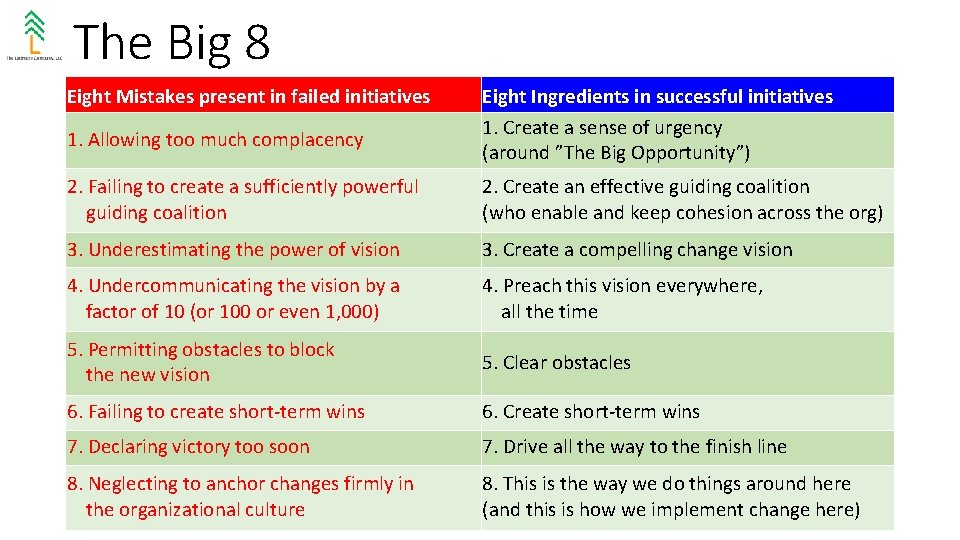
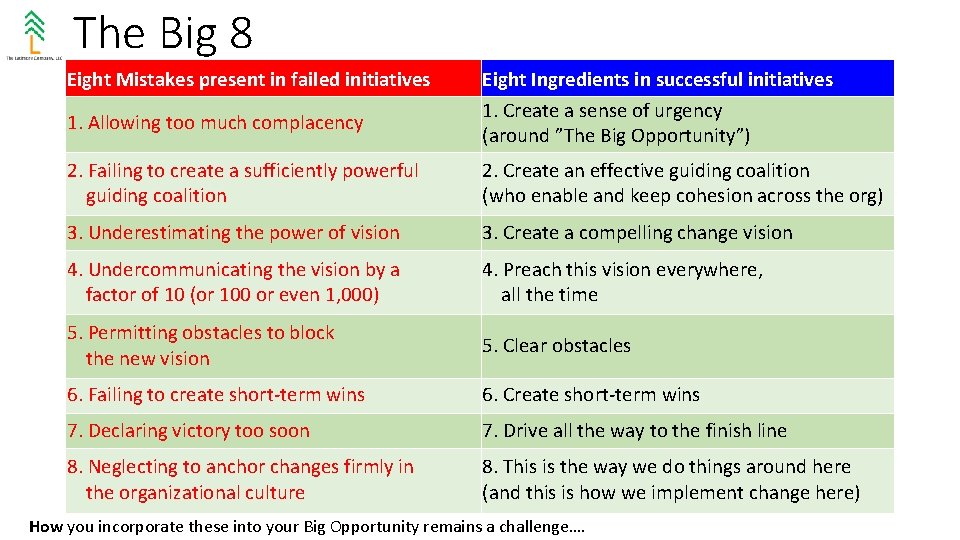
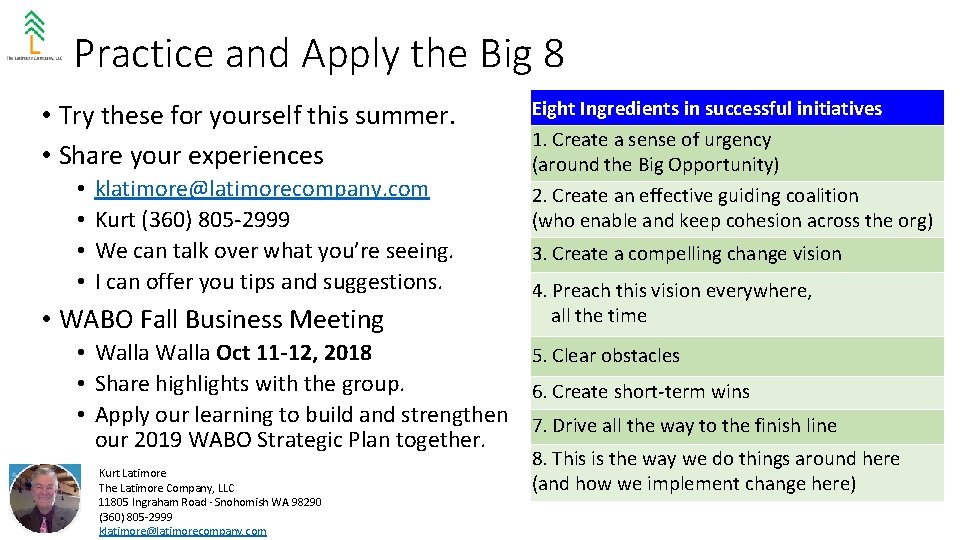
The Big 8 Eight Mistakes present in failed initiatives 1. Allowing too much complacency Eight Ingredients in successful initiatives 1. Create a sense of urgency (around ”The Big Opportunity”) 2. Failing to create a sufficiently powerful guiding coalition 2. Create an effective guiding coalition (who enable and keep cohesion across the org) 3. Underestimating the power of vision 3. Create a compelling change vision 4. Undercommunicating the vision by a factor of 10 (or 100 or even 1, 000) 4. Preach this vision everywhere, all the time 5. Permitting obstacles to block the new vision 5. Clear obstacles 6. Failing to create short-term wins 6. Create short-term wins 7. Declaring victory too soon 7. Drive all the way to the finish line 8. Neglecting to anchor changes firmly in the organizational culture 8. This is the way we do things around here (and this is how we implement change here)
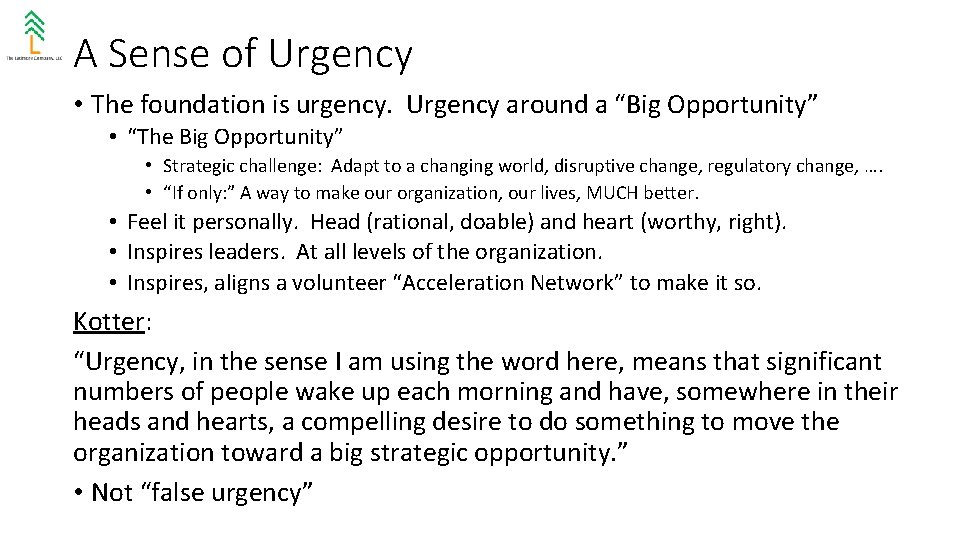
A Sense of Urgency • The foundation is urgency. Urgency around a “Big Opportunity” • “The Big Opportunity” • Strategic challenge: Adapt to a changing world, disruptive change, regulatory change, …. • “If only: ” A way to make our organization, our lives, MUCH better. • Feel it personally. Head (rational, doable) and heart (worthy, right). • Inspires leaders. At all levels of the organization. • Inspires, aligns a volunteer “Acceleration Network” to make it so. Kotter: “Urgency, in the sense I am using the word here, means that significant numbers of people wake up each morning and have, somewhere in their heads and hearts, a compelling desire to do something to move the organization toward a big strategic opportunity. ” • Not “false urgency”
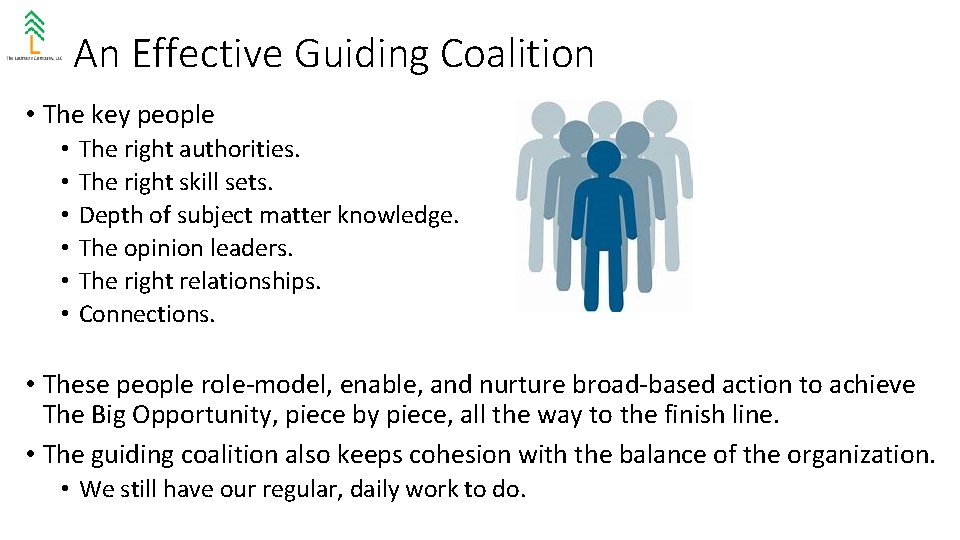
An Effective Guiding Coalition • The key people • • • The right authorities. The right skill sets. Depth of subject matter knowledge. The opinion leaders. The right relationships. Connections. • These people role-model, enable, and nurture broad-based action to achieve The Big Opportunity, piece by piece, all the way to the finish line. • The guiding coalition also keeps cohesion with the balance of the organization. • We still have our regular, daily work to do.
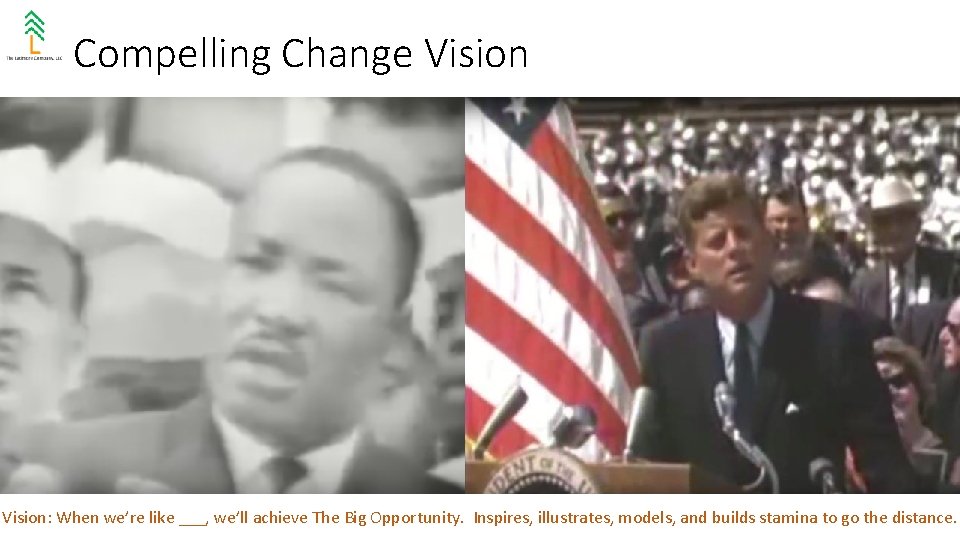
Compelling Change Vision: When we’re like ___, we’ll achieve The Big Opportunity. Inspires, illustrates, models, and builds stamina to go the distance.
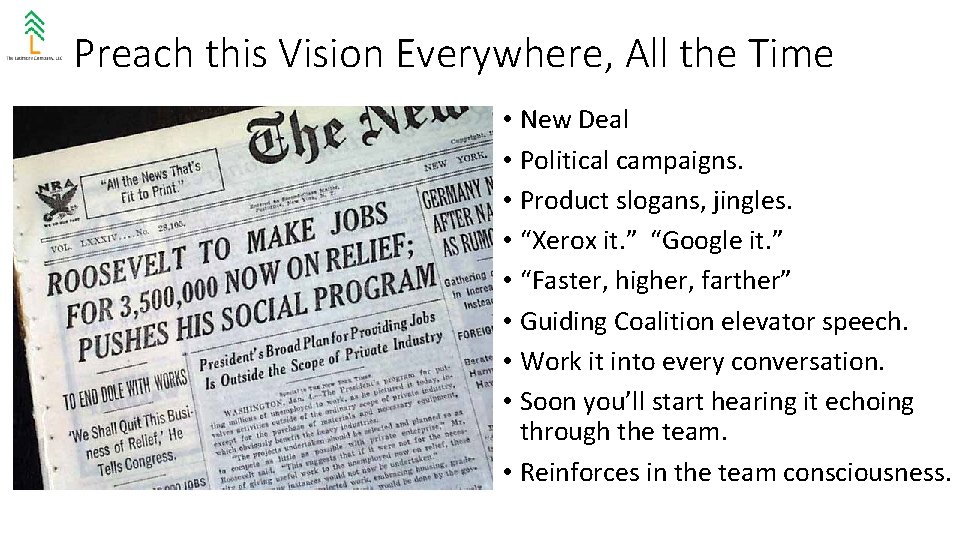
Preach this Vision Everywhere, All the Time • New Deal • Political campaigns. • Product slogans, jingles. • “Xerox it. ” “Google it. ” • “Faster, higher, farther” • Guiding Coalition elevator speech. • Work it into every conversation. • Soon you’ll start hearing it echoing through the team. • Reinforces in the team consciousness.
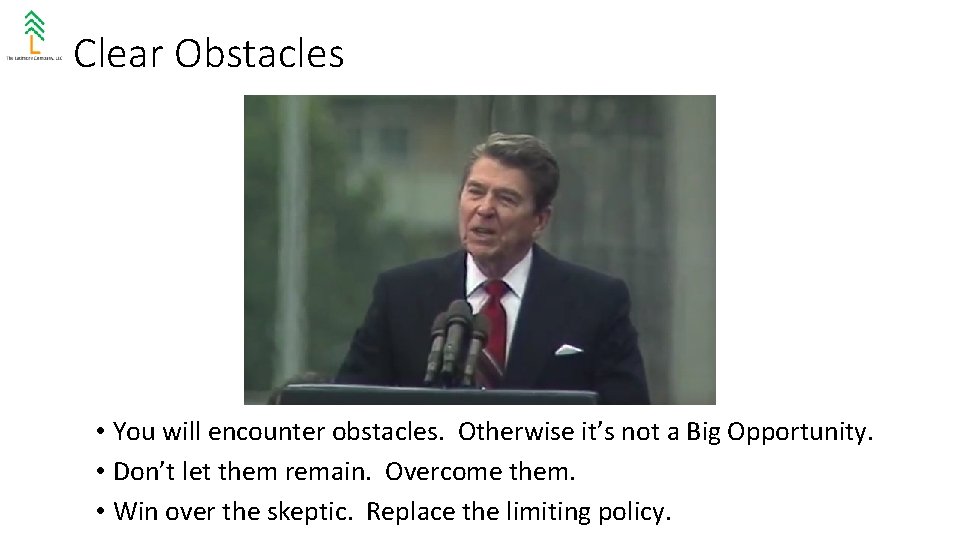
Clear Obstacles • You will encounter obstacles. Otherwise it’s not a Big Opportunity. • Don’t let them remain. Overcome them. • Win over the skeptic. Replace the limiting policy.
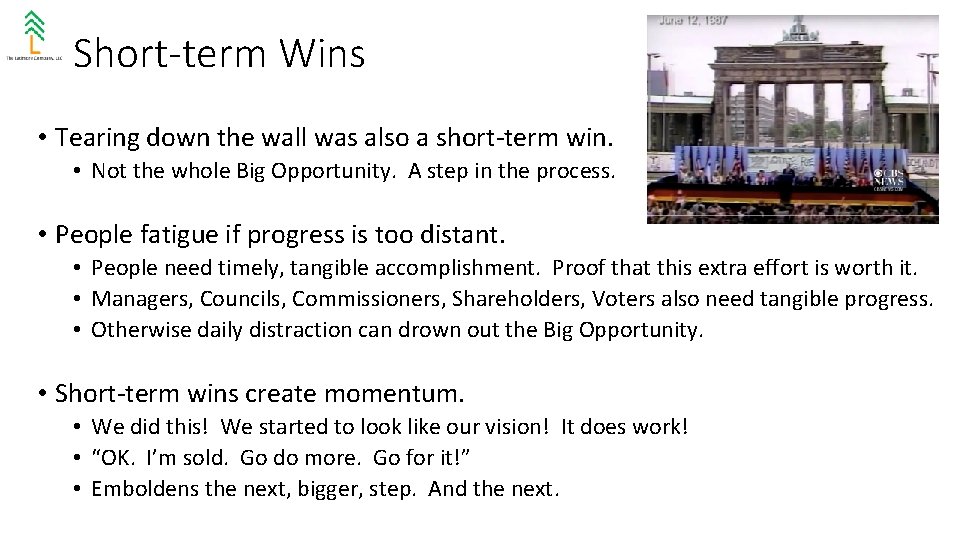
Short-term Wins • Tearing down the wall was also a short-term win. • Not the whole Big Opportunity. A step in the process. • People fatigue if progress is too distant. • People need timely, tangible accomplishment. Proof that this extra effort is worth it. • Managers, Councils, Commissioners, Shareholders, Voters also need tangible progress. • Otherwise daily distraction can drown out the Big Opportunity. • Short-term wins create momentum. • We did this! We started to look like our vision! It does work! • “OK. I’m sold. Go do more. Go for it!” • Emboldens the next, bigger, step. And the next.
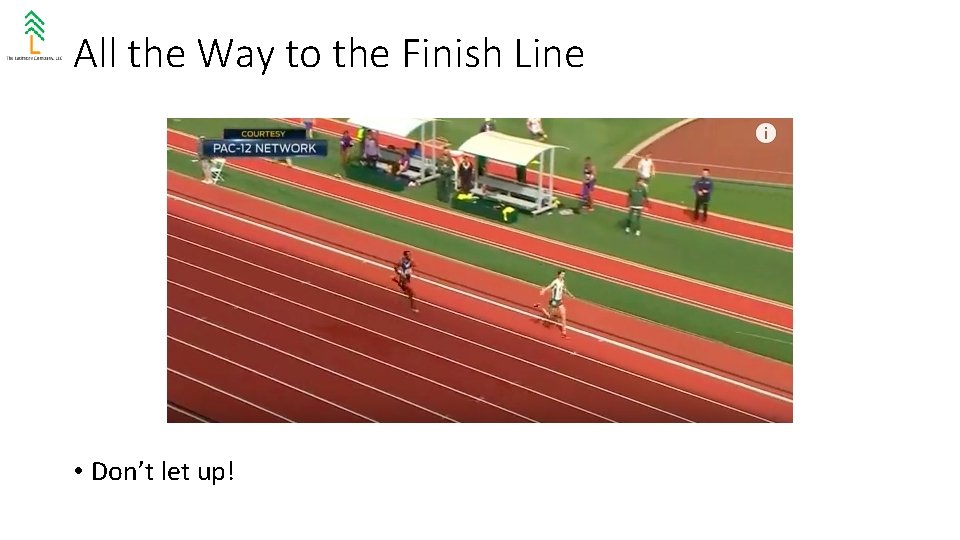
All the Way to the Finish Line • Don’t let up!
Anchoring Firmly into the Culture • This is the way we do things around here. • Don’t underestimate this 8 th step. • The downfall of many weight-loss efforts. • Until firmly established, it is easy to drift back to the old way. • Steadily reinforce, in the moment, that we only use the new way now. • And, this is the way we achieve Big Opportunities here • We use the Big 8. • We run a reliable, smooth running office. … AND we pursue big advances at the same time.
The Big 8 Eight Mistakes present in failed initiatives 1. Allowing too much complacency Eight Ingredients in successful initiatives 1. Create a sense of urgency (around ”The Big Opportunity”) 2. Failing to create a sufficiently powerful guiding coalition 2. Create an effective guiding coalition (who enable and keep cohesion across the org) 3. Underestimating the power of vision 3. Create a compelling change vision 4. Undercommunicating the vision by a factor of 10 (or 100 or even 1, 000) 4. Preach this vision everywhere, all the time 5. Permitting obstacles to block the new vision 5. Clear obstacles 6. Failing to create short-term wins 6. Create short-term wins 7. Declaring victory too soon 7. Drive all the way to the finish line 8. Neglecting to anchor changes firmly in the organizational culture 8. This is the way we do things around here (and this is how we implement change here) How you incorporate these into your Big Opportunity remains a challenge….
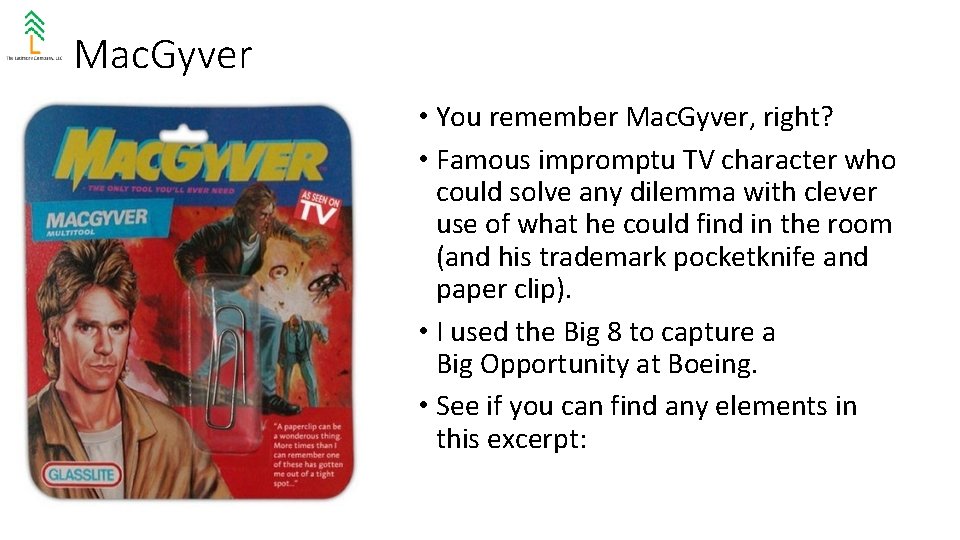
Mac. Gyver • You remember Mac. Gyver, right? • Famous impromptu TV character who could solve any dilemma with clever use of what he could find in the room (and his trademark pocketknife and paper clip). • I used the Big 8 to capture a Big Opportunity at Boeing. • See if you can find any elements in this excerpt:
FBJ – Final Body Join LRBP – Long-range business plan PST 2 – Production Cell VRM – A developmental mathematical approach to assembly variation management Flow – manufacturing days LN – Line number
Practice and Apply the Big 8 • Try these for yourself this summer. • Share your experiences • • klatimore@latimorecompany. com Kurt (360) 805 -2999 We can talk over what you’re seeing. I can offer you tips and suggestions. • WABO Fall Business Meeting Eight Ingredients in successful initiatives 1. Create a sense of urgency (around the Big Opportunity) 2. Create an effective guiding coalition (who enable and keep cohesion across the org) 3. Create a compelling change vision 4. Preach this vision everywhere, all the time • Walla Oct 11 -12, 2018 5. Clear obstacles • Share highlights with the group. 6. Create short-term wins • Apply our learning to build and strengthen 7. Drive all the way to the finish line our 2019 WABO Strategic Plan together. Kurt Latimore The Latimore Company, LLC 11805 Ingraham Road ∙ Snohomish WA 98290 (360) 805 -2999 klatimore@latimorecompany. com 8. This is the way we do things around here (and how we implement change here)