
LLC Resonant Converter Introduction Switching Bridge Generate pulsating

LLC Resonant Converter

Introduction Switching Bridge: Generate pulsating voltage • Either a half-bridge (with 0. 5 gain) or full-bridge ( with unity gain) Transformer and rectifier: • Transformer provides galvanic isolation • Rectifier transforms the pulsating voltage to DC Resonant tank: Modulates the gain through changing the switching frequency
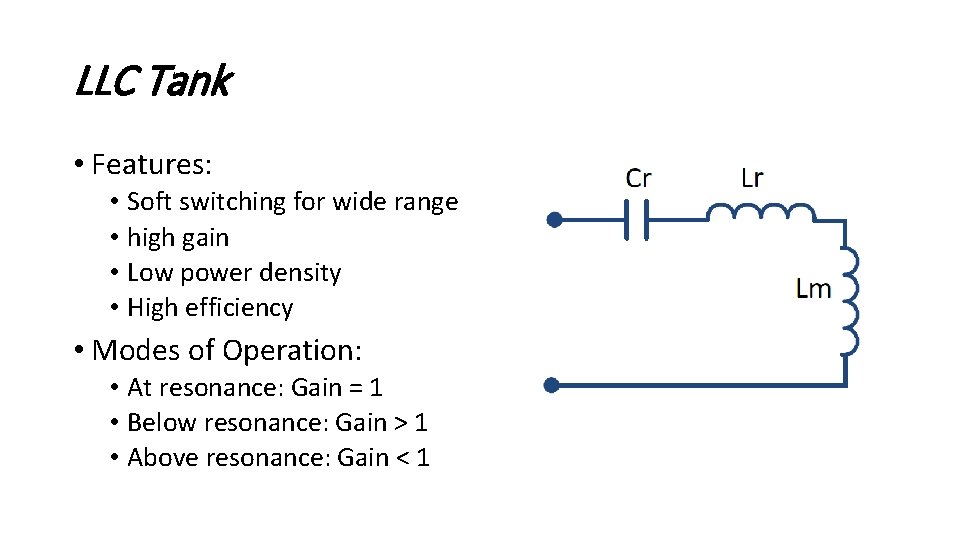
LLC Tank • Features: • Soft switching for wide range • high gain • Low power density • High efficiency • Modes of Operation: • At resonance: Gain = 1 • Below resonance: Gain > 1 • Above resonance: Gain < 1
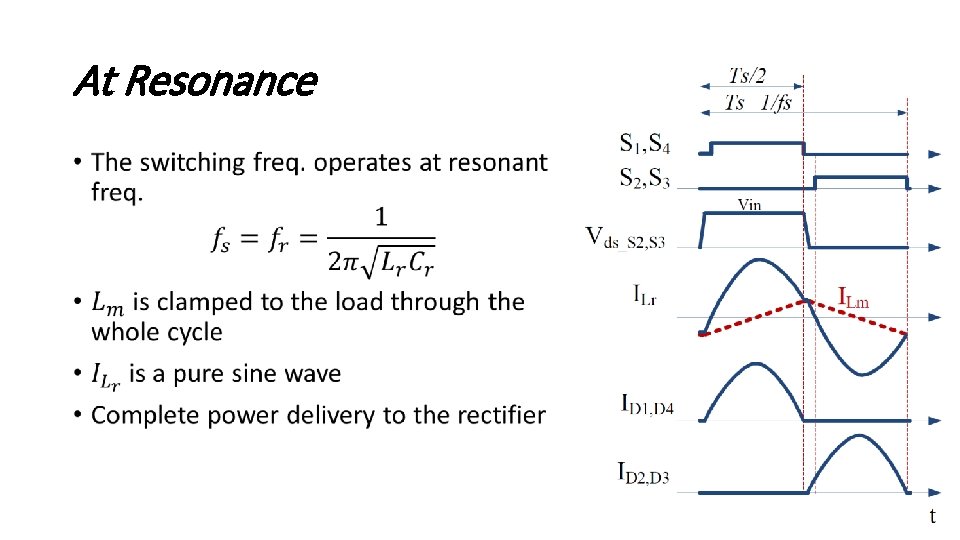
At Resonance •
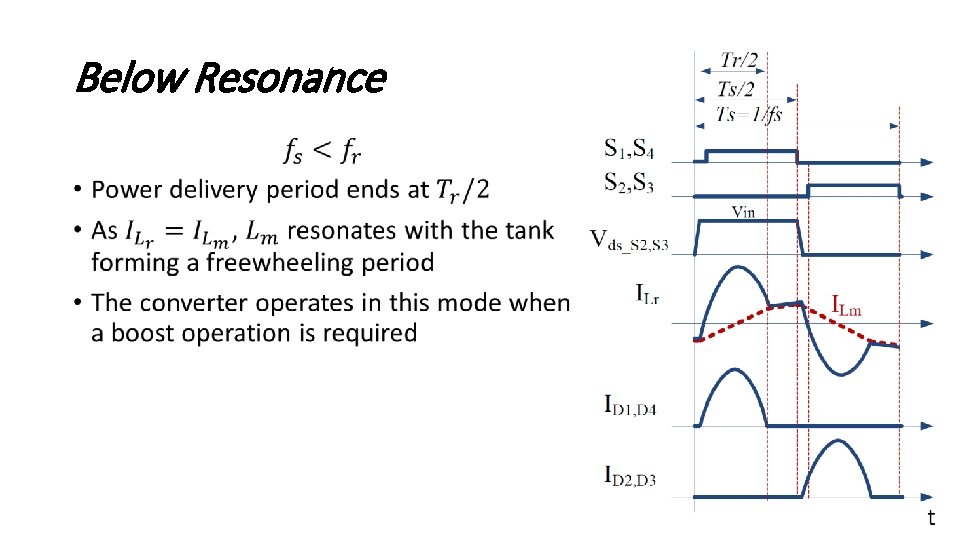
Below Resonance •
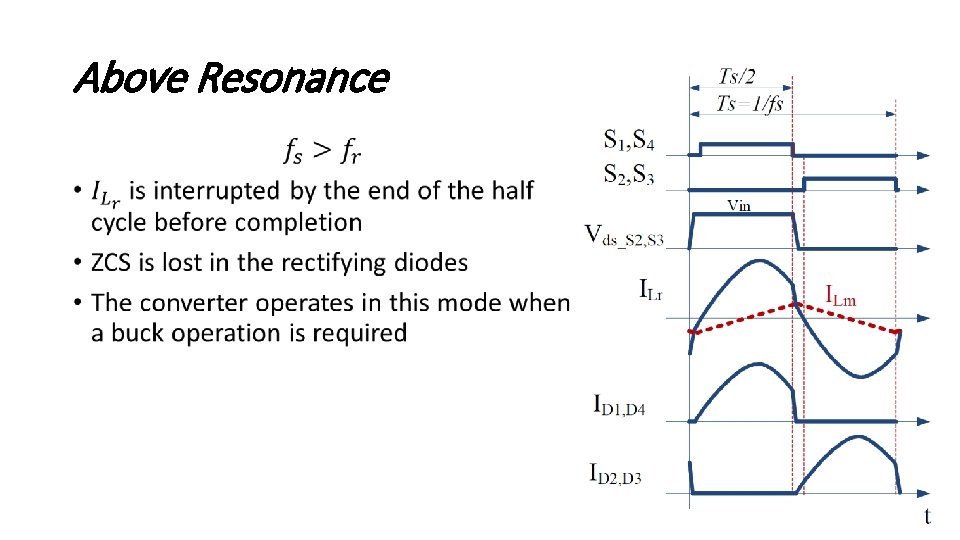
Above Resonance •
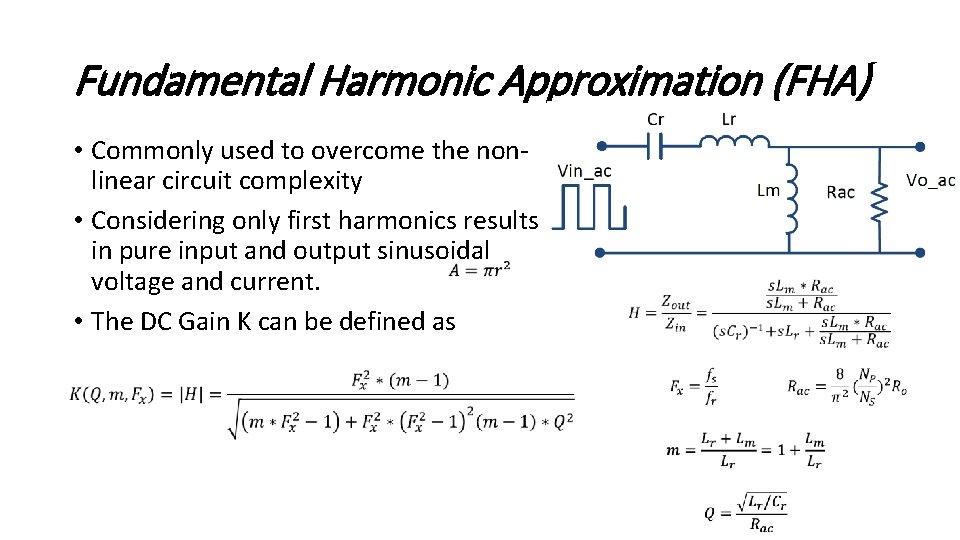
Fundamental Harmonic Approximation (FHA) • Commonly used to overcome the nonlinear circuit complexity • Considering only first harmonics results in pure input and output sinusoidal voltage and current. • The DC Gain K can be defined as
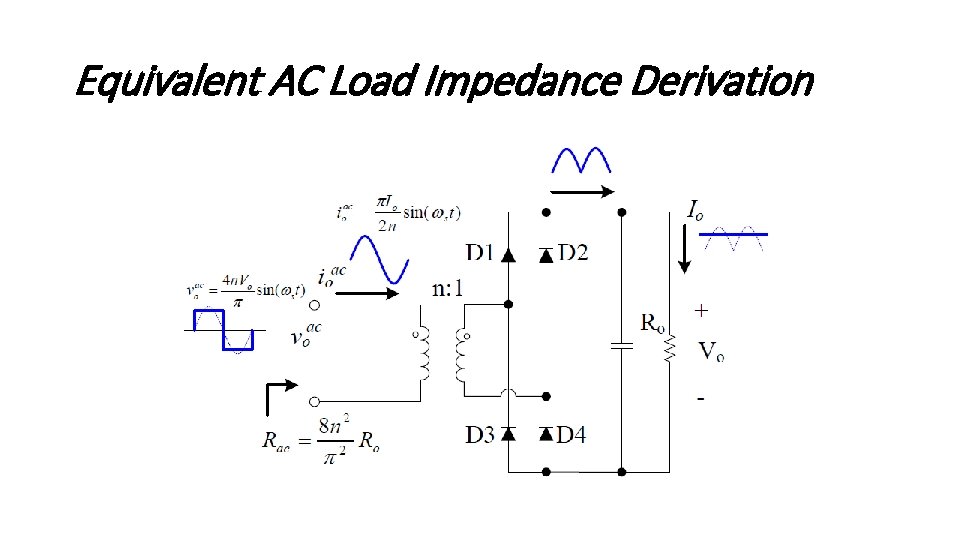
Equivalent AC Load Impedance Derivation
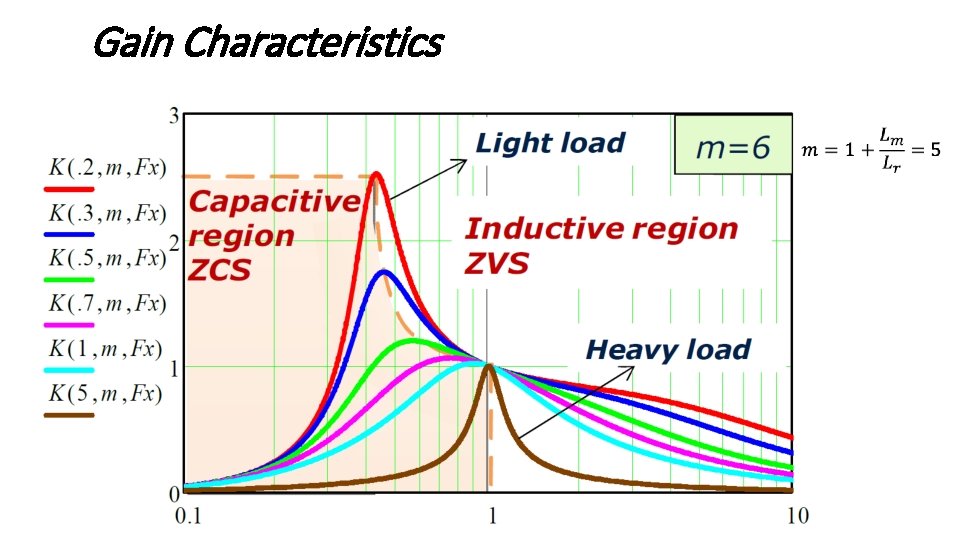
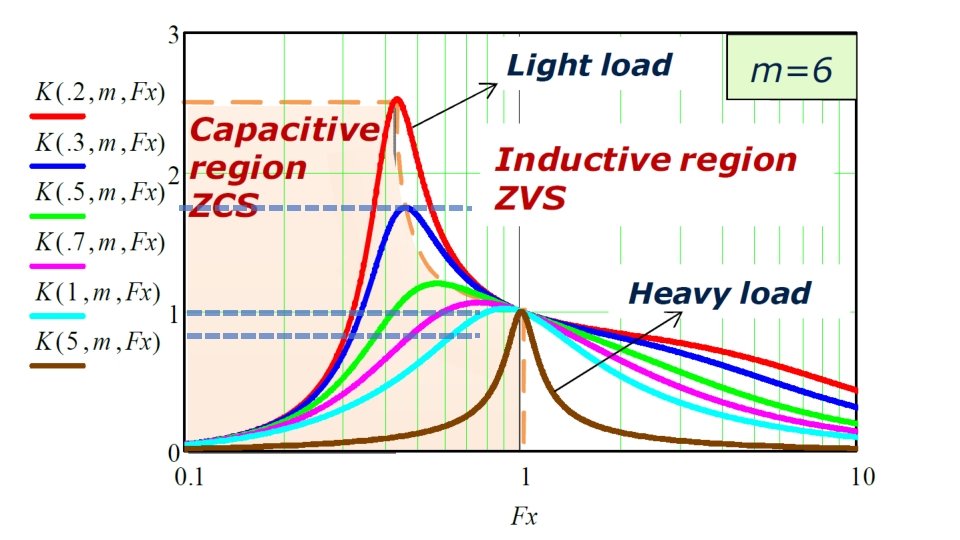
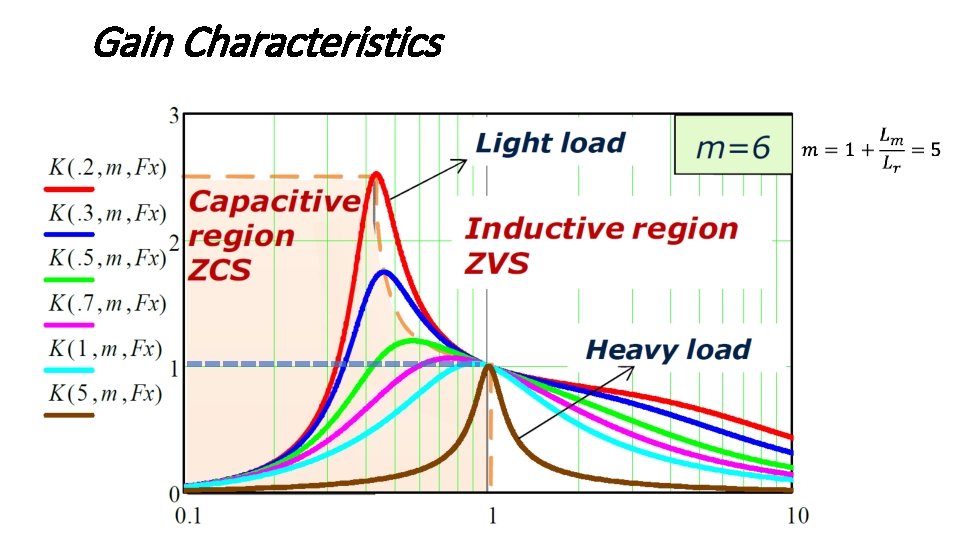
Gain Characteristics
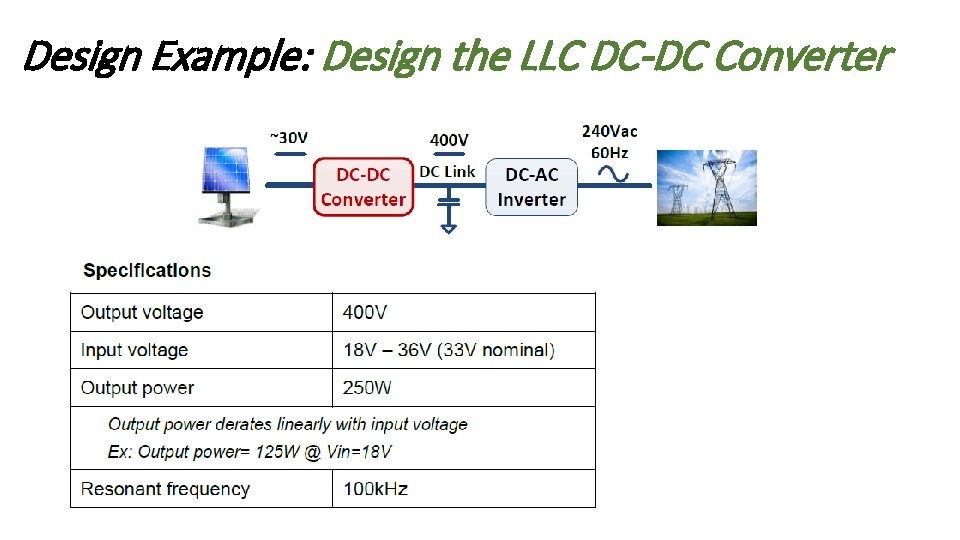
Design Example: Design the LLC DC-DC Converter
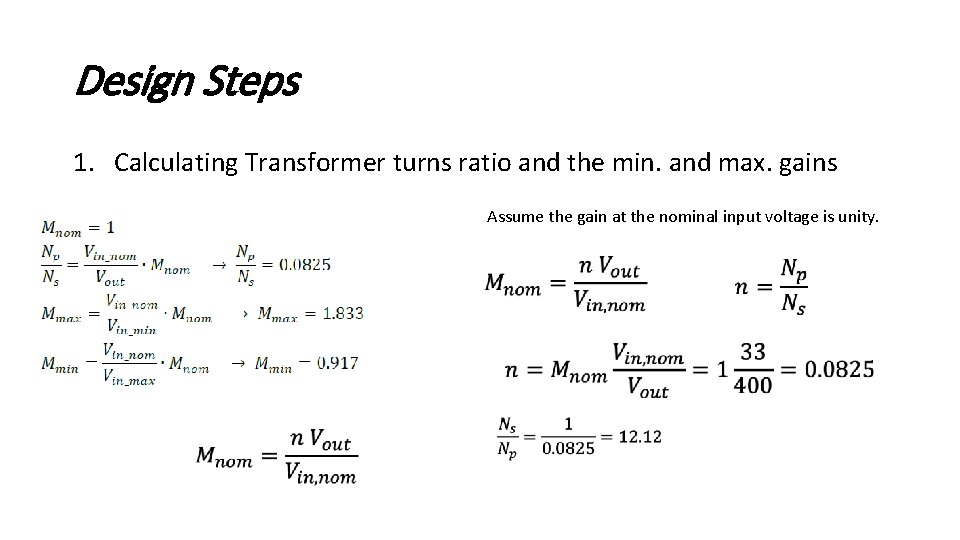
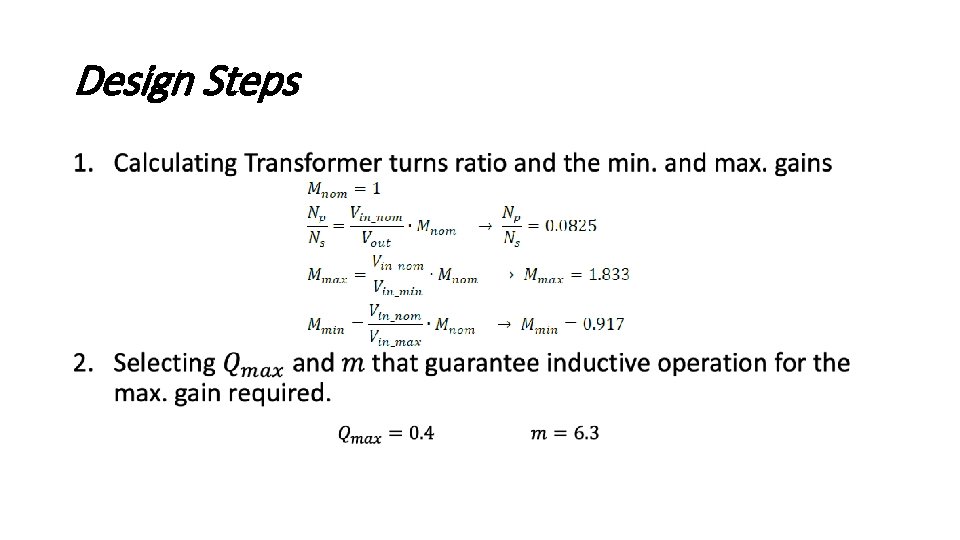
Design Steps 1. Calculating Transformer turns ratio and the min. and max. gains Assume the gain at the nominal input voltage is unity.
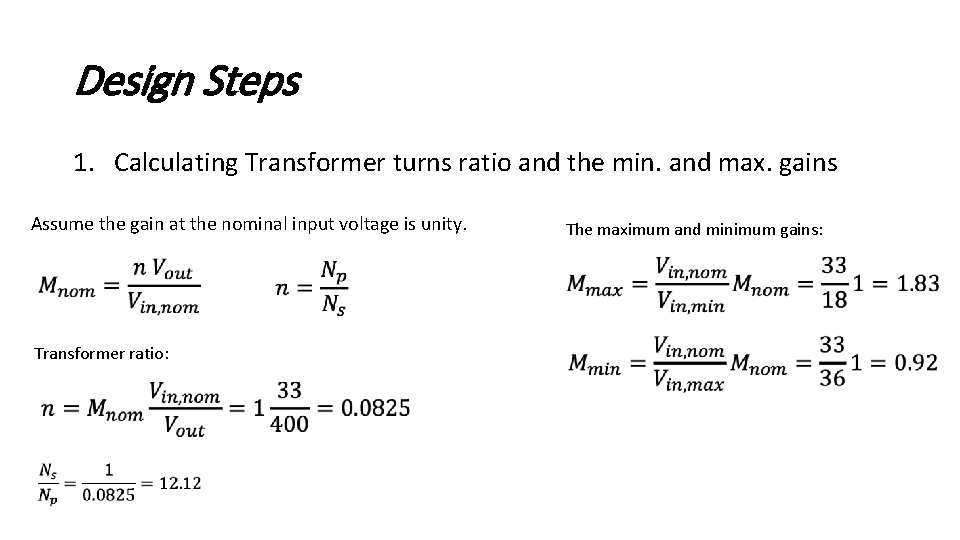
Design Steps 1. Calculating Transformer turns ratio and the min. and max. gains Assume the gain at the nominal input voltage is unity. Transformer ratio: The maximum and minimum gains:
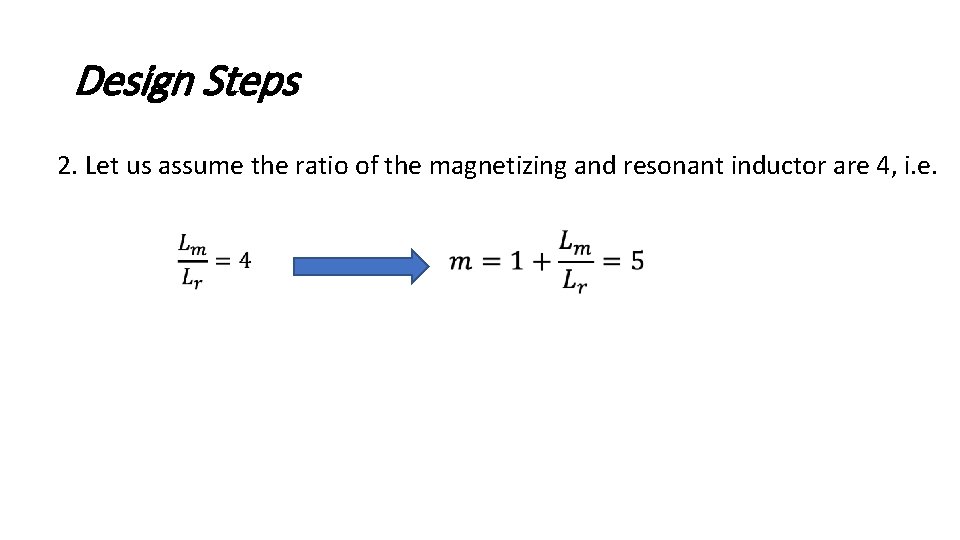
Design Steps 2. Let us assume the ratio of the magnetizing and resonant inductor are 4, i. e.
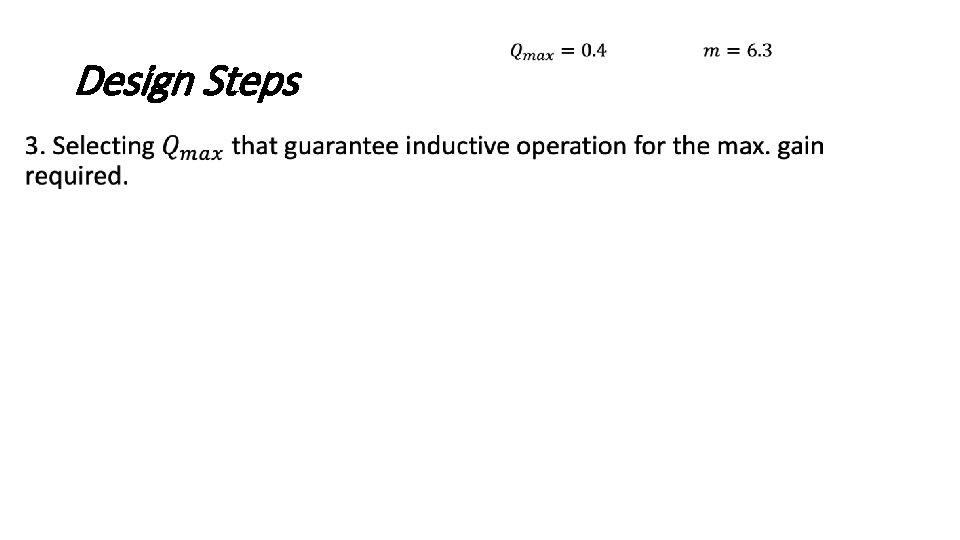
Design Steps •
Gain Characteristics
Design Steps •
Design Steps (continue) •
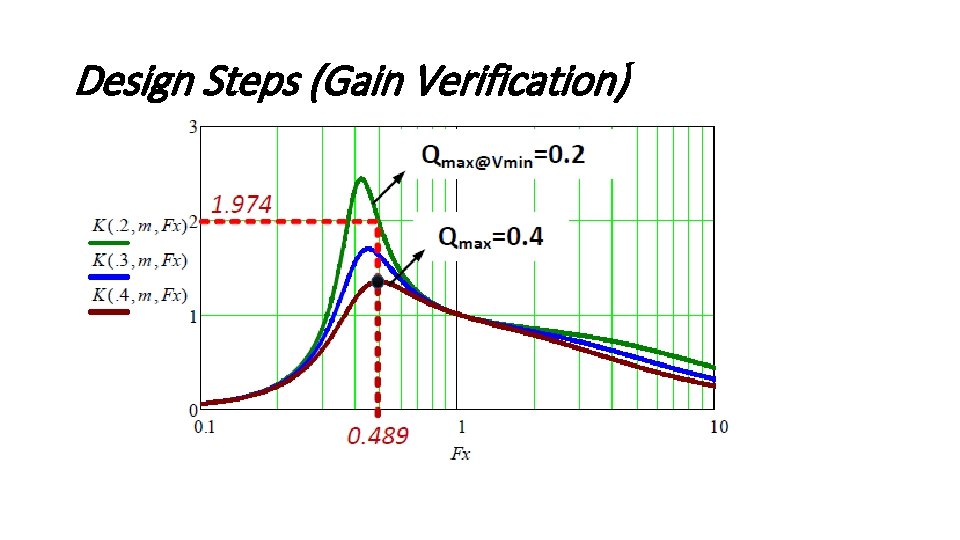
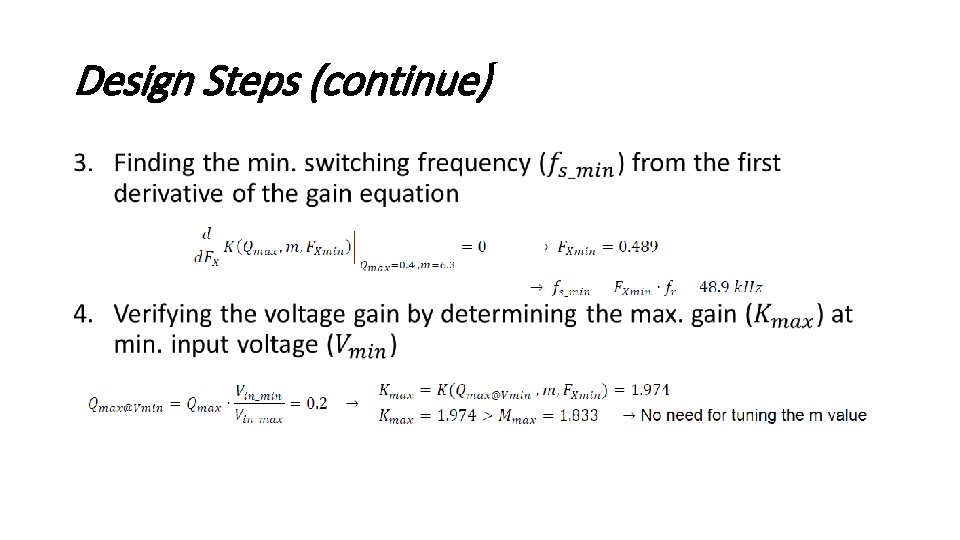
Design Steps (Gain Verification)
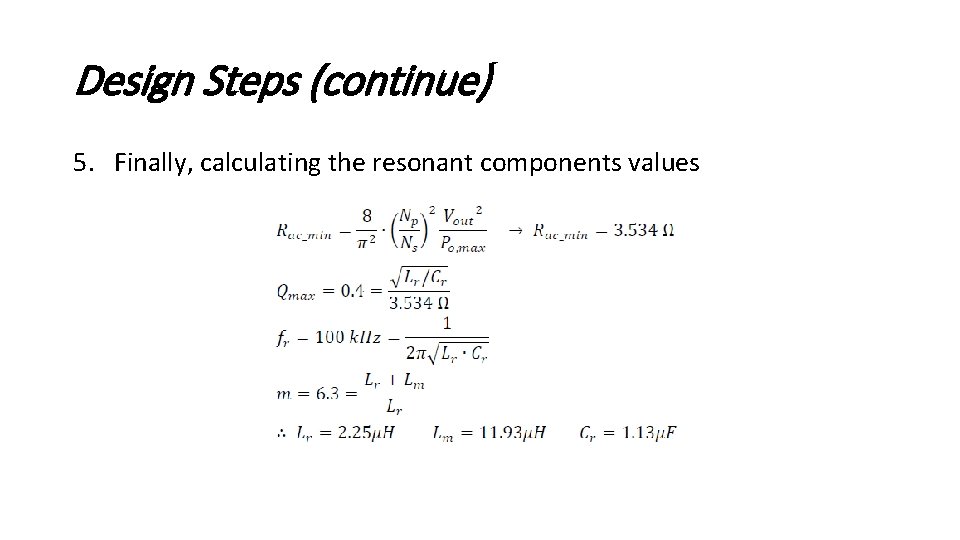
Design Steps (continue) 5. Finally, calculating the resonant components values
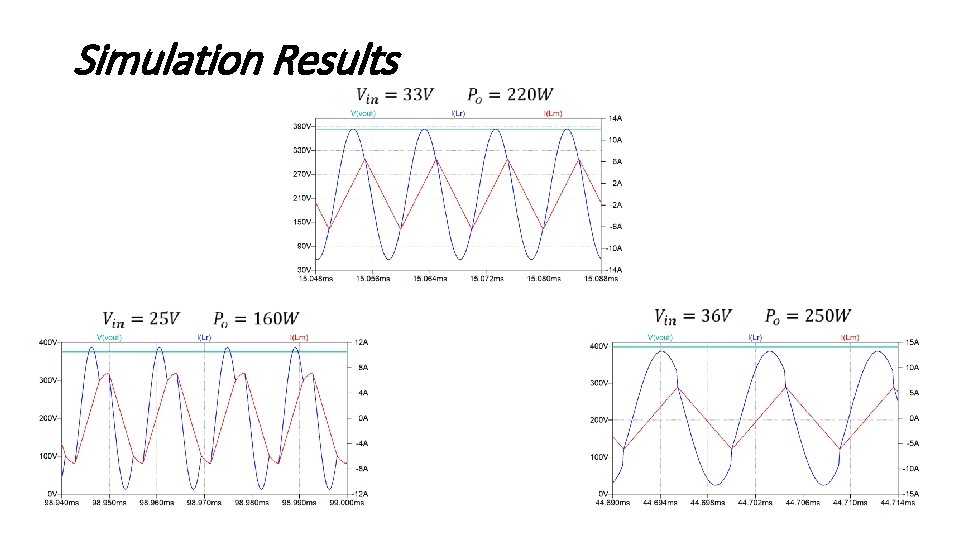
Simulation Results
- Slides: 21