
Living without Electricity Written by Janie Harris M
Living without Electricity Written by: Janie Harris, M. Ed. , CRS Housing and Environment Specialist Modified by: Vincent Mannino, County Extension Director
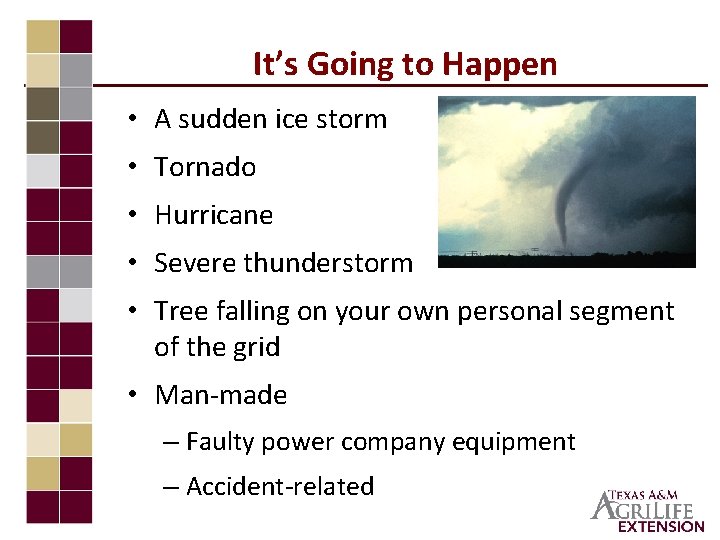
It’s Going to Happen • A sudden ice storm • Tornado • Hurricane • Severe thunderstorm • Tree falling on your own personal segment of the grid • Man-made – Faulty power company equipment – Accident-related
Effect is the Same • Everything electrical in your home or business stops working • Unknown when it will come back on • May be off for minutes • May be off for hours • May be off for days
Loss of Power = Loss of Normalcy • Cooking meals • Lighting after dark • Keeping warm or cool • Information • Water supply • Septic system or sewage
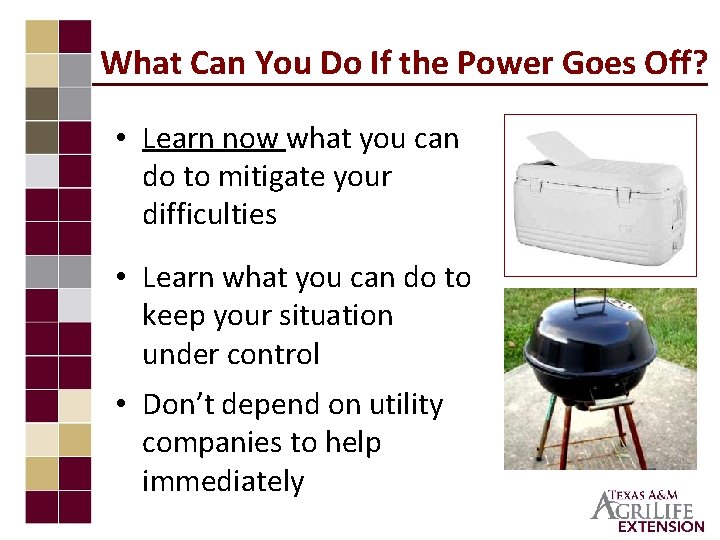
What Can You Do If the Power Goes Off? • Learn now what you can do to mitigate your difficulties • Learn what you can do to keep your situation under control • Don’t depend on utility companies to help immediately
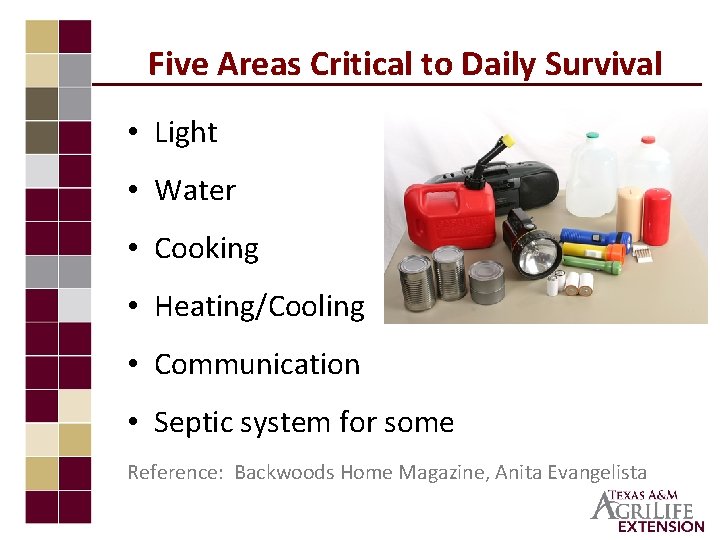
Five Areas Critical to Daily Survival • Light • Water • Cooking • Heating/Cooling • Communication • Septic system for some Reference: Backwoods Home Magazine, Anita Evangelista
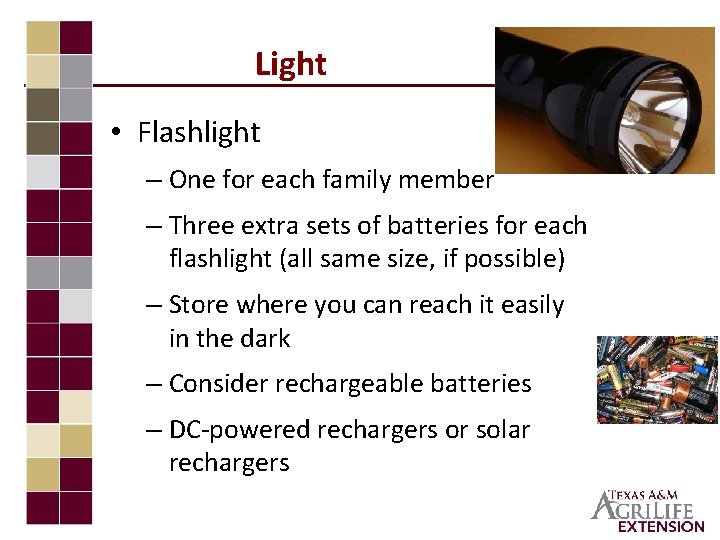
Light • Flashlight – One for each family member – Three extra sets of batteries for each flashlight (all same size, if possible) – Store where you can reach it easily in the dark – Consider rechargeable batteries – DC-powered rechargers or solar rechargers
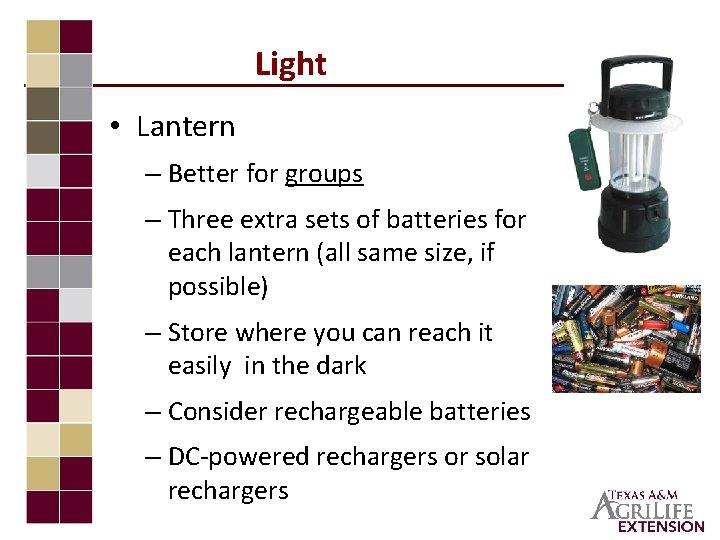
Light • Lantern – Better for groups – Three extra sets of batteries for each lantern (all same size, if possible) – Store where you can reach it easily in the dark – Consider rechargeable batteries – DC-powered rechargers or solar rechargers
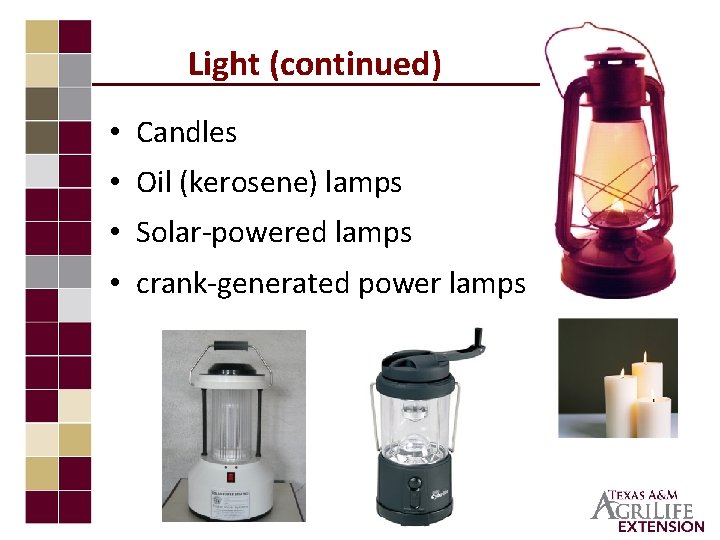
Light (continued) • Candles • Oil (kerosene) lamps • Solar-powered lamps • crank-generated power lamps
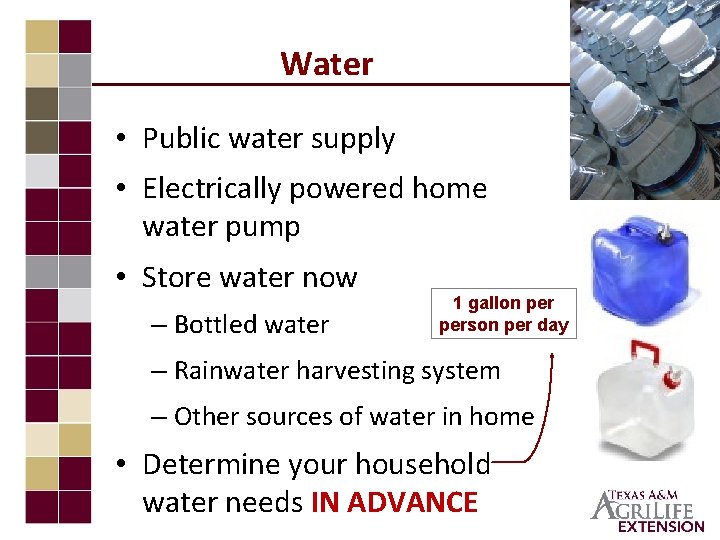
Water • Public water supply • Electrically powered home water pump • Store water now – Bottled water 1 gallon person per day – Rainwater harvesting system – Other sources of water in home • Determine your household water needs IN ADVANCE
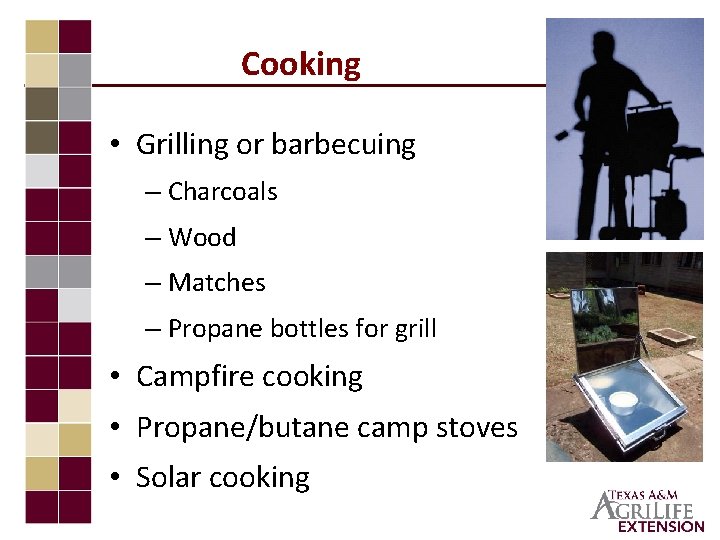
Cooking • Grilling or barbecuing – Charcoals – Wood – Matches – Propane bottles for grill • Campfire cooking • Propane/butane camp stoves • Solar cooking
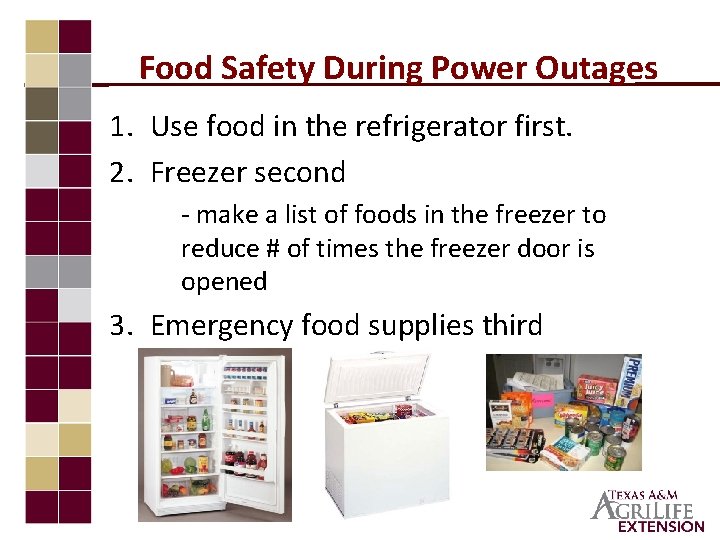
Food Safety During Power Outages 1. Use food in the refrigerator first. 2. Freezer second - make a list of foods in the freezer to reduce # of times the freezer door is opened 3. Emergency food supplies third
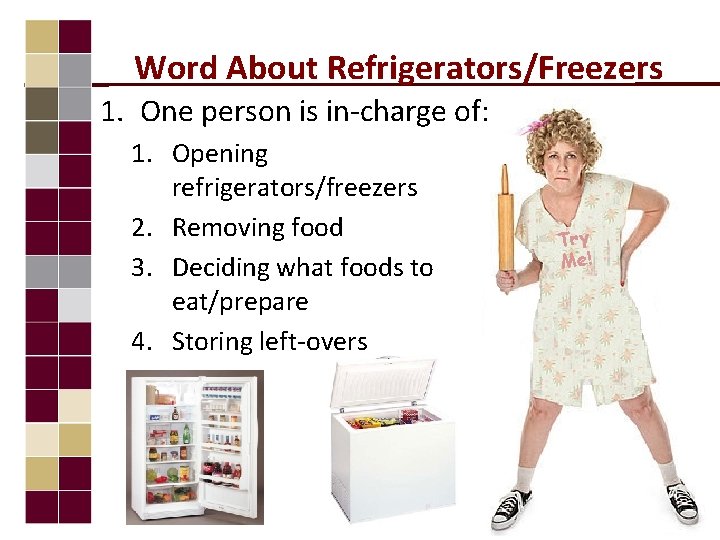
Word About Refrigerators/Freezers 1. One person is in-charge of: 1. Opening refrigerators/freezers 2. Removing food 3. Deciding what foods to eat/prepare 4. Storing left-overs Try Me!
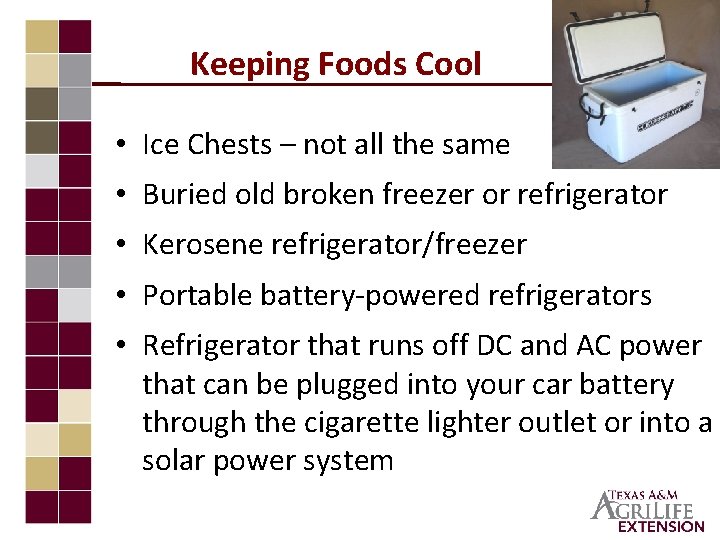
Keeping Foods Cool • Ice Chests – not all the same • Buried old broken freezer or refrigerator • Kerosene refrigerator/freezer • Portable battery-powered refrigerators • Refrigerator that runs off DC and AC power that can be plugged into your car battery through the cigarette lighter outlet or into a solar power system
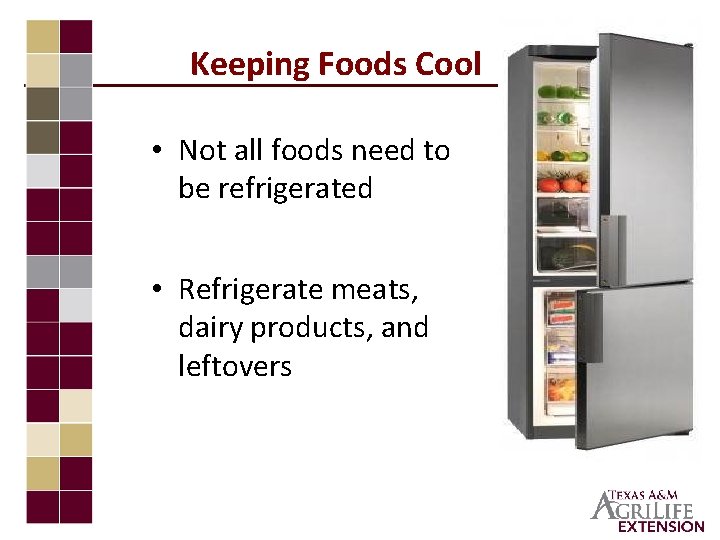
Keeping Foods Cool • Not all foods need to be refrigerated • Refrigerate meats, dairy products, and leftovers
Keeping Foods Cool Keep Frozen Food Safe • Keep an appliance thermometer in the freezer. – temperature for a deep freezer is 0 o F • Store meat/poultry on lowest shelves. • Food in the freezer should stay frozen for 1 -2 days depending on how full it is. • Keep a list of foods inside freezer and refrigerator to keep from opening it too often • One person should be in-charge of taking food out of the freezer or refrigerator
Keeping Foods Cool Keep Frozen Food Safe • If thawed, many frozen foods can be refrozen IF ice crystals are present. • If food is thawed but freezer temperature stays at 40 or below, the food should be safe to eat. • If frozen foods have thawed and been at 40◦F or warmer for 2 or more hours, some will need to be thrown out.
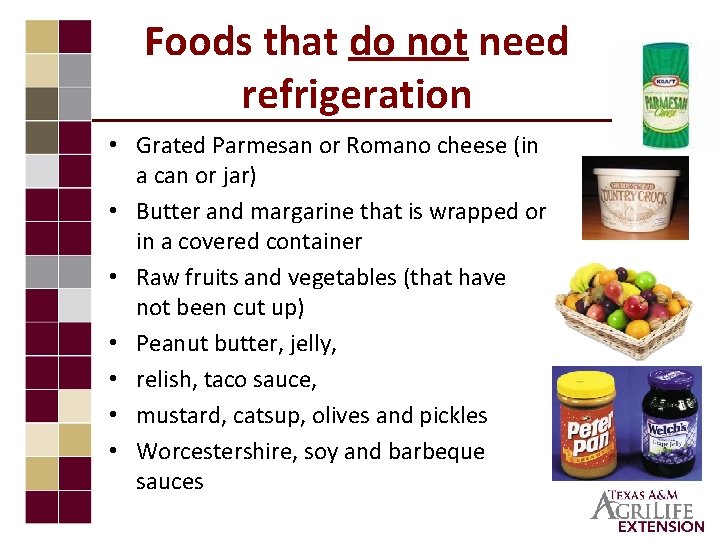
Foods that do not need refrigeration • Grated Parmesan or Romano cheese (in a can or jar) • Butter and margarine that is wrapped or in a covered container • Raw fruits and vegetables (that have not been cut up) • Peanut butter, jelly, • relish, taco sauce, • mustard, catsup, olives and pickles • Worcestershire, soy and barbeque sauces
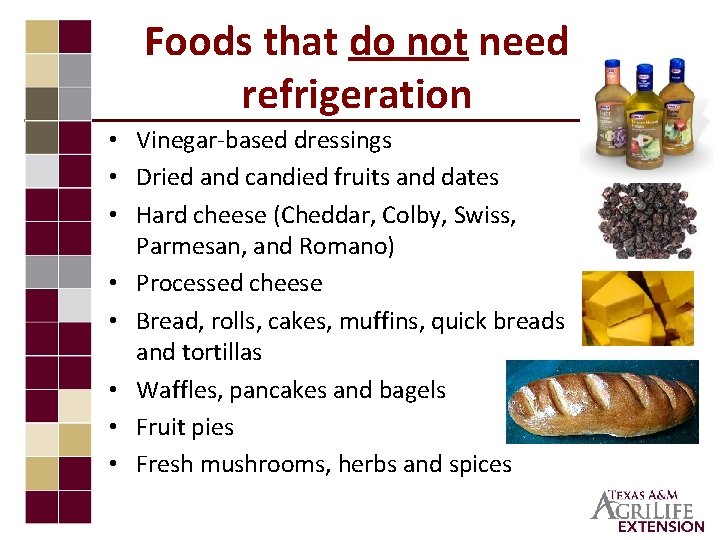
Foods that do not need refrigeration • Vinegar-based dressings • Dried and candied fruits and dates • Hard cheese (Cheddar, Colby, Swiss, Parmesan, and Romano) • Processed cheese • Bread, rolls, cakes, muffins, quick breads and tortillas • Waffles, pancakes and bagels • Fruit pies • Fresh mushrooms, herbs and spices
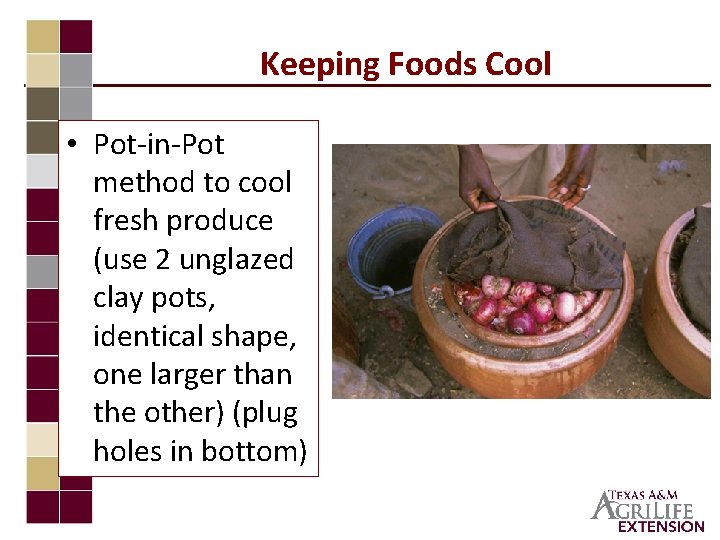
Keeping Foods Cool • Pot-in-Pot method to cool fresh produce (use 2 unglazed clay pots, identical shape, one larger than the other) (plug holes in bottom)
Food Safety • A fact sheet and Power. Point presentation developed by Dr. Jenna Anding, Nutrition Specialist, focuses on: – Importance of food safety – Handling food and water safely after a disaster – Keeping food safe: when to keep it and when to throw it out after a disaster http: //texashelp. tamu. edu
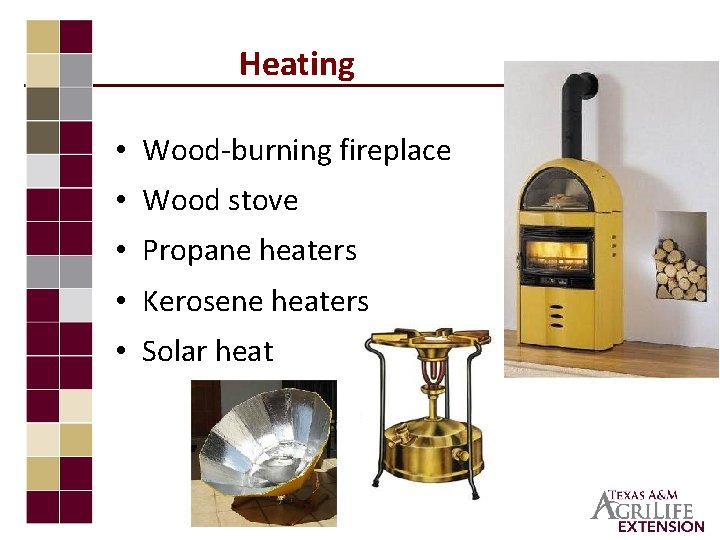
Heating • Wood-burning fireplace • Wood stove • Propane heaters • Kerosene heaters • Solar heat
Cooling a Residence • Battery-powered fans • Solar-powered fans • Open windows (screens needed) • Shades over outside of windows and doors where sun rays hit • Hang a wet sheet over an open window, and let the wind blow through it
Communications • Battery-powered radio – Batteries or radio plugged into car battery through the cigarette lighter Battery-powered TV (must be digital ) Phone plugged directly into the phone jack Shortwave radio Satellite Internet hookup that uses a batterypowered laptop • Citizens band radios (CB) • Short range FM-band devices • •
Keeping Things Normal • Keep routines as close to normal as possible • Do the same things you do when the power is on • Practice living without electricity – Try campouts, – Outdoor cooking
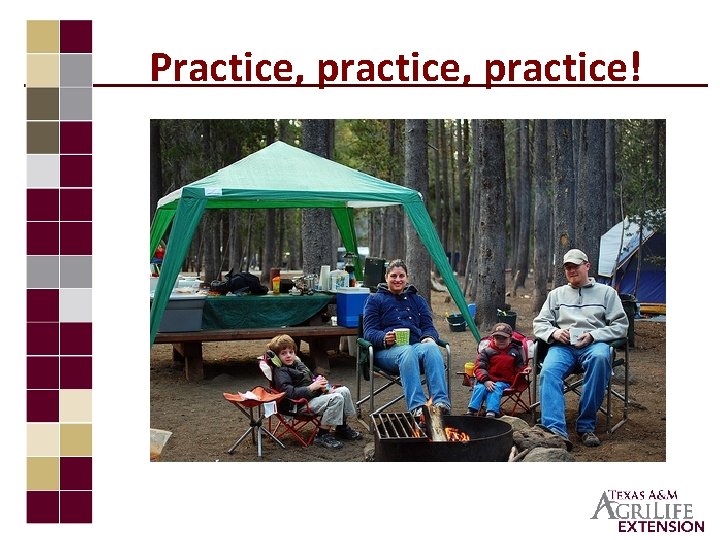
Practice, practice!
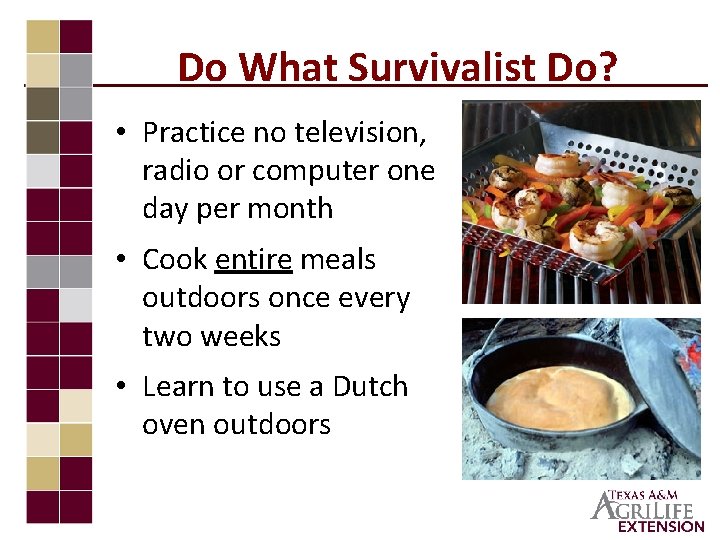
Do What Survivalist Do? • Practice no television, radio or computer one day per month • Cook entire meals outdoors once every two weeks • Learn to use a Dutch oven outdoors
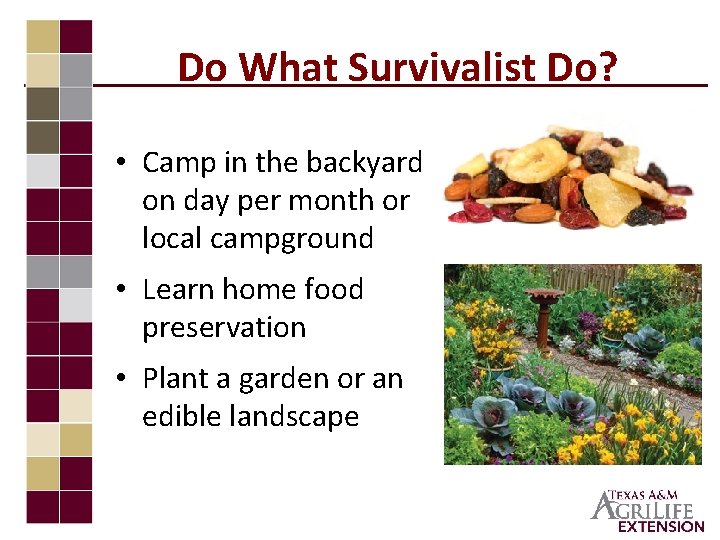
Do What Survivalist Do? • Camp in the backyard on day per month or local campground • Learn home food preservation • Plant a garden or an edible landscape
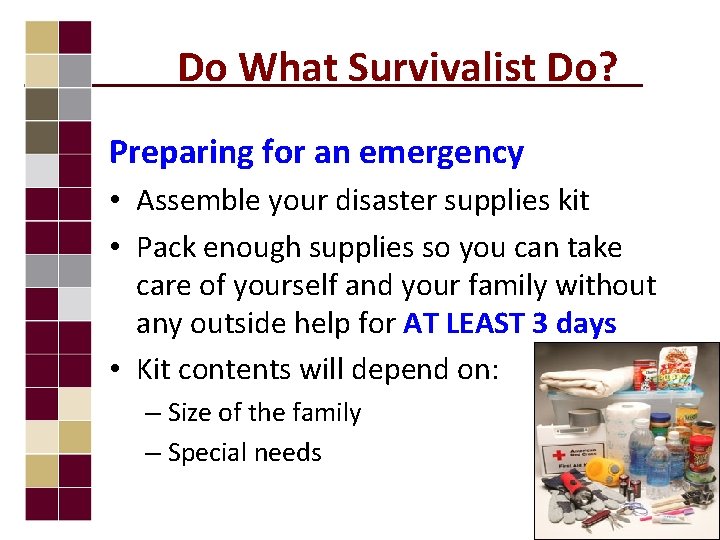
Do What Survivalist Do? Preparing for an emergency • Assemble your disaster supplies kit • Pack enough supplies so you can take care of yourself and your family without any outside help for AT LEAST 3 days • Kit contents will depend on: – Size of the family – Special needs
Do What Survivalist Do? What is in a Disaster Supply Kit? • Food & Water (3 -day supply) • Utensils • Clean air items (masks, plastic sheeting) – In case of chemical explosion • Extra clothing • First aid kit • Emergency items (e. g. battery operated radio, flashlights, batteries, garbage bags, baby wipes, toilet paper) • Special needs items (diapers, medications, etc)
Do What Survivalist Do? Foods to include in a disaster kit Protein bars Ready-to-eat cereals Fruit bars Smoked/dried meat Granola bars Canned soups/stews Formula/baby food Foods for medical cond. Dried &/or canned fruit Multi-vitamins Nuts/peanut butter Comfort foods Crackers Canned juices Canned meats (tuna, chix, beef) Meals ready to eat (MREs) Shelf-stable milk
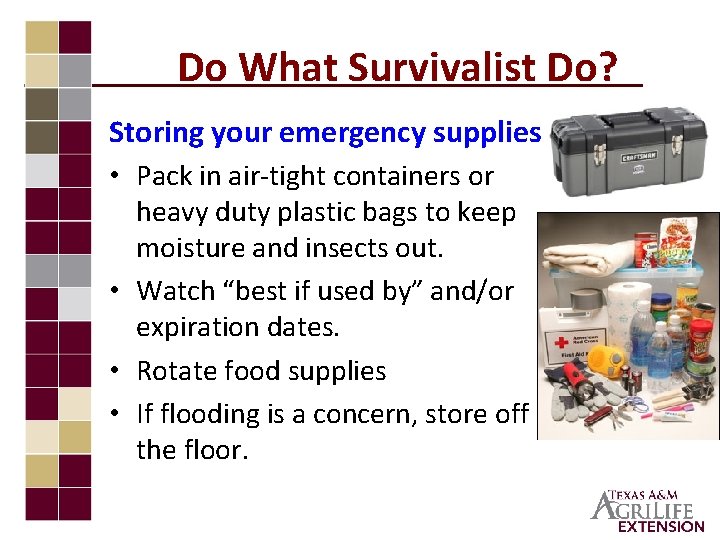
Do What Survivalist Do? Storing your emergency supplies • Pack in air-tight containers or heavy duty plastic bags to keep moisture and insects out. • Watch “best if used by” and/or expiration dates. • Rotate food supplies • If flooding is a concern, store off the floor.
Questions ? ? ? Resources: http: //texashelp. tamu. edu http: //www. backwoodshome. com/ articles 2/evangelista 73. html http: //www. fema. gov/
- Slides: 33