
LIVING TOGETHER WITH OTHERS SOCIAL CONFLICTS AT MICRO


- Slides: 10
LIVING TOGETHER WITH OTHERS – SOCIAL CONFLICTS AT MICRO AND MACRO LEVEL - INSIDE AND OUTSIDE KINGA SZABÓ-TÓTH, PHD. INSTITUTE DIRECTOR, ATTI UNIVERSITY OF MISKOLC FACULTY OF ARTS EFOP-3. 6. 2 -16 -2017 -00007
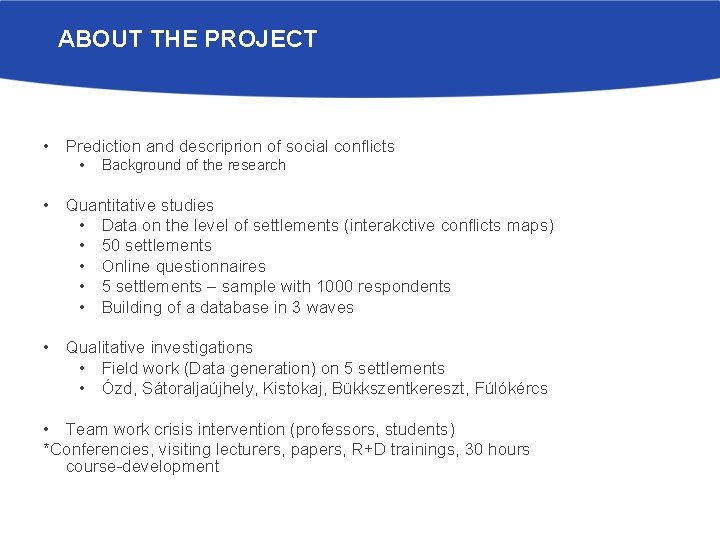
ABOUT THE PROJECT • Prediction and descriprion of social conflicts • Background of the research • Quantitative studies • Data on the level of settlements (interakctive conflicts maps) • 50 settlements • Online questionnaires • 5 settlements – sample with 1000 respondents • Building of a database in 3 waves • Qualitative investigations • Field work (Data generation) on 5 settlements • Ózd, Sátoraljaújhely, Kistokaj, Bükkszentkereszt, Fúlókércs • Team work crisis intervention (professors, students) *Conferencies, visiting lecturers, papers, R+D trainings, 30 hours course-development
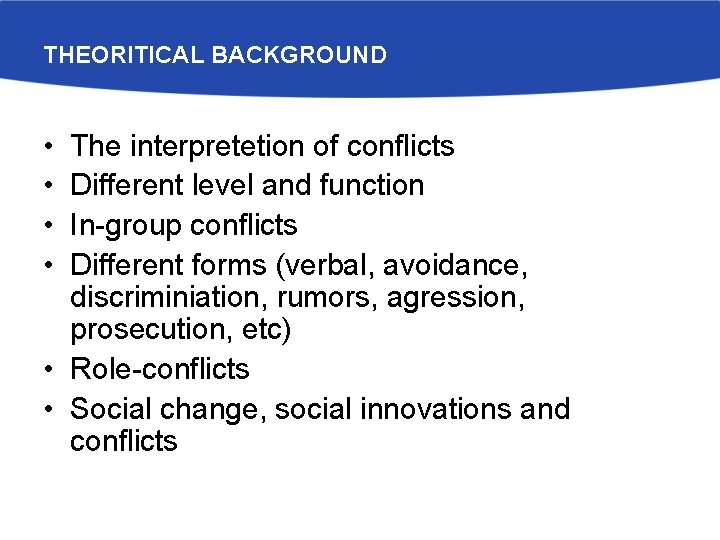
THEORITICAL BACKGROUND • • The interpretetion of conflicts Different level and function In-group conflicts Different forms (verbal, avoidance, discriminiation, rumors, agression, prosecution, etc) • Role-conflicts • Social change, social innovations and conflicts
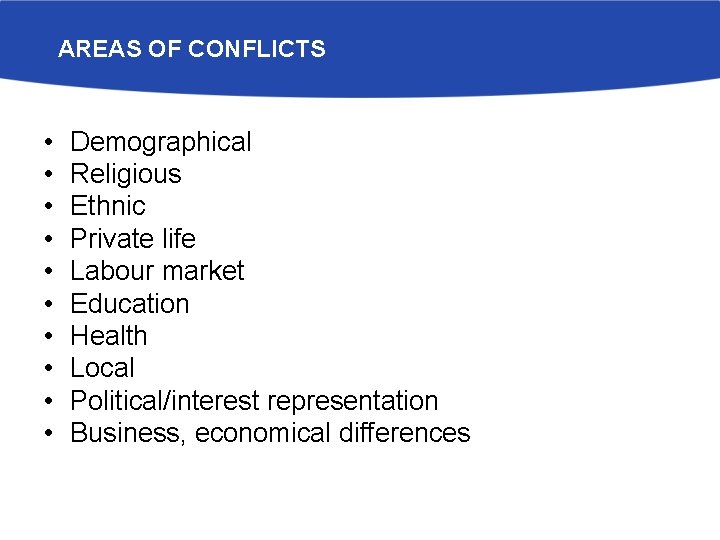
AREAS OF CONFLICTS • • • Demographical Religious Ethnic Private life Labour market Education Health Local Political/interest representation Business, economical differences
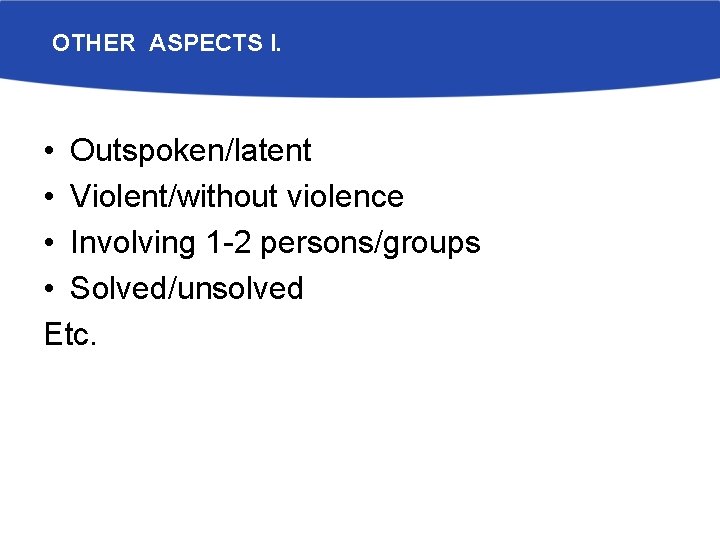
OTHER ASPECTS I. • Outspoken/latent • Violent/without violence • Involving 1 -2 persons/groups • Solved/unsolved Etc.
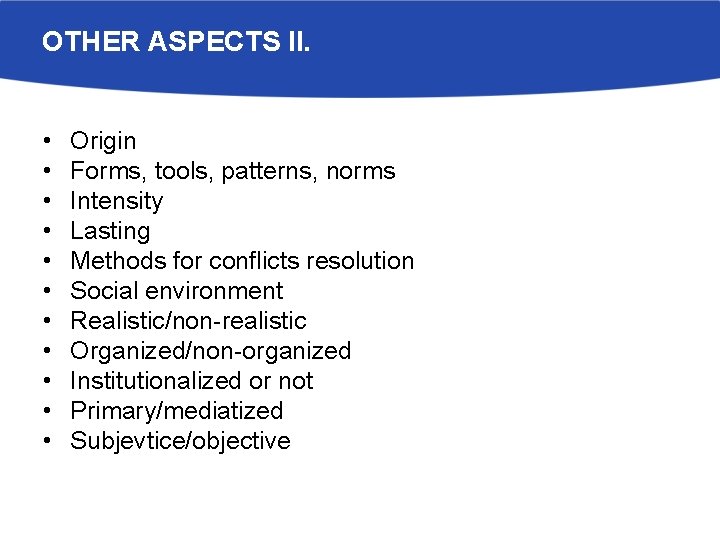
OTHER ASPECTS II. • • • Origin Forms, tools, patterns, norms Intensity Lasting Methods for conflicts resolution Social environment Realistic/non-realistic Organized/non-organized Institutionalized or not Primary/mediatized Subjevtice/objective
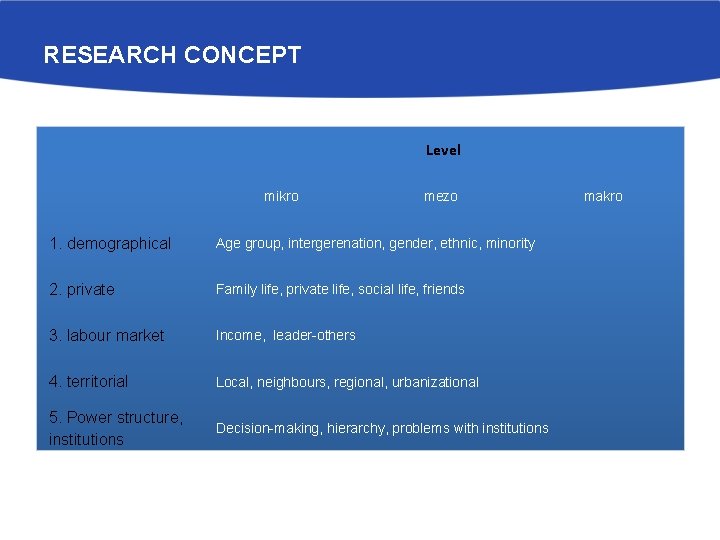
RESEARCH CONCEPT Level mikro mezo 1. demographical Age group, intergerenation, gender, ethnic, minority 2. private Family life, private life, social life, friends 3. labour market Income, leader-others 4. territorial Local, neighbours, regional, urbanizational 5. Power structure, institutions Decision-making, hierarchy, problems with institutions makro
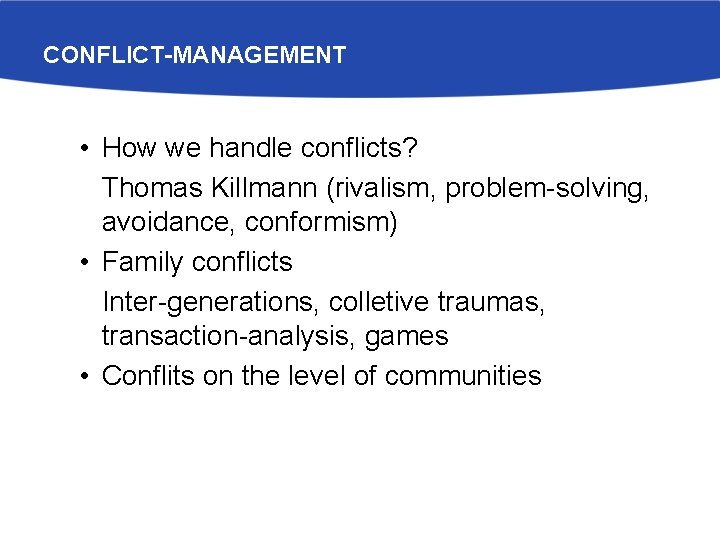
CONFLICT-MANAGEMENT • How we handle conflicts? Thomas Killmann (rivalism, problem-solving, avoidance, conformism) • Family conflicts Inter-generations, colletive traumas, transaction-analysis, games • Conflits on the level of communities
ACKNOWLEDGEMENT This research was supported by the project nr. EFOP-3. 6. 2 -16 -2017 -00007, titled Aspects on the development of intelligent, sustainable and inclusive society: social, technological, innovation networks in employment and digital economy. The project has been supported by the European Union, co-financed by the European Social Fund and the budget of Hungary.
THANK YOU FOR YOUR ATTENTION!