
Living things What is a micro organism Microorganisms
- Slides: 8
Living things
What is a micro organism?
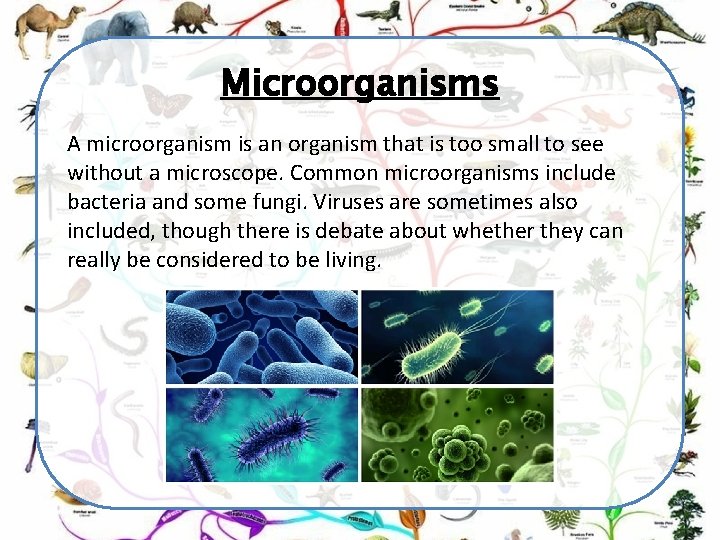
Microorganisms A microorganism is an organism that is too small to see without a microscope. Common microorganisms include bacteria and some fungi. Viruses are sometimes also included, though there is debate about whether they can really be considered to be living.
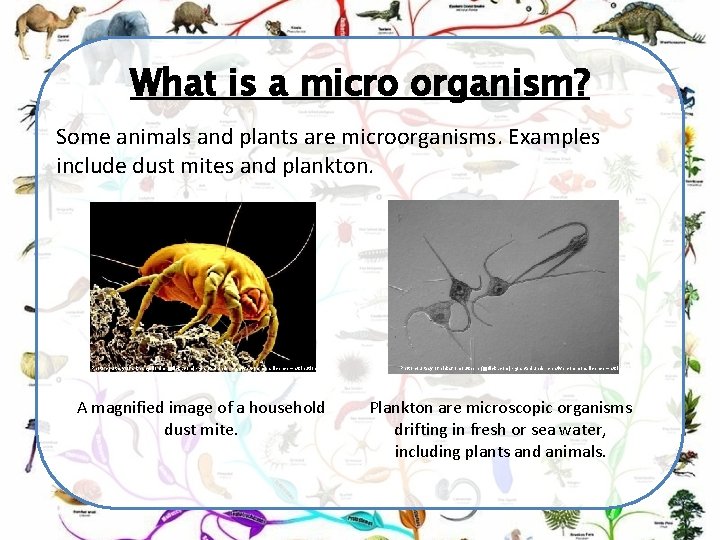
What is a micro organism? Some animals and plants are microorganisms. Examples include dust mites and plankton. Photo courtesy of arkhangellohim @flickr. com) - granted under creative commons licence – attribution A magnified image of a household dust mite. Photo courtesy of picksfromoutthere (@flickr. com) - granted under creative commons licence – attribution Plankton are microscopic organisms drifting in fresh or sea water, including plants and animals.
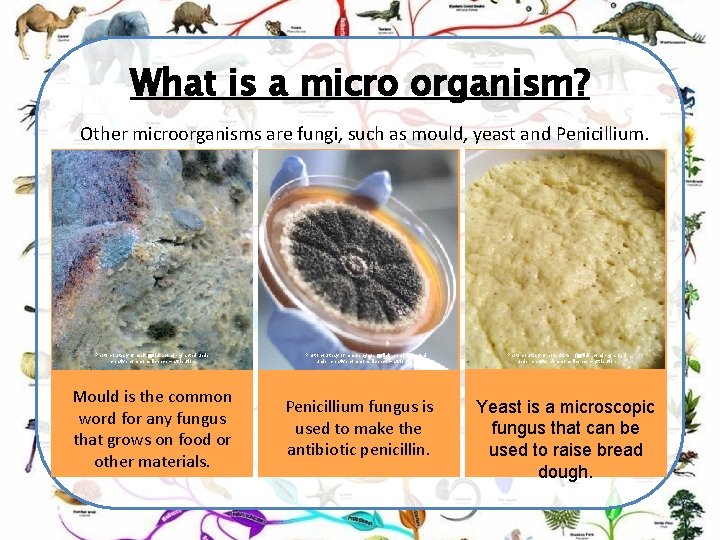
What is a micro organism? Other microorganisms are fungi, such as mould, yeast and Penicillium. Photo courtesy of nsalt @flickr. com) - granted under creative commons licence – attribution Mould is the common word for any fungus that grows on food or other materials. Photo courtesy of mmu-engage @flickr. com) - granted under creative commons licence – attribution Penicillium fungus is used to make the antibiotic penicillin. Photo courtesy of notahipster (@flickr. com) - granted under creative commons licence – attribution Yeast is a microscopic fungus that can be used to raise bread dough.
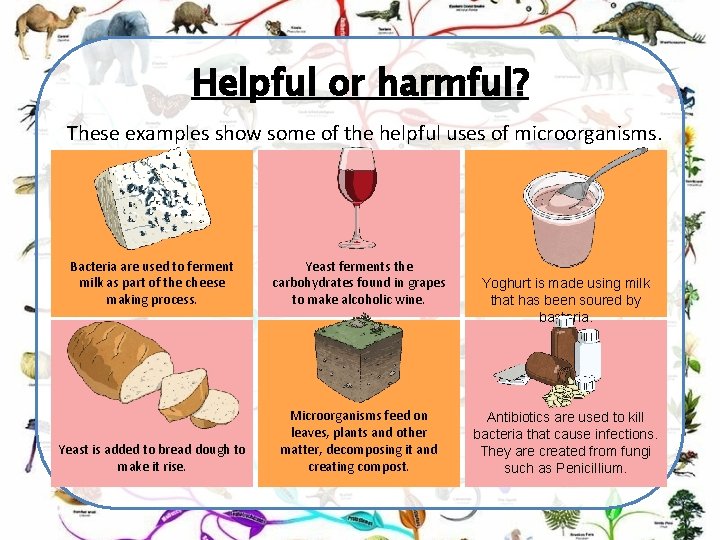
Helpful or harmful? These examples show some of the helpful uses of microorganisms. Bacteria are used to ferment milk as part of the cheese making process. Yeast ferments the carbohydrates found in grapes to make alcoholic wine. Yeast is added to bread dough to make it rise. Microorganisms feed on leaves, plants and other matter, decomposing it and creating compost. Yoghurt is made using milk that has been soured by bacteria. Antibiotics are used to kill bacteria that cause infections. They are created from fungi such as Penicillium.
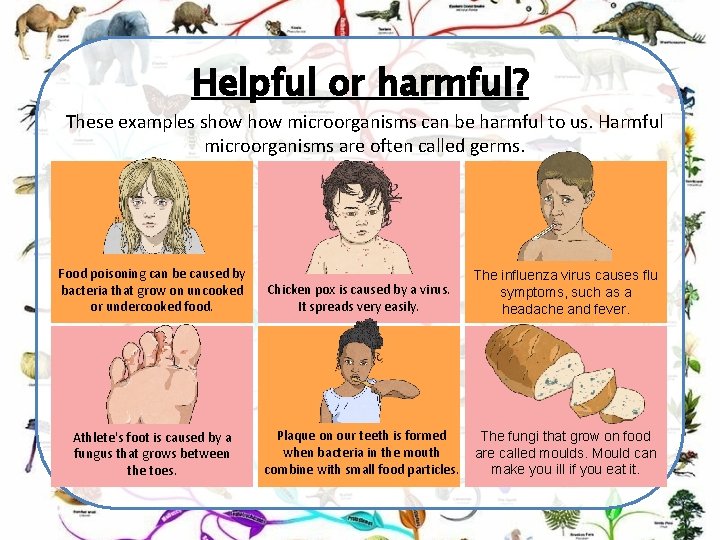
Helpful or harmful? These examples show microorganisms can be harmful to us. Harmful microorganisms are often called germs. Food poisoning can be caused by bacteria that grow on uncooked or undercooked food. Chicken pox is caused by a virus. It spreads very easily. The influenza virus causes flu symptoms, such as a headache and fever. Athlete's foot is caused by a fungus that grows between the toes. Plaque on our teeth is formed when bacteria in the mouth combine with small food particles. The fungi that grow on food are called moulds. Mould can make you ill if you eat it.
Micro-Organisms Task - Select a micro-organism to research and create a poster about. Using the watercolours provided, paint a picture of your chosen micro-organism onto plain A 4 paper. While your painting dries, conduct your research and decide how you will lay out your findings onto your picture. Once your picture is dry you can neatly write up your findings. Be prepared to present it back if there is time.